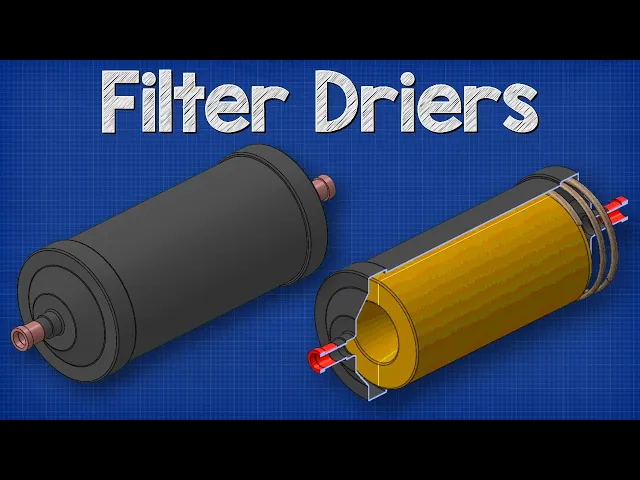
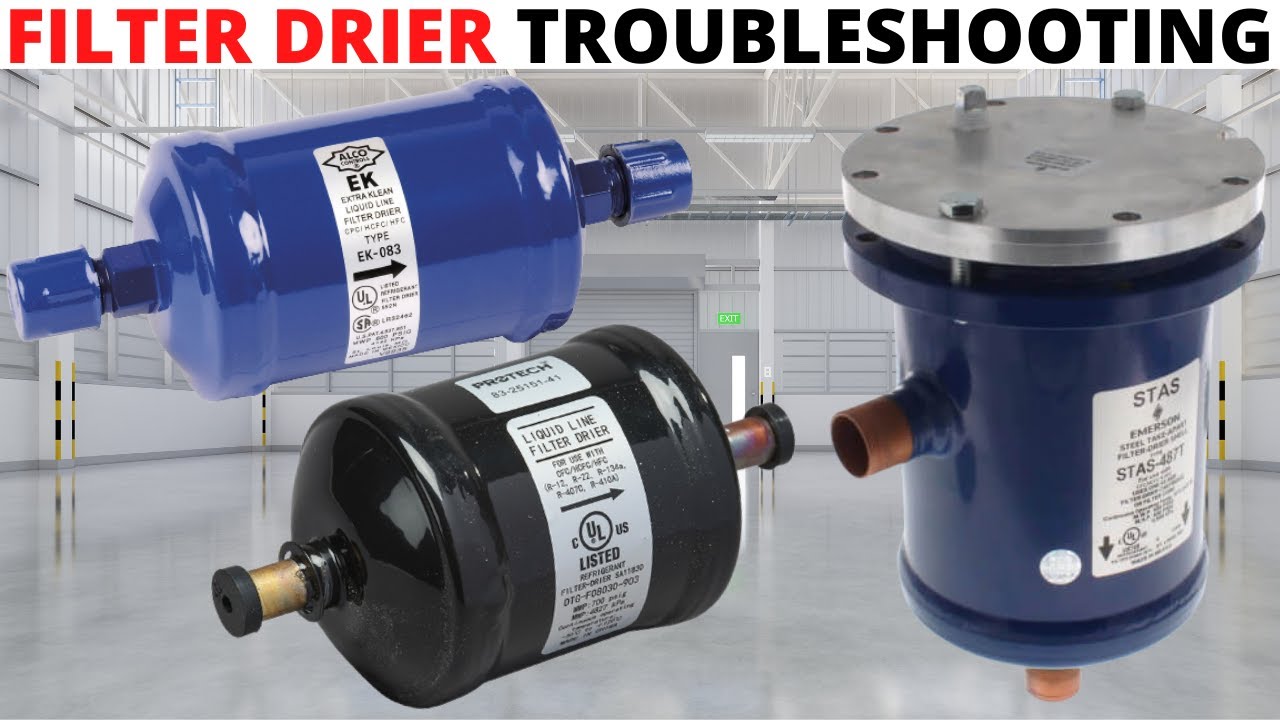
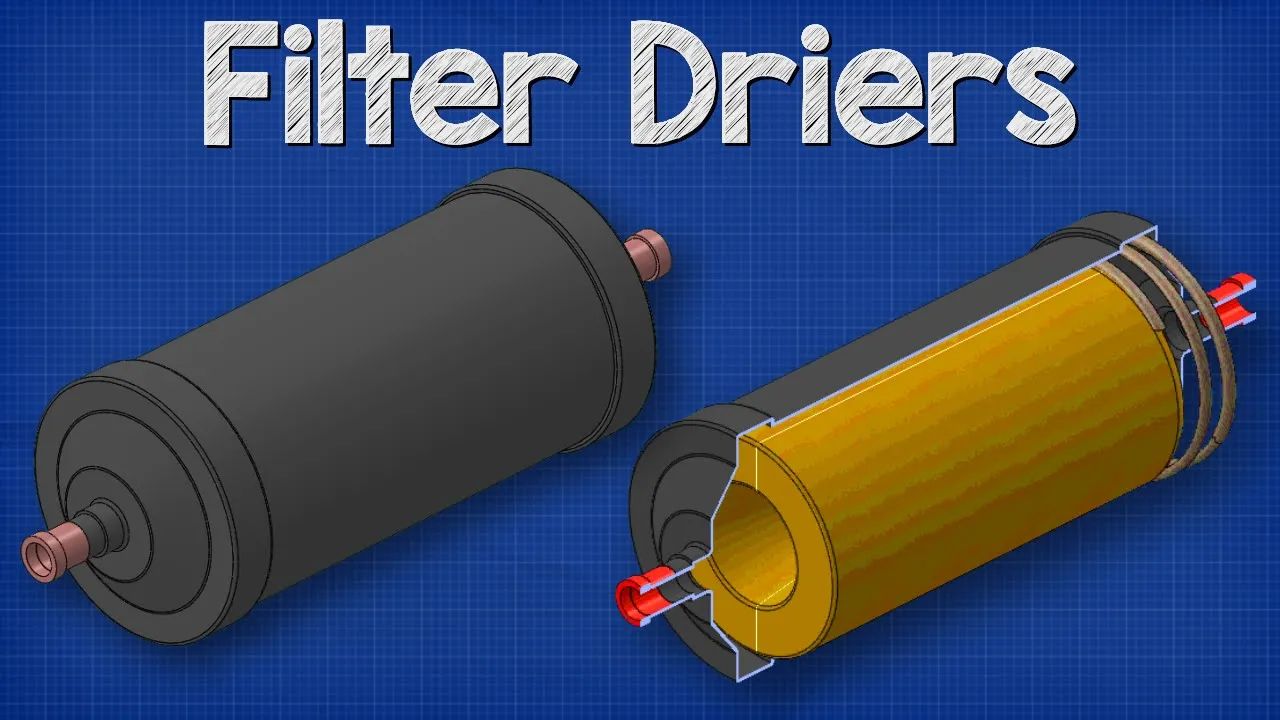
[Applause] hey there guys paul here from the engineering mindset.com in this video we're going to be looking at the filter dryer to understand how it works the main parts and why we use them this video was sponsored by danfoss filter dryers look something like this these are found in refrigeration systems and as you might guess from their name their job is to filter and dry the refrigerant they protect the refrigeration system and its components by capturing and absorbing water particles as well as harmful solid substances and stopping these from cycling around the system and getting
into the compressors the valves the sensors etc this keeps the system running at optimal conditions when the refrigeration system is first installed or anytime the unit is opened and serviced there is a potential for air and dust to enter as you might already know air contains particles of water for example a cubic meter of air at 30 degrees celsius contains up to 30 grams of water so why does this matter when the refrigerant the lubricating oil and moisture combine this can create an acid which is then pushed around the system corroding the internal surfaces and
parts now we definitely don't want that so we use a filter dryer to filter the moisture and dirt and dry the refrigerant out by adding a filter dryer to the system we are adding a slight restriction to the flow of refrigerant so we will see a very small pressure drop and this will cause a small temperature drop this pressure and temperature drop increases the dirtier the filter drive becomes and that's because it becomes harder for the refrigerant to pass through eventually this will become excessive and it can cause problems in the system we can also
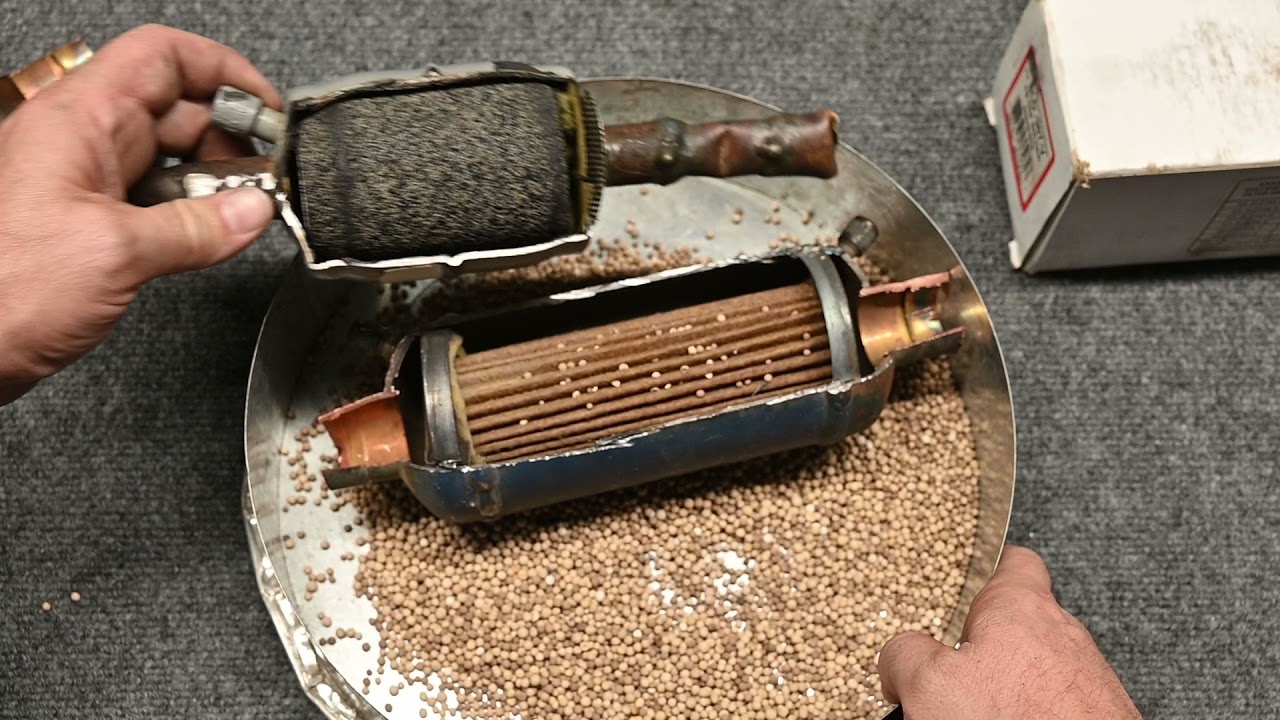
check the sight glass which should indicate whether moisture is present in the system the sight glass is typically fitted between the filter dryer and the expansion valve the filter dryer will need to be replaced periodically typically every two years or so depending on the system and the manufacturer's recommendations every time the system is opened it's good practice to replace the filter dryer we have also cut open a real filter dryer to look inside if you'd like to see that then you can find links in the video description down below we find filter dryers installed in
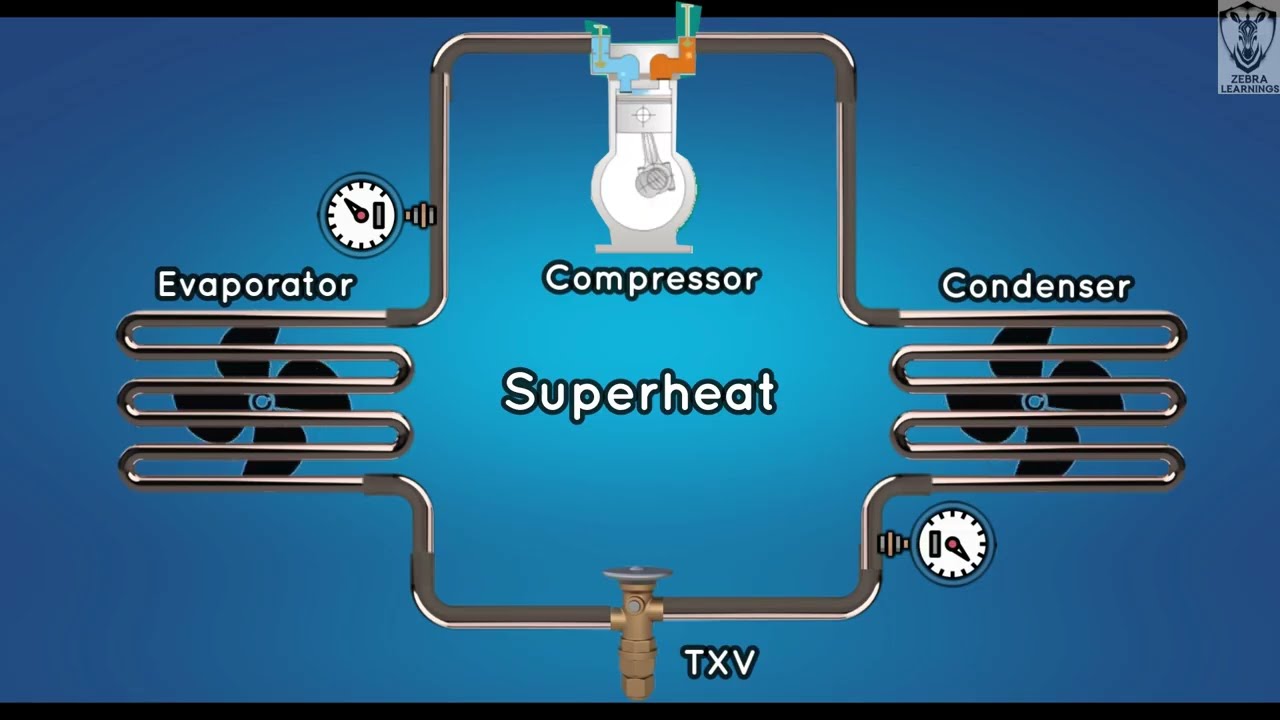
the liquid line of the refrigeration system these will be fitted between the condenser and the expansion valve this is usually accompanied by sight glass the filter dryers can only hold a certain amount of moisture they come in different sizes for different sized systems the filter dryer should not be exposed to outdoor atmospheric conditions this will lead to corrosion of the casing and ultimately the unit will eventually fail the filter dryers do come with a corrosion resistant coating but this will not last forever you can also find filters in the suction line these are usually installed
after a compressor burnout to absorb acid and moisture contamination but we won't go into much detail on that in this video on the side of the filter dryer you'll find an arrow this indicates the direction of refrigerant flow some models for heat pumps might have bi-directional filter dryers and the arrow will point both left and right but in this case we have a single direction one-way filter dryer pointing in the direction of the expansion valve by the way we have also covered expansion valves in detail in our previous videos do check that out links can
be found in the video description down below when we look at a filter dryer we have the main casing this is made from steel and is a cylindrical design because it will distribute the internal pressure evenly the filter dryer has to battle the internal pressures as well as the atmospheric pressures so we need a strong casing at each end we find a connection one is an inlet and the other is an outlet we can check the arrow on the casing to determine this the inlet and outlet will allow us to connect the filter dryer into
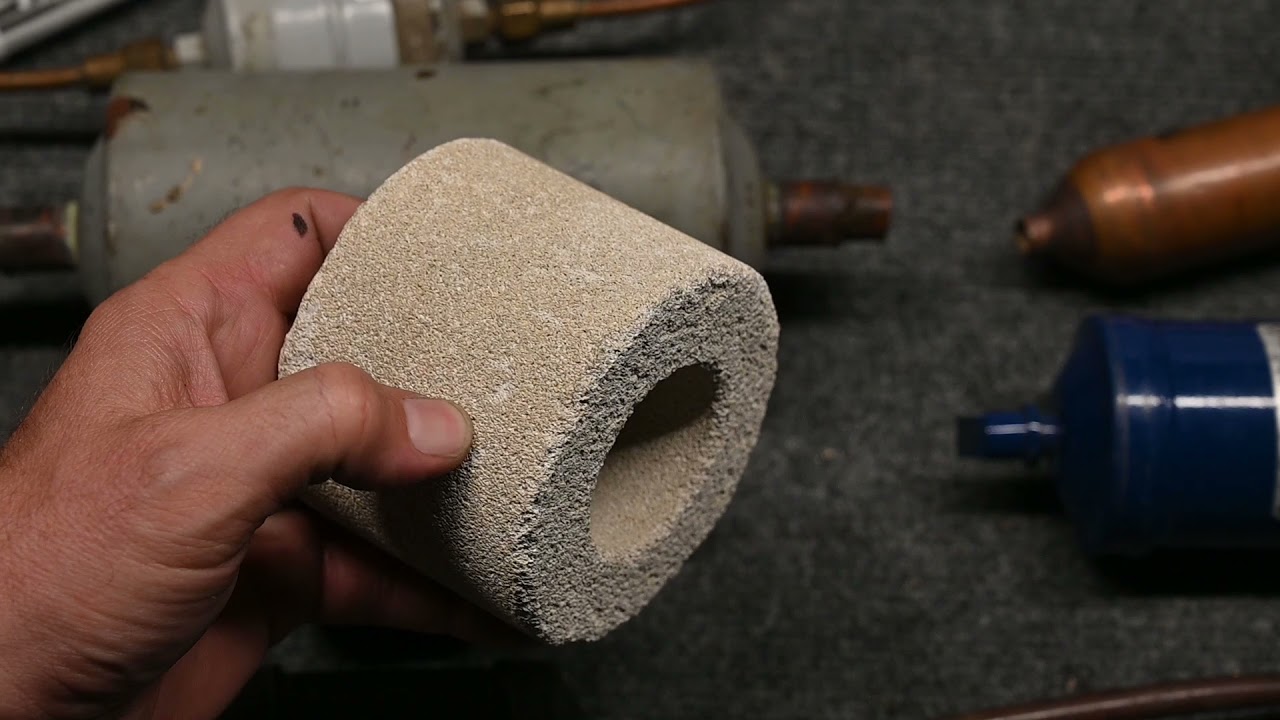
the system these connections will either be pure copper or copper plated depending on the model these allow the connections to be brazed to form a strong airtight seal inside the casing at the refrigerant inlet end we're going to find a large spring this spring is going to push against the casing as well as the solid core this is just to keep the core in a fixed position inside the casing next we have the core or the molecular sieve this particular model has a solid core eighty percent of which is a molecular sieve and twenty percent
being activated alumina i'll just show you some close-ups here of that porous material the solid cores molecular structure acts as a filter to capture any large dirt particles the material is similar to a sponge in that it can soak up and retain water the aluminium oxide is added in there to capture and retain acids not all filter dryers will have activated alumina inside them it depends on the application notice this groove inside the refrigerant will pass through the solid core and then collect in this groove to continue its flow at the end of the solid
core we have a screen this polyester mat retains smaller dirt particles which might have been able to pass through the solid core the material is able to capture dirt particles down to around 25 microns with minimal pressure drop after the screen we have a perforated plate this is just there to keep all the internal parts in position the holes just allow the refrigerant to flow to the outlet the refrigerant enters through the inlet it then passes across the spring again the spring is just there holding everything in place the refrigerant will then surround the outside
of the core the refrigerant then passes through the solid core and as it does so the dirt moisture and acids are absorbed and become trapped within the small pores of the filter material the compressor is still pushing more refrigerant which is providing the back pressure so that once the dirt and moisture enters the pores of the material it will not be able to leave the refrigerant now continues to pass through the solid core and accumulates within the chamber at the center from here it passes through the screen to capture any remaining particles of dirt that
may have been able to slip through it then passes through the perforated plate and exits the unit having been filtered and dried and then continues to the expansion valve okay that's it for this video but to continue learning refrigeration engineering then check out one of the videos on screen now and i'll catch you there for the next lesson don't forget to follow us on facebook twitter instagram linkedin and of course the engineeringmindset.com you