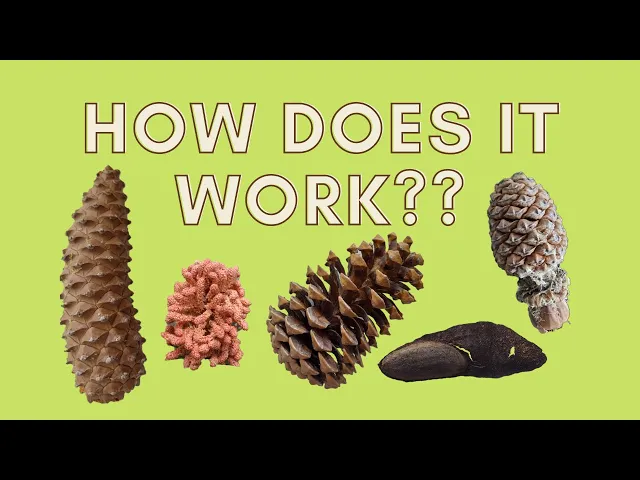
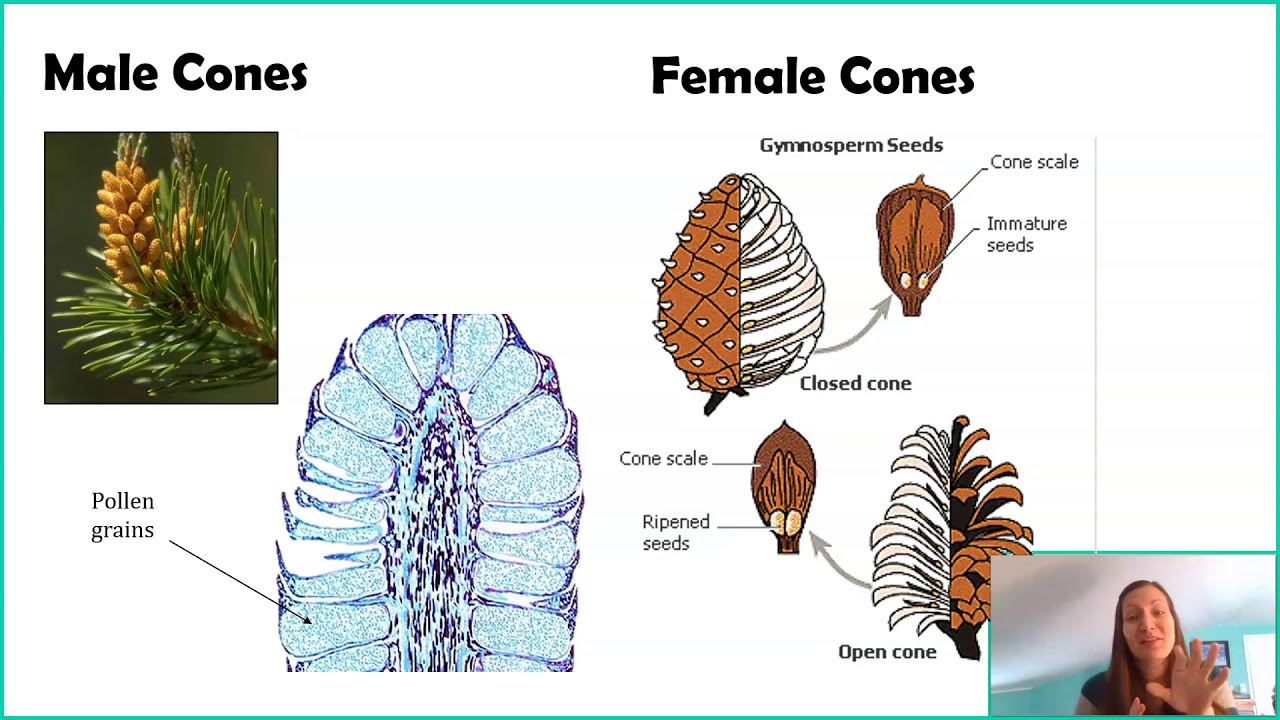
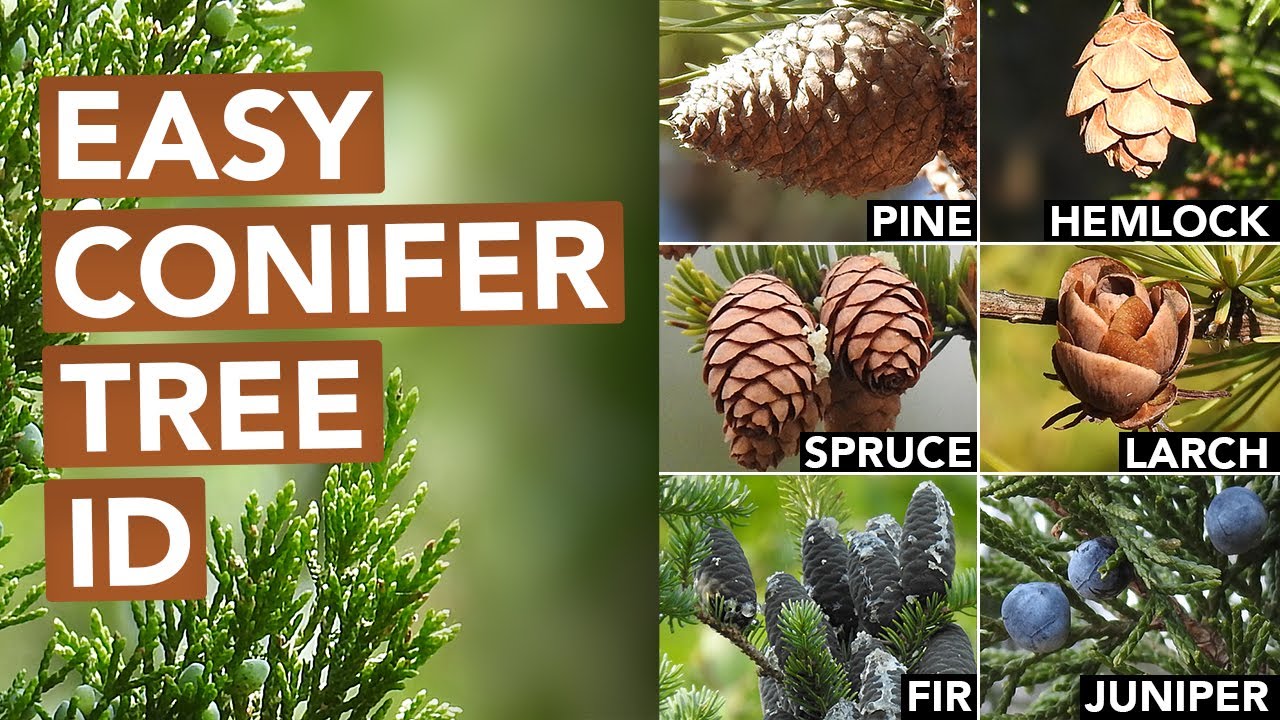
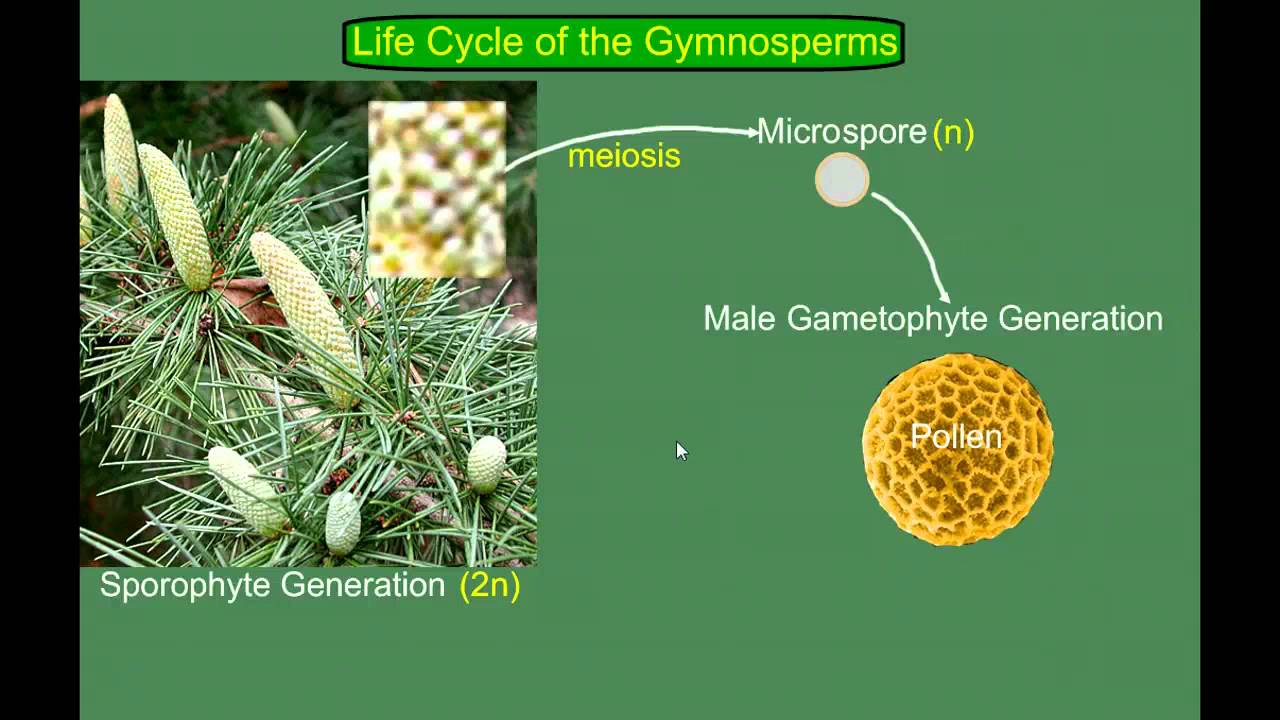
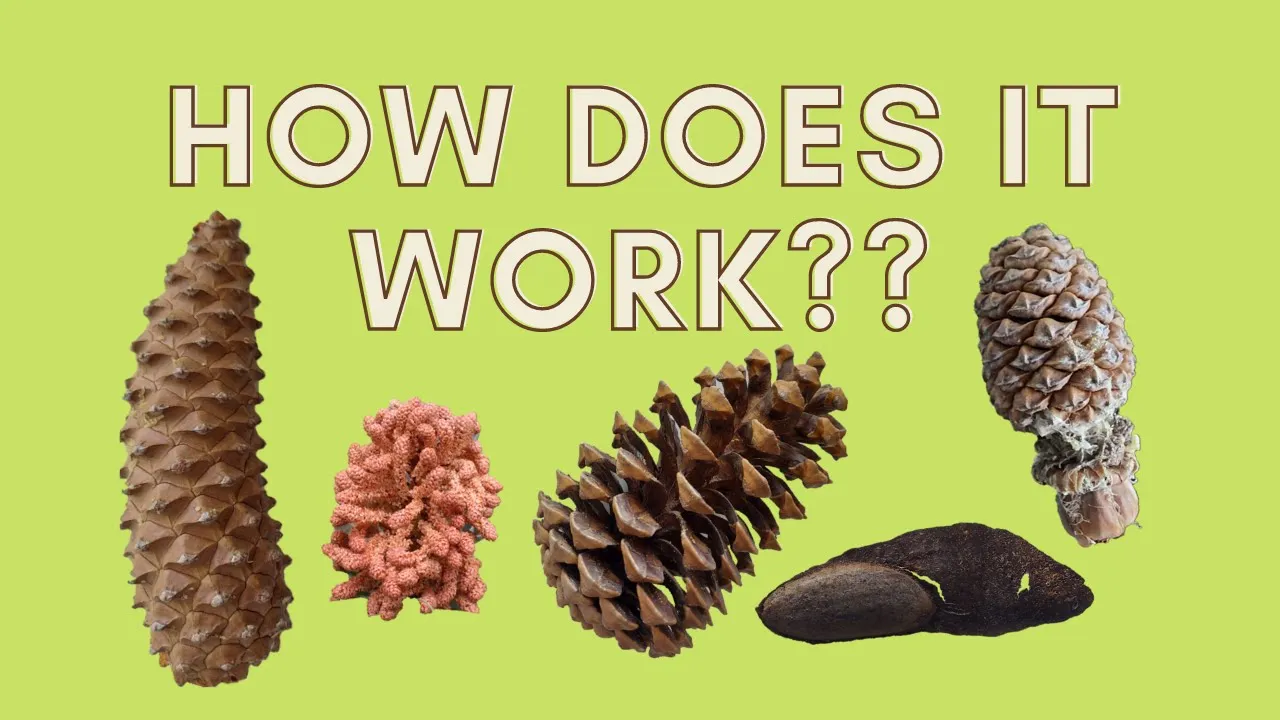
During the spring months, you might have noticed these orange clusters, looking a bit like catkins, appearing on conifers like pines, spruces, and firs. And if you passed by conifers during windy weather, you might have even seen a cloud of yellow dust blowing from those orange clusters. The yellow dust is actually pollen, which comes out of male pollen cones that develop on coniferous trees.
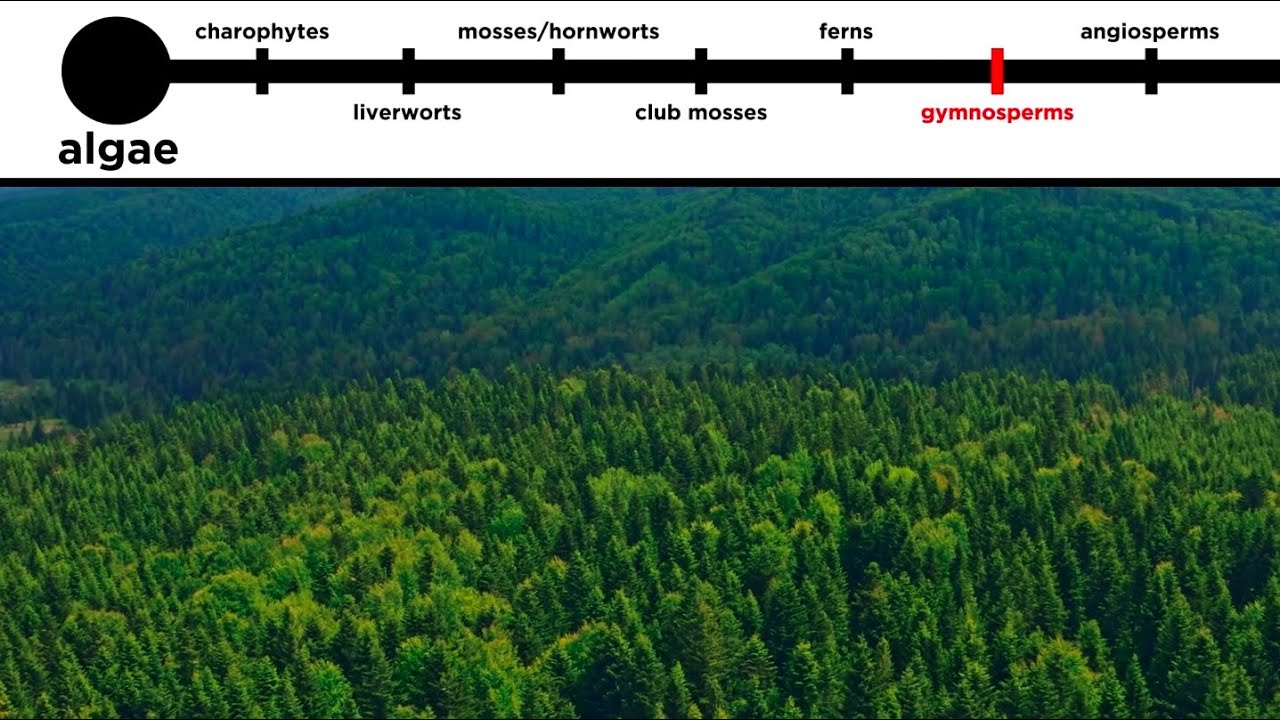
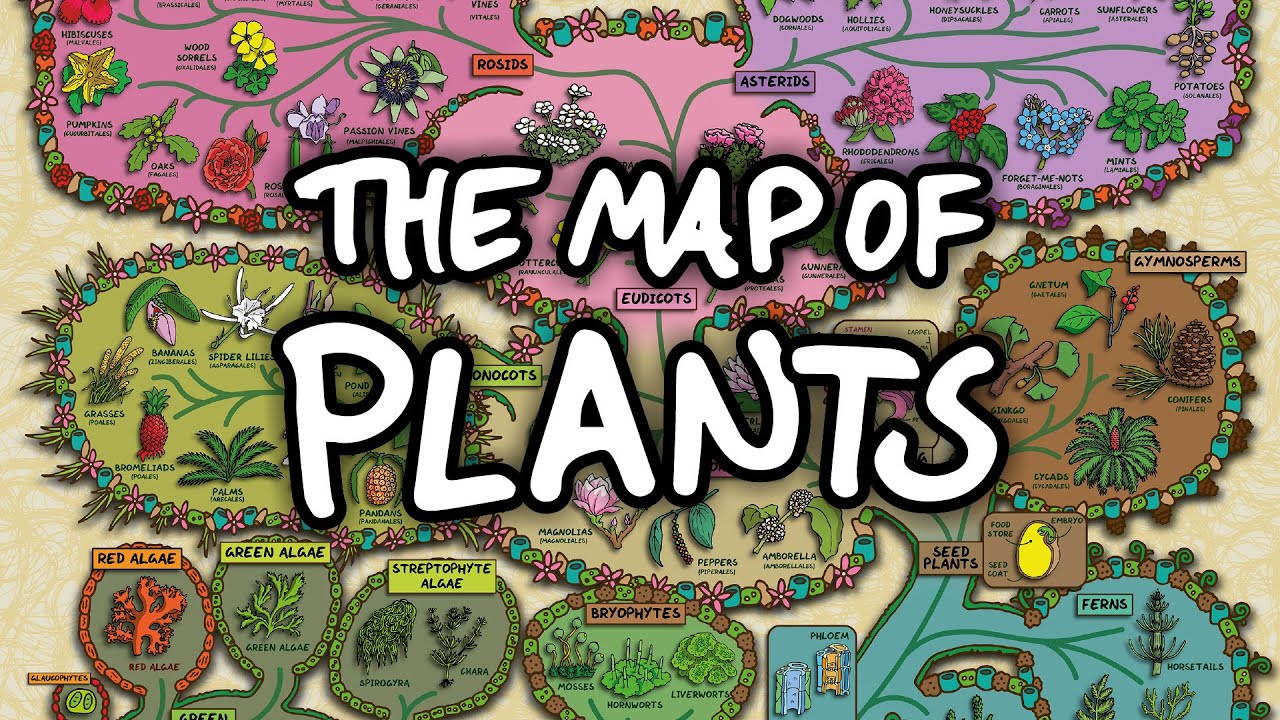
They're present only for a short time, so you won't be able to see them on the trees all year round. But how can there be pollen when there aren't any flowers? Coniferous trees belong to a group of plants called Gymnosperms.
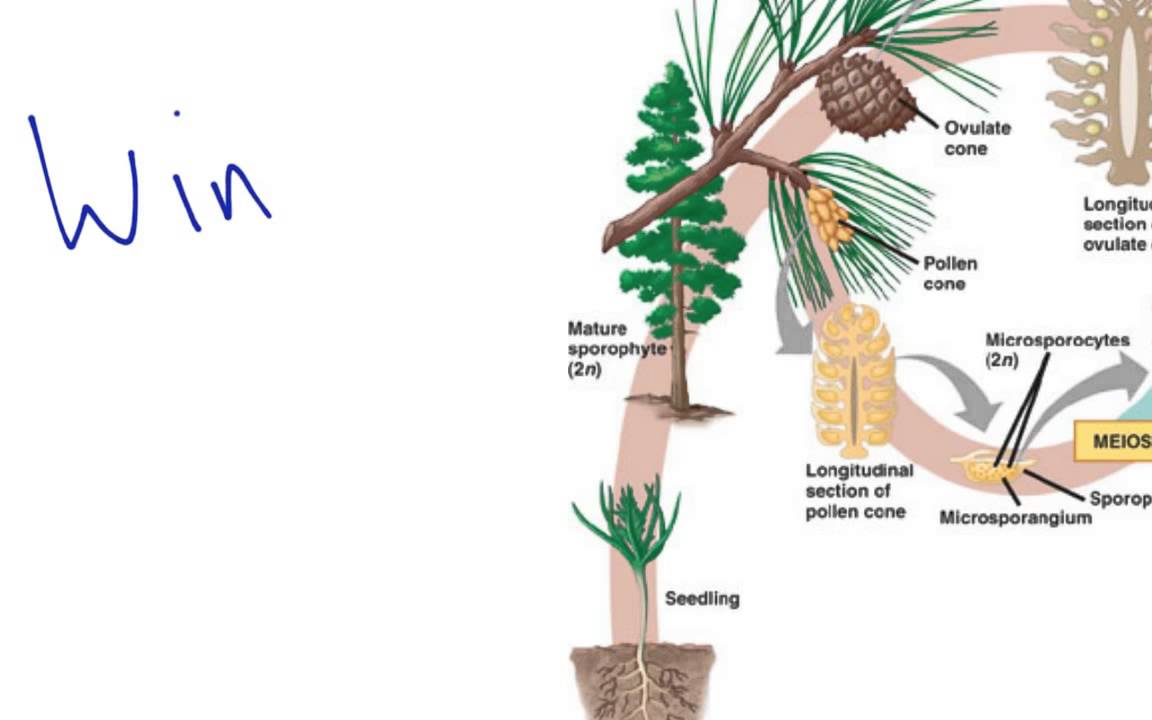
Their reproduction is evolutionarily more basic than reproduction in Angiosperms, which are the flowering plants. To see what we mean by this, let's look at this process in pine trees. During spring, pine trees start producing male cones at the tips of the branches.
They appear in clusters and each cone is loaded with pollen. Every individual pollen grain can produce male reproductive cells called sperm. Pines are not pollinated by insects or birds, as you might be used to from flowering plants.
Instead, the pollen is released from male cones and carried away by wind. Each pollen grain is equipped with two air sacs to help it float in the air, which makes them look like Mickey Mouse's head. The pollen grain is very tiny, only about 1/20 of a millimeter in length, so you would need a high magnification microscope to see it.
If you happen to find pollen cones and can reach them, try shaking the branch they're on to witness the amazing pollen explosion. If there's not much coming out, it might be because the cones are older and they've already released all their pollen. Of course ,if you're allergic to plant pollen, this is not a good experiment to try!
But let's get back to reproduction. Now we have pollen with male cells floating in the air , ,but in order to make a seed, the pollen needs to find its way to the female reproductive structures Where are these located? In pines, you'll find the female cones on the same tree where you find the male cones.
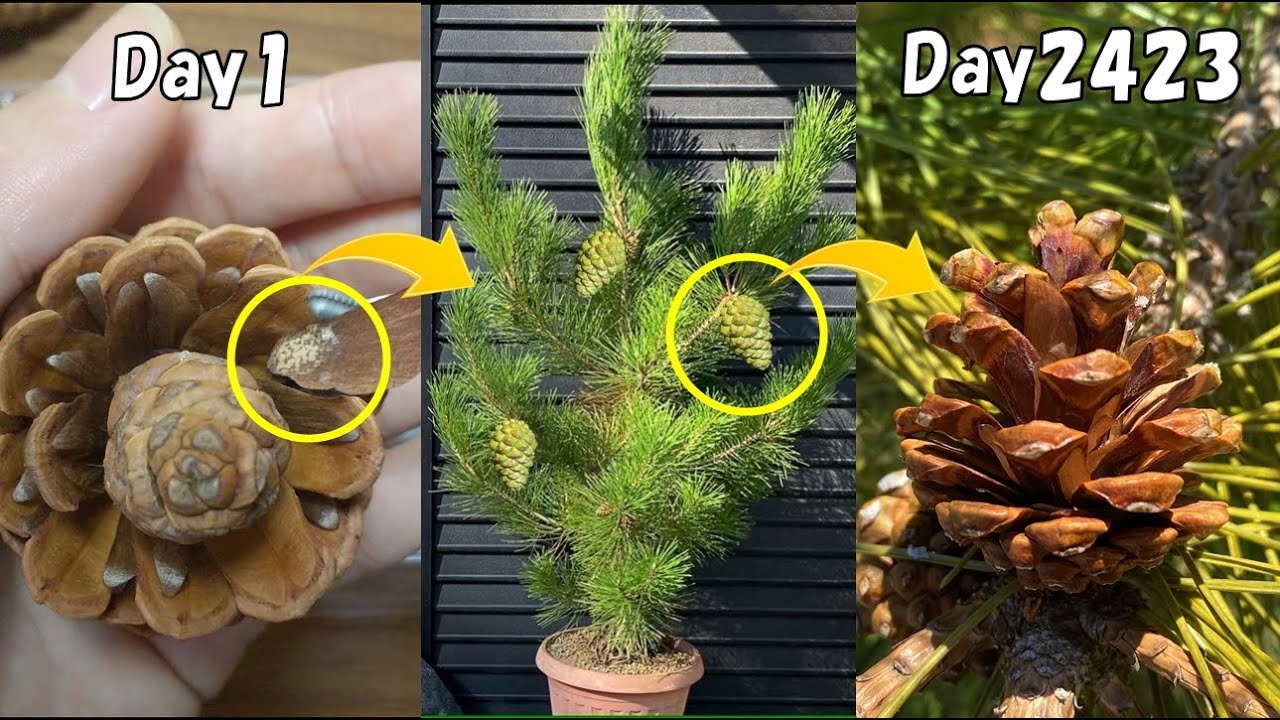
These female cones look much more like what you imagine when you think of a "pine cone ". However, at the time when they're receiving pollen, they're much smaller and more closed up. Inside these nearly completely enclosed cones are structures called ovules, which are ready to receive pollen.
Pollen drifting through the air randomly finds its way inside the female cone through small openings. After the pollen is received, the female cone closes completely while the sperm produced by the pollen joins with the ovule. This is called fertilization and it will result in a seed.
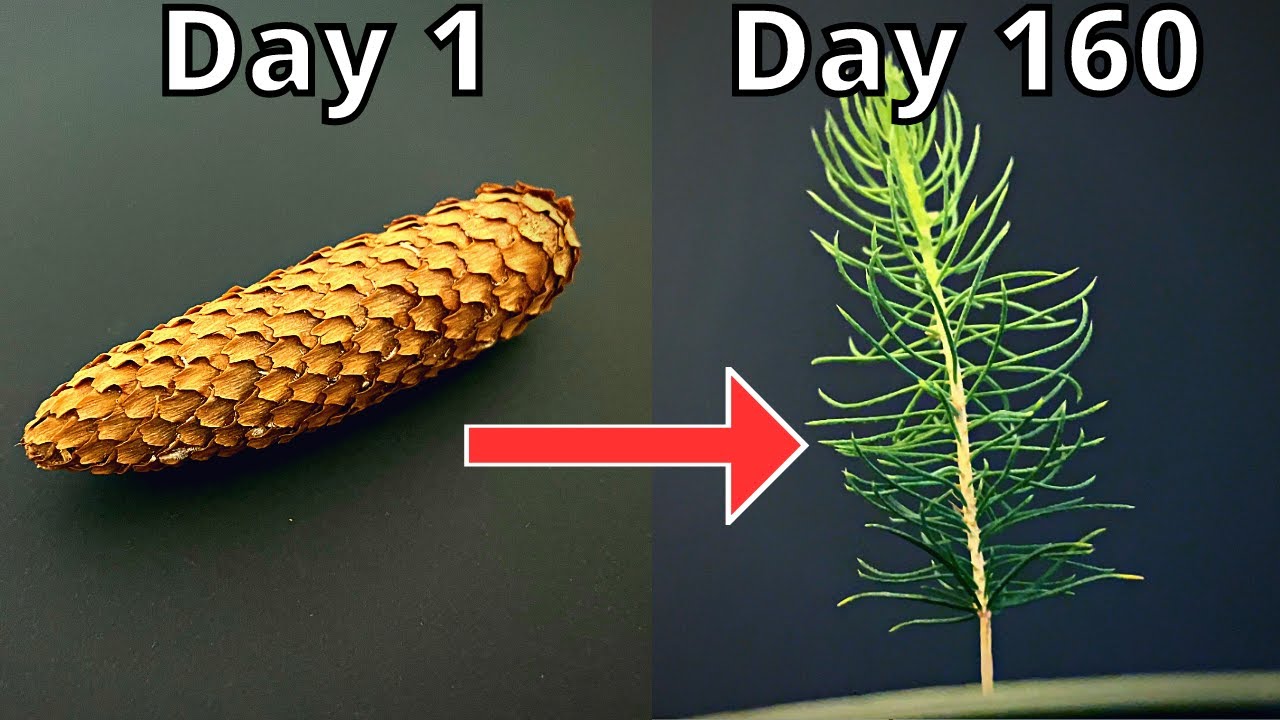
The cone stays closed to protect the new seed inside during its development, a process that takes two to three years. During this time, the cone grows in size but stays firmly closed. You might notice female cones of different ages all on the same tree!
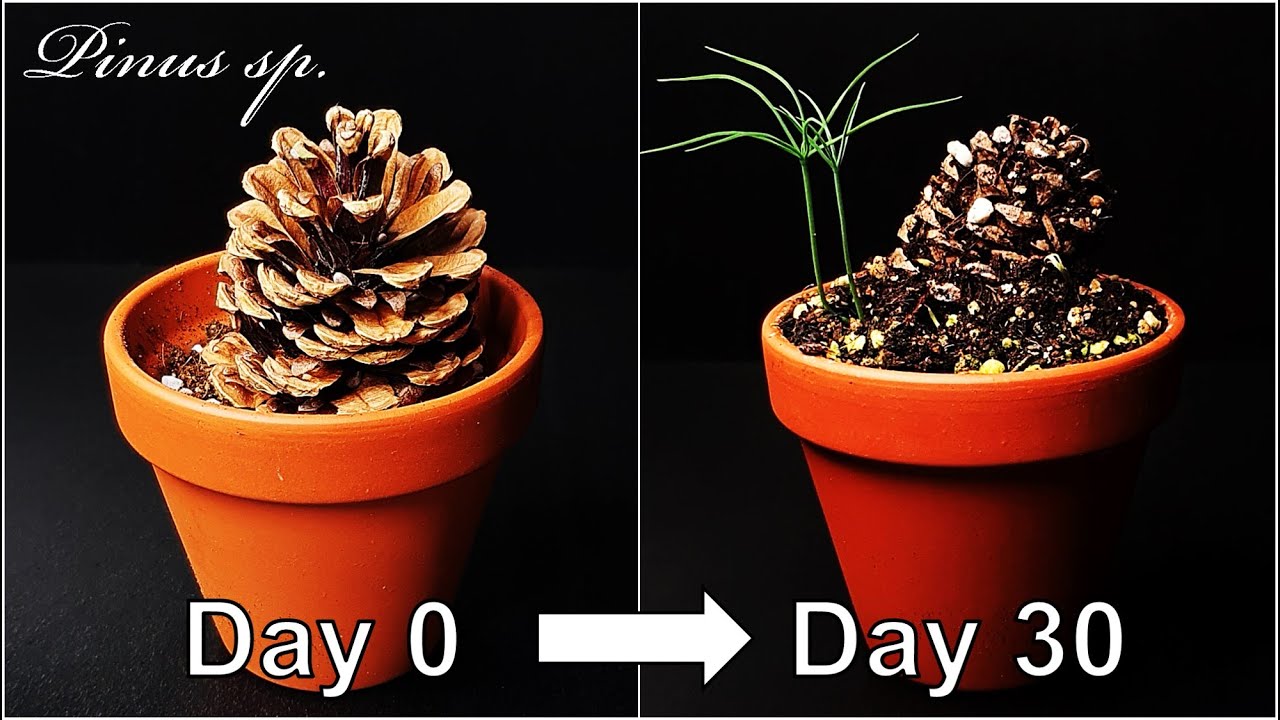
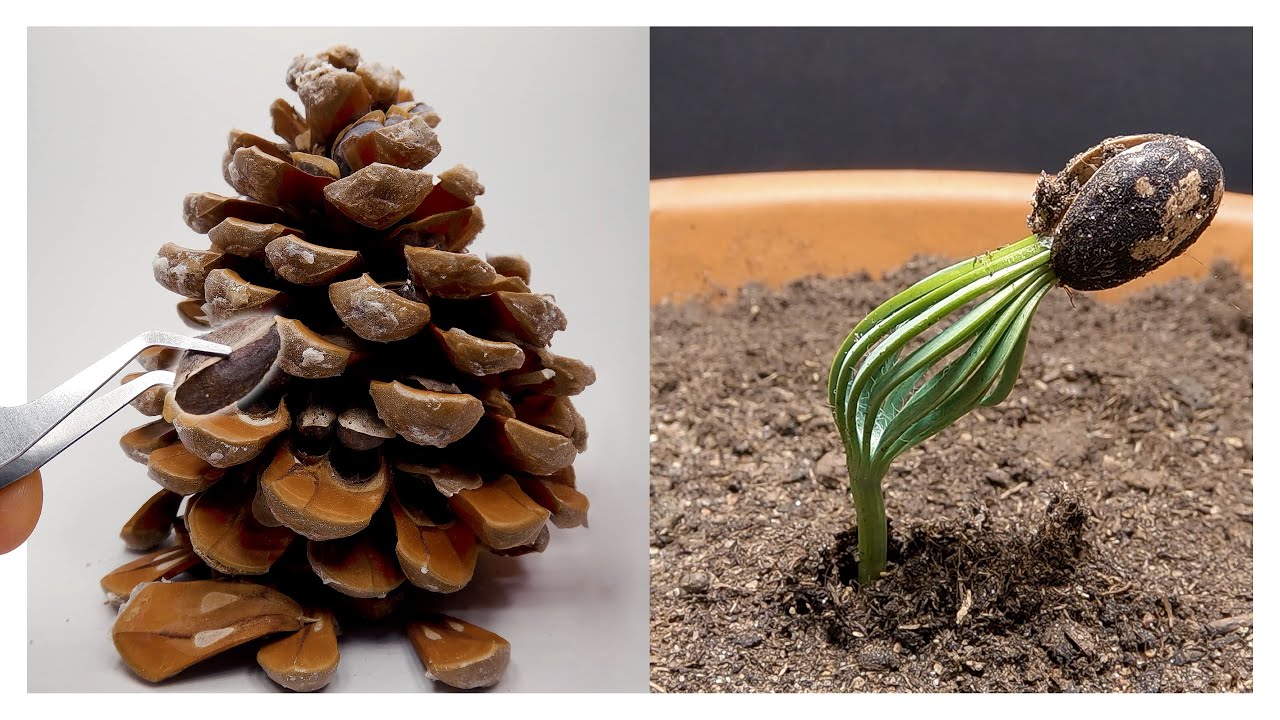
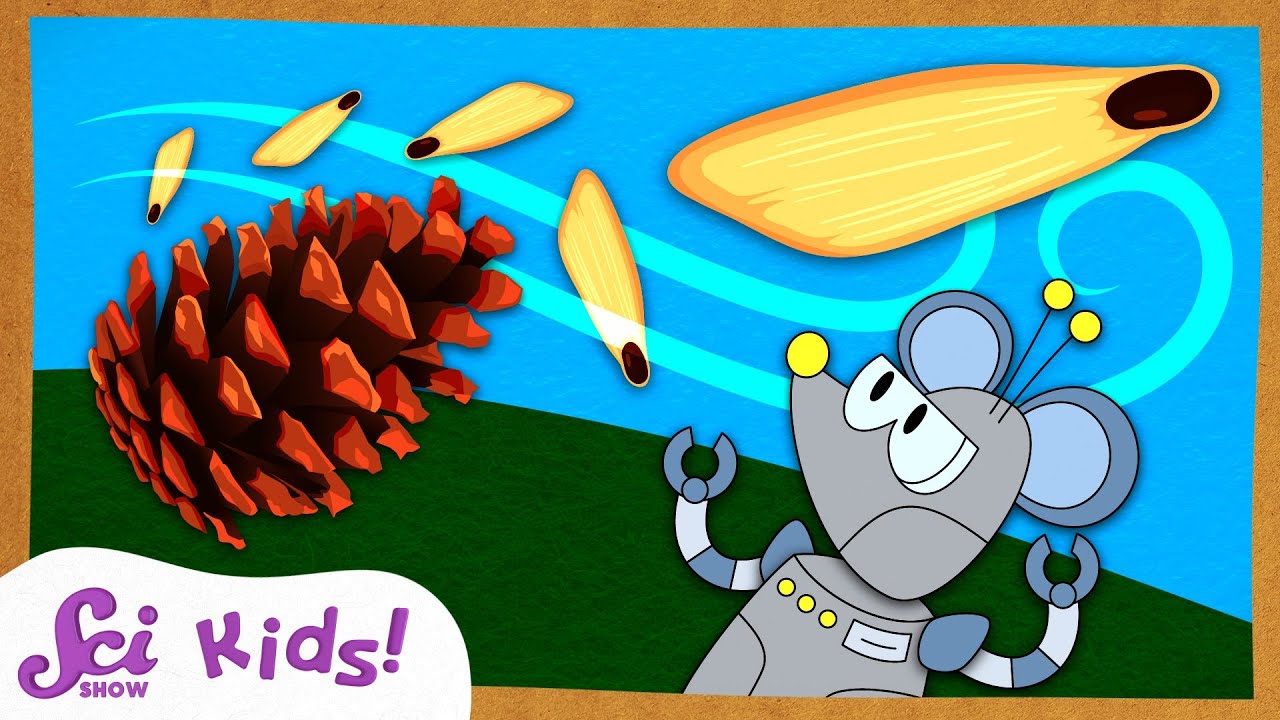
When the seeds inside are fully mature, the cone opens up to release the seeds. They can be dispersed by wind or animals like birds or squirrels, who enjoy eating them but may drop a few in the process. And there's one more cool thing that pine cones do!
Female cones open only when the weather is convenient for seed dispersal. During wet, rainy weather, female cones close up to protect the seeds inside. You've probably seen this while walking outside after rain.
All the pine cones are closed but once they dry out, they open up again. You can try this experiment at home! Just take an open, mature female cone and place it into a bowl filled with water.
Watch the scales slowly close up, as the cone takes on the moisture. That's the protecting mechanism in action! Let us know in the comments below if you try this experiment and we'll see you in the next video!