so we we have been doing this for about for almost a decade um we've made about 100 million of them so far you know it sounds like a big number uh but if you compare that to the number of atoms in your body it's it's really minuscule um and if we if we if we could get get them all together and just annihilate them then we could we could you know light a laser pointer for about a second okay so and if you took all of the antimatter that's been created so far by man-made machines
it you know you could annihilate it on your finger and it'd be equivalent of maybe lighting a match on your finger okay so at the moment it's really not a problem this this was a picture of our group meeting last year in vancouver and you can see me hiding in the back there so this i just want to give you some feeling for in the movie the the trap looks that the the the bottle looks like it's about this big and that turns out to be actually pretty much close to what it really is um
this is on the the picture there is is is my collaborators uh uh makoto is from from triumph vancouver and richard is a student in calgary uh then there's carlos a brazilian and there's an american colleague uh what's his name again ben and that shows the size of the trap there he's holding onto it there um on the right is is just a picture of showing what the trap is and what we do is we bring in anti-protons that we get from cern we do this at cern because there's only two places in the world
we can actually get antiprotons cern and fermilab and then we get we get positrons anti-electrons from a from a sodium iodine a sodium source which is radioactive then we bring them together and try and make what we do is we we make clouds of of anti-electrons and clouds of antiprotons and then we try and coax them together to to try and make atoms and it's actually an incredibly uh difficult thing to do i thought it was going to be simple it's not at all now dirac was an amazing character he won the nobel prize for
physics in 1933 remember he was the one that predicted the existence of antimatter and he says that if we accept the view of complete symmetry between positive and negative electric charges we must regard it as rather an accident that the earth actually the universe contains a preponderance of negative electrons and positive protons it's quite possible for some of the stars the other way around that some of the stars could be made of negative protons and positive electrons as a matter of fact when we look at that picture again they that may all be antimatter for
all we know because in fact it will look exactly the same in terms of the light that it gives off because light itself as we saw light produced electron positron it didn't really care whether it was electron or a positron and so anti-atoms anti-stars anti-galaxies anti whatever would look exactly the same as far as we could tell and that's brings us to the moment of creation which of course is the big bang and and that's that's another mystery for physicists that most people probably don't think is a mystery at all and that is just as
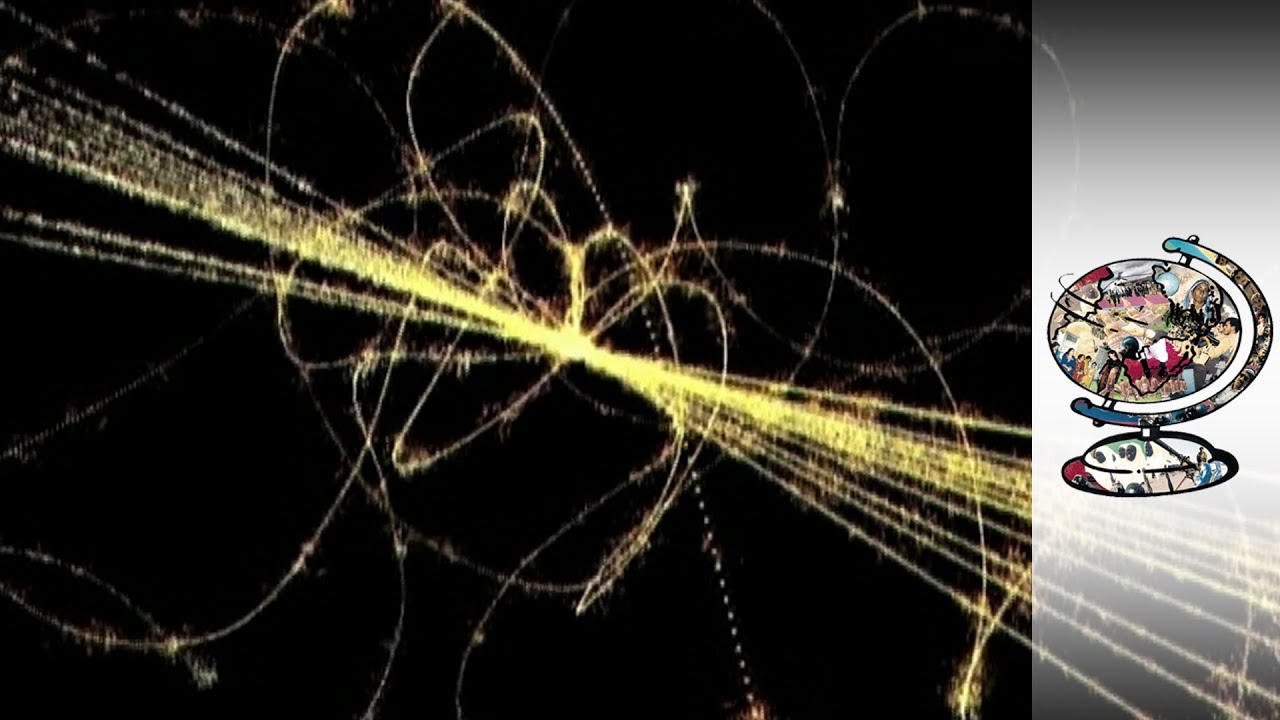
we saw that a photon produced an electron and a positron the big bang was neutral in everything and so the big bang produced just as many positrons as it did electrons it produced just as many protons as it did antiprotons it produced just as many particles as antiparticles and you might you might just say well okay obviously the big bang was wrong you know i mean you look around the world and you don't see any antimatter so obviously the big bang picture's wrong but in fact the big bang picture predicts quite a number of things
which which we observe so we believe it's right and so the one of the big questions in in science is is what happened to all that antimatter i mean it's not like you know you could just you know take an exit door out of the universe i mean where'd it go um as i said 14 billion years ago we started off with equal amounts and then at some point there was just a little bit more matter than antimatter as a matter of fact for every 10 billion antimatter particles there was 10 billion in one particle
and so the 10 billion and the 10 billion annihilated leaving one and the the reason that we know that fact actually is because if you look at the number of particles in the universe compared to the number of light particles there's 10 billion times as many light particles okay and they come from annihilation so that's not just you know like that number isn't just picked out of a hat it's an experimental measured number so that's one of the great challenges of physics and the question is is that we know that the answer lies in in
some some very subtle difference between matter and antimatter and the reason we're doing anti-hydrogen research is because the most precisely measured system in science is hydrogen it's the simplest and we can predict it incredibly precisely and so if we can make measurements on anti-hydrogen the same we make on hydrogen and compare them then we can see if there's some little slight difference and so that's the idea and the idea is to is to zap them with lasers and then they they emit light and we measure that light very precisely and we just see oh is
it is it is the light coming from antihydrogen slightly different than light coming from hydrogen okay we know it's not a lot different we know that right now that's the idea another kind of interesting funky idea is is is we don't really know a lot about gravity with respect to antimatter i mean for example you know we know perfectly well that the the apple will fall to the earth and we we're pretty sure that the anti-apple will fall to the anti-earth exactly the same way what we actually don't know though is whether an anti-apple will
fall to the earth whether an anti-apple will be repelled by the earth that's that's actually an experimental question and we don't know the answer and and it's actually an extremely difficult measurement to make and that's because gravity is such a such a weak force but that's another experiment we're going to try and do there's a lot of fun you can have with antimatter let me just quickly go through a couple other big questions that we're looking at one is that it was a bit of a shock in the last five about five years to discover
that most of the universe is actually not made of matter it's made of this stuff that's given very sort of spooky names of dark matter and dark energy and we don't know anything about either one of those and so it's kind of a spooky thing that 95 percent of the universe is made of stuff that we have no idea what it is but as an experimental physicist that's the challenge can we find out what it is um dark matter is called dark because it doesn't give off light it's like a black hole um but we
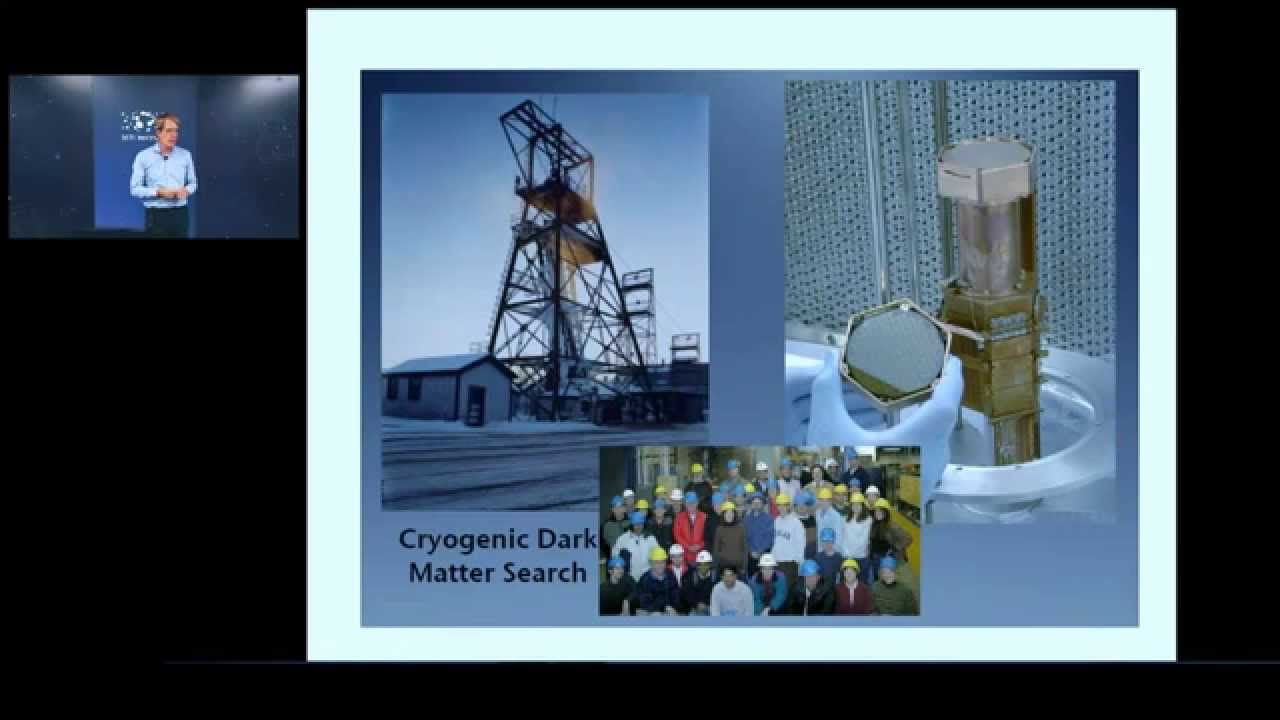
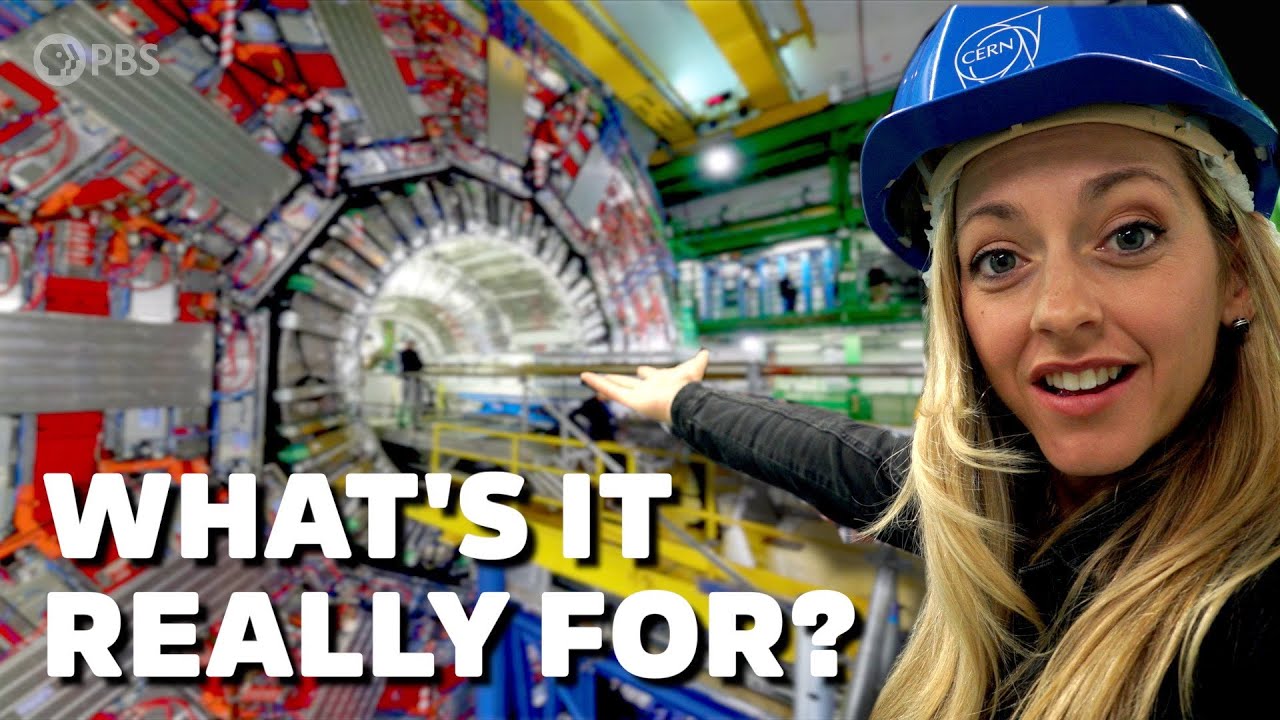
know it's there we actually know a fair bit about it in some senses except exactly what is it we don't know and we're doing we're searching for it as usual um in on earth in experiments in in satellites i just put up here snow lab which is the sudbury neutrino observatory they've expanded to now have a number of experiments there when some of them are looking for a dark matter we'd like to make dark matter and the collider the lhc is a is the perfect place to make it actually uh dark energy is even even
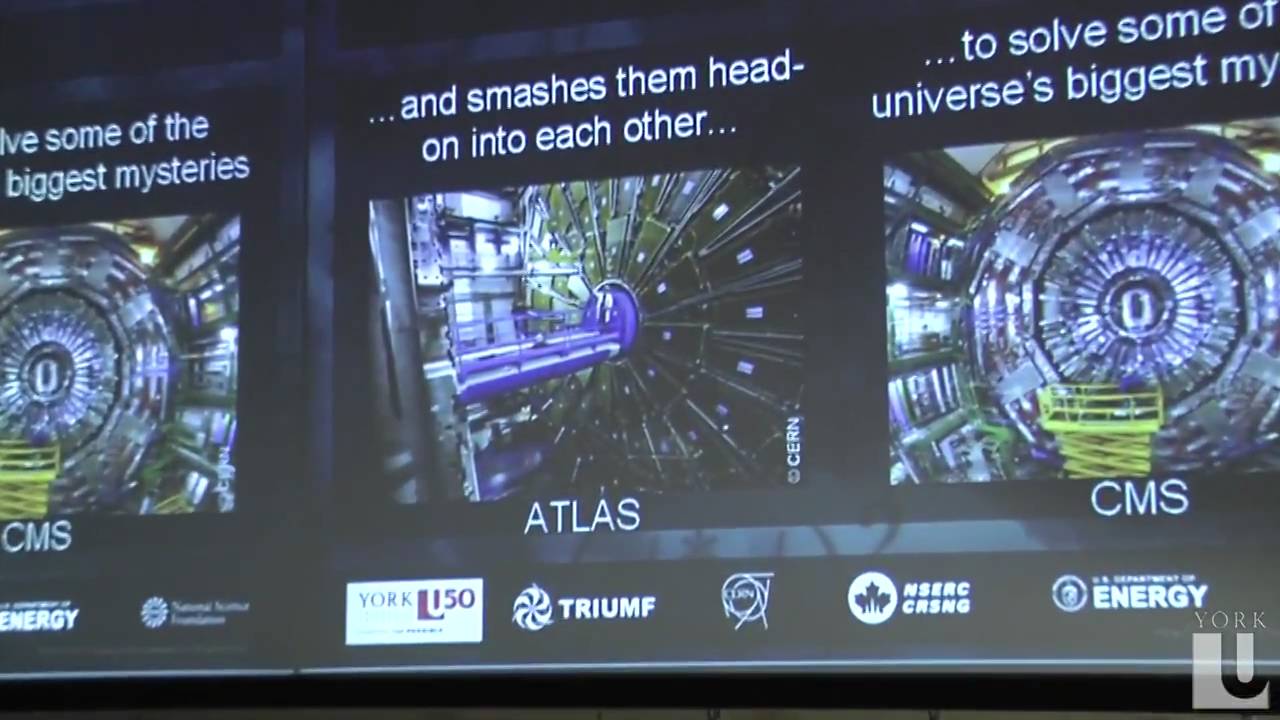
even weirder having a clue um some sense we don't even know where to start and just to finish off just the the people here at the university that are doing research on on antimatter includes my colleague wendy taylor who works on atlas the experiment at the lhc um eric hessels and cody story who work on uh a-trap which is an anti-hydrogen trapping experiment myself i work on alpha which is an anti-hydrogen trapping experiment and then we also have a bunch of theorists who you know try and tell us what's really going to happen if you
want more information there is a number of places that you can you can look to to get more information or else you can just ask me right now thank you