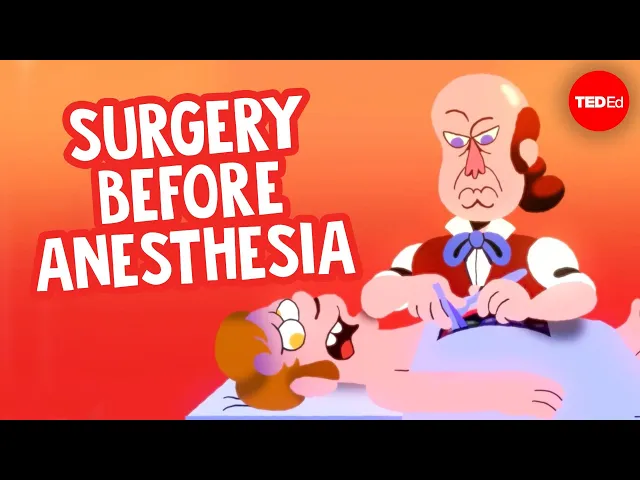
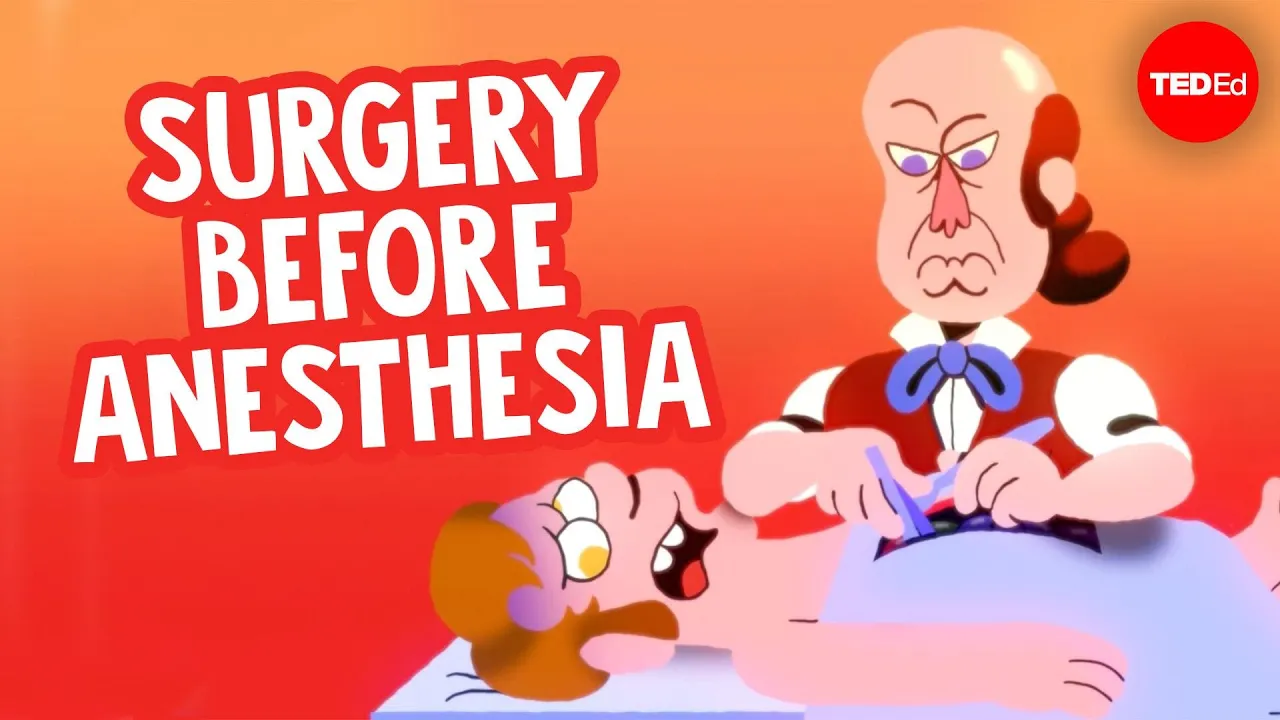
With medical students restraining the patient and onlookers eagerly awaiting, Scottish surgeon Robert Liston poised himself to begin. In quick succession, he cut his patient’s flesh, sawed through their tibia and fibula and, within just a few minutes, the amputation was complete. It was the 1830s and Liston was renowned for his surgical speed.
This was important because, before anesthesia was widely used, patients had to consciously endure every moment of surgery. The quest for anesthetics that could induce unconsciousness and enable more meticulous surgeries launched long before Liston. Around 200 CE, Chinese physician Hua Tuo described mixing alcohol with a powder of various ingredients to anesthetize patients.
And 13th century Arab surgeon Ibn al-Quff described patients taking anesthetics, likely inhaling drugs like cannabis, opium, and mandrake, from saturated sponges. By the end of the 1700s, many scientists were pondering chemistry’s medical applications. This led to a profusion of anesthetic advancements involving three main players: nitrous oxide, ether, and chloroform.
In 1799, English chemist Humphry Davy began experimenting with nitrous oxide, or laughing gas— inhaling it himself and observing its effects on friends. Davy noted that its pain-relieving abilities might make it useful for surgical operations— but it would be decades before that happened. This was, at least in part, because some surgeons and patients were skeptical of the effectiveness and safety of anesthetic drugs.
In 1804, Japanese surgeon Seishū Hanaoka successfully removed a breast tumor from a patient anesthetized with a mix of medicinal herbs. But the news stayed in Japan indefinitely. Eventually, ether started garnering medical attention.
It was first formulated centuries before then came to be used recreationally. During the so-called “ether frolics” of the early 1800s, an American physician noted that the fall he suffered while using ether was painless. In 1842, he etherized a patient and successfully removed a tumor from his neck.
In the meantime, dentists finally began recognizing nitrous oxide’s promise. But, in 1845, when an American dentist attempted a public tooth extraction on someone anesthetized with nitrous oxide, he apparently encountered a setback when his patient screamed. It was probably just an insufficient dose— but it was a bad publicity moment for the drug.
Meanwhile, dentists refined ether for tooth extractions. And, in October 1846, an American dentist administered ether to a patient, and a surgeon removed the man’s neck tumor. Two months later, Liston himself performed an upper leg amputation on an etherized patient, who reportedly regained consciousness minutes after and asked when the procedure would begin.
Further ether-enabled successes followed from India, Russia, and beyond. But ether had issues, including unpleasant side effects. Scottish obstetrician James Simpson heard about an alternative anesthetic called chloroform.
And, in 1847, he and two colleagues decided to try some themselves and promptly passed out. Soon after, Simpson administered chloroform to one of his patients during childbirth. It quickly gained popularity because it was fast-acting and thought to be side-effect-free— though we now know it’s harmful and probably carcinogenic.
Because anesthetics weren’t yet fully understood, they sometimes had lethal consequences. And some doctors held sexist and racist beliefs that dictated the amount of anesthesia they’d provide, if any at all. American obstetrician Charles Meigs argued that the pain of childbirth was a form of divine suffering and was skeptical that doctors should interfere with it.
Throughout the 1840s, American physician James Marion Sims conducted experimental gynecological surgeries without pain relief, primarily upon enslaved Black women. By the late 19th century, those who could access anesthetics were undergoing increasingly complex operations, including some that were previously impossible. Chloroform came to be understood as a riskier, more toxic option, and fell out of favor by the early 1900s.
Alongside newer drugs, ether and nitrous oxide are still used today— but in modified formulations that are safer and produce fewer side effects, while doctors closely monitor the patient’s state. Thanks to these advances, speed is not always of the essence and, instead of acute agony, surgery can feel like just a dream.