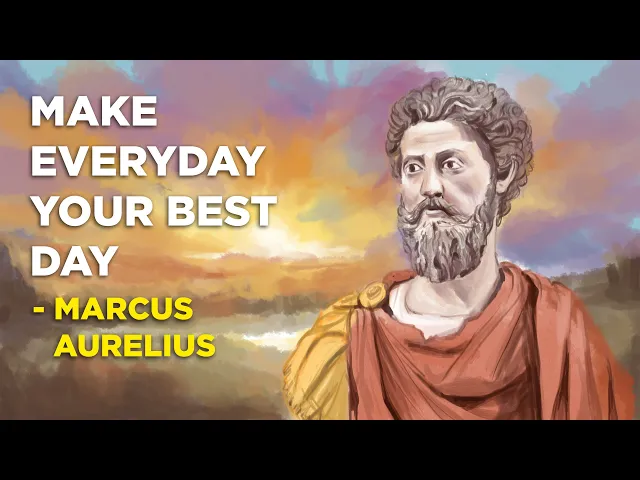
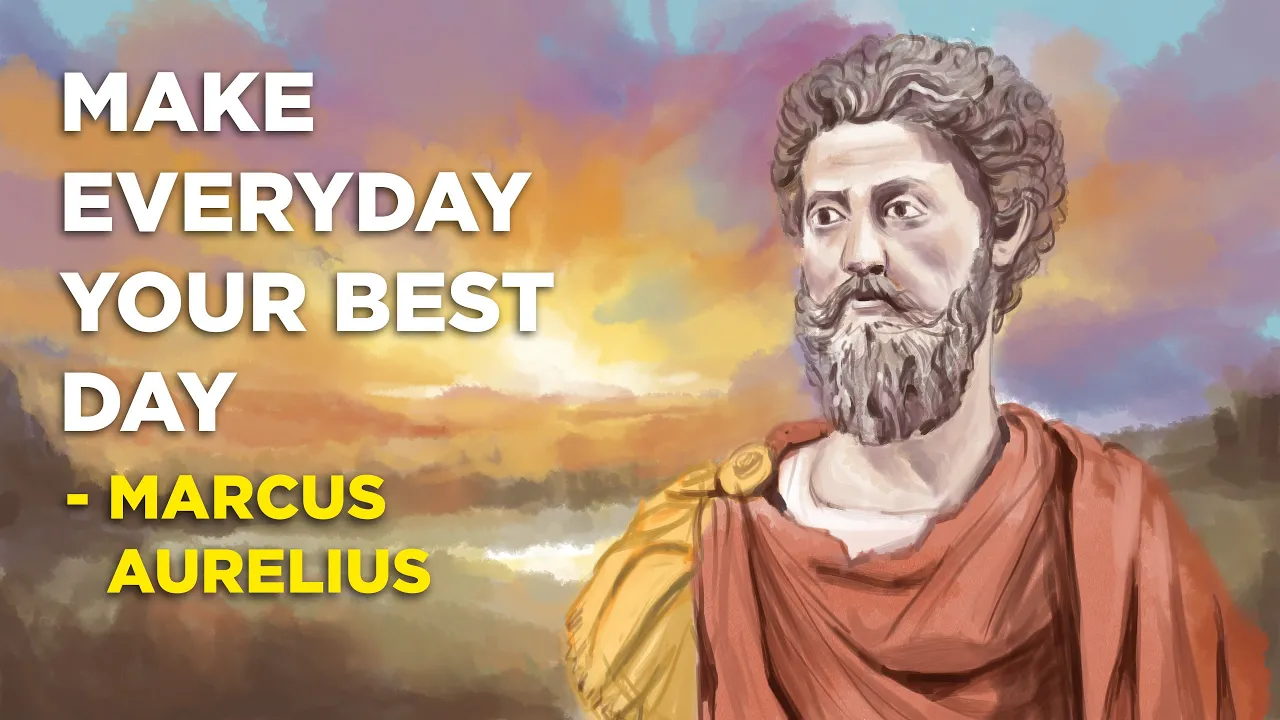
Marcus Aurelius says “Waste no more time arguing what a good man should be. Be one. ” Marcus Aurelius was a Roman emperor who lived from 121 to 180 AD and despite being an emperor, Aurelius's contributions to philosophy, particularly Stoicism, have earned him recognition throughout history.
Stoicism is an ancient Greek philosophy that emphasizes personal ethics and self-improvement. In his famous work "Meditations," Aurelius shares his personal reflections on various aspects of life, offering insights into his daily routine and practices. Aurelius believed that every day is an opportunity to live life to the fullest.
He recognized the brevity of life and encouraged people to make the most of every moment. His daily routine, as outlined in his personal writings, offers valuable insights into achieving personal growth, inner peace, and fulfillment. His writings have become a source of inspiration for many seeking to improve their lives and make every day their best day.
Which is why in this video, we will discuss six ways to make each day the best day of our life by following the routine of Marcus Aurelius. By implementing his practices, we can strive towards a more fulfilling and meaningful life. Make the most of your mornings Marcus Aurelius says "At dawn, when you have trouble getting out of bed, tell yourself: 'I have to go to work - as a human being.
What do I have to complain of, if I'm going to do what I was born for - the things I was brought into the world to do? Or is this what I was created for? To huddle under the blankets and stay warm?
'" In his Meditations, Aurelius acknowledges his struggle with getting out of bed in the morning, but he engages in an internal dialogue where he reminds himself that all of nature is constantly at work - from the plants, to the birds, to the bees - fulfilling their innate purpose to contribute to the world's evolution. As human beings, it is our duty to do the same, regardless of our social status. Aurelius believed that starting each day with a structured routine could help one achieve focus, productivity, and emotional stability and failing to fulfill this obligation goes against the natural order of things.
His morning routine consisted of four steps, which are still applicable in our modern world: Appreciating Your Life The first step in Aurelius' morning routine was to appreciate the blessings in his life. He believed that taking a few moments to reflect on what he was grateful for would help him maintain a positive outlook on life. Aurelius recognized that life is fleeting, and we should cherish every moment we have.
In our modern world, we can practice gratitude by taking a few minutes each morning to reflect on the things we are thankful for. This could be as simple as appreciating a good night's sleep or the ability to spend time with loved ones. By focusing on the positive aspects of our lives, we can start the day on a positive note and set the tone for a productive day ahead.
Negative Visualization Negative visualization involves imagining worst-case scenarios and mentally preparing oneself for them. Aurelius believed that by preparing for the worst, he could better appreciate the good in his life and avoid being overwhelmed by negative emotions in difficult situations. In our modern-day world, negative visualization can help us prepare for challenges and adversity.
By mentally preparing for worst-case scenarios, we can better cope with unexpected events and reduce anxiety and stress. This technique can also help us appreciate the good in our lives and avoid taking things for granted. Voluntary Hardship Voluntary hardship involves deliberately exposing oneself to discomfort and challenges to build resilience and self-discipline.
Aurelius believed that by embracing difficulty, he could become stronger and better prepared to face adversity. We can practice voluntary hardship by taking on challenges that push us outside of our comfort zones. This could be as simple as taking cold showers or waking up early to exercise.
By embracing discomfort and challenges, we can build resilience and self-discipline, which can help us succeed in all areas of our lives. Start Your Most Important Task of the Day The fourth and final step in Aurelius' morning routine was to start his most important task of the day. Aurelius recognized that the early morning hours were the most productive and focused time of the day.
He believed that by tackling the most important task of the day first, he could ensure that it was completed efficiently and effectively. Starting our most important task of the day first can help us stay focused and productive. By prioritizing our most important task and completing it early in the day, we can free up mental energy and avoid procrastination.
This can help us accomplish more and feel more accomplished at the end of the day. By following these simple steps, we can improve our daily lives and achieve greater success in all areas. Stay focused In the words of Marcus Aurelius “Concentrate every minute like a Roman - like a man - on doing what's in front of you with precise and genuine seriousness, tenderly, willingly, with justice.
" Aurelius recognized that distractions and interruptions are a natural part of life, but encouraged individuals to develop the ability to stay focused on the task at hand in the face of these challenges. He encouraged individuals to approach each task with a sense of dedication and seriousness, concentrating every minute on the task at hand, with precision and genuine commitment. By doing so, one could avoid becoming sidetracked by distractions, unwanted thoughts or concerns, and achieve greater productivity and success.
In today's fast-paced world, where distractions are everywhere, it's easy to become sidetracked by short-term pleasures and diversions. From social media notifications and emails to the constant bombardment of information and entertainment, our minds are forever being pulled in different directions. To overcome this challenge, it's important to develop the self-discipline and mindfulness needed to stay focused on what truly matters.
This can be achieved through a variety of strategies, such as by making a to-do list for the day and prioritizing your tasks based on their importance. This will help you stay focused on the most important tasks and avoid becoming distracted by less important ones. Once you prioritize the tasks, you can set specific, achievable goals for each task, and focus on one goal at a time.
This will help you stay motivated and avoid becoming overwhelmed. You can turn off your phone, close unnecessary tabs on your computer, and create a quiet environment that minimizes distractions. Throughout this process, try to remain fully present in the moment while working on your task.
Be aware of your thoughts and emotions, and gently redirect your attention back to the task at hand if you become distracted. By practicing these tips, you can develop the sense of dedication and seriousness that Marcus Aurelius believed was essential for staying focused on the task at hand. Keep your mind in check Marcus Aurelius tells us “You have power over your mind - not outside events.
Realize this, and you will find strength. ” Aurelius himself kept his mind in check with his Meditations, which were essentially his way of commanding his mind. Throughout the meditations, we read things like: “The happiness of your life depends upon the quality of your thoughts: therefore, guard accordingly, and take care that you entertain no notion unsuitable to virtue and reasonable nature.
” In essence, these are the words of a man writing to remind himself to keep guard of his mind. Learning to harness the power of the mind is key, rather than escaping from it or obeying all of its whims. The mind can be thought of as a chaotic and powerful dragon that can either consume us or be under our control.
The best option is to learn how to tame this dragon, bring order to it, and harness its power through mindfulness training. Not being mindful can lead to negative thoughts, stress, anxiety, depression, and self-destructive behaviors. Additionally, we may miss out on experiencing the simple joys of life and forming meaningful connections with others, which is detrimental because we're social by nature.
According to stoicism, mindfulness training is one of life's priorities. By focusing on the present moment and letting go of distractions and worries, we can learn to be more present and attentive in our daily lives, make more intentional choices about how we spend our time and energy, and achieve a deeper sense of purpose. Mindfulness can take many forms, including focusing on your breath, journaling to examine the contents of your mind, practicing daily activities with awareness, and incorporating movement such as yoga, tai chi, or dancing to help center the mind and promote relaxation.
Engaging in artistic activities like painting, writing, or music can also help cultivate mindfulness. The ultimate goal of all these practices is to achieve a level of mindfulness that allows you to gain greater control over your thoughts and emotions and develop deeper insights into yourself. Through mindfulness practice, we can increase our awareness of our thoughts and emotions, identify triggers that lead to unhealthy behaviors, and develop healthier coping mechanisms to manage them.
For example, if you are trying to quit smoking, mindfulness can help you recognize the passing thought or feeling of the urge to smoke and acknowledge it without acting on it. You can observe the thought, acknowledge it, and let it go, rather than getting caught up in it and giving in to the urge. Mindfulness can also help you identify triggers that lead to smoking, such as stress or social situations, and develop healthier coping mechanisms to manage them.
By taking responsibility for your own thoughts and making an effort to correct them, you can overcome your addiction to smoking and lead a healthier, happier life. Accept Your Fate and Love It According to Marcus Aurelius “Accept the things to which fate binds you (. .
. ) but do so with all your heart. ” Marcus believed in the concept of “dichotomy of control” and "amor fati".
The dichotomy of control refers to the distinction between what we can control and what we cannot. There are many things in life that are beyond our control, such as the weather, traffic issues, or the actions of other people. However, what we can control is our thoughts, words, and actions.
By focusing on what we can control and letting go of what we cannot, we can reduce our stress and anxiety levels and increase our sense of empowerment. For example, if you are going on a date and you are feeling nervous, you can focus on what you can control. You can choose what to wear, how to style your hair, and what to say.
You can control your thoughts and emotions by reframing your nervousness as excitement and focusing on having a good time. On the other hand, you cannot control how the other person will feel about you, whether they will find you attractive or interesting, or whether they will want to see you again. By accepting this lack of control, you can let go of your expectations and simply enjoy the experience.
Amor fati, or "lover of fate," is the idea that we should accept and embrace our fate, whatever it may be. This means that we should not only accept the things that are outside of our control, but we should actively love them as a part of our destiny. By embracing our fate, we can find peace and contentment in the present moment, rather than worrying about the future or regretting the past.
For example, if you experience rejection in your dating life, you can choose to embrace it as part of your fate. Instead of dwelling on your disappointment or feeling like a failure, you can choose to see the rejection as a learning experience. You can reflect on what you can control, such as improving your communication skills or expanding your social circle, and take positive steps to improve yourself.
By embracing your fate and taking responsibility for your own growth, you can find meaning and purpose in your experiences. In summary, the concepts of the dichotomy of control and amor fati can have a significant impact on our lives if we apply them properly. By focusing our attention on what is within our control, we can take positive action toward our goals and live a more fulfilling life.
At the same time, by accepting and embracing external events as part of our fate, we can find peace and contentment in the present moment. It's important to remember that while we can't control everything that happens to us, we can control how we respond to it. By adopting these principles, we can learn to live with a greater sense of purpose and tranquility, even in the face of adversity.
5. Review your day Marcus Aurelius once wrote “These are the characteristics of the rational soul: self-awareness, self-examination, and self- determination. It reaps its own harvest.
. . .
It succeeds in its own purpose . . .
” In his book "Meditations," Marcus Aurelius recommended a practice known as "reviewing your day" as a means of self-reflection and self-improvement. This practice involves taking a few minutes at the end of each day to reflect on your actions, thoughts, and emotions throughout the day, and to identify areas where you could have acted more virtuously. Reviewing your day can be an effective way to gain greater self-awareness and cultivate a more reflective and intentional approach to living.
You can start practicing this by setting aside a few minutes each evening to reflect on your day. This could be before you go to bed, or at some other quiet time when you can focus without distractions. Begin by asking yourself some open-ended questions about your day.
For example, you might ask: What did I do well today? What could I have done better? How did I treat others today?
What emotions did I experience today, and how did I handle them? Did I act in accordance with my values today? After answering the questions, take a few minutes to reflect on your responses and identify areas where you could have acted more virtuously or handled situations more effectively.
While being honest with yourself, also approach the exercise with compassion and understanding. For example, let's say you had a disagreement with a colleague at work during the day, and you felt like you didn't handle it as well as you could have. During your evening reflection, you might identify this as an area where you could have acted more virtuously.
You might commit to approaching future disagreements with greater calm and objectivity, and to listening more actively to your colleague's perspective. By implementing these actions in the days ahead, you can improve your communication skills and strengthen your working relationships. Through daily reflection, Aurelius believed that we can also develop a more positive outlook on life, as we become more aware of the good things that happen each day, and learn to appreciate them.
This can help us to make every day our best day, by focusing on the positive and working to improve ourselves in small, incremental ways. 6. Practice Memento Mori In our final quote from Marcus Aurelius for this video, he says, “Do not act as if you were going to live ten thousand years.
Death hangs over you. While you live, while it is in your power, be good. ” Aurelius believed that death is just as important as birth, and he held the view that we should recognize the inevitability of death and appreciate the value of life in light of that awareness.
He frequently contemplated death in his writings, but never in a gloomy manner. For Marcus, "Memento Mori," which is Latin for "Remember that you will die," was a celebration of life. This phrase originated in ancient Rome, where it was used as a reminder for military leaders to make the most of their time in power and avoid excessive pride, greed, and ambition.
According to ancient Roman tradition, a general who returned victorious had to parade through the streets, joined by a slave who had the sole task of reminding him that his triumph was not permanent. The slave would whisper "Memento mori" into the general's ear, serving as a reminder of his mortality. Over time, the phrase has served as a reminder of the fleeting nature of life, encouraging people to cherish each moment and live with purpose.
The idea is to make a meaningful impact in the world and not waste precious time on things that don't matter. To Marcus Aurelius, “It is not death that a man should fear, but he should fear never beginning to live. ” However, in today's fast-paced and constantly connected world, it can be easy to forget about the inevitability of death and the importance of living each day to the fullest.
People often get caught up in the grind of daily life and forget to take time to reflect and appreciate what they have. The focus is often on acquiring material possessions and achieving success, rather than leading a fulfilling and meaningful life. By incorporating the principles of "Memento Mori" into our lives, we can cultivate a more purposeful and fulfilling existence, one that is not driven by fear of death, but rather, a celebration of life.
To cultivate this attitude, you can daily meditate on your death by finding a quiet place where you can sit comfortably and without distraction. Then, close your eyes and take a few deep breaths to relax your body and mind. Reflect on the fact that death is inevitable and that you will die, one day.
Try to visualize yourself on your deathbed, and contemplate the feelings and thoughts you might have in that moment. Consider the brevity of life and how precious each moment is. Think about the things you would regret having not done if you were to die tomorrow.
For example, Imagine yourself in your thirties, obsessed with climbing the corporate ladder. You now start meditating on your own death and you confront the transience of life and reevaluate your priorities. Now you realized that success and material possessions were not the keys to happiness.
Following your realization, you decide to step back from your career and embrace new experiences, including marriage and fatherhood, which you think will bring new meaning to your life. By practicing meditation on death you learnt to live in the present moment and prioritize the things that truly mattered, like love, family, and personal growth. This change in perspective allows you to gain a newfound sense of purpose and fulfillment in life that contemplating death has now opened up for you.
Use this contemplation as motivation to live in accordance with your values and priorities, and to make the most of the time you have. Repeat this practice daily for a few minutes. And, over time, it will become easier to accept the reality of death and to live in the present moment with greater mindfulness and intentionality.
Remember that this practice is not meant to be morbid or depressing, but rather a way to cultivate a deeper appreciation for life and a greater sense of purpose and meaning. "Memento Mori" is essentially a call to live life to the fullest and embrace death with a happy smile. Meditating daily on your death can help you have better days by bringing a sense of perspective and appreciation for the present moment.
For Aurelius, death was the ultimate freedom for the spirit. Therefore, contemplating death in a manner that promotes a meaningful life is liberating to the spirit. If you enjoyed this video, please make sure to check out our full philosophies for life playlist and for more videos to help you find success and happiness using ancient philosophical wisdom, don’t forget to subscribe.
Thanks so much for watching.