To be entitled to copyright protection, something must be original. That term encompasses two distinct requirements. The first is independent creation.
If you copy your work from someone else, you can not assert a copyright in it. Suppose, for example, that you read a poem and like it. You memorize it, then you write it down verbatim.
Someone photocopies the piece of paper on which you have written down the poem. Do you have a copyright claim against the person who makes the photocopy? No.
The author who first created the poem might, but you don't. That's certainly true if the poem is recent and still covered by copyright. But what if the poem is old and no longer covered by copyright?
You still have no claim against the person who makes the photocopy, because your work is not original. Here's a more plausible example: Rodin's famous sculpture, "The Thinker," was created in 1902 -- and thus (as we will see) is no longer subject to copyright protection. Suppose that you make a perfect replica of The Thinker.
Do you have a copyright in your replica? In other words, if someone copies your replica, do you have a legal claim against the copyist? No.
The same principle applies -- certainly in the US and probably in other countries -- if you take a photograph of an old painting, like the Mona Lisa, trying to recreate the painting exactly. This is not a hypothetical example. A few years ago, there was a sharped-edged controversy between the National Portrait Gallery in England and one Derrick Coetzee, who uploaded to Wikipedia some 3000 high-resolution photos, taken by the Portrait Gallery, of old paintings in its collection.
Coetzee invoked this principle when resisting, successfully, the Gallery's copyright claims. Because the photos lacked originality, they were not shielded by copyright. As we will see later, the question becomes more complicated if your replica or painting of a public-domain work is not perfect -- in other words, if you have made changes to The Thinker or altered the colors of the Mona Lisa.
But if your replica is verbatim, you have no rights. So, to repeat, the first of the two requirements encompassed by the term originality is independent creation. The second requirement is creativity.
To be entitled to copyright protection, a work must embody a modest amount of creativity. Not much, but some. This is the more interesting and subtle of the meanings of originality, and we'll spend a fair amount of time exploring it.
Before doing so, however, we need to identify some related characteristics that are not required for copyright protection -- and consider why not. Once we have cleared away this underbrush, we'll return to the question of creativity. The first thing not encompassed by the Originality requirement is novelty.
To be protected in the United States, a work does not have to be new. In this respect, copyright law is very different from patent law. To be patentable, an invention must be new.
To be protected by copyright, a literary or artistic work need not. The classic statement of this principle in US law appears in the Sheldon case, decided by the Second Circuit Court of Appeals. Because Judge Hand's language is involuted, I'll put in up on the screen: Borrowed the work must indeed not be, for a plagiarist is not himself pro tanto an "author"; but if by some magic, a man who had never known it were to compose anew Keats's Ode on a Grecian Urn, he would be an "author," and, if he copyrighted it, others might not copy that poem, though they might of course copy Keats's.
In other words, if your creation is identical to an already existing work, but you are genuinely unaware of that existing work, your creation is original, and you get the benefit of copyright protection. Novelty is not necessary. To be sure, as Professor Paul Goldstein observes, lack of novelty, though not itself fatal, may sometimes be introduced in litigation to undermine other aspects of a plaintiff's case.
For example, it can be used to rebut a presumption that the plaintiff's work was independently created -- which, as we've seen, is required for copyright protection. Or a defendant can sometimes use the fact that the plaintiff's work is not novel to argue that the defendant did not copy the plaintiff's work, but instead copied the preexisting work. That's the import of the last clause in Judge Hand's statement -- "though they might of course copy Keats'.
" If true, that would get the defendant off the hook. The upshot is that, in practice, novelty helps a plaintiff, and lack of novelty can hurt. But strictly speaking, novelty is not required for copyright protection.
Another thing that is not required for copyright protection -- at least in the United States --is intent to be original. To get the benefit of copyright protection, it's not necessary that you, the author, try to create something of your own. It's only necessary that you do so.
The classic statement of this principle in US law comes in an opinion by Judge Jerome Frank in the 1951 Alfred Bell case, which held that, even if mezzotint engravings of old (public-domain) paintings differed from the originals only inadvertently, they were still copyrightable. "A copyist's bad eyesight or defective musculature, or a shock caused by a clap of thunder, may yield sufficiently distinguishable variations. Having hit upon such a variation unintentionally, the 'author' may adopt it as his and copyright it.
" As you might imagine, this issue doesn't arise often, and one can find some judicial opinions that seem to cast doubt upon it. But the principle expressed by Judge Hand is the canonical view in the United States. A third thing not required for copyright protection is that the work in question be artistic.
If your creation is bad art -- or not art at all -- you still get a copyright in it. The classic statement of this principle comes in the 1903 Bleistein case, which involved a copyright claim to 3 circus posters, one of which is shown on the screen. In some famous passages in the majority opinion in that case, Justice Holmes rejected the defendant's argument that these posters did not enjoy copyright protection because they did not constitute "fine art.
" In US law, Bleistein has come to stand for the principle sometimes referred to as "aesthetic neutrality. " When applying copyright law, the quality or artistic character of both the plaintiff"s work and the defendant's work are said to be irrelevant. A child's finger paintings are as deserving of copyright protection as the Mona Lisa.
Why? What might justify this stance of strict aesthetic neutrality? Defenders of this principle commonly make four arguments.
The first is that judges (or juries) who would be called upon to assess the merit of either the plaintiff's or the defendant's works, lack the expertise to do so. Justice Holmes emphasizes this point in Bleistein: "It would be a dangerous undertaking for persons trained only to the law to constitute themselves final judges of the worth of pictorial illustrations, outside of the narrowest and most obvious limits. At the one extreme some works of genius would be sure to miss appreciation.
Their very novelty would make them repulsive until the public had learned the new language in which their author spoke. It may be more than doubted, for instance, whether the etchings of Goya or the paintings of Manet would have been sure of protection when seen for the first time. At the other end, copyright would be denied to pictures which appealed to a public less educated than the judge.
" The second argument, latent in the last sentence of Holmes' passage, is fear of elitism -- worry that an upper class would use the opportunity to assess artistic quality to impose their tastes on the rest of the population. The third, related argument is fear of paternalism -- or what has come more recently to be called parentalism. This argument is tied to the political theory of liberalism, which continues to have considerable sway at least in western democratic societies.
The basic idea is that governments should not impose on their citizens any particular conception of the good -- or the good life in particular -- but rather should create conditions in which people are free to formulate and pursue their own conceptions of the good. One implication of that idea, it is sometimes argued, is that the law -- specifically copyright law -- should not promulgate a particular conception of what counts as worthy art. In the United States, this attitude finds expression in periodic campaigns to abolish the National Endowment for the Arts, which distributes government funds to artists.
Most other countries are less hostile to government support for the arts. The final argument in favor of the principle of aesthetic neutrality is that, to decide what constitutes good art, one needs to know what art is, and there's deep disagreement on that crucial question. As Professor Fred Yen has pointed out, at least three different meanings of art are in widespread circulation.
Formalism, exemplified by the work of Clive Bell, defines art as things capable of provoking in sensitive people the aesthetic emotion. Some objects have formal qualities that enable them to cause this reaction while others don't. Only the former count as art.
By contrast intentionalism, exemplified by the work of Monroe Beardsley, defines art as "something produced with the intention of giving it the capacity to satisfy the aesthetic interest. " So, for example, whether people moving in a circle are engaged in a form of art depends on the nature of their motivation. Their purpose might be religious (as in a ceremony), it might be political or economic (as in a picket line), or it might be artistic (as in the dance).
Only if their intention falls into the last category does their behavior constitute art. Finally, institutionalism, exemplified by the work of George Dickie, emphasizes the role of the "art world" -- ""[t]he broad social institution in which works of art have their place. " The members of this world include artists and viewers who participate in the traditional social practice of creating, presenting, and appreciating art.
Against this backdrop, "objects become art when someone who believes that he is a member of the art world invites others to view the object aesthetically. " In the simplest case, an object constitutes art if a museum chooses to display it. These 3 approaches -- formalism, intentionalism, and institutionalism -- are in obvious tension.
Some objects or activities qualify as art under one approach, but not under others. If aesthetic theorists cannot resolve this crucial question, surely it would be foolish for the law to attempt to do so. So those are the 4 arguments commonly deployed in support of the principal of aesthetic neutrality.
Lack of expertise, unease about elitism, hostility to governmental involvement in art, and uncertainty concerning what constitutes art in the first place. However, as we will see, the principle of aesthetic neutrality is frequently violated-tacitly and occasionally expressly-even in the United States, which purports to adhere to the principle most faithfully. Judges and juries find ways to favor plaintiffs who have created what they consider meritorious works, and to disfavor plaintiffs who have created what they consider bad or unimpressive material.
On the other side of the ledger, judges and juries find ways to penalize defendants whose work seems poor, and to give extra latitude to defendants whose work seems worthy of respect. Professor Yen and others argue that, if judges and juries are going to be making such judgments, they should do so expressly-and should be obliged to justify their judgments. This is a fairly fundamental issue, on which, as we will see, countries differ sharply.
By the end of the series of lectures, I hope you are in a position to form your own opinion concerning the scope and merits of the principle of aesthetic neutrality. Yet another characteristic not required for copyright protection is that a work be noncommercial. This is not quite as obvious as it might seem.
For example, Justice Harlan, in a dissenting opinion in the Bleistein case, suggested that advertisements will be produced in at least optimal quantities, regardless of whether they are protected by copyright. In other words, copyright protection for ads is unnecessary. Whatever the merits of Harlan's position, it has been rejected.
Today, advertisements definitely enjoy the protection of the copyright law. A final characteristic not required for copyright protection in the United States is that the content of a work be lawful. So, for example, it's now reasonably clear that, in the US, obscene, libelous, or fraudulent material enjoys copyright protection.
In this respect, US copyright law differs sharply from US trademark law, which denies protection to immoral or scandalous marks. Copyright law purports to have no such exclusions. Having listed the things that copyright does not require, let's now return to what it does require.
As I mentioned earlier, to satisfy the requirement of originality, a work must pass two tests: it must be independently created, and it must embody some degree of creativity. The more important and slippery of these tests relates to creativity. How much do you need?
In the United States, very little. In its 1991 decision in the Feist case, the Supreme Court put it this way: A work must possess "at least some minimal degree of creativity. To be sure, the requisite level of creativity is extremely low; even a slight amount will suffice.
The vast majority of works make the grade quite easily, as they possess some creative spark, 'no matter how crude, humble or obvious' it might be. " As the Court notes, it's pretty easy to pass the test formulated in this way. Take photographs, for example.
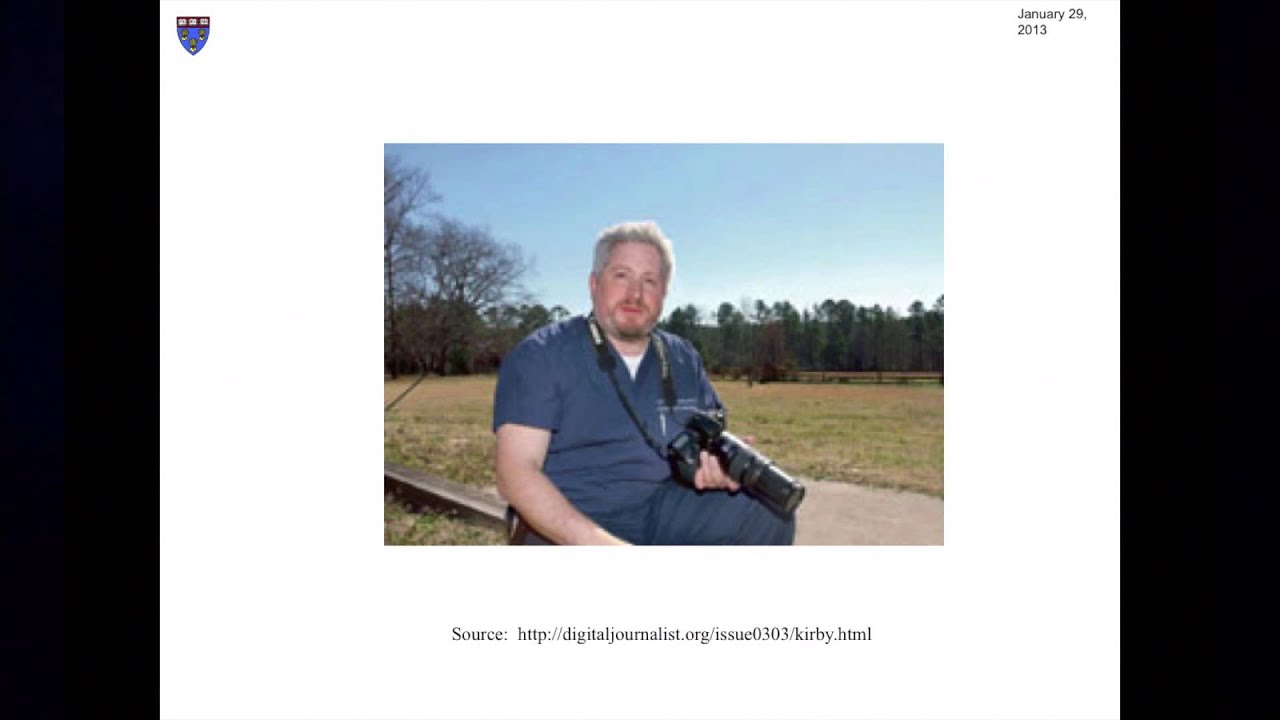
In 1884, the Supreme Court ruled that this staged studio photo of Oscar Wilde enjoyed copyright protection, emphasizing the many forms of creativity that went into setting up and producing the photo. Today, it's clear that nothing so elaborate is necessary. In the US, a snapshot taken with a modern automated point-and-shoot camera contains enough creativity to satisfy the Feist standard.
The modest creativity involved in deciding what to point the camera at, and when to activate the shutter, is enough. But some degree of creativity is necessary. The most important effect of this requirement is to withdraw copyright protection from works whose form is entirely conventional, even if they required lots of effort and/or skill to create.
At one point, courts in the US (and in other common-law countries) extended copyright protection to such works under the auspices of the so-called 'sweat-of-the-brow" theory. Since the 1991 Feist decision, that doctrine has been formally rejected by US courts. I hasten to add that, in practice, it's not so clear that a plaintiff's labor does him no good when seeking copyright protection.
Despite the formal repudiation of the sweat-of-the-brow theory, in borderline cases, some courts still pay attention to the effort that authors have invested in their works. Again, this is a general theme we'll return to in lecture #2, when we take up the Fairness and Personality Theories of Intellectual Property. Thus far, I have confined my attention to the interpretation of the originality requirement in the United States.
Now let's examine some other jurisdictions. Today, every country in the world treats originality as an essential requirement for copyright protection. But not all define "originality" the same way.
A few decades ago, countries' disagreement on this issue was sharp. Generally speaking, countries influenced by the common-law tradition set the bar very low, while countries influenced by the civil-law tradition were more demanding. The two fields where this disagreement mattered most were photography and software.
As mentioned above, in the US and its cousins, virtually all photos taken by people have long enjoyed copyright protection. By contrast, as Roman Heidinger has observed, in Austria photographs were given copyright protection only if they differed substantially from pre-existing photographs. Applying that standard, a conventional photo showing some bikers in a landscape failed to qualify.
Likewise, as we will see in Lecture #3, software programs received generous protection in the US and its cousins. In Germany, by contrast, software programs were accorded copyright protection only if they embodied degrees of creativity greater than that exercised by average programmers. Recently, the divergence among countries on these and related issues has decreased.
As you can see from the map, most common-law countries have now repudiated the permissive "sweat of the brow" approach and adopted stances similar (though not always identical) to the approach taken by the US Supreme Court in Feist. Meanwhile, harmonization within the European Union has resulted in a modest softening of the requirements that some of the member countries previously enforced. In a series of decisions, the European Court of Justice has announced and then refined a new, general definition of originality.
Under this new approach, two related things (in addition to independent creation) seem both necessary and sufficient: -- the creation reflects the author's personality; -- the author, when creating the work, was able to express her creative ability by making unconstrained choices and thus impressing her personal touch on the work. The articulation of this standard by the European Court of Justice has caused courts in several of the member countries of the EU to adjust their originality thresholds -- in most cases downward. In Austria, for example, it's now easier to secure copyright protection for modestly creative photos than it used to be.
And in Germany, a larger set of software programs are now eligible for copyright protection; the only things now excluded are simple, routine programs that ordinary programmers would write the same way. In combination, the harmonization process in Europe and the trend among common-law countries to abandon the sweat of the brow theory has reduced the divergence among the countries of the world concerning the meaning of originality. But some divergence remains.
For example, the European standard alludes to a theme that US lawmakers generally ignore -- namely, the degree to which a work reflects the personality of the creator -- a topic we'll return to in the next lecture. And there remain outlier countries. For example, South Africa and New Zealand still seem to adhere to the sweat of the brow approach.
At the other extreme, courts in Switzerland pay attention, when considering originality, to the degree of "statistical uniqueness" of the work in question -- an approach that suggests concern with the novelty of the work, a consideration ignored in the overwhelming majority of countries. The upshot is that some works are more likely to secure copyright protection in some countries than in others.