avagadro's law avagadro's law is a fundamental principle in chemistry that describes the relationship between the volume of a gas and the number of molecules it contains this law is named after the Italian scientist amadel avagadro who proposed it in 1811 avagadro's law states at equal volumes equation is where V is the volume of the gas n is the number of moles of the gas this relationship implies that if the amount of gas increases the volume increases proportionally provided the temperature and pressure remain constant offo principle the offo principle explains how electrons are arranged in the
orbitals of an atom it derived from the German word offo meaning building up this principle guides the order in which electrons fill Atomic orbitals thereby helping to determine the electronic configuration of an element states that electrons occupy the lowest energy orbitals available before moving to higher energy levels this principle the key roles P Exclusion Principle and Huns role in P Exclusion Principle note do electrons in an atom can have the same set of for quantum numbers this means that each orbital can hold a maximum of two electrons with opposite spins and in Hun's rule when
electrons occupy orbitals of equal energy they first fill them singly with parallel spins before pairing up the order in which electrons fill the orbitals can be remembered using the following sequence known as the offb order 1 s to S to p 3 S 3 p and so on let's take examples of oxygen an inner shell it has to electron in an outer shell it has six electron so electronic configuration is to S2 to P4 redox reactions it is also called reduction oxidation reactions is a chemical reaction that involves the transfer of electrons between the substances
this transfer of electrons leads to changes in the oxidation states of the substances involved oxidation is the process where a substance loses electrons and its oxidation state increases reduction is the process where a substance gains electrons and its oxidation state decreases in any redox reaction there are two important players the oxidizing agent and the reducing agent oxidizing agent is the substance that gets reduced or gains electrons and reducing agent is the substance that gets oxidized or loses electron for examples see this electrochemical cell here copper is deposited when zinc metal is placed in a copper
sulfate solution balancing Redux reactions can be done by half reaction method consider the Redux reaction between zinc and copper sulfate zinc plus copper sulfate goes to Zin sufate plus copper write half reactions like this combine and balance like this Heisenberg and certainty principle the Heisenberg uncertainty principle states that it is impossible to simultaneously know both the exact position and the exact momentum of a particle this was formulated by German physicist Warner Heisenberg in 1927 equation is here Sigma X is the uncertainty in the position p is the uncertainty in the momentum and H is Plank's
constant for example consider an electron in a hydrogen atom if we try to measure its position very precisely the uncertainty in its momentum will increase significantly this High momentum uncertainty translates into a high kinetic energy preventing the electron from being localized close to the nucleus nerst equation this equation is named after the German chemist falter nerst provides a way to calculate the electric potential or voltage of an electrochemical cell under non-standard conditions it shows how the cell potential changes with varying concentrations of reactants and products it is crucial for understanding the behavior of electrochemical cells
batteries and corrosion processes the NST equation is here e is the cell potential EO is the standard cell potential R is the universal gas constant T is the temperature n is the number of moles of electrons f is farity constant Q is the reaction quotient molecular orbital Theory this theory was developed by Friedrich hun Robert Mullin in 1927 and also called as hun Mullin Theory according to this Atomic orbitals of the bonding atoms combined to form molecular orbitals these molecular orbitals capture over the entire molecule and electrons in these orbitals are associated with the whole
molecule R other than single atoms the key idea is that when Atomic orbitals overlap they interact to form bonding anti-bonding and non-bonding molecular orbitals bonding molecular orbitals are formed by in phase overlap of atomic orbitals electrons in bonding molecular orbitals stabilize the molecule and contribute to its overall stability antibonding molecular orbitals are formed by out of phase overlap of atomic orbitals electrons in anti-bonding molecular orbitals destabilize the molecule increasing its energy non-bonding molecular orbitals are formed when Atomic orbitals do not overlap significantly electrons in non-bonding molecular orbitals do not contribute to bonding or anti-bonding interactions
Dalton's law of partial pressures it states that in a mixture of non-reacting gases the total pressure exerted is the sum of the partial pressures of the individual gases each gas in the mixture behaves independently and his pressure is called as partial pressure this empirical law was observed by John Dalton in 1801 and published in 1802 equation is where P1 P2 upop PN represent the partial pressures of each component where Z is the mole fraction of the E component in the total mixture of Inc components for example our atmosphere is composed of about 78% nitrogen and
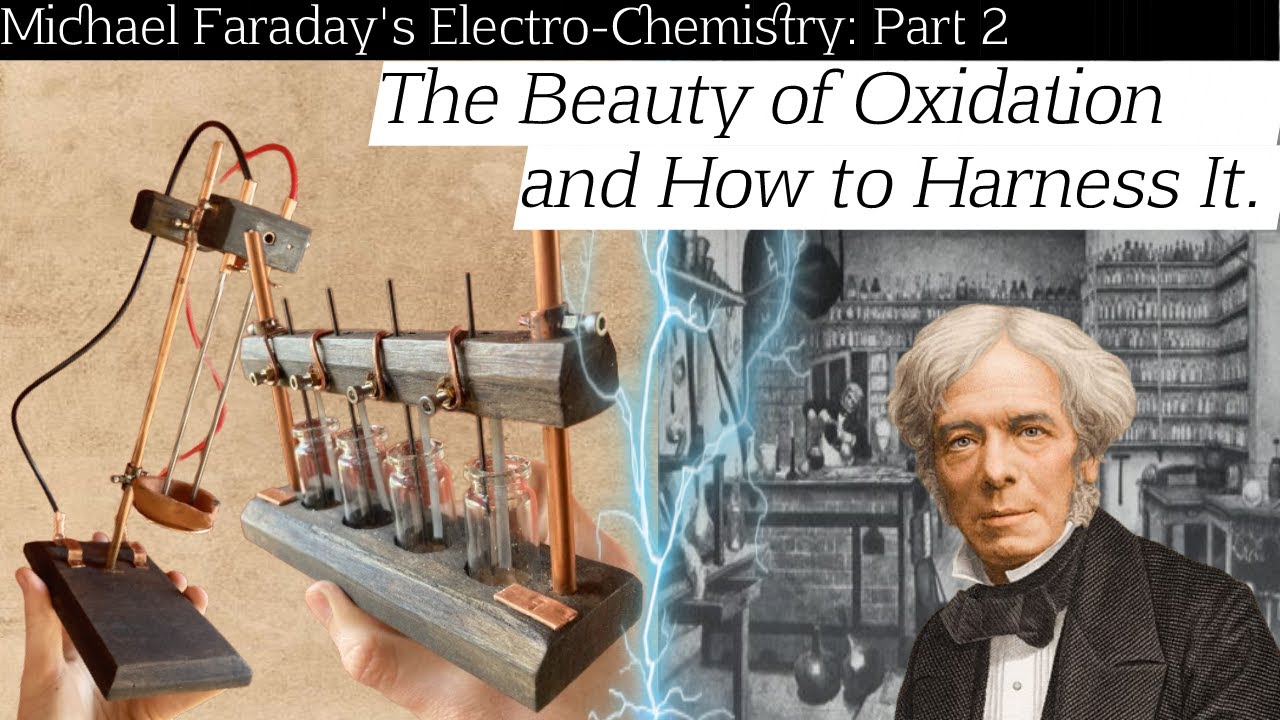
21% oxygen with smaller amounts of several other gases making up the rest since nitrogen makes up 78% of the gas particles in a given sample of air it exerts 78% of the pressure if the overall atmospheric pressure is one atmospheric then the pressure of just a nitrogen in the air is 0.78 atmospheric the pressure of the oxygen in the air is 0 point to one atmospheric farad's laws of electrolysis Michael Faraday published a research in 1833 based on the electrochemical relationships which describe the quantitative relationships between the amount of substance produced during electrolysis and the
amount of electric charge passed through the electrolyte first law the amount of substance in moles deposited at an electrod during electrolysis is directly proportional to the quantity of electrocharge passed through the electrolyte equation is where m is the mass of the substance deposited Q is the electr charge p through the electrolyte and K is a proportionality constant that depends on the substance being deposited in the nature of the electrode reactions Second Law the masses of different substances deposited by the same quantity of electric charge are proportional to their chemical equivalent weights where m m be
the masses of substances and be deposited e e be the chemical equivalent weights of substances and B this law is used in electroplating electrolysis of water Battery Technology and puf ification of metals acid base Theory it is also called as Bron stead lowri acid base Theory it defines acids and bases based on the transfer of protons in 1923 chemist Johannes Nicolas Bron dead and Thomas Martin Lowry independently recognized that acid base reactions involve the transfer of hydrogen ions this zero Theory defines acids and bases as an acid is a substance that donates a proton to
another substance during a chemical reaction a base is a substance that accepts a proton from another substance during a chemical reaction for example in acetic acid ch3 co ch3 co plus H2O equal to ch3 co minus plus h3o+ ch3 co+ and H3 equals to ch3 co minus plus and H +4 here ch3 Co acts as an uranous acid because it acts as a source of h3o plus when dissolved in water and it acts as a bronet acid by donating a hydron to water in the second example C3 co under goes the same transformation in this
case donating a hydron to ammonia and H3 but it cannot be described using the uranous definition of an acid because the reaction does not produce hydronium ions gusc law of combining volumes gusak law usually refers to Joseph flu gusak law of combining volumes of gases discovered in 1808 and published in 1809 states that it refers to the proportionality of the volume of a gas to its absolute temperature at constant pressure according to gac's law the volumes of gases involved in a chemical reaction are in simple ratios to one another for example if gases NB react
to form gas C the volumes of NB consumed or produced can be expressed as simple whole number ratios for examples combustion of hydrogen and oxygen when hydrogen gas reacts with oxygen gas to form water vapor the volumes of reactants and products follow a simple ratio the balanced equation is to H to plus2 equals to 2 H2O according to gac's law two volumes of hydrogen gas react with one volume of oxygen gas to produce the volumes of water vapor Graham's law this theory was formulated by Scottish physical chemist Thomas Graham in 1848 it describes the relationship
between the rates at which gases ause or Escape through a small hole and diffuse or mix with another gas in rate of effusion or diffusion of a gas is inversely proportional to the square root of its molar mass at same time temperature and pressure difference between effusion and diffusion is effusion refers to the process where a gas escapes through a small hole into a vacuum diffusion involves the spontaneous mixing of gases due to their random motion equation is where rate one is the rate of effusion for the first gas rate two is the rate of
effusion for the second gas M1 is the molar mass of gas one M2 is the molar mass of gas 2 for example let gas 1 be hydrogen and gas to be oxygen therefore hydrogen molecules if used for times faster than those of oxygen dot dot Grahams law is used in processes like gas chromatography and gas separation techniques ideal gas law the ideal gas law also called the general gas equation is the equation of state of a hypothetical ideal gas it is a good approximation of the behavior of many gases under many conditions although it has
several limitations it was first stated by Benoit Paul Emil clayon in 1834 as a combination of the empiric Bo's law Charles's Law avagadro's law and gac's law the ideal gas law is often written in an empirical form PV equals to an RT where p is pressure V is volume T is absolute temperature and is amount of substance and are is ideal gas constant it's used to calculate the amount of reactants and products and chemical reactions involving gases it helps in understanding and predicting the behavior of gases under different conditions of temperature pressure and volume it
is used extensively in Industries such as manufacturing where gases are involved in processes like heating cooling and storage buffer solution a buffer solution is a solution where the PH does not change significantly on dilution or if an acid or base is added at constant temperature its pH changes very little when a small amount of strong acid or base is added to it buffer Solutions are used as a means of keeping pH at a nearly constant value in a wide variety of chemical applications in nature there are many living systems that use buffering for pH regulation
for example the bicarbonate buffering system is used to regulate the PH of blood and bicarbonate also acts as a buffer in the ocean buffer Solutions are crucial in biological systems maintaining stable pH levels in blood cells and tissues necessary for enzymatic activity and cellular functions in chemical laboratories buffers are used to maintain constant pH environments during experiments ensuring consistent reaction conditions buffers play a role in various industrial processes such as in the manufacturer of pharmaceuticals where precise pH control is necessary simple buffering agents are citric acid acetic acid and borid Etc Isotopes Isotopes are atoms
of the same element that have different numbers of neutrons in their nuclei leading to variations in atomic mass despite having different masses isotopes of an element exhibit similar chemical properties because they have the same same atomic number protons and electrons most elements exist as a mixture of isotopes with one isotope usually being more abundant than others the atomic weight of an element in the periodic table is an average of the masses of its Isotopes weighted by their abundance every atom of a particular element has a specific number of protons in its nucleus which determines its
atomic number and thus its identity as an element Isotopes differ in their number of neutrons resulting in variations in atomic mass for example hydrogen has three Isotopes br duum and tridium prodium is the most abundant approximately 99.98% duum is stable and used in nuclear reactions and labeling while tridium is radioactive and used in various research applications other example is carbon Isotopes like carbon 12 carbon 13 and carbon 14 carbon 12 is the most abundant approximately 98.9% and is used as the standard for atomic mass units while carbon 14 radioactive and is used in carbon dating
to determine the age of organic materials uses isotopes with known Decay rates like carbon 14 are used to determine the age of fossils and archaeological artifacts these are used in medical imaging and cancer treatment periodic table the periodic table is a tabular arrangement of chemical elements ordered by their atomic number electron configuration and recurring chemical properties it provides a systematic way to classify elements and predict their behavior structure of the periodic table is rows or period elements are arranged horizontally in rows called period which represents a new energy level or shell of electrons columns or
groups or families elements are group vertically in columns called groups or families elements in the same group share similar chemical properties due to having the same number of veence electrons block classification elements are classified into different blocks based on the subshell of the highest energy electron s block groups one and to leftmost columns P block groups 13 to 18 rightmost columns d block transition metals middle section F block lanides and actinides Inter transition metals group characteristics are group one alkali metals which is highly reactive metals that readily lose their one veence electron to form plus
one ions group to alkaline earth metals which is reactive metals that lose to veence electrons to form plus2 ions Group 17 halogens which is highly reactive non-metals that readily gain one electron to form minus1 ions group between noble gases which is chemically inert gases with full outer electron shells making them very stable















![The moment we stopped understanding AI [AlexNet]](https://img.youtube.com/vi/UZDiGooFs54/maxresdefault.jpg)