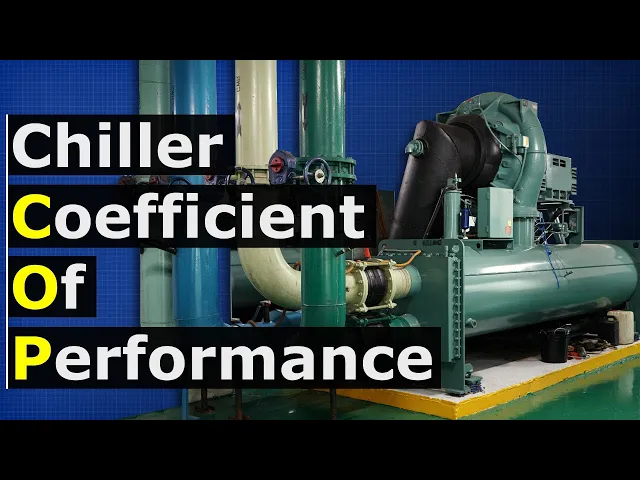
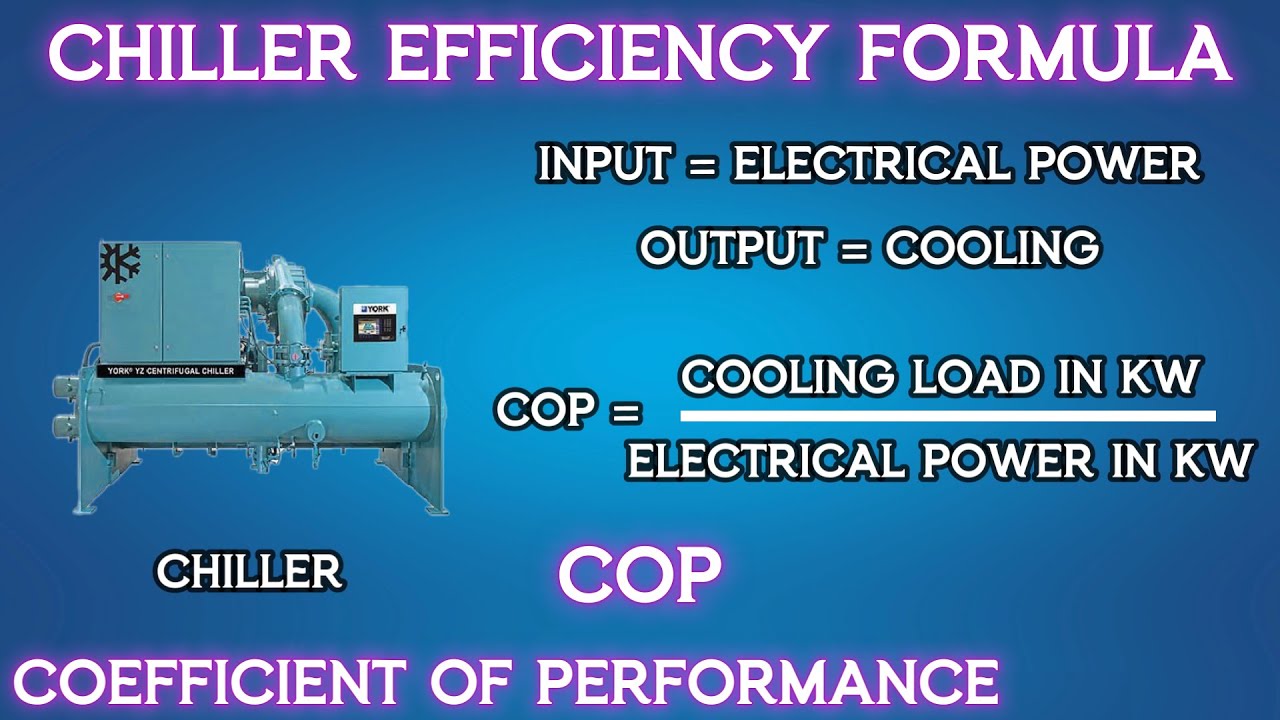
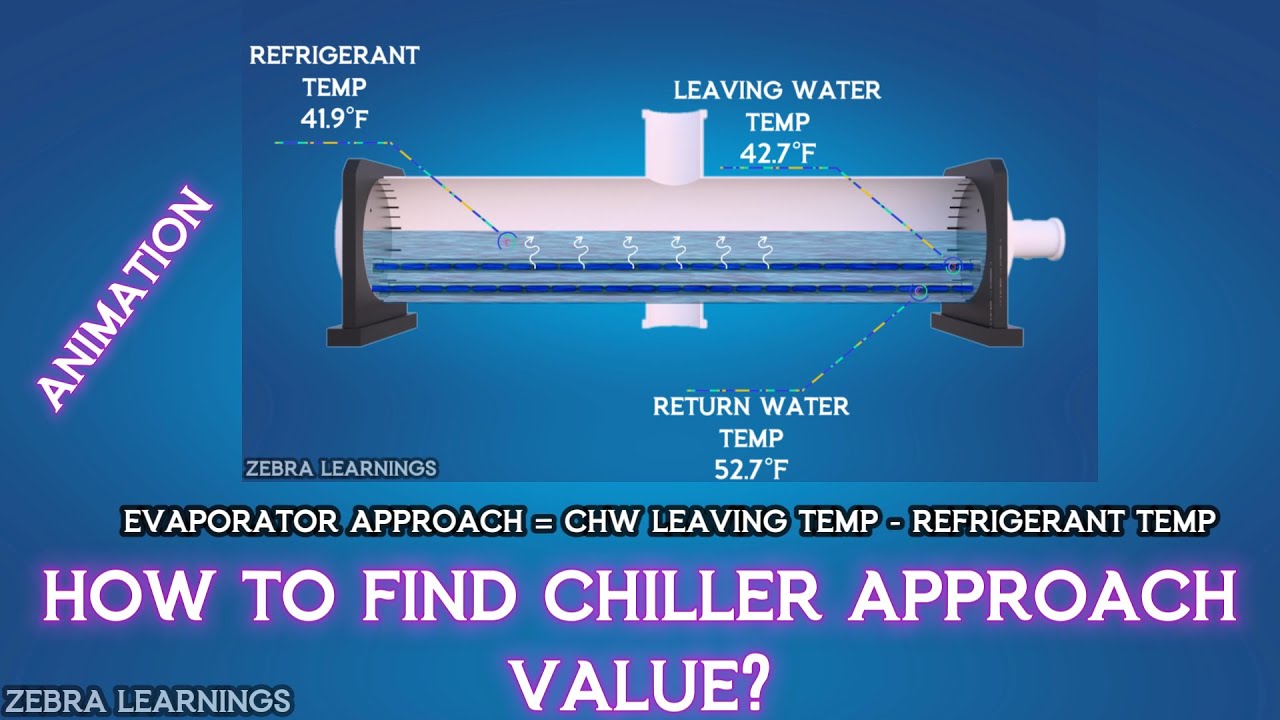
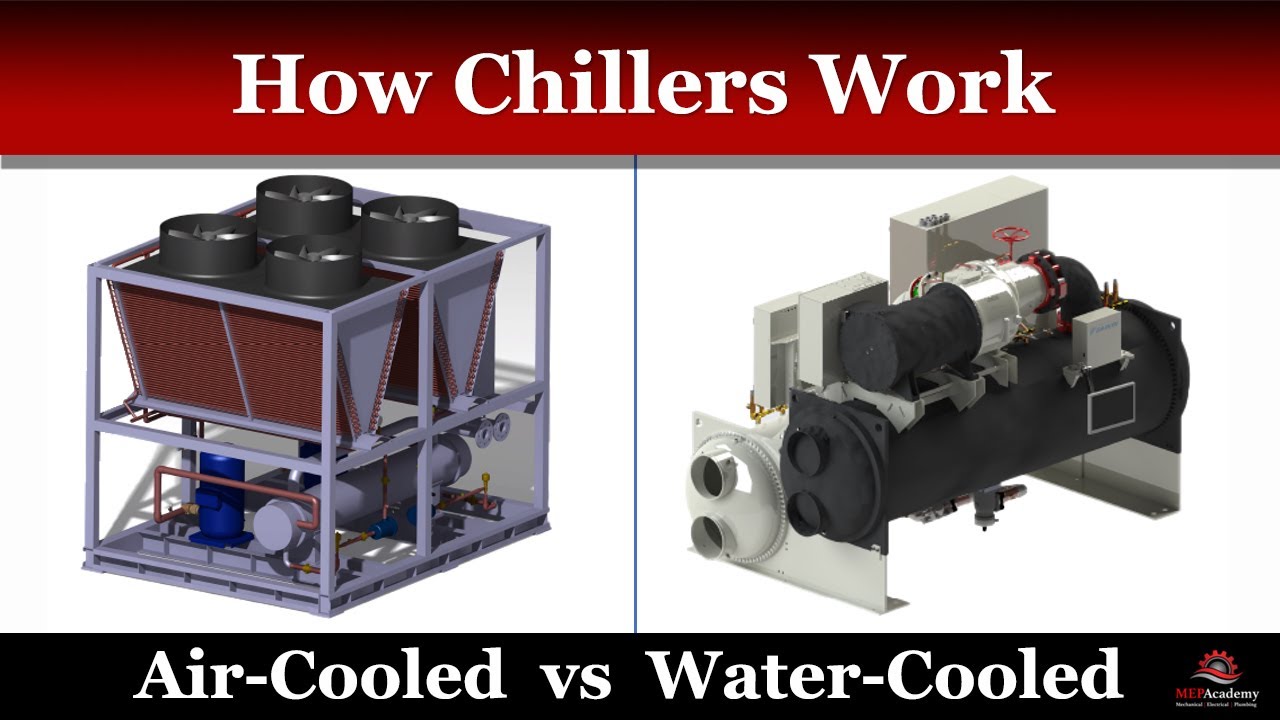
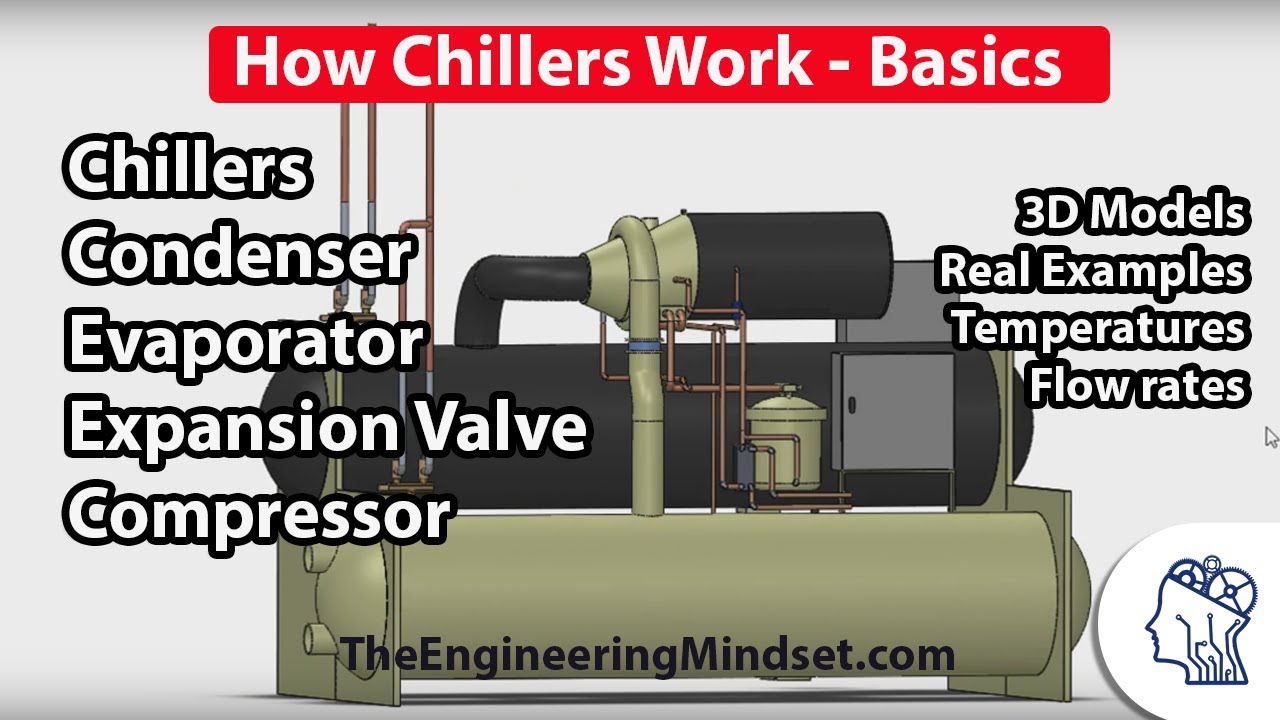
in this video we're going to be understanding chiller cop and how it's used to measure the efficiency of hlr and also learn how it's calculated chillers are extremely energy intensive to operate and that also means they are very expensive to run so it's important to understand how efficient they are operating one way to do that is by calculating the cop or coefficient of performance this will provide a measurement of the system's efficiency at different operating conditions a very low efficiency means you're getting very little output for your money and a very high efficiency means you're getting a lot of value for your money it's good practice to perform calculations on a chiller at different operating temperatures and loads and if the building uses multiple chillers this allows us to find which is the most efficient to run during certain times and conditions chiller efficiency is measured in cop this stands for coefficient of performance really the cop is just the ratio of how much refrigeration you get per unit of electricity you put in now the formula for this one is very simple the cop is just the division of the kilowatts of refrigeration divided by the kilowatts of electricity we're going to do the calculations on this example chiller and we're going to have a look at both the metric and the imperial units and the formulas and calculations for those now the first part that we need is the electricity in and that's measured in kilowatts this number is very easy to get hold of you can find this information on a digital energy meter and you will likely find this on the electrical panel alternatively it should be displayed on the user interface of the chiller or even on the building management system otherwise you will need to connect a temporary energy meter the electricity demand will vary depending on the cooling load this is not a fixed value now the second part that you will need to know is how much cooling you are getting out of the chiller evaporator ideally this will also be in kilowatts which makes it much easier but you can also use btus for the imperial calculation as we'll simply convert this for this value we should also be able to find this information from the chillers user interface or from the building management system alternatively if this is not available we would need to calculate this by taking some manual measurements for the volume flow rate of the chilled water and then we look up the water density and the specific heat capacity and then we measure the difference in temperature between the water entering and leaving the evaporator that is beyond this video but i'll just show you a sample calculation for how this is done coming back to the cop if we consider the metric units first we can see from our data gathering that this chiller is demanding 460 kilowatts of electricity and is providing 2 500 kilowatts of cooling so using the formula cop equals kilowatts of refrigeration divided by the kilowatts of electricity if we drop those numbers in we see we get a cop of 5. 4 when using the imperial units we see the chiller is demanding again 460 kilowatts of electricity and providing 8. 5 million btus per hour we need to convert that into kilowatts so we just divide that by the conversion factor of three four one two to get two thousand five hundred kilowatts then we drop those numbers in to get a cop of 5.
4 so what does this mean this means that for every one kilowatt of electricity we input into the chiller it produces 5. 4 kilowatts of cooling we are therefore producing more cooling energy than electricity input so it is efficient however this might not be operating at optimal performance and we could improve this if we had a cop of one this is not good because it means we would only get one kilowatt of cooling per one kilowatt of electricity you can check with your chiller manufacturer what the design cop range is for your model of chiller to understand if it is operating efficiently or not but typically the chillers will fall within these ranges for the different types of compressors used the cop of a chiller will vary throughout the day and the season it is not a fixed value unless it handles a constant load which most buildings do not one of the biggest impacts on these values is whether the chiller's compressor is constant or variable speed variable speed chillers usually offer optimal efficiency because they work best during part load conditions and most buildings operate apart load for the majority of the year there will only be a few days or weeks per year usually in the summer when the chiller is operating at full load we can see from these charts that the variable speed compressors generally do not perform efficiently at full load because of the inverter losses so at full load it is usually more efficient to run a constant speed compressor chiller by the way you can also learn how variable frequency drives work in detail in our previous video i'll leave a link in the video description down below for you in this example we see at around 50 load we get the highest cop of around 9. however as the load increases in the peak of summer we are approaching ninety percent load on the chiller then you can see the cop becomes a lot lower at around seven whereas the constant speed lr will provide much more efficient and economical performance at this point so we need to consider the building's cooling load profile because typically it might only be at full load for perhaps eight percent of the year and then spend 40 to 60 percent of the year apart load so overall the variable speed compressor would perform better and in most scenarios this is true changing the water temperatures and the flow rate and ensuring the chillers heat exchangers are clean will all impact the amount of cooling produced and thus the efficiency of the chiller check out one of the videos on screen now to continue learning about refrigeration engineering as this is the end of the video don't forget to follow us on facebook twitter linkedin instagram as well as the engineeringmindset.