What up? Welcome to inverse for value gaps explained. Okay, so we talked about fair value gaps two days ago.
Today we're talking about inverse for value gaps. Yesterday we talked about advanced imbalance concepts. So with that being said, let's jump straight into this.
So as we remember fair value gaps, what do they do? we've kind of established I hopefully we can start laying and now that we have a couple confluences under our belt I would like to be start classifying each one of these confluences. So first liquidity.
Okay, for me this is just like the reversal confluence, right? Because price has the opportunity to fill orders, right? To be able to start a reversal when we push up above or below a draw on liquidity.
Cuz again, if we're in an uptrend and we push above a high, what do we have the opportunity to do? Boom. Fill some orders above here and then cause price to go lower.
or if we're in an uptrend and then there's a high time frame high right here and then we push above it, we have the opportunity to potentially cause a reversal. So liquidity is step one of our strategy. Now again, I'm not going to get in depth into our strategy just yet, but I want to start classifying all the confluences that we've learned thus far.
So liquidity, what does that correlate to the reversal? As you guys know, I would much rather sell the top and be buying the bottoms of every single move because that's going to give us a better risk-to-reward. That's going to give us higher odds and better chances of being correct about the overall move as well.
From there, we are going to be looking for a change in trend. So, so far, what confluences do we know or have we learned that helps us identify a change in trend? Well, breakup structure or we can just abbreviate it to Bos.
Okay, breaker structure for me. This is giving me this I call a confirmation confluence. Why do I call it a confirmation confluence?
Because it's saying, hey, we pushed above a area that we could potentially fill orders at. We pushed above an area that we could potentially fill orders at. And then when we get the break of structure, what does that tell me?
It confirms to me that orders were filled above this high right here, above the liquidity sweep. Cuz again, what do we know about liquidity? Price just has the opportunity to fill orders above highs and below lows.
It doesn't mean that price has to fill orders. It just means price has the opportunity. So, how do we confirm that price actually took that opportunity and wants to cause the reversal?
We see a change in trend through breakup structure. Now that's the only confirmation confluence that we know for now. And then just recently we learned a continuation confluence through fair value gaps.
So what are sorry I can't talk and type at the same time. So what are fair value gaps? Well let's think about it again.
Liquidity gives us the opportunity to reverse. So if we're in an uptrend and then boom, we push above this high. Awesome.
We have the opportunity to reverse. And then boom, we break structure to the downside. Awesome.
We get confirmation that the trend has broken. What do I need? Because I like to be extra safe about my trades.
And I mean, you guys should be too because eventually we're going to be risking our hardearned money on on on these trades. And our strategy better be [ __ ] airtight. Okay?
I'm not just going to be taking a trade off of us pushing above a high and then breaking structure to the downside because guess what? This could just be a higher time frame retrace, right? And then price could just boom go all the way up from here.
So what do I need? I need to show proof that the new trend that we are starting like this downtrend is going to continue. How do we identify a continuation of a downtrend?
Downtrend right now the only continuation confluence that we know is fair value gaps. Okay. So in this case we get boom we push up into liquidity.
We get the confirmation and as of 2 days ago we learned fair value gap. So if there's a fair value gap right here boom we push into the fair value gap and then we see a continuation of the trend. Again opportunity to fill orders confirmation that orders have been filled and then confirmation that the trend is going to continue down.
Hopefully you guys are now seeing how this is a very very optimal trade entry to then be targeting other draws on liquidity over here to the left hand side. Now with all of that understood today we are going to learn another confirmation confluence and it's actually believe it or not using fair value gaps because again if we think about it what are fair value gaps supposed to do? They are supposed to show us continuation of a trend.
So, if we have a fair value gap right here that gets filled and then we push up higher, it's showing a it's showing continuation. What else do we know? What happens if a trend doesn't continue?
Then it's pretty freaking obvious that price is going to start a new trend. So, what happens if we inverse or if we disrespect a fair value gap that's within a current uptrend? What if we have a fair value gap right here and price comes down and closes underneath it?
Well, that's not what continuation confluences are supposed to do. Price is supposed to come into this continuation confluence and move higher. So, why is price pushing and closing underneath this continuation confluence?
Maybe because price is actually changing direction and this is giving us a confirmation confluence that price is going to go lower and this is going to be a change in trend and that is all inverse for value gaps are. Now, we already know how to identify fair value gaps. So, we're just going to jump straight to the chart and I'm going to show you guys examples of this.
All an inverse fair value gap is is a fair value gap that gets disrespected within the current trend that it's in and we can use it as a break of structure or as a confirmation confluence. So, let's get in here and let's find an example for us. We can go.
Let's see. Where's a good Where's a good one? Where's a good one?
I want to find a good one. Maybe we can go on the 4 hour. 4 hour map cleaner.
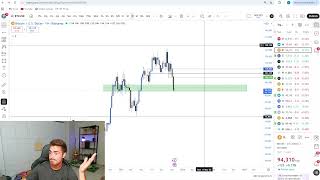
This is a good example right here. Boom. Let's look at this 4hour price action.
Okay, price comes down. We break structure to the downside right here. Right, this is the most recent low.
We get a closer underneath it. Awesome. Cool.
We're in a downtrend at this point in time. And oh, what do you what do we see? Awesome.
We have a bearish fair value gap right here. What does price do? Price comes up and then what do we end up doing?
We end up inversing this fair value gap. So in turn, we were in a downtrend because we closed underneath this low. But now that we close above this fair value gap, inversing the continuation confluence that realistically should have sent price lower, but instead didn't.
Then what does that cause price to do? Slowly but surely move higher. We inverse this gap, price comes down, retraces, and then we continue with the uptrend.
We get a high, we get a higher low, we get a higher high, we get a higher low, we get a higher high, we get a higher low, higher high, higher low, etc. That's one example. Let's show an example to the downside.
And the nice thing about inverse for value gaps is I want to find an example where we are able to use this to our advantage before we are able to find a break of structure. Now, that's why this is very useful. And you're again, you're probably saying, "Well, why would we want to use this when we could just use break of structure?
" Well, that's the thing. Sometimes, like in this case, we can look and identify a change in order flow before we actually get the breakup structure. So, notice right here, we are in an uptrend, right?
We closed above the most recent high to confirm that we're in an uptrend. So, if we're looking for a break of structure to the downside, we are going to be monitoring this low, right? This is the most recent low.
But now with this newfound confluence of fair value gaps and inverse fair value gaps, we have a bullish fair value gap right here. So realistically, if this trend wants to or is supposed to continue higher, we should respect this fair value gap and continue higher. Why?
Because it's a continuation confluence. This is the last form of imbalance price on this time frame that price needs to tap into to continue higher. When do we invalidate this gap?
Is it on this candle? No. When we get a candlestick closure underneath the bottom of the bullish for value gap, right?
Because this invalidates the bullish for value gap. We're getting a candlestick closure underneath it. Awesome.
Now, once this candle closes, we know that price is probably going to turn into a downtrend. And look at that. It does.
However, if we only had the confluence of break of structure, we probably would have had we would have had to wait for another 4hour candle to form until we got underneath this. And now this is why you guys can hopefully see how important having this confluence is because we were able to enter up here instead of having to wait till all the way down here. That's an extra 68 tick.
And that could literally be make or break for us on having a better risk-to-reward, having a better win rate, okay, by being able to execute right here. Because if we took a short position right here and target these lows, this is a pretty good risk-to-reward. This is a 1 to 1.
3 risk-to-reward ratio by entering right here and then targeting this draw in liquidity and then targeting these draws in liquidity. Right here we have a 1 to2 risk-to-reward. However, what would happen or what could potentially happen if we didn't know about inverse for value gaps and we had to enter on this break of structure.
Look how drastic that changes our risk-to-reward, but also how how much larger it makes our stop loss. This makes my stop loss literally two times the size and now makes me have a risk-to-reward that's not even 120. 5.
Meaning if I'm risking $1,000, I'll only be able to make $450. That's horrible, right? Versus if I take this trade up here, if I'm risking $1,000, I'll be able to make $1,300.
That's a little bit better. Okay. So, again, having this as another confirmation confluence.
Again, we you you guys don't necessarily know how to put these pieces together just now. And we can't just be taking sell positions on inverse fair for value gaps to the downside and taking buy positions to inverse for value gaps to the upside willy-nilly and just expecting for price to go in our direction. However, this is a very very key confluence that is going to be beneficial for you guys down the line in helping understand our strategy because I use this confluence almost every single day almost more than breakup structure because more often than not it happens before breakup structures even do.
Like again I'm looking at this. This is another very good example right here. Boom.
What do we have? We have a bearish for value gap right here. What does price do?
We close above it. And notice again, this is the high that we were monitoring for us to have a break of structure. We fully would have had to wait for another 4hour candle.
And look at the difference. Boom. We could have entered this trade right here compared to having to wait for a break of structure all the way up here.
That's 123 ticks that we literally are chopping off from our trade by not knowing this confluence. So, this confluence is very, very useful, very, very helpful for us. I use it on a daily basis.
So, make sure that we understand this. Now, there's going to be some caveats with this, so I'm going to get into it um with like when we have multiple fair value gaps stacked on top of each other, and then we're going to wrap it up today. Okay.
All right. Now, you're probably saying, "Well, TJR, remember when you were telling us all about how when we have multiple fair value gaps stacked up up on top on top of each other, all of them are valid and it just depends on which one it wants to push into and um if it pushes into one of them and then ends up going higher, then all of the other ones that were underneath end up getting invalidated, blah blah blah blah blah. " Yes, I do remember that.
So, let's show examples of this and show you guys how to be able to tell which one is actually going to be the invalidation point of a stack of fair value gaps. Okay, I'm trying to find a good example for you guys where we have a couple fair value gaps stacked up on top of each other without getting a breaker structure first. Um, okay.
This is a good example right here. So, in this case, oh, is this a fair value? Yeah, barely.
Okay, cool. So, in this case, what are we in? We are in a uptrend, right?
We are closing above most recent highs. So, we know that we're making higher highs. Awesome.
We're in an uptrend. Okay. So, in this case, we have two fair value gaps stacked up on on top of each other.
Again, how do we identify this as just fully these two are together in imbalanced price action because there's no retrace in between these candles. So again, we have a fair value gap followed immediately by another fair value gap. There's no black candle in between it.
Awesome. These two are grouped together. Now, let's look at this and let's have let's sit here and let's look to be able to identify.
What fair value gap do we wait for? And what fair value gap do we look to get invalidated when we're looking for an inverse fair value gap? Because now in this case, we have two fair value gaps that we could potentially use that we could potentially retrace off of.
Well, if you think back to me explaining fair value gaps in this concept, right? Price could come into this imbalanced price range and it could push higher, right? And then from there, we no longer need this imbalanced price range.
Why? because price came down to this imbalanced price range said, "Yep, that's enough. That's all I needed to do to to balance out price and I want to move higher.
" But what does price also still potentially have the opportunity to do? It can still close underneath this fair value gap, come down, fill this one, and push price higher. Hopefully that explanation helped you understand what fair value gap needs to be inversed when we have a stack of them for this to be a proper confir confirmation confluence.
It's going to be the bottom fair value gap when we are looking for inverses to the downside. Okay, so the bottom fair value gap when we have multiple fair value gaps stacked up on top of each other needs to be inverse. Why?
Because price closing underneath this fair value gap and in this case we closed underneath both of them but I wish there were this candle ended like right here because price closing underneath this fair value gap it doesn't mean anything. Why? Because we can still come down and fill this gap to push price higher because this is still a valid imbalanced price range.
Again, like I was telling you guys two days ago, price can come down and fill in this gap and then push push higher. Okay, so me looking at this, I'm like, okay, we need to wait for not this gap to get closed underneath in order for me to flip bearish, but this gap to get closed underneath because this is the last fair value gap that is holding up the trend. Right?
If this fair value gap gets inverse, it's not a problem, right? because the trend could still continue off of this one. However, if this one gets inversed, then this 100% means that boom, the trend is gone.
And what do we see? We see price barely close underneath it. And then price cons ends up going lower for a little bit.
Okay, let me show you guys another example of this of stacked up fair value gaps. Okay, so this is a good example right here. So again, let's see.
We're in an uptrend here, right? And we have two fair value gaps that are stacked up on top of each other. We have this gap immediately followed by this gap.
Again, there's no retrace in between. There's no price showing us that we balance out these price ranges yet. So awesome.
We know that from here up to here, this imbalance price. We see price come down and then what do we do? We close underneath this gap right here.
So what does that mean? Does that that mean oh no price is actually going into a downtrend? No.
Why? Because price still has the opportunity to one maintain the bullish trend that we're in. How do we know that we're in an uptrend?
Because we closed above the most recent high. We haven't broken into a downtrend just yet. So awesome.
Us closing below this for value gap right here doesn't mean anything. Why? because price can very well continue the trend out of this gap because these gaps are stacked up.
So if I wanted to see a inverse or a confirmation confluence by using a inverse fair value gap, what fair value gap would I have to wait for in the stack of these fair value gaps? I would have to wait for a closure underneath this gap. Okay, now obviously that is going to take a lot but that just shows an example of us having a stack of two fair value gaps.
the first one getting closed underneath, but us still be able still not being able to classify it as a full inverse. Because if we wanted an inverse, we would be looking for this gap to get closed underneath, not this one. Because again, if this one gets closed underneath, doesn't matter.
The trend is still intact. We can still use this one in our favor. All right.
Let's find another example. Trying to find a good example to the upside. So, this isn't an example of a stack, but this is a good example for us to look at.
So, right here, what are we in currently? We're in a downtrend. We have a high.
We have a low, lower high, lower low. We close underneath the most recent low. We're in a downtrend, right?
What do we have right here? We have a continuation confluence at least that we could be potentially looking at for price to come in, fill, and push lower, right? But what happens?
Price comes up. We get a candle closure within this fair value gap. Is this on this candlestick closure right here a inverse for value gap?
No. Even though we pushed a wick above this fair value gap, it is not a inverse for value gap until we get a full candlestick closure above the gap. Just like with breakout structure, we need to wait for a full candlestick closure above the gap.
So when do we get that on this candlestick? And then from there we can see awesome this trend has reversed. And then what do we see?
Boom. We see price come down fill this gap and then move higher. Come down fill this gap move higher.
Come down fills this gap moves higher. We can see the trend being formed in these imbalances being created and being respected on our way up after getting a inverse of this gap and an inverse of our previously continuation confluence which now turns into a confirmation confluence. So hopefully you guys understand inverse for value gaps.
Now that is another one of our confirmation confluences that I use literally every single day. Okay. Um, it's very very important that you guys understand this concept.
So, if you guys don't necessarily understand it just yet, you guys will probably be able to get it a little bit more as we go through this series and as I show you guys more examples of it um, and it being used in real time whether you guys are watching my trade recaps or not. Um, but this is a very very important confluence for you guys to learn. And with that being said, we are going to introduce another continuation confluence.
So, now we know two confirmation confluences. We have breakup structure and inverse for value gaps. And right now we have one continuation confluence which is for value gaps.
The next continuation confluence that we are going to learn is equilibrium. I'm going to teach that to you guys tomorrow. So with that being said, I love and appreciate you guys.
I'll see you guys tomorrow.