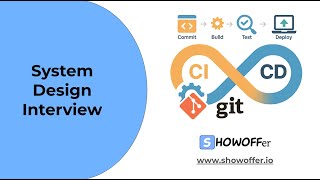
What is CI/CD? How does it help us ship faster? Is it worth the hassle?
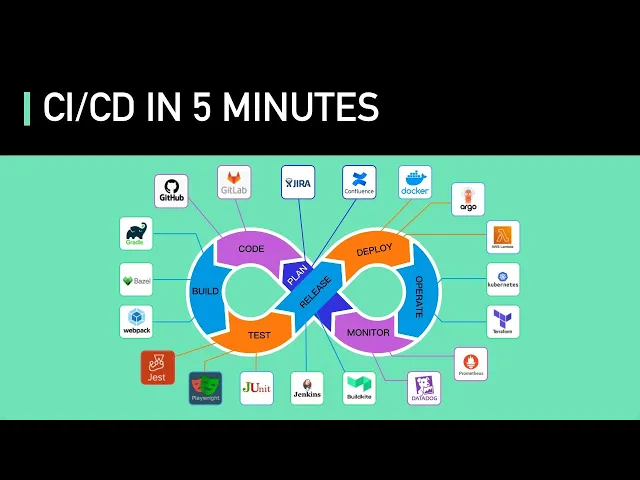
Let’s take a look. CI/CD, or Continuous Integration and Continuous Delivery, automates the software development process from the initial code commit all the way through to deployment. It eliminates much of the manual human intervention traditionally required to get new code to production.
The CI/CD process takes care of building, testing, and deploying new code to production. The promise is that it enables software teams to deploy better-quality software faster. This all sounds very good, but does it work in real life?
The answer is - it depends. Let’s break up CI/CD into their own parts and discuss them separately. CI is less controversial and more common.
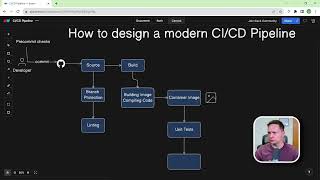
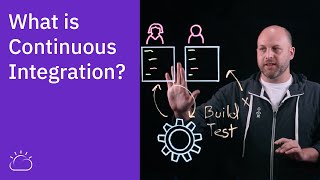
In a nutshell, it is the practice of using automation to enable teams to merge code changes into the shared repository early and often. Each commit triggers an automated workflow on a CI server that runs a series of tasks to make sure the commit is safe to merge into the main branch. A good CI process relies on a set of good tests.
It is non-trivial to maintain a set of tests with sufficient coverage that is not flakey. High test coverage usually takes longer to run. This impacts developer productivity.
It is a tough balancing act, but it is worth the effort to get it right. What are some common tools used in CI? A good source code management system is the foundation.
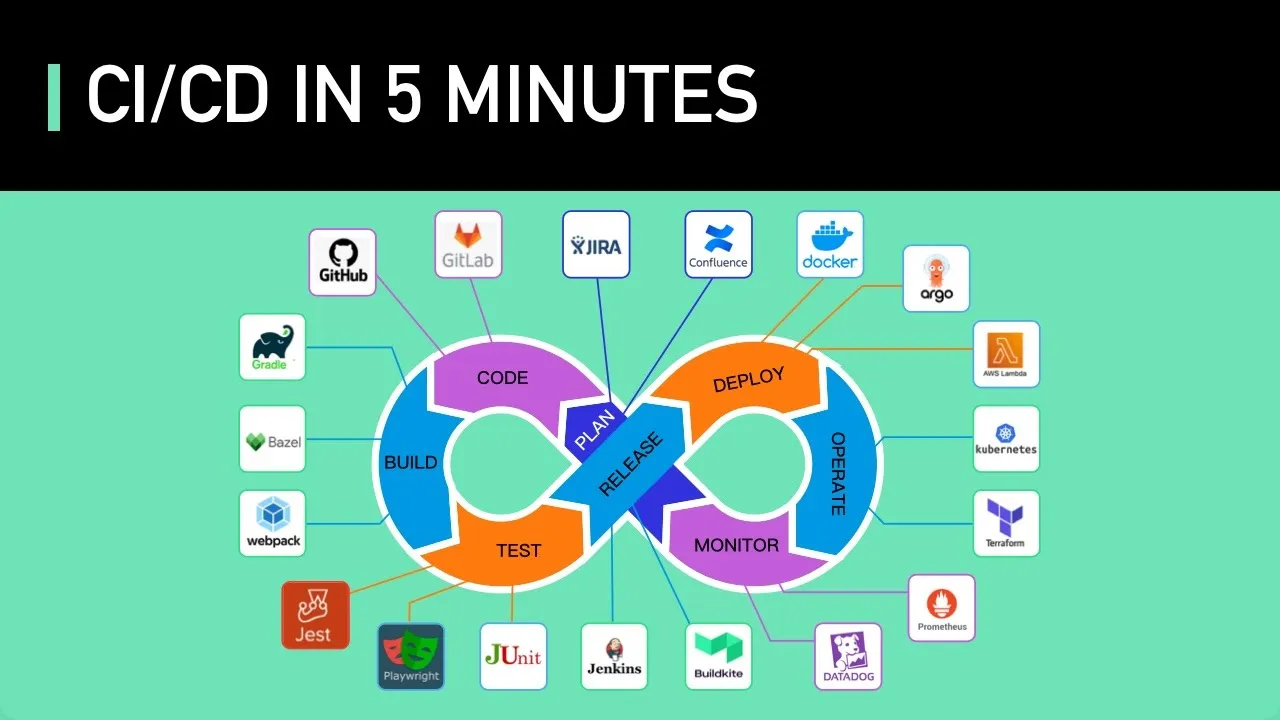
Github is a very popular example. It should hold everything needed to build the software. This includes source code, test scripts, and scripts to build the software applications.
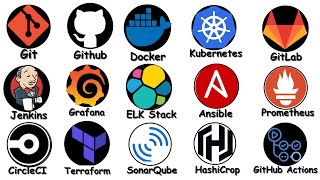
There are many tools to manage the CI process itself. Github Actions and Buildkite are some modern examples. Jenkins, CircleCI, and TravisCI are also common.
These tools manage the build and test tasks in CI. There are many test tools for writing and running tests. These tools are usually language and ecosystem specific.
For example, for JS, Jest is an example of the unit testing framework, while playwright and cypress are some common integration testing frameworks for web applications. The build tools are even more diverse and ecosystem specific. Gradle is a powerful build tool for Java.
The Javascript build ecosystem is fragmented and hard to keep track of. Webpack is the standard, but many new build tools claim to be much faster, but they are not yet as extensible as webpack. Now let’s examine the CD part of CI/CD.
CD is continuous deployment. If we are being truthful, real continuous deployment is hard. They do exist, but the practice is not as common as CI.
Many teams only practice CD on the most basic types of systems. These systems are usually stateless, like the API or web server tiers. With good production monitoring, these systems could be deployed continuously with minimal risks.
They are stateless, and rollbacks are usually quick and harmless. It is also a common practice to wrap new features in feature flags to separate the deployment of the code from the activation of the features. This allows the team to quickly shut off new features if they cause any issues without requiring a full rollback.
Canary deployment is also a common practice for products with hundreds of millions of users. It deploys the new production code to a tiny subset of the power users and staff who both appreciate new features and have the risk appetite to help catch problems before the new code is deployed widely. This allows the team to test the new code in a real-world environment while limiting the blast radius if something goes wrong.
These techniques work well for simple stateless systems. On the other hand, very few teams have the resources or the convictions to implement real continuous, hands-off deployment on complex stateful systems like database backend clusters or other types of stateful systems like a websocket cluster. Instead, these systems are usually on a fixed deploy cadence.
The deployment process is manual, risky and time consuming. They require the care of a dedicated platform team. It is rare to see these systems deploy fully continuously and automatically.
What are some tools that are used for CD? The tools we mentioned earlier like Github Actions, Buildkite, and Jenkins are commonly used to handle CD tasks. There are also infrastructure-specific tools that make CD easier to maintain.
For example, on Kubernetes, ArgoCD is popular. In conclusion, CI/CD is a powerful software development practice that can help teams ship better-quality software faster. However, it's not a one-size-fits-all solution and its implementation may vary depending on the complexity of the system.
If you'd like to learn more about system design, check out our books and weekly newsletter. Please subscribe if you learned something new. Thank you so much and we'll see you next time.