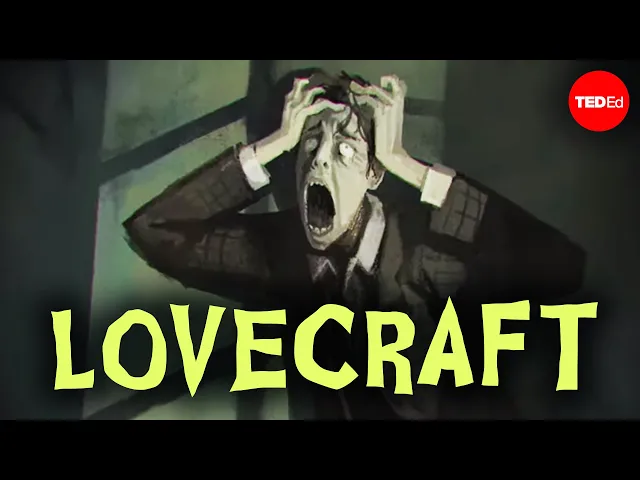
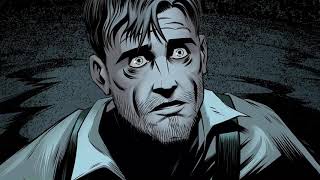
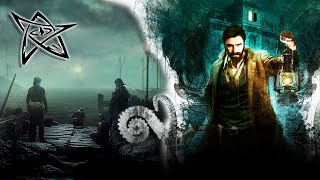
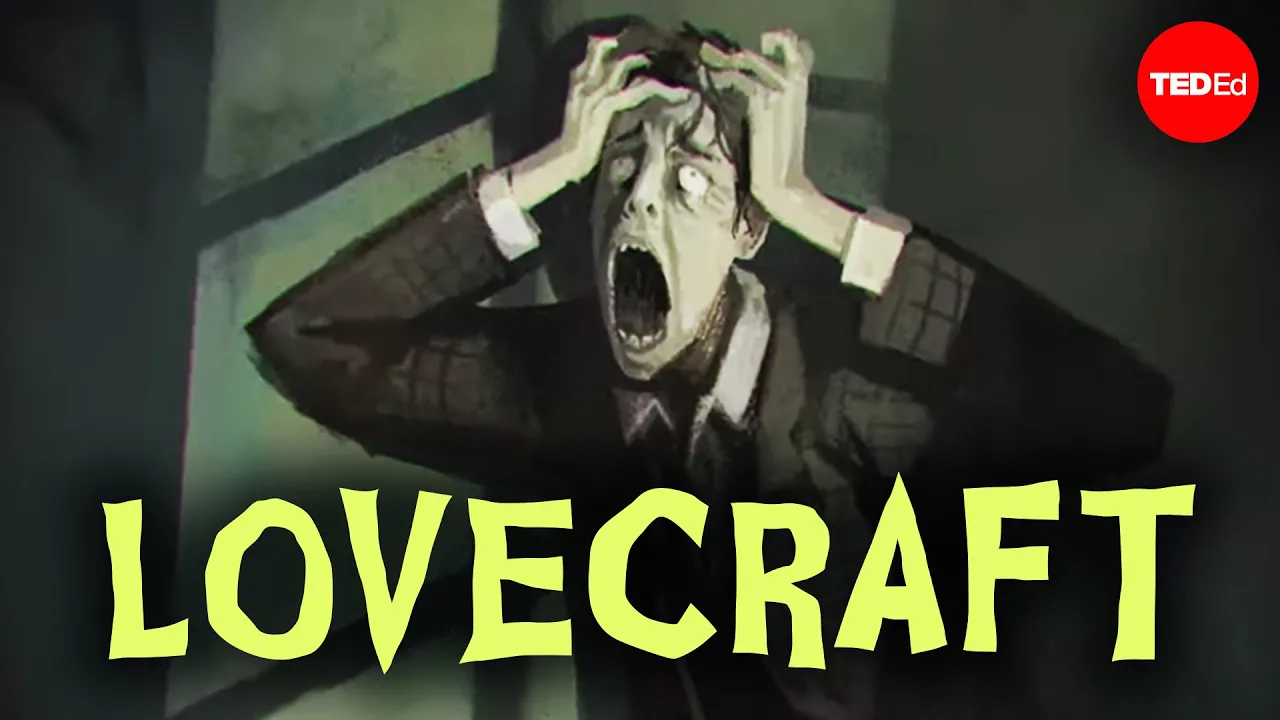
Arcane books of forbidden lore, disturbing secrets in the family bloodline, and terrors so unspeakable the very thought of them might drive you mad. By now, these have become standard elements in many modern horror stories. But they were largely popularized by a single author– one whose name has become an adjective for the particular type of terror he inspired.
Born in Providence, Rhode Island in 1890, Howard Phillips Lovecraft grew up admiring the Gothic horror stories written by Edgar Allan Poe and Robert Chambers. But by the time he began writing in 1917, World War I had cast a long shadow over the arts. People had seen real horrors, and were no longer frightened of fantastical folklore.
Lovecraft sought to invent a new kind of terror, one that responded to the rapid scientific progress of his era. His stories often used scientific elements to lend eerie plausibility. In "The Colour out of Space," a strange meteorite falls near a farmhouse, mutating the farm into a nightmarish hellscape.
Others incorporated scientific methodology into their form. "At the Mountains of Madness" is written as a report of an Antarctic expedition that unearths things better left undiscovered. In others, mathematics themselves become a source of horror, as impossible geometric configurations wreak havoc on the minds of any who behold them.
Like then-recent discoveries of subatomic particles or X-rays, the forces in Lovecraft’s fiction were powerful, yet often invisible and indescribable. Rather than recognizable monsters, graphic violence, or startling shocks, the terror of “Lovecraftian” horror lies in what’s not directly portrayed– but left instead to the dark depths of our imagination. Lovecraft’s dozens of short stories, novellas, and poems often take place in the same fictional continuity, with recurring characters, locations, and mythologies.
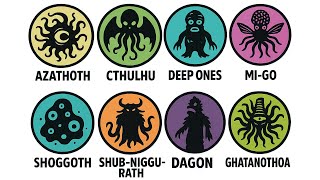
At first glance, they appear to be set within Lovecraft’s contemporary New England. But beneath the surface of this seemingly similar reality lie dark masters, for whom Earth’s inhabitants are mere playthings. More like primordial forces than mere deities, Lovecraft’s Great Old Ones lurk at the corners of our reality.
Beings such as Yog-Sothoth, “who froths as primal slime in nuclear chaos beyond the nethermost outposts of space and time. ” Or the blind, idiot god Azathoth, whose destructive impulses are stalled only by the “maddening beating of vile drums and the thin monotonous whine of accursed flutes. ” These beings exist beyond our conceptions of reality, their true forms as inscrutable as their motives.
Lovecraft’s protagonists– often researchers, anthropologists, or antiquarians– stumble onto hints of their existence. But even these indirect glimpses are enough to drive them insane. And if they survive, the reader is left with no feeling of triumph, only cosmic indifference– the terrible sense that we are but insignificant specks at the mercy of unfathomable forces.
But perhaps the greatest power these creatures had was their appeal to Lovecraft’s contemporaries. During his lifetime, Lovecraft corresponded with other writers, encouraging them to employ elements and characters from his stories in their own. References to Lovecraftian gods or arcane tomes can be found in many stories by his pen pals, such as Robert E.
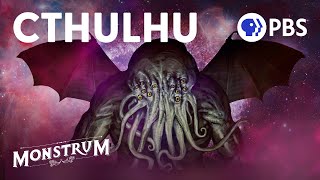
Howard and Robert Bloch. Today, this shared universe is called the Cthulhu Mythos, named after Lovecraft’s infamous blend of dragon and octopus. Unfortunately, Lovecraft’s fear of the unknown found a less savory expression in his personal views.
The author held strong racist views, and some of his works include crude stereotypes and slurs. But the rich world he created would outlive his personal prejudices. And after Lovecraft’s death, the Cthulhu Mythos was adopted by a wide variety of authors, often reimagining them from diverse perspectives that transcend the author’s prejudices.
Despite his literary legacy, Lovecraft was never able to find financial success. He died unknown and penniless at the age of 46– a victim of the universe’s cosmic indifference. But his work has inspired numerous short stories, novels, tabletop games, and cultural icons.
And as long as humans feel a sense of dread about our unknown future, Lovecraftian horror will have a place in the darkest corners of our imagination.