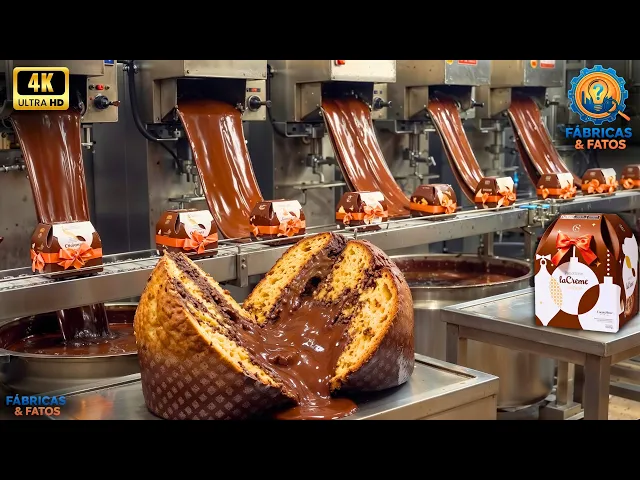
Every year, millions of panettone cakes roll off production lines so quickly they seem to defy logic. Before any machine even starts, there's a fact few people imagine: Cacau Show alone produces thousands of tons of seasonal dough per year, including its special panettone, some filled with exclusive chocolate lines that undergo their own roasting and conching processes. During peak seasons, the company operates shifts that practically never stop—placing the brand among the largest producers of premium panettone in the country.
Tons of live dough move through fermentation tunnels, rivers of melted chocolate, and ovens that bake hundreds of units per minute. And the most fascinating thing: this spectacle happens behind the scenes of the brands that dominate Brazilian Christmas—Cacau Show, Bauducco, and other giants that transform a centuries-old recipe into precision engineering. Welcome to the Factories and Facts channel!
Get ready to see panettone like you've never seen it before: from inside the machines that mold, heat, cool, and perfect this Christmas symbol. Today you'll discover how the country's largest manufacturers control temperature, time, texture, and fermentation to create that unmistakable aroma that fills homes in December. Although each brand keeps its own secrets, the industrial process that brings panettone to life follows impressive principles.
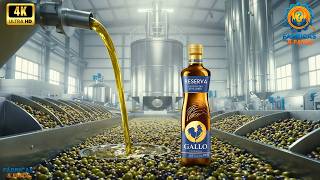
And you know what's most curious? Even with all this volume, the steps follow almost artisanal principles… only multiplied on a colossal industrial scale. And if you watched our last episode about Sunflower Oil, you already know: when the food industry enters the scene, every drop, every gram, and every second counts.
Here it's no different — panettone depends on the same millimeter-precise dance between ingredients and machines. Before we continue, tell me: which ingredient do you think most determines the final flavor of the panettone? Tell me in the comments and check if you're already subscribed to Fábricas e Fatos because now we're going to start this journey behind the scenes of production!
Before any panettone takes shape, it all begins with the rigorous selection of raw materials. And here's a little-known fact: the major national manufacturers, including Cacau Show, Bauducco, and other giants, have entire teams dedicated solely to measuring the quality of ingredients, batch by batch. Nothing is random.
The flour, for example, needs to have a specific protein content to sustain the long fermentation process without collapsing. If the flour is too strong, the dough becomes elastic and difficult to work with; if it's weak, the panettone simply doesn't rise. That's why many industries have fixed contracts with mills that can always deliver the same standard.
The second fundamental element is the yeast — the true heart of the panettone. Although each brand has its secret, they all use some type of "mother dough," also called industrial levain. It is fed daily and needs to be monitored like a living organism.
And that's exactly what it is: millions of microorganisms transforming sugar into carbon dioxide, alcohol, and acids that give it its characteristic aroma. In many factories, this sourdough starter has been active for decades and has never been completely replaced. It's like a living lineage that accompanies the brand's evolution.
Then comes the most flavorful part: butter, sugar, egg yolks, chocolate chips, or candied fruit. The butter needs to have an exact melting point so that it melts at the right time during kneading and incorporates into the dough uniformly. The sugar cannot be too refined, otherwise it caramelizes too quickly in tunnel ovens.
The egg yolks are pasteurized and filtered, creating a homogeneous texture that facilitates the aeration of the dough. And in the case of the chocolate chips, there's a trick: they go through a process called refractory confectionery, which helps maintain their shape even after the intense heat of the oven. That's why you never find the chips completely melted inside the panettone.
The initial mixing of the ingredients takes place in giant industrial mixers, some with a capacity of hundreds of kilograms. They operate in stages: first, the dry ingredients; then, Liquids are added first; lastly, the fats. The logic is simple: each ingredient reacts differently to the movement of the dough.
If everything were added at once, the final texture would be unpredictable—something the industry cannot allow. To ensure consistency, sensors monitor the temperature and density of the dough from the very first minute. If the mixture gets too hot, the enzymes degrade and the panettone loses its aroma.
If it cools down too much, the fermentation doesn't progress. An impressive fact: At Cacau Show and the largest factories in Brazil, this initial stage alone can process more than a ton of dough per hour. Even so, the sensation, when observed closely, is of a surprisingly delicate process.
The dough grows slowly, breathes, forms bubbles, gains elasticity… It's like watching an organism come to life. Right after mixing comes the hydration period. The dough is left in large resting vats, where it begins to become more flexible.
This moment is crucial in determining whether the panettone will be soft or dense. The water needs to distribute throughout the gluten structure, and this requires patience. This is also where the flavors begin to integrate.
Some brands let this stage last for hours; others accelerate it with temperature-controlled chambers. The choice determines the final aromatic profile. What's impressive about all this is the transition between dough preparation and the start of fermentation.
It's at this turning point that the panettone ceases to be just a mixture and begins to transform into something alive, airy, and full of personality. From here, every minute counts—and it's precisely this point that paves the way for the next stage, where mechanical kneading, dough dividers, and fermentation tunnels come into play to shape the panettone as we know it. With the dough hydrated and active, one of the most mesmerizing stages of the entire production begins: industrial kneading.
If in the artisanal process the movements are repetitive and slow, in factories the work is done by giant planetary machines, some with paddles that rotate on different axes simultaneously. This cross-shaped movement creates a continuous stretching effect, strengthening the gluten networks while incorporating air into the dough. The result is that soft , elastic texture that every panettone needs.
And there's a fascinating technical detail: sensors installed on the sides of the mixers monitor the dough's resistance in real time. When it reaches the ideal point, the machine automatically reduces the speed to prevent the dough from "breaking. " During this phase, delicate ingredients begin to be added.
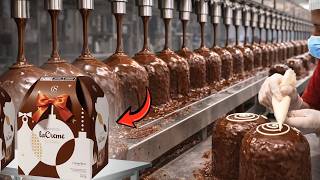
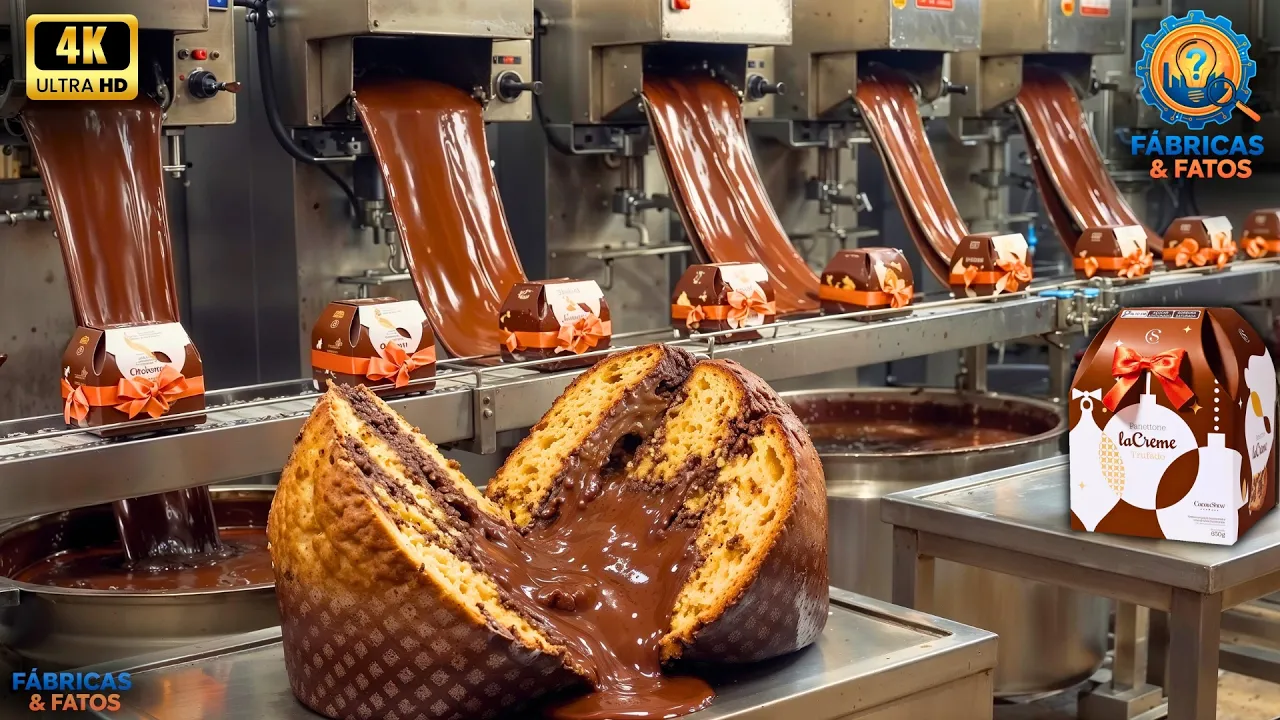
In the case of Cacau Show's laCreme chocolate panettone, this is the special chocolate cream. And in other chocottones, millions of chocolate chips need to be distributed absolutely homogeneously so that each unit maintains the same standard. To achieve this, manufacturers use a step called late incorporation, in which the chips are added only when the dough is almost ready.
This way, they don't melt, turn into a paste, or cause blemishes. In traditional panettone, the candied fruits undergo a polishing process with neutral oils to prevent them from sticking together. It's a simple but essential detail.
When the kneading is finished, the first fermentation begins—a moment when the dough transforms before your eyes. In controlled chambers, temperature and humidity are precisely adjusted so that yeasts work at the ideal pace. If the chamber is 1°C above the planned temperature, the dough ferments too quickly and loses structure; if it is 1°C below, fermentation is slow and compromises the entire line flow.
This is why many factories have climate control systems that automatically correct the environment, second by second. And here lies one of the great industrial secrets: the dough can never be handled roughly after this point. Strong movements can expel air bubbles and compromise the final volume.
Therefore, the transition to the next stage is fully automated. Stainless steel ramps and conveyors transport the dough to the dividers with the least possible impact. The dividing machines are a spectacle in themselves.
Some can fractionate hundreds of pieces per minute, each one meticulously adjusted to the desired size. To have the same weight. This precision is fundamental: if a panettone weighs less than the standard, the consumer notices; if it weighs more, the industry loses money on a gigantic scale.
It's a calculation that simply cannot get wrong. After dividing, the dough rounders come into action, rotating each piece to create a smooth and uniform surface. This rounded shape ensures that the dough ferments stably inside the paper mold.
The second fermentation takes place in the molds, lined up on huge trays that follow fermentation tunnels. Here, the dough rises until it reaches its final volume, creating that characteristic dome. What few people know is that this phase can take hours and varies according to the external climate.
On very hot days, the internal humidity needs to be adjusted to prevent the surface from drying out; on cold days, the machines work double to reach the ideal level of fermentation. Before we move on to baking — one of the most critical moments in the entire process — I want to know one thing: 👉 What type of panettone do you prefer: Bauducco's chocolate chip panettone, candied fruit panettone, or Cacau Show's truffle versions? Tell us in the comments… And tell us your city or state.
I'm curious to know where you 're watching Fábricas e Fatos from. And now we have the transition between the living dough and the almost-ready product. This is where the panettone takes its final shape and prepares to face the extreme heat of industrial ovens.
Next, you'll see what happens when hundreds of units enter a baking tunnel at the same time that looks like a furnace of surgical precision. With the dough already shaped and placed in its molds, the second fermentation begins — the stage that decides whether a panettone will be tall, light, and airy or dense and lifeless. The trays enter proofing chambers with meticulously calibrated temperature and humidity.
Here, each manufacturer adjusts its own parameters, but the principle is the same: to create an environment where the yeasts work at the ideal pace. Sensors scattered throughout the walls analyze the evolution of the volume and make automatic corrections. Interestingly, a difference of just 2% in humidity can completely alter the texture of the crust and the final shine.
Once they reach the perfect volume, the panettone go to the tunnel ovens, one of the most impressive pieces of equipment in the line. These tunnels can reach tens of meters in length and bake hundreds of units simultaneously. Inside them, the process is divided into zones: first, a heat shock that stabilizes the dough; then, phases of gradual cooking that develop color, aroma, and structure.
The top of the panettone—that rounded dome—is not just aesthetic: it indicates that the internal expansion was balanced. If it cracks on one side only, it's a sign that the fermentation occurred unevenly. When they come out of the oven, still golden and fragrant, one of the best-known rituals in the panettone industry begins: inverted cooling.
The units are hung upside down on metal structures to prevent them from collapsing while the dough is still hot and malleable. Without this procedure, the panettone would lose volume and look squashed. Gravity does the work, and the process can take several hours.
And I don't know about there… but here, just watching this process, the aroma seems to pierce the screen. Mmm… Before going to packaging, each batch undergoes rigorous quality control. Technicians analyze texture, moisture, weight, elasticity, and distribution of the drops or fruits.
Some factories use industrial tomographs that "scan" the inside of the panettone to ensure there are no bubbles that are too large or areas without filling. It's a level of precision that surprises those who imagine that panettone is a simple product. And since we're behind the scenes of the giants of production, take the opportunity to leave your like!
This helps Fábricas e Fatos continue exploring tasty industrial processes like this one. With the quality control approved, the final step begins: packaging and the incredible logistics, where you'll discover how thousands of units are prepared to fill the entire country with flavor during the Christmas season. After passing quality control, each panettone moves on to a stage that seems simple, but is a true spectacle of technical coordination: the final packaging.
Before reaching the famous Christmas box, the still-warm product undergoes a resting period to stabilize aromas and prevent condensation. Then, mechanical arms fit each unit into protective metallized polypropylene bags, which act as a shield against moisture and oxidation. This type of film is also responsible for keeping the panettone fresh for weeks—it's not just pretty packaging, it's food engineering.
After that, the folding machines come into action. They assemble the boxes at a rate of hundreds per minute, creating that traditional shape that every Brazilian recognizes. As soon as the boxes are ready, synchronized conveyors bring the panettone and packaging together precisely .
In some factories, smart cameras automatically identify the ideal positioning of the unit inside the box, ensuring that none come out crushed or tilted. Details like these make all the difference in the final presentation. And here comes an impressive stage: packaging in bundles.
Robotic forklifts arrange dozens of boxes into perfect blocks, wrap everything in shrink film, and prepare for transport. This packaging is not only to facilitate handling; it also protects the panettone from vibrations and impacts during transit. On larger lines, some of these bundles weigh over 200 kg.
The precision is such that, even at high speeds, misalignment rarely occurs. With the bundles ready, the logistical journey begins, taking panettone to every corner of Brazil. During the Christmas season, manufacturers operate distribution centers at an accelerated pace, some operating 24 hours a day.
Refrigerated trucks, although not mandatory, are frequently used to ensure that the product arrives without changes in texture, especially in warmer regions. An interesting fact: at Cacau Show and the largest brands in Brazil, demand forecasting for each state is done months in advance, using historical data, average temperature, and regional purchasing power. That's why you almost always find panettone available, even in small towns.
Another little-known aspect is seasonality control. Since panettone sales peak extremely concentrated—generally between November and December—factories need to adjust their entire year's operations to support this increase. Some industries even redirect entire machines and teams from other lines just to reinforce Christmas production.
And when December passes, the line gradually returns to normal. Now, a detail: did you know that some manufacturers use X-ray scanners not only to detect internal flaws, but also to analyze the dough's expansion pattern over the years? They create a kind of "panettone library" that allows them to compare how the recipe evolves, ensuring that the tradition is maintained even with technological advances.
It's like an industrial archaeology of panettone. After following this entire journey—from flour to transportation—it becomes clear that panettone is much more than a simple sweet bread (especially the one from Cacau Show). It is the result of a gigantic industrial chain, where biology, chemistry, mechanical engineering, and logistics work in harmony to deliver a Christmas symbol that enchants "millions of Brazilians.
" And for those of you who have followed me this far, it's time to wrap things up with a bang: 👉 Subscribe to the Fábricas e Fatos channel here to continue exploring the behind-the-scenes of the country's largest industries. And tell me in the comments: what part of the production surprised you the most today? After all, your participation is what helps us bring you increasingly complete episodes.
And if you think you've seen it all… Then you can't imagine the factory we showed in our last episode. It's already appearing on your screen… Click… and come with me to discover another hidden secret here on “Fábricas e Fatos”. A big hug… I'll see you there!