[Music] foreign [Music] how can we think about the interplay among technology society and change in in these Explorations here we will use a three-dimensional framework basically saying that technology and social change co-evolve and these are the three dimensions and these three dimensions we go more in detail we explore the different aspects of them in the first one we basically start with the technology and that is everything you can touch call it Hardware infrastructure and everything you cannot really touch call It software or services and then the human is also in the mix socially constructing their
technology Technologies to be socially constructed so the human is a very important part of this you know underlying uh infrastructure of what we're doing here and what we're doing with digital technology is we put aspects of the information communication and knowledge processes of society into electronic networks that's why traditionally we call it the e-government the E-Business e-commerce e-health e-education and that that e in front just basically tells you that part of the information communication and knowledge is an electronic networks and there are many more call it e-social Network combined with news it's called social media
or e-banking or or cyber War you can also call it with this other prefix many more of them and we always have them I mean we what's the difference between E-Business and e-commerce well what's the difference between business and commerce and there's a clear distinction feel free to look it up also even social networks we had them long before there were digital networks close your eyes right now and think about your friends or your family I mean that's you're just like imagine your family you basically imagine a social network and what we do is we
put that really we put that into digital networks and then we call it the E something and combined with news we call it social media so so that's what we do in future Generations they will just drop the e and actually we already now you know 25 more than 25 quarter of a century in we don't say that anymore we don't say I don't know Amazon is an e-commerce no it's just it's a that's that's that's what it is it's a company like basically right and then in the third one we manage change and we
have in uh systems theory um and complex adaptive systems we have two ways of dealing with change we can reduce and stabilize change or we can reinforce change the technical lingo for that is negative feedback and positive feedback so uh these are the three dimensions and you basically again let's go quickly to them you have the development of let's call it technology that's That's the basis uh the development yeah of this of this technological infrastructure on basis of which we build then you have technology for development or for social Evolution for social change and you
have the development instrument so here you have public sector policies you have private sector strategies business strategy or social change agendas from NGO so basically here you try to socially construct that so this framework I developed when I still was working before I joined Academia I worked for over a decade for the United Nations for the United Nations Secretariat and there we use this framework a lot and we actually extract structured digital development action plans for entire world regions for it and we will in the next Explorations also go deeper into how this framework basically
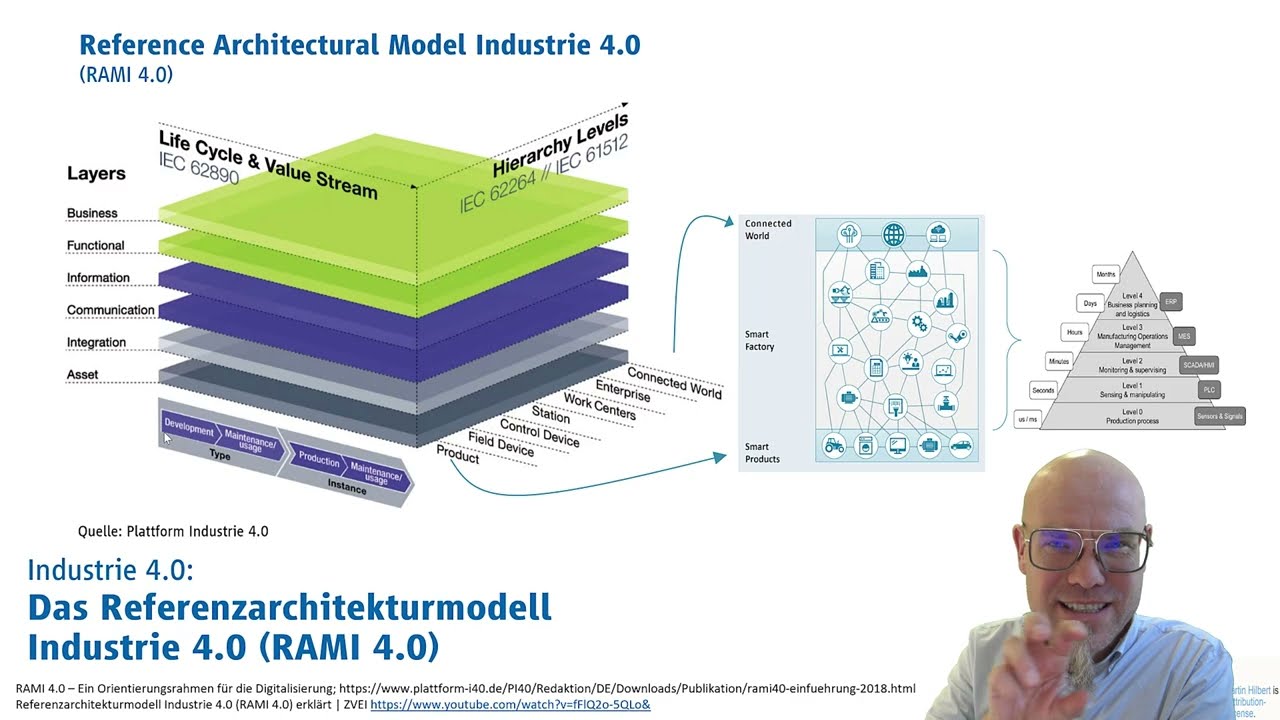
aligns with the most common digital thinking Frameworks that are used in Industries and in engineering and in standards so I I will walk you through that but it has basically everything it has the tech it has the social change and it has the social construction that's why it's useful it's never forget the social construction you could also do the other way around right social change is socially constructed through digital technology now what we will work our way up to during these lectures is this third dimension the managing change and that is often forgotten often we
also train Us in the University via GLT we train our students like to become really good engineers and that might also be here whatever business mbas business Engineers or political scientists and whatever that have you know good understanding of how to create and change actually society and then with companies just go out and do things or with public sector strategies but actually here this managing change that is it's a science by itself and that's what we will work our way up to and we have to understand understand that Nessa said in systems and systems theory
and complex adaptive systems which I've been trained in there are two different ways of managing change of you know emerging in an emergent so system and that is you can stabilize it or you can reinforce it now very broadly speaking you can think about it as the stick and the carrot and that's we could think about it that way so let's start with that so so for example you have regulation you could through you know regulation on it and many companies also regulate say that that is our business philosophy and that's what we do and
that's what we not do governments we have regulations and have laws or you can give incentives so you have the carrot so you have the stick and the carrot basically and you give subsidies or you Foster you hire more people and tell them to work in this new Division and you try to create something new so you give incentives with that so we will play around then with this Cube it's kind of like magical Cube that we can also take apart during the different sessions and we can focus on very specific things just like really
on the technical hardware and see what are the Innovations that's going on there be it in deep neural Nets or in the blockchain for example in a 3D metaverse infrastructure or you can zoom in on a specific application for example regulation or legislation for e-government and for for the infrastructure that we have there data privacy laws for municipalities for example my one of my master thesis I've been a long time ago focused on on that and you can really like you can write an entire Master thesis about that it's it's amazing or you go cross-cutting
services for example generative artificial intelligence is very important you can have some projects to say okay let's use generative intelligence for well socially constructed for the good for world peace for better understanding of different cultures for example and that can affect many different aspects of it a generative AI that Fosters diversity and and lessons discrimination for example so you could have incentives working towards that or you focus on a specific sector and say like oh I focus on Hardware software on human in a specific sector that could also be E-Business and you focus uh you
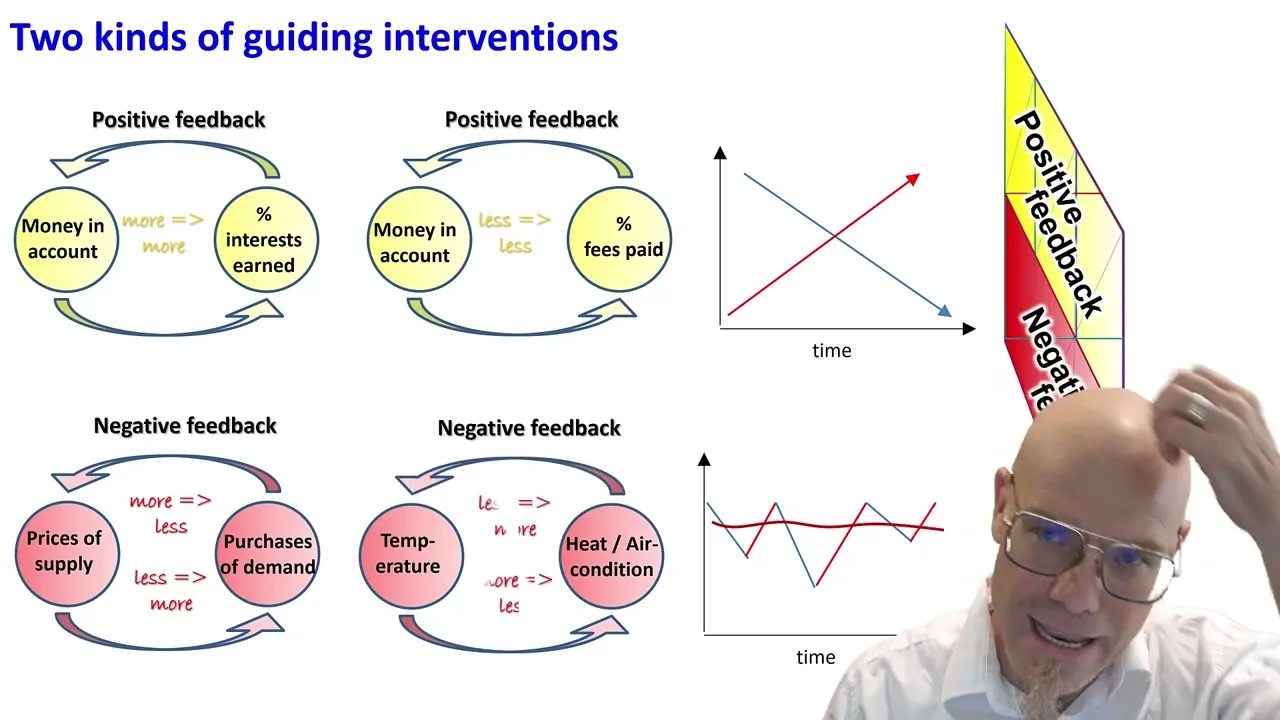
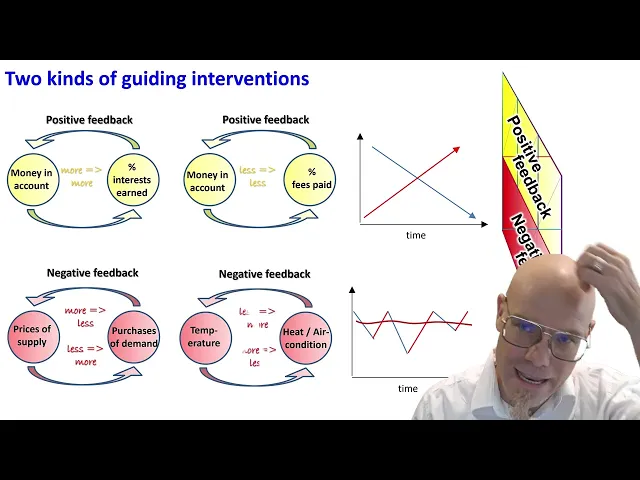
use all the tools you have at hand you can reinforce some regulate some others so let me maybe take a couple of minutes to talk about this positive and negative feedback and in the last parts of this exploration and there are several lectures that have of content between that we will get back to that so I wanted to start also start out with that and that's the positive and negative feedback and just show you and explain because otherwise I always get a lot of questions what this is actually about well okay what is positive and
what is negative feedback in complex systems theory well these are basically that's all you can do in a system so you have an emerging system going on like a social system and you can focus on different aspects on the politics on the economy on the on the health on the education whatever you want and then you can do two things either you can put oil into the fire blow it up or water into the fire and turn it out both of them are positive feedback or you can kind of like regulate the file and keep
it like in the middle and that is called negative feedback funny huh so negative feedback doesn't mean turn the fire out it just means you stabilize the size of it positive feedback is either blow it up oil in the fire or water and completely extinguish it so both of that is positive feedback think about it give you some examples for example one example of positive feedback is you would have money in your account you earn interest oh then you have more money in your account right well then if you have more money account you earn
more interest well then you have more money in your car then you earn more interest so you basically that's positive feedback so it goes up over time that's what I said put oil into the fire but it could also be you have money in your account and then you pay a fee so then you have less money in your account and and then if you again have to pay a fee you have less money in your account and then if you can have to pay a monthly fee you have less money in your account at
the end you know like you won't have any left because every every month they take out that fee and what what you're left with that you go you go towards zero both of that is positive feedback because you just keep on going in One Direction now negative feedback stabilizes it and that's a lot of the supply and demand Dynamics for example so you have the prices and then you have purchases of demand so if prices are higher people buy less because who would buy such expensive stuff now if people buy less and like hey I'm
not selling anything maybe I lower the price so you lower the price then people buy more because hey it's really cheap right and then if they buy more then you say like hey that's so popular maybe I should increase the price and then they so it stabilizes that's what supply and demand does so we would say that's negative feedback it stabilizes the price stabilizes oh and it keeps it eventually in the middle it might go up and down zigzag a supply and demand or think about a thermostat so if the temperature in the room and
then if it gets too hot the air condition turns on the air condition turns on and it brings it down and then the temperature goes goes too much down if it's too low then the heat goes on and then as I saw the term thermostat basically keeps it it keeps it in the middle so these are the two ways you have in order to manage change and I come from this complex adaptive systems approach where technology has agency and we weave it into the social Evolution so we will talk a lot about evolving social systems
complex evolving social systems they can be in this same now I make it a little bit more complicated so for example if you have if you get a lot of training and you're well trained well then you're really prepared so you have more chances of winning a scholarship right because then you're like you're really good so you might get a scholarship now if you get a scholarship then you have more training and you might get a a better scholarship and then you are really and then you get more so this is a positive feedback cycle
but it might also be the other way around like you don't get that scholarship so well then you have you know to take up a job which actually doesn't allow you to study so you don't have a lot of training you apply for the next scholarship and they say like who like no that's like cannot even write straight because you're like between this job and you don't really have you know it gets less and less it's like a vicious circle downward both of them a positive feedback again oil or water into the fire negative feedback
uh would be again supply and demand Dynamic is the typical example of that so there are a lot of I.T professionals so I don't need a lot of scholarships I I have enough but if I don't have enough scholarships maybe people say like oh no I cannot you know study it so so I don't have enough I.T professionals so I have to increase the number of scholarships now if there enough scholarships then I get more I.T professionals and then if I so again so it can also be you know more is less and less becomes
more and that stabilizes again so I hope this is clear now I just wanted to take it away we will get to back to that in the last in the last sessions but I wanted to say that's what we work our way up to but before we get to that we have to really work through this what the technology is what social change is and how they go together and then we can see how we socially construct it and weave it in it's a very you know it's these are emerging phenomenas that that we're dealing
with now before we get there let me tell you one last caveat and that is already in the slides that I showed you the slides with you know the progress and the evolution and the different technological The Innovation Theory it seems like we always make progress and that's that's how it is and that's good let me be very clear before we get starting on this exploration that I want to tell you I do not know and nobody knows technological progress is that it's progress and it's not necessarily equal to development either so when I was
working for over decaded United Nations we call it development and that's different human development stiff and also than progress and technological progress so I just want to put this out there progress comes from it comes from the Latin word Pro greedy and that means to move forward so you basically walk you advance you you progress you move forward and which direction we don't know and sometimes it's not it's not clear the direction and then we find out a hundred years later that oh you know what with this combustion engine actually like are we heating up
the planet like is that actually what a bit like can we get to put this Genie back into the oh maybe we should positive negative like what we have left oh my goodness should we do something or maybe you know what so the direction that we progress with technology also I mean it's socially constructed and it's in our hands and it is also different then development and who knows if development is actually also the right thing so develop is the opposite of envelope so D valve means it like rolls out envelope like you roll it
in and that's in many different language in German you say antiviklo as the skating title is do you have the ones that rolling out so that means it's already all there just like to be rolled out like really because circular who knows he was correct so I just want to also make clear that I'm also not certain as well as nobody and we have to be all we need to do is really you know spend some time think about these issues as well technology and progress and how we push it and how it affects Society
how we socially construct our reality and what direction we want to progress to so urgently and what we want to roll out and maybe some things that I don't roll out who knows and sometimes maybe it's good to go back and circle anyways I wanted to have this as a caveat as well Joseph but this is the framework we will work with and in the following session we will go much deeper around and playing around with the cube and I'm looking forward to that










![ACCA BT Week 3 | [PODCAST] | Microeconomics | Social Factors | Technology | Sustainability](https://img.youtube.com/vi/G1-MbvXRlqc/maxresdefault.jpg)