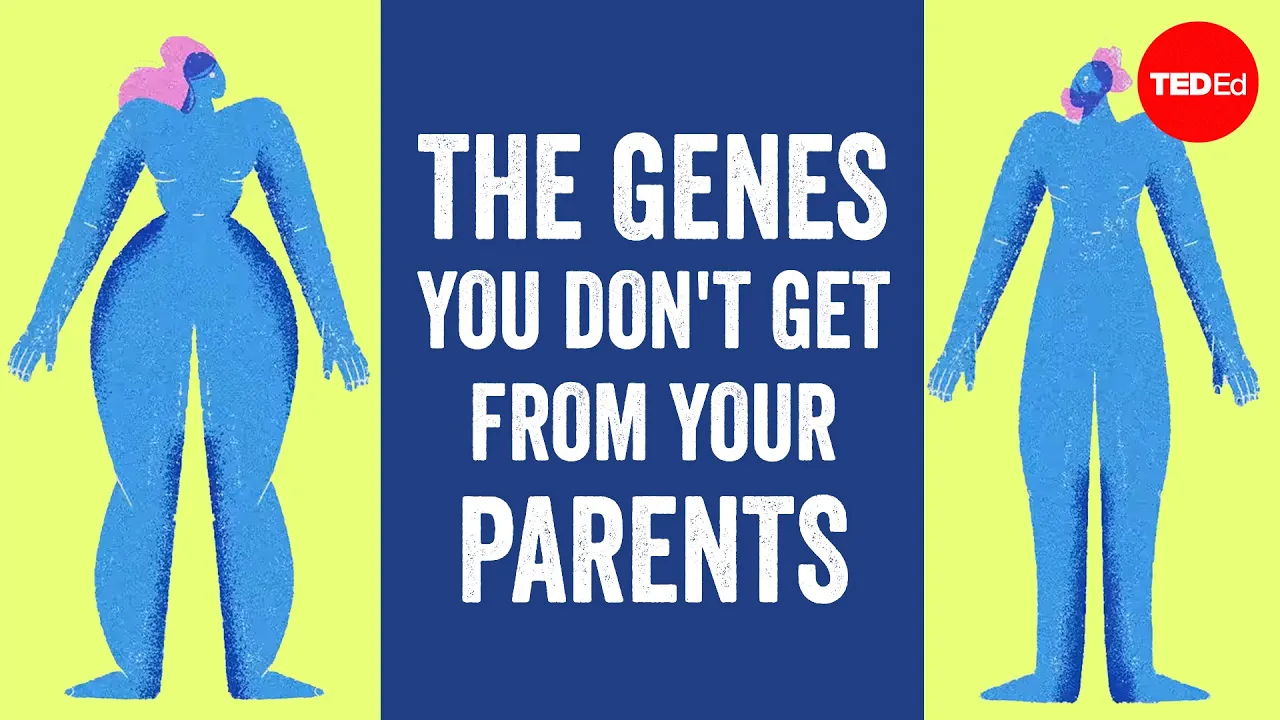
Inside our cells, each of us has a second set of genes completely separate from the 23 pairs of chromosomes we inherit from our parents. And this isn’t just the case for humans— it’s true of every animal, plant, and fungus, and nearly every multicellular organism on Earth. This second genome belongs to our mitochondria, an organelle inside our cells.
They’re not fully a part of us, but they’re not separate either— so why are they so different from anything else in our bodies? Approximately 1. 5 billion years ago, scientists think a single-celled organism engulfed the mitochondria’s ancestor, creating the predecessor of all multicellular organisms.
Mitochondria play an essential role: they convert energy from the food we eat and oxygen we breathe into a form of energy our cells can use, which is a molecule called ATP. Without this energy, our cells start to die. Humans have over 200 types of cells, and all except mature red blood cells have mitochondria.
That’s because a red blood cell’s job is to transport oxygen, which mitochondria would use up before it could reach its destination. So all mitochondria use oxygen and metabolites to create energy and have their own DNA, but mitochondrial DNA varies more across species than other DNA. In mammals, mitochondria usually have 37 genes.
In some plants, like cucumbers, mitochondria have up to 65 genes, and some fungal mitochondria have only 1. A few microbes that live in oxygen-poor environments seem to be on the way to losing their mitochondria entirely, and one group, oxymonad monocercomonoides, already has. This variety exists because mitochondria are still evolving, both in tandem with the organisms that contain them, and separately, on their own timeline.
To understand how that’s possible, it helps to take a closer look at what the mitochondria inside us are doing, starting from the moment we’re conceived. In almost all species, mitochondrial DNA is passed down from only one parent. In humans and most animals, that parent is the mother.
Sperm contain approximately 50 to 75 mitochondria in the tail, to help them swim. These dissolve with the tail after conception. Meanwhile, an egg contains thousands of mitochondria, each containing multiple copies of the mitochondrial DNA.
This translates to over 150,000 copies of mitochondrial DNA that we inherit from our mothers, each of which is independent and could vary slightly from the others. As a fertilized egg grows and divides, those thousands of mitochondria are divvied up into the cells of the developing embryo. By the time we have differentiated tissues and organs, variations in the mitochondrial DNA are scattered at random throughout our bodies.
To make matters even more complex, mitochondria have a separate replication process from our cells. So as our cells replicate by dividing, mitochondria end up in new cells, and all the while they’re fusing and dividing themselves, on their own timeline. As mitochondria combine and separate, they sequester faulty DNA or mitochondria that aren’t working properly for removal.
All this means that the random selection of your mother’s mitochondrial DNA you inherit at birth can change throughout your life and throughout your body. So mitochondria are dynamic and, to a degree, independent, but they’re also shaped by their environments: us. We think that long ago, some of their genes were transferred to their host’s genomes.
So today, although mitochondria have their own genome and replicate separately from the cells that contain them, they can't do this without instruction from our DNA. And though mitochondrial DNA is inherited from one parent, the genes involved in building and regulating the mitochondria come from both. Mitochondria continue to defy tidy classification.
Their story is still unfolding inside of each of our cells, simultaneously separate and inseparable from our own. Learning more about them can both give us tools to protect human health in the future, and teach us more about our history.