In the summer of 1962, a war of words between the United States and the Soviet Union and a number of nuclear tests on both sides increases tensions that had been mounting for years. Both sides are under increasing panic that the other will ‘press the button’ and launch a preemptive nuclear strike, possibly destroying the world in the process. I’m Indy Neidell and this is TimeGhost with the Cuban Missile Crisis In 1958, the Soviets, led by Nikita Khrushchev, demand a stop to nuclear testing to cool down the arms race.
The US sways no, but the Soviets stop testing on their own. So, under mounting international pressure, the US government and its allies agree to stop tests and a de-facto moratorium went into effect. In an attempt to make the test ban permanent, negotiations between the US, Great Britain, and the Soviet Union begin in Geneva.
But here’s the thing, as we saw in the preludes, the Soviets are seriously inferior to the Americans in terms of nuclear strength. Alt-hough both governments know this, the public on both sides is largely unaware and the public perception is a missile gap to the Soviet Union’s advantage. In reality, with mid-range missiles in Italy and Turkey, the US is now not only the stronger, but also the only side that can effectively carry out an initial strike without ensuring complete self-destruction from the retaliation.
In the Soviet Union, political and military pressure increases on Khrushchev to do something, anything, to at least keep up the semblance of a balance of nuclear power, but Khrushchev holds fast to the test ban. By early 1960, the cold war belligerents reach a tentative agreement in the ongoing Geneva talks, but the situation changes when an American U2 spy plane is shot down over Russia May 1st. A solution as to how to effectively enforce a ban seems further and further away as the already fragile mutual trust is now severely dam-aged.
By the end of the year, war hawks on both sides call increasingly for resumed testing. When the crisis over West Berlin breaks out in June 1961, the Soviets end the moratorium and will resume testing beginning September 1. The US soon follows suit.
On October 30th, 1961, the Russians shock the entire world when they set off a staged thermonuclear bomb called RDS-220, over the Novaya Zemlya Island in the Russian Arctic Sea. The bomb is nick-named 'Tsar Bomba’ in the West. In the USSR, it is referred to as ‘Kuzkina mat’ (Kuzma’s mother), which is also an idiom meaning roughly ‘we’ll show you!
’ that had been said as a threat to the West by Khrushchev at the United Nations the year before. Now, Tsar Bomba is a truly terrifying device. In a staged thermo-nuclear device, several separate cores boost the nuclear reaction, right?
Theoretically, you can have as many layers as you have nu-clear material, making it possible to construct a bomb that blows up the whole planet - anything more than two stages is considered excessive even by nuclear bomb proponents. Tsar Bomba has three. The cores implode sequentially on each other, compressing the nu-clear material and setting off an outward chain reaction - the actual explosive power.
The immediate explosion expands into a huge fireball before reaching 100 million degrees Celsius - the same temperature as the interior of the sun. The initial explosion also emits thermal radiation traveling at the speed of light, instantly igniting anything within its radius. The heat created inside the fireball causes a thin shield of air to expand violently within fractions of a second of detonation.
This hydrodynamic front acts like a piston on the surrounding medium and sets off a massive shockwave that accelerates outwards at more than a thousand km per hour. In Tsar Bomba, the combined force of thermonuclear blast and shockwave make for an explosion 50 million times stronger than a metric ton of TNT. It remains the largest manmade explosion ever set off, 3,800 times stronger than the Hiroshima bomb.
The detonation is 4 km, or 13,000 feet above ground, and it still triggers an earthquake of 5. 0 on the Richter Scale. The mushroom cloud is close to 60 km high - that’s seven times as high as Mount Everest.
Objects within in a radius of 35 km are completely destroyed and the heat from the bomb can be felt hundreds of kilo-meters away. It actually defies human imagination in many ways, so let’s try to put this into perspective. Let’s say that the bomb is set off over the Eifel Tower in Paris in our time in clear weather.
The light flash as it goes off can be seen from more than 1,000 km away – so in Berlin, Dublin, or Barcelona. The fireball engulfs and instantly incinerates more or less all of the western half of the inner city, about two million people just evaporate. The thermal flash is hot enough to instantly ignite wood in the rest of the inner city and the better part of the Parisian suburbs – so millions more die in the flames.
Thermal radiation strong enough to create third degree burns extends to 60 km (37 miles). Thermal radiation from the bomb only becomes harmless at a distance of 129 km (80 miles) - That’s roughly the distance to the next big French cites; Rouen close to the Normandy coast, Amiens in the North, Reims in the East, and Orleans in the South. At ground zero, it blasts a crater around 1.
5 km (one mile) wide and 1100 feet, or 335 meters deep - that is deeper than the Eiffel Tower that was high. The shockwave travels outward at hundreds of meters per second, wiping away pretty much any manmade construction still standing. The whole inner city of Paris is now flattened.
The shockwave continues to wreak havoc on the suburbs, destroying most houses in a 21-kilometer radius including the Pal-ace at Versailles, the Louvre, and of course killing yet more people. Houses are damaged and all windows blown out for another 25 - 46 km from ground zero, that’s about a third of the distance to the English Channel - yet more people are killed and injured. The blast has now destroyed millions of homes and workplaces, 130 hospitals, 88 fire stations, 155 schools, and over a thousand places of worship.
Millions are already dead and injured, and any survivors have no immediate humanitarian and medical aid at their disposal. Within the next months, countless more will die from radiation sickness and their wounds. Over Paris, the bomb kills close to 7 million people and injures another 2.
5 million. In an instant, one single bomb has created a human tragedy nearly on the scale of a world war. The Soviets might have been behind in the number of warheads and deployment devices, but they now have the strongest bomb.
The cold war is heating up fast and the US soon resumes atmospheric tests of its own. But it’s not only tests that fan the flames - the rhetoric is also sharpening. On October 21st, a few days before Tsar Bomba, Kennedy lets Khrushchev know that the US knows full well that the missile gap is a myth.
For a speech in Hot Springs, Virginia, Kennedy tells his Deputy Secretary of Defense, Roswell Gilpatric, to let everyone know for the first time—and let Khrushchev know the US knows—that there is no missile gap. He reveals the actual number of US missiles and emphasizes that even after a Soviet strike this arsenal would be enough to destroy the Russians. Up until this day the Soviets may have really believed that the US actually believed in the missile gap.
Khrushchev knows without a doubt that this jig is up. Yet he continues the rhetoric – his standard response to questions on the missile gap is ‘Yes I know what Kennedy claims, and he’s quite right. But I’m not complaining.
. . We’re satisfied to be able to finish off the United States first time round.
Once is quite enough. What good does it do to annihilate a country twice? We’re not a bloodthirsty people.
” Although this might sound polite by today's standards, it has effects. Both Khrushchev and Kennedy come under pressure to act on the threats. Khrushchev makes the first move in May of 1962 when he convinces Fidel Castro to let him place nuclear missiles on Cuban soil.
By June, the work has begun, and soon a trickle of re-ports on mysterious Russian shipments to Cuba, blank cargo statements, tarpaulin covered machinery, night time unloading of equipment under heavy guard, and increasing soviet presence on the island reach US officials. Meanwhile, the nuclear tests on both sides proceed. Between 1961 and 1963, the Soviets and the US carry out more than 200 nuclear tests.
In the summer of 1962, they turn their attention to high altitude tests, partly to see if nuclear weapons induce Electro Magnetic Pulses- EMPs- thought to be an effective way to knock out electron-ics and infrastructure. As it turns out, they are right. On July 9th, 1962, the US carries out the Starfish Prime test 400 km above the Pacific Ocean.
The 1. 4-megaton bomb creates a spectacular light show in the sky, but also knocks out a number of satellites, caused power and telephone line outages in Hawaii, and even making Hawaiian streetlights explode. The nuclear radiation band that it spreads across the top of the stratosphere severely damages the worlds first TV and telephone satellite, Telstar 1, which is launched a few days after the detonation.
Although it is made functional and makes the first ever satellite relayed telephone calls ad TV broadcasts, it does sustain serious radiation damage. In November 1963, shortly after Kennedy’s assassination, it fails terminally. Tests in Russia have similar effects.
Kennedy is still under attack at home for being ‘soft on communism’ so more tests, more rhetoric, and more mysterious shipments to Cuba put the nuclear arms race at the top of the political debate in the US. On August 31st, 1962, Senator Kenneth Keating brings the reports on possible missiles on Cuba to the attention of the Senate, and urges Kennedy to take action. Instead of increasing intelligence gathering, though, the White House chooses to restrict aerial reconnaissance by U-2 spy planes over Cuba for diplomatic reasons.
So on September 15th, the first actual Soviet missiles arrive on Cuba and the US doesn’t notice. Nevertheless, the reports on suspicious Soviet activity in western Cuba keep on coming in. In early October, the National Security Council relaxes the restrictions on the U-2 flights, but bad weather and red tape delay them until Oct.
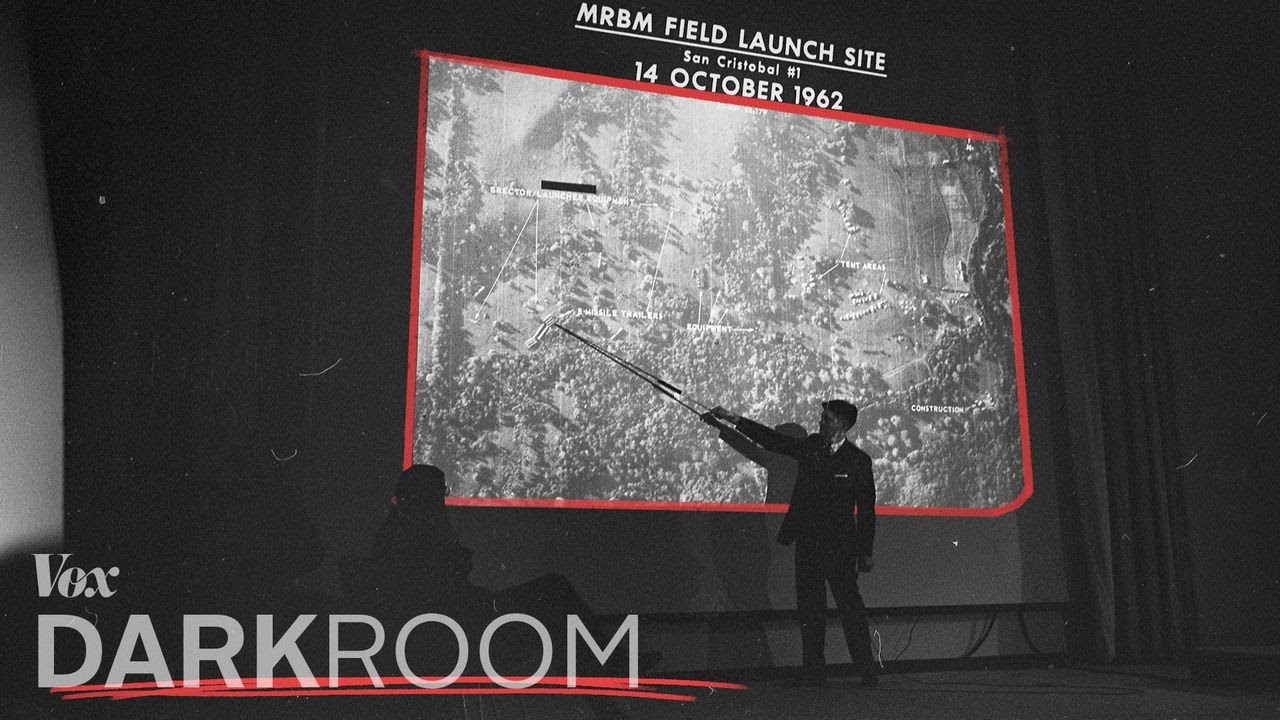
14th. On that day, the first flight crosses the island of Cuba and brings back photographs of what analysts at the National Photographic Interpretation Center determine are three MRBM launch sites near San Cristobal. The CIA informs the President's National Security Adviser, McGeorge Bundy, on the evening of Oct.
15th, and Bundy tells President Kennedy the following morning. The hard words, the threats, the blustering, the missiles in Turkey and Italy, the increased nuclear tests, and the overwhelming might of the US nuclear arsenal have not deterred the Soviets. Instead, it has forced them into a corner and made them more dangerous than ever.
Kennedy now faces the most dangerous crisis in the his-tory of humanity. In the next thirteen days, we’ll see the world not only come close to a new world war, but almost step over the precipice into total nuclear holocaust. See you tomorrow on Day One.
The 13 episodes for the 13 days of the crisis will be released daily, subscribe and ring that bell to NOT miss any of the action. Also, we worked out the effects of Tsar Bomba on Paris using Nukemap by Alex Wellerstein. Nukemap lets you calculate the devastation of any given nuclear device for any place on the globe.
If you want to understand more about the devastating effect of nuclear arms, you can click here to check that out. It is the TimeGhost Army that funds this, our WW2 in real time project, and all of our programming. Join the army at TG.
tv or patreon. com. See you tomorrow!