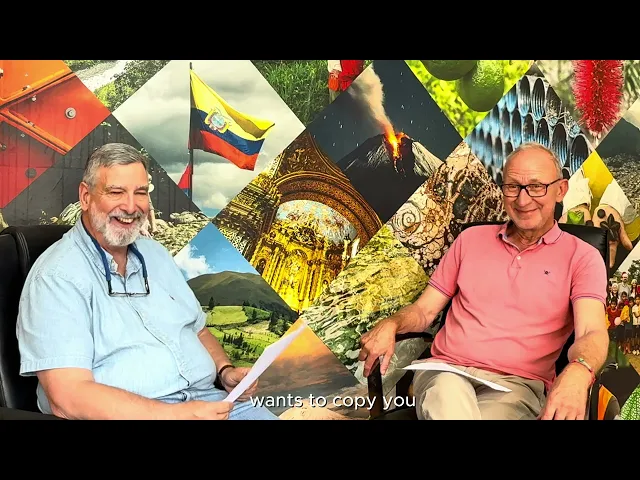
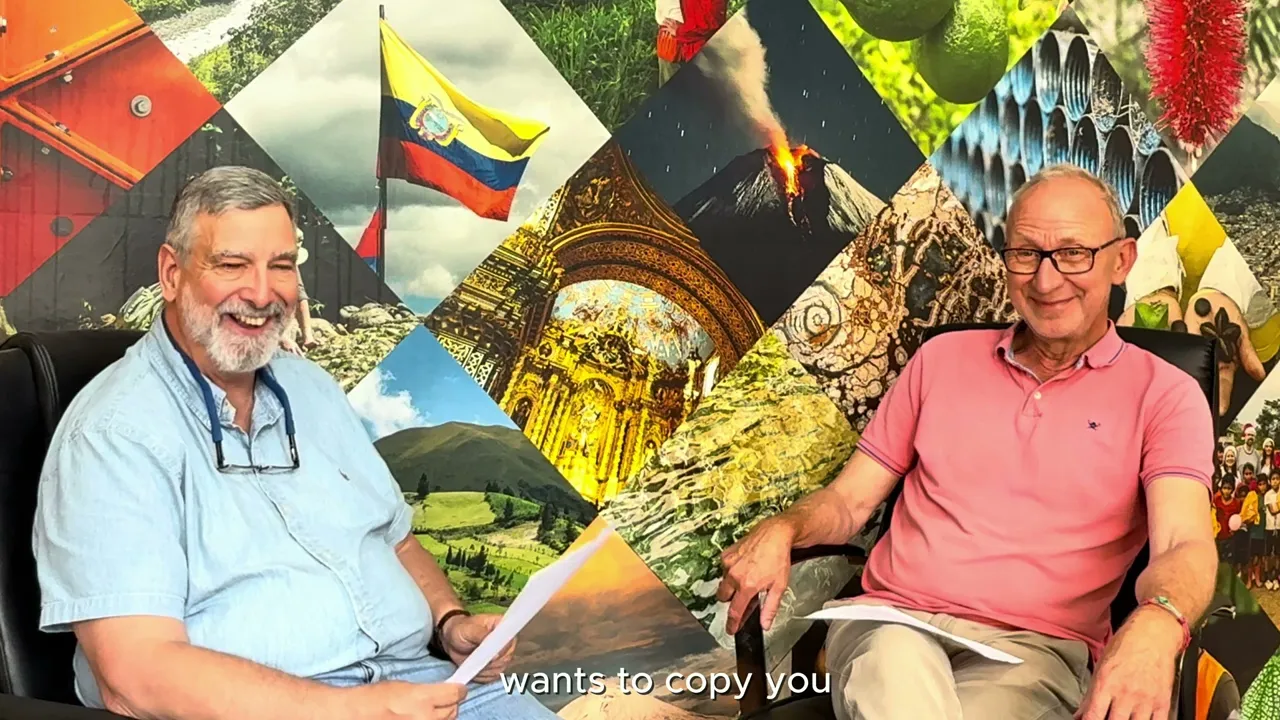
[Music] Hello everyone. Um, so I'd like to introduce uh the great uh Professor Gregor Borg who's come all the way from Germany. Here we are in Ecuador.
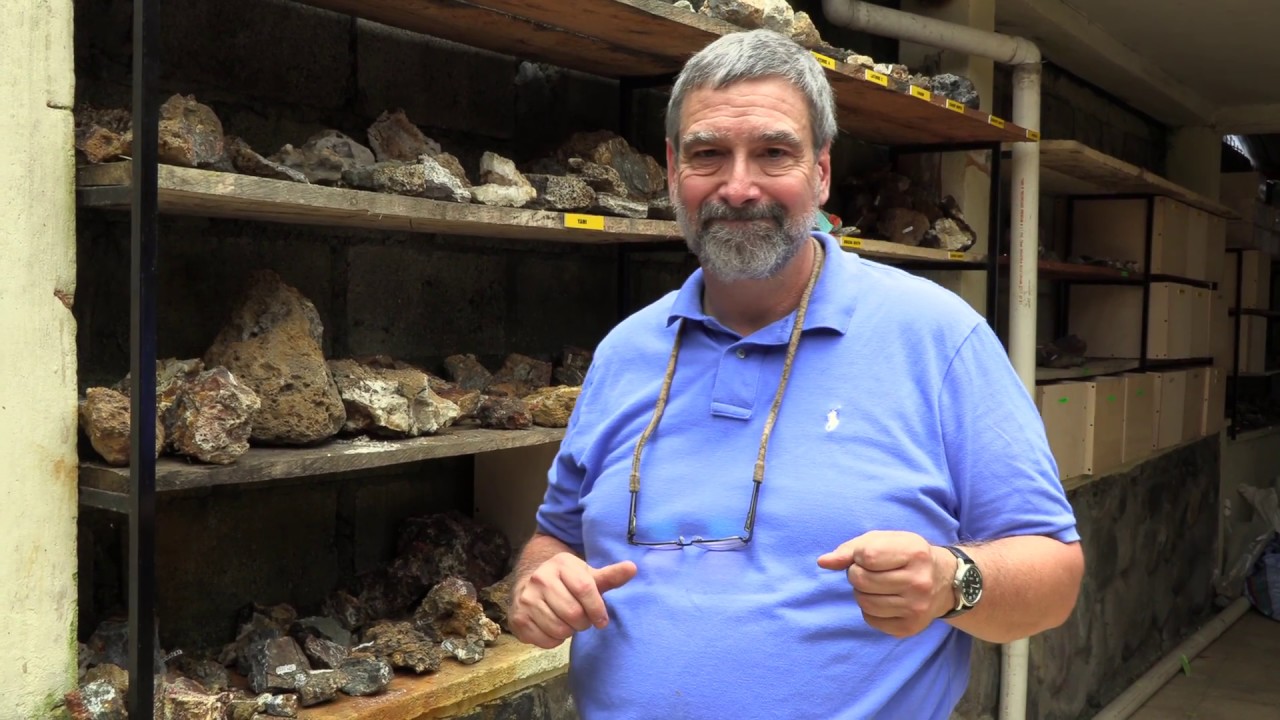
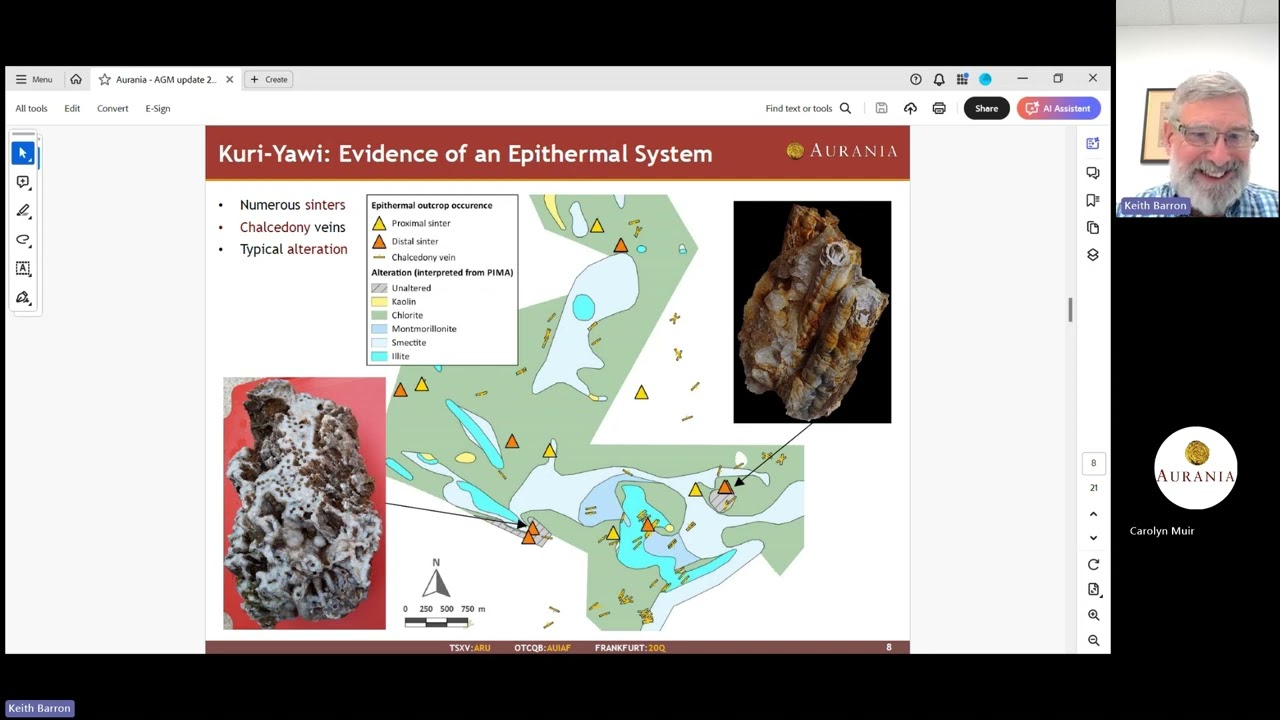
And u on camera I'm going to ask him a bunch of questions about uh Irania's project here in Ecuador. They're all kind of uh uh simplistic questions. Um but uh probably the sorts of things that investors have been asking and uh we could wax philosophical about these things for hours of course and we often do uh but we'll try to keep it a little bit short.
So um the first question please and and Gregor is one of the renowned experts in the world on sedimentary hosted copper and silver deposits. He's worked very very extensively in the Cooper sheeper in uh eastern Germany and in Poland and other places worldwide. And um we have uh we believe we have an analog to uh those sorts of systems on our project.
In fact, we found silver and copper mineralization standing across our property for 22 kilometers. Hence we need some help and this is the gentleman to provide it. So, number one, what most caught your attention about the Lost City's curfew project from a geological perspective?
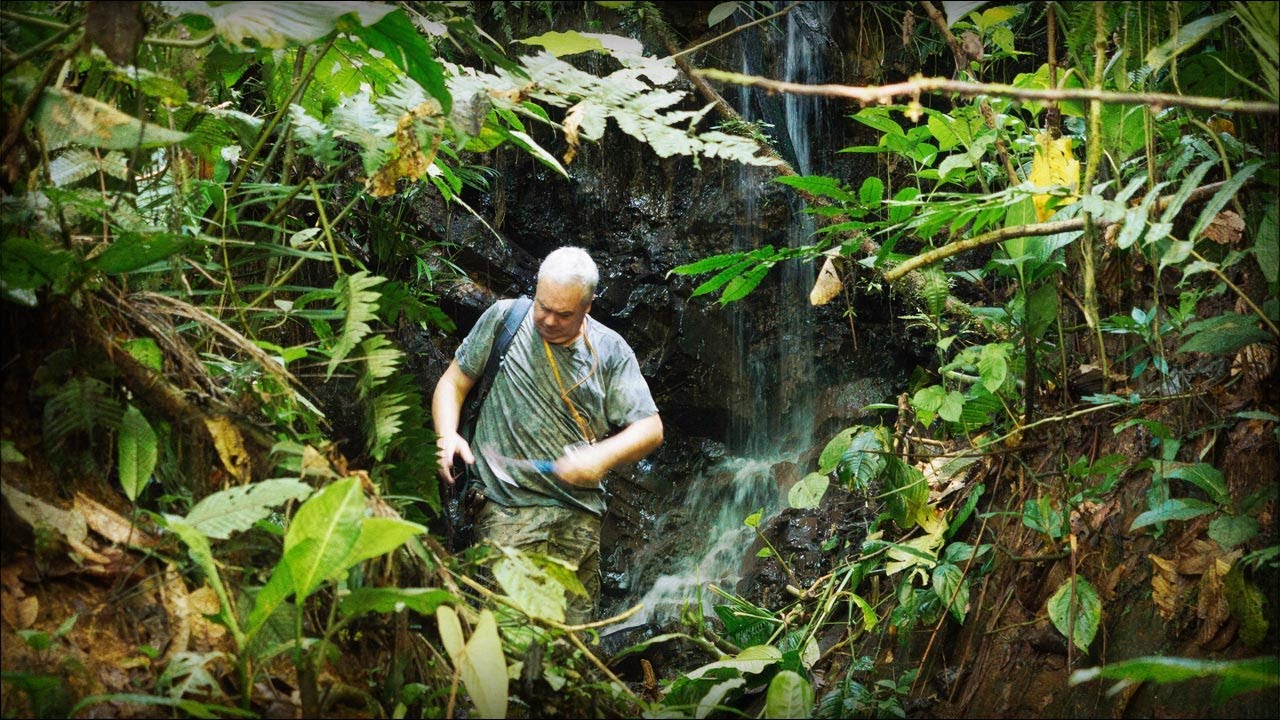
Well, first of all, thank you uh Keith for bringing me here and I'm very happy to be back in Ecuador. It's my fourth visit and I'm still very impressed and more impressed with what I see. Well, to answer your question, what right from the beginning has fascinated me that your approach and approach of your the approach of your team on this project has combined historical archive work of what the concistadoras have done in South America a long time ago with exploring for gold and combined this work with the most modern exploration techniques whether that's geohysical, geochemical, mapping in the field sampling and that is is a fantastic and I think unique combination and the success that you actually have been able to locate some of the Spanish concistadoras or deposits and the mining traces that you have found there is actually a very very nice proof that this concept is highly applicable and applaudable that you combine historical work in archives up to the archives of the Vatican of all places together with the most modern exploration techniques that I can think Thank you.
Thank you. Yeah, we're very proud of our our activity. Number two, uh why would you consider this region unique from the perspective of geodamics and the formation of mineral deposits?
Well, part of this is not very unique because we are in a situation where we have got one of the biggest subduction zones of the world where the Pacific Oceanic plate is subducted under the South American continent and has built a large origin the Andes and we have in North America we also have in Indonesia and we have in other places we have situations like this and for these plate tectonic situations it's very typical that we're finding pfrey copper deposits, pfrey copper, porefree gold, porefree molly deposits, but also ether thermody deposits. What is so unique here is that behind this origin, that means on the eastern foot of the Andes and on the fringe of the Amazon in an area with very very little outcrop, you have sedimentary basins. We call these back ar basins.
They are grains and they are formed from the Jurassic through the Cretaceous. And in these grains we have the erosional debris of this origin of the Andes. But interestingly enough you have discovered that here you've got substantial sediment hosted copper silver deposits copper zinc silver deposits.
We must actually say and that is a very unique combination that I don't know from anywhere else in the world. Although following your success in discovering this, other companies to the north and to the south have also identified similar prospects in Colombia and in Peru. So you have delivered the proof of concept and now other people are following this and that's very exciting.
Well, it's uh it's it's always impressive when somebody uh wants to copy you. Uh and certainly we had uh we've had some good success. uh what real potential do you see in this area in terms of strategic metals like copper not just gold?
Well, as you mentioned the gold and we talked about this just before the gold has been of interest already to the spanets. So it is sort of a constant that one goes to the Andes and looks for pfer gold, one looks for epiothermal gold. These are classical deposits that made it into all textbooks.
But the copper in here not only from the poffer which is the biggest source of supply of copper worldwide but followed immediately by sediment hosted copper. There are big provinces where you have sediment hosted copper in the European goodie in Germany and Poland you mentioned it already but also in the Kalahari copper belt and in other places. So this is well known but the combination of the two is something completely new.
So to have a combination of pferric coppers and sediment hosted copper is very very interesting and the copper is one of the strategic metals. It is not really a rare metal. It is not so seldom.
There are plenty of deposits worldwide, but at the same time, we need huge quantities because for the electrical transition from combustion engines to electrical engines, we must remember that an electrical vehicle needs three times much as much copper as a combustion engine vehicle. So, it is one of the most pressing strategic metals in big quantities. And this combination makes it necessary that we look for deposits that have this combination of sediment hosted copper with the pfery coppers and even the epiothermals although they provide a little copper but mainly don't.
Mhm. Well, thank you. Um certainly this is a very very unique area and I' I've often said that we have a basically a cornucopia of resources on our our project.
uh lots and lots of of different well lots of smoking guns how can we say it that way uh and lots of potential for uh mining in different metal scenarios so the final question if I can of why do you think it's important to continue the scientific research in underexplored areas like this well that is a question that is easy to answer I think that you have found a new deposit type here because when I said before that globally I don't know any other locations except for the extensions to the north and to the south which what we is what we call a metalotex so that has the same patterns it is completely new that we have this combination of sediment hosted copper and pfrey coppers and epiothermals so we can see that the pferries and the epiothermals have apparently contributed to the metal budget. We don't know how much. We don't know what the conduit, the channel ways have been, how they found their way into the sediments.
And that is something that is not really researched neither on the academic side, not on the applied side in exploration. So when we have our discussions here about these numerous exploration targets that you have identified and that all need drilling now they need geo physics and they need drilling because if we don't drill we don't know what's underneath and we have to go deep because everything is covered by soil and thick vegetation in the Amazon. So this cannot be done by scientific research and you've been able to talk to and to um acquire quite a fantastic network of people that have a fantastic knowledge of the area and they bring the individual expertise like on sedimentry and sequence strategraphy like Christian BO that you have brought into the team and I'm very impressed by that.
Mhm. Well, thank you. Thank you.
Yeah, it's um it's a very very impressive opportunity and and we really are I believe at the forefront not just of of scientific research but certainly uh of exploration here in South America. Well, thank you very much. Uh I really really appreciate uh all that you've done and all you are doing your your contribution to this project.
I think ultimately we're going to be very very successful. I may not name the mine after you but uh Uh certainly uh you're going to get a lot of credit and uh thank you very much for being here, Keith. Thank you very much for bringing me into this team.
It's a fantastic team. I really love doing this and it's the best sol. Fantastic.
Thank you.