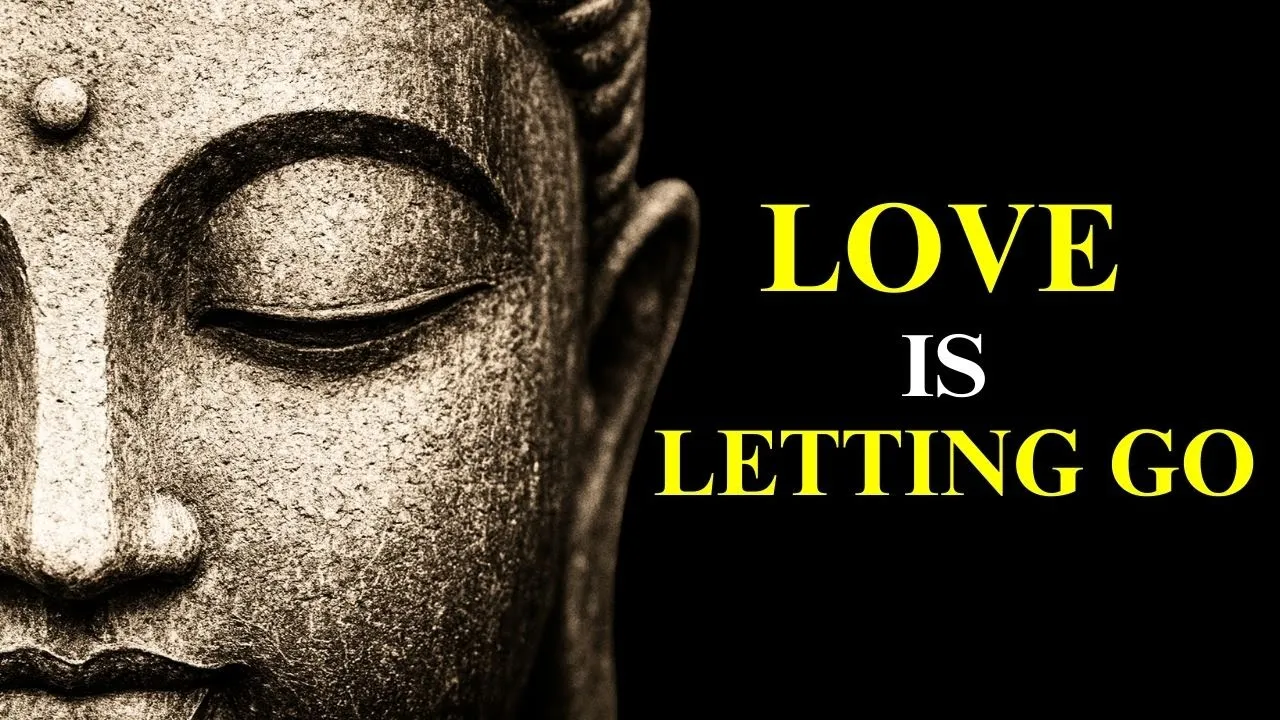
You've been taught that love means holding on, that caring means never letting go, that if you truly love someone, you must cling tightly so nothing is lost. But if that were true, why does love so often feel painful? Why does attachment create fear? And why does caring slowly turn into anxiety and control? Why do you feel uneasy when someone changes? Why does distance feel like danger? And why does love sometimes Feel like something you could lose at any moment? The truth is this. Love was never meant to be held. It was meant to be lived.
Buddhist teachings reveal a deeper truth, one that quietly changes everything. [music] Detachment is loving without clinging. It is being close without grasping. Caring deeply without trying to own. Detachment is not coldness. It is not abandonment. And it is not emotional distance. It is warmth without possession, presence without Pressure. Love without fear. For centuries, Buddhist wisdom has taught that suffering is born from attachment, from gripping what is meant to flow, from demanding permanence from an impermanent world. When you understand detachment, love becomes gentler, relationships become lighter, and the heart learns how to rest. As you listen,
your mind may begin to slow. Your chest may feel less tight. Old emotional habits may start to Loosen. You may realize that love does not disappear when you stop clinging. It becomes purer. This is not about letting go of people. It is about letting go of fear. This is not about distance. It is about trust. This is not about loss. It is about freedom. Something inside you is about to soften. Not all at once, but quietly and naturally. This is not just a lesson. It is a new way of loving. Detachment is loving without clinging.
Let's begin. Something shifts after Hearing that detachment is loving without clinging. It doesn't arrive as a dramatic realization. It shows up quietly like a pause in the mind, like a soft hesitation before old emotional habits take over. Thoughts about past relationships, moments of closeness, moments of tension begin to surface on their own. A question starts forming beneath everything else. If love is not meant to cling, then what has love been turning into without you noticing? At The center of this question sits a difference most people never slow down enough to see. There is a form
of love that feels warm, steady, and calm. It doesn't rush. It doesn't tighten the chest. It doesn't need constant reassurance. This is emotional warmth. It is the natural expression of care when fear is not running the show. Emotional warmth feels like being present without effort, like allowing another person to exist Fully without needing to shape them. It creates closeness without pressure and connection without demand. Then there is another form of relating that often wears the mask of love. It can sound caring. It can look devoted. It can even feel intense and passionate. But underneath it
carries tension. It needs reassurance. It fears distance. It reacts strongly to change. This is emotional ownership. Emotional ownership doesn't rest inside the connection. It Guards it. It watches it. It tries to secure it. The difference between emotional warmth and emotional ownership is not about how much you care. It is about where that care comes from. Warmth comes from inner stability. Ownership comes from inner fear. One flows outward naturally. The other reaches outward desperately. When emotional warmth is present, love feels spacious. You can be close to someone without losing yourself. You can care deeply without Monitoring
their behavior. You can enjoy their presence without worrying about their absence. There is an unspoken trust that the connection does not need to be forced [music] to exist. Emotional ownership operates differently. It quietly turns love into something that must be maintained, [music] protected, and controlled. It introduces fear into moments that were once simple. A delayed reply feels personal. A change in tone feels threatening. Independence feels Like distance. Without realizing it, the relationship becomes something to manage instead of something to experience. True love generates warmth because it does not need to hold. It does not arise
from lack. It arises from fullness. When you feel emotionally grounded within yourself, you do not need another person to regulate your sense of worth or safety. You are able to meet them as they are, not as a solution to an internal emptiness. Ownership often Begins when love is used to soothe insecurity. Instead of being an expression of connection, it becomes a way to stabilize anxiety. The mind quietly believes that if closeness can be guaranteed, then pain can be avoided. But this belief creates the very suffering it is trying to [music] prevent. Ownership slowly damages intimacy
because intimacy depends on freedom. Real closeness Requires the ability to be honest without fear of consequence. It requires the space to grow, to change, to have inner movement. When someone feels owned, they feel watched. When they feel watched, they begin to protect [music] themselves. They hold back parts of who they are. They shrink their truth to keep the peace. From the outside, the relationship may still look close, but inside something vital has withdrawn. What remains is compliance, not Intimacy. Togetherness without aliveness. Warmth invites openness. Ownership creates tension. Warmth allows disagreement without threat. Ownership turns disagreement
into emotional danger. When ownership is present, a boundary feels like rejection. A request for space feels like abandonment. A difference of opinion feels like disconnection. Over time, this creates emotional exhaustion on both sides. Many people confuse intensity with depth. Ownership feels intense because fear activates the nervous system. The heart races. The mind stays alert. There is a constant sense of urgency. Warmth feels quieter. It feels steady. It doesn't spike the nervous system. Because of this, unhealthy attachment can feel more powerful at first than genuine love. But intensity fades into fatigue. What once felt like passion
becomes pressure. Emotional warmth does not need constant proof. It does not count effort. It does Not search for reassurance. It trusts the bond without interrogating it. Ownership constantly checks for signs that love is still there. It reads into silence. It assigns meaning to small changes. It scans for threats that may not exist. This constant scanning slowly erodess trust. Not because the other person has done something wrong, but because being constantly assessed changes how people show up. When someone feels emotionally owned, they feel Reduced to a role. They feel responsible for another person's emotional stability. This
weight is rarely spoken, [music] but it is deeply felt. Warmth never makes another person responsible for your inner peace. ownership quietly does. Another place where the difference becomes clear is expectation. Emotional ownership carries expectations that often remain unspoken. Expectations about availability, about Consistency, about how someone should feel, behave, or prioritize. These expectations form invisible agreements the other person never consented to. When those expectations are not met, disappointment arises. That disappointment often turns into resentment, guilt or emotional withdrawal. But the pain does not come from what the other person did. It comes from the belief that
something was owed. Emotional warmth carries no hidden Contracts. It does not say because I care you must stay the same. It does not say because I give you must give back in the same way. It offers care freely [music] without demanding a return. Buddhist teachings point gently but clearly to this truth. Suffering does not arise from love. It arises from clinging. When the heart clings, it stops seeing clearly. It begins to relate to ideas, memories, and fears instead of the living person in front of It. Love [music] becomes tied to an image of how things
should be. Ownership often begins with good intentions. It may come from past wounds, from abandonment, from inconsistency, from a history where love felt conditional or unsafe. The nervous system learns to hold tightly because it believes holding tightly prevents loss. This pattern is understandable, but understanding it does not make it harmless. Detachment does not mean suppressing care. It means Releasing the belief that another person must remain constant for you to feel whole. When this belief loosens, emotional warmth returns naturally. Care becomes clean again. Presence becomes genuine instead of strategic. A detached heart can still feel sadness.
It can still feel longing. It can still grieve, but it does not panic. It does not demand reality to be different in order to survive. It allows emotions to move without building an identity around Them. When emotional warmth leads, love feels light even when it is serious. There is room for silence without fear. There is room for difference without threat. There is room for change without collapse. Ownership tries to shrink uncertainty by narrowing the relationship. Warmth meets uncertainty by widening the heart. This is why ownership quietly kills intimacy. Not through dramatic conflict, but through slow
pressure. Each moment of unspoken Expectation, each instance of emotional monitoring, each subtle guilt drains vitality from the connection. Over time, love begins to feel like responsibility instead of joy. Warmth keeps intimacy alive because it allows movement. It allows two people to meet each other again and again as they actually [music] are, not as they used to be. It does not ask the past to guarantee the future. The body often recognizes this difference before the mind does. Warmth Feels like ease in the chest. Ownership feels like tightness in the stomach. Warmth feels open. Ownership feels contracted.
Paying attention to these signals reveals where love is flowing and where it is being gripped. Letting go of ownership does not mean tolerating disrespect. Detachment does not erase boundaries. It clarifies them. You stop trying to control outcomes and start responding honestly to what is present. You stop using love as leverage and Start offering it as presence. From this place, intimacy does not need to be protected. It exists because it is allowed. Something begins to feel different after seeing how emotional ownership tightens love. The pressure no longer looks dramatic or obvious. It reveals itself in quieter
places. In moments that once felt harmless, concern, advice, help, protection, you may start noticing how some forms of care felt heavy instead of supportive. How certain gestures of love carried tension instead of ease. This is where attention naturally shifts not outward but inward toward the way compassion itself can quietly change shape. Compassion in its natural state is gentle. It notices suffering and responds without urgency. It does not rush to correct or interfere. It does not [music] demand progress. It does not need to be effective to feel valuable. It simply stays present with what is. This
kind of compassion feels calm in the body. It does not tighten the chest. It does not create anxiety in the mind. It allows space for another person's experience to unfold. But compassion does not move through an empty system. It moves through memory, fear, identity, and expectation. When fear enters, compassion can slowly lose its softness. It leans forward. It becomes alert. It wants results. It wants reassurance that things will turn Out okay. Without being noticed, care starts to carry tension. This is where clinging begins to distort compassion. At first, the shift feels responsible. You care deeply.
You want to prevent pain. You recognize [music] patterns from your own life and want to save someone else from repeating them. You speak more. You suggest more. You step in sooner. None of this feels wrong. It feels loving. It feels necessary. But beneath these actions, a subtle change Has taken place. The discomfort you feel is no longer only empathy. [music] It is personal unease. The other person's struggle activates something inside you. [music] Their uncertainty unsettles your nervous system. Their choices challenge your sense of safety. Without realizing it, compassion starts serving your need to feel [music]
calm rather than their need to grow. This is the quiet moment where care turns into control. Control rarely announces Itself. It does not always look forceful. Often it appears as concern that cannot tolerate uncertainty. It appears as help that cannot wait. It appears as guidance that leaves no room for refusal. It appears as support that feels heavy, intrusive, or pressuring even when the words are kind. Clinging fuels this shift. When you cling to outcomes, you stop trusting another person's process. When you cling to roles, you stop seeing them as Autonomous. When you cling to being
the helper, the protector, or the one who knows, compassion becomes entangled with identity. Pure compassion respects autonomy. Distorted compassion quietly undermines it. This is why control often feels justified. It usually comes from fear, not malice. Fear of loss, fear of watching someone suffer, fear of helplessness, fear of uncertainty. The mind creates a story that intervention is required to prevent disaster. Urgency Takes over, listening decreases, direction increases. The other person feels this immediately. They may not name it, but they sense pressure. They sense mistrust. They sense that their experience is being managed. Something inside them closes
slightly, not out of rebellion, but out of self-p protection. Compassion without clinging feels very different. It does not rush to fix. It does not assume authority. It does not confuse presence with interference. It Stays nearby without hovering. It offers support without attaching conditions. It allows the other person to say no without consequence. This kind of compassion requires inner stability. It requires the ability to stay with discomfort without acting on it. It requires trusting another person's capacity to learn through experience. Even when that experience includes pain, it requires letting go of the belief that love means
preventing all Suffering. Clinging removes this trust. When you cling, you relate to an imagined future instead of the present moment. You become attached to what should happen instead of responding to what is happening. Compassion becomes tied to outcomes. Progress becomes more important than presence. This is where manipulation quietly enters, not as something intentional, but as something subtle. Tone softens, but pressure remains. Help is offered with Expectation. Kindness is paired with disappointment. Approval becomes linked to compliance. Support becomes conditional without being stated. The other person begins adjusting. They explain themselves more. They justify their choices. They
hide struggles to avoid advice. They agree outwardly while withdrawing inwardly. None of this strengthens connection. It erodess it. Detachment restores compassion by removing the need to manage outcomes. It Separates care from control. It allows love to exist without directing another person's life. It replaces urgency with trust. Detachment does not mean stepping away. It means stepping out of interference. It means recognizing that another person's journey belongs to them. It means allowing life to teach lessons you cannot teach for it. This kind of detachment is active, not passive. It does not abandon people when they struggle. It
stands with them Instead of over them. It listens more than it instructs. It asks before offering guidance. It helps without tying selfworth to acceptance. Clinging often grows from identity. You may see yourself as the strong one, the responsible one, the wise one. Compassion then becomes a way to reinforce this identity. Helping feels necessary not just for them, but for who you believe you are. Detachment loosens this grip. It allows you to help without Needing to be needed. It allows compassion to flow without being tied to self-image. This makes compassion lighter and more sustainable. There is
also a hidden cost to clinging disguised as care. When you take responsibility for someone else's emotions or choices, you carry weight that does not belong to you. Over time, this weight turns into frustration, resentment, or emotional exhaustion. You may feel unappreciated. You may feel drained. You may feel angry Without understanding why. This happens because control is heavy. It requires constant monitoring. Compassion without clinging does not drain energy. It does not require vigilance. It requires presence. Buddhist teachings place deep emphasis on intention. The same action can arise from very different inner states. Helping because you trust
is different from helping because you fear. Speaking because you are invited is different from speaking because you are Anxious. Silence held with care is different from silence used as withdrawal. Detachment clarifies intention. Before acting, there is space to notice what is truly motivating you. Are you responding to another person's need or to your discomfort? This awareness alone can dissolve control. When compassion is pure, it does not shrink the other person. It does not place you above them. It does not make them dependent. It strengthens their sense of agency. [music] It leaves them feeling respected rather
than managed. Control, even when subtle, weakens confidence. It sends an unspoken message that the other person cannot be trusted with their own life. Over time, this message is absorbed. The person may become dependent or resistant. Both responses [music] damage authentic connection. Detachment interrupts this cycle. It Returns responsibility to where it belongs. It allows you to care deeply without interfering. It allows compassion to exist [music] without attachment to results. This does not mean silence replaces honesty. It means honesty becomes cleaner. Words are no longer charged with fear. Advice is no longer disguised as concern. Support is
no longer tied to expectation. There is humility in detached compassion. It acknowledges that you do not see the Full picture. You do not know what another person must experience to grow. You do not control the timing or direction of their learning. This humility softens the impulse to control. Clinging assumes certainty. Detachment accepts mystery. When compassion is freed from clinging, relationships change. Conversations feel safer. People open more easily. Resistance fades. Trust grows naturally. Not because you are doing more, but because you are Interfering less. Detached compassion also protects inner peace. You stop carrying outcomes that are
not yours. You stop measuring your value by another person's progress. You stop absorbing emotions that do not belong to you. Care becomes lighter. Love becomes cleaner. Presence becomes enough. Something softens after compassion is freed from control. When care no longer interferes, when help no longer carries pressure, a quieter question begins to surface. If Love is no longer trying to manage outcomes, if compassion no longer needs to steer another person's path, then what is love really asking of you? What remains when there is nothing left to secure, correct, or control? There is a subtle fear that
lives beneath most expressions of love. It is not always conscious. It does not always speak loudly, but it influences behavior in quiet ways. It asks to be seen. It asks to be appreciated. It asks to be Remembered. Much of what people call love is actually an attempt to leave a mark, to matter in a way that feels permanent. to ensure that effort, care, and sacrifice do [music] not disappear without acknowledgment. Loving without needing to be remembered challenges this fear at its root. There is comfort in being remembered. It reassures the ego that it mattered, that
it had weight, that it left an impression. Gratitude feels like proof That love was successful. Permanence feels like confirmation that connection was real. Without these signs, love can feel unfinished, wasted, or invisible. But Buddhist teachings point toward a deeper form of courage. The courage to love without guarantees. The courage to give without knowing whether it will be acknowledged. The courage to show up fully while accepting that everything changes, fades, and eventually dissolves. This kind of love does not Rely on memory to validate its worth. Most people are taught directly or indirectly that love should leave
something behind, a bond that lasts, a role that remains, a place in someone's story that does not disappear. When love ends or changes, the pain is often not only about loss of connection, but about the fear of being forgotten, replaced, or erased. Detachment asks a different question. What if love does not need to be remembered to be real? What if its Value exists entirely in the moment it is given? Loving without needing to be remembered means releasing the need for permanence. It means accepting that connection is an experience, not a possession. It means allowing love
to be meaningful without demanding that it last forever. This does not make love weaker. It makes it more honest. The need to be remembered often shapes behavior in subtle ways. You may repeat your sacrifices. You may remind others Of what you've done. You may feel hurt when effort goes unnoticed. You may feel resentment when gratitude is not expressed. None of this means you are selfish. It means you are human. But it also means love has quietly become tied to recognition. When recognition does not arrive, disappointment follows. Disappointment then turns into withdrawal, bitterness or emotional distance.
Love becomes conditional even if the conditions were never spoken. Detachment removes this condition. It allows love to exist without keeping score. It allows giving without measuring return. It allows presence without expectation of remembrance. This does not mean gratitude is unimportant. Gratitude is beautiful when it arises naturally. But when love depends on it, love becomes fragile. It needs constant reinforcement. It needs to be seen to survive. Loving without needing to be remembered means accepting impermanence At every level. People change. Roles end. Relationships shift. Memories fade. None of this invalidates what was shared. The meaning of love
does not disappear just because the form changes. Buddhist teachings emphasize impermanence not as a threat but as a truth that frees the heart. When you stop resisting impermanence, you stop clinging to outcomes. You stop asking love to promise what [music] it cannot guarantee. This kind of love requires courage because it leaves no emotional insurance. You cannot rely on future gratitude. You cannot rely on lasting presence. You cannot rely on memory to protect you from loss. What remains is the act of loving itself. And that act becomes enough. When love is freed from the need to
be remembered, it becomes lighter. You stop performing love in ways meant to be noticed. You stop shaping yourself to ensure a place in Someone's life. You stop attaching your worth to how long you are held in someone else's mind. [music] You begin to love because love is true in the moment it is expressed. This shift changes how you show up. You listen without needing credit. You support without expecting loyalty. You care without demanding continuity. Love becomes something you do, not something you secure. There is a quiet humility in this. It acknowledges that you are part
Of a much larger flow. That your presence, while meaningful, is not permanent. That people will move on, grow, forget, and be shaped by countless influences beyond you. This humility does not diminish love. It purifies it. The fear of being forgotten often comes from the ego's need for significance. The ego wants proof that it mattered. It wants confirmation that it left a trace. Detachment gently loosens this need. It allows significance to exist without Permanence. A flower does not need to be remembered after it withers for its beauty to have been real. A conversation does not need
to be recalled years later for it to have been meaningful. Love does not need to last forever to be complete. Loving without needing to be remembered also changes how loss is experienced. Loss still hurts. Sadness still arises, but the pain is not layered with resentment or regret. [music] You are less likely to think After everything I gave, this is how it ends. You are less likely to feel erased. Instead, there is a quieter grief, a grief that acknowledges what was shared without demanding that it remain. This form of love does not ask to be held
onto. It does not ask to be preserved. It allows itself to pass through time [music] naturally in relationships. This creates a different quality of presence. You are no longer trying to build something that must Last. You are building something that is alive now. Conversations feel more sincere. Moments feel more vivid. You are less distracted by the future and more rooted in what is unfolding. The need to be remembered often pulls attention away from the present. You think about how this moment will be perceived later. You think about whether your effort will be acknowledged. You think
about whether your role will be valued. Detachment brings attention back To now. This presence is felt by others. They sense when love is being offered freely rather than strategically. They sense when care is not trying to secure a place in their life. This often makes connection safer. There is less pressure to reciprocate perfectly, less pressure to remember correctly, [music] less pressure to preserve the bond at all costs. Loving without needing to be remembered also allows you to love people who may not be able to love you Back in the way you hope. It allows care
without expectation of return. This does not mean tolerating harm or disrespect. Boundaries still exist. It means releasing the fantasy that love must always be mirrored to be valid. This kind of love does not depend on symmetry. It does not require balance sheets. It does not demand equality of effort. It stands on its own. Many people fear that this will lead to being taken advantage of. But detachment is Not self- eraser. It is clarity. You can give freely and still walk away when something is unhealthy. You can love deeply and still choose yourself. The difference is
that you are no longer loving to secure a future. You are loving because the heart is open now. Loving without needing to be remembered also softens how you relate to endings. Endings no longer feel like failures. They feel like completions. Something was lived fully, then it changed. That Is not a tragedy. That is the nature of life. When you stop asking love to be permanent, you stop fearing its end. This does not remove pain, but it removes resistance. Pain moves through instead of becoming a story you carry forever. There is also freedom in knowing that
you do not need to leave a mark to have mattered. You do not need to be unforgettable. You do not need to be essential to someone's identity. Love does not require legacy. This Freedom allows love to be quieter, softer, less dramatic, less performative. You stop needing love to prove anything about you. Detachment returns love to its simplest form, attention, care, presence offered without demand. This kind of love is rare not because it is difficult to understand, but because it asks the ego to [music] relax. It asks the self to trust that meaning does not need
to be preserved to be real. When you love Without needing to be remembered, you are no longer trying to outlast [music] time. You are moving with it. You are no longer asking love to secure your place in someone's life. You are allowing connection to be what it is for as long as it is. Love becomes an offering, not a claim. And in this offering, there is a quiet peace. Not the peace of certainty, but the peace of acceptance. Not the peace of permanence, but the peace of presence. Care no longer needs Applause. Affection no longer
needs proof. Love no longer needs a future to justify itself. It is enough to have been real. When love is no longer asking to be remembered, something else comes into focus. Without the need for gratitude or permanence, the heart begins to notice subtler tensions that were once hidden beneath good intentions. You may start sensing moments where closeness felt restrictive, where affection carried an Unspoken demand, where staying the same felt safer than becoming something new. This is where attention turns toward a quieter truth about attachment, one that is rarely named because it does not look like
harm on the surface. Attachment often presents itself as devotion. It speaks the language of loyalty, consistency, and commitment. It says, "I love you as you are." But beneath this statement, there is sometimes another message that remains unspoken. Please do Not change in ways that unsettle me. This is where the hidden violence inside attachment begins to operate. Not through force, not through cruelty, but through pressure that is so subtle it feels normal. Violence does not always involve raised voices or broken boundaries. There is a form of violence that exists at the emotional level, one that constrains
rather than attacks. It limits rather than harms outright. Attachment can carry this kind of Violence because it resists change. It clings to familiar versions of people. It prefers predictability over growth. It seeks comfort over truth. When you are attached, you may love someone deeply, but you also love who they were when the relationship felt safe. You love how they made you feel at a certain time. You love the role they played in your life. Without realizing it, you may begin relating to that version instead of the living person who continues to Evolve. This creates pressure
not spoken but felt. The pressure to remain consistent. The pressure to fulfill expectations. The pressure to not disrupt the emotional balance of the relationship. Over time, this pressure shapes behavior. People sense what is allowed and what is not. They sense which changes will be welcomed and which will cause discomfort. They begin to adjust themselves accordingly. This is how attachment quietly limits freedom. Not by forbidding change, but by making change costly. The cost may be disappointment. It may be withdrawal. It may be subtle disapproval. It may be emotional distance. The message is rarely explicit, but it
is clear enough to influence choices. Attachment often confuses familiarity with love. When someone grows, shifts values or expresses new needs, attachment reacts with fear. The fear is not always about losing the person. Often it is about Losing the sense of self that depended on who they used to be. This is where attachment becomes self-protective rather than loving. True care supports growth even when it is uncomfortable. Attachment supports stability even when it requires suppression. The difference is not always visible from the outside, but it is deeply felt from within. The hidden violence lies in the demand
for emotional continuity. The expectation that someone should Remain recognizable to you in order to remain loved. This expectation turns love into a condition. You are free as long as your freedom does not disturb the bond. Over time, this creates internal conflict. A person may feel torn between authenticity and belonging. They may feel guilt for changing. They may minimize parts of themselves to preserve harmony. They may delay growth to avoid causing pain. This inner compromise is rarely acknowledged as Harm. It is often praised as sacrifice, loyalty, or maturity. But beneath the praise, something essential is being
constrained. Attachment often uses memory as an anchor. You used to be like this. You never cared about that before. This isn't who you were. These statements may sound nostalgic or concerned, but they subtly point backward. They ask the present to justify itself against the past. This backward pull creates resistance to Becoming. [music] It frames change as loss. rather than evolution. The violence here is not intentional. It comes from fear of instability, from fear of unfamiliarity, from fear of losing emotional ground. Attachment wants the relationship to remain legible. It wants to know what to expect. It
wants reassurance that the emotional landscape will not shift unexpectedly. But life does not work this way. People are not static. Growth Is not optional. Change is not a threat. Even though it feels like one to attachment, when attachment tightens, it often shows up as subtle correction. You may question choices more. You may express concern more frequently. You may frame your discomfort as care. I'm just worried about you. I just don't want you to lose yourself. I miss how things used to be. These statements are not wrong, but they carry weight. They signal that change has
consequences. They remind the Other person that growth comes at the cost of emotional safety. Over time, this creates emotional suppression. People begin to filter themselves. They share less. They reveal selectively. They avoid topics that cause tension. They hold back truths that might disrupt the bond. The relationship remains intact, but at the cost of aliveness. Attachment often believes it is preserving love. In reality, it is preserving familiarity. Love that cannot tolerate change becomes fragile. It depends on conditions that life cannot maintain. The deeper issue is that attachment often links identity to relationship roles. You may unconsciously
need someone to remain a certain way so that you can remain who you believe yourself to be. A partner's growth may threaten your sense of relevance. A friend's independence may challenge your role as supporter. A child's autonomy may unsettle your Identity as needed. This is where attachment becomes entangled with ego. The ego resists change because change dissolves certainty. It prefers known dynamics even when they limit growth. Attachment serves the ego by stabilizing roles and expectations. Detachment does not destroy connection. It removes this pressure. It allows people to change without fearing emotional punishment. It allows relationships
to breathe. When Detachment is present, growth is not experienced as abandonment. Difference is not experienced as betrayal. Evolution is not experienced as loss. The relationship adapts rather than resists. This does not mean everything is accepted without discernment. Boundaries still matter. Values still matter. But detachment allows you to respond honestly to change instead of reacting defensively to it. The hidden violence inside attachment also shows up In how time is used against people. After all these years, after everything we've been through. These phrases imply obligation. They suggest that history should limit present [music] choice. They turn shared
past into emotional leverage. This creates guilt. Guilt is one of the quiet tools of attachment. It keeps people aligned without needing force. It makes deviation feel like betrayal. Detachment releases this leverage. It honors shared history Without using it as control. It allows gratitude without obligation. It allows appreciation without debt. Another subtle form of violence appears when attachment resists emotional change. A person may begin processing pain, developing new boundaries, or expressing emotions differently. Attachment may respond with confusion or resistance. You're not as open as you used to be. You've changed. Why are you so distant? These
reactions frame growth as loss. They suggest that emotional development is a withdrawal rather than a refinement. The truth is [music] that growth often looks like distance before it looks like clarity. Attachment struggles with this phase. It wants immediate reassurance. It wants continuity of emotional access. This demand creates pressure to remain emotionally available in old ways, even when those ways are no longer healthy. The violence here lies in denying the Other person's right to redefine themselves, not through words, but through expectation. Detachment allows emotional evolution. It allows people to renegotiate how they show up. It allows
relationships to transform rather than freeze. Attachment freezes because it fears dissolution. But freezing does not preserve life. It suspends it. When you stop needing people to remain who they were for your comfort, love changes shape, it becomes Less about maintaining equilibrium and more about witnessing becoming. This kind of love does not demand consistency. It welcomes authenticity. It does not cling to identity. It stays curious. The hidden violence of attachment often goes unnoticed because it is socially normalized. Stability is praised. [music] Change is questioned. Loyalty is celebrated. Growth is tolerated only when it aligns With expectations.
Detachment challenges this norm quietly. It does not rebel. It releases. Releasing the need for others to remain familiar does not mean abandoning connection. It means relating to the present rather than the past. It means loving who is here now, not who once was. This release is not easy. It requires grieving old versions. It requires letting go of emotional security. It requires trusting that Connection does not depend on sameness. But in this trust, something opens. People feel less constrained. Conversations become more honest. Growth becomes shared rather than feared. Attachment tries to protect love by holding it
still. Detachment protects love by allowing it to move. And when love is allowed to move, it stops injuring quietly. It stops pressuring silently. It stops asking people to remain small so that Others can feel safe. Love becomes spacious enough to hold change. When love stops trying to hold people still, something unfamiliar appears. The tension that once lived beneath connection begins to loosen. You may notice fewer silent negotiations, fewer expectations carried without words, fewer moments where change feels like a threat. In that space, a deeper question quietly arises. If people are not meant to remain who
they were, then what does Love look like when it no longer asks them to? Most forms of love are trained to look backward. They anchor themselves in memory. They draw strength from shared history. They repeat stories of how things used to be, who someone was, how the bond once felt. This backward gaze feels safe. It gives love a sense of continuity. But it also carries a hidden refusal, a refusal to fully accept that nothing living stays the same. Detachment offers something Radically different. It does not ask people to remain consistent for the sake of comfort.
It does not confuse loyalty with sameness. It recognizes impermanence not as a threat to love but as its natural condition. To honor another person's impermanence is to respect their right to change without needing permission. It is to accept that growth may alter priorities, values, behavior, and emotional availability. This acceptance goes deeper than Tolerance. It is an active form of respect. Many people believe they respect change while secretly resisting it. They say they support growth, but only when it does not disrupt the relationship only when it fits within familiar roles. only when it does not require
emotional adjustment. This conditional acceptance is subtle, but it is felt. Radical respect does not ask change to justify itself. It does not measure evolution against the past. It Does not frame difference as loss. It meets what is emerging without comparison. This is difficult [music] because impermanence destabilizes identity. When someone close to you changes, it does not only affect them. It affects who you are in relation to them. Your role shifts. Your expectations lose footing. Your emotional habits are challenged. Detachment does not deny [music] this discomfort. It simply refuses to make it Someone else's responsibility. Honoring
impermanence means allowing others to outgrow versions of themselves that once felt essential to you. It means recognizing that the person you loved yesterday [music] is not obligated to exist today for your comfort. This recognition can feel like grief before it feels like freedom. The instinct to preserve the past often comes from fear of disconnection. Memory feels like glue. It holds the Relationship together. But when memory becomes the standard, the present is forced to perform. People are asked to match earlier versions of themselves. When they cannot, tension arises. Detachment releases the present from the burden of
comparison. It allows relationships to exist without rehearsing old scripts. It allows connection to be responsive rather than repetitive. Loyalty to the past often disguises Itself as devotion. This is how we've always been. This is what we promised. This is what love looks like. These phrases sound stable, but they can quietly invalidate present truth. They ask current needs to bow to former agreements. Radical respect asks a different question. What is true now? This does not mean dismissing shared history. History still matters. It shapes understanding. It carries meaning. But it no longer dictates form. It no longer
overrides authenticity. Detachment respects impermanence by staying curious. It does not assume it already knows who the other person is. It does not cling to definitions. It allows identity to remain fluid. This curiosity changes how listening happens. You listen not to confirm what you already believe but to discover what is emerging. You stop saying you're not like yourself and start asking who are you becoming? This shift transforms Interaction. People feel seen differently when their change is welcomed rather than questioned. They feel less defensive, less constrained, less pressured to explain or justify themselves. They sense that the
relationship is a place where growth is not penalized. Honoring impermanence also means accepting that not all changes will align with your preferences. Some changes may create distance. Some may alter compatibility. Some may lead to endings. Detachment does not pretend this is painless. It simply does not treat pain as evidence that something is wrong. Pain becomes information rather than accusation. When love is detached, it does not rush to restore old dynamics when discomfort arises. It pauses. It observes. It allows the relationship to renegotiate itself. Sometimes this leads to deeper connection. Sometimes it leads to separation. Both
outcomes are respected. This respect is what makes detachment radical. It does not prioritize preservation over truth. It does not sacrifice authenticity to maintain form. It trusts that love does not need to look the same to remain sincere. Many conflicts in relationships arise not from disagreement but from misaligned timelines. One person is changing faster. One is letting go sooner. One is redefining themselves while the other is still Holding on to familiarity. Attachment reacts by pulling backward. Detachment allows asynchronous growth. This allowance prevents resentment. When growth is resisted, it becomes charged. When it is accepted, it becomes
navigable. Conversations may still be difficult, but they are cleaner. They are not layered with guilt or obligation. Radical respect also changes how commitment is understood. Commitment is No longer about freezing identity. It becomes a willingness to meet change honestly. It becomes an agreement to respond to what is real rather than enforcing what was. This form of commitment is more demanding than loyalty to the past. It requires ongoing attention. It requires emotional flexibility. It requires humility. Humility is essential because impermanence reminds you that you are also changing. Detachment is not only About allowing others to evolve.
It is about allowing yourself to do the same without fear of rejection or guilt. When you respect impermanence in others, you create space to respect it in yourself. You stop feeling disloyal for growing. [music] You stop apologizing for becoming. You stop measuring your present against who you used to be. This mutual allowance creates a different emotional climate. Growth feels less lonely. Change feels less risky. People Stop hiding parts of themselves to preserve connection. Detachment also dissolves the idea that love must be preserved at all costs. Some relationships are meant to transform into something else. Some
are meant to soften. Some are meant to end. Radical respect does not see this as failure. It sees it as movement. Movement is not betrayal. Stillness is not virtue. Attachment often equates stability with success. Detachment equates honesty with Care. This shift reframes what it means to love well. Honoring impermanence also requires letting go of emotional nostalgia as a guiding force. Nostalgia can be beautiful, but it can also trap. When nostalgia becomes a standard, the present is constantly compared and often found lacking. Detachment allows nostalgia to exist without governing behavior. Memories can be cherished without being
enforced. The past can be honored without being resurrected. This release reduces pressure on the relationship. People are no longer asked to recreate old feelings. They are allowed to feel what is natural now. Radical respect also extends to emotional change. Someone may become quieter, more reflective, more boundared, or more independent. Attachment may interpret this as distance or loss. Detachment recognizes it as evolution. Instead of demanding emotional access remain constant, Detachment allows it to shift. This does not mean tolerating neglect. It means differentiating between withdrawal and reconfiguration. Reconfiguration requires dialogue, patience, and openness. Detachment supports this process
by not rushing to conclusions. It allows space for understanding to develop. Respecting impermanence also softens power dynamics. When you no longer expect someone to remain who they were, you Relinquish subtle control. You stop positioning yourself as the reference point. You stop anchoring the relationship around your comfort. This redistribution of power creates equality. Both people are allowed to change. Both are allowed to respond. The relationship becomes a meeting rather than an arrangement. Detachment does not guarantee continuity. It guarantees integrity. Love is no longer sustained by pressure, guilt, or obligation. It is Sustained by choice. Choice feels
lighter than duty. It feels more alive. When love is chosen again and again in the present, it does not rely on history to justify itself. It stands on awareness. It stands on respect. It stands on willingness. This is why honoring impermanence is a deeper form of love than loyalty to the past. Loyalty can exist without awareness. Respect requires it. Loyalty may hold on even when growth is suffocating. Respect Loosens its grip when holding on causes harm. Detachment is not the absence of attachment. It is the absence of coercion. It removes the demand that people remain
legible, familiar or emotionally consistent. In its place, it offers trust. Trust in change. Trust in truth. Trust that love does not disappear when it is allowed to evolve. When you stop asking people to stay the same for you, love stops injuring quietly. It stops resisting life. It Begins to move with it. And in that movement, connection becomes more honest, more spacious, and more real. When love is allowed to move with change, another layer quietly reveals itself. Even when people are given freedom to evolve, suffering can still linger. Not because the connection itself is broken, but
because something unseen continues to grip the heart. Beneath growth, beneath acceptance, there often remains a story that has not Been released. And that story keeps pulling the mind backward even when life has already moved on. Most people believe detachment means letting go of people. This belief alone creates fear. It sounds like abandonment. It sounds like loss. It sounds like cold distance. But this misunderstanding keeps many trapped. In reality, detachment rarely asks you to release people. It asks you to release the stories you are telling about them, about yourself, and about What the relationship was supposed
to be. Stories are powerful. They organize memory. They create meaning. They give coherence to experience but they also create suffering when they harden into truth. When a story becomes fixed, life is forced to fit inside it. And life never does. A relationship can still exist, still function, still carry care. Yet suffering persists because the mind keeps returning to a narrative that no longer matches reality. This is how it Should have been. This is what it was meant to become. This is who they are. These thoughts feel harmless, even reasonable. But they quietly tighten the heart.
Detachment does not require emotional erasure. It requires narrative release. The mind clings to stories because stories create certainty. They explain pain. They assign roles. They give the ego something to hold. Without stories, experience feels open-ended. unresolved, unprotected. This openness Can feel threatening. So the mind fills the space with interpretation. The story may be about betrayal or sacrifice or destiny or wasted time or unfulfilled potential. Whatever its shape, the story becomes heavier than the relationship itself. You are no longer responding to the person in front of you. You are responding to the meaning you assigned to
what happened. This is why detachment can feel so difficult. You are not being asked to stop caring. You are being Asked to stop rehearsing an explanation that keeps pain alive. Stories freeze moments in time. They preserve emotional snapshots. But people continue changing while the story stays the same. The result is dissonance. Reality feels wrong because it no longer matches the narrative. This dissonance creates resistance. You may accept change on the surface yet feel unrest underneath. The unrest is not coming from the present relationship. It is Coming from the story that insists the present should look
different. Detachment releases this insistence. Letting go of stories does not mean denying what happened. It means allowing events to exist without layering them with conclusions that define the future. It means separating facts from interpretation. It means noticing when memory has turned into identity. Many people unknowingly turn their stories into self-defs. I am the one who was left. I am the one who gave more. I am the one who was misunderstood. These identities feel protective. They give pain a structure. But they also keep the wound active. When identity is tied to story, healing feels like erasia.
Letting go feels like invalidation. The mind resists because it believes releasing the story means saying it didn't matter. But detachment does not erase meaning. It removes Captivity. The relationship mattered. The experience mattered. The feelings were real. But the story does not need to continue narrating your present. This is why detachment often feels relieving and unsettling at the same time. Relief comes from the loosening of tension. Unsettling comes from the loss of familiarity. The story may have been painful, but it was known. Without it, the mind must stay present. Staying present is where peace lives. But
it is Also where control ends. Stories often include expectations that were never spoken, promises that were assumed, futures that were imagined but never agreed upon. When those futures do not unfold, the mind turns expectation into grievance. You were supposed to. We were meant to. This shouldn't have happened. These thoughts keep the relationship frozen in a hypothetical version that never existed outside the mind. Detachment releases the hypothetical. It allows the actual to stand on its own. What happened is allowed to be complete [music] without needing to lead somewhere else. This is especially important in endings. When
a relationship changes or dissolves, suffering often comes not from the loss of connection, but from the loss of the story that gave that connection purpose. Without the story, the mind feels unanchored. But anchoring to a story Does not restore connection. It only prolongs pain. Letting go of stories does not mean forgetting. It means remembering without reliving. It means allowing memory to soften rather than dictate. Stories also shape how you interpret present behavior. A single action can be read as proof of a narrative already believed. Silence becomes rejection. Distance becomes punishment. Change becomes betrayal. The story
interprets before awareness Arrives. Detachment introduces space between event and meaning. In that space, you regain choice. You can respond to what is happening rather than what you fear it represents. This space is not indifference. It is clarity. Many conflicts persist because both people are responding to different stories about the same events. Each believes their narrative is accurate. Each feels misunderstood. Communication becomes a defense of story rather than An exploration of truth. Detachment dissolves this rigidity. It allows multiple perspectives to coexist without needing one to win. The relationship becomes less about being right and more about
being present. Stories also cling to time. They divide life into before and after. They measure progress by comparison. They turn change into loss. When life does not return to before, the mind mourns endlessly. Detachment releases timebased judgment. It stops Comparing now to then. It stops asking the present to compensate for the past. This does not erase grief. It allows grief to move. Stories trap grief by replaying it. Detachment lets grief complete its cycle. There is also a subtle comfort in suffering that stories provide. Pain with meaning feels safer than pain without explanation. The story tells
you why you hurt. It gives your pain a purpose. But suffering does not need justification to be felt. Pain does Not need a narrative to pass through the body. Detachment allows pain to exist without being converted into identity. When stories loosen, emotional energy frees up. You may notice less mental repetition, fewer inner arguments, less replaying of conversations. The mind becomes quieter, not because answers were found, but because questions were released. This quiet does not mean confusion. It means the mind is no longer trying to resolve something that Cannot be resolved through thought. Detachment also changes
how you relate to others in the present. You stop projecting old stories onto new people. You stop expecting the same outcomes. You meet individuals more freshly without inherited fear. This freshness makes connection lighter. There is less guarding, less anticipation of harm, less need to protect against repetition. Letting go of stories also frees compassion. You are no longer locked Into a role of victim, rescuer, or betrayer. You can see complexity again. [music] You can acknowledge harm without reducing people to it. This does not excuse behavior. It contextualizes it. Detachment does not ask you to rewrite the
past. It asks you to stop living inside it. When stories fall away, what remains is relationship as it actually is, not as it was meant to be. Sometimes this reveals that connection is still alive. Sometimes it reveals that it has Ended. In both cases, clarity replaces confusion. The suffering caused by stories often feels endless because stories have no natural end point. They loop. They reinforce themselves. [music] They seek confirmation. Detachment interrupts this loop. This interruption does not come from force. It comes from awareness. From noticing when thought has replaced experience, from gently returning to what
is real now. Reality is always simpler than the story about It. Detachment is not emotional withdrawal. It is narrative freedom. It does not distance you from people. It brings you closer to them as they are, not as you imagined them to be. When stories loosen, relationships become less heavy. [music] Expectations soften. Reactions slow. You listen more. You assume less. You stop filling silence with interpretation. This is where peace begins to show itself. not as resolution but as relief from mental weight. The Relationship no longer has to carry the burden of meaning. It can simply exist.
And in that simplicity, love becomes less entangled, less strained, and more honest. When the grip of old stories loosens, another weight becomes visible. Even without replaying the past, [music] even without clinging to what should have been, there can still be a quiet dependence hiding inside love. It shows up as expectation rather than memory, as hope rather than nostalgia, as the Silent belief that someone else is meant to make life feel lighter, steadier, or more complete. This belief often goes unnoticed because it feels normal. It feels human, but it shapes love in ways that create pressure
long before anyone realizes it. Most people are taught that love is where happiness lives, that partnership is meant to fill emotional gaps, that closeness should ease inner unrest. These ideas are rarely questioned. They are passed down gently, Wrapped in romance and reassurance. Yet beneath them lies a subtle transfer of responsibility. another person becomes the caretaker of your emotional state even if they never agreed to that role. Loving someone without making them responsible for your happiness requires seeing this transfer clearly. Happiness is often treated as something external, something that arrives through connection, validation or belonging. When
you feel low, you Reach outward. When you feel uncertain, you look to someone else for grounding. This pattern can feel natural, even loving, but over time it turns relationships into emotional support systems rather than shared experiences. The other person becomes a regulator. Their presence calms you. Their absence unsettles you. Their mood affects your own. Their attention reassures you. Their withdrawal destabilizes you. Without words, they begin carrying Emotional labor they never consented to carry. Emotional labor is not always about effort. Sometimes it is about expectation. The expectation to be available, to respond in certain ways, to
provide comfort on demand, to stabilize emotions that originate elsewhere. When love is tied to happiness, disappointment becomes personal. If you feel unhappy, it is easy to look for the cause in the relationship. If someone you love cannot Lift your mood, you may feel let down. If they prioritize their own needs, you may feel abandoned. These reactions are rarely intentional. They arise from the belief that love should fix what hurts. Detachment gently breaks this belief. Detachment does not say happiness should be isolated or solitary. It says happiness is an inside job. It says your inner state
is your responsibility. Others can support, share and accompany you, but they are not meant to carry Your emotional weight. This shift changes the entire dynamic of love. When someone is responsible for your happiness, love becomes conditional. Their behavior must align with your emotional needs. Their availability becomes essential. Their choices feel consequential to your well-being. This creates pressure even when it is never spoken. The other person may feel it as obligation, as guilt when they need space, [music] as anxiety when they Cannot show up perfectly, as fatigue from constantly being emotionally attuned to your inner world.
Over time, this pressure erodess connection. Love starts to feel like work. Presence starts to feel like duty. The relationship becomes a place of management rather than mutual enjoyment. Loving without making someone responsible for your happiness removes this burden. It allows the relationship to exist without emotional debt. It Allows the other person to show up freely rather than functionally. This does not mean you stop sharing feelings. It means you stop outsourcing emotional regulation. There is a difference between sharing joy and depending on someone to create it. There is a difference between seeking comfort and requiring it
to feel okay. Detachment helps clarify this difference. When you are responsible for your own happiness, love becomes lighter. You stop scanning Interactions for reassurance. You stop interpreting neutral moments as emotional threats. You stop expecting another person to rescue you from inner discomfort. Instead, you bring a fuller self into connection. You offer presence rather than need. You share rather than lean. This creates a different quality of closeness. The other person feels less pressure to perform emotionally. They can be honest about their capacity. They can have bad days without fearing They are failing you. They can take
space without being accused of neglect. This freedom deepens intimacy. When emotional labor is no longer demanded, affection becomes more sincere. Support becomes more genuine because it is offered, not required. Many people fear that detachment will make love colder. In reality, it makes love safer. When happiness is not outsourced, love does not need to constantly reassure. It can relax. The need to be made happy often Comes from unmet needs earlier in life from moments where emotional support was inconsistent or absent. The nervous system learns to seek regulation through others. This [music] pattern is understandable, but understanding
it does not mean repeating it. Detachment offers a different form of security. Security that comes from self-rust rather than dependence. Self-rust does not mean you never need others. It means you know you can meet your own emotional States without collapsing. You can feel sadness without blaming. You can feel loneliness without demanding. You can feel joy without clinging. When this trust is present, relationships stop being emotional lifelines and start being shared spaces. This also changes how conflict unfolds. When someone is responsible for your happiness, conflict feels threatening. Disagreement feels destabilizing. Emotional tension feels intolerable. You May
rush to resolve, appease, or avoid conflict to restore comfort. When you hold responsibility for your own happiness, conflict becomes navigable. You can tolerate discomfort without panic. You can stay [music] present without needing immediate relief. This creates room for honest communication rather than emotional urgency. Loving without outsourcing happiness also prevents resentment. When someone cannot meet an unspoken emotional demand, Frustration builds. After everything I do, why don't they make me feel better? This resentment is painful and it often feels justified, but it arises from an expectation that was never fair. Detachment dissolves this expectation before it hardens
into resentment. It also protects the other person from emotional exhaustion. Being responsible for someone else's happiness is heavy. It requires constant attunement. It limits authenticity. It Turns love into caretaking. Most people do not leave relationships because they stop caring. They leave because the emotional load becomes unsustainable. When you free others from responsibility for your happiness, you increase the chance that they will stay willingly, not out of obligation, but out of choice. This does not mean you stop leaning on others during difficult times. Support is part of human connection. The difference lies in Responsibility. Support is
shared. Responsibility is personal. You can say, "I'm struggling without saying,"Fix this for me." You can seek comfort without making it someone else's job to restore your emotional balance. Detachment clarifies this [music] boundary. It also allows happiness to become less fragile. When happiness depends on another person's behavior, it fluctuates constantly. Mood rises and falls based on attention, availability, and tone. This creates emotional instability. When happiness is rooted internally, relationships stop controlling your emotional weather. You can enjoy connection without fearing its absence. You can appreciate closeness without panicking when it shifts. This internal grounding does not make
you less loving. It makes you more resilient. Loving without emotional outsourcing also changes how appreciation is expressed. Gratitude becomes genuine rather than Relief-based. You appreciate someone not because they made you feel okay, but because you enjoy who they are. This creates a healthier exchange. Love becomes mutual enjoyment rather than emotional maintenance. Detachment also helps distinguish between support and dependency. Dependency narrows life. Support expands it. Dependency says, "I need you to feel okay." support says I value you in my life. This distinction matters deeply. When dependency is Present, separation feels like collapse. When detachment is present,
separation feels painful but survivable. This survivability reduces fear. Fear reduction reduces control. Control reduction restores trust. The cycle is quiet but powerful. Loving someone without making them responsible for your happiness is not about emotional distance. It is about emotional ownership. You take responsibility for your inner state. You allow others to Take responsibility for theirs. This mutual responsibility creates balance. No one is overburdened. No one is infantilized. No one is placed on a pedestal. The relationship becomes a meeting of two whole people rather than a solution to inner lack. Detachment does not remove vulnerability, it refineses
it. You share feelings without attaching demands. You express needs without expecting fulfillment. You invite connection without making it Compulsory. This invitation feels different to the other person. It feels respectful. It feels safe. It feels voluntary. And when love is voluntary, it becomes more alive. Happiness no longer has to be chased through another person. It becomes something you carry into connection rather than something you seek from it. This does not make love smaller. It makes it honest. When happiness is no longer placed in someone Else's hands, another force quietly steps [music] into view. Even without emotional
outsourcing, even without conscious dependence, there can still be a pull inside that wants certainty, reassurance, and safety through closeness. This pull does not always speak in words. It operates through habits, reactions, and subtle urges. It belongs to something deeper than emotion. It belongs to the ego. The ego is not evil. It is not something to Destroy. It is a structure the mind uses to create continuity and protection. [music] It answers the question, who am I? And how do I stay safe? To do this, it looks for stability. It looks for patterns. It looks for things
it can hold on to. Emotional dependency becomes one of its favorite tools. Emotional dependency gives the ego something solid. When attachment forms, the ego feels anchored. Someone knows me, someone needs me, someone [music] is Here. These feelings create a sense of identity and security. They tell the ego that it exists in a stable form. Without this reinforcement, the ego feels exposed. This is why attachment feels comforting at first. It quiets uncertainty. It reduces the fear of being alone with oneself. It offers a shortcut to safety. But like all shortcuts, it comes with a cost. The
ego becomes addicted to the relief attachment provides. Addiction does not Always look dramatic. It can [music] look like preference, like habit, like normal desire. The ego learns that closeness regulates discomfort, that reassurance calms anxiety, that being wanted stabilizes identity. Over time, the ego stops asking whether attachment is healthy. It only asks whether it is available. This addiction shapes behavior. The ego seeks signs of security constantly. It watches responses. It tracks attention. It Reacts strongly to distance. It interprets change as threat. All of this happens automatically, often beneath awareness. The ego does not crave love itself.
It craves control over uncertainty. Emotional dependency gives the ego the illusion of control. If someone stays close, the ego believes it can predict the future. If someone remains attached, the ego believes it can avoid loss. If someone continues to choose it, the ego believes it has Value. But this value is fragile. It depends on conditions. It depends on external confirmation. This is why the ego must keep feeding the attachment. The relief never lasts. Detachment threatens this system. Not because detachment removes love, but because it removes the ego's leverage. Without emotional dependency, [music] the ego cannot
guarantee safety through others. This feels destabilizing. It feels like groundlessness. This is why detachment Is often resisted internally even when it is understood intellectually. The ego fears what it cannot control. It fears the absence of guarantees. The ego's addiction to emotional dependency often disguises itself as romance, loyalty or depth. It says this is connection but underneath it is saying this is how I know I exist. When dependency is present, [music] identity becomes relational. You are not just yourself. You are someone's Partner, someone's anchor, someone's source of comfort. These roles feel meaningful. They give structure, but
they also trap. When the ego is tied to these roles, any change threatens identity. If someone pulls away, the ego feels diminished. If someone changes, the ego feels destabilized. If someone leaves, the ego feels erased. This is why attachment triggers such intense reactions. It is not only about loss of connection. [music] It is about loss of Self-defin. Detachment dismantles this addiction by removing the ego's dependency on external reinforcement. It asks the ego to find stability internally. This is uncomfortable at first. It feels like standing without support. But detachment does not remove connection. It removes the
belief that connection is required for wholeness. The ego resists this because wholeness without dependency feels unfamiliar. It cannot be measured. It cannot be secured. It cannot be proven through another person's presence. This resistance often appears as rationalization. The mind may say detachment is cold or selfish or unsafe. But these are interpretations created by fear. The ego fears being alone with itself because it does not trust that it is enough. Emotional dependency reinforces the ego's narrative that safety comes from outside. Detachment [music] rewrites That narrative quietly. It does not argue with the ego. It simply stops
feeding it. When the ego no longer receives constant reassurance, it reacts. Anxiety may increase. Restlessness may appear. A sense of emptiness may surface. This is not failure. It is withdrawal. Like any addiction, the absence of the substance reveals what was being numbed. Detachment asks you to sit with this discomfort without immediately fixing It. To feel uncertainty without rushing toward attachment, to experience loneliness without filling it with reassurance. This is not punishment. It is recalibration. As the ego learns that it can survive without emotional dependency, something shifts. Identity begins to loosen. You no longer define yourself
solely through roles or relationships. You begin to experience Yourself as presence rather than position. This presence feels quieter, less dramatic, less urgent. It does not spike or crash based on attention. It does not need constant validation to remain intact. From this place, relationships change. They stop being identity anchors and start being shared experiences. You no longer need someone to confirm who you are. You enjoy them without requiring them. The ego's addiction to dependency also shows up in How it relates to suffering. When attached, the ego uses pain as proof, proof of depth, proof of investment,
proof of meaning. Suffering becomes a badge. This hurts because it mattered. Detachment releases this need. It allows pain without turning it into identity. It allows loss without turning it into self-defin. The ego also seeks security through predictability. Attachment creates routines, expectations, and emotional Scripts. These scripts reduce uncertainty, but they also reduce aliveness. Detachment removes scripts. It replaces predictability with presence. The ego finds this unsettling because presence cannot be controlled. But presence is where freedom lives. Freedom does not mean chaos. It means responsiveness instead of fixation. As detachment deepens, the ego begins to soften. Not because
it is attacked, but because it is no longer needed. In the Same way, when safety is found internally, the ego no longer has to cling. This internal safety does not come from affirmations or self-concepts. It comes from direct experience. The experience that you can feel discomfort and remain whole, that you can experience loss and continue, that you can stand without leaning and not collapse. This experience slowly dissolves the ego's addiction. You may notice fewer reactive urges, less need To check, less need to control, less fear around distance, less anxiety around change. These are signs that
the ego is no longer running the system alone. Detachment does not eliminate the ego. It puts it in its proper place. The ego becomes a tool rather than a master. From this place, attachment loosens naturally, not because you force it, but because it no longer serves the same function. You do not need emotional dependency to feel real. This is why Detachment is not withdrawal. It is liberation. It frees both you and others from roles that were never sustainable. When the ego no longer needs attachment to feel secure, love becomes cleaner. There is less fear underneath
affection, less urgency beneath closeness, less panic beneath change. Love becomes something you participate in, not something you cling to for survival. The ego may still whisper. It may still seek reassurance, but it no longer controls Behavior. Awareness stands between impulse and action. This awareness is the beginning of real freedom. Freedom not from love but from the addiction to needing love to feel whole. And in this freedom, relationships are no longer used as emotional scaffolding. They become places of meeting rather than places of rescue. The ego learns that security does not come from holding on. It
comes from being able to let go and remain present. Detachment does not Strip life of meaning. It removes the fear that meaning will disappear if attachment loosens. What remains is steadiness, quiet strength, a sense of self that does not depend on being held together by another. This is where love becomes fearless. When the ego loosens its grip on emotional dependency, something unexpected happens. Instead of becoming distant or numb, the emotional world Becomes clearer. Reactions slow down. Feelings are still felt, but they no longer hijack behavior. This is often the moment when detachment is misunderstood. From
the outside, it can look like coldness. From the inside, [music] it feels like balance. This is where detachment begins to reveal itself not as withdrawal, but as maturity. Many people grow up believing that emotional depth means intensity. The stronger the reaction, the deeper the feeling. The Louder the pain, the more real the love. Emotional maturity is often confused with emotional exposure as if showing everything without filter is the same as understanding what is happening inside. Detachment challenges this belief quietly. Detachment does not remove emotion. It refineses the relationship with it. Emotional maturity is the ability
to feel fully without being ruled by what you feel. It is the capacity to stay present with emotion Without needing [music] to act it out, suppress it, or hand it over to someone else. Detachment supports this capacity. It creates space between feeling and reaction. Coldness shuts down feeling. Detachment stays with it. Coldness avoids vulnerability. Detachment allows vulnerability without collapse. Coldness disconnects. Detachment connects without entanglement. The confusion between detachment and coldness comes from a culture that equates care with emotional Fusion. If you are not overwhelmed, you must not care. If you are calm, you must be
[music] distant. If you are not reactive, you must be indifferent. These assumptions make emotional maturity difficult to recognize. Detachment appears calm because it is regulated. It appears steady because it is grounded. It appears less dramatic because it is no longer fueled by fear. Emotional intelligence begins with awareness. Awareness of what you feel. Awareness of Why you feel it. Awareness of how your feelings influence your behavior. Detachment strengthens all three. Without detachment, emotions tend to blur together. Fear disguises itself as love. Anxiety disguises itself as concern. Insecurity disguises itself as attachment. The mind reacts quickly, often
without clarity. Detachment slows this process. It allows you to notice what is actually happening inside. You begin to distinguish between sadness and Abandonment, between care and control, between desire and dependency. This clarity is not cold. It is precise. Emotional immaturity often shows up as urgency. The need to resolve discomfort immediately. The need to be reassured right now. The need to fix, explain or defend without pause. Detachment reduces urgency. It does not eliminate discomfort, but it removes panic. This is one of the clearest signs of emotional maturity. The ability to Tolerate emotional discomfort without externalizing it.
When detachment is present, emotions are no longer treated as emergencies. They are treated as information. You can feel hurt without attacking. You can feel disappointed [music] without withdrawing. You can feel afraid without controlling. This does not mean you ignore emotions. It means you listen to them without letting them take over the steering wheel. Coldness avoids emotion because it feels Threatening. Detachment allows emotion because it feels manageable. Another sign of emotional maturity is responsibility. Not responsibility for others feelings, but responsibility for your own. Detachment supports this by removing the impulse to blame or outsource emotional states.
When something hurts, you can acknowledge the pain without immediately assigning fault. When something triggers fear, you can explore it without demanding that Someone else change to soothe it. This inner accountability is often mistaken for emotional distance, but it is actually emotional strength. People who are detached are often accused of being uncaring because they do not react in expected ways. They may not argue loudly. They may not chase reassurance. They may not escalate conflict. But this restraint is not apathy. It is regulation. Regulation is a key component of Emotional intelligence. It allows connection to continue even
when emotions are intense. It prevents damage that comes from impulsive reactions. Detachment also improves empathy. When you are not overwhelmed by your own emotions, you have more capacity to understand others. You can listen without defensiveness. You can hold space without absorbing. You can respond thoughtfully instead of reflexively. Coldness cannot do this. Coldness blocks empathy. Detachment enhances it. This is why detached people often become emotional anchors in relationships. Not because they suppress feeling, but because they are not flooded by it. Their presence is steady. Their responses are considered. Their boundaries are clear. Clear boundaries are another
hallmark of emotional maturity. Detachment allows boundaries to exist without guilt. You can say no Without anger. You can take space without punishment. You can express limits without fear of rejection. Coldness uses boundaries as walls. Detachment uses them as clarity. Emotional immaturity often confuses boundaries with rejection. Any limit feels like abandonment. Detachment dissolves this confusion. It allows closeness and autonomy to coexist. This coexistence is a sign of high emotional intelligence. You do not need to merge to connect. You do not need to distance to protect yourself. Detachment also changes how you handle others emotions. You can
care deeply without becoming responsible for fixing them. You can offer support without losing yourself. You can witness pain without collapsing into it. Coldness turns away from others pain. Detachment stays present without [music] drowning. This distinction matters deeply in relationships. When one person Is emotionally mature, conflict becomes less destructive. There is room for disagreement without escalation. There is room for repair without drama. There is room for silence without threat. Detachment does not remove conflict. It removes unnecessary suffering around conflict. Another aspect of emotional maturity is flexibility. The ability to adapt emotionally rather than rigidly defend a
position. Detachment supports flexibility by loosening identification With being right, being needed, or being validated. When you are less attached to ego roles, you can change your mind without shame. You can apologize without self- erasia. You can listen without preparing a defense. Coldness cannot do this because it protects itself through rigidity. Detachment allows movement. Detachment also reframes vulnerability. Vulnerability is not emotional exposure without boundaries. It is honesty with self-awareness. [music] It is sharing without expectation. It is openness without demand. Detached vulnerability feels grounded. It does not ask for rescue. It does not demand response. It allows
the other person to meet it freely. This kind of vulnerability deepens trust. People feel safe around it because it does not overwhelm or manipulate. It invites rather than pressures. Emotional maturity also shows up in how endings are handled. Detached people can grieve Without clinging. They can let go without resentment. They can acknowledge loss without turning it into identity. Coldness avoids grief. Detachment allows it to move. Grief that is allowed to move completes itself. Grief that is resisted or dramatized lingers. Detachment supports completion. This does not mean detachment is easy. It requires inner work. It requires
awareness. It requires practice. It requires facing discomfort without Immediately reacting. But this effort is what builds emotional intelligence. Not by accumulating techniques, but by developing capacity. Capacity to feel without drowning. Capacity to care without controlling. Capacity to love without attaching survival to it. Detachment also enhances authenticity. When you are not driven by fear of loss or need for validation, you can be more honest. You say what is true, not what secures approval. You act in alignment With values, not anxiety. Dishonesty is often mistaken for distance, but it is actually intimacy without performance. Emotional immaturity performs
emotion to maintain connection. [music] Emotional maturity expresses emotion to maintain truth. Detachment supports truth. It also supports patience. You no longer need immediate resolution. You can let emotions settle. You can let conversations breathe. You can allow understanding to unfold over time. Coldness avoids engagement. Detachment allows timing. This patience reduces harm. Many wounds in relationships are caused not by what is felt, but by how quickly it is acted upon. Detachment creates a pause. In that pause, wisdom has room to enter. Wisdom is not the absence of feeling. It is the integration of feeling and awareness. Detachment
is this integration in practice. When detachment is present, love becomes more reliable not because It is constant but because it is not reactive. People feel safer because emotions are not used as weapons or leverage. Safety is not created by intensity. It is created by consistency. Detachment supports consistency. This is why detachment is often found in people who have done deep emotional work. They have felt the extremes. They have seen where reactivity leads. They have learned the cost of unregulated attachment. What remains is not Numbness, but discernment. Discernment allows you to choose how to respond rather
than being compelled. It allows you to differentiate between what you feel and what you do. It allows you to remain connected to yourself while engaging with others. This is emotional maturity in action. Detachment does not make love smaller. It makes it more sustainable. It does not drain emotion. It organizes it. People often fear that becoming detached will make them less Human. In truth, it makes them more humane, less driven by impulse, less driven by fear, more driven by clarity and care. Emotional intelligence is not measured by how much you feel. It is measured by how
well you relate to what you feel. Detachment is the skill that makes this relationship healthy. It allows emotions to arise, pass, and inform without dominating. It allows love to exist without desperation. It allows connection without collapse. This Is why detachment is not coldness. It is emotional adulthood. And when love is expressed from emotional adulthood, it becomes calmer, clearer, and far more powerful. When emotional maturity takes root, fear begins to lose its authority. The urgency to hold secure and defined love softens. In that softening, something unexpected becomes possible. letting go no longer feels like a threat.
It begins to feel like an opening. This is where many people are Surprised because what they were taught to fear turns out to be the very thing that allows love to deepen. Most people believe that letting go is the beginning of the end. They associate it with loss, distance, and separation. To let go sounds like giving up, like caring less, like preparing for disappearance. But this belief comes from a version of love built on control and fear. When love is rooted in attachment, letting go feels like death. When love is rooted in awareness, letting go
feels like trust. Letting go strengthens love. When what is released is not the person but the grip. Clinging creates pressure even when it is subtle. It narrows the emotional space between people. It fills silence with expectation. It turns closeness into obligation. Over time, this pressure makes connection feel heavy. People stay, but they [music] cannot fully relax. They feel watched, needed, or Depended on in ways that quietly drain vitality. When clinging disappears, pressure lifts. And when pressure lifts, presence returns. Presence is what deepens love, not proximity. You can be close to someone every day and still
feel distant if clinging is present. You can also have space and feel deeply connected when letting go allows authenticity to breathe. Letting go changes the emotional atmosphere of a relationship. Conversations feel less Loaded. Disagreements feel less threatening. Silence no longer carries accusation. Each person feels more free to show up honestly rather than strategically. This freedom is often mistaken for detachment in the cold sense. But what actually happens is the opposite. [music] When people feel free, they engage more fully. They choose connection rather than comply with it. Clinging creates a dynamic where love is maintained [music]
Through fear of loss. Letting go creates a dynamic where love is maintained through choice. Choice is powerful. When someone stays because they want to, not because they feel responsible or afraid, the connection gains depth. Love becomes a living thing rather than a contract. Letting go also changes how attention works. When you are no longer scanning for signs of reassurance, you become more attentive to what is actually happening. You listen better. You notice Subtleties. You respond rather than react. This quality of attention is deeply felt. People sense when they are being seen rather than monitored. They
sense when care is present without agenda. This invites reciprocity naturally. [music] Paradoxically, letting go often makes people feel safer. When they are not being held tightly, they are less likely to pull away. When they are not being emotionally managed, they are more Likely to open up. Clinging tries to keep love close by force. Letting go keeps love close by removing resistance. Resistance is what weakens [music] connection. Resistance to change, resistance to difference, resistance to uncertainty. Letting go dissolves resistance by allowing reality to be as it is. When resistance dissolves, intimacy can deepen because there is
nothing to push against. Another way letting go strengthens love is by Restoring individuality. Clinging blurs boundaries. It makes people feel merged rather than met over time. This merging suffocates desire and respect. Letting go restores separateness. And separateness is not the opposite of intimacy. It is the condition for it. You cannot truly meet someone if you have dissolved into them. When each person feels whole on their own, the connection becomes a meeting of fullness rather than a filling of lack. This changes the emotional tone completely. Desire, respect, curiosity, and admiration all grow in spaces where individuality
is honored. Letting go creates those spaces. Letting go also shifts how reassurance works. In clinging relationships, reassurance is constantly needed. Are we okay? Do you still care? Am I enough? These questions keep the connection fragile because reassurance must be continually renewed. When letting go is present, reassurance Becomes less central. Trust replaces constant checking. The relationship feels steadier not because it is controlled, but because it is not constantly questioned. This steadiness allows love to deepen organically. Energy once spent on anxiety becomes available for connection, creativity, and shared meaning. Letting go also changes how people handle each
other's growth. In clinging dynamics, growth feels threatening. Any shift risks Destabilizing the bond. In detached dynamics, growth is welcomed because it does not endanger connection. This welcoming of growth deepens love by allowing both people to evolve without fear. They do not have to choose between becoming themselves and staying connected over time. This creates a bond that is resilient rather than rigid. It bends with change instead of breaking under it. Letting go also softens power struggles. Many conflicts are not about the surface issue but about control. Who needs whom more? Who has leverage? Who can afford
to pull away? When letting go removes the need for leverage, conflicts lose their edge. Conversations become less about winning and more about understanding. Understanding deepens love far more than agreement ever could. Letting go also allows vulnerability to become safer. When clinging is present, vulnerability Can feel risky because it may be used to secure closeness or create obligation. When letting go is present, vulnerability is offered without hooks. This kind of vulnerability invites genuine care rather than compliance. It strengthens intimacy because it is not transactional. Another paradox is that letting go often increases commitment. Not commitment born
from fear, but commitment born from clarity. When people know they are free to leave, Choosing to stay carries real meaning. Freedom gives commitment weight. Obligation drains it. Letting go also reduces emotional drama. Drama thrives on uncertainty, urgency, and fear. When these are removed, emotions still exist, but they are not amplified into crisis. This does not make relationships boring. It makes them stable enough to explore deeper layers without constant disruption. Depth requires safety. Letting go creates safety by removing Emotional coercion. When people feel safe, they reveal more of themselves. They speak more honestly. They take more
emotional risks. They share doubts, dreams, and fears without worrying about how it will affect their security. This honesty is what deepens love over time. Letting go also changes how appreciation works. In clinging relationships, appreciation often functions as reassurance. In detached relationships, appreciation becomes genuine Recognition. You appreciate someone not because you need them to stay, but because you see who they are. Being seen without being needed is deeply nourishing. It affirms existence without creating obligation. Letting go also helps relationships survive difficult phases. Illness, stress, distance, and change can strain any bond. Clinging responds to strain with
panic. Letting go responds with steadiness. Steadiness allows support without pressure. It Allows care without desperation. It allows presence without demanding resolution. This quality of support strengthens love because it communicates trust. Trust that the connection can handle difficulty without collapsing. Another way letting go strengthens love is by reducing resentment. When expectations are loosened, disappointments hurt less. When disappointments hurt less, resentment Has less fuel. Resentment erodess love quietly. Letting go cuts it off at the source by releasing entitlement. Entitlement often hides inside clinging. Because I love you, you should. Letting go removes this logic. Love is no
longer used as leverage. Without leverage, love becomes clean. Clean love feels different in the body. It feels lighter. There is less tension in the chest, less vigilance in the mind, less emotional exhaustion. This lightness allows Affection to flow more freely. Touch feels more natural. Laughter comes easier. Silence feels comfortable. Letting go also allows forgiveness to arise more naturally. Forgiveness becomes less about moral effort and more about emotional release. You stop holding on to hurt to maintain control or identity. Forgiveness deepens [music] love because it removes barriers to closeness. Letting go does not guarantee that all
relationships will last. Some Will still end. But even when they end, they do so with less damage, less bitterness, less regret. And when relationships do last, they do so with greater authenticity. The paradox is this. Clinging tries to keep love alive by gripping [music] it. Letting go keeps love alive by allowing it to move. Movement is essential to life. What cannot move begins to decay. Letting go gives love room to breathe, adapt, and deepen. It replaces fear with trust. It Replaces control with presence. It replaces obligation with choice. This is why letting go does not
weaken love. It reveals its strength. Love that can survive freedom is far deeper than love that depends on restraint. When clinging disappears, love no longer has to prove itself. It simply exists. And in that existence, it grows. [music] When love no longer depends on holding tightly, another fear finally steps into the light. It is not the [music] fear of Distance or change anymore. It is the fear of loss itself. Even when clinging has softened, even when letting go has strengthened connection, there remains a quiet resistance to the one thing no relationship can escape. Endings, separation,
death, disappearance. This resistance shapes much of human suffering, often without being recognized. Loss is not only something that happens at the end of relationships. Loss is woven into every Moment of living. Every phase passes. Every version of a person fades. Every feeling shifts. Every [music] connection changes form. Yet the mind is trained to treat loss as a failure rather than a fact. It learns to avoid it, postpone it, deny it or fight it. And in doing so, it multiplies suffering. Avoiding loss feels protective. It feels like survival. The mind believes that if it anticipates loss
early enough, controls tightly enough, loves carefully enough, It can somehow escape pain. This belief drives attachment. It fuels anxiety. It creates vigilance. But it never delivers what it promises. Avoidance does not prevent loss. It only prevents peace. When loss is feared, love becomes guarded. You enjoy moments while already bracing for their end. You hold joy with tension. You cling to presence because absence feels unbearable. This clinging turns love into a negotiation with time. Please stay. Please don't change. Please Don't leave. Even when these words are never spoken, the nervous system feels them. This is where
suffering begins long before loss actually arrives. The mind begins grieving prematurely. It imagines endings. It anticipates pain. It rehearses devastation. Instead of being present, it stays alert, waiting for what must eventually come. Life becomes a series of rehearsals for heartbreak. Detachment introduces a different response. It does not deny Loss. It allows it. It recognizes impermanence not as a threat but as the nature of reality. This recognition does not make loss painless. It makes it honest. The courage to allow loss is not dramatic. It is quiet. It shows up as a willingness to love fully without
demanding guarantees. It shows up as presence without armor. It shows up as openness without bargaining. This courage is rare because it feels unsafe at first. The ego Believes that allowing loss means surrendering protection. But the truth is that resistance to loss creates constant tension while acceptance creates steadiness. When you stop trying to outrun loss, your body relaxes. You stop living in anticipation of disaster. You start inhabiting the moment more fully. Welcoming impermanence does [music] not mean you stop caring. It means you stop treating care as something that must be defended against Time. Love becomes an
experience rather than an investment. Avoidance of loss turns love into insurance. You seek reassurance. You seek promises. You seek permanence. None of these prevent loss. They only delay acceptance. Detachment removes the need for insurance. It accepts that everything borrowed from life will eventually be returned. This acceptance changes the quality of love immediately. Moments feel more vivid. Conversations feel more sincere. Touch Feels more precious. Not because you are afraid of losing them, but because you are no longer pretending they will last forever. This is the paradox. Acceptance of loss deepens appreciation. Resistance to loss dulls [music]
it. When impermanence is welcomed, you stop asking love to protect you from pain. You allow love to include pain as part of its reality. This inclusion does not make love heavy. It makes it whole. The fear of loss often comes from Identifying with what can be lost, roles, relationships, possessions, status. When identity is tied to these things, loss feels like erasia. Detachment loosens this identification. You begin to experience yourself as something that witnesses change rather than something defined by it. [music] Loss still hurts, but it no longer destroys identity. This shift is subtle, but powerful.
Pain becomes an event rather than a verdict. Avoiding loss also distorts behavior. People stay in relationships long after they have become harmful. They silence their truth to preserve connection. They sacrifice growth to avoid endings. All of this is done in the name of love. But it is driven by fear. Fear of loss makes people betray themselves quietly. Detachment does not rush endings. It simply refuses to distort truth to prevent them. It allows honesty even when honesty risks loss. This honesty Creates integrity. [music] Integrity is peace. Even when it is painful. When loss is allowed, grief
becomes cleaner. It is still intense. It still aches. But it moves. It does not stagnate. It does not turn into bitterness, blame, or self-punishment. Avoided loss creates complicated grief. Grief mixed with regret, with resentment, with unfinished conversations, with unspoken truths. Detachment reduces this complexity by allowing loss to be acknowledged when it Arrives. Welcoming impermanence also changes how you relate to fear. Fear becomes information rather than command. You feel it without obeying it. You recognize its presence without shaping your life around it. This recognition restores choice. Choice is often lost when fear of loss dominates. Decisions
are made to preserve, not to align. Detachment returns decisionmaking to values rather than anxiety. This does not mean choosing loss deliberately. It means choosing truth even when loss is possible. Impermanence also teaches humility. Nothing is owned. Nothing [music] is guaranteed. This humility softens entitlement. You stop expecting life to deliver permanence as a reward for effort or virtue. When expectations soften, disappointment loses power. Loss is painful when it violates expectation. When impermanence is expected, pain Still arises. But shock does not compound it. Detachment also dissolves the illusion that peace comes from stability. Stability is temporary. Peace
comes from flexibility, from the ability to move with change rather than resist it. >> [music] >> This flexibility allows you to remain open even after loss. Without it, loss closes the heart. With it, [music] loss deepens it. Welcoming impermanence does Not make you reckless. It makes you present. You take care of what you love because it is here now, not because it must last. Care becomes an expression, not a defense. This also changes how you approach endings. Endings are no longer framed as failures. They are recognized as transitions. Something completes. Something dissolves. Something else eventually
arises. This perspective does not erase grief. It contextualizes it. Avoiding loss often leads to living Half-heartedly. You hold back to protect yourself. You ration love. You limit joy to minimize pain. Detachment allows full participation. Full participation includes vulnerability. It includes risk. It includes the possibility of heartbreak, but it also includes depth, meaning, and aliveness. The alternative is emotional safety at the cost of vitality. Detachment chooses vitality. Allowing loss also dissolves comparison. You stop measuring what remains against What was lost. You stop asking life to compensate. You stop waiting for replacement. What arises is accepted on
its own terms. This acceptance creates peace not because everything is okay but because resistance has ended. Peace is not the absence of loss. It is the absence of fighting reality. Buddhist teachings point to this again and again. Suffering arises not from change but from resisting change. Loss is inevitable. Suffering is optional. Optional does not mean avoidable through control. It means avoidable through acceptance. Acceptance does not come from force. It comes from seeing clearly. Seeing that holding on does not prevent loss. Seeing that letting go does not erase love. Seeing that impermanence is not cruel. It
is simply true. When impermanence is welcomed, love stops demanding protection. It flows. It deepens. It expresses itself fully. And when loss eventually arrives, As it always does, it is met with grief that honors what was rather than bitterness that resists what is. This grief is heavy, but it is clean. It does not linger as identity. It does not define the future. The courage to allow loss is the courage to live without armor. It is the courage to open the heart knowing it will be broken and opening it anyway. Not because pain is desired, but because
life is. Detachment does not save you from loss. It saves You from living in fear of it. And in that freedom, peace quietly takes root. When loss is no longer resisted, love begins to stand on different ground. It is no longer measured by how tightly it holds or how long it lasts. It is felt more honestly moment by moment. And yet even here another quiet struggle often remains. It hides inside comparison, inside mental calculations, [music] inside the silent question of balance. Am I giving more than I receive? Do they Feel what I feel? Do they
understand me the way I understand them? This is where another layer of detachment asks to be seen. There is a deep discomfort many people feel but rarely name. It arises when love does not mirror itself back in the same shape. When affection is expressed differently, when effort looks uneven, when understanding feels one-sided. This discomfort is not proof that love is missing. It is proof that expectation is present. Emotional Symmetry feels fair. It feels reassuring. It promises equality and safety. If we love each other the same way, with the same intensity, in the same language, then
no one is at risk. Or so the mind believes. But this belief quietly turns love into a comparison rather than an offering. Releasing the need for emotional symmetry does not mean settling for neglect or harm. It means recognizing that love is not a mirror. It is a meeting of two different Inner worlds. No two people feel in the same proportions. No two nervous systems express care the same way. No two histories shape affection identically. Expecting symmetry asks love to erase difference. Much suffering comes from this erasure. People often say they want to be met halfway.
But what they mean is they [music] want to feel matched. They want confirmation that their inner experience is shared. Exactly. When that Confirmation does not come, insecurity appears, doubt creeps in. Love is questioned. But love does not require sameness to be real. It requires sincerity. When you expect emotional symmetry, you begin measuring. You measure words. You measure gestures. You measure time. You measure effort. This measuring pulls attention away from connection and into accounting. Accounting creates resentment. You may start noticing what you give more than What you receive. You may feel unseen because the other person
expresses care differently. You may feel misunderstood because they do not process emotions the way you do. Over time, love becomes heavy with unspoken comparisons. Detachment loosens this grip by releasing the demand that love must look equal to be valid. This release does not mean you stop valuing reciprocity. Reciprocity matters. Mutual care matters. But reciprocity is not Sameness. It is responsiveness. [music] It is willingness. It is presence in one's own way. Emotional symmetry assumes that fairness means matching output. Detachment recognizes that fairness means respecting difference. Some people show love through words, others through consistency, others through
action, others through quiet presence. Expecting symmetry often leads to missing love that is actually there simply expressed in a different Language. This does not mean ignoring your own needs. It means communicating them without turning them into demands for sameness. There is a subtle difference between saying I need more closeness and saying you should love me the way I love you. One invites understanding. The other invites defense. Loving without expecting emotional symmetry allows this difference to remain open rather than threatening. It also releases the burden Of being perfectly understood. Many people suffer because they want to
be known completely. They want their inner world mirrored back accurately. When this does not happen, they feel alone even in connection. But complete understanding is not a requirement for love. It is a hope, not a guarantee. Detachment accepts that some parts of you may never be fully grasped by another. This acceptance does not diminish intimacy. It grounds it in Reality. When you stop demanding equal understanding, you stop forcing explanations. You stop repeating yourself in different ways hoping [music] something will click. You allow difference to exist without turning it into distance. This reduces frustration. It also
reduces the impulse to overgive. Overgiving often comes from the hope that if you love harder, more clearly, more consistently, the other person will eventually match you. This hope turns Love into persuasion. It drains energy and creates imbalance. Detachment breaks this pattern. You give what is true for you without using it as leverage. You stop loving in a way that tries to produce a specific response. This does not mean loving less. It means loving honestly. Honest love does not require equal return to justify itself. [music] It stands on its own intention. This is difficult because the
ego equates equality with safety. If love is Balanced, no one has power. If affection is symmetrical, no one is vulnerable. But vulnerability is part of love. Trying to remove it creates tension. When emotional symmetry is required, any imbalance feels dangerous. If one person pulls back, the other panics. If one person struggles, the other feels burdened. Love becomes fragile because it depends on constant calibration. Detachment allows imbalance without catastrophe. It recognizes that Emotional rhythms shift. One person may give more at one time, the other at another. Love is not a ledger. It is a flow. Flow
cannot be controlled through symmetry. Releasing the need for equal effort also protects against entitlement. Entitlement often hides behind fairness. I do this, so you should do that. This logic turns love into exchange. Exchange kills generosity. When generosity disappears, love becomes transactional. Every act is Weighed. Every gesture is evaluated. Over time, this creates exhaustion rather than closeness. Detachment removes the transactional frame. It allows generosity to be free rather than strategic. You give because it aligns with who you are, not because it secures return. This also frees the other person from pressure. They no longer feel constantly
evaluated. They no longer feel that love must be proven through performance. Performance is not Intimacy. Intimacy grows when people feel safe to show up imperfectly. When they are not required to match intensity or style, when they are allowed to express care in their own way. This safety deepens trust. Loving without expecting emotional symmetry also changes how rejection is perceived. If someone cannot meet you emotionally in a certain way, it no longer automatically means they do not care. It may mean they care differently or that they are Limited or that they are in a different place.
Detachment allows these possibilities without collapsing into self-lame or accusation. This does not mean staying where your needs are consistently unmet. Detachment is not self-abandonment. It is clarity without comparison. You can acknowledge mismatch without turning it into judgment. You can choose alignment without demanding sameness. This clarity is empowering. It allows you to make choices based on Truth rather than resentment. Another source of suffering is the expectation of equal emotional timing. One person processes faster, another slower. One person expresses immediately, another needs space. When symmetry is expected, [music] these differences become problems. Detachment allows timing to differ
without interpreting it as lack of care. This reduces unnecessary conflict. Many arguments are not about content, but About pacing. Letting go of symmetry allows patience to grow. Patience is a form of love that is rarely recognized. It means allowing others to arrive emotionally without rushing them. It means trusting that care does not need to look immediate to be real. Loving without expecting emotional symmetry also changes how you relate to gratitude. When you expect equal affection, you may feel unappreciated if gratitude is not Expressed the way you hope. Detachment allows appreciation to be felt without demanding
a specific response. You stop needing proof in a particular form. This creates emotional spaciousness. You feel less dependent on feedback, more grounded in your own intention. Another subtle benefit is reduced comparison between relationships. When symmetry is expected, you may compare one relationship to another. They did this. They felt that this comparison distorts Perception. Detachment returns focus to the relationship itself rather than an imagined standard. Standards are useful when they protect values. They are harmful when they erase uniqueness. Each relationship has its own language. Expecting symmetry imports a foreign grammar. Detachment allows fluency to develop naturally.
This also applies to self-compassion. When you release the demand for symmetry, you stop criticizing yourself for feeling More or caring more. You accept your capacity without shame. You no longer try to shrink your heart to match anothers. You allow it to be what it is. This self-acceptance prevents bitterness. Bitterness often comes from denying one's own nature in the hope of balance. Detachment allows you to be fully yourself without making that self a demand on another. Loving without expecting emotional symmetry is not passive. It is deeply active. It Requires awareness, honesty, and restraint. It requires resisting
the urge to compare, calculate, and correct. [music] But what emerges is a quieter strength. Love becomes less about being matched and more about being present. Less about being mirrored and more about being sincere. In this sincerity, love becomes resilient. It can hold difference without fracture. It can hold imbalance without resentment. It can hold Misunderstanding without withdrawal. This does not guarantee harmony. It guarantees authenticity. And authenticity is the ground on which real connection stands. When love is no longer measured by balance or comparison, another tension [music] finally becomes visible. It is quieter than jealousy, subtler than
control, and more persistent than doubt. It lives underneath many thoughts and behaviors, shaping reactions before they are Noticed. It is the fear that love can disappear at any moment. The fear of being left, the fear of becoming unimportant, the fear of abandonment. This fear does not always come from what is happening now. Often it is older than the relationship itself. It lives in the nervous system as memory rather than thought. It reacts to silence, to [music] distance, to change. It tightens the chest even when there is no real danger. And it quietly asks love to
Provide certainty that life never offers. The anxiety of abandonment feeds attachment. It encourages monitoring. It encourages reassurance seeking. It encourages clinging disguised as care. But the more bonds are tightened to prevent abandonment, the more fragile they become. Love starts revolving around security rather than presence. Detachment offers a different path. Not by making bonds stronger through control, but by loosening them enough to Breathe. Fear of abandonment is not eliminated by guarantees. Promises help temporarily but anxiety always returns because it is not asking for words. It is asking for certainty and certainty cannot be given by another
person. No amount of reassurance can permanently calm a fear that is rooted in impermanence. Detachment dissolves abandonment anxiety by removing the illusion that security comes from holding on. This does not mean you stop Caring whether someone stays. It means your sense of safety no longer depends on their staying. [music] This distinction changes everything. When fear of abandonment is active, attention narrows, you become hyper aware of signals. Tone is analyzed. [music] Timing is interpreted. Behavior is monitored. Love becomes vigilance. Even moments of closeness are tense because they are enjoyed with the awareness that they could disappear.
This is Exhausting. Loving without fear of abandonment feels different in the body. There is less urgency, less checking, less interpretation. The mind rests more often in what is happening rather than what might happen. This quiet freedom does not come from indifference. It comes from trust. Trust not in the permanence of others, but in your capacity to remain whole regardless of change. Detachment builds this trust slowly. Each time you allow someone Space without panic, the nervous system learns something new. Each time you tolerate uncertainty without reacting, the fear loses a little authority. Each time you feel
anxiety rise and do not act on it, resilience grows. This is how freedom develops, not through thought, but through experience. Fear of abandonment often believes it is protecting you. It says stay alert. Don't relax. Don't trust too much. But this vigilance keeps the body in a Constant state of tension. Love becomes a threat rather than a refuge. Detachment does not argue with fear. It shows it a different outcome. It demonstrates that looseness does not equal loss. That space does not equal disappearance. that love does not need surveillance to survive. When you stop trying to secure
bonds, bonds often feel safer, not because they are guaranteed, but because they are no Longer burdened with fear. This safety allows you to show up more authentically. You speak more honestly because you are less afraid of consequences. You set boundaries without panic. You allow differences without interpreting them as rejection. Fear of abandonment often makes people shrink themselves. They hide needs. They avoid conflict. They overaccommodate. All of this is done to avoid loss. But it creates another loss instead. The Loss of self. Detachment restores self-presence. You remain visible to yourself even when connection feels uncertain. This
visibility creates inner stability. You no longer disappear to keep others close. This inner stability is what reduces anxiety most effectively. Loving without fear of abandonment also changes how you relate to distance. Distance no longer feels like danger. It feels like space. Space for individuality. Space for reflection. Space for return. When space is not feared, reunions feel sweeter. Conversations feel fresher. Presence feels chosen rather than enforced. Fear of abandonment also creates emotional urgency. You feel pressure to resolve things immediately. Silence feels intolerable. Detachment removes this urgency. You can allow time to pass without filling it with
worry. Time becomes an ally rather than an enemy. This does not mean ignoring issues. It Means not turning every pause into a crisis. It means allowing emotional processes to unfold naturally. Loving without abandonment fear also reduces emotional bargaining. You stop doing things to ensure someone stays. You stop shaping behavior around being indispensable. You stop overgiving to secure attachment. [music] This removes manipulation from love. Love becomes an offering rather than a strategy. The Other person feels this shift immediately. They sense less pressure, less need to reassure, less emotional responsibility. This often makes them more present, not
less. Freedom invites closeness. Pressure invites escape. Detachment also allows you to accept uncertainty honestly. You stop pretending you can control outcomes. You stop needing to know what will happen next. You allow the relationship to be what it is now. This honesty reduces Internal conflict. You are no longer fighting reality. Fear of abandonment often pulls the mind into the future. It imagines endings. It anticipates pain. Detachment brings attention back to the present. Not because the future is ignored, but because it is not controllable. Presence is calming because it is real. The future is anxious because it
is imagined. Loving without fear of abandonment also transforms how you experience love Itself. Love feels lighter. There is more joy and less tension. More curiosity and less fear. You enjoy moments without gripping them. This enjoyment is deeper because it is not contaminated by worry. Detachment also dissolves jealousy at its root. Jealousy is often a response to perceived threat of loss. When abandonment fear loosens, jealousy loses its fuel. You no longer see others as competition for your safety. Trust Replaces comparison. This trust is not blind. It does not deny risk. It simply does not organize life
around it. Another shift occurs in how you handle rejection. When abandonment fear dominates, rejection feels catastrophic. It confirms deepest fears. Detachment softens this impact. Rejection still hurts, but it does not define worth. You grieve without collapsing. You feel sadness without self- eraser. This resilience is not armor. It is Flexibility. Loving without fear of abandonment also changes how you approach commitment. Commitment is no longer a shield against fear. It becomes a choice made in freedom. When fear is removed, commitment becomes more meaningful. You stay because you want to, not because you are afraid to leave. This
authenticity strengthens bonds more than any promise. Detachment also helps you recognize when fear is driving behavior. You begin to notice when you are reaching out to calm anxiety rather than to connect. This awareness allows choice. Choice restores dignity. Fear of abandonment often comes from early experiences of inconsistency or loss. Detachment does not erase this history. It rewires its influence. You learn that past wounds do not have to dictate present behavior. This learning takes time. It requires patience. It requires compassion for yourself. But with Practice, the nervous system learns a new truth. That connection can exist
without constant threat. that love can be enjoyed without constant defense. This learning is what creates quiet freedom. Freedom not from attachment but from feardriven attachment. Freedom not from love but from the belief that love must be secured to be safe. When fear of abandonment dissolves, love becomes karma. You stop bracing. You stop preparing for loss. You allow yourself to be touched by connection without immediately planning for its end. This openness does not make you fragile. It makes you alive. Detachment does not promise that no one will leave. It promises that if they do, you will
still be here. And that knowledge changes everything. Love no longer needs to be guarded. It can be lived. In this quiet freedom, anxiety fades not [music] because bonds are tight, but because the heart is no Longer trapped inside them. Love becomes something you experience, not something you defend. And in that experience, there is space to breathe. When fear loosens its grip, something [music] even deeper is revealed. Beneath anxiety, beneath attachment, beneath the need to secure love, there is a fundamental question quietly shaping every relationship and every choice. Can life be trusted? Or must it be
controlled? This question does not announce itself Loudly. It lives in hesitation, in resistance, in the urge to pull back or hold tight. And it is here that detachment is most misunderstood. Many people believe detachment means stepping away from life, pulling back emotionally, lowering expectations, protecting oneself from disappointment by caring less. But this belief comes from fear, not [music] wisdom. True detachment is not a retreat from life. It is a deeper step into [music] it. It Is an act of trust. Trust is not blind optimism. It is not the belief that everything will turn out the
way you want. It is the willingness to stay open even when outcomes are uncertain. Detachment is built on this willingness. It does not deny pain, loss or difficulty. It simply does not try to prevent them through emotional withdrawal or control. Withdrawal says I will feel less so I won't get hurt. Detachment says I will feel fully and Trust myself to meet whatever comes. This difference changes everything. When detachment is misunderstood as withdrawal, people fear it will make them passive, disengaged, [music] or indifferent. They worry it will drain life of passion and meaning. But detachment does
the opposite. It removes fear-based interference so that engagement can be real. Fear is what pulls you out of life, not detachment. Fear makes you hesitate. It Makes you second guessess joy. It makes you hold back love because it might not last. It makes you overthink instead of experiencing. Detachment clears this [music] fear by shifting where safety is located. Instead of finding safety in control, detachment finds safety in presence. Presence means being with what is happening without trying to reshape it to feel secure. It means allowing reality to unfold without constant negotiation. This does not make
you Powerless. It makes you responsive at detachment as trust means trusting that you can meet life as it arrives. Not because life is predictable, but because you are capable. This trust is deeply grounding. When you no longer need to micromanage outcomes, the nervous system settles. You stop scanning for threats. You stop bracing against change. You begin to participate more fully. Participation is not attachment. Participation is engagement Without ownership. Ownership says this must stay this way for me to be okay. Trust says I can be okay even as things change. This trust allows you to say
yes to life more often. Yes to connection, yes to love, yes to opportunity. You stop holding back out of fear that joy will be taken away. Detachment removes the need to preemptively withdraw. Many people withdraw emotionally not because they want distance but because they do not trust life to handle intensity. They Believe that if they care too much, loss will be unbearable. Detachment teaches a different lesson. It teaches that pain is survivable, that grief moves, that loss does not erase you. This knowledge creates courage. Courage is not the absence of fear. It is the decision
to remain open despite it. Detachment supports this decision by removing the belief that openness requires guarantees. Trusting life does not mean expecting it to be kind. It means Accepting that it will be real, sometimes gentle, sometimes harsh, sometimes beautiful, sometimes devastating. Detachment allows all of this without collapsing. Withdrawal avoids the harshness by shrinking life. Detachment meets harshness without shrinking. This is why detached people often appear calm in chaos. Not because they are disengaged, but because they are not Fighting reality. They respond instead of resisting. [music] Resistance drains energy. Trust restores it. When you resist reality,
you are constantly at war with what is. When you trust reality, you work with it, even when it hurts. Detachment also reframes uncertainty. Uncertainty is usually experienced as danger. The mind wants to know what will happen so it can prepare. Detachment accepts that preparation has limits. It replaces prediction with Presence. Presence is stabilizing [music] because it is grounded in what is actually happening, not what might happen. Trusting life also means trusting timing. You stop forcing clarity before it arrives. You stop demanding answers before questions have matured. You allow understanding to unfold gradually. This patience is
not laziness. It is respect for complexity. Life rarely reveals itself all at once. Detachment allows you to move step by Step without demanding the entire map. Withdrawal waits for certainty before engaging. Detachment engages without certainty. This engagement deepens experience. You notice more, you feel more, you learn more because you are not standing at a distance trying to stay safe. Trust in life also means trusting change. Change no longer feels like betrayal. It feels like movement. Even when change is painful, it is recognized as part of a larger process. This Recognition does not remove grief. It
removes shock. Shock comes from expectation. Detachment softens expectation so that change can be met with steadiness. Detachment also shifts how you relate to control. Control is often mistaken for responsibility. But many attempts at control are driven by fear of uncertainty, not care. Trust allows responsibility without control. You do what you can, then you let go. This Letting go is not neglect. It is realism. When you trust life, you stop overextending yourself emotionally. You stop trying to manage everything. You stop believing that your vigilance is what keeps things together. This releases enormous pressure. Pressure often masquerades
as dedication, but dedication rooted in fear becomes exhausting. Detachment replaces fear-based dedication with presence-based commitment. Commitment Becomes cleaner. You show up fully without gripping outcomes. Trust in life also affects how you relate to effort. You still try, you still care, you still invest, but you are no longer trying to guarantee [music] results. You accept that effort and outcome are not always aligned. This acceptance prevents burnout. Burnout often comes from believing that if you try hard enough, you can control everything. Detachment frees you from this impossible standard. Trust also deepens gratitude. When you accept impermanence, you
appreciate what is here without demanding it stay. Gratitude becomes natural rather than forced. Forced gratitude is another form of control. Natural gratitude arises from trust. Detachment as trust also changes how you relate to meaning. Meaning is no longer something you extract from outcomes. It is something you experience in participation. You do not need life to make sense in Advance. You allow meaning to emerge through living. This openness keeps life interesting. Curiosity replaces fear. Exploration replaces defense. Withdrawal closes curiosity. Detachment keeps it alive. Trusting life does not mean you agree with everything that happens. It means
you stop arguing with reality after it has already arrived. This stops unnecessary suffering. Pain is inevitable. Suffering is prolonged by resistance. Detachment removes Resistance not by numbing but by acceptance. Acceptance is often misunderstood as resignation. But resignation gives up. Acceptance stays present. Detachment as trust stays present. This presence allows you to respond wisely instead of reactively. You choose actions based on values rather than fear. You speak truth without needing to control response. You love without demanding certainty. Trust also strengthens resilience. When Difficulties arise, you do not interpret them as personal failure or cosmic injustice. You
see them as part of the unfolding. This perspective does not minimize pain. It contextualizes it. Context reduces despair. Despair comes from believing that pain should not exist. Trust accepts that pain exists and still chooses to engage. Detachment also dissolves the illusion that life owes you stability. When this illusion fades, disappointment loses power. You Stop measuring life against imagined contracts. This freedom is subtle but profound. You no longer feel constantly disappointed by reality. You meet it as it is. Trust in life also deepens compassion. When you are not fighting reality, you have more energy to care.
[music] You are less defensive, less reactive, more available. Compassion becomes sustainable because it is not fueled by anxiety. Withdrawal protects the self by disengaging. Detachment Protects the self by grounding it. Grounding allows connection without [music] collapse. This is why detachment is an act of faith. Not faith in a specific outcome, but faith in your capacity to meet life. It is faith that you do not need to shrink to survive. that you do not need to control to be safe, that you do not need certainty to live fully. This faith is not loud. It does not
announce itself. It shows up as calm willingness, as quiet openness, as Steady engagement. You continue loving even though you know it may end. You continue caring even though you know it may hurt. You continue participating even though you know nothing is guaranteed. This is not recklessness. It is courage informed by truth. Detachment does not pull you out of life. It pulls fear out of the driver's seat. With fear removed, life feels closer, not farther away. You are no longer watching from the Sidelines. You are in it. Trusting life does not mean trusting that everything will
be easy. It means trusting that whatever comes, you can respond with presence rather than panic. That trust is freedom. Freedom not from pain but from the constant attempt to avoid it. Freedom not from loss but from the fear that loss will destroy you. Freedom not from love but from the need to control it. This is detachment as trust. And from this trust, life opens rather than Closes. You are no longer retreating. You are finally stepping forward. When trust replaces fear, love begins to feel more open and alive. You stop pulling away from life and you
stop gripping it too tightly. Yet even in this openness another hidden pattern can [music] quietly remain. It does not announce itself as fear or insecurity. It feels reasonable, fair, even loving. It is the belief that giving creates entitlement. That care should be returned in kind. That effort should guarantee response. This is where clinging turns love into something else without being noticed. There is a moment in many relationships when disappointment appears. Not because love is gone, but because an unspoken deal has been broken. You gave [music] time. You gave patience. You gave loyalty. And somewhere inside
a quiet voice says, "After all that, you should give me this." This voice is rarely acknowledged. It hides beneath kindness, But it shapes expectation. This is how love slowly becomes transactional. Transactions are not always about money or favors. Emotional transactions are subtler. They involve energy, attention, sacrifice, and presence. They sound like generosity on the surface, but underneath they carry a condition. I give so that you will stay. I give so that you will choose me. I give so that I will feel secure. The moment love becomes a strategy. It stops Being free. Clinging fuels this
transformation. When you cling, you are not just holding on to a person. You are holding on to an outcome. You want something to come back to you. Validation, loyalty, priority, certainty. The giving is no longer an expression. It is an investment. Investments expect returns. This expectation may not be conscious. In fact, many people are surprised when resentment appears. They believe they Were giving freely. But resentment does not come from nowhere. It comes from unmet expectation. It reveals that love was carrying a hidden bargain. I did this for you. I was there when no one else
was. I sacrificed so much. These statements are not lies. They are facts. But when they are used to justify expectation, love has already shifted into transaction. Detachment dissolves this shift by removing entitlement from care. Care Without detachment keeps score. Care with detachment does not. One watches balance. The other trusts alignment. When love becomes transactional, intimacy suffers. People feel pressure rather than presence. They sense that affection comes with strings. They feel obligated rather than chosen. Obligation erodess desire. Even when both people participate in the transaction, something vital disappears. [music] Love becomes predictable. Safe in one Way
but heavy in another. There is less joy, less spontaneity, less freedom to say no. Transactions limit honesty. If giving creates debt, then refusal becomes risky. People stop expressing true capacity. They say yes when they mean no. They give more than they can sustain. Over time, this creates imbalance. One person feels used. The other feels burdened. Both feel misunderstood. Clinging reinforces the idea that love Must be earned or secured. that if you give enough, sacrifice enough, tolerate enough, you deserve something in return. This belief is deeply rooted in conditioning. Many learned early that love came with
conditions. Be good, be helpful, be agreeable, then you will be loved. Detachment interrupts this pattern. It separates love from reward. When you give without clinging, you give because it aligns with who you are, not because it guarantees outcome. Your care Is not a down payment. It is a choice. This choice feels lighter. It does not wait. It does not demand. It does not build pressure over time. Transactional love always carries tension. Even in good moments, there is an underlying awareness of exchange. Who owes whom? Who has done more? who should compromise next. This accounting steals
attention from the present. Detachment brings attention back. You stop asking [music] what do I get and start noticing what Feels true? Now this does not mean you accept imbalance indefinitely. Detachment is not martyrdom. It is clarity. You recognize when a relationship consistently drains rather than nourishes. But you do not use past giving as leverage. >> [music] >> You simply respond to reality. One of the most painful aspects of transactional love is how it distorts generosity. Acts that were once given Freely become reminders. Sacrifices become weapons. Care becomes proof. This poisons connection. The other person may
feel guilty even when they did not ask for the sacrifice. They may feel trapped by a debt they never agreed to. This creates distance, not closeness. Detachment restores generosity by removing the need for acknowledgement. Appreciation becomes welcome but not required for care to remain genuine. When you stop clinging to return, giving Becomes cleaner. You can offer support without silently waiting for gratitude. You can show up without needing recognition to validate your worth. This freedom protects both people. Clinging also turns love into negotiation. You adjust your behavior to elicit response. You give more when you feel
distance. You withhold when you feel unappreciated. Love becomes a tool rather than an expression. Negotiation creates Manipulation even when intentions are [music] kind. Detachment ends negotiation by ending leverage. You are no longer trying to shape the other person through your giving. You are relating honestly. This honesty may reduce the appearance of harmony at first. You may give less. You may say no more often, but what remains is more real. Transactional love often hides behind the idea of fairness. Fairness sounds reasonable. But when fairness is Used to measure affection, it becomes rigid. Love is not equal
at every moment. It flows unevenly. Sometimes one gives more, sometimes the other does. Detachment allows this unevenness without resentment. Resentment is the clearest sign that love has become transactional. It says, "I have paid more than I received." Detachment dissolves resentment by removing the sense of debt. Debt has no place in love. When debt [music] is Present, forgiveness becomes difficult. Apologies feel insufficient. Repair feels incomplete. The past is never settled because the ledger is still open. Detachment closes the ledger. It does not erase memory. It erases obligation. This also changes how boundaries are experienced. In transactional
love, boundaries feel like breaches of contract. After all I've done, how can you say no? In detached love, boundaries are respected because Giving was never meant to buy access. Boundaries protect love from becoming exploitative. Detachment allows you to notice when you are giving to avoid loss. This is one of the most common hidden bargains. I will keep giving so you don't leave. I will keep accommodating so you don't change. I will keep sacrificing so I don't feel alone. This giving is not free. It is fearddriven. Feardriven giving always leads to Exhaustion. Detachment allows fear to
be seen without obeying it. You can give from fullness rather than anxiety. You can stop overextending to secure attachment. This restores dignity to love. Transactional love also distorts selfworth. When you tie your value to how much you give, you become dependent on response. Praise inflates. Indifference deflates. Detachment separates worth from output. You are valuable regardless of how much you Provide. This realization changes how you love. You stop using love to prove yourself. You stop trying to earn a place. You belong to yourself first. From this place, love becomes an offering rather than a performance. Detachment
also allows disappointment to be processed cleanly. When expectations are explicit or implicit, disappointment turns into accusation. You didn't hold up your end. Without transactions, disappointment becomes information Rather than blame. Information allows choice. Blame traps. This clarity helps you decide whether to stay, adjust, or leave without turning the relationship into a moral argument. Another subtle bargain inside clinging is emotional availability. I am always here for you, so you should always be here for me. This expectation feels natural, but it ignores capacity. People change, energy fluctuates, availability shifts. Detachment allows availability to be Honest rather than constant.
You can care deeply without [music] being endlessly accessible. You can receive care without demanding symmetry. This reduces burnout and preserves goodwill. Transactional love often collapses under stress. When one person cannot give as before, the other feels cheated. Detachment allows love to adapt rather than fracture. Adaptation is impossible when love is rigid. Detachment also reshapes gratitude. Gratitude becomes Appreciation rather than repayment. You receive kindness without feeling indebted. You give kindness without expecting return. This creates emotional spaciousness. Love breathes when it is not confined by exchange. Clinging says this must mean something for me. Detachment says this
is meaningful in itself. This shift is profound. It releases love from future orientation. Love no longer waits to be validated later. It is complete in the Moment it is expressed. Transactional love postpones fulfillment. It waits for confirmation. Detached love is fulfilled in giving. This does not mean accepting neglect. It means responding to reality rather than expectation. If a relationship consistently lacks reciprocity, detachment allows you to see that clearly without bitterness. You do not stay because you have invested too much. You stay because it is alive or you leave because it is not. No debt, No
bargaining, no scorekeeping. Detachment returns love to its natural state. fluid, responsive, unowned. When clinging dissolves, love stops asking to be paid back. It stops turning kindness into currency. It stops converting care into control. What remains is simpler and more demanding at the same time. [music] It demands honesty rather than strategy, presence rather than leverage, courage rather than calculation. This kind of love is not guaranteed. It Cannot be secured through effort. It exists only when both people choose it freely. And that freedom is what makes it real. When love is no longer treated as a transaction,
something fragile but powerful is exposed. Without bargains, without silent contracts, without scorekeeping, expectations begin to stand out clearly. You start to notice how often disappointment appears. Not because someone intended harm, but because reality failed to meet an inner Demand that was never spoken. This is where another quiet freedom becomes possible. One that most people resist because it feels uncomfortable at first, allowing others to disappoint you. Disappointment carries a heavy emotional charge. It feels personal. It feels like proof that something went wrong. But disappointment is not created by another person's behavior alone. It is created in
the space between expectation and reality. When expectation is rigid, Disappointment is inevitable. When expectation loosens, disappointment loses its power. Most people do not realize how much of their emotional life is shaped by expectation. expectations about how others should care, how they should respond, how they should prioritize, how they should understand. These expectations are often unspoken even to oneself. They feel natural, reasonable and justified. And because they feel justified, Disappointment feels justified too. Detachment does not deny disappointment. It neutralizes it by addressing its source. Allowing others to disappoint you does not mean tolerating harm or disrespect.
It means releasing the belief that others are responsible for fulfilling your internal picture of how love should look. This release is deeply liberating because it removes the constant friction between what is and what you hoped would be. Disappointment Often arises from emotional projection. You project your values, your capacity, your timing, your emotional language onto another person. You assume that care will be expressed in similar ways. When it is not, the gap feels like neglect. But the gap is often difference, not absence. Detachment allows this difference to exist without turning it into a verdict. You stop
interpreting unmet expectation as betrayal. You stop personalizing limits. You stop demanding that others mirror your inner world. This does not mean suppressing feelings. It means understanding where they come from. Disappointment is a signal. It points directly to expectation. When you feel disappointed, there is an opportunity to ask a simple but powerful question. What did I expect that was [music] not promised? This question shifts attention away from blame and toward awareness. Awareness dissolves Resentment. Resentment is disappointment that has not been examined. It lingers because it feels justified. But resentment quietly poisons love. It changes tone. It
alters perception. It builds walls where bridges once stood. Allowing disappointment without resentment requires detachment. You feel the letdown, but you do not attach a story of failure or injustice to it. You let the feeling move through without turning it into identity or accusation. This is not easy. The ego wants explanation. It wants meaning. It wants accountability. But not all disappointments require resolution. Some require acceptance. Acceptance does not mean approval. It means acknowledging reality without resistance. When you allow others to disappoint you, you stop needing them to be different in order for you to be okay.
This removes pressure from the relationship. Pressure that often causes more disappointment. People often disappoint because they are human, limited, preoccupied, unaware. Expecting consistency beyond capacity sets relationships up for repeated friction. Detachment aligns expectation with reality. Reality is imperfect. Reality is uneven. Reality is unpredictable. Detachment does not try to improve reality by force. It relates to it honestly. Allowing disappointment also frees others from emotional performance. When people sense they must Meet expectations to avoid your disappointment, they may begin to hide, overpromise or withdraw. Authenticity suffers when disappointment is allowed without punishment. People feel safer. They can
be honest about limits. They can say no. They can fail without fear of losing connection. This safety deepens trust far more than unmet expectations ever could. Detachment also transforms how you communicate needs. Instead of assuming and then resenting, You can express clearly. You can ask rather than expect. You can negotiate rather than demand. Even when needs are not met, clarity reduces confusion. Disappointment becomes simpler. It does not spiral into meaning. Meaning making is what intensifies disappointment. If they cared, they would. This sentence reveals expectation masquerading as truth. Detachment gently removes this mask. Caring does not
always look the way you imagine. And sometimes even when Care exists, capacity does not. Allowing disappointment also protects you from self-abandonment. Many people respond to disappointment by trying harder. They give more. They explain more. They accommodate more. They hope that if they adjust enough, disappointment will disappear. But this strategy only deepens imbalance. Detachment allows you to feel disappointed without turning it into overgiving. >> [music] >> You stay aligned with yourself even when others fall short. This alignment is self-respect. Self-respect does not require others to behave differently. It requires you to remain honest with yourself. When
you allow disappointment, you also allow choice. You can choose to stay. You can choose to adjust. You can choose to leave. But these choices are made from clarity rather than emotional charge. Emotional charge narrows options. Detachment widens them. Disappointment is often tied to fantasy. Not always conscious fantasy, but subtle images of how relationships should unfold. These images feel comforting. They promise harmony. But when reality diverges, pain arises. Detachment releases fantasy. It does not destroy hope. It removes illusion. Hope without illusion is grounded. It allows disappointment without collapse. Allowing Disappointment also dissolves the need to control.
Control often arises as an attempt to prevent future disappointment. You try to manage behavior. You try to shape outcomes. You try to anticipate and correct. But control creates resistance. [music] Resistance creates distance. Distance creates more disappointment. Detachment breaks this cycle by letting go of prevention. You accept that disappointment may happen. And because You accept it, it no longer governs behavior. This acceptance is strength, not resignation. Strength comes from knowing you can survive emotional discomfort without needing to eliminate it. This knowledge builds resilience. Resilience changes how you love. You stop loving defensively. You stop testing people.
You stop bracing for let down. Instead, you meet people where they are. Meeting people where they are does not mean staying where you are not Valued. It means seeing clearly without demanding transformation. Detachment also helps distinguish between disappointment and incompatibility. Not every disappointment means something is wrong, but repeated disappointment around core needs may indicate mismatch. Detachment allows you to see this without blame. Blame keeps you stuck. Clarity moves you forward. Allowing disappointment also reduces emotional drama. Drama thrives on unmet Expectations combined with resistance. When you accept disappointment, drama loses fuel. You still feel emotion. You
just don't amplify it with narrative. Narrative is what turns disappointment into suffering. This always happens. I'm never enough. People always let me down. These stories extend pain beyond the moment. Detachment interrupts these stories. It keeps disappointment contained in the present. Contained disappointment Passes. Uncontained disappointment accumulates. Allowing others to disappoint you also softens judgment. You stop categorizing people as good or bad based on their ability to meet expectations. You see nuance. You see limitation. You see humanity. This perspective does not excuse harm. It contextualizes behavior. Context reduces reactivity. When reactivity decreases, relationships become more stable even
when they are imperfect. Detachment also Changes how you respond. When you disappoint others, you become less defensive. You can acknowledge impact without collapsing into shame. You can take [music] responsibility without self-punishment. This mutual allowance strengthens connection. Disappointment is inevitable in any close relationship. Two inner worlds will never align perfectly. Expecting perfect alignment creates constant friction. Detachment accepts misalignment as normal. This Acceptance creates peace not because everything is ideal but because reality is no longer being resisted. Allowing disappointment does not mean lowering standards. [music] It means clarifying them. You stop expecting what cannot be given. You
start valuing what is offered honestly. Honesty becomes more important than perfection. Detachment also frees joy. When you stop demanding that moments fulfill expectation, you enjoy them more. You Stop comparing experience to ideal. You receive what is present. Joy grows in acceptance. And this acceptance does not numb you. It opens you. Allowing disappointment also reduces fear of vulnerability. When you know disappointment will not destroy you, you risk connection more freely. You share more honestly. You show more of yourself. Fear of disappointment often limits expression. Detachment removes this fear by proving it's survivable. Survivability is the key.
When you know you can survive emotional letdown, it loses control over you. This is liberation. Liberation not from feeling but from being ruled by feeling. Liberation not from others but from expectation. Liberation not from love but from the demand that love meet conditions it never agreed to. Allowing others to disappoint [music] you creates emotional spaciousness. You breathe easier. You carry less. You react less. In that space, love becomes less tense and more sincere. Detachment does not promise that disappointment will stop. It promises that disappointment will no longer dominate. And when disappointment no longer dominates, love
becomes lighter, clearer, and far more resilient. This is the quiet liberation detachment offers. Not control, not certainty, but freedom. When disappointment no longer controls the heart, something else quietly releases. The mind stops replaying what should have happened. The body stops bracing for letdown. And in that easing, a deeper habit becomes visible, even without resentment, even without expectation of fairness. Love is often still reaching forward, planning, hoping, calculating, wondering where this is going. This is where love carries a future agenda and where detachment asks for one more letting go. There is a subtle tension that lives
Inside many loving moments. You may not notice it at first because it feels natural. You enjoy closeness, but part of you is already checking where [music] it leads. You feel connection, but you quietly wonder if it will last. You give affection, but somewhere in the background there is a question about outcome. Will this grow? Will this stay? Will this become what I hope? This future orientation pulls love out of the present. Loving without a future agenda Does not mean lacking intention or direction. It means removing negotiation from the act of loving. It means allowing love
to be complete now without using it as a bridge to something else. Most people love conditionally without realizing it. Not in the sense of withholding care, but in the sense of investing love toward a result. Love becomes a means rather than an end. A way to secure commitment, a way to avoid loneliness, a way to create certainty. When love is used this way, it is never fully present. It is always leaning forward. Detachment brings love back into now. This does not feel dramatic. It feels quieter, less urgent, less charged. You show up fully, but you
stop asking love to promise a future. You stop turning moments into steps on a path. Future agendas often sound reasonable. I just want to know where this is going. I just need clarity. I don't want to waste time. These thoughts Are understandable, but beneath them often lies fear. Fear of investing without guarantee. Fear of vulnerability without payoff. Fear of being present without protection. Detachment does not shame this fear. It simply refuses to let fear run love. When love has a future agenda, every moment becomes evaluated. Is this enough? Is this moving forward? Is this a
sign? This evaluation pulls attention away from what is actually happening. You are there but not fully. Part of you is watching from above, judging the moment's usefulness. This creates subtle distance. The other person can feel it. They may not know why, but they sense that love is not entirely free, that it is heading somewhere, that it carries expectation. This creates pressure even when no demands are spoken. Pressure makes love cautious. Detachment removes this pressure by letting love be sufficient in itself. You care because Care is true now, not because it secures later. This shift is
powerful. When love is no longer negotiating outcomes, it becomes more honest. You say what you feel without checking how it will affect the future. You act with kindness without calculating consequence. You listen without waiting for confirmation. Presence deepens immediately. Loving without a future agenda also changes how time is experienced. Time slows down. Moments feel richer. You are less Distracted by anticipation or fear. You stop rushing love toward clarity. You allow it to unfold at its own pace. This patience is not passive. It is attentive. Patience rooted in detachment does not mean waiting silently while ignoring
your needs. It means not forcing meaning before it has formed. It means not demanding answers before questions have matured. Many conflicts arise not because people disagree but because one person wants certainty now And the other is still discovering. Future agendas clash with natural timing. Detachment respects timing. Timing cannot be controlled without damage. When love is allowed to exist without future demand, people feel safer. They do not feel pushed toward decisions before they are ready. They do not feel evaluated for potential. They feel met for who they are now. This safety often deepens connection naturally. Ironically,
love without Agenda is more likely to grow because it is not being forced to. Growth that is forced becomes brittle. Growth that emerges is resilient. Detachment also frees love from performance. When the future is at stake, people perform. They present the best version. They hide uncertainty. They shape themselves to fit the hoped for outcome. When the future is not being negotiated, performance relaxes. Authenticity becomes easier. You show up as you are, Not as you think you should be to secure what you want. Authenticity deepens intimacy far more than strategy ever could. Loving without a future
agenda also changes how you handle ambiguity. Ambiguity no longer feels like threat. It feels like space. Space for discovery, space for honesty, space for truth to reveal itself. Most anxiety in love comes from intolerance of ambiguity. The mind wants resolution. Detachment allows openness. This Openness does not mean avoiding difficult conversations. It means having them without using them to force direction. You speak from present truth rather than future demand. For example, instead of saying, "Where is this going?" You might say, "This is how I feel right now." One demands outcome. The other offers presence. Presence invites
response. Demand invites defense. Detachment also dissolves the habit of loving as preparation. Many People love while bracing for loss. They enjoy moments but protect themselves emotionally because the future is uncertain. This half presence limits depth. Loving without a future agenda means allowing yourself to feel fully now even if the future is unknown. This takes courage. It means risking that what is felt now may not last. But what is the alternative? not feeling now in order to protect against later pain. That protection costs vitality. Detachment chooses vitality. When love is no longer a path to something
else, it becomes complete in itself. This completeness reduces hunger. You stop trying to extract meaning from the future. You receive meaning from the present. This does not make love stagnant. It makes it alive. Alive things change. Detachment allows love to change without fear. You stop needing to know what love will become in order to allow it to be. This is especially Important in early connection where future agendas are strongest. People rush to define, label, and secure. Detachment slows this down. It allows connection to reveal its nature organically. Not all connections are meant to become permanent.
Some are meant to teach. Some are meant to open. Some are meant to pass through. Future agendas try to override this truth. Detachment respects the role each connection plays without forcing it to Be more. This respect reduces regret. When things end, you are less likely to feel that time was wasted. You experienced what was real while it was real. That is not waste. Waste comes from withholding presence in service of imagined outcomes. Detachment also protects against manipulation. When love is future oriented, people may unconsciously say or do things to steer outcomes. They may compromise honesty.
They may avoid truth. They may apply Pressure subtly. Loving without a future agenda removes incentive to manipulate. There is nothing to secure. This creates ethical clarity. Ethical clarity allows love to remain clean. You are not using affection as currency. You are not using vulnerability as leverage. You are simply relating. Relating without agenda also changes how endings are experienced. When love was not given conditionally, endings feel less like betrayal. There is sadness, but not the Sense that something promised was taken away. You did not give to get. You gave because it was true. This truth remains
intact even when form changes. Detachment as love without future agenda also softens attachment to identity. You stop defining yourself by where love is going. You stop using relationship trajectory as proof of worth or success. Your value is not postponed. This brings stability. You are grounded in who you are now, not who you hope to become Through another. This grounding allows you to love without urgency. Urgency often distorts communication. It rushes decisions. It amplifies fear. Detachment calms urgency. Calm allows wisdom to enter. Wisdom knows that clarity cannot be forced. It emerges through lived experience. Love reveals
itself over time when allowed. Allowing [music] does not mean waiting passively. It means participating fully without demanding outcome. Participation without demand is Joyful. It feels like freedom. Freedom not from commitment but from coercion. Freedom not from depth but from pressure. When love is freed from future agenda, commitment that does arise is more genuine. It is not born from fear of loss or need for certainty. It is born from desire to continue. Continuation chosen freely is powerful. Detachment also prevents overinvestment in imagined futures. Many people suffer more from futures that never happen than From realities that
do. Detachment keeps imagination from hijacking emotion. You stop living in hypothetical timelines. This returns energy to the present. You are more attentive, more responsive, more alive. Loving fully in the present does not mean ignoring the future entirely. It means not using the future as a bargaining chip for love. You can plan without clinging. You can hope without demanding. You can commit without controlling. Detachment balances These naturally. The heart learns to say this is enough right now. Enough does not mean final. It means complete. Complete moments accumulate into meaningful lives. When love is lived this [music]
way, it does not feel like something you are waiting to arrive. It is already here. You stop asking love to prove itself later. You let it be real now. And in that reality, love becomes lighter, deeper, and more honest. Not because the future is secured, but Because the present is no longer being traded away for it. When love no longer reaches forward to secure the future, fear begins to lose its hiding places, the mind stops negotiating outcomes and the heart stops bracing. Yet fear does not disappear all at once. It reveals itself in familiar forms.
Jealousy, anxiety, defensiveness. These reactions feel personal and unavoidable. But they are not rooted in love itself. They are rooted in ownership. And when ownership Is released, something rare begins to emerge. Love without fear. Fear in love is often misunderstood. [music] It is not always loud. Sometimes it is quiet vigilance, a tightening when attention shifts, a subtle comparison when someone else enters the picture, a defensive reaction to questions or feedback. These responses are not signs of weakness. They are signs of attachment trying to protect what it believes it owns. Ownership creates fear because What is owned
can be taken away. When you believe someone belongs to you, their independence becomes a threat. Their joy elsewhere feels like loss. Their attention toward others feels like competition. Their growth feels like risk. Fear arises not because love is fragile but because possession is. Detachment removes possession from love. This does not mean you stop valuing connection. It means you stop claiming it. You stop treating another person as Something that must be secured, defended, or protected from the world. You allow them to be themselves without fear that their freedom diminishes your worth. When ownership dissolves, jealousy loses
its foundation. Jealousy is often described as fear of losing someone to another. But beneath that fear is the belief that love is a limited resource, that attention is [music] proof of value, and that another person's interest threatens your Position. These beliefs collapse when ownership is released. If someone is not owned, they cannot be stolen. Detachment reframes love as shared experience rather than territory. There is no competition when love is not a claim. There is no rivalry when connection is not possession. This does not mean jealousy never arises. It means it is recognized as a signal
rather than obeyed as truth. The signal points to insecurity, not reality. Detachment Allows you to feel the signal without acting on it. [music] Acting on jealousy often creates what it fears. Control, accusation or withdrawal pushes people away. Detachment interrupts this cycle. Anxiety and love follows a similar pattern. Anxiety arises when the mind tries to predict and prevent loss. It scans for signs. It interprets behavior. It anticipates danger. This constant monitoring creates tension even in safe moments. Anxious love is exhausting Because it never rests. Detachment allows rest because it accepts uncertainty. It stops demanding guarantees. It
stops asking love to promise permanence. Anxiety fades not because certainty is achieved but because certainty is no longer required. This is why detachment makes love fearless. Fear depends on conditions. Detachment removes conditions. Defensiveness also softens when ownership is released. Defensiveness Arises when identity is tied to the relationship. Criticism feels like threat. Questions feel like attack. Feedback feels like rejection. The ego protects what it believes defines it. When love is not used to define identity, feedback becomes information rather than danger. Detachment allows you to listen without bracing. You can hear discomfort without collapsing. You can engage
conflict without needing to win. Defensiveness fades because the Self is no longer at stake. Fearless love is not careless love. It is grounded love. Grounded love does not need to control narrative, behavior, or outcome. It trusts presence. It trusts honesty. It trusts that connection does not require ownership to survive. This trust changes how you show up. You stop checking phones for reassurance. You stop interpreting silence as abandonment. You stop needing constant proof. Love becomes spacious. Spacious Love allows individuality. It allows difference. It allows expansion. People feel less constrained. They breathe more easily. They bring more
of themselves forward. This freedom deepens intimacy rather than weakening it. When people are not feared, they are more open. When they are not monitored, they share more honestly. When they are not owned, they choose connection freely. Fearless love also changes how you respond to attraction outside the relationship. Instead of [music] panic or control, there is curiosity. Instead of accusation, there is dialogue. Instead of suppression, there is honesty. Detachment allows you to trust yourself as much as you trust the other. You trust your ability to respond if something changes. You trust your capacity to handle truth.
Fear dissolves when you trust yourself. Ownership says I cannot survive without this. Detachment says I can love deeply Without disappearing. This internal stability is what removes anxiety at its root. When you are not trying to protect love from loss, you enjoy it more fully. You laugh without checking. You share without guarding. You connect without measuring. [music] Moments become lighter because they are not burdened by fear of ending. Fearless love also allows boundaries without hostility. You can say no without defensiveness. You can express Discomfort without accusation. You can hold limits without threat. Threat disappears when ownership
disappears. Ownership turns boundaries into power struggles. Detachment turns them into clarity. Clarity strengthens love because it removes confusion. People know where they stand. They do not have to guess or perform. Fear often drives people to hide parts of themselves. They avoid honesty to preserve connection. Detachment removes This fear. Honesty becomes safer because connection is not contingent on compliance. This safety invites authenticity. Authenticity deepens love more than perfection ever could. Fearless love also changes how you experience uncertainty. Uncertainty is no longer an enemy. It becomes part of the relationship's aliveness. You stop needing to lock things
down. [music] You allow mystery. Mystery keeps love dynamic. Anxiety tries to eliminate Mystery. Detachment respects it. Jealousy, anxiety, and defensiveness all share a common root. They arise when love is tied to possession, identity, or control. Detachment removes these ties gently. It does not suppress emotion. It contextualizes it. You still feel. You just do not panic. This is why detachment feels empowering rather than empty. It gives you agency. You respond rather than react. You choose rather than defend. Fearless love does not Demand that nothing goes wrong. It trusts that even if something does, you will meet
it with integrity. This trust changes behavior. You are less reactive, less suspicious, less guarded. People often mistake fearlessness for indifference. But indifference does not care. Fearless love cares deeply. It just does not cling. Clinging creates fragility. Detachment creates resilience. Resilient love can handle truth. It can handle change. It can Handle imperfection. This does not mean it tolerates harm. It means it responds to harm without losing itself. Fearless love does not need to dominate or submit. It stands on equal ground. Equality dissolves power struggles. Power struggles fuel fear. Detachment returns love to equality. You meet each
other as free beings, not as possessions. This meeting is alive. It is dynamic. It is honest. Fearless love also allows joy without guilt. You enjoy Moments without worrying that happiness will be taken away. You stop tempering joy to protect against disappointment. Joy becomes full. This fullness nourishes love. Detachment also dissolves comparison. You stop measuring your relationship against others. You stop worrying about who has more or better. Comparison fades because ownership fades. What remains is appreciation. Appreciation thrives where fear is absent. Fearless love does not Need to prove itself. It does not need to be defended.
It does not need to be secured. It exists because it is chosen. Choice is the opposite of fear. When love is chosen freely, it carries strength. When it is chosen under fear, it carries tension. Detachment restores choice. This restoration changes everything. Love no longer lives in survival mode. It lives in expression. Expression is generous. It flows. It adapts. Fear contracts. Detachment Expands. This [music] expansion allows love to be fearless. Not because nothing can hurt it, but because fear no longer defines it. You love without armor. You care without chains. You stay open without guarding. This
openness is not naive. It is wise. It knows that nothing can be owned and nothing needs to be. [music] Love does not need possession to exist. When ownership falls away, fear loses its grip. And what remains is love that is calm, strong, and free. Love That does not flinch. Love that does not defend. Love that simply is. Detachment is not the end of love. It is the end of fear inside love. It is what happens when you stop gripping people, stories, outcomes, and begin trusting life as it unfolds. It is loving without ownership, caring without
control. Staying open without losing yourself. Throughout this journey, one truth keeps returning. Suffering is not caused by love itself, but by what we ask love to guarantee. When clinging fades, love becomes lighter. When expectation loosens, connection becomes real. When fear steps aside, the heart finally rests. Detachment is not distance. It is intimacy without chains. It is presence without pressure. It is love that does not need to be secured to be true. If something in you softened while listening, if a belief quietly shifted, or if you recognized yourself in these teachings, leave a comment and write,
"I Choose freedom." It helps this message reach others who may need it. And it lets me know you were truly here. And if you want more reflections like this on detachment, inner peace, and living with clarity, subscribe to the channel [music] and turn on notifications. Not to escape life, but to meet it with an open heart.