So, in your life, you're never in an even mood. Sometimes you get up, you want to smack people, and sometimes you jump like a dapper kid. Well, there are people whose high phases are so high that they freak out, and low phases so low that they want to kill themselves, which really stinks like shit.
Ok, so today we're going to talk about bipolarity, and before we talk about bipolarity, we're going to talk about mood. So, what is mood? This is your latent emotional state.
So, on the one hand, you have your emotions which are enormously dependent on what is happening outside of you, and which can change very quickly. And on the other, you have your mood, which is a more stable background state, which will become more of your basic temperament, your personality or your hormonal state of the moment. So, overall, there are people who are more or less dapper, more or less cheerful, more or less aggressive, more or less energetic.
And in this mood there are troubles. The best known is depression, where your mood is far too low for you to continue your life properly. You also have hyperthymia, which puts you too high at the base, and which makes you particularly tiring for those close to you.
And you have bipolarity, which will be an alternation between high phases and low phases. So, you have several types of bipolarity. You have type 1, which will alternate between very high phases, which we will call manic episodes, and very low phases, which we call depressive phases, hence the fact that we called it before manic-depressive disorder.
So, when we talk about a manic episode, I'm not just talking about someone in a good mood. That is to say, it goes beyond that, to the point of burning out your entire bank account, masturbating in public, being as high as on cocaine, no sleep at all, or giving yourself excessive overconfidence. , to the point of putting themselves in danger.
The low phases, on the other hand, are identical to a major depressive episode, as I have already talked about. Then, you have bipolar type 2. So they have the same depressive phases, but they don't rise as high.
So, we don't call them manic phases, but we call them hypomanic phases. It's exactly the same symptoms, but less strong. For example, we will talk about excessively high self-esteem, rather than people who believe they are king of the world, or who have the technical term megalomaniac delusions.
Obviously, bipolar type 2, they are more difficult to detect than type 1, because the high phase, the hypomanic phase, is much less identifiable than the manic phase. These are the 2 types we are going to talk about today, because talking about the others would take too much time. Will have to wait for another video, sorry.
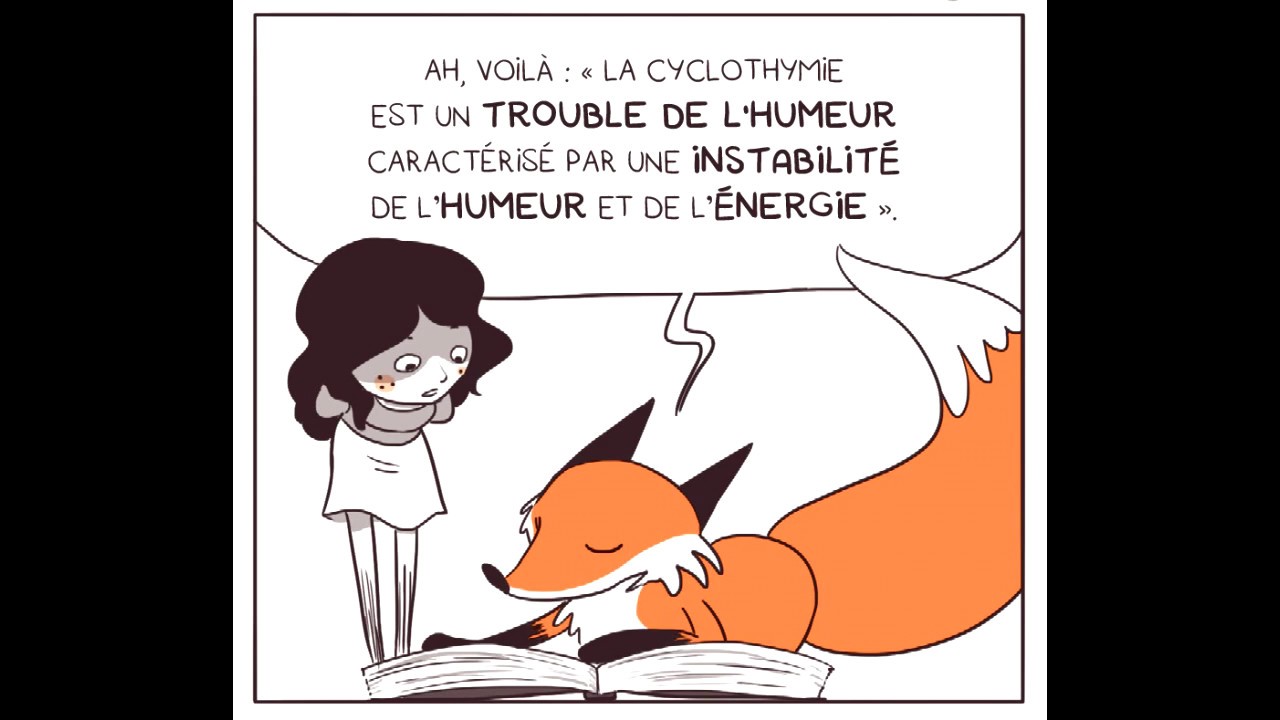
But I'm still going to say a few words to you about it. Well, in the bipolar classifications, you also have the cyclothymics. They alternate between high and low phases more quickly, and at 2°C less strong than the other 2 types of bipolar.
Well, the problem with talking about it is that it can take a long time, because researchers are really wondering if it really exists, and if it's not in fact people who have personality disorders, who make their particularly unstable mood. Then, you have mixed bipolar, who manage to have mixed high and low episodes, and finally, you have bipolar type 3, which I will never talk to you about for the moment, because I have absolutely no argument which would make me say that this classification has the slightest interest. In this category, in fact, they find depressed people who have bipolar parents.
So, I don't understand the point of classifying them as bipolar, because they're not bipolar, it's their parents who are. And you have people who react a little too strongly to antidepressants and who will go very high and have manic phases just because they took an antidepressant. There, I don't understand why call them bipolar, because they are not only under the effect of a product.
If anyone has arguments for the usefulness of these classifications, I accept them, because personally, I have not found any objectively in the articles, apart from the desire to scare patients. Oh yes, and a little clarification: when you see someone in your entourage or your colleagues who suddenly changes their mood, who suddenly changes their behavior during the day, going from calm to furious, from nice guy to mean, it's not call it bipolarity. In bipolarity, the cycles are longer, they last at least a few days.
Here you have to look for another diagnosis, such as personality disorders, post-traumatic stress or attention problems. Okay, so, one important, mysterious point. Where does bipolarity come from?
So, bipolarity has the advantage and disadvantage of having been studied a lot, so we have plenty of explanatory avenues everywhere, but not much yet that allows us to unify them into a good model. So, there are some who look, for example, at how monoamine plays on it, others at cholinergic acid. You have neurotrophic hypotheses.
So, neurotrophy is everything that concerns the genesis and growth of your neurons. For example, we see that depressed people have certain areas of their brain where the growth of neurons is impacted. That's a neurotrophic problem.
Then, we have endocrinal, inflammatory, immune, mitochondrial, chronobiological tracks . You have leads from everywhere, everywhere, everywhere. So, I'll give you an article with all the hypotheses that we currently have in the description.
You still have people who try to unify all of this and try to understand all of this in a model. The last model that came out was the cidling one. So, I don't know how to say it in French, candleling.
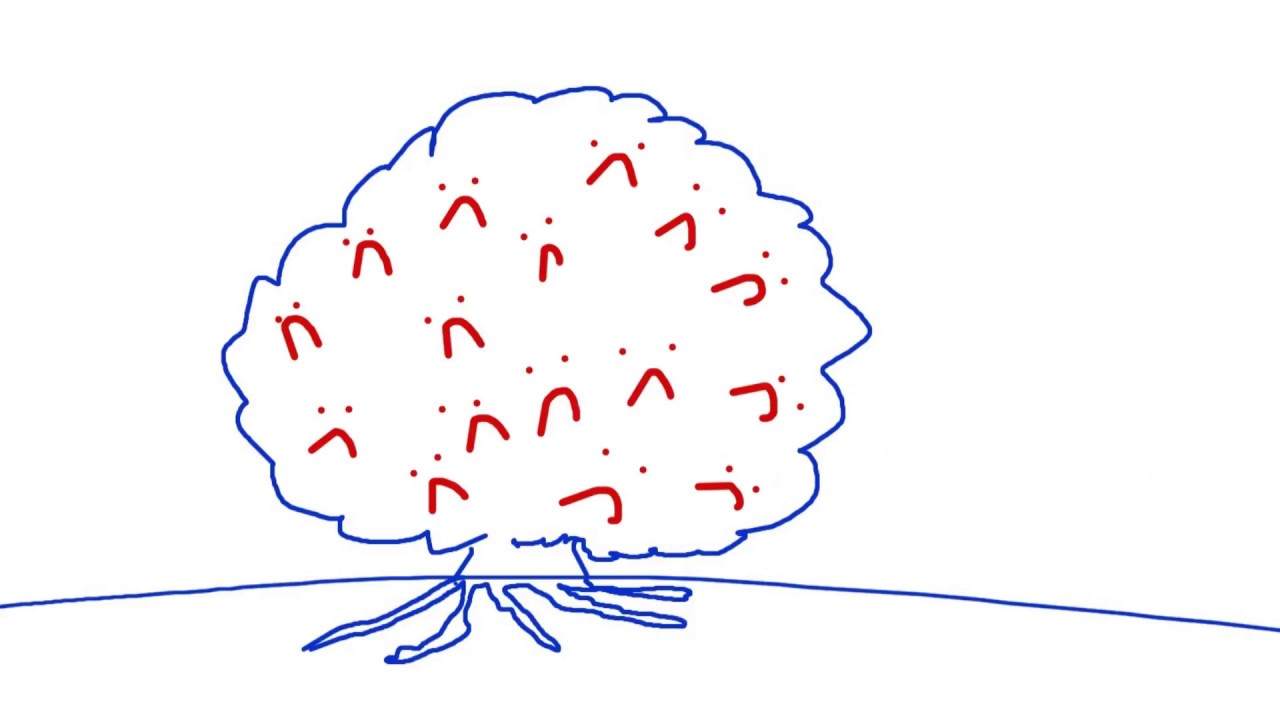
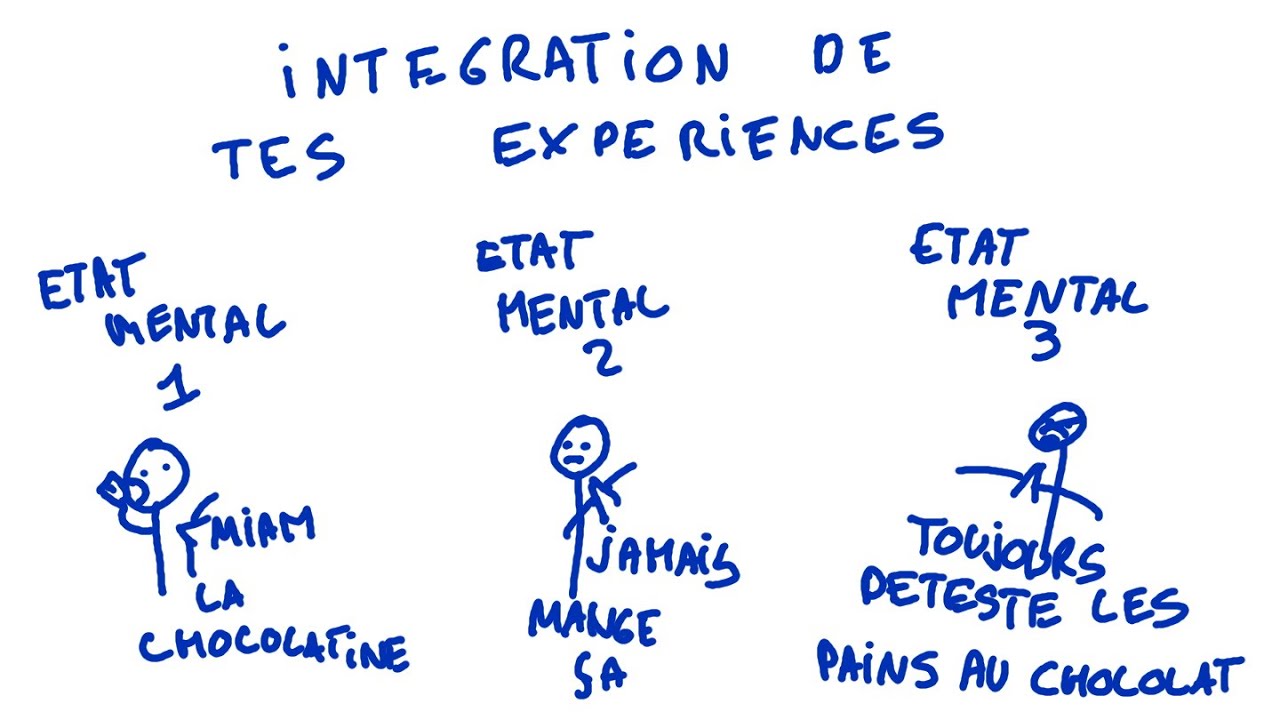
The idea of cidling is to increase the response of your neurons to stimulation. For example, at first, you hear people talking about chocolatine and pain au chocolat. It goes over your head, but hearing this conversation every day makes it more and more visceral.
You want to punch them, because actually, you know it's called a croissant loaf. And so, bipolar people would begin their normal, cushy lives, except that instead of adapting better and better to the trials of life, their neurons would become more and more sensitive to these trials, which would cause transitions to extreme states, despite stimulation identical to other human beings. Well, the problem is that studies show that this model doesn't work very well.
So, you're going to find it everywhere, but in fact, after hindsight, let go of this model. The other model that we are currently developing is that of allostatic load. When you are stressed, your body adapts to react correctly, with bodily changes, for example, such as throbbing, cognitive changes, such as hypervigilance, and many physiological changes.
And the longer and longer you're going to be exposed to stress . And the more your body adapts, this progressive modification of the body depending on the stress you accumulate is called the allostatic load. And the idea would be that the increase in it would cause changes in rhythm in bipolar people and it is this load which would cause the changes between depression and mania.
So how do these changes come about? We will see the passage model of mood change. There it is, there it is, there it is.
Well, now that you know it, I'll try to explain it to you, even if I admit I have my limits. I understood absolutely nothing about some of these boxes, because biology isn't necessarily my thing, but I'm going to show you the model anyway. So, as I told you, the increase in allostatic load, the increase in your bodily changes in the face of stress, will lead to a change, for example, management of your gluco-corticoids.
So, it will lead to, for example, more inflammation, more immune problems if you have been exposed to stress for a long time. And this functioning of glucoat tortiwrid will lead to a whole cascade of events which will potentially increase the chances of mood changes in the bipolar person. The more, as a result, the bipolar person is subjected to significant and chronic stress, the more it increases the chances of arriving at a given moment.
Another important thing that not many people know about bipolar is that what researchers found is that to study bipolar, they found a great idea. It's about depriving people of sleep, because the state that your brain balance is in when you're deprived of sleep is almost the same as when a bipolar brain is spinning . For example, you have plenty of people who experience an antidepressant effect from sleep deprivation , therefore an increase in mood, which in bipolar people can cause a transition to a manic state.
Then, another important point of the model is circadian rhythms. We noticed that the mood changes were very much linked to the sleep-wake rhythm of the bipolar person, particularly seeing that a lot of mood changes took place in the morning. We therefore see that a disorganization of your cycles leads to changes in your cerebral balance, which will potentially also lead to a change in mood.
And here, I will admit to you that I cannot explain the model to you any further, because I do not have the knowledge to explain to you all the other boxes which will lead to the cascade which will change the mood. But it's not a big deal, because in any case, what the researchers say is that currently, we very, very, very generally understand why a person becomes bipolar. We have some leads, but we can't be sure, that's what makes the person spin.
And then, there also remains an important question: what makes a person sensitive to this increase in allostatic load and creates bipolarity, and a person is not? And there, indeed, always the same, we try to find the factors which will cause one brain to be bipolar and the other not. And for the moment, we only have leads, we have no clear explanation.
For example, it was long believed that childhood trauma could create bipolarity, except that we noticed that in fact, as someone's abused life is more stressful, they will have more violent bipolarity. But that’s not what’s going to create bipolarity. So, if we take the model very simply, you have the effect of chronic stress, lack of sleep and disruption of rhythms, which would cause mood changes in brains vulnerable to bipolarity that are triggered immediately.
a blow by any event. When the brain is in a pre-existing state, the trigger can be any event: a conflict, an inflammation, an illness, a sleepless night, anything disruptive for the body which will add a boost of stress. So, now that we have this model, what do we do when we are bipolar?
Well, the first thing is that you already have to be diagnosed. And already, that's not easy, because you imagine that when you're in a high phase, well that's not when you're going to go see a doctor to say that you're not well, that there's a issue. And when you are in a low phase and you go to see a specialist, well there are two problems that will arise.
The first is that there are many who do not have the time to diagnose themselves correctly, who will have to do it in fifteen minutes and who need, because their model requires it, to give you a medicine, a solution in a quarter of an hour. Except that in fifteen minutes, you can't put someone in a box and you can't say what their diagnosis is. And as a result, what happens is that, in the United States, example, as the diagnosis is made haphazardly, we discovered that 60% of bipolar people were not actually bipolar.
I don't know the figures in France at all, however, if anyone has them, I'd be willing to take them. Second problem is that bipolarity can be very difficult to spot. So type ones are okay, because when they go into a manic phase, it's noticeable and it's very noticeable to those close to them, especially.
But type 2s, they often don't even recognize that they are in the high phase, because for them, it perhaps just resembled their normal state. So, it's hard not to just conclude it's simple depression. And often, there are many professionals who say that they need to see the hypomanic phases, they need to evaluate the hypomanic phase when it arrives in order to be able to conclude that it is bipolarity type 2.
And so, all of this leads to the fact that The diagnosis of bipolar is generally made years after the first phases and the first depressions or the first hypomanic or manic phases. And then, there is something particular, which is that if the diagnosis is made correctly, there remains the problem of accepting the disorder. Which is still complicated, because it’s a diagnosis, eh, hyper-stigmatizing.
When we are in a high phase, believing that we are sick is quite complicated, especially given our megalomaniacal delusions. And what's more, there's a lot of bullshit said on the internet about bipolarity, including that it 's a conspiracy to sell drugs. And so, a few years after the first problem we arrive at an identified bipolar person who would like to learn to live with it.
Because yes, currently, we have no way of ensuring that a person who has been bipolar does not relapse. So we say we learn to live with it. We resume our explanation.
You have people with a brain vulnerable to bipolarity, that is to say that the allostatic load would have serious repercussions which would make them spin. So, we must learn one thing: to manage this load so as not to violently pass into one phase or the other. And for this, you have several avenues.
You already have the drug trail. So, we believed for a long time that this was the only solution. So, it's true that it helps a lot, but it's not the only thing available for bipolar people.
It's important to know that it will help you with the medication, but that you have other things available and that we can offer you other things. All the more important since, in fact, taking medication, It's going to be difficult for someone with bipolar disorder, and medication compliance can be very low. Already, you have the common fairy in bipolar: "I'm better, so no need for medication.
" Because yes, indeed, they are stabilized with medication, things are better, so they stop taking medication, which doesn't work very well, because we see that the risk of relapse increases significantly without medication. Then, as I told you, there are plenty of dream sellers on the Internet who will say that bipolarity can be cured by stopping eating gluten or eating tomatoes. Unfortunately, currently, you have no food that magically heals you.
And then, logically, as with acceptance, when you're in a high phase, taking a medication that will ruin your mood and make you more unhappy than you are currently, well, you don't want it . Except that the problem is while you spend all your money being happy in the high phase, or you quit your job to get lost naked in the woods, well, when you start to come down, the fall, it's d 'all the harsher as you see that you've done a lot of stupid things. And therefore, the depressive phase is even more violent.
So your life becomes even more difficult, even more stressful, and therefore your alostatic charge increases even more, and your chances of causing further changes increase even more. Which leads to the 2nd point to take into account in the management of bipolar, it's stress. As the changes will be caused by an increase in changes in your body reacting to stress, the more stressful your life, the stronger and faster the mood changes will be.
So, overall, stress management is very important. And so, it requires managing your personality, your emotions, your relationships, your job, your family and your conflicts. Where psychotherapeutic work can be very useful, anything that allows you a better psychological balance will allow you to better manage bipolarity.
And besides, in this case, there is something more to do, that is to educate loved ones about bipolarity, and this is often recommended, because they are the first, the loved ones, to be able to limit the damage and not make the situation worse. So, it is not abnormal if we offer family or interpersonal therapy . If you are bipolar, it is so as not to add stress to your life through family imbalance.
Another avenue linked to the model that we have seen is basically that of life and sleep rhythms. Since sleep deprivation necessarily increases the chance of spinning, the goal is to try to maintain the healthiest sleep hygiene possible. And there, you can start by thinking like this: does he know how a bipolar person will gradually twist?
Like, he is sensitive to abandonment, he has a relationship problem which is bothering him a lot , it stresses him out, and it therefore increases his alostatic charge. As the months go by, he begins to sleep less, thinking all the time about his relationship, and because his body is also less able to sleep, he gradually increases the chances of spinning, until the day he relapsed. Which means that, like him, bipolar people are able to perceive the changes in mood that will come with the experience and the triggers that precipitate them towards relapse.
What is equally important work is identifying when we are starting to spiral and relapse may soon occur. If we also add that the bipolar person who begins to feel unwell in his relationship will stop, will disrupt his rhythms by sleeping more in the morning, by taking a nap at midday, or by going to bed late in the evening, and there, bam, he's heading into an even bigger fall, and he's even more likely to relapse. So ultimately, we see that currently, in addition to medications, managing bipolarity requires a healthy lifestyle and significant psychological hygiene.
If you want to have a little more detail, I'll provide you with a description of a well-designed French document that sums it all up. While waiting for a potential more advanced video on bipolarity, like I did on borderlines, well, you can go see lots of information on lots of other psychological disorders and find out about lots of other things. There you go, have a good evening.