okay so now just to review satellite photo we um advertising is Multiplied salesmanship and two parts of salesmanship how to open the sale and then how to close the sale and uh we've seen the best way to open the sale is to make your advertising valuable so that it it resist it survives that first toss away now we're going to start getting more advanced I have a picture up here it's a famous painting of the Tower of Babel and this is really where advertising is today as I mentioned there probably a thousand ad agencies within
a couple of miles of where we are right now and if you were to ask the head of each one what is good advertising you'd probably get a thousand different answers as I said before there was a time in my copyrighting career where it all came together for me with the help of other people we we were running a a small Ad Agency U I'll go into this more later we we wanted to end this problem I I was uh I worked my way up to become a copy Chief and the business was doing very
well the little Ad Agency and I had to hire other people and I had to come up with a way of the copywriters I had to come up with a way to teach copywriters how to think I didn't have my thinking as well formulated as I expressed this morning about how to think like the Prospect and not like a marketer uh but over time time the system that I helped to form there and have refined over these uh last years um has really made that possible and this is the system that I would like to
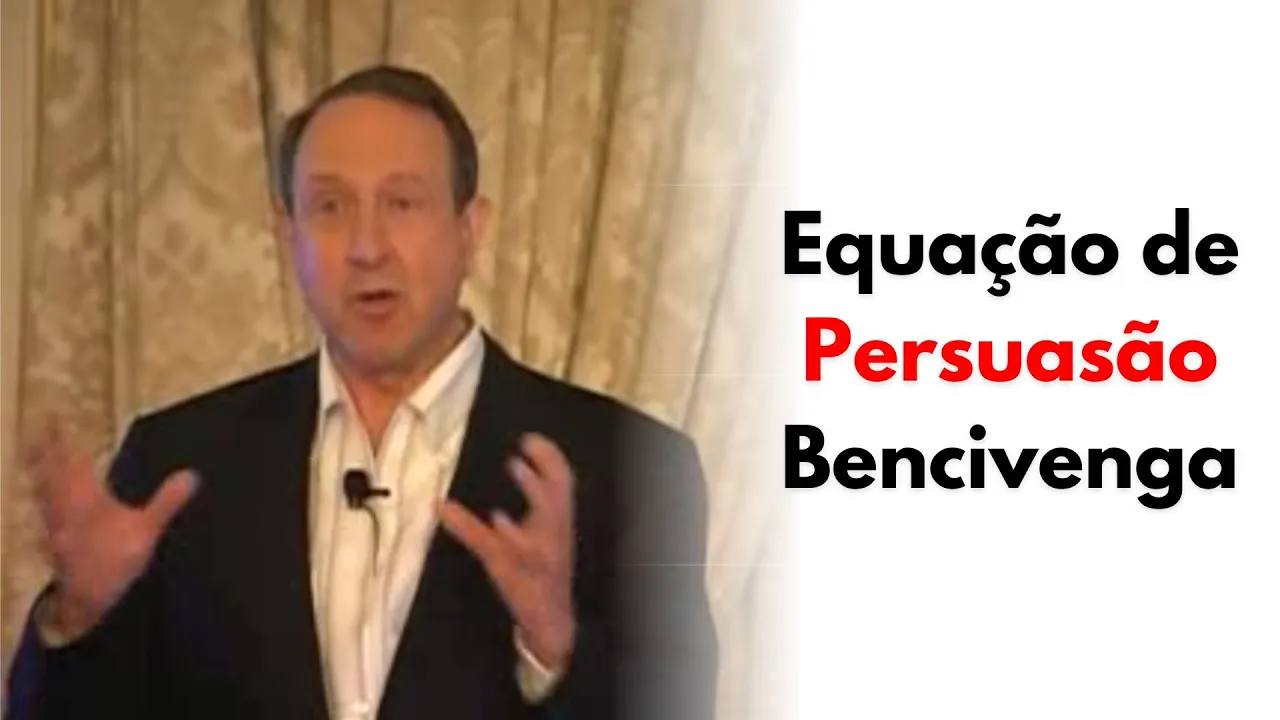
teach you now and in fact I call it the banga persuasion equation and in fact if I were to ask you um how many people here would be interested in in knowing a very simple four-part formula for knowing how to be in perfect sync with your best prospects and also the same fourpoint formula would allow anybody in your organization whether they're a designer or a a writer or marketing manager uh that they too would be able to make very valuable contributions to the advertising um if you would be interested in that and also how it
could be very simple for you with mathematical Precision to grade any direct marketing ad and be very close to how it's going to pull um how many would like to know that okay well look I I kind of expected that response in fact um I'm using this benga persuasion equation now with you and notice I didn't say on you because um all persuasion really begins with the person that you're trying to help or sell something to or serve it all starts with what the person wants so many times I've seen marketers go wrong and trying
to sell something because they they want to sell it not because anybody wants to buy bu it and that's again thinking like a marketer not like a prospect it's like the great Dale Carnegie said you know when he goes fishing he loves Strawberry Shortcake but if he puts that on the end of his line the fish like something else so we always have to be aware of what our prospects want in fact probably the mo one of the most persuasive people of the 20th century was Bernard Baro many people here may have heard of him
um he was a Great financier Wall Street Titan and he was an adviser to six presidents Bernard baroo had the unique ability he would be able to walk into any room and you can imagine on Wall Street and down in Washington there are egos that have trouble getting in through the front door he could um talk to a group of people like that and you know 20 minutes a half hour later everyone would come out of the meeting and say Bernard Brook has a solution he's made us all happy with it and he's going to
explain it and he was a just brilliant and at persuading others to see his point of view and so at the end of his career toward the end of his life somebody um said Mr bro you know what is your secret is that something that the rest of us can learn how to do and he gave he said to that person that a 12w sentence and which I'm going to share with you now which is a hot of all persuasion whether it's in print and person or whatever those 12 words are 12 words for marketers
to live by find out what people people want and show them how to get it because that's how he would purade those big egos in the room he would say to each sit down with each one look your bottom line what is it you're trying to get out of this deal and they would say it then we go to the next person then we' figure out a way well look there's a way we can make all of these things happen and they'd have a deal so this is the foundation of all persuasion and we're going
to be getting into this four-part formula for great persuasion of thinking putting now this doesn't teach teach you right now how to write great airs or design great airs that'll come later the most important point that we want to know now is how to be in perfect sync with what our prospects want because too often as marketers thinking as the fishermen not as the fish we do what we think will work and uh we're looking at it totally through our end of the telescope not through the prospect's end so we first and foremost we want
to find out what people want and then show them how to get it now you think um this would be obvious but you know advertising like any field can get caught up in a lot of jargon psychographics demographics all kinds of relationship marketing I feel that problems are markets problems and when I say problems I mean problems wants needs desires I'm lumping them all together just in the shorthand saying calling it problems uh I know some people in selling and in advertising say well you know you got to sell what people want not what they
really need and to me that's sort of a semantic difference and and just again to keep everything simple my my mom last week had some uh fainted and she we took it to the hospital and she needed a pacemaker put in thank goodness she's fine now but I'll tell you she had that procedure and there were other people in that hospital who were scheduled to have their chest cut open and their arteries worked on not because they wanted it but they were lining up to to have that done uh because they needed it so to
me it's of course they want to live so it's to make a big distinction between needs and wants to me is a semantic difference so we're going to just call Everybody's wants problems so we we want to find what the what are the biggest problems are for the people that we want to serve I take an aspirin only if I have a headache you can be the most brilliant copyright or in the world you're not going to convince me to take an aspirin if I don't have a headache so that's how you have to think
of your prospects you find those with the greatest need and who really need what you offer don't waste your time trying to offer something to people that you have to educate or Cokes or in any way persuade who don't have a need or want for what you're offering you'll waste a lot of time a lot of money doing that so problems of markets not demographics I take an aspirin when I have a headache not because I want a relationship with my druggist I don't do anything unless I have a want or a desire and you
would think well this is so obvious it's not really obvious because so much many of our Lives we are spent we we spend being the marketer and not looking at it through the prospect's eyes class classic example is the edil in the 1950s I mean poor edil Ford got one of the greatest failures in marketing history named after him and probably had never lived it down but the Ford edil was something that was a problem actually it's uh I mean the foundation for it was that Ford had a big problem in the middle of its
product line you know a lot of people ever since the days of the Model T that uh when you uh buy your entry car a lot of people would buy a Ford um when you really started doing well in your career you would buy Lincoln Continental but they were losing a lot of sales in between to General Motors who had a lots of different models in the middle stages so the the bright lights at Ford including a lot of Harvard mbas and Brilliant marketing people said we've got to solve this problem and the edil was
the answer to this problem the problem was they spent $350 million in 1950s money so it's got to be worth at least 10 times that today so they spent an incredible $3. half billion dollar launching this product and then they found nobody wants it because what the problem was that their automobile buyers weren't waking up in the morning saying my goodness I am so worried about the middle of Ford products line I don't know what I'm how I'm going to get through this day so there was a big problem inside the Ford building nobody could
care less outside the Ford building so that classic example can shows that even the best and brightest can fall into this trap of trying to sell something because they want to sell it not because people want to buy it here's the formula in very it's basic form starts with what the um problem want or desire The Advertiser or salesperson makes a promise to solve that or fulfill that promise the problem want or desire and if you touch these four bases that I'm going to walk through now starts with a real problem want or need the
advertiser makes a promise to satisfy it you provide proof that you are uh solving the problem in a in a way that's um believable and then Base number four is you give a proposition for acting now and you have persuasion it's as simple as that truly as simple as that so now we talked before about how to open the sale now we're into the phase of how to close the sale applying salesmanship and advertising we open the sale making the advertising itself valuable now here's a second part of what we do now we're into how
do you close a sale you start with what somebody wants you promise to solve the problem you prove that you can deliver on what you're promising and make an irresistible proposition sale is done in fact we can Crank It Up just as Emerald would say let's kick it up a notch you'll really get outstanding results if you solve an urgent problem if your promise is unique it's not the same promise that many other people are making we all see uh weight loss add to so many of them seem alike and people will screen out the
ones that's they've seen 100 times because they um it's not unique so if we really want to crank up this formula to the max we want to solve an urgent problem that a Marketplace is feeling we want to offer that Marketplace a unique promise we want to offer unquestionable proof and you can have any adjectives and nouns you want to choose for the I I just chose the adjective with a u so it sounds a little more easy to remember and the and the noun with a p but um and then we want to use
offer a user friendly proposition why they should act now and it's really easy to take up the uh offer now this is so important because we have to remember that in multiplied salesmanship you really don't have any power people say well what are the most powerful words and advertising the most powerful things you can do again it's thinking like a marketer you have no power if you're talking anonymously to a million people at once they each one of those people has the total power to toss your ad or ignore it run to the fridge whatever
they want to do you have no direct power in that situation except for one and that is to anticipate what they are likely to think at each point of from the moment of when you introduce that you're trying to solve a problem in their lives so now we are finally coming full circle to really what is good salesmanship again we open the sale with something of value so that people aren't tossing us away immediately and now we have the other uh key components of closing the sale because if we think of salesmanship really it's a
science of anticipating the prospect's objections so let me just put up a slide here the five Universal objections that every salesperson will encounter no matter what they're selling in print or in person well I have no time I'm just too busy I don't want to enter a sales dialogue right now and so okay we said with our value offer make your advertising yourself valuable we've counted that move now I have no time I'm too busy oh wait a minute a little black book well I can't throw that away so okay so no time is now
taken care of the rest of the four two through five are going to be done now by our closing procedure so we've opened the sale by getting somebody to to not run away because they have no time okay so then the next step is no interest and if you do manage to convince him that it's interesting well this what you're offering is no different than what everybody else so I'm out of here and so you have to anticipate that objection number four objection this pretty much goes in sequence in a person's mind uh well okay
you you got me to pay attention but I I really didn't think I had an interest okay it is solving a major issue in my life for me or giving me something I'd really like to have or do or be okay but you know a lot of people promise oh okay you're you're giving me uh how you are different well you know I I I don't know if I can believe you so now that's the next objection you have to anticipate and and solve and then finally well no decision let me think it over and
then your offer does that so let's see how all these match up now because what we're doing is as a salesperson in a much more sophisticated way than the timid salespeople who didn't want to have skinny kids and try to manipulate you into with psychological pressure we're doing this now in a multiplied way where you're not even on the scene you're anticip a in their next move and closing off what I would call the exits of Escape how your prospects you know we're all busy we're all prospects also how often do we have to escape
from a sales situation that we just don't want to deal with right now so these are the five major objections or in effect five major ex exits of Escape that your prospects always will run for and what you're going to do is you're going to lock the door at each at each exit so that a person has no time to deal with this now oh wait a minute this is some there's a crackjack prize in this direct mail package it's something extremely valuable I better I can't use that excuse right well let me just get
that and then I'll be on my way oh because I have no interest really buying anything well no it's uh kind of addressing an urgent problem or want or desire I have in my life all right but you know this is just another sales pitch no different from oh there's a unique promise hm I never saw that one before but you know how can I believe it wow look at this proof this is amazing and then you know let me think it over and then the proposition says no you can't think it over if you
act by a certain date or only a certain number of people are going to get advant take advantage of this you're closing off all the five Avenues of Escape that every sales person has to has to put up with or to which they're losing their their customers this is so simple that even a child can do it and then I'm going to show you how let's say that you and I have just well a month or so have been let off for the summer and we're not going to go to Camp we're say we're good
buddies we live next door to each other we're 8 years old 9 years old and I we're sitting on your front porch I say what are we going to do for this summer it's um you know long summer and what can we do so um he said well would be nice to make some money so Lemonade Stand that's that's so yesterday uh and nobody buys lemonade today alling Atkins in this town what are we going to do um and so we say you know the lake is very popular with fish getting back to this fishing
analogy um why don't we try to sell them worms we know where to dig up the worms every fall the um sanitation department dumps tons of leaves collected from the town into the into the park and those leaves become fertilizers for worms and we could dig up hundreds of worms over there so our product is free so why don't we uh dig up some worms and on Saturday morning when many of the fishermen come to the lake to launch their boats we'll sell them boxes of worms we'll get little like ganoli boxes from the bakery
and sell them worms so yeah it's worth a trying not doing anything else so so we do that and we we we need an advertising campaign now so um now just being kids we uh we hire Gary bener to do the art and uh this is what they wind up with and um so we put out our little sign and um says worms and we sell you know Fair number of boxes we make a few bucks and um we think that we could be doing better I mean as it is this is probably a better
ad than half of the Fortune 500 are running on TV have you ever noticed that um you what were they just trying to sell me or tell me or do what what what was that about um and that's if you're even paying attention to that head so um we ambushed Johnny's dad on the way home from the train because we know he works on Madison Avenue and um we meet him at the train station and we say Mr Jones you know we're we're trying to build a little business here for the summer um here's already
R can you make this better and he said well I like your entrepreneurial spirit let me take a look and he and he said you know it's nice that you're saying what the product is but good advertising should have a benefit you should think of who your prospects are and so we we go back with our crayons or haary again and um once again the artwork is stellar and we come up with worms that catch fish and Johnny's dad said that's that's the ticket and so we go to go go down to the lake again
on Saturday morning and we do see an increase in sales but we see a lot of people kind of a lot of fishermen just kind of look at the our sign and kind of smile at our business Spirit but they don't buy and we don't know why we we did a little better than last week but we heard that Patricia's mom is a great saleswoman so we we take our ad campaign to her on Monday and we say um you know Mrs Smith can you can you help us here because we thought this was such
a great headline this is where most advertisers who really think they know what they're doing are uh just put a big benefit in a headline for the right market and that's what good advertising is so she tells us you know I just got back from this persuasion equation seminar I have to tell you that's sound enough um she said You Know You're missing two other steps you're Miss you're missing proof and so he said what do you mean proof he said well really that's just a claim and people are bombarded by thousands of claims a
day and they just write them off it's like water off a duck's back so that's it's that's good in the old days of adverage but not today that's that's not good enough in today's market where the biggest enemy is clutter and Promises hit us from every direction so you have to get some proof and so our kids say well how do I prove that these worms catch fish so way did you get some the key to proof is deeper research and so she said look we you know there's some oldtime fishermen uh down with you
kids dig up the leaves ask them why do they find their worms there they'll give you I'm sure they'll you know they know the leg better than anybody and so we decided to to do that so we go down and we visit the old-timers who dig up their worms every Friday and we said you know um we're trying to get a little business going can you guys tell us why do you dig up your worms here uh and they say and one of the all-times might say to us um well look I admire your entrepreneurial
spirit let me tell you something fish like most animals are very wey like most people and if something's very unfamiliar with them to them they uh they back off now these are the worms that these fish eat all the time you know every time it rains a lot of the worms get washed into the lake and that's their diet they're not wey of these worms this is what's familiar to them so um these worms catch more do really do catch more fish and my buddies and I have a bunch of photos in fact if you
want to have our photos of the fish we caught with worms right from the spot I'll let you have those you'll have a you'll have a good campaign so we get so excited we we do the next we we take that we get the sign ready for our next uh campaign next Saturday's campaign now incorporating a reason why tremendous difference now we see a now we a Quantum Leap in our persuasive power we have a sign that now says local worms catch more fish and now we notice that when the fishermen come down to the
lake they say you know kids what's this all about and our sales pitch become just what the uh the research told us that these fish love these local worm that's what they eat normally and so you can't get any better diet than that on your on your fish hook that's and you see the fish that work we got these pictures from the Oldtimer who used the worms that we're selling you from the same place to catch these big beautiful fish but notice the tremendous difference in selling power between even if that had been a photo
worms that cat fit just a claim but most even direct marketing is at this level today what it's really needed as part because so many people use that next exit of Escape ah it's not believable um I mean if if promises were a gold uh all politicians would be fabulously wealthy and we we'd all love them you know we hold them in high disregard because promises are so cheap without proof we are held in the same way when all we do is um make promises so okay so now we we went from local worms to
catch more fish and we go back to Patricia's mom with the exciting news she's the one who came to the seminar um and tell her that um boy that made some difference in sales and and she says well you forgot the last step you have to have a proposition oh okay well let's do that so now we have a killer ad local worms catch more fish only $2 per box of a dozen by three boxes for just $5 and get a free secret map of the lak's best fishing holes okay so now you can just
imagine as all of these exits now have been that prospects normally run out of how we've kind of done a pretty good job of sealing them off some I mean just picture what's happening our Fisher is coming down to the lake he's got his bass his $115,000 bass boat hooked up his to his $30,000 SUV he's got all kinds of paraphernalia fish finders depth finders temperature gauges and he's he's a high-tech fisherman and he sees our signed is he going to be Grudge us $5 no it's not the price resistance will go right out the
window when you meet all four of those uh uh if you close off all four of those exits that prospects normally run out of problem promise proof and position so we've done that here and notice that this is um not brilliant copyrighting I mean most ads are win or lose not by the eloquence of the words but just a psychology that you map out that matches up how your prospects are going to behave remember the only Power you have in the transaction is anticipating their next move and it's always going to be for another objection
unless you cover every objection in you know the four-fold way and something else very interesting Happ happens that price resistance goes out the window one great salesman that I worked with um many years ago said price is a funny thing when people say that too expensive what they're really saying to you is that you haven't given me enough benefit yet and all the benefits that we've just mapped up mapped out in our um persuasion equation with the with the worms they're putting tremendous benefit and and desire on one side of that that Apothecary scale it
means that you can throw a heavy price on the other side until they balance out uh just as I mentioned with the the bass boat and everything he is not I mean after all he spent so much money but he's going to bring home fish and the cost is only about $2,000 a pound so he's really getting a bargain for his all of this investment so he's not going to worry about us charging $5 and $10 that maybe we don't even want to dig up worms anymore maybe we just want to sell the secret map
of the lake and then Branch out into an informational business this is what they L up with you can see that as the desire goes up the price resistance goes down I mean you can equalize them so the more you create desire and proof and proposition with a promise that you're making the higher price you can charge in fact you can even assign a value to each of these four key Concepts actually eight when you count all the words very simply if when you are asked to judge a piece of copy an ad and I
think even in this room if we were to hand out ads to each one of you we' get a probably a 100 different opinions on you know whether NAD is really good or not I mean the the the straw man cases the one that's that are really weak we'd all probably recognize but the other ones might give us a lot of different opinion this brings all those opinions very close together so if you're a copy Chief or an a director or just an entrepreneur and wants to and you want to know is this ad any
good or not just ask and you see how simple it is is it solving a problem is it if it is for our audience or want or desire give it 50 15 points if it's solving or satisfying an urgent want or problem or desire well add another 10 and the same all the way through the list is it clearly making the promise is it doing it in a unique way give another 25 points is there strong proof give it 15 points if it's uh really unquestionable kind of proof that makes me say wow that's I
really have to um it's so believable I have to see what this is all about and purchase it add another 10 and so on for prop proposition and use a a user friendly proposition making it very desirable and then if the the ad also use that what we first said opening the sale the Cracker Jack secret It's s valuable so that we we we prevented the first objection have no time for this right now it's too valuable to not give it time give it a 20 a 20 point bonus so this adds up to 120
points and the system that we uh created back when I was a copy Chief really focused on those those we at that time realize how valuable it was to do editorial style layouts and magalog so uh this was the um above the the 20 point bonus that that was at that time the how you can grade any AD it's so simple you don't have to it's not rocket science is the ad solving a problem is it an urgent problem and go through the whole list and you'll very quickly see that 95% of of the ads
you'll see in any magazine in fact we have time tomorrow you can do an experiment anybody rip out an ad even a good direct response it will run through these points and you don't have to need a slide rule or anything complic complicated just ask these simple questions because these are the questions your prospects are asking as they encounter anything that you're presenting in front of them so again it doesn't teach you how to write but at this point I just want everybody on the same page is how do we evaluate because again using that
zen master philosophy you have to see the target if you're going to hit the target anybody can apply this um whether you're writing or not it doesn't tell you how to create a unique promise that will come later this afternoon but it does let you know if what is sitting in front of you is a good piece of copy and art or not
![Método RMBC do Stefan Georgi [Passo a Passo]](https://img.youtube.com/vi/hIGuBl6P1sQ/maxresdefault.jpg)
![Chris Langan - The Interview THEY Didn't Want You To See - CTMU [Full Version; Timestamps]](https://img.youtube.com/vi/9miVG2xT5jY/maxresdefault.jpg)



![Gravitation' by Richard Feynman [1080p HD Video with clear audio]](https://img.youtube.com/vi/q_edsSpDzHg/maxresdefault.jpg)