I think it's like the greatest time to be a marketer ever. >> They were doing $1,000 a day in spend. Now they're spending $140,000 a day. >> It is such an advantage today to have creators who are just good yappers. >> Got to go and find the creators before they're the creators. And if you help them become the creators, they are forever loyal to you. >> What are you guys seeing working right Now? Treat your editors like they're creative strategists. And they probably will become creative strategist. And they might even surpass them. more air animations,
more yappers, and both of them do them through storytelling. If you do that extensively, there's no way that you don't crush. We found this story of this guy saying that he was embarrassed because he noticed that his girlfriend kept looking at the flakes on his shoulder, connecting dandruff to my Girlfriend might leave me. That's kind of urgent. Like, probably should fix that. How do you think AI is going to impact marketing teams? And what do you think people should do to prepare? All right, we are here today with Mr. Alex Cooper. Alex, how are you,
man? >> I'm good, man. How are you? >> This is my traditional podcast intro. We're going to be answering some of the questions, some interesting questions, but we're going to try to prioritize Them by what we think are the hottest topics and we're going to just really yap. Hopefully not for 4 hours, but we're going to yap a decent amount today about creatives, about AI, team structures, what's coming, all that kind of stuff. Obviously, if you know you're watching this on my channel and you don't know Alex, Alex is the founder of Ad Creator. I
guess I should let you introduce yourself, shouldn't I? >> I mean, founder of Adate, founder of Parker, ad creative nerd, ad creative, yapper, >> loves ads. >> We could go for four hours. We could >> probably more. >> We could. >> Carlo asks and and I want you to answer this first obviously because of just your business and what you're doing with Parker and you see so much of this and how deep you guys are going. How do you think AI is going to impact marketing Teams in the next 1 to two years? And what
do you think people should do to prepare? I think preparation's one that I want to dive a little bit deeper into, but what do you think is coming and what should we do? >> I think we've said this for a couple of years now, but I've really started to feel this over the last few months. roles in the creative team. If you look at the creative team, you have the strategist, you have the uh video Editor, the graphic designer, the media buyer, the creative sourcer, uh like some of the key roles, it's all converging into
one, you know, whatever you want to call it, creative strategist, engineer, growth marketing engineer, you know, paid media specialist, they're all moving towards one role because, you know, with Astra now, you can now, I mean, I was talking yesterday, you can literally do video editing on Astra. can cut down an 8-minute video into a 45se secondond ad and put a decent edit on it. Especially if it's an ugly ad, you can put a good edit on it. If you take the time to go and uh explain your process of editing, you know, you can basically
do a like 80% of the edit inside of AI. You can get remote control to go and go on apps like Tribe or go on Instagram, go on Tik Tok and go and do it for you. So, it's funny. We were saying the other day about how like if I was building the Agency today, you got TM55, you could probably do it with like 15 super AI pill marketers. And I think that's where it's going. It's all of those roles converging into one. I think it's probably possible today if you put enough elbow grease into
building the skills, but it's just going to get easier and easier as more and more tools come out, the models get smarter and smarter over the next 3 6 12 months. So then the question becomes, what can I do To prepare for this? The first thing we've tried to do throughout this year is I've been super transparent with the team in saying that like I believe this is going to happen. I don't believe that I can stop it. It's inevitable that all of these roles will converge into one. And what I can do is I
can give you guys all the tools and the training to upskill you whether you're a strategist, whether you're a video editor, whether you're a graphic designer, whether You're a media, whatever into this new role. I want to give you everything that you are that you will need to be a paid media engineer or whatever that be. And then for the people who want to be on board with that, great. We're going to be able to do so much because you can do anything. You can have a one person creative team. Like I I saw a
tweet the other day with Daniel saying, I I believe a 9 figure ecom brand could be probably done by four or five people who Are super AI field. And I and I 100% believe that. It's just taking your existing team and upskilling them and giving them the opportunity to work aically. If they don't want to get on board with that, then like there's not much you can do. The other thing that we're asking them to do and I think that everyone should be doing this regardless of what role they are is commentating on why they
do what they do. So if we work with strategists the whole idea if You're doing creative strategy inside of cl is like you want to teach it how to do creative strategy how to uh come up with hooks how to write scripts how to iterate. If you take that approach and apply it to every role, like if you have editors who while they're editing are saying, I am making this cut because of this and I am choosing this piece of B-roll because of this, then as the tools get smarter and smarter, the models get smarter
and smarter, you can Just take those transcripts, put them into Astra and your like AI editing is going to be so much better than everyone else because it's the actual is the actual like >> it's the context of how to do every single task. So whether it's creator sourcing, whether it's media bank, whether it's creative strategy, I know it's like really annoying and tedious to have to do this, but like as much as possible, we're encouraging our team to Commentate while you're doing the work because we're going to take all that context feed into agents
and as the models get better and better, that's when they can really take a step up to that paid media engineer role and they can be QC and let the agents do all the work. I think it was Jimmy that actually said this. I think I sniped this from you guys where he was like even if you just load up a Google meet and put like a fathom or record it like just Commentate like you said like you're going through the entire process and just record it that way or like imagine you're onboarding a new
hire and you have to explain to them how you do everything and then you just take all that context and that's what actually makes it good. I think one thing I was going to I was going to throw in while you were talking is like with enough elbow grease you can make it happen. There actually is one guy and I think There's more starting to to develop. There's one guy actually right now in Evolve that has like a fully autonomous thing that and it's like he still has people obviously but like you said he's basically
become this creative engineer or like this you know ad engineer essentially and his system can do like the song ads you can also do native ads and all that kind of stuff but it's crazy and like like the editing everything's done obviously the final Output isn't 100% perfect so there is still some manual doing on it but this is what I find so interesting because obviously from our end we have access to so many like insights on editors and things like that I feel like editors actually have a huge advantage to this if they can
understand creative strategy cuz a lot of editors it's almost I don't want to say it's easier but like you can learn creative strategy but I feel like a lot of creative strategists don't want To learn editing but even after touch dropped the the new model to do editing I think that is the thing where I haven't seen like I thought that would be longer and then it came out I was like oh my gosh >> oh yeah it's here today people think that like the one man creative team is an idea for like 18 months
time it is possible today it would just take a lot of work to do all of that explaining of how to edit, how to do creative strategy And turn it all into skills. I went to a conference in in Greece a couple months ago actually that that Sean was at. Yeah. >> Uh and someone was speaking on stage. It was Andre Lunv. He's literally got the entire process mapped out where he has clawed code generate 100 statics a day and it uses the meta CLI. So like the statics literally go straight into the ad account.
I don't fully agree with that. Like I would want more human in The loop. Yeah. Yeah. A little bit little bit more human touch. It's interesting to see what's possible. If you really want to push the limits, it is actually possible to be a one person creative team today. >> This is always my next question or like my next thought is like, okay, AI is going to be able to do a lot of things. Where do you think the edge actually comes in then? Like, won't everybody just be the same or like what do you
Think the edge is going to be? >> This is a great question and I actually get like pretty passionate about this because I think it's like the greatest time to be a marketer ever. And I think what all these AI tools are doing is just really shifting the focus back and it will continue to do so over the next six months of like who's actually a great marketer cuz like I could commentate on what I believe a good edit or a good hook or a good headline or a Good creator to like to be. You
could have a different commentary on that. You know, you're probably going to have a lot more of an advanced view than someone who's never wrote an ad before. Everyone has access to the same tools that can do the thing, but the doing the thing is not actually what's going to generate the output. is the thought behind why you did the thing. And if you're not a good marketer, you're not going to give it the right context. The Wrong editor might not know why to put this clip in, like this visual in into this hook because
they might not know what a good visual hook is. The wrong strategist might not know how a a script flows or how to, you know, use a certain type of framework to write the right script. So, I really do think that it it just brings all the leverage back to the people who h who are actually the best marketers. I think it's just going to be such a liberating time for the people Who understand like are dangerous enough at AI but more so are just great great marketers because you can do everything. You can do
everything as a one person team. >> You kind of just are the brain to an extent. >> Yeah. >> I don't know why for the longest time agents just didn't I I I struggled with it for so long. Like I thought an agent would just be like constantly doing work For me like and I wouldn't have to do anything, >> right? But it's like agents are like they're they're literally like they're the hands. They they will go and do things for you. And I think you've said this before where just force yourself uh and I
think it was even didn't Taylor say this where he was going to like delete the browser. >> I think that's yeah you like talking about how to encourage agentic work Across the company. I saw a tweet Jacob Poswell did this recently originally where he just said that you got to force your team to do everything inside of claude code or codeex like even don't allow yourself to respond to emails. If you want to respond to an email you do it inside of claude and codeex. was like, "Okay, that's a little bit annoying at the start,
but and then Taylor quoted it and all replied and said, "Yeah, I'm literally considering Cutting off browser access for my entire team." Which is like crazy, by the way, but like in terms of a force function for your team to like force them to become agentic, like I I I loved it. >> Yeah. It's so funny like and and this is this is like more psychology based that doesn't really have anything to do with ads, but like the brain is just so weird how like we just we hate change. Change happens all the time. Like
remember when everybody went from like the the flip Like the Blackberries and then like Apple removed the keyboard and everyone was like, "Oh wait, this is actually like they they kind of hated it at first and then they liked it." I think the more relatable example is like remember when Apple removed the headphone jack. Yeah. >> And everyone was like why the hat? >> It's who would do this? And now it's like bro you you know you never use wire any still do the real trenchers do. It's Stuff like that. It's like we we hate
change but then if you actually adopt it you're like oh wait this actually is a lot better. And I've noticed for me as well, like at least with the stuff that I do now, I almost find myself like I can't do work without Claude. There's times, I was talking with Carlo about this where I think it's good, but I'm like sometimes I don't even feel like I use my own brain. I'm just like I rely on Claude too much, but I have gotten For the sake of this point, like I have gotten in the routine
of before I do anything, I always just start with literally whisper flow brain dump. Here's what I'm trying to do. Here's what I'm thinking. And I think again that just comes from having context like you said and having a skill set to be able to actually communicate what you want it to do. I just love it for organizing like okay here's the steps that you should probably take and then That makes it so much easier. I don't know how you feel about this but at times I feel like I am trying to solve really big
problems. Sometimes I get a little bit overwhelmed like that's going to be a huge problem to fix or a huge initiative or a huge thing for me to build right but when I break down what I'm trying to do and explain it to an AI tool it's amazing at breaking it into like these steps. And I feel like for creative strategy workflow as well, a Lot of people I think don't think it can be like processed or steps, but that's what I I love what you've done is like, okay, well, here's how to write a
great hook because if you're going to write an ad, you got to write a great hook. And then from there, you got to learn how to write a great bridge. And then from there, you've got to learn. But I think >> what's going to happen is, like you said, just saying, hey, you need to write a great hook or write a great Bridge is not going to do anything for you. It's like anyone can do that. >> What is that? Like what is a great give me examples. And like that was the question I was
trying to get to outside of the tangent is like have you noticed like giving the AI like actual examples of like what good is is that way more effective than just >> generally yes. I mean even if you go into court and you like if you say create me a script versus like recreate The script it's always going to be better at recreating the initial script. You just got to be careful about sometimes if you put in examples it will overindex on those examples. Like at the start when we released Parker which is our software
we had a bunch of example winning scripts and like ideas or like ways to think about coming with ideas and what we found over time is that the chat like overindex and always would give the same ideas. So it's a bit of a Balancing game like you don't want to have no examples in there but also you don't want to instruct it to just just go after the examples otherwise the ideas it comes up with are going to be um going to be repetitive. I actually want to go back to something that you touched on
a minute ago about editors. We spoke yesterday and I think you guys have a really interesting process for training and incentivizing editors. Now, personally, we incentivize strats. We do A lot of our training around strats. We do training for editors, but not to this extent and not in the same way that you guys train incentivize your editors. Can you talk about your process and like what you would recommend a brand or, you know, advertisers out there do when it comes to upskilling their editors? >> This is definitely like this is Carlo's zone. So, I mean,
you know Carlo, but Carlo um I originally hired him as a video editor and it was funny like cuz The editor at the time didn't even speak English and he was editing our ads and I was like I don't know how that's but but he was he was doing okay but then Carlo came and I was like whoa this guy is really good at editing but he's followed this arc and this kind of leans into like one of the other questions but like and then I'll get into the training but he followed this arc from
he was an editor just in the trenches editing so many ads and then he realized like Oh, Hey, I can learn some copywriting, learned like stacked the copywriting skill on top and then kind of got into ideiation and then learned ideiation. Then as a result of that, he kind of said to me, he's like, "Hey, bro, like I can just I'm going to get some more editors. Like I think I want to get into this creative strategy stuff." Cuz we also noticed that Carlo, who was the editor, would always have really good ideas. And I
was like, "Okay, like what? Yeah, let's just keep doing ideas with you. Like keep coming up with them and then also do the briefs." And then so he transitioned into a creative strategist. And then now obviously where he is and this will all make sense in a second but where he is now is like he's got the community of editors that has been I think one of the biggest unlocks for us has been just having editors essentially follow his path like the exact same path and what I think editors have like Editors are just trenchers
man like like they're grinders like if you are an editor like you know that you're sifting through drives or sifting through like you know frame trying to find different clips and all that kind kind of stuff. And I think what's interesting is that a lot of people just treat editors as that. Like they're just kind of cogs in a machine where it's like, "Hey, do this clip." Like just just edit this and like send it back to me and that's it. Like That's your job. Put these clips together just like this. Especially if you do
a lot of UGC, right? Hey creator, here's this brief. Film this clip, this clip, this clip. Hey editor, you're just going to string these clips together and you're kind of just like you're just doing it on autopilot, right? Mh. >> And so again to bring this back home, what I saw differently was Carlo was curious. Like he wanted to know why are we doing this? Why are we writing the Brief this way? Why did you come up this idea? And so we realize that like hey if you just treat your editors or like and just
give them more context almost like how you got to get an AI call like you give it context like here's why I'm choosing this clip or not just clips here's why we're doing this ad in this first place. And even a bigger unlock is most editors and this or a lot of brands don't do this but give your editors access view performance access to the ad Account. Let them see how their ads are performing cuz most editors don't even know how their ads perform. They had no idea. It's like how do you expect your editors
to get better if if you don't give them the result of like what's actually happening. That's the story of like how really you know ecom talent got got created is like Carlo was like hey I'm really passionate. I want to help editors. I know editors can drastically change businesses. I mean and we see This all the time and evolve. Like we see guys doing a million dollars $2 million a month with themselves and one editor or two editors. It's crazy because like editors, if you give them the opportunity and you want them to get better,
they will get better because those guys, like I said, they're treasurers. Like they're hungry. They if you find the right ones, they want to learn. And so anyway, like the way that we really train editors is one is like, Hey, you've got to understand the basics of editing. Like be first become a good editor. Like learn good clip selection, learn how to, you know, actually use the tools the right way, understand transitions, animations, all that kind of stuff. And I think right now AI has been going crazy. So, like all of our editors and a
lot of editors in there are trained on how to generate their own B-roll clips if they need it. The different types of formats like the song Ads or the just the animations or crochet. There's all these different types. But yeah, really the big thing is is like the the moral of this or like the TLDDR is give your editors access to the create like almost try to treat them like a creative strategist like give them the opportunity to do that. And what we actually do for our editors as well is we have something called like
well we call it bounty but like edits basically we have we track this as a KPI Is like how many edits are the editors uh producing and essentially any ads that they make 100% by themselves we pay them a percentage of ad spend and so that also incentivized the editors like hey I'm done my briefs for the week I have some extra time I'm going to go and just crank out a bunch of ads because they have access to you know all of our trainings or like they can learn copywriting and again they're on all
of our learnings calls they're on all of Our strategy calls they're talking with the media buyers everyone is like big family on our team. That's what we try to preach to brands is like treat your editors like they're a creative strategist and they probably will become creative strategist and they might even surpass it. >> I love that so much. So just to repeat like in terms of putting this into a framework for people to apply three steps, educate them, give them access, Incentivize them. You're starting to see this more and more in the industry. Like
we we started pitching uh like agency service on performance three years ago and we ran into a lot of people saying like oh we don't want to pay performance, we'd rather play fat flat fee. Uh, and over the last couple of years, I've really seen like a lot more people start to want to pay for creative on performance. And it makes sense because if like, you know, 90% 85% of The ads that we will make are going to flop, like why not just only pay for the winners and then have the agency or the editor
in this case, absorb the risk instead of you, the brand, paying the flat fee for your agency, for your editors, for your creative strategist. I just love the idea of of you've almost built like you know how the streamers have the clippers uh who go out and uh their stuff and they and they make a money on percentage like that's what You've got with your with your editors. >> Yeah. But like and the thing is though is like rather than views it's like it's actual money and like these brand owners are legitimately spending money on
the ads and I think that's what people actually join Carlos community come from like that clipping scene or come from that hey I'm editing these YouTube videos and you know I'm getting paid a flat rate and there's no performance. But it's like marketers it's all about Performance. Literally what got me into marketing or what made me be like hey I could get behind this model is like I'm going to charge somebody say you know back in the day I charge them like a thousand bucks a month and I'd be like it's a big retainer >>
but I was like I charge somebody,000 bucks a month and then I'm going to make them 3,000. So I'm like that's a no-brainer. Like what? Like that's the greatest business model ever. Like Everybody wins, right? And I think honestly to to your point like I think Tik Tok shop really made this like you know we just they were just kind of talking about it. It's like the modernday like MLM like Tik Tok and everybody's like performance performance performance. It does just make sense. And and what I would also say like you also don't really lose
as the person making the creative because like if your creative sucks like that should make you Want to get better, you know, and even creators like I always talk to like we have a creator we actually just brought in in house and we kind of she's like our only creator so we actually brought her in and she's just doing UGC for us and we but she's also on performance. So she's like retainer and performance. But I think you just learn so much and especially if you're like hungry and that's the biggest thing I think I
think you have to be able to as a founder at Least or like if you're a brand owner watching this like you have to be able to incentivize your editors like you have to make them realize like hey there's a huge opportunity here. If I win you're going to win. We're going to do this together. Like I want to help you get as good as you possibly can so the brand can scale whatever. Like that's really important because then the editor is going to feel like oh wow I actually have an opportunity to grow Here.
But my my point that I was trying to get to is like they don't really lose on that because they're getting better at it. like the more ads they make, the better they get. And that's a huge thing that Carlo always tries to reinforce to everybody. And we also say to everyone on our team, we had a client recently that was like plateaued at like 100k a day in spend. And we were like we've been stuck on it for 2 months. You know, Carlo actually said this to the team Where it was like once we
break through this like we're going to be so much better after it. And so I think we also try to like reinforce to editors or reinforce to our even just team is just like hey yes we are paid on performance and if you're not getting paid it's like you're not 100% losing because you're actually getting the skill. You're putting the time in and getting better and know if you ask me is like more valuable than anything. >> What you're hitting on here is actually a really important concept that I think is is quite slept on.
I'm assuming when you've got these editors who are making ads are they doing it from an existing footage library? >> Yes. But they also are with AI like they we also generate some of their own stuff as well. >> Yeah. I I think it's so interesting that like there's this uh notion in the industry that if you want new creative You have to go out and film it with creators and you have to go and work with influencers or you have to have to go and make something. >> But like I am such a big
believer in that every brand has so many winning ads in their existing library. Especially if you're a brand that spends like a a decent amount on Facebook and you've got a big footage folder, >> you've probably got so many winning ads literally sitting there in footage that You've already got. You just need to find the right way to tell the story. >> Yep. I think so many people also, they don't have a footage problem, they just have a messaging problem. Like the footage is fine, but the messaging that they slapped on top of it was
horrible. >> Like, you know, like they'll have like some decent footage, but then they're like, "We're the best product ever and like you should buy from us." and like you know you know as stereotypical like Create review or something like that but I 100% agree with that. I think brands don't realize how much literally like you said how many winning ads are in there but also on top of that just like the fact that they probably don't even need more content if you're testing a decent amount of volume of ads. Like maybe you're testing like
100 ads a month or something like that or you've worked with some creative agencies or you've done the UGC and obviously now With all the AI stuff that you can generate. It's like yeah we'll generate some clips here and there for trying to do something very specific but for the most part it's like and if you are paying on performance for the editors to go make these ads and there's genuinely no cost to you like unless the ad works. Like if you've literally said to an army of five editors, "Here is a footage folder. Go
make as many ads as you want. You get paid on percentage." You're Literally not paying anything for the creative at all minus like if unless it works. The only thing I would add on that too is like if you do want to do this, don't just be like, "Here's all my footage. Go make some ads." That's that's like telling Claude, "Write me a script." >> Right. Yeah. >> You would 100% agree with this, but it was just like go and make those ads, but by the way, >> here's all of our winning ads. Like Like
you have to want them to win. like you can't just like throw them in it and just be like hopefully they figure it out and you know like the top one 0.1% will. But if you actually take the time to try to help them and be like, "Hey, here's our best ads. Here's why they're our best ads. These clips work really well. This messaging works really well. These angles work really well." if you can break down your ads or if you can at Least just give them like the playbook or the frameworks to to make
better ads and you I think you do a really good job with that cuz like you said you've got all this to to train Parker and and obviously and train your team. It's like that helps them because like if you if you just hire editors and expect them to figure it out, it's like that's so overwhelming and extremely hard for them to do. >> Dude, I love this conversation so much Because this is just like I've got a ton of ideas which ways you can go. Now, there's something interesting here that's happening with editors and
also happening with creators if they're all kind of like doing it all. They're all doing creative strategy. They're all doing content creation, editing, actually making the whole ad. Then the question becomes not like how do I make the best ads, but like if anyone can make ads and everyone's incentivized and Everyone can access the same content creators and same editors, why should they choose you over everyone else? And this is I mean happens uh to editor for editor some extent, but especially when it comes to content creators. You look at platforms like tribe. Now, I
have had a lot of creators come to me and saying that like I I'm overwhelmed with the amount of brands that want to work with me. And I'm like, if the only uh incentive for them is just a higher Percentage or more money, then like the next time another brand comes along and offers them more money, then they're going to direct their attention towards them. So, one thing I find really interesting is when you have these incentive based programs for editors, for creators, for strategists, whoever it is on the team, what makes you unique? What
is there that gives them a reason to want to edit for you, to want to create for you? Is it that you have a Mission that they are driven by? You're a female only brand or you you want to help people with a certain disability and they and they are like felt particularly compelled by that. Do you have some kind of community where you help train them like you guys do? So they're actually upskilling rather than just like oh I make ads and hopefully they work and I and I get some money from that. I
have spoke to you consulting clients before where um they Will literally fly out their creators to their HQ and they'll get feedback on the product because they're power users or like you know VIP customers uh and they'll train them there like actually in the office themselves like what can you offer them beyond a financial incentive because I don't think this incentive based model is going to go away. I think it's only become more and more prominent in the industry. So, I'd really like like to think about what Makes you unique and why, if you're genuinely
working with like a top editor or a top content creator or a top creative strategist, why outside of what you can offer them monetarily, are they going to stay and direct their attention and like the the time they can spend making ads towards you? >> I think you honestly kind of hit on one of the biggest ones, which which is mission. Like it sounds kind of like corny at times, but I feel like it's one Of those things where I remember when I would go to business events, there'd be guys up on stage with agencies,
you know, doing like 2 three mill a month or something like that, and they'd be like, "Culture is every culture." And I'm like, "How do I build c like do I do core values or like like how do I do that?" But like now as I've gotten to the point where I actually like don't do everything in my business, I've realized like, oh, okay, like culture is Everything. And culture is like one of those terms where it's like how do you define that? I think it's how you do things and then how you how you
treat people. So the the only example that I can give is just from our own company where like we we have three core values and if you are going to come up with core values I think look internally that's my favorite way to do it. Our first core value is like value first which is like just try to give as much Value as possible to everyone. If you just give as much value and this like really comes from Hermosi I was like I grew up on business wise on Herozi and it was it was all
value like if you just produce as much value as possible people are going to be around you. The second one is uh move fast which is like do things quickly like get it done and don't wait around. And then the third one which kind of keeps move fast in check is world class where it's like you Just want to be the best at at what you're doing. Like you if you work here, you want to be the best. That's it. And otherwise it's like if if you're not going to be the best at something, there's
no point in doing it. Like and that's very extreme. But what I've noticed is like most of the big companies, like the abnormal companies have people who are obsessed about the company and have people that are extreme, right? Like a lot of my team, My dad came in and I'm going to tie this whole back. My dad flew down and he was talking to the girl who runs our agency and she's like, "Yeah, I work every Saturday and most Sundays." He's like, "What?" He's like, "He can't fathom that." I was like, "But she's just obsessed
with what we're doing." And so I think culture, like a simple way is like, "What do you really value?" and then go and find other people who have those same values or see your values and Are attracted to that. And then I think second thing is mission and and like vision kind of goes with it. But like where where are we actually going and like what are we actually doing to an extent like I just did a podcast with my creative strategist. This the same girl is here. You met her and she said she got
like I don't know how many DMs after the podcast like I'll pay you whatever. I'll pay you twice as much. Like I got like you know crazy and she was she's Like honestly I just I love our team. I love our culture. I love what we're about because that's the thing, culture is not something that you can really create. Your team has to create it and as you get more people, everyone starts to like vibe the same and they're and everyone's just they're just around a bunch of different peers. Another weird example and then I'll
try to bring this whole thing home is like when you get started in business and you're around All your friends who aren't in business and they're like, "Bro, why don't you come drink, bro? Like what? Let's go smoke." Or like, "Yo, we're going to party here." And you're like, "No, I got to work on business." And then like all you can think about is business. But then you go to an event and then you meet, you know, like other people or like us, right? like all we talk about is ad creatives and I meet you
and I'm like, "Oh, this guy's like the same." Like he feels the same. You feel like you find your people and this is very it's like tribal, right? And it's like leaving the tribe is kind of scary. And so I think that is like when you're when you have a bunch of team members that feel like they're a tribe and like they're their people because they're kind of the same, they have the same values, that is like what will really keep people wanting to work with you. And then I think the vision of like Where
is this company actually going? I think at the beginning a lot of times it's just money. Like so I think growth is one of the main reasons why a lot of people will stay with us. And that's the thing where even today despite all the core value talk and all this kind of stuff even today if you're just like if you work with us you're going to become a more valuable editor you're going to become better like that you're going to grow here. And the only way that happens Is if you actually make it intentional
where you give them resources. You go buy them a program or something like that. And I don't want to say that just I mean we have a program so we can cut that if you need to but it's like just go and give them something or even send them a YouTube video. do do something to show that you're trying to help them get better. What ends up happening is they become better at the thing and then they actually feel good about it and then They associate the fact that hey you help them get better and
them getting better made them feel good and they're like this guy makes me feel good right so I think growth was a huge thing for us whereas Sean for example he this is the longest tangent in history but he was like a media buyer with us and he he you know he had no point to stay with me cuz I brought him on to to to for one of our bigger clients. I was telling you this yesterday and he the bed and Then he was like, "Yeah, I've got all these other clients paying with me."
And I was like, "Bro, I can't really pay you much." I was paying him like 500 bucks a month. But he just like stuck around. He's like, "Oh yeah, I'll manage this account. I'll manage this account." And then sure enough, you know, you know, we've we've grown into what we have. But like he was just someone who's like when I asked him, I was like, "Why did you stay? Like why did you actually care?" Even when there was no money there, he was like, "I just learned a lot around you." He's like, "I was I
was growing a lot." And I like that. Um, so I think growth is like that's the one thing that I would say will keep people around. And that's something you 100% can control. just help people get better and they'll associate like everybody just wants to be better. I don't think anybody would ever not want to be better at something. I mean some people are like that but I Mean I think your your original question was like how do you incentivize people outside of just money? I think it's all of that but big emphasis on the
growth like help people grow and then usually when people grow they feel better. Even for example, you know, Hudson from Comfort is obviously like the biggest guy who's done this with Tik Tok shop like people who work at his company and the creators that work at his company like he found creators and even even Lucas kind of talks about this as well the from tribe where it's like you got to go and find the creators before they're the creators and if you help them become the creators they are forever loyal to you because they wouldn't
be where they are today without you. So, I think that is one of the biggest things. If you focus on helping people grow alongside giving them an incentive, that's how they're like loyal forever. >> Yeah. Yeah. That's great. I I think you hit the nail on the head there because it is so important in in attracting people and keeping them around, whether they be editors, strategists, or whatever on the team, even outside the creative team. I think core values and mission is about letting people know not just what you stand for, but what you don't
stand for. >> Facts. Yeah. 100%. I mean it can be big things like I don't know whether it be Politically, religion or things in the industry like antagonizing a big player in the industry or even something little like I uh had a situation uh a few weeks ago where we did an all hands and some people join with their camera off. I'm not a fan of that and like when you see that stuff see little things like that like I don't stand for that. Like we don't we don't stand for that in our company but
I called it out and I had people say to me I mean I didn't call The people out themselves. I said everyone let's make sure that we have our cameras on cuz I want to see your pretty faces. and had people after that saying like all right I respected that because my team have not been doing that recently so I I it's good to be in a company where like that is valued and and respected. The other thing that I want to say on core values cuz this isn't uh something that's helped us massively this
year both in ad crit and In Parker is a lot of people you know end of the year comes and they go oh one of my objectives next year is to define our core values. They define the core values and then they never come back to them. >> One thing that I found super useful I can't remember where I got it from. I actually got from Have you read Culture Code? >> I actually haven't. No. One of my favorite books on culture is an Incredible book. Anyone who's in the team should read the book culture
code. I can't remember who wrote it, but you can find one. It talked about the idea of how do you incentivize people who act in accordance to the culture. So if say if one of your core values is speed, right? Y can you do some kind of rewards based system where if if Sarah does something quickly that generates a result for a client in the next all hands can you really big up Sarah and Praise her and go hey guys you see this behavior speed this is good and if you do this your boss is
going to like you or we're going to say you did a good job you're going to get an incentive financially or whatever that be. So just finding little ways to remind everyone every single day hey speed is one thing that we do here. when you do this, you get recognition or when you do this, you get some kind of incentive, bonus or whatever it be. And just remind everyone Every day, these are our core values. This is what we live by. This is what we use to actually make decisions in our company because that's what
core value is. Like if if you don't actually change the way that you make decisions in your company based on the core values, you don't have core values. >> 100%. >> It's like how can we just incentivize that every single day? And you do that over time. you compound and and the team Starts acting in accordance then you have an effect on creators editors to type back to the original conversation that like oh they can go oh that's why this company is different that's the reason to stay versus every other offer that I could be
selling >> I actually had a question for you in this have you have you read the strategic enemy it's like a it's a it's a book about positioning but what you said about like it's about what you Stand for I think that like is one of the even from a brand perspective I think for your brand like liquid death is my favorite example of this and they're actually on the cover of that book where it's like they don't they don't stand for like plastic is their enemy, right? Like that's what and like they're completely against
that. They stand for, you know, like recyclability. I don't even know what the hell the word is like, you know, uh helping the Environment like right like getting plastic bottles out of the ocean. But to to your point, I I haven't actually thought about translating into a company. And like you said, just turning your camera on, it's such a small thing that a lot of people are like, eh, that just shows like especially from the top, if you don't call that out, then the core values aren't that serious. But when you do, it's like this
is how we do. This is how we operate. I think That's sick. And I love how you can try to find ways to action it. And I do think you have to, to your point, and there's actually another really good really good example from this ecom brand to try to make it more relatable for people watching. This brand was getting a lot of complaints about um the flavor of their like kids vitamin. And it would have been super easy for them to just be like, "Okay, well, we could fix this massive churn problem just by
adding Sugar and and allowing the kids to enjoy it more because it has sugar." But that was completely against what they stood for. Even though it would have made them so much money and probably would have fixed churn massively, that was completely against their positioning and against what they stand for. And it was interesting that now because of like that's what they stood for and even in this point that's their core value um where like or no not really a core value But like they they that's what they value. They they believed you know kids
shouldn't be having all these sugary They had to completely fix their back end like they they went and figured out how they could manufacture bottles to only have specific flavors. So like if your kid only liked this one, they would send you one with just that flavor in it rather than all the other flavors. But I found that like super super interesting and from like again like if You don't stand for something or like if you don't enforce your your values and and what you believe again that just says to the rest of the team
and to everybody else working with you it's like hey well this is not that serious. >> Should we get back to ads? >> Let's do it man. I know we got carried away. >> Let's um let's get tactical. You have a ton of people in the community. You have access to a ton of different ad accounts And a lot of data. I'm curious what are you guys seeing working right now uh in ad accounts? obviously like the big hype on these AI song ads and all of the AI specific creatives and I'm going to say
like you know the the animation ones those are obviously going berserk and and I think I think the reason why I I've looked into this um a lot and then actually outside of AI actually just UGC like legitimate just straight Tik Tok shop content like UGC content but I Think what the AI stuff and and and this is a brand that we scaled um you know I talked about it it they they were doing like $1,000 a day and spend in February and now they're spending across their products like $140,000 a day. One of the
biggest unlocks for us was using those AI animated ads to actually visualize things that were extremely hard to visualize. And I think you see a lot of like supplement bros doing this uh sometimes in a not the right way. But I Think what though what that ad format has allowed us to do and and that's the thing. It's not the format that's making it work. So, I don't want to make it sound like that's just the format, but it allows for a lot of creative diversity, but more importantly, it allows you to show things that
were extremely hard to show before. So, for example, if you, you know, have a specific ingredient in your product, like let's just say you have vitamin A In your product or something like that. Um, it'd be very hard to like visualize that unless you were like an animator, right? But now with these AI ads, and I'm sure you've probably seen a lot of these like ingredient ads where it's like I'm vitamin A, especially for big product aware markets, those mechanism specific AI style ads that explain in a way that the brain can understand or like
can visually see what those ingredients or what your mechanism Specifically does cuz I don't think it just stops at supplements. Like for example, we had this guy submit an ad for like a brand that we used to work with. Um, but he was like it was the stainless steel humidifier brand that we used to work with and it's like I'm stainless steel and I keep the mold out and stuff. But it's like those ads I think are obvious everybody's known. I'm I'm a little bit behind probably, but like those are still working really well For
us. And obviously the song ads. So again, if you find a winning ad script or some kind of format that's working well, usually if you just break it down into the components, although we probably don't have time to talk about that today, and put it into different formats, like that can crush as well. But also like I said just straight up UGC and and I kind of touched on it a little bit but what we've actually done and this is kind of me just like knowing Our game like we are much more on the intent
side than we are on like the crazy volume side. So I remember we were hiring all these creators and we were trying to do you know kind of like Tik Tok shops that like all the have all these different creators that were like inhouse and what we actually did I was like okay who's our best creator. So I just went in the ad account and I just started searching like UGC and then I would just look for names. I saw we had One creator that would like if we were spending a million dollars a month
in an account or like on UGC in the account she had like 500,000 of it and I was like why don't we just hire her full-time and like I just said help her just get even better than she already is. And we've done that and as a result she's now like producing our top like UGC that's beating one of this client's like full Tik Tok shop army because like she's just going in on intent or you Know focusing a lot on intent and just trying to make really really good ads. And so I would say
like long long story short obviously these AI animated formats are crushing. Um the UGC stuff has been working really well for us. Um, but I think we have kind of been, you ever heard the saying like when people zigg you zig. Like everybody's focused on AI and just like spamming so much stuff right now where I'm like how can I just use AI to put as much intent on Creatives and then just make a banger creative. So that would I guess summarize kind of what I'm seeing working and like what our strategy has been. But
I know you've got way more data than me and and a lot you're you're pretty hands-on with that stuff. So, I'd love I'd love to hear what formats you're seeing or like what ads you're seeing. >> Yeah, I think that that lines up pretty well with what uh we're seeing in our Accounts. I want to talk on actually both of those. First, air animations and then I want to talk about yappers. So, air animations, you know, when they started coming out, >> I don't know, call it 6 months ago. Now, >> I think that you
could get away with pretty much anything because the format was so novel, people would watch it because it was people still thought it was completely organic. Now, I'm still seeing the like I'm I'm tomato and I can Do this. Like, I still see them work. But what I'm really interested in now, and I've seen them crush in some huge accounts, the AI animation ads that are based on specific trigger events. >> So, for example, I mean, we're at this conference right now in San Diego and Ezra Firestone did a good talk this morning about doing
deep re customer research to find out specific trigger events that your audience are uh feeling. Y >> So, like you could start your ad by saying, "Get rid of your fine lines for a makeup brand uh over 50." Or you could say, and this is literally picked out from their customer voice, I don't recognize myself in the mirror anymore. There's a lot of questions about storytelling and uh and how to write copy that resonates deeply. That's how you get someone's attention in a feed where everyone's making the get rid of your fine lines and wrinkles
claim. If You can find out what they are genuinely internally saying, if they're looking in the mirror every morning and going, I don't recognize myself anymore, and you can say that, that's how you're going to stand out and uh and resonate with them on a deeper level. So I've seen these, you know, storytelling based animation ads as I'm sure you have as well in these Brazilia quasi style life form ad liies. You know, some of them take it way too far. I wouldn't recommend, you Know, just going and doing like the my wife left me
so I use this product and she came back. I wouldn't go that I wouldn't go that far myself, but like there's something to be said for taking instead of trying to go straight into the the problem, the agitation, start with the trigger event and then tell a story. We're also seeing this with the the AI drama ads that are doing the rounds on Twitter right now. How can you tell an actual story that deeply relates To an an experience or a trigger event that someone's experiencing in their life and then go on to do the
pitch off the back of the adation of that? And I've seen some of these animation ads be 5 10 plus minutes. I've seen you look at the quasi ad library. I did a video breakdown on this on my YouTube channel. something like 25% of their ad library was trigger event animation ads and and three of the top five were literally uh that exact style of like like taking a Trigger event making animation ad about it and because it's not like you said it's not the format that's doing the work there it's the actual storytelling you
can literally take that you you can turn it into a native with primary text you can turn it into a yapper ad and just get someone to actually tell the story rather than animating it and you can just take it and apply it to any different format but I am loving those at the moment they're super effective And again when combine it with a suno song. You can literally just take that script, put it into suno, and then get an editor to animate in line with the song. They absolutely crush. I think it's just because
they make, and I don't want to interrupt your flow. I was going to say like stories like and even these songs, they just make people feel something. I was thinking about this at the event. Taylor, for example, like he did his talk and I just remember it like I remember he like because he started with the story the 5'9 like he was 5'9 baseball player and then he was applying that to like how you can be a a median brand and like still be very successful and like I just like cuz you you almost feel
for that, right? Like you feel for that guy who's like the fighter, you know, like trying to make it sort of thing. And and I was thinking about this last night and I was like then I was reflecting like on my talk and I was Like I didn't really have like mine was just like bang bang bang bang like almost to like what I said like with I'm stainless steel or like I'm vitamin like those ads like they can work and like my talk for example is like very very tactical but there wasn't really a
story there. So like maybe you remember it but maybe you probably don't but when there's that story you just remember it because it makes you almost kind of emotional like it makes you feel Something. And I think that's why those song ads have also started to rip. And to the drama ads, like when you listen to those song ads, it makes you feel something like a Marvin's Room track from Drake. It's like, you know, everybody's cried to that, you know, not me. I'm just kidding. Um, but it's like, >> but it's like that's that's an
example of like music makes people feel something. And then with these drama ads, like I even remember I was like Watching one. I think it was the one where it was like the girl was at the gas station. You see that one where it's like that guy just touched my butt. >> Did you see that one? It was it was crazy. And then the guy's like she was like you're not going to go do anything. And like bro, I put myself in that scenario. I was like it was like three like scary ass looking dudes
and I'm like bro I was like what would I do? But it's like because you can picture Yourself in that and then like I felt I almost felt anxious watching that. And to this point it's like I remember it super visually because of what it makes me feel. And so I went super deep in on this and then I want to go back to I don't know maybe I'm getting away from creatives but like why does that work? Like why does that format work? It is because of that. And like if you go deep enough,
it's like, you know, when we were running around in the jungle like Hunting like if there was a tiger that clawed the out of us, that made us feel terrified. And so if we see a tiger, we're like, "Hell no." Like, cuz you you have to because like it makes you scared. You felt physical pain. And so it's like anytime I think you can create ads that make people feel something. Um, and I know that's broad, but like that's again storytelling is a great way to make people feel something. Songs make people feel something. these
Drama stories are making people feel something. I think again even you can it doesn't need to be an AI animated ad. It doesn't need to be a you know I think we were just about to talk to yappers which I want to throw back to you. Even those yapper ads cuz I think a lot of people look at yapperats like how the hell do those work? It's like because of what the story is and like what it makes them feel. So we actually personally don't do a ton of yappers but I'm curious like How how
does that work for you if you if you were going to get into that or if you want >> Yeah. Well first have you seen the Cheetah Buster ads? Have you seen that app? I mean I've not seen any like organically I always get served their stuff. So it's basically again storytelling of like they will I'm assuming hiring these women to tell stories about how people caught their partner cheating >> and like whole story and like I don't really have interest in that stuff but I end up watching every single one of them and like
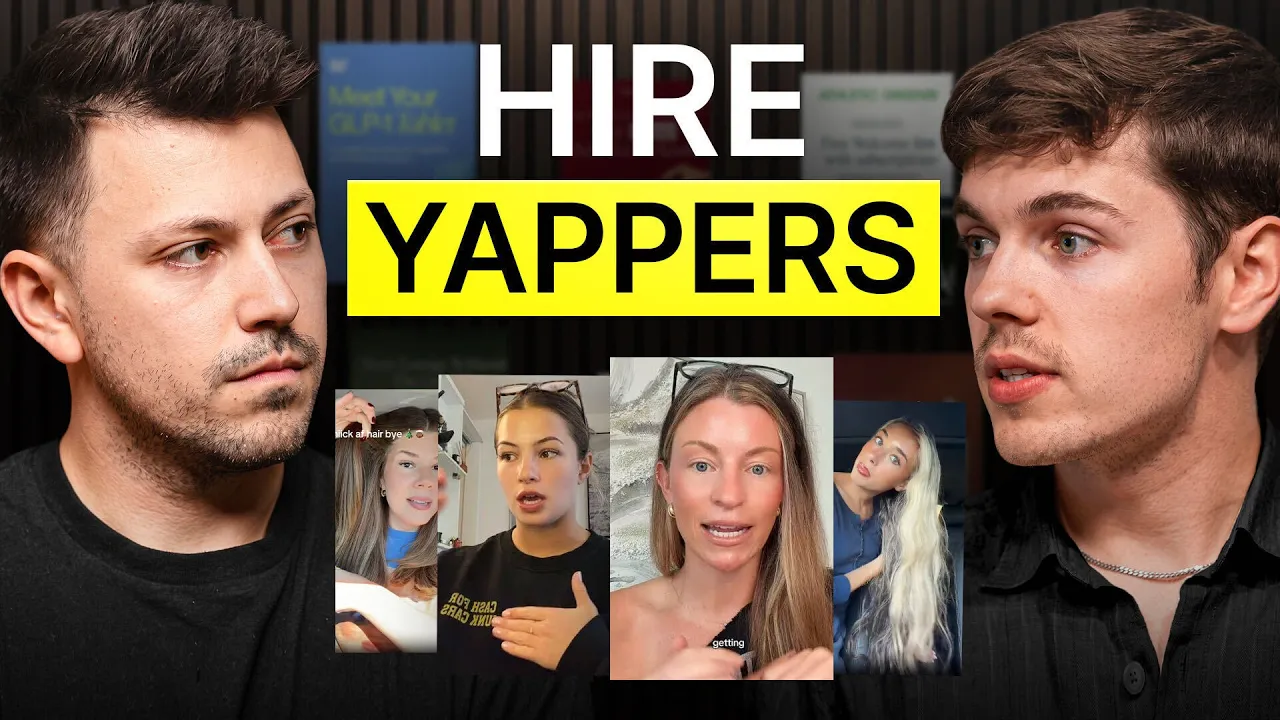
you get to the end of it it's like oh yeah I found it on I I caught them by using this app called Cheetah Buster which somehow must you know anyway point is the story is what they lead with. I think it is such an advantage today to to have creators in your pool of creators who are just good yappers who can tell a story and you Believe that freaking story. And you know, we've kind of restructured how we work with creators and are now like intentionally seeking out higher price a better creators because you
know the difference between a normal creator and a and a top yapper could be maybe you know 300 bucks or 600 bucks but what what can that in an ad account if you're spending 2 three 400k a month a good yapper a good storytelling yapper can go and spend hundreds of thousands. I've Seen it spend millions of accounts and I just think that a lot of times we just think oh my cost per creative is 300 bucks therefore that means I can only spend 150 on a UGC creat like no you the good storytellers are
going to cost you 3 4 5 600 bucks like you know sometimes if they've got a bit of a following then you know north of a,000 bucks but you do that you give them the freedom to actually go and tell authentic stories and like they will Create you ads that you could have never never got from a UGC creator. And I remember I put a tweet out at the start of the year cuz someone asked me like on a consulting call like what formats would be you'd be more bullish on this year? What would you
be doing more like more this year? And and I gave the answer that I think is more true today than it was back in January. More AI animations, more yappers, and both of them do them through storytelling. If You do that extensively, even if they're the only two formats in the account, I think there's no way that you you don't crush. >> Yeah. And I think what's so cool, what AI has done is it's actually enabled people to now like visualize a lot of those stories because like for example, if you look at a native
ad, right, or like a we call them camouflage ads, but it's the same It's got this like weird photo. Usually it's if you if you Write them really well, it you have a line that will like create a massive curiosity gap or even juxtapose with, you know, the image. And it's like that is a way that, you know, you can essentially a lot of people are telling stories. A lot of stuff is made up, which maybe we can get into that, maybe we don't. But I think um that is an example of like where it's
a written story. But I think what AI has allowed us to do is start just visualizing those Stories in a way that we could never really visualize before. You know, even even with the drama ads, like we have I our team's probably already testing them now, but we are almost able to create like Hollywood level like short films with with editors, you know, anywhere in the world, like just talking to Claude or talking to Chad or on Astro, whatever it is, right? That is what's been really cool for me to see cuz like storytelling Has
been around forever. It's like storytelling is literally how we remember everything. Like if you think of anything that you remember, it's probably some kind of story, right? Like even even, you know, when you're hanging out with your buddies and you were doing dumb like that becomes a story that you tell that you just always remember, right? And so I think now with AI, what's what I find really cool is like everybody is realizing how powerful It is and how probably even more. But now we're even able to like make it crystal clear and like people
can see it and visualize it. And I think yeah, the more like even for us, one of our one of our top spending ads, I was thinking about it while you were talking is literally, you know, a borrowed authority where we're talking about this these people in this other country that I can't talk about it because we have a everybody every client has an NDA, but I'm going to we got we got some stuff that we're working on, but they were they were borrowing authority from this other country and then it was just like kind
of a yapper ad talking about how this other country solved this problem. Like it's almost like Korean skincare. I'll use that as an example where it's like Korea's been doing this and it's like they're the authority. >> Do you want to give the Can you give the example that you shared yesterday? >> The ad was like this AI voiceover girl basically saying, you know, my grandpa used to fix washing machines for a living. Here's what he told me to do about the smell. Um, and then it's like this VSSL style video and like you probably
don't clock that. Like you're not thinking, okay, whatever. Like you're just watching the ad. And the next thing you know, grandpa's like, hey, um, you know, my my grandpa came over and it's a story, right? My grandpa Came over and he leaned in and he took a sniff and he's like, "You're yeah, your clothes are like you're you're basically slow cooking them in mold right now. Like this is this is really bad, right?" Uh and then it goes on later and it's like, "Yeah, you know, then my grandpa told me that he's only been able
to find this tablet and this is the only tablet that he recommends." And so they're just the the point of that is is like you're probably listening like, "Why is Spencer Talking about a grandpa?" But subconsciously, your brain is trusting the grandpa because the grandpa used to fix washing machines for a living and he's recommending the product, not the brand. And I think that's what stories do a really good job of is they kind of remove bias. And if you tell stories with an authority, that's where you see ads go crazy. Um, but yeah, that
that was an example of authority that was Just like it's because whenever I say authority, people think it has to be a doctor or like someone with a white coat. But if you actually just look at like people who are really good at like look at your product and what you sell and be like who could be an expert about this thing or who's someone that could be really trusted about this thing and then even then it doesn't have to be like you don't have to be the direct person like in that example that I
just Said it was her grandpa. It wasn't the grandpa himself like talking. She was just retelling the story about her grandpa. I think when a lot of people start to realize you can have I called that borrowed authority where you borrow authority to then tell a story. Those ads are like I love that because if you read a story and then someone's like I knew this person that had this thing or whatever, right? It's like you're not saying it yourself. You're just kind of The messenger bringing the story to the customer and then you're actually
using real stories but in a way that has a bunch of authority that people are really going to believe. >> Dude, I literally remembered it. Like I I remembered it. Uh, and I cuz we we've been in this conference the last two days and there are so many things in my head, but like that stuck out to me because of the borrow authority and because it was a good story. I know cuz I'm going to go home and swipe that ad when I get in, but like I remembered it because of the story. And the
cool thing is you don't have to go and create these stories. You can get them from your customer voice. You can go into Parker or you can go into any app and just query like look through my customer reviews, look for my ads. And this is why kind of kind of why we built Parker like so you can connect all your data sources. You look, you can look through Customer reviews, you can look through ad commerce, you can look through Reddit, you can look through postp purchase surveys, support tickets, and you can go, >> I
want you to find the most emotionally loaded real stories or trigger events that people are having when it comes to the problem around our product. We did this for anti-dand shampoo and uh we found this story of this guy saying that he was embarrassed because he noticed That his girlfriend kept looking at the flakes on his shoulder. you would never have like sat down and and thought of that in that hook. But like that's a story within then we then went on to tell and it went on to do well inside of uh inside of
the ad account. >> One other thing I want to add to this is like I've uh in the iteration playbook that I think you got it this one ad where the stakes were much higher and so we have something we say like try to see If you can raise the stakes for example connecting dandruff to my girlfriend might leave me. Yeah, that's like now it's like that's kind of urgent. Like probably should fix that, right? Or like I wonder if my girl's thinking that like oh right? Um but like that ad just has way higher
stakes, right? And people love high stakes. It's like why why does Mr. Beast give away $10 million in his game show cuz that's crazy high stakes. Um and I think sometimes high stakes can Get taken too far and put in the wrong direction. But I love that like even what we've done uh and now we we need to be doing it with Parker is like we also tell like go through the reviews and see like if there's anything with like high stakes, anything that's like intense or like people that are have like talked about cuz
Yeah. Like that point it's like the dandruff is leading to my girlfriend potentially leaving me. Like that's that's high stakes. That's pretty Intense. >> Yeah. Or just how can you paint the picture? How can you paint like a visceral picture where they're like I need to do something about that? Even the example you just gave there where you you you use the words slow cooking in mold like >> it's disgusted. >> Yeah. I mean I like instantly I'm like oh I need to solve that problem. I don't need to that's not something I'm going To
wait 6 months to solve. I need to solve that today. If that's what happening that's what's happening to me and I didn't know that. They're like I want to solve that today. >> Yeah. >> It's just how you've phrased it, how you've told the story. Anything else you want to say on ad formats or what you've seen in ad accounts? I mean I've seen a lot of people talk about uh drama ads at the moment. I actually did a pass. I Don't know if you've seen any different. I did a pass on a bunch of
ad accounts to see if I could find any of these like drama ads that are performing. I found a few of them, but like nowhere near the level that the AI animation ads or the appas are. I don't know. It seems like a pretty new format and not many brands are doing them anyway. I don't know if you've seen them. One thing that I also will plus one that Taylor spoke about today or yesterday at the conference is The idea of moments campaigns or like moments based ads whereby you can create ads around certain moments
of culture in the year. So like all of us, you know, Black Friday, Sunday comes around, we all have our our discount, our Saturday ads, our offer based ads or, you know, activations for for the holidays, but like what else can you do throughout the year that is urgent to do in a specific time frame? And you can you can just go and create things. Like for example, the One that he gave was he was running ads for a Bible brand or like a Bible study brand coming into the end of Q3 did a whole
campaign or a whole bunch of ads around a 90-day plan to the end of the year to read the entire Bible. M it's like you just that's not that's not a holiday that's not that's just something that you've created in a moment that like people go oh this is something that I need to commit to now there's there's urgency even though you're not in a sale Or a holiday period I think that concept is really cool it reflects what I've seen inside of ad accounts as well you just create these out thin air like you
know we have a a jeans client it's like we made ads around someday in August is like national jeans day it's like you can literally go and like go into claude and say what are some moments that I can advertise around for my brand because then there's there's a reason to by now. It's urgency and you can just create Them. You don't have to wait for Black Friday. You don't have to wait for certain, you know, Labor Day, Father's Day sales to come around. You can just find moments of culture in the year where where
buying demand uh might be higher than at other times and make ads around that. It's just super easy to even just throw up some statics from that. So, that's something I've seen work in quite a few accounts recently, too. >> Yeah, that's far. I haven't um I think I haven't seen any different types of formats. But again, like at the end of the day, I think a lot of the only thing I would add on this is I think a lot of people chase formats and formats definitely are huge. Like formats can I don't want
to say revive ads, but can revive angles can can freshen angles. I say this all the time in my YouTube videos where you know people be like I' I've tested the low testosterone angle For my brand and like it didn't work. Like bro, you like you know brands like Marsmen, you don't you think all their ads aren't working. It's like bro like that angle works. That is a thing. It's just like the way that you've executed it and the way that you're trying to tap into it is not working right. You're it's kind of a
skill issue as Carlo would say. So I think the biggest thing is just like always keep in mind that yes, formats are going to give you Different ways to communicate angles which is why sometimes when people take an angle like that like low te and they put it in and they're first to put it in an AI animated ad or a drama ad then all of a sudden it's like oh people it's like new stimuli so people go and and buy. But then unless you understand how to actually repeat that success, it's it's going to
be very hard to sustain it. And I think that's the biggest the biggest thing is make sure that you're Not just constantly chasing formats. Like really try to make sure you're understanding what you're doing in your ad, the messaging, the story, the angle. Like really try to understand what's happening. I'm curious then. I mean, this is going to be a super loaded question, but then how do you go about doing research? You put the tweet out about, you know, saying we were doing a pod today. We got a ton of questions about how you go
about developing Personas, doing research. How do you uncover those messages that you're going to test in your ads? What does the research process look like? >> I'll be fully transparent. I probably haven't done research in like a year. I mean, like, actually, that's a lie. I mean, when I was doing uh the the copyrighting program, I was actually doing more research for our brands and stuff like that. But I think honestly based off of what my team has told me um Recently with the new claude updates like Fable and stuff like that like the research
that it's been able to do is insane. Like it's crazy what it's been able to pull. Obviously you've got to know how to work a little bit. I don't have you know I'm not I can't get into the details of like the prompt and the things that we ask and stuff like that. But I'm also just a big fan and this is something that I love that that you guys do with Parker is like the Facebook Comment stuff and and obviously like you know I'm considering that you have like a lot of the brands that
we work with aren't starting from zero like they've got data and so like one of my favorite things to do is is that is like literally just go read comments and get new ideas from that. Um, but also for us because of, you know, even what I just talked about like all the iteration stuff, a lot of times when we work with a brand, we'll just look at their ad, Break into the components, and be like, "Oh, dude, you're so you're not doing anything with these components. We're about to cook like crazy." And then we
do that. Um, but yeah, for like net new research, if I'm coming in, like, how do I how do I find angles to test? How do I prioritize them? that that really is like the hardest part is like how can you how can you find an angle that I think makes sense for you. And I think in the beginning the best thing that you Can do although this would sound like very contrary to usually what I talk on is like go and look at what your competitors like what angles are working for them and then
from there use that as like your direction for like what you should go and research. So, like if you see competitors have a specific angle that's working really well, try to just go deeper into that. Especially if they're big, try to just go deeper and then maybe see if there's like a Slightly underserved avatar in there. Like same angle but like more specific like maybe they're having different experiences or maybe they have, you know, different behaviors of like what they're trying to do or maybe they've tried other things that like that brand's not talking about.
Uh, and we've even seen a brand like genuinely scale from just talking about a big brand about how their product is different. And just doing that as like, hey, you've Probably tried this brand were different. Here's how. Even Ezra today was talking about like, I've been doing the same for 20 us versus them still works. You know, it's like the landing pages that are congruent still work. So, I know I've gone and darted all over the place, but yeah, like a claude is a huge part of our research process, but still, we're still doing the
traditional, you know, like go read Facebook comments, go read YouTube Comments, go through Reddit still. I know a lot of people on Reddit, but like Redd has still got a lot of good stuff in there. I think what you were talking about about the the platforms I want you to get into about looking at the the different types of ads on on sporting sites and stuff like that. But yeah, I think for me like a lot of it is just coming down to the the basic stuff, but just just doing it well and then obviously
leveraging AI and not just Like having AI do the research and then giving it to Claude, but like having do the research and then actually digest it. And something that uh Carlo actually loves to do is he loves to take the research doc and like especially if it's like a 60page like doc or something. He likes to put it in notebook LLM and turn it into a podcast and then he just listens to the podcast. >> Yeah, I think there's a lot to be said for knowing like in the creative process When not to use
AI and like especially if someone's watching this and they're starting out, it's like you really need to be actually going through the the Facebook ad comments. You need to be reading the Reddit post. Like sure, you can go and have Claude go and do all the research for you, but you will pick up so much just by going line by line in your customer reviews or your competitor's Amazon reviews or whatever it be, whatever data source that you Choose and actually absorbing what people are saying because there are so many parts of the creative process
that that AI is incredible at and research is is definitely one of them, but it's also like you just need a finger on the pulse and just difficult to do that when you're reading like a synthesized report from Claude or Chatt. The other thing that I'd say here, speak to your freaking customers. Like I I I'm such a big proponent for this and again I know This is >> like a lot of people are scared to I I know but like I again talking about Zigg people Zach I just love the idea of actually get
on the phone with customers and like asking about how they use the product, what use cases they have. Sometimes sometimes the best angles for us have come from unexpected use cases. People using the product in a way that we didn't even think the product was meant to be used. And then you can Unlock a whole new a whole new uh angle. >> I love this. >> The the example actually for for the anti-dander shampoo brand is we're speaking to customers and it's a shampoo, right? People traditionally use it on their hair. Speaking to customers and
we're like this guy's like, "Yeah, dude. Like I I use this on my beard for my beard dandruff all the time." We're like, "What? What are you talking about? Use it on your beard?" >> Yeah. >> And then he's like, "Yeah, dude. I do it all the time." And we do some research online and we find out there's like there's this is he's not the only guy who's doing this. There's a lot of people who also use it for their beard down. We never touch that. >> Never thought of it in your ad account and
uh you go we go and make ads for it and it ends up resonating because no one else is speaking to that use case. There's also just like speaking to customers or or postpurchase service, however you want to do it, and finding out how do you guys actually use this product? Like why did you buy and like why are you still uh using this product cuz you can find some absolute golden nuggets when you talk to them. Dude, I love this. And I think this is like you're looking for the customer that worked really hard
to make a connection on how it could help them. So, like what You said, you were running an ad about how it works on the hair and then some customers like, "Hm, I wonder if this will work on my beard." And then tries it. It's like, "Oh, hey, that worked." Right? And then they leave a comment, "Hey, I actually use this for my beard." And then like that customer has like almost done the research for you. Like the example that we have, and this was a YouTube video that I just did, is I was looking
at this uh this kids brand that Sells like these stamps like you stamp clothes, you stamp the kids lunchbox, their backpack, right? Cuz kids always lose right? And uh it was actually a super interesting ad cuz it was coming that the voice over was a kid. It was like a little kid. It's like, "Here's how I always bring home my stuff from school. My mom's so happy about it." And I'm like, "That's so smart." I I went super deep into it, but I saw a comment that was like, I actually love this Product. I bought
it for my mom who's in a nursing home and she always forgets and like cuz she's old and like has dementia and like leaves her things in places, but now because of the stamp that I'm and that girl saw an ad for her kid and was like, "This could work for my nan who's in is who's in the old home." And it's like that angle right there, I'm like and then immediately I was like that that that would be a winning ad. and all it was was a Facebook comment of a customer who like did
the work for you. So, I love I love that when you're able to find those like the edge cases, I think is what you called it. Those are those are like the best. We Yeah, huge fan of them. I want to switch gears a little bit and talk about account structure because a question that I've been getting a lot recently, I don't consider myself anywhere near as as good at media buying as you are. And I would like to hear you Talk to this. Everyone's able to create hundreds of ads at the click of a
button. Now, whether they end up being, you know, top quality or not is is uh is up for debate, but like people are able to do way more volume than ever. Statics, for example, you can build skills that will go and generate hundreds of statics in in Hicksfield. Has that changed the way that you structure ad accounts? I would say like you might even be better at media buying Than me, but like I'm the biggest like anti not anti- media buyer, but like we have a media buyer who's going very deep. And actually, I want
to I want to give a shout I think it's uh Brandon Frink. You know, do you know Brandon Fink? Um I watched one of his uh like he did a talk. Um it's so funny. He's like, "Dude, that guy spends like a billion dollars a year on ads and like his talk had like 400 views or something like that. It's just free on YouTube." And I'm just like >> idiots like us. >> Yeah. And that's where the views go. >> Yeah. But I sent something from him to my media buyer. I was like, "Just watch
this, dude." And then he's starting to test a lot more things. And I think if you have a media buyer, they should be trying to media buy the hell out of things. I said I wasn't going to tangent, but here we go. But like if you're the brand owner or if you're the Creative strategist, like media buying is secondary always. For how we actually test things, we always just have still for the most part our one campaign where like we test and scale. Like that's it. Our thesis is that when you put ads into the
arena, Facebook knows whether or not they're going to be able to scale. Like Facebook's pretty smart. With that said, Facebook does have signals that it will use. Like for example, if an ad starts getting a bunch of likes or a bunch of Comments or some engagement, Facebook sees that as a signal before purchases flow in. So if you make very high engagement, I don't want to say engagement bait, but engaging ads like natives for example get so many because it's a crazy story, right? Natives people I always recommend people put them into a separate campaign
for sure cuz like they're in a world of their own of like ads like get crazy. It'd be like making a meme ad. It's just going to get So much more engagement. So like those ads we segment, but then in our main campaign, we kind of treat it as like our our high intent. And high intent for us is creating anywhere from like 10 to 15 concepts a week and each concept is three ads. And we just test those as adsets inside of our main CBO. And as long as you're at enough budget, like if
you're above $1,000 a day, usually you're fine. But we have a formula where it's like, hey, if your target CPA is 30 Bucks and you're spending $100 a day and you load 30 adsets in there, it's like, what is Meta going to do? like it's it would be impossible for Meta to statistically test all these different adsets. So try to make sure you don't overwhelm the machine um especially for smaller budgets. But so yeah, we'd have like a native campaign. We and we don't really run natives. This is just guys involved that do. Then we
have our main high intent campaign and then the new Campaign that we have is just like we kind of call like a shotgun or like raw content campaign where like that's where all of our volume will go and we same things one CBO loaded up with creatives. And then a new thing that we've added is like a graveyard campaign, which is like we started doing this earlier this year, but our graveyard campaign is like, hey, the ads that don't get spent, you can put those in a graveyard campaign. A graveyard campaign is again just another
CBO but with a cost cap. So it's only going to spend if it's going to be profitable. And we basically just put all of the duds or losers in there uh and just see if eventually it spends cuz you probably know this, but like some ads are seasonal, right? Like I saw an ad the other day that's like ripping on ad spy that's like selling black and orange nail polish. Like bro, in February, nobody's going to care about black and orange nail polish. Maybe Black if you're selling like some goth I don't know. But like
bro, it's getting close to Halloween. Like even my fiance showed up here with like black and orange. So it's like that is hot right now. So if you had an ad with that, it might not get spent in in February, March, but coming up in October, you better that thing is going to be ripping. So that's something that you have to account for and the graveyard campaign can kind of help with That. But then the final thing I'll say is like we actually started using now as well where if we see an ad getting a
good KPI in our CBO but it's not pulling spend. We'll pull it out, put it in and be like let's just see if this thing can scale on its own. And most of the times it doesn't. It allows us to take ads that are getting a good KPI but not a lot of spend and see if we can scale them separately. And then it also allows us to take ads that are Getting a lot of spend but not a good KPI and just see again we'll take that out put in an and see if it
can scale at a smaller or like just spend at a smaller budget. Um but really our entire like media buying process hasn't changed that much. I just think if you're going to do a volume like a ton of ads, maybe separate that from if you're going to do intent and I talked about this where I think you should do both. But I think your intent should Guide your volume because I just think if you're spamming volume with no direction, it's just like you're literally throwing at a wall. But if you're doing intent to like figure
out what angles are working, what authorities are working, what formats are working, stuff like that, then you give that to like a volume machine, it'll amplify all the good stuff and then you'll probably find more winners that way. Um, but that's essentially how We approach it. I mean, again, media buying I'm not overly indexed on, but that's kind of how we've handled it. We just added an additional campaign, but people go crazy with And like you know Brandon as I mentioned him like some of the things that he does is like whitelisting campaigns or he
has he has different um campaigns and different like things that he's doing. Our media bar is really deep into that. So once we test that and see how that goes I'll I'll probably make a video about it. That's what we're doing right now to kind of handle all the the volume. The volume versus intent conversation I find really interesting because I mean I'm sure you've seen all the like tweets and LinkedIn posts of like you know here's a static workflow that you can go and make thousand statics at once or 200 AI animation videos and
I think you're right like you can do AI intentionally you can build claw code workflows for Example we have a static workflow that you can put out hundreds of statics with but it's not just spamming statics it's starting off by looking at the ad account, looking at what we've got our personas defined, looks at what personas we've already tested, what we haven't, if we got any underserved personas. Like one prompt I love to run in core code all the time using the parkp is look at all of the ads in our ad account by persona
and compare the distribution of Personas in the ad account versus customer voice. So you can basically see if there are any underserved personas that keep coming up in your customer reviews that you've not yet tested inside the ad account. like that I would consider to be an example of intentional volume. If you plug something like that into a static system or like an idea generation system inside of Claude code, then you're not just throwing stuff at the wall. You've actually got a process For how you go about creating ads. So, I think you're right. It's
finding a balance. You can and should be doing a lot more volume now because it's possible. You shouldn't just be shying away from code and and codeex because, you know, you think that the quality is bad. If you do it right and you teach a skill like it the quality is really good but then then the next stage of that is like how do you implement a feedback loop from the ad account so it does more Of what's working and it learns over time and also it's looking for gaps of what you're not testing or
could be uh exploring as well. I just think that's a really interesting conversation cuz people are often uh underutilizing it or or overindexing on it and it's it's tough to find balance. What I think that the final point I would say on this is like sometimes people also mistake volume in like for example in the community the editor community they make Ads right and um it's volume but it's individual people making ads with intent. So we just have a lot of individual people making ads with intent that then equals volume. And I think if you
can crack that and it's like creators, like if you have a lot of creators that focus on making the best yappers, UGC style, whatever videos that they can, you get both, which is sick. And I'm a big fan of trying to optimize for that. And I want to give a huge Have You watched the Harry Dry podcast, by the way? Do you know Harry Dry? >> Yeah, I don't know him personally, but I've seen stuff. He's he's some dude that I I developed a bit of a man crush on because of just like the way
that he thinks about marketing is it's very old school. I don't not not old school but just like he is like I think the definition of intent and and even the the example that came to mind while we were talking about this was like AG1 Like I can't imagine how many statics AG1 has done and created but that one that Harry showed which which is like you're going to need a smaller cabinet or something like that that they had on all their billboards and all that kind of stuff. I I actually don't know if that
was their best static ad, but because they probably put a bunch of marketing spend behind it. I'm sure it was a good ad, but it's like just that one static probably made them more money Than all the other statics that they that they made. Just one. That excites me. I'm like, how can I make an ad that like how can I again rather than making 200 ads, how can I put all that effort and energy into one? And I feel like that is way harder to do than just make 200, especially nowadays. Final thing I'll
say on this is like I think in the beginning if you're a newer marketer, you don't have a lot of skills. I think you should try to make more ads because You just need to get all the shitty ads out of your system. Um you got you I mean you've probably made I don't know how many ads, thousands, right? And so you've done the volume to get to the point where you know your And I think that is important for people to do, but also then try to be aware and like you said, do some
feedback loops. Try to figure out why does this work? I know Claude, you just made 200 ads. This one's working. Why? And just try to Figure that out and go deep. >> Yeah. And there's no right or wrong answer. Like we have an we have one of our AI video editors who like a a human video editor who makes AI ads, not a literal AI video editor, >> although I'm not sure I'm sure we're not far away from that. >> Uh he is really good at the AI animation style. So we always give him the
most difficult AI animation ads and it takes him a while. Like it takes him two or Three days to make an edit. But like his even though I don't like the uh the the metric, but hit rate is really high. he can launch three ads and have a higher chance of getting a winner than someone else who makes 10 edits. It's like there's no right or wrong. You can you can do volume, you can do in 10. >> You should be doing a combination of the both. >> I'm going to be late for dinner, but
this was so fun, dude. >> Dude, I loved it. I loved it. I do just want to give a quick plug to uh to Parker because I mean it ties in with a lot of the stuff that we spoke about in this podcast. If you want to do the research from one place and have all of your data sources connected with your customer reviews, your post purchase surveys, Tik Tok, Reddit, uh our ad library of over millions or three three to four three or four million ads uh that we've got in there and have all
of That accessible queryable inside of one chat that you can pull through an MCP to claw code. Then go to hey parker.ai and go and give it a try. I cannot tell you how revolutionary it's been. I have literally built this product for me because we have a creative agency and it's just changed the way that we make ads and we're able to do so much more and make much better decisions with our creative strategy now that we can actually bring all the data sources into One chat. So, we can juxtapose customer reviews versus ad
comments versus what's the organic fee is versus what the ad account is saying. It's just so much easier to do that than trying to pull in all these different uh MCPS APIs or do all the research in 20 different tabs. So, if you want to go and check that out, hey, Parker.ai. I know it's cringy to say this, but like we are the direct response marketing platform made for and by direct response marketers. So, I'm Just trying to make the product that our agency would actually use. So, um yeah, go and check that out if
uh if that's of interest to you. And if you enjoyed this video, then sub to Spencer. I mean, he's way more consistent on YouTube than I am and puts out some absolutely killer content on there. Sub to Spencer. If you don't sub to me, I sporadically put out YouTube videos on AI and ad creative, >> but they are really good when they come out. So yeah. Yeah, I go for intent when It comes when it comes to uh but like, comment, let us know what you want more of. And if you want us to run
it back and do another one of these, we'd love to just comment what you guys want to see. Thanks for watching and we'll see you in the next