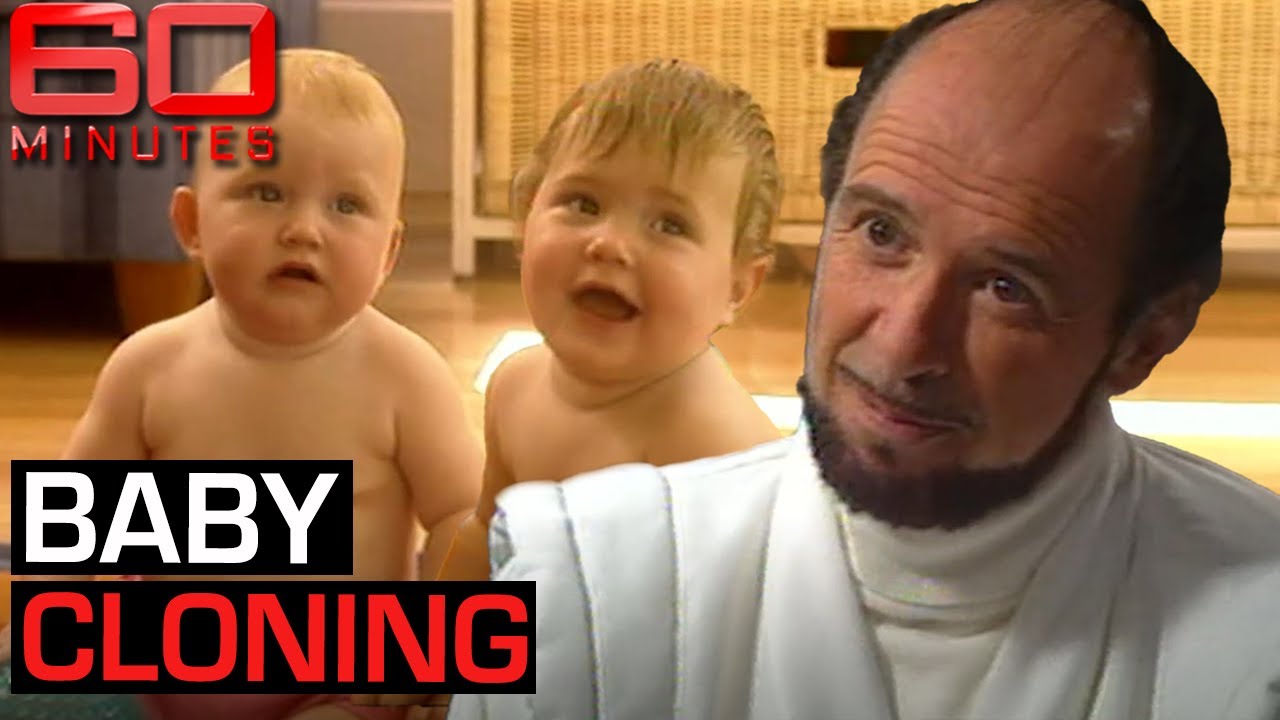
We've been able to clone human embryos for about seven years. But as far as we know, no one's actually cloned a whole person. Turns out, ethics aren't the only thing holding scientists back.
Cloning isn't the sci-fi marvel we think it is. It can be dangerous, often ineffective, and, most of all, we just haven't thought of a good enough reason to do it. So, here's why you'll probably never have to fight your evil clone.
This is Dolly. Just kidding, that's a regular sheep. This is Dolly, the first mammal cloned successfully from an adult cell.
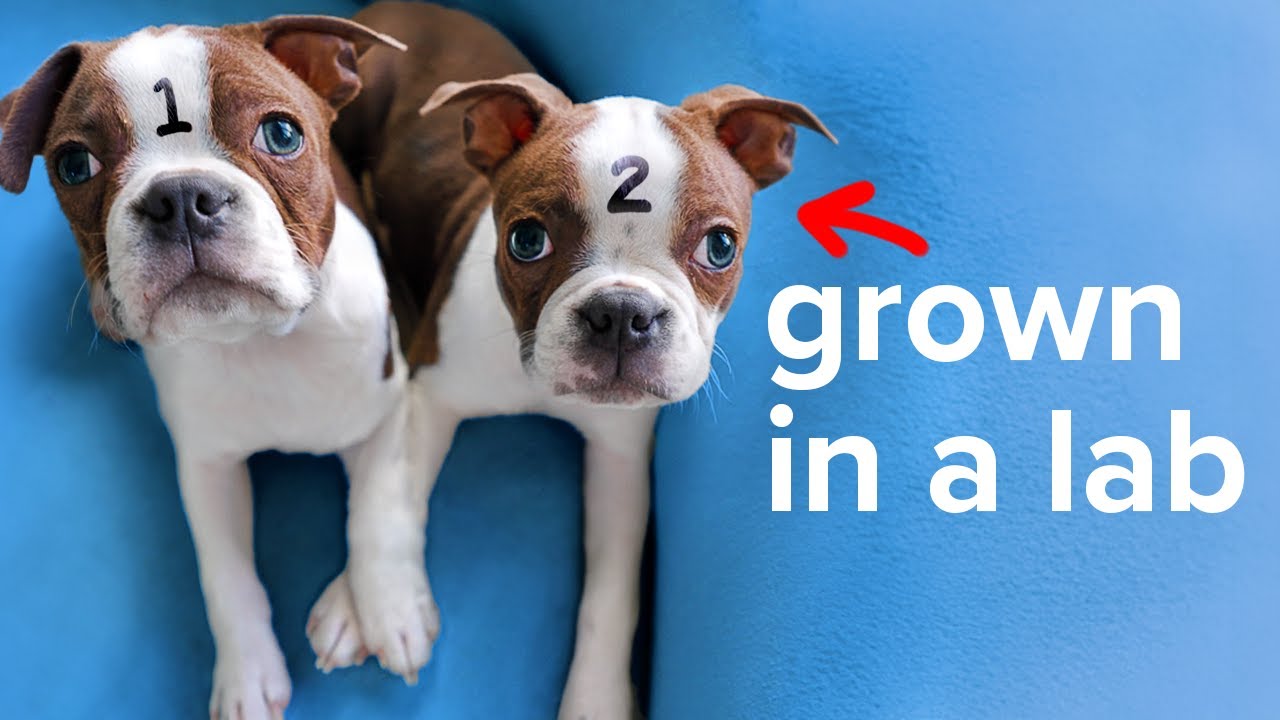
She was born in 1996 after scientists figured out how to remove the DNA from the egg cell of a Scottish Blackface sheep and basically replace it with the DNA of a mammary cell from a Finn Dorset sheep. They gave it a little electric shock to fuse the cell and get it replicating, placed the cells in the uterus of another sheep, and boom, clone. This method, called reproductive cloning, could theoretically be used on humans.
But this is a best-case scenario. It took 277 tries for the scientists to get one Dolly. Nowadays, cloning mammals generally has a success rate of about 10% to 20%.
Better than one in 277, but still a majorly inefficient process. Jose Cibelli: Technically, it's not difficult to produce a clone embryo, but human cloning has other hurdles that need to be considered. Narrator: To even research human cloning, scientists would need to ethically collect a large amount of donated eggs and find enough surrogates to carry them.
But even if they made it through that logistical nightmare, the biggest issue is this: Cibelli: They're gonna hurt the baby, or they're gonna hurt the person carrying the cloned fetus. Narrator: Across the board, scientists have found that some embryos expire before they're implanted. Others result in miscarriages.
And those that make it to term often die soon after birth or end up with severe abnormalities. Simply, these are risks that are easier to take when it comes to experimenting with sheep than with people. But arguably the biggest reason we haven't cloned a human being?
There's not a good enough reason to. In pop culture, cloning is used to bring people back from the dead. But that's not how it works.
Cloning someone would only create a twin, not a replica, since identical twins have the same genetics, but not necessarily personalities. And a "Never Let Me Go" scenario, where organs are harvested from clones to save the rich, is not only unethical, but unnecessary. Why clone an entire person when you can just make the part you need?
Something, theoretically, therapeutic cloning can solve. Therapeutic cloning is almost identical to reproductive, except the cloned embryo is never implanted in a uterus. Instead, the embryo is cloned for the sole purpose of extracting stem cells.
Stem cells have the incredible ability to turn into any other cell in the human body, which means they're great for developing new treatments for disease and have the potential to repair or regenerate tissues and organs. But, no surprise, there are a lot of downsides with therapeutic cloning. The thing about stem cells is that they're a pretty limited resource.
The most substantial source for embryonic stem cells? Three- to five-day-old embryos, cloned or otherwise. And when someone else's stem cells are transplanted into a patient, the body will sometimes fight them off like a disease.
Some researchers believe that cloned stem cells, since they share the patient's DNA, would be less likely to be rejected. But this use case is still in the research stage. And, finally, therapeutic cloning is an individualized treatment in a world where drug companies are more interested in standardized ones.
And there are easier ways to create multipurpose cells nowadays, like the method for creating induced pluripotent stem cells. They're basically adult cells that have been reprogrammed to be a different type of cell. Cibelli: The problem with therapeutic cloning, of course, is that you need a lab personnel that is qualified to do it, specific equipment to do it.
Whereas the other technique, you can just buy a kit and one person can do it in a lab that has some expertise in tissue culture. Narrator: Cloned cells still have an advantage when it comes to healthier mitochondria and the ability to grow into entire animals, whereas iPSCs often peter out. But since iPSCs safely and reliably do most everything but create entire living animals, why fund the harder, ethically ambiguous thing?
So, cloning might actually have a bigger place in movies than it does in real life, because the money just isn't there. And just because we can do something doesn't mean we need to. Ian: Your scientists were so preoccupied with whether or not they could, they didn't stop to think if they should.
Abby Tang: So, in the research for this video, I did come across one very interesting tidbit, and that is the announcement of cloned human baby Eve, who was born on December 26, 2002. And the source of this announcement is a company called Clonaid, which was formed in 1997 by the Raelian cult. And they're a cult that believes that humans were cloned from aliens and the only way for us to reach immortality is to clone ourselves.
It's been 18 years, and we haven't gotten any proof that baby Eve exists or has ever existed, but the company is still alive and well. So if any proof does come through, we will update you. Subscribe below so you don't miss it.