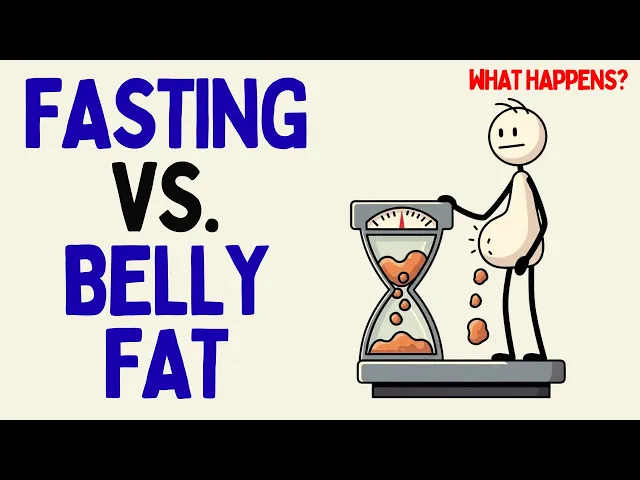
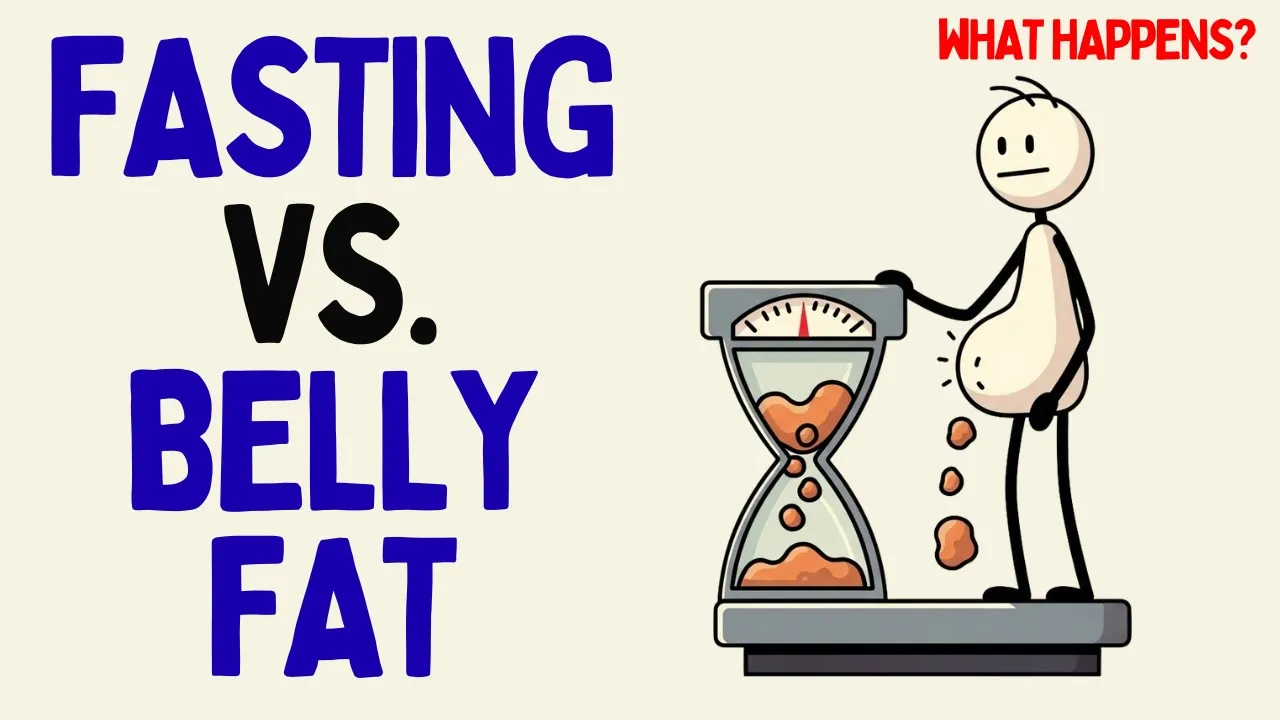
Imagine standing in front of the mirror right now, grabbing that stubborn roll of skin around your midsection. You've done the crunches. You've cut the calories.
You've sworn off bread, rice, and anything that tastes remotely good. And yet, it feels like that fat is glued to your body with industrial strength adhesive. It's frustrating.
It's disheartening. And honestly, it feels deeply, deeply personal, like your body is betraying you. But here's what you need to understand.
And I mean really understand. This isn't a failure of character. This isn't about willpower or discipline or how badly you want it.
This is a failure of chemistry. Your body isn't broken. It's trapped.
Because that belly fat you're carrying. It's not just stored energy sitting there waiting politely to be burned off during your morning jog. It's not some harmless cosmetic nuisance you can ignore.
Visceral fat, the kind that wraps around your liver, your pancreas, your intestines, is an active parasitic organ. It's strangling your vital organs from the inside and pumping out inflammatory signals like a factory spewing toxic waste. It's literally a ticking time bomb sitting right in your center, increasing your risk of diabetes, heart disease, and metabolic dysfunction with every passing day.
And here's the real villain in this story, insulin. Think of insulin as a one-way valve on your fat cells. Every time you eat, even a healthy snack, even an apple, even that handful of almonds at 3:00 in the afternoon, insulin spikes.
And when insulin is high, it locks those fat cells shut tight. You are chemically, biologically trapping the fat inside your body, making it impossible to burn it. No matter how many miles you log on that treadmill, you could run until your legs give out.
And that belly fat isn't going anywhere as long as insulin is standing guard at the door. The tragedy of the modern diet is this. We are overfed but cellularly starving.
We spike insulin every 2 to three hours with our six small meals, our constant snacking, our grazing throughout the day to keep metabolism high. We never ever give the body a chance to switch modes. We never let it unlock the fat.
But here's the good news. You have a built-in evolutionary switch, a dormant mechanism buried deep in your DNA that can drain that visceral fat like pulling a plug in a bathtub. Your ancestors survived ice ages with this switch.
It's not exotic. It's not experimental. It's already inside you waiting.
But here's the real twist. Most people fail at fasting because they focus on what to eat when the secret to melting belly fat actually lies in exactly how you navigate the 16th hour. So, let's walk through the biological timeline of what actually happens to your body when you stop eating.
Starting with the surprisingly chaotic first few hours. Let's be honest about the first few hours because if I sugarcoat this, you'll try it, hit a wall, and think something's wrong with you. So, here's the truth.
Hours 0 through 12 can feel rough. You might get a headache. You might feel a wave of fatigue washing over you around hour 8.
You might snap at your coworker for breathing too loudly. This is real. This is normal.
And this is your body throwing a tantrum because you've changed the rules on it. Here's what's happening. There's a hormone called ghrein.
It's your hunger hormone and it comes in waves. But here's the thing most people don't understand. Grein isn't a command to eat.
It's not your body screaming that you're in danger. It's a notification. It's a reminder based on your old habits.
If you've been eating breakfast at 8 in the morning for the last 10 years, your body has learned to release ghrelin at 8 in the morning. It's Pavlovian. It's a schedule, not an emergency.
And the beautiful part, those waves pass usually in about 20 minutes. Hunger is not an emergency. It's a notification you can choose to ignore.
Now, let me give you the most important analogy you'll hear in this entire video. I want you to think of your body's energy storage system like a kitchen with two storage units, a fridge and a freezer. The fridge is your glycogen, the sugar stored in your liver and muscles from the food you ate recently.
It's easy to access. It's right there. You open the door, grab what you need, close it.
Simple. The freezer is your body fat. It's your deep storage.
It's harder to access. It requires effort. And here's the critical part.
You cannot open the freezer until the fridge is empty. Every time you eat, you're restocking the fridge. Every snack, every meal, every little bite keeps that fridge full.
And as long as there's food in the fridge, your body has absolutely zero reason to go digging through the freezer. Why would it? The easy energy is right there.
So that body fat, the stuff you desperately want to burn, stays locked away, untouched, preserved like a forgotten casserole in the back of your freezer from two Thanksgivings ago. Science shows us that it takes roughly 10 to 12 hours to deplete the liver's glycogen store. This process is called metabolic switching, and researchers have been studying it for decades.
Before this point, you're not burning fat. You're not in some magical fat burning zone. You're simply burning your last meal.
You're living off the fridge. But then something happens around hour 10, hour 12. It varies person to person.
The fridge empties. Your body panics for about half a second, realizes no food is coming, and is forced to make a decision. And that's when it reaches for the freezer door.
That's when it unlocks the fat. This is your first major victory. This is the moment most people never reach because they ate a granola bar at hour 9 and restocked the fridge without even realizing it.
You might notice something strange around this time. The fog lifts. The irritability fades.
Your blood sugar stabilizes because it's no longer on a roller coaster of spikes and crashes. You feel surprisingly okay, maybe even good. But once that fridge is empty and the freezer door cracks open, something incredible starts to happen deep inside your cells that goes far beyond just burning calories.
Welcome to the magic window, hours 16 through 24. This isn't starvation. This is optimization.
This is your body operating the way evolution designed it to operate. And what happens here is nothing short of remarkable. First, there's a hormonal flip.
Insulin, that one-way valve we talked about, has finally dropped to its lowest levels. And when insulin drops, the counter regulatory hormones rise. Think of it like a seessaw.
One side goes down, the other goes up. And the hormones that rise are the ones that make you feel alive. Noradrenaline surges through your system.
This is your huntergatherer hormone. This is evolution, giving you energy so you can go find food. Our ancestors didn't curl up in a ball and wait to die when food was scarce.
They became sharper, faster, more alert. They had to or they wouldn't have survived. This is why so many people report feeling more focused, more energized during a fast.
It seems paradoxical, but it's pure biology. You're not shutting down. You're powering up.
And here's where the fat cells finally finally open. There's an enzyme called hormone sensitive lipase. Think of it as the specific key that unlocks fat cells.
Insulin locks the door. H cell kicks it open. When insulin is high, HCL is suppressed.
When insulin drops, HSL activates and it starts pulling triglycerides out of your fat cells, breaking them down into fatty acids and releasing them into your bloodstream to be burned as fuel. Now, here's where common sense and biology diverge. Common sense says if you don't eat, your metabolism slows down.
You go into starvation mode, your body clings to every calorie. Right? Wrong.
Biology says the opposite. Short-term fasting actually increases your metabolic rate. Studies show it can go up by as much as 14% in the first few days.
Why? Because your body thinks you need to hunt. It thinks you need energy to go find food.
So, it revs up, not down. You're not a dying battery. You're an engine that just switched into high gear.
And here's the part that makes belly fat so responsive to this process. Visceral fat is more metabolically active than subcutaneous fat. It has more receptors for adrenaline.
It's more sensitive to hormonal signals. It's first in first out. When you finally lower insulin and activate those fat burning hormones, visceral fat is the first fuel source your body raids.
That dangerous inflammatory fat wrapped around your organs. That's the first thing to go. Pause for a second.
I want to know something. Have you tried fasting before and quit because of the headaches or did you quit because of boredom? Let me know in the comments because understanding which one stopped you is the key to fixing it.
Now, around this time, something else starts to happen in your brain. Your liver begins producing ketones. These are molecules made from fat.
And they're an incredibly clean fuel source for your brain. Your brain is switching from running on glucose, which is like dirty gasoline, to running on ketones, which is like clean electric power. Some people describe it as mental clarity.
Others say it feels like a fog lifting. It's your brain realizing it doesn't need constant sugar to function. It's been lied to.
Now, burning fat is great. Feeling sharper is great, but there's a common fear that stops most people from trying this. A fear that whispers in the back of their mind every time they consider skipping a meal.
A fear that you're actually destroying your muscles along with the fat. Let's talk about the fear. The one that keeps people eating protein shakes every 3 hours, like their muscles will evaporate if they don't.
Will I lose muscle? It's the number one objection. It's the thing your gym buddy warned you about.
It's the reason you're hesitant to try this, even though everything I've said makes sense. So, let me put this to rest right now. When you fast, your body releases human growth hormone, HGH.
And it doesn't just release a little, it skyrockets. Studies show that HGH can increase by up to 2,000% in men and 1300% in women during an extended fast. 2,000%.
Let that sink in. Now, what does HGH do? It's muscle armor.
It tells your body, "Preserve the protein, protect the muscle, burn the fat instead. " Think about this from an evolutionary perspective. Would it make any sense for your body to cannibalize your muscles when you need to hunt for food?
When you need strength and speed to survive? Evolution isn't stupid. It would be a death sentence.
So, your body does the opposite. It guards your muscle tissue like a fortress and forces itself to burn fat for fuel. But the benefits don't stop there.
There's something happening at the cellular level that most people have never even heard of. It's called autophagy. And in 2016, a scientist named Yoshori Osumi won the Nobel Prize for discovering exactly how it works.
Think of autophagy as a recycling crew that shows up when your cells finally have some downtime. When you're constantly eating, constantly digesting, your cells are too busy processing food to do any cleaning. But when you fast, when digestion stops, your cells switch into maintenance mode.
They start eating up old damaged proteins, misfolded enzymes, broken down organels, all the cellular junk that accumulates over time. It's spring cleaning at the microscopic level. And this isn't just about efficiency.
This is anti-aging. This is your body repairing itself from the inside out, recycling the broken parts and building new, healthier components. Here's something fascinating that most people don't know.
Autophagy can even help with loose skin because the body doesn't just recycle damaged proteins inside cells. It can consume unnecessary protein structures outside cells too, including the protein in excess skin tissue. This is why some people who lose weight through fasting report better skin elasticity than people who lose the same amount of weight through chronic calorie restriction.
The body is smart. It knows what's essential and what's expendable. Now, let's kill one more myth while we're at it.
Starvation mode. You've heard it a thousand times. If you don't eat, your metabolism crashes and your body clings to every ounce of fat.
Here's the truth. That's not fasting. That's chronic calorie restriction.
There's a massive difference. Chronic dieting, eating slightly less than you need day after day, week after week. That does slow your metabolism.
That does make your body adapt by burning fewer calories. It's a flatline. But fasting is a pulse.
It's on and off. Fast and famine. Your body never has time to adapt because you're constantly switching between fed and fasted states.
Fasting is hormonal optimization. Chronic dieting is metabolic surrender. So, we've burned the belly fat.
We've protected the muscle. We've cleaned the cells. We've debunked the fears.
But none of this matters if you don't know how to make this a permanent part of your life without going crazy. Let's zoom out for a second because this isn't about a 16-hour window. This isn't about a 30-day challenge or some quick fix you do until you fit into those jeans.
This is about something bigger. This is about metabolic flexibility. The ability of your body to seamlessly switch between fuel sources, to burn sugar when it's available and burn fat when it's not.
To be adaptable, resilient, free. Picture yourself 10 years from now. You're not a slave to meal times.
You're not panicking because you missed lunch. You're not carrying granola bars in your bag like they're life support. You skip a meal and you still have high energy, crystal clear focus.
You look in the mirror and you see a lean, capable body, not an inflamed one, not one that's constantly battling itself. You've unlocked something most people never find. The ability to trust your body again.
Here's how you start. You don't need to jump into 24 hours. You don't need to suffer.
Start with 12 hours. Most of that is sleep anyway. Then push it to 14.
Then 16. Keep it simple. Drnk black coffee if you need it.
Unsweetened tea. Water. That's it.
No lemon water with honey. No bulletproof coffee with butter and oil. Those break the fast.
They spike insulin. They restock the fridge. Keep the freezer door open.
And here's the line I want you to remember. We live in a world that feasts every day. But nature intended for us to feast only after we fasted.
Balance isn't about moderation. Balance is about cycling on and off, feast and famine. Insulin up, insulin down.
That's the rhythm your body was designed for. That's the rhythm that keeps you lean, sharp, and metabolically healthy for life. However, there is one critical mistake that can ruin an entire 16-hour fast in 5 minutes.
One error that undoes all the benefits we just talked about and it has everything to do with how you break the fast. If you spike your insulin instantly with the wrong food, you slam the freezer door shut, you shut down autophagy and you waste those hours. The first thing you put in your mouth after fasting might be the most important meal decision you make all week.
So, if you found value in this deep dive, hit that like button. It helps the algorithm get this information to people who are struggling with the same frustrations you've had. People who've been told it's their fault when it's really just bad chemistry.
Subscribe to upgrade your biology to learn how your body actually works instead of guessing. And now, click on the video on the screen to stay connected. See you there.
Till then, peace Imagine standing in front of the mirror right now, grabbing that stubborn roll of skin around your midsection. You've done the crunches. You've cut the calories.
You've sworn off bread, rice, and anything that tastes remotely good. And yet, it feels like that fat is glued to your body with industrial strength adhesive. It's frustrating.
It's disheartening. And honestly, it feels deeply, deeply personal, like your body is betraying you. But here's what you need to understand.
And I mean really understand. This isn't a failure of character. This isn't about willpower or discipline or how badly you want it.
This is a failure of chemistry. Your body isn't broken. It's trapped.
Because that belly fat you're carrying. It's not just stored energy sitting there waiting politely to be burned off during your morning jog. It's not some harmless cosmetic nuisance you can ignore.
Visceral fat, the kind that wraps around your liver, your pancreas, your intestines, is an active parasitic organ. It's strangling your vital organs from the inside and pumping out inflammatory signals like a factory spewing toxic waste. It's literally a ticking time bomb sitting right in your center, increasing your risk of diabetes, heart disease, and metabolic dysfunction with every passing day.
And here's the real villain in this story, insulin. Think of insulin as a one-way valve on your fat cells. Every time you eat, even a healthy snack, even an apple, even that handful of almonds at 3:00 in the afternoon, insulin spikes.
And when insulin is high, it locks those fat cells shut tight. You are chemically, biologically trapping the fat inside your body, making it impossible to burn it. No matter how many miles you log on that treadmill, you could run until your legs give out.
And that belly fat isn't going anywhere as long as insulin is standing guard at the door. The tragedy of the modern diet is this. We are overfed but cellularly starving.
We spike insulin every 2 to three hours with our six small meals, our constant snacking, our grazing throughout the day to keep metabolism high. We never ever give the body a chance to switch modes. We never let it unlock the fat.
But here's the good news. You have a built-in evolutionary switch, a dormant mechanism buried deep in your DNA that can drain that visceral fat like pulling a plug in a bathtub. Your ancestors survived ice ages with this switch.
It's not exotic. It's not experimental. It's already inside you waiting.
But here's the real twist. Most people fail at fasting because they focus on what to eat when the secret to melting belly fat actually lies in exactly how you navigate the 16th hour. So, let's walk through the biological timeline of what actually happens to your body when you stop eating.
Starting with the surprisingly chaotic first few hours. Let's be honest about the first few hours because if I sugarcoat this, you'll try it, hit a wall, and think something's wrong with you. So, here's the truth.
Hours 0 through 12 can feel rough. You might get a headache. You might feel a wave of fatigue washing over you around hour 8.
You might snap at your coworker for breathing too loudly. This is real. This is normal.
And this is your body throwing a tantrum because you've changed the rules on it. Here's what's happening. There's a hormone called ghrein.
It's your hunger hormone and it comes in waves. But here's the thing most people don't understand. Grein isn't a command to eat.
It's not your body screaming that you're in danger. It's a notification. It's a reminder based on your old habits.
If you've been eating breakfast at 8 in the morning for the last 10 years, your body has learned to release ghrelin at 8 in the morning. It's Pavlovian. It's a schedule, not an emergency.
And the beautiful part, those waves pass usually in about 20 minutes. Hunger is not an emergency. It's a notification you can choose to ignore.
Now, let me give you the most important analogy you'll hear in this entire video. I want you to think of your body's energy storage system like a kitchen with two storage units, a fridge and a freezer. The fridge is your glycogen, the sugar stored in your liver and muscles from the food you ate recently.
It's easy to access. It's right there. You open the door, grab what you need, close it.
Simple. The freezer is your body fat. It's your deep storage.
It's harder to access. It requires effort. And here's the critical part.
You cannot open the freezer until the fridge is empty. Every time you eat, you're restocking the fridge. Every snack, every meal, every little bite keeps that fridge full.
And as long as there's food in the fridge, your body has absolutely zero reason to go digging through the freezer. Why would it? The easy energy is right there.
So that body fat, the stuff you desperately want to burn, stays locked away, untouched, preserved like a forgotten casserole in the back of your freezer from two Thanksgivings ago. Science shows us that it takes roughly 10 to 12 hours to deplete the liver's glycogen store. This process is called metabolic switching, and researchers have been studying it for decades.
Before this point, you're not burning fat. You're not in some magical fat burning zone. You're simply burning your last meal.
You're living off the fridge. But then something happens around hour 10, hour 12. It varies person to person.
The fridge empties. Your body panics for about half a second, realizes no food is coming, and is forced to make a decision. And that's when it reaches for the freezer door.
That's when it unlocks the fat. This is your first major victory. This is the moment most people never reach because they ate a granola bar at hour 9 and restocked the fridge without even realizing it.
You might notice something strange around this time. The fog lifts. The irritability fades.
Your blood sugar stabilizes because it's no longer on a roller coaster of spikes and crashes. You feel surprisingly okay, maybe even good. But once that fridge is empty and the freezer door cracks open, something incredible starts to happen deep inside your cells that goes far beyond just burning calories.
Welcome to the magic window, hours 16 through 24. This isn't starvation. This is optimization.
This is your body operating the way evolution designed it to operate. And what happens here is nothing short of remarkable. First, there's a hormonal flip.
Insulin, that one-way valve we talked about, has finally dropped to its lowest levels. And when insulin drops, the counter regulatory hormones rise. Think of it like a seessaw.
One side goes down, the other goes up. And the hormones that rise are the ones that make you feel alive. Noradrenaline surges through your system.
This is your huntergatherer hormone. This is evolution, giving you energy so you can go find food. Our ancestors didn't curl up in a ball and wait to die when food was scarce.
They became sharper, faster, more alert. They had to or they wouldn't have survived. This is why so many people report feeling more focused, more energized during a fast.
It seems paradoxical, but it's pure biology. You're not shutting down. You're powering up.
And here's where the fat cells finally finally open. There's an enzyme called hormone sensitive lipase. Think of it as the specific key that unlocks fat cells.
Insulin locks the door. H cell kicks it open. When insulin is high, HCL is suppressed.
When insulin drops, HSL activates and it starts pulling triglycerides out of your fat cells, breaking them down into fatty acids and releasing them into your bloodstream to be burned as fuel. Now, here's where common sense and biology diverge. Common sense says if you don't eat, your metabolism slows down.
You go into starvation mode, your body clings to every calorie. Right? Wrong.
Biology says the opposite. Short-term fasting actually increases your metabolic rate. Studies show it can go up by as much as 14% in the first few days.
Why? Because your body thinks you need to hunt. It thinks you need energy to go find food.
So, it revs up, not down. You're not a dying battery. You're an engine that just switched into high gear.
And here's the part that makes belly fat so responsive to this process. Visceral fat is more metabolically active than subcutaneous fat. It has more receptors for adrenaline.
It's more sensitive to hormonal signals. It's first in first out. When you finally lower insulin and activate those fat burning hormones, visceral fat is the first fuel source your body raids.
That dangerous inflammatory fat wrapped around your organs. That's the first thing to go. Pause for a second.
I want to know something. Have you tried fasting before and quit because of the headaches or did you quit because of boredom? Let me know in the comments because understanding which one stopped you is the key to fixing it.
Now, around this time, something else starts to happen in your brain. Your liver begins producing ketones. These are molecules made from fat.
And they're an incredibly clean fuel source for your brain. Your brain is switching from running on glucose, which is like dirty gasoline, to running on ketones, which is like clean electric power. Some people describe it as mental clarity.
Others say it feels like a fog lifting. It's your brain realizing it doesn't need constant sugar to function. It's been lied to.
Now, burning fat is great. Feeling sharper is great, but there's a common fear that stops most people from trying this. A fear that whispers in the back of their mind every time they consider skipping a meal.
A fear that you're actually destroying your muscles along with the fat. Let's talk about the fear. The one that keeps people eating protein shakes every 3 hours, like their muscles will evaporate if they don't.
Will I lose muscle? It's the number one objection. It's the thing your gym buddy warned you about.
It's the reason you're hesitant to try this, even though everything I've said makes sense. So, let me put this to rest right now. When you fast, your body releases human growth hormone, HGH.
And it doesn't just release a little, it skyrockets. Studies show that HGH can increase by up to 2,000% in men and 1300% in women during an extended fast. 2,000%.
Let that sink in. Now, what does HGH do? It's muscle armor.
It tells your body, "Preserve the protein, protect the muscle, burn the fat instead. " Think about this from an evolutionary perspective. Would it make any sense for your body to cannibalize your muscles when you need to hunt for food?
When you need strength and speed to survive? Evolution isn't stupid. It would be a death sentence.
So, your body does the opposite. It guards your muscle tissue like a fortress and forces itself to burn fat for fuel. But the benefits don't stop there.
There's something happening at the cellular level that most people have never even heard of. It's called autophagy. And in 2016, a scientist named Yoshori Osumi won the Nobel Prize for discovering exactly how it works.
Think of autophagy as a recycling crew that shows up when your cells finally have some downtime. When you're constantly eating, constantly digesting, your cells are too busy processing food to do any cleaning. But when you fast, when digestion stops, your cells switch into maintenance mode.
They start eating up old damaged proteins, misfolded enzymes, broken down organels, all the cellular junk that accumulates over time. It's spring cleaning at the microscopic level. And this isn't just about efficiency.
This is anti-aging. This is your body repairing itself from the inside out, recycling the broken parts and building new, healthier components. Here's something fascinating that most people don't know.
Autophagy can even help with loose skin because the body doesn't just recycle damaged proteins inside cells. It can consume unnecessary protein structures outside cells too, including the protein in excess skin tissue. This is why some people who lose weight through fasting report better skin elasticity than people who lose the same amount of weight through chronic calorie restriction.
The body is smart. It knows what's essential and what's expendable. Now, let's kill one more myth while we're at it.
Starvation mode. You've heard it a thousand times. If you don't eat, your metabolism crashes and your body clings to every ounce of fat.
Here's the truth. That's not fasting. That's chronic calorie restriction.
There's a massive difference. Chronic dieting, eating slightly less than you need day after day, week after week. That does slow your metabolism.
That does make your body adapt by burning fewer calories. It's a flatline. But fasting is a pulse.
It's on and off. Fast and famine. Your body never has time to adapt because you're constantly switching between fed and fasted states.
Fasting is hormonal optimization. Chronic dieting is metabolic surrender. So, we've burned the belly fat.
We've protected the muscle. We've cleaned the cells. We've debunked the fears.
But none of this matters if you don't know how to make this a permanent part of your life without going crazy. Let's zoom out for a second because this isn't about a 16-hour window. This isn't about a 30-day challenge or some quick fix you do until you fit into those jeans.
This is about something bigger. This is about metabolic flexibility. The ability of your body to seamlessly switch between fuel sources, to burn sugar when it's available and burn fat when it's not.
To be adaptable, resilient, free. Picture yourself 10 years from now. You're not a slave to meal times.
You're not panicking because you missed lunch. You're not carrying granola bars in your bag like they're life support. You skip a meal and you still have high energy, crystal clear focus.
You look in the mirror and you see a lean, capable body, not an inflamed one, not one that's constantly battling itself. You've unlocked something most people never find. The ability to trust your body again.
Here's how you start. You don't need to jump into 24 hours. You don't need to suffer.
Start with 12 hours. Most of that is sleep anyway. Then push it to 14.
Then 16. Keep it simple. Drnk black coffee if you need it.
Unsweetened tea. Water. That's it.
No lemon water with honey. No bulletproof coffee with butter and oil. Those break the fast.
They spike insulin. They restock the fridge. Keep the freezer door open.
And here's the line I want you to remember. We live in a world that feasts every day. But nature intended for us to feast only after we fasted.
Balance isn't about moderation. Balance is about cycling on and off, feast and famine. Insulin up, insulin down.
That's the rhythm your body was designed for. That's the rhythm that keeps you lean, sharp, and metabolically healthy for life. However, there is one critical mistake that can ruin an entire 16-hour fast in 5 minutes.
One error that undoes all the benefits we just talked about and it has everything to do with how you break the fast. If you spike your insulin instantly with the wrong food, you slam the freezer door shut, you shut down autophagy and you waste those hours. The first thing you put in your mouth after fasting might be the most important meal decision you make all week.
So, if you found value in this deep dive, hit that like button. It helps the algorithm get this information to people who are struggling with the same frustrations you've had. People who've been told it's their fault when it's really just bad chemistry.
Subscribe to upgrade your biology to learn how your body actually works instead of guessing. And now, click on the video on the screen to stay connected. See you there.