Strength and conditioning webinar with Dr Mike young thank you all for taking the time to join us this evening for what promises to be an awesome presentation by Mike on motor learning Concepts that we should all know and understand uh for us the the webinar marks the launch of the performance strength and conditioning Network and Mike and I have been working hard behind the scenes to create a Global Network of Educational events for coaches to learn share and connect with leading Fitness professionals and performance coaches it's great to be able to officially welcome Mike to
the team and I'm really excited by what we have in the pipeline over the next 12 months or so uh we've got some exciting workshops coming up in both the US and the UK in addition to uh bigger series of online events which hopefully will'll have some of you with us um I'll now hand you over to Mike for His presentation tonight and there will be some time for Q&A at the end here you go hey Mike we're bringing you in hey guys thank you James and uh as this is a webinar and I'd like
to have interaction back and forth if if there are is any commentary feel free to uh put in a little chat box uh if if I see it fits in I'll try to address it uh feel free to dialogue amongst yourselves uh as I talk as well and we'll try to have a little bit of a Q&A at the tail end of This so what I'd like to do here is go into the first part of a two-part lecture on some applied motor learning Concepts that I think are relevant for all coaches and fitness professionals
unfortunately motor learning is a serly underserved Sport Science which is a shame because it doesn't matter how much technical knowledge we have from biomechanics or exercise physiology standpoint if we can't convey what we are trying to have the athlet Convey the message that we're trying to to uh get across to our athletes and motor learning really is about skill acquisition and teaching similar from cognitive learning methodology so with that we'll go into this lecture here as many of you know I come from a uh physiology and biomechanics background but I really think uh it motor
learning as I said is extremely underserved Sport Science I think it's Something that is incredibly relevant many of us have been to University and had the unfortunate circumstance come aely brilliant Professor perhaps someone who was hired for research purposes they could bring in huge grants and so forth but unfortunately many of those brilliant professors are not very good teachers and that's what this entire lecture is about this first of of two parts here so we'll start off by giving you a little bit of a road map and what I'd like to do is first Define
skill and we will Define it from a research standpoint uh how it is used in the motor learning research and what we're going to find is that it's important to Define it this way because the way that we frequently look at skill and skill acquisition is oftentimes very misguided then we'll go on to what I call the skill acquisition Paradox and this is what leads a lot of well intended coaches astray the fact that Many of the things that we think we are doing to benefit our athletes may actually be hindering their long-term performance when
it comes to motor learning then we'll talk about some feedback recommendations we'll look at this idea of attentional focus and how we can better improve an Athletes Performance and their learning of a skill through focusing their attention in the right area well we'll move on and discuss this Idea of contextual interference and how it relates to motor learning we'll talk about movement variability and then see if we can wrap all of this up and that's where we'll put a little Q&A so when we talk about skills I think it's important to understand what we really
mean when we talk about skills most of us would Define skills as practitioners in the field as being able to accomplish a task and do so with Great movement efficiency and I think this is a great definition it works really well in the framework of motor learning the motor learning science literature however we need to add we need to add two or three things onto that definition to really get to the heart of what we are trying to accomplish as coaches now one thing that is irrefutable is that everyone wants to be more skilled they
want Have a higher level of proficiency it doesn't matter whether you are a beginner or a expert level we still want to have skill than we currently have the benefits of that should be undeniable one thing that we do need to kind of keep in mind though especially when dealing in our realm strength and conditioning uh sport performance is that it's important to recognize that performance alone is not necessarily indica of skill so for Example I could take an athlete who's very very fast they run a fast 40 yard dash or 30 meter dash or
whatever the case is but they may be highly unskilled at running running is a skill you can't improve the mechanics of it they may be very fast just simply because they chose the right parents they have great fiber type limb length ratios and so forth the engine is really big but they could be highly skilled at the movement patterns associated with running Efficiently if we were to improve those movement patterns then we would have an improved performance on the flip side of that we could also see an athlete who is highly skilled but lacks the
physical parameters so they don't have the strength the stamina the the flexibility but they do have the movement patterns correct as practitioners we should recognize that performance is ultimately the intersection of your mechanical proficiency and how big Of an engine you have we can't Short change one and expect to maximize performance another important concept that I think needs bearing out here because it does have some implications for what we're going to talk about moving forward here is the idea of muscle memory now you'll hear a lot of coaches talk about learning a skill and storing
ing that information in the muscles that doesn't really happen like that what ends up happening is the motor Pattern the skill itself is not too dissimilar from cognitive learning all of that change those neural connections and so forth is actually occurring in the brain now this means that muscle memory as most people casually refer to it does not exist but that doesn't mean that movement memory does not exist we can have movement memory now what this the implications for this is that many of the same things that we find true for cognitive learning are also
going to Hold true for motor learning and this is nice to know and it's well validated by research because the things that we oftentimes do as practitioners are very different than what we tell our student athletes for example to do in learning and what we should actually be doing is something quite similar to what we're doing in cognitive learning now one important distinction that needs to be made when we talk about How we uh use we as coaches use the word learning skill learning and how it's defined in the research literature which is very very
important is this idea that true learning is assessed by retention true learning is assessed by retention now in the research literature the field of motor learning typically looks at retention of a skill 24 to 48 hours later at least that at least that long after the practice period so we have to make a very Clear-cut distinction between what is achieved in a practice session and what is achieved at some test period later on if we were to put this in the context of us as strength and conditioning professionals we might think of it as practice
versus the competition or practice versus the actual test so if we're using this and keeping this in mind that true learning is assessed by retention what we're going to find is that a lot of the things that We do well well intended we do it with all the best intentions in mind for our athletes what we do is actually very very much wrong what we're looking for is a continuous improvement over time we want to see these marginal gains incrementally add up over extended periods of time now this is important to recognize here I think
we all understand this to some extent this is important to acknowledge because a lot of the things That we do get in the way of this continued Improvement what we end up do with doing with our queuing and feedback and so forth is setting up a scenario where we see shortterm gains and no continuous Improvement we very very limited continuous Improvement ideally we're seeing small gains adding up over time if I take one step forward I want to make sure that tomorrow when I come back And work on that skill again that I have retained
my one step forward so again true learning is assessed by retention how well you hold on to that skill that you have learned and if we can retain it over time that's when we're going to see serious benefits when I was a kid my favorite toys were the Transformers I love this idea that I could be driving around town or you know in the back seat of my mom's car as the case were and the little Buggy next to me could suddenly transform into some gigantic robot with a gun in its hand this was fascinating
to me and one of the themes the motifs of Transformers was that there was more than meets the eye and the same is actually going to hold true for motor learning and skill acquisition as coaches we're trying to make make our athletes as proficient at movement as we can doesn't matter if you're a sport Coach or a performance coach we're trying to enhance movement proficiency now one of the things that gets in the way of this is the motor learning Paradox and the Paradox is that there is much more than meets yet seem to be
good things that seem to be working are in fact not working at all when when we judge it by the Criterion of retention so we get these short-term gains and we come back the following day and we Wonder why this athlete has lost all of the skill Improvement that they gained the prior day and we bang our head on the wall we blame the athlete maybe we blame ourselves and a lot of times this one step forward one step back uh interplay is really just due to some simple things that we are doing wrong and
what we see is that many of the tactics many of the strategies that we use to enhance skill actually impede True skill acquisition and the reason for this is that we are fooled into believing that immediate improvements are indicative of true learning so remember how I defined skill and learning skill learning it's that we have to improve in that skill and then have retention of that skill some period of time later the minimum Criterion that is used or time frame that's used in the motor learning research literature is About 24 hours although you often times
see a test periods or retention periods of five days or seven days and what we actually see is that if we do things incorrectly we could be taking that one step forward and we come back we we lose that step forward that we gained the very things that improve performance acutely are often times the opposite the opposite of what should be done to enhance true skill acquisition So again this is that more than meets the eye and unfortunately this isn't nearly as cool as the Transformers because in this case it's fooled us as coaches into
believing that what we are doing is doing it the best way possible when in fact many of the things that we need to do will fly in the face of what we have been doing for so long let's move on now and talk about feedback so the next portion of this lecture Series this webinar is going to Be out be about mythbusting and some best practices of what we should do as coaches to enhance motor skill acquisition and we'll kick this off by looking at feedback and as a coach who started coaching very very young
I took on my first coaching job at an age group track and field Club at about 17 years old and I had I did the same things that most young coaches do I over coached I gave too much information and we're Going to look at a lot of those things and talk about why they might seem correct but are in fact the exact opposite of what we might want to do so when looking at feedback I'm going to break this up into four different areas we're going to talk about the type of feedback that you
provide we will talk about the timing of the feedback that you deliver the quantity of feedback and the frequency of feedback and all of these things can impact how Well your athletes learn a skill so when looking at type we can break this down into a discussion of several different subcategories the first subcategory would be a an examination of knowledge of results versus knowledge of performance knowledge of results would be telling an athlete what they did knowledge of performance would be telling them how they did it so if for example as a snc coach you
Are trying to work on an athlete speed and you have them run a 30 meter sprint an example of providing knowledge of results would be telling them how fast they ran telling that athlete hey Johnny you just ran 4.2 seconds for that 30 meter dash that is a knowledge of results knowledge of performance would be giving them information on how they did it so telling them hey you kept your feet behind you for a long time or you stepped over the opposite knee or you Pushed yourself tall something to that effect now in the battle
between providing knowledge of results versus knowledge of performance we want to generally try to steer ourselves towards providing knowledge of performance the reason for that is that in terms of motor skill acquisition telling someone in the example that I just gave how fast they ran provides very little actionable information to them Johnny will go back thinking he ran A 4.24 30 meter sprint that might be great for him it might be bad for him but he doesn't know what helped him achieve that performance whether it was good or bad by providing knowledge of performance we're
giving that athlete something that is actionable they can change it now I gave you an example using a Sprint time but you can think of it on a variety of different tasks right so we could look at something like an Olympic lift knowledge of results might Be telling them how much weight was on the bar or did they make the lift or not make the lift knowledge of performance would be telling them something more finite that can actually help their performance hey your back lower back stayed in a correct position I like I'd like you
to pull your shoulder blades down and back those are the kinds of things that will help improve performance another subcategory of Feedback is intrinsic and augmented feedback intrinsic feedback tends to be feedback that the athlete already has to some extent it's kinesthetic awareness is what we as coaches might often times refer refer to it as augmented feedback is feedback that they probably do not already have they do not know it and while it might seem simple it might seem pretty logical that we would want to provide augmented feedback if you do a self- audit on
yourself like I have to Repeatedly do I find that I am often times steering myself having to steer myself away from intrinsic feedback and towards augmented augmented feedback will be much more beneficial for your athletes now there's times when it's redundant and you don't need to provide it but in general I like to think of it like this most of us have smartphones and in this day and age phones are becoming smarter and smarter and smarter a lot of smartphones have Applications on them where you may actually be able to do a a Street scan
with your phone you pick it up the application will access the camera it will access your GPS coordinates you could scan the street and you'll get some information like this I'm walking by Banana Republic that's a four-star store it's only 0.02 miles away from me hey how's that bagel place three stars maybe I won't go there this is all augmented feedback it's beyond what I Inher know this is the kind of information that is useful for athletes we want to provide information that is something beyond what they already have so augmented feedback is almost always
going to win we don't want to create White Noise by telling someone something that they already know which is what might be the case with intrinsic feedback let's move on now to look at the timing of feedback now with timing Of feedback I'm talking about when do we actually tell them about their performance do we do it before do we do it after or do we do it during the performance and a lot of the research looks at what's called concurrent feedback versus terminal feedback so in concurrent feedback you're providing information while the athlete is
performing the task while the athlete is performing the a task in terminal feedback we're providing feedback after They have completed the movement pattern now as a coach I I have frequently caught myself giving concurrent feedback to athletes and there is a time and a place where concurrent feedback is beneficial those times and places tend to be when the movement pattern is fairly cyclic and Contin in nature so for example if I were doing a Sprint and the gate pattern is repeating Itself over and over and over again I can probably scream something at the athlete
and expect for them to produce a mechanical change while they are performing the activity other activities most activities though don't meet that Criterion of cyclic continuous tasks in these types of movement patterns we want to provide terminal feedback meaning immediately after it has been Performed so for example it might be better for me to provide feedback after that athlete has finish their run and come back or in the case of something more gym related I might let them do their sets of two on a power clean and not tell them to fix anything until they've
completed the set of two we don't want to try to muddy the waters too much because if we're getting into concurrent feedback on these as cyclic tasks things like power cleans Or um throwing actions or rotational actions things that tend to not be cyclic uh continuous repeated activities a lot of times what we do is distract the athlete from actually performing well so it's better off to give back at the end of an activity now I work in the real world just like you do and the research literature does suggest terminal feedback is better than
even feedback immediately prior to an activity so for example an athlete Performs a movement pattern provides some feedback and then let them do their thing and they'll do it again sometime later well as I say I work in reality like you guys do we might be doing a set of Olympic lifts and the rest and Recovery period between each set might be two to three minutes now if your athletes are anything like mine in that two to three minute time period they're probably on their phone they're checking Instagram and Facebook and Twitter and They have
likely forgotten what you told them at that terminal point of their prior set so in the real world we may need to provide feedback IM immediately prior to an activity but in general you have to recognize the activity and match the timing of the feedback that you provide with the movement pattern that is occurring This research study here looked at concurrent versus terminal feedback and why it is better to Wait and what what this research found was that not all feedback conditions are equal if we wait bite our lip and wait to provide feedback at
the end Better Learning will occur they will be able to improve on their performance both within that session as well as later on they will retain it now let's look at this idea of quantity of feedback now I told you I started coaching very early at about 17 years old and I distinctly remember the First big competitive coaching event that I coached at I was coaching athletes at a at a track and field championship event in some fairly Complex events and I distinctly remember myself having verbal diarrhea I was telling them everything that I possibly
knew about that activity I was trying to fix everything that they were doing wrong if they were doing 10 things wrong I was probably telling them 20 things that they were doing wrong and 50 50 Ways that they could correct it I was providing far too much quantity of feedback now as a young coach this makes logical sense right it helps feed my ego it makes me feel more comfortable around my coaching peers if it looks like Hey My My job is to provide feedback and improve your performance so why don't I do my job
better and provide more feedback to improve your performance Unfortunately the quantity versus quality of feedback does not work like that we really want to try to steer towards greater quanti greater quality of feedback and limit ourselves on the quantity of feedback so with regards to quality of feedback I try to assess myself on three Criterion three Criterion that what I call the three C's of feedback I want my feedback to be clear I want it to be concise and I want it to Be concrete now with regards to these we'll go go through on each
one individually just so that you understand where I'm coming from with regard to Clarity I think it's very important that you understand the concept and can still it down to the most simple format I use the Criterion for myself that can my eight-year-old daughter understand and do what I'm asking to be to be done if you don't have a Criterion like that if It can't be understood by a young child then you're probably not clear enough in what you're trying to convey there's multiple layers of clarity here and I will give you one kind of
funny example that backfired on me I have an athlete running 100 meter dash and they're doing it in a competition they are sprinting they pass me as a coach sitting in the stands and I say knees up knees Up and this athlete I see start to slow down almost as soon as I say that they finish the race and I walk over to them and I say what the hell were you doing it's a good 100 meter race uh you started to back off it's only 100 meters we don't Pace our 100 meters like that
he says hey coach I thought you said ease up thought you said ease up so here's a here's a scenario where just because I wasn't I chose words that could be easily Misunderstood it had the opposite effect now that's kind of a ridiculous example there just so happens it knes and ease match up with each other but more oftentimes what we what we run into is that we have a perfect understanding of what we want our athletes to do but they don't know what the hell we're talking about and a lot of times we see
this when we provide some feedback and then all of a sudden they're doing something completely opposite or no change is Being made and you provide the same feedback repeatedly repeatedly repeatedly and no change is made certainly no beneficial change and a lot of times we get frustrated with the athletes hey are you paying attention to me are you being Mindful and the real problem often times is in our Clarity we are not telling them exactly what we want them to do Andor they don't understand it in the in the Uh language that we are using
so we want to make sure that we are telling the story in a language that they can understand sometimes this is going to come down to simply asking an athlete do you understand what I'm asking you to do can you do it in slow motion can you uh explain it to me and while those aren't the best criteria necessarily A lot of times by just by asking asking questions like that you will find that your Clarity is not very good you'll Find that they don't understand what you're asking them to do and if they don't
understand what you're asking them to do it doesn't matter how much you know so we want to try to really focus on Clarity we also want to be as concise as possible we don't want to provide excess information and have verbal diarrhea linguistics research suggests that that's not going to be beneficial for us at all or our athletes that they will Probably remember the last thing we said maybe if we're lucky the first thing we said and nothing in between and what we want to try to do is use as few of a words as
possible I do some research editing some editing for a couple re Sport Science research Publications and one of the things that we have to do when editing research journals is make sure that there are no Extra words that you are as concise as possible this is one of the reasons why research is often times so dry to read but there's no excess baggage so to speak you're just getting to the point and we need to do the same thing with our athletes don't use 10 words when you can use eight don't use eight words when
you can use six don't use six when you can use four if you can get away with delivering a message in one word you're going to find that that's often times The best way to enhance motor skill acquisition in learning our last C is concrete we want our feedback to be as concrete as possible I'll give you two two examples here let's say our athlete performs a movement pattern let's use power cleans again because it is a fairly complex common exercise that all of us probably do to some extent or coach the athlete performs a
rep and we Say that was good that is as wishy-washy as you can imagine it's a cute it's something that we Pro tell our athletes all the time that was good well from the athletes perspective they've probably become so accustomed to hearing that worthless feedback that they might not even know any better but saying that was good tells them almost nothing what was good was the entire thing good or was my setup position good was my front rack Position good was my second pole good did I keep my elbows straight until I finish the poll
give them something concrete surely not everything was good not everything was bad so when we're trying to provide feedback remember we delivered with the three C's clear concise concrete can a six-year-old understand what you're trying to do can you distill the most complicated processes the most complicated movement patterns down into Something that is easily digestible and palatable that's going to be really really critical and important for our success as coaches and our athlete success in motor skill acquisition let's move on now and talk about feedback fre quency and this is another one where what is
seemingly logical is not actually the case as coaches it would make sense I can rationalize why it would make sense to provide feedback Every single time to every single one of my athletes on every single rep that they perform that's my job right I'm supposed to be helping them get better so why don't I do more of what helps them get better unfortunately this is not the case and what we actually see is that less frequent feedback may be beneficial and I've got one paper up here but this is actually fairly unanimous in the research
literature with the only differences really Being across uh skill skill level so less skilled athletes May benefit from a little bit more feedback G more more highly skilled athletes May benefit from less but in general less feedback is going to be beneficial we want to move away from feeling like we need to provide a ton of feedback every single performance every single time that athlete does a rep what ends up happening is that frequent feedback May generate what's Called maladaptive short-term Corrections and the athlete may actually become dependent on that feedback and that's the last
thing that we want because for most sports an athlete cannot test or an athlete cannot compete with you in their ear even in really closed Sports where there are ver there's very little variability going on things like track and field and swimming and Olympic weightlifting even in sports like that The coach cannot be right next to them while they're performing the activity in the competitive Arena and when we look at other sports like football and rugby and field hockey the coach can barely have any interaction with players they can yell across the field they might
be able to say one thing or another But ultimately they're going to be in a scenario when they're actually called upon to perform where we cannot provide A ton of feedback so among other reasons we want to make sure that athletes are not dependent on the feedback that we are providing because when it actually matters most they probably will not be able to have us right by their side we want them to be able to figure things out on their own and that's part of what less frequent feedback is going to do when I first
set up my training center in the state I had a handful of Olympic sport athletes move to train with me some of whom who had never trained with me prior to that point some of whom had only trained with me via correspondence prior to that and when they started training with me some of them were a little bit worried they were worried that I didn't provide feedback all the time they thought maybe that I wasn't watching they thought that it was so bad that I was disappointed in them and Neither of those were actually the
case the way that I tend to treat my delivery of feedback and the frequency in which I deliver it is by taking what I'd call a bandwidth approach so for example I will have a bandwidth plus or minus for the sake of discussion 5% of Ideal 5% of Ideal movement pattern and if they deviate from that a little bit in One Direction or the other I might not say anything but if they go outside of that bandwidth now let's say for the sake of Numbers and and discussion that they now one standard deviation outside of
my ideal movement pattern now I might say something so I limit myself to providing feedback only when it seems really necessary now with beginners they're going to benefit from more feedback early for sure that is a given but we want to start to wean them off of uh feedback every single trial now this is a slide that I put together that kind of sums up the Research literature on feedback frequency and this is really interesting it also draws to draws to light some of the things that I talked about with the motor learning Paradox on
the left hand side of this graph we have performance now again this is an amalgam of several different research studies research studies that looked at things as far-reaching as dart throwing and basketball shooting and putting in golf very complex to simple Motor tasks it covers the gamut and movement patterns were assessed on whether they were poor or highly skilled so up top higher is better now if we look at practice practice and we provide feedback every single time every single time that athlete does a putt we give them feedback every single time they do a
squat we provide them feedback versus a scenario where we provide reduced Feedback look at what happens here we actually see that in that practice session providing feedback every single time is going to improve their performance and providing reduced feedback will actually diminish their performance when compared to 100% feedback so if you were to only look at this practice side of this graph you would sell say well why wouldn't I provide 100% feedback all the time it improves performance it helps them get Better but remember we're looking at skill through the lens of attention how well
did they retain what they learned a day ago two days ago and then can we add on that tomorrow so if we do that look at skill through the the lens of retention and we go to a test or a competition scenario we look at the groups that have received 100% feedback and look at what happens they've they've fell through the Toilet I mean the performance dramatically dropped off and when we look at a reduced feedback group we see that their performance actually improves during test and competition now you have to ask yourself when does
what we do matter do we want to create workout Warriors that look great in the practice or do we want to create people who can perform when they need to perform at their best if it's the latter and I'm hoping that It is then we want to provide a reduced amount of feedback to help them improve their performance acknowledging that doing so will come at the short-term loss of performance in that practice session and if you have athletes that are like mine that might actually be a little bit neurotic and say why is coach not
providing feedback he must not like me he must not have watched that performance explain to them what you're doing explain that you're making Practice more challenging from a motor skill and learning and acquisition standpoint to help them improve on their performance tomorrow and the next day our business is all about getting marginal marginal gains incrementally ere extended periods of time we don't want to take one step forward and one step back and this example here is a very clear crystal clear example of how how we could take one big step forward by providing 100% feedback
in practice And then if we were to come back again and see if we actually learned that skill we'd see that we actually took one step back meanwhile if we provide reduced feedback we might not improve as much in the short term in that practice session but when it actually comes time to test we would find that our performance was actually better than it was during the practice session all right let's move on now to focus of attention and I see here in the Chat box we have some people talking about uh internal versus external
queuing and that is a reference to focus of attention do we cue an athlete to focus internally or do we cue them to focus externally by and large what I found as a coach is that our tendency is to provide internal cues but the research literature is overwhelmingly supportive of providing external cues to enhance both Performance and skill acquisition just for the sake of clarification in case you're not familiar with the distinction between internal and external cues an internal Quee is something that is in reference to the athletes body inside their body something for for
example like put your elbow joint at 90 degrees or the example in the chat box squeeze your quads that's an internal cue there are times when that may work There's a research paper which has not yet been published that is looking at the very rare cases where internal cues may win out but as I said overwhelmingly external cues will lead to better performance short-term and better skill acquisition longterm so what is an external Q an external Q is a q telling the athlete to perform something where we are providing a ref a global reference push
the ground away jump and touch the Ceiling block the sun shade the sun that's what I want your arm swing to do these external cues tend to be much much better for performance performance and for skill acquisition now this is a study here done by two of my peers I actually started a company with this will woo and Jared Jared Porter and will were office mates of mine prior to this point a lot of the internal external focus of attention literature had been on very Simple motor tasks and not really looking at performance but this
particular one looked at a test that many of us do in our practice standing long jumps or standing vertical jumps and what this research literature found was that external focus of attention will improve performance over internal focus of attention so if we tell the athlete we give them some feedback and say jump to this point something external to the Athlete they will perform better we say push the ground away they will perform better but if we did in contrast something internal when you take off I want your leg to be at 180° fully extended that
makes sense to us as practitioners but in terms of the skill learning and in terms of what they can actually perform on it's actually much less with an internal CU versus an external CU so here's here's a look at that the Effect of attentional focus on standing long jump performance and again this is significant here imagine impact an Athletes Performance just by the cues that you give them that's 15 cm or so 10 to 15 centimeters that's that's a huge margin this is getting to the ball or not getting to the ball this is tackling
a player or not tackling a player so again external cues are overwhelmingly going to win out we have to be careful with what we provide because the Textbooks that we read as practitioners tend to provide provide the information in ways that we would naturally want to convey internally degrees uh movement pattern movement speed sequencing of movements but those are not what are useful for the athlete so we need to translate that into an external cue that the athlete will be able to make actionable let's move on now and talk About contextual interference and I have
this illustration up here because what we have here is uh two vibrating objects in water and they're creating waves of frequency that are interfering with each other and contextual interference is very similar to this as a coach what you're trying to do is provide some interference that will give the semblance give the appearance that is that is getting in the way of the learning process but as we've seen Already there's much more than meets the eye and with contextual interference short-term gains will often be associated with reduced retention so when we look at contextual interference
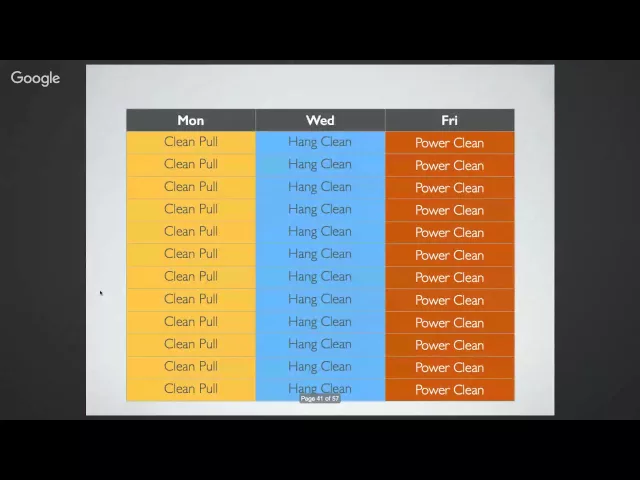
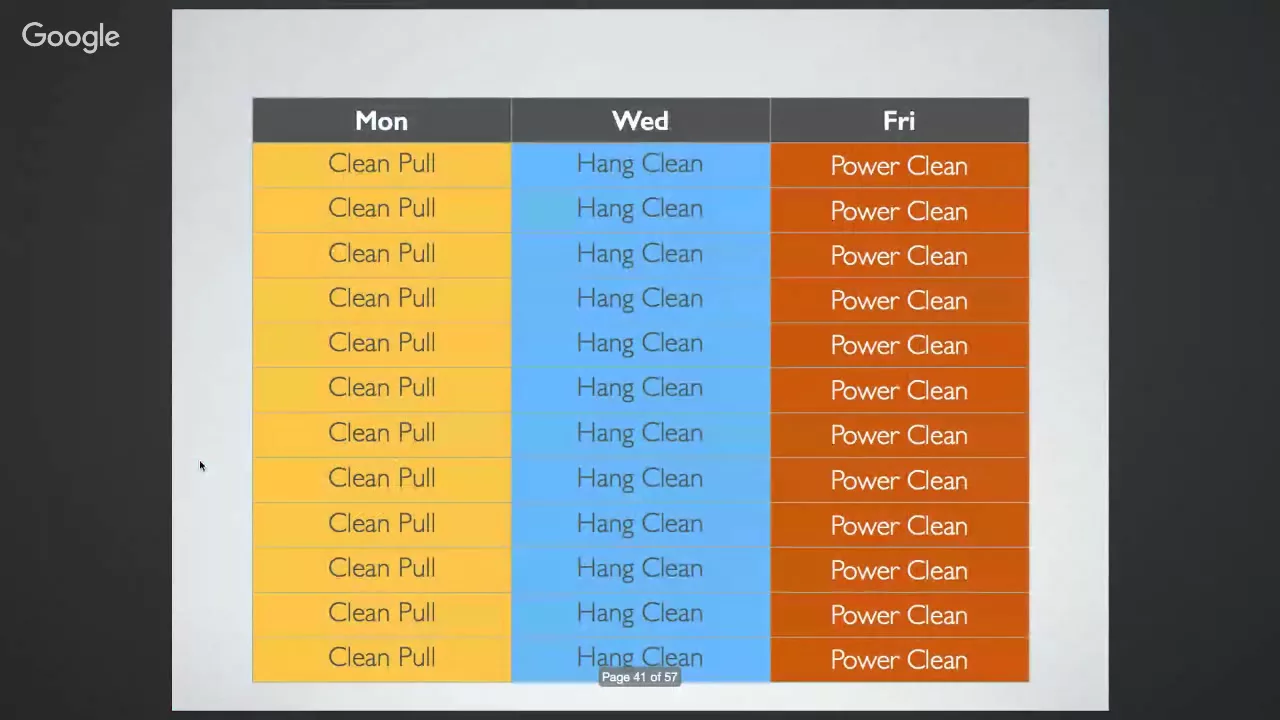
I'm going to give you a scenario here a scenario that is very very commonly used in our field let's say we're trying to learn how to Olympic lifts maybe we have a team of athletes and we're trying to improve their Proficiency in the Olympic lifts a Typical programming schedule might see you see might see you set up a training plan like this on Monday we perform 12 reps of a clean pull on Wednesday we performed 12 reps of a hang clean and on Friday we perform 12 reps of a power clean so all very similar
related movement patterns but we're per forming them in what we might call a block so Monday we're doing 12 in a row maybe it's 12 sets of one maybe it's six sets of two Maybe it's four sets of three just keep in mind we're doing 12 repetitions of it for the sake of this discussion on Wednesday we do hang cleans for 12 repetitions six sets of two 12 sets of one whatever the case is Friday it's all power cleans now if you set things up like this and this is how 90% of coaches do it
what you're going to have happen inevitably is by that sixth or seventh clean Pole or sixth or seventh hang Clean that athletes going to feel like they've got it they're warmed up they're in a rhythm movement patterns will start to become crisp and proficient and it will look great until you're finished with that practice but if we were to come back later as we've seen before we might actually see that the skill that we have thought that we learned might actually regress same thing holds true for hand cleans and power cleans yet this is how
We often times set up our practice schedules to to give you another example I'm sure many of you are familiar with the basketball player Shaquille O'Neal and I don't know how closely you followed his career in the NBA but he was an atrocious free throw shooter absolutely atrocious one of the greatest players of all time shot something about something around 50% from the free throw line so here you have a player who's being paid millions Of dollars millions of dollars it is his job to put the ball in the basket and he can't make a
basket standing still when no one is guarding him from several feet away from the rim now a lot of people looked at this and said what's wrong with this guy he's lazy he just needs to practice more blah blah blah and Shaquille O'Neal worked with some coaches that I'm familiar with some Uh he went to school where I went to school so I've had the luxury of meeting him on a couple occasions and I found out what he did he would shoot he had a free throw shooting coach he would go to the gym at
the height of his career and shoot hundreds of free throws after practice on a daily basis and in practice he could make 80% out of the those hundreds of free throws 80% but when it came to a game he still sucked he was shooting 50% he went Through free throw shooting coach after free throw shooting coach and it didn't get any better and the commonality was that he was following this blocked practice schedule it allowed him to make 80% of his free throws in a practice session but when it came time to do it in
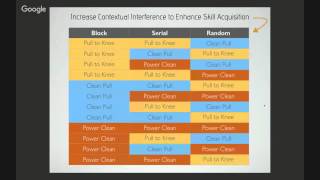
a game and actually test his skill acquisition he was actually quite poor he hadn't learned what he had thought he had so while most coaches program in What we call a blocked fashion what I would suggest we move towards is one of these different practice scenarios the first one is a semi block so for example we do four repetitions of a clean pull four repetitions of a hang clean and four repetitions of a power clean what's going to happen here is that the athlete might not ever get as good in that practice session at any
one of these movement patterns as they would if we gave them 12 State straight tries At it but what we will see is that anytime we make that change over between one exercise to the next clean Pole to hang clean hang clean to power clean that athlete now has to make some mental notes whether it's conscious or unconscious is another matter altogether but they have to figure things out they have to be mindful of what's going on and this is leading them to Greater skill acquisition it might not look as clean While they do it
but if we were to come back and test a day later and do some 3D motion analysis or Force plate analysis on the proficiency of the movement we would find that moving away from a hard block program would actually improve performance if we have a more highly skilled athlete what we might try to do is follow what we call a Serial pattern so now it's clean pole hang clean power clean clean pull hand clean power clean now you could do this a variety of ways Maybe this is a complex maybe one set is do one
clean pull then do a hang clean then do a power clean and that's one set your introducing some contextual interference within the set and that's going to help the athlete learn that motor pattern it's going to be harder for the athlete if they're not already at a high high proficiency level but it will help them gain and acquire higher levels of skill if we have someone who's more Advanced and we want to try to challenge them with the training schedule the practice schedule then we can perform a random order we say hang clean h hang
clean clean pull hang clean they don't know what to expect we provide them with something that is unpredictable very similar to what might be seen in the sporting Arena now this contextual interference while it seems to interfere With performance on the acute the shortterm level within that practice session what we actually see is that if we can provide one of these types semi blocks serial or random to an athlete at their appropriate level that they will learn and acquire skill better so we want to try to increase contextual interference to enhance skill acquisition and do
so keeping in mind and choosing a trial order or a practice type that is Suitable for the level of the athlete I like to use block type training for novice athletes unskilled athletes it allows them to gain some momentum it allows them to start to get on a rooll it allows them to build confidence but as I have an athlete who is increasingly more and more skilled I might introduce more intricacies more wrinkles into the practice so that we're still doing the same things that we need to do except we're doing it in a way
that is Challenging from a motor skill acquisition standpoint as coaches and pract practitioners in this field a lot of times we recognize and easily lean towards setting up practices that are physically challenging run more run faster lift more lift faster jump higher but we can also set up practices which are more challenging from a skill acquisition standpoint and for us to test and Continually improve our Athletes Performance in movement proficiency we want to look at not just building that big engine but also by challenging their ability challenging them with more contextual interference challenging them with
the amount and degree of feedback that we provide and challenging them with different movement variability patterns which is what I'll talk to next now many coaches try to keep movement patterns exactly the same all the Time and this is shortsighted in my opinion if the movement pattern is this exactly the same every single time that athlete doesn't have any ability doesn't doesn't uh gain any ability to have movement skill transfer and in the real world where athletes will be asked to do things in a variety of contexts in highly unpredictable environments that we need to
have them be prepared to do it as well as possible And what we find is that we can actually prepare them for those environments and improve both skill retention as well as what is known in the research literature as transfer so we we improve their performance on different skills that are related if we introduce movement variability now what we're trying to do here is increase movement variability to a level that is that is diges by that athlete and just like with some of these Other recommendations I've given you you have to figure out what works
within the logistics of your coaching environment as well as with the level of the athlete you're dealing with now in terms of movement variability we could look at it for a task as simple as a squat perhaps we're trying to teach an athlete how to squat safely uh orthopedically sound maybe we're trying to improve their performance we could instead of having them perform that squat exactly the same Every single time we might actually want them to introduce some movement variability into the task so we could have them squat Barefoot we could have them squat with
shoes on maybe running shoes one time maybe weightlifting shoes another time we could ask them can you do a squat with with weight can can you do it with no weight do we go high bar or low bar I don't care whether you're a high bar Back squatter if I want to enhance your skill and maybe prepare you for other movement environments I might need to switch things up I could ask them to do it fast I could ask them to do it slow a lot of times you'll put athletes in competitive environments or ask
them to do something fast and it's just like driving driving a car really fast if your car isn't ready to be driven fast when you start to go fast it's going to feel like the wheels are About to fall off so sometimes you need to test that we could vary hand position there's Limitless and infinitely Limitless number of things that you could change here change the heel height change how the knees track just because it isn't exactly what you do in the competitive Arena or in test environments doesn't necessarily mean that you never want to
go there we could be making changes as small as micro micro changing the position of the Feet normally we're at 5 degree toes out maybe we want to do a couple warm-up sets with the toes Straight Ahead or maybe we want to do back off sets with the toes pointed out or with a wider stance and it doesn't have to be a wholesale change it could just be very slight changes in performance I think if we look at the greatest Sportsman of all time one of the commonalities is that they do things that they have
probably never practiced And they do it exceedingly well I think if you think of a guy like Michael Jordan my childhood hero and we look at his highlight reel we see that there are shots that could probably never be performed in any other environment he he took and made shots while he was being fouled by two or three guys throwing the ball over his head not even looking at the basket and made it he did that repeatedly in different different environments Different players different positions on the court and he could do it every single time
if you asked him if he ever practiced that the answer would be no you can't practice that because no one's ever been foued exactly like that in that exact position and that same thing holds true for guys like Ronaldo and Messi that same thing holds true for Tiger Woods at the height of his Career they can do whatever is necessary whatever you throw at them because they are capable of handling movement variability now as I've said a couple times here contextual interference and movement task variability are going how we integrate those into our practice will
vary depending on the level of skill of our athletes if we have beginners go ahead and start them with Low practice variability and low contextual learning interference This Is How They will learn the best but the more advanced an athlete becomes as they move to intermediate and then expert level skill we want to challenge them with the practice environment not just their physical constraints so it's not just adding sets reps volume and load we're making the Practice more difficult as well so let's wrap up here and look at this discussion of skills and and kind
of overview what we talked about remember that the retention is the true measure of skill learning and that you shouldn't be fooled by short-term gains many things that we do are all wrong we provide too much feedback we provide it too often we provide it at the wrong time we make practices too easy for our athletes and regards to the Practice trial type order and the amount of movement variability that we introduce so we need to get that right challenge your athletes do things that are contrary to what might logically make sense we want to
follow the evidence on feedback meaning we are giving external cues meaning we are providing feedback terminally whenever possible that we are not giving feedback every single time and that we are making the feedback that We provide clear concise and concrete we want to use contextual interference as appropriate and we want to incorporate movement variability whenever we can thank you very much guys this is my information here I'm fairly active on Twitter and do take quite a bit of dialogue there uh if any of you are stat side or come stat side athletic.com is my training
center Elite Track and fit for football our uh free informational Websites where I distribute content with some other coaches performance Pro is James and I are our new network that we're trying to kick off and I do put some of my PowerPoint slides on that SlideShare so there are I have noticed there's some discussion here on the chat board um it looks like some really good stuff here in terms of uh discussion between internal and external feedback as I say the the information is overwhelming in terms of Providing external feedback it has been brought to
my attention that there might be one study that's looking at a very specific environment where internal feedback might be better but I think that is very very early on to be looking at that right now and there's not a lot lot not a lot uh in support of it um in so there's there is a question about the difference of variability and contextual interference for open and Closed Sports skills now I I work or have worked traditionally in primarily activities like performance-oriented quantitative Sports very closed closed discrete task activities like sprinting like throwing like Olympic
weightlifting like pushing a bob slay where you do something and then you're done and the environment is exactly the same every single time the rules still apply here all we have to do is just put them into the Appropriate context so for example with contextual interference if I am trying to get an athlete to become more proficient at a block start one thing that I might do is I might schedule on the training plan eight times 30 Metter and my goal is to have them get better at starting from the blocks but instead of having
them do all eight time 30 MERS from the from the blocks what I might Actually have them do is every third one we might take from a stand start or we I maybe even have them start with the wrong leg forward so every every other one or something to that effect obviously that will reduce their flow so to speak but it will allow them to create these comparisons and contrasts in their head that will ultimately improve their performance long term so we're still looking to introduce it it's probably not as Important to introduce high levels
of contextual interference and movement variability in discrete task closed environment movements but certainly if you're working with athletes who are competing in field and Court Sports I think it's safe to say that there is no one play that is exactly the same as any other one play that has ever occurred in the history of sport so it's important to in recognizing this introduce movement variability so that we can Enhance the trans of skill so we want to make that athlete proficient so that when they are asked to do a similar movement pattern In the Heat
of competition that they can do so proficiently uh question here on can you mix internal and external cues I think you can and realistically a lot of this we just have to decide what works for us as coaches I use internal cues I try to Match them with external cues as well you could put them together I think the example here by Dwayne is push your knees out like you are pushing against a band that's a good mix a lot of times I will use uh I will use quasi external feedback so for example I
might say uh throw your hand over your head right it's external from my hand and but I'm using the reference Global reference frame of my head so there's some gray Ground there some middle ground that we that I think is fair game and really with coaching we have to recognize that of course is an art and a science uh not ignoring the science that is pretty clear on feedback and motor learning but recognizing that within the logistics and context of how we train that sometimes you're going to violate these so-called rules um in terms of
James had a question on feedback with video feedback within a Session I think it's great to use and here's I don't use it extensively meaning we don't record every single repetition every single time and look at it every single time but I do use it quite a bit and I don't necessarily use it the same way that most coaches use it so the tendency for most coaches is to to provide feedback a video feedback using what's called an expert model if we want to see a uh if we want to see what a Power clean
looks like we pull up the latest video from hook grip and we see what some Chinese girl who's been Lifting for the last 15 years does on a power clean Super technically proficient and that works that does work in some cases however as the athlete becomes more and more proficient we might actually want to stay clear of providing expert models we might actually want to show them people who are doing it wrong Because that will allow them to make those comparisons and and contrasts that will allow them to learn you might even provide a video
of a of a performer doing something with the same mistake maybe to a greater or lesser magnitude than they are doing I will frequently record Another athlete while we're weightlifting on my weight lifting team they're doing an error and show it to someone else who's performing the same error but not quite to the same extent So novices work really well with expert models uh more advanced athletes go ahead and occasionally show them uh people who are not experts at the activity they will be able to make the those types of distinctions um mirrors I think
are really great there so so there's some discussion of mirrors and I know I don't know if this is the case everywhere but in in the US at least especially among meat head type cultures um the looking In the mirror is associated with bodybuilding types guys that are going to stand in front of the mirror and do excessively weighted shrugs and partial range of motion curls while they admire themselves in a tank top so mirrors have kind of gotten a bad WP in that regards but the reality is that mirrors are a great means of
providing ing uh feedback to the athlete and I use I use mirrors in a variety of fashion so my whole facility Has Mirrors all around it uh sometimes we'll have athletes oftentimes against their own uh inclination do the the Olympic lift in front of the mirror looking at it their tendency tends to be to face away from the mirror but we might have them look in the mirror you can get some very valuable information like that the timing of the lift the movement pattern of the lift it's really easy to see something like did you
break at the elbows too early uh so all of These things can be can be very valuable I think the mirror can provide useful information I've also used it on a treadmill I think on a treadmill it's a perfect environment because we do have this discret cyclic closed task where I can look in the mirror see how my foot contact is see what my right left symmetries are that kind of thing and make those changes on the spot just based off of the augmented feedback from Air any other questions guys [Music] looks like that might
be the end of the questions Mike but if anyone does have um any more to to add pleas please do got a couple of minutes but whilst uh whilst I'm on Mike it would be great uh just just great to thank you um for your time this evening it's obviously been great to um great to have you presenting um and I'm sure everyone would agree um it's it's Given me lot of Feel For Thought to go and review my own practice thinking back to just this afternoon especially about the feedback I'm all of a sudden
very conscious thank you James thank you guys yeah cheers guys hopefully we'll um see you again for another webinar we've got stuff coming up in the coming weeks um with uh some youth snc stuff that I'll be presenting um based on strength and conditioning in in schools so if you Want to hop on that webinar um we'll be putting the links out on um Twitter and Facebook soon but thank you very much for joining us and uh hopefully we will uh see you uh at another event soon