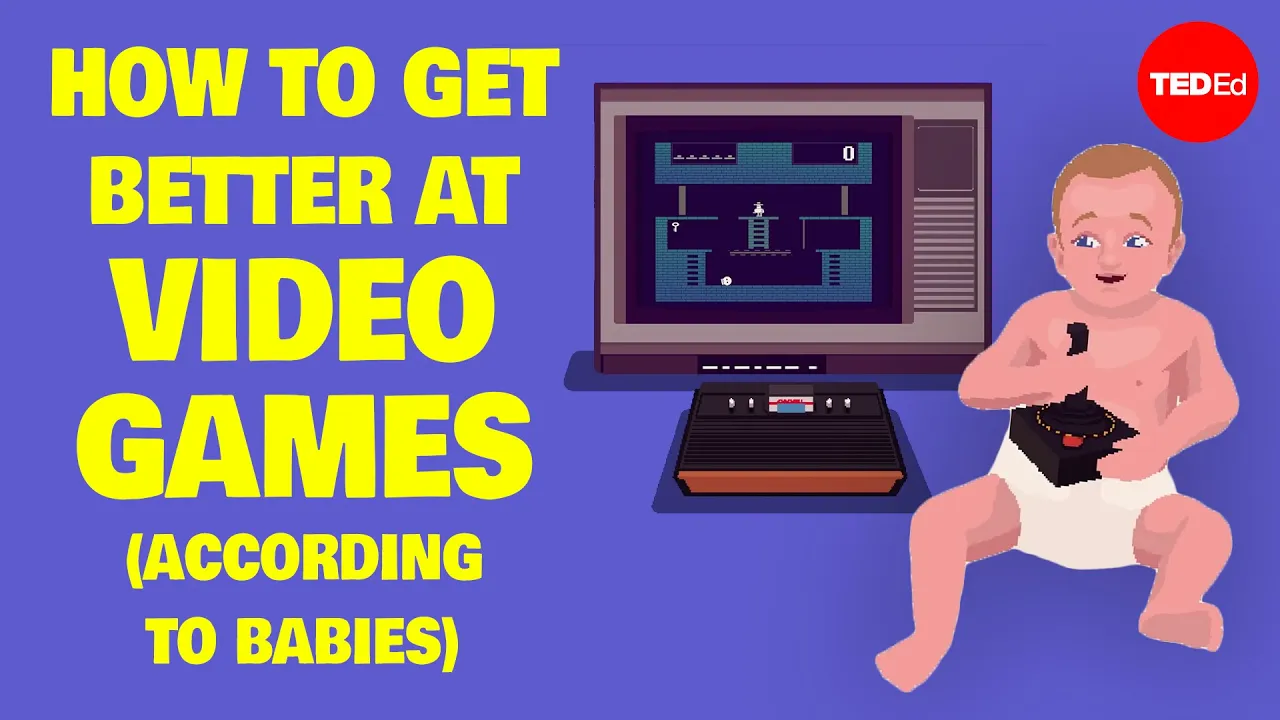
In 2013, a group of researchers at DeepMind in London had set their sights on a grand challenge. They wanted to create an AI system that could beat, not just a single Atari game, but every Atari game. They developed a system they called Deep Q Networks, or DQN, and less than two years later, it was superhuman.
DQN was getting scores 13 times better than professional human games testers at “Breakout,” 17 times better at “Boxing,” and 25 times better at “Video Pinball. ” But there was one notable, and glaring, exception. When playing “Montezuma’s Revenge” DQN couldn’t score a single point, even after playing for weeks.
What was it that made this particular game so vexingly difficult for AI? And what would it take to solve it? Spoiler alert: babies.
We’ll come back to that in a minute. Playing Atari games with AI involves what’s called reinforcement learning, where the system is designed to maximize some kind of numerical rewards. In this case, those rewards were simply the game's points.
This underlying goal drives the system to learn which buttons to press and when to press them to get the most points. Some systems use model-based approaches, where they have a model of the environment that they can use to predict what will happen next once they take a certain action. DQN, however, is model free.
Instead of explicitly modeling its environment, it just learns to predict, based on the images on screen, how many future points it can expect to earn by pressing different buttons. For instance, “if the ball is here and I move left, more points, but if I move right, no more points. ” But learning these connections requires a lot of trial and error.
The DQN system would start by mashing buttons randomly, and then slowly piece together which buttons to mash when in order to maximize its score. But in playing “Montezuma’s Revenge,” this approach of random button-mashing fell flat on its face. A player would have to perform this entire sequence just to score their first points at the very end.
A mistake? Game over. So how could DQN even know it was on the right track?
This is where babies come in. In studies, infants consistently look longer at pictures they haven’t seen before than ones they have. There just seems to be something intrinsically rewarding about novelty.
This behavior has been essential in understanding the infant mind. It also turned out to be the secret to beating “Montezuma’s Revenge. ” The DeepMind researchers worked out an ingenious way to plug this preference for novelty into reinforcement learning.
They made it so that unusual or new images appearing on the screen were every bit as rewarding as real in-game points. Suddenly, DQN was behaving totally differently from before. It wanted to explore the room it was in, to grab the key and escape through the locked door— not because it was worth 100 points, but for the same reason we would: to see what was on the other side.
With this new drive, DQN not only managed to grab that first key— it explored all the way through 15 of the temple’s 24 chambers. But emphasizing novelty-based rewards can sometimes create more problems than it solves. A novelty-seeking system that’s played a game too long will eventually lose motivation.
If it’s seen it all before, why go anywhere? Alternately, if it encounters, say, a television, it will freeze. The constant novel images are essentially paralyzing.
The ideas and inspiration here go in both directions. AI researchers stuck on a practical problem, like how to get DQN to beat a difficult game, are turning increasingly to experts in human intelligence for ideas. At the same time, AI is giving us new insights into the ways we get stuck and unstuck: into boredom, depression, and addiction, along with curiosity, creativity, and play.