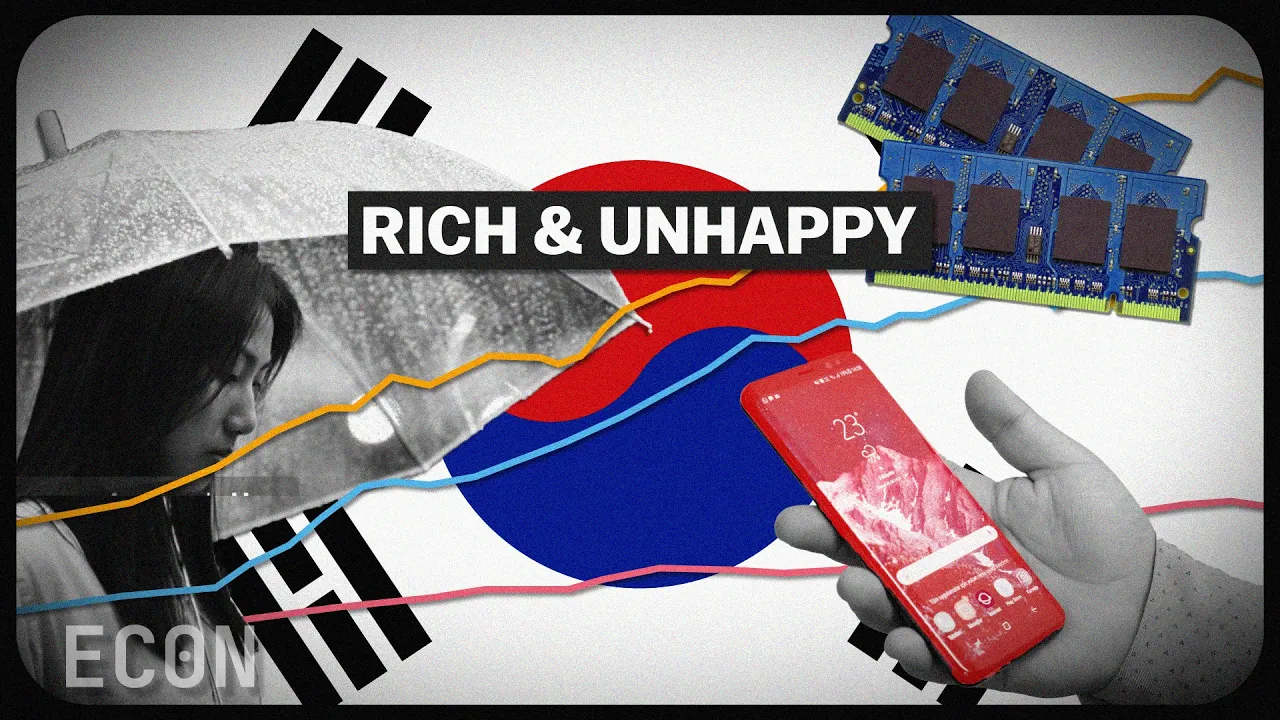
This is South Korea, or officially the Republic of Korea. South Korea makes up the bottom half of the Korean Peninsula in East Asia located between the Yellow Sea and the East Sea; whereas the Japanese and others might call it the Sea of Japan. South Korea shares a border with North Korea at the DMZ, or Demilitarized Zone.
The zone is 250 kilometers long and about 4 kilometers wide. Though the DMZ itself is demilitarized, the borders on both sides are among the most heavily militarized in the world. South Korea claims to be the sole legitimate government of the entire peninsula and adjacent islands.
It has a population of 52 million, of which half live in Seoul, the capital city. Seoul is a vast metropolis where modern skyscrapers, high-tech subways, and pop culture blend with Buddhist temples, palaces, and street markets. Other major cities include Busan, Daegu, and Incheon.
The economy of South Korea is a highly developed mixed economy. Its rise to the world’s 14th largest economy in 2024, along with its vibrant democracy and social transformation, especially in the past two decades, seems to have charmed the world to fall in love with everything Korean: from technology to Korean pop culture, including K-pop, K-drama, and more. Some major Korean companies have become global leaders, especially Samsung.
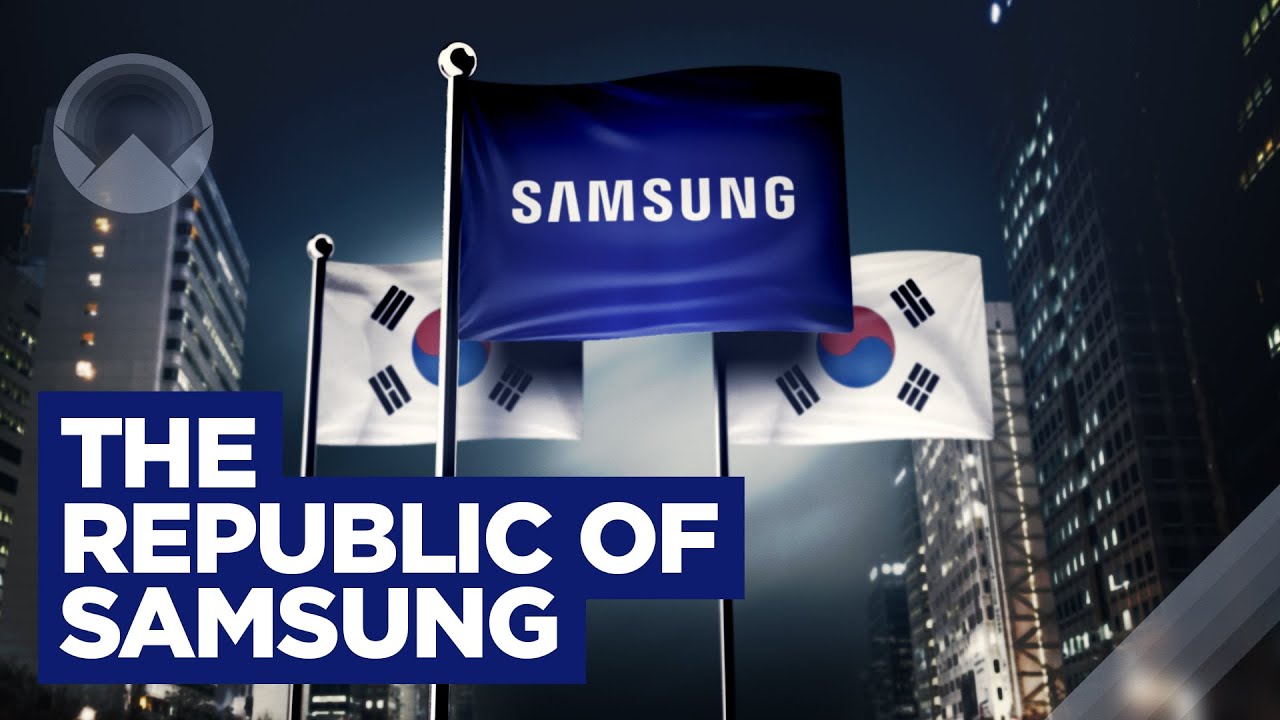
No company is more important to South Korea than Samsung, which accounts for around a fifth of the country’s GDP. It is now a world leader in manufacturing semiconductors and stylish consumer electronics. K-pop is a global phenomenon, whether you love it or hate it.
Half of the top ten bestselling albums in the world in 2023 were from South Korea. And BTS (Bulletproof Boy Scouts) is the most popular South Korean boy band ever, perhaps epitomizing a more ambitious South Korea that is shaping global pop culture. What’s remarkable is how quickly South Korea became one of the most advanced economies in the world.
In less than a lifetime, South Korea has undergone a huge transformation. In the mid-20th century, when it was poor and ruled by a dictator, it was not so different from its communist northern neighbor. It has become a democracy of 52m people and an economic and technological powerhouse.
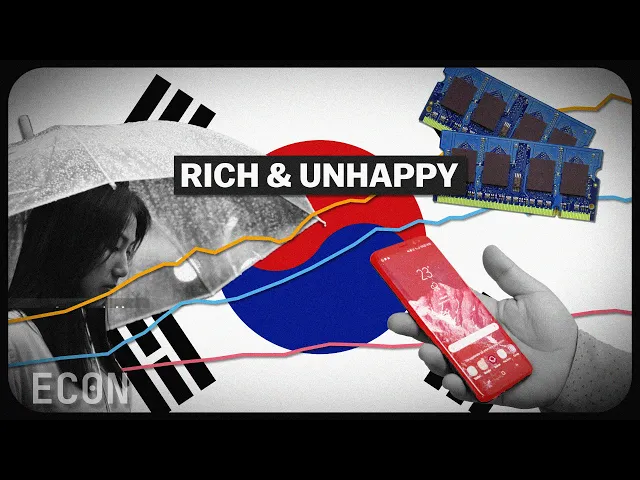
Its music and films entrance hundreds of millions of people who don’t speak a word of Korean. South Korea is justly proud of these achievements, but there are aspects of its society and politics that it is less eager to talk about. Among its worries are one of the world’s lowest birth rates and highest suicide rate in oecd, inequalities of both class and gender and an over-cosy relationship between business and politics.
So, How did South Korea get rich with its dark side? Or is its economy at risk? After the end of World War II in 1945, Korea, which had been a Japanese colony for 35 years, was divided into the Soviet-backed Democratic People’s Republic of Korea (North Korea) and the American-backed Republic of Korea (South Korea).
The DPRK was led by Kim Il Sung in Pyongyang, and the ROK by Syngman Rhee in Seoul; both claimed to be the sole legitimate government of all of Korea and engaged in limited battles. On 25 June 1950, the Korean People's Army (KPA), equipped and trained by the Soviets, launched an invasion of the south. After more than a million combat casualties had been suffered on both sides, the fighting ended in July 1953 with Korea still divided into two hostile states.
In the aftermath of a devastating war, the exhausted south was one of the poorest countries in the world, with an income per head on a par with the poorest parts of Africa. By the end of 2018 it became richer than the former colonizer Japan, with a GDP per person at purchasing-power parity (PPP). South Korea is the only country that has so far managed to go from being the recipient of a lot of development aid to being rich within a working life.
South Korea has not merely grown fast. It has combined growth with democracy. Essentially, unlike their brothers from the north, South Korea became a democratic presidential republic, adopting a capitalistic model for their economy with free-market enterprise encouraging a competitive private-sector.
This did wonders for that. Today, they are classified as one of the four Asian Tigers along with Hong Kong, Singapore and Taiwan; meaning that they have grown at an economic rate over 10 percent annually over the past 30 years. This remarkable economic success was built on the trauma of the first half of the 20th century, which laid crucial foundations for the triumphs of the second half.
Wartime refugees fled to the cities, creating an urban labor force for new factories. Land reform in the countryside meant that millions in South Korea now owned the land they farmed. These new landowners had the incentive and the stability to be entrepreneurial.
They also wanted their children to get an education and a better life. South Korea built thousands of schools after 1953, which provided a highly educated workforce. South Koreans place great value on education and hard work.
They work an average of 2,200 hours per year, 50% more than the Dutch or Germans. South Korea had the second-largest increase in hours worked in manufacturing, after Taiwan. However, the quality of labor has been even more important than the quantity.
Along with Finland and Singapore, South Korean schools regularly rank at the top in international comparisons of educational standards. South Korea also spends 40% of its GDP on tertiary education and has the highest proportion of tertiary-educated population in the OECD, a group of rich nations. It was the decisions of the South Korean government after 1960 that made the difference, especially those associated with President Park Chung-hee , who controlled the country for 15 years after 1963.
Park was deeply patriotic and he was determined that his country would be free of foreign influence. He saw that the only way that would happen was if South Korea was economically strong and self-reliant. By 1972, with dictatorial powers, Park decided to push the economy toward even greater growth.
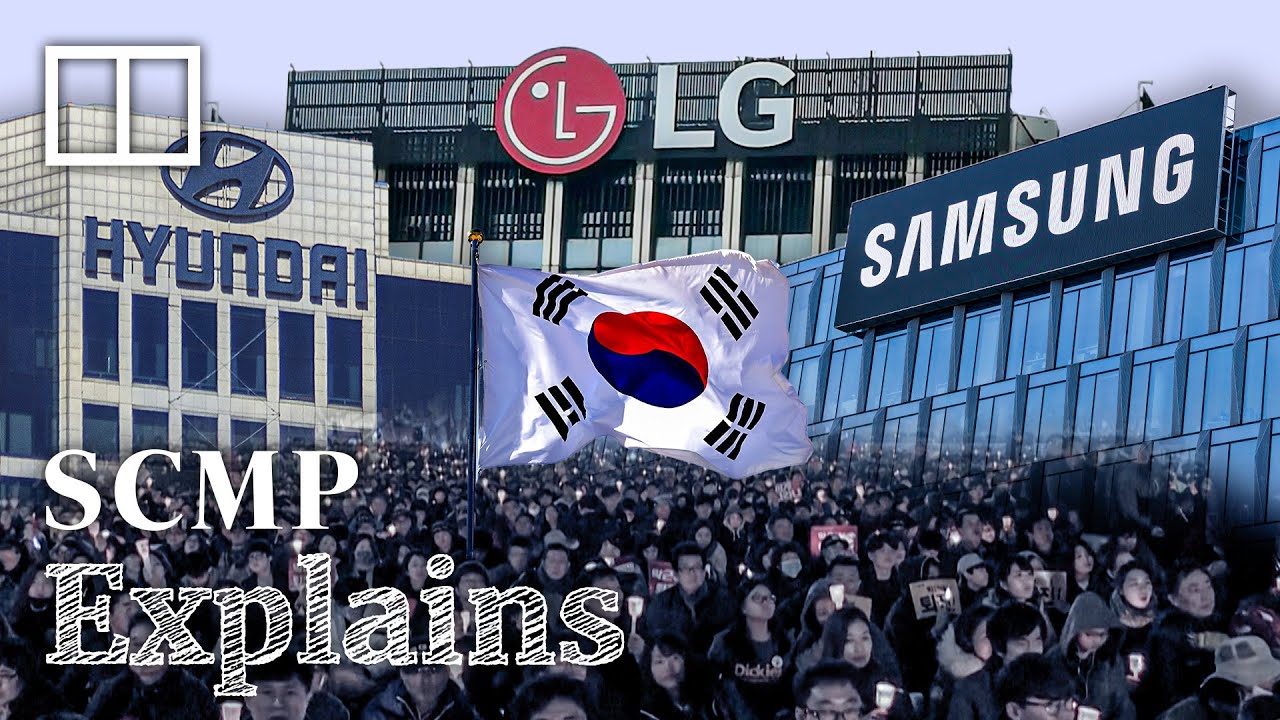
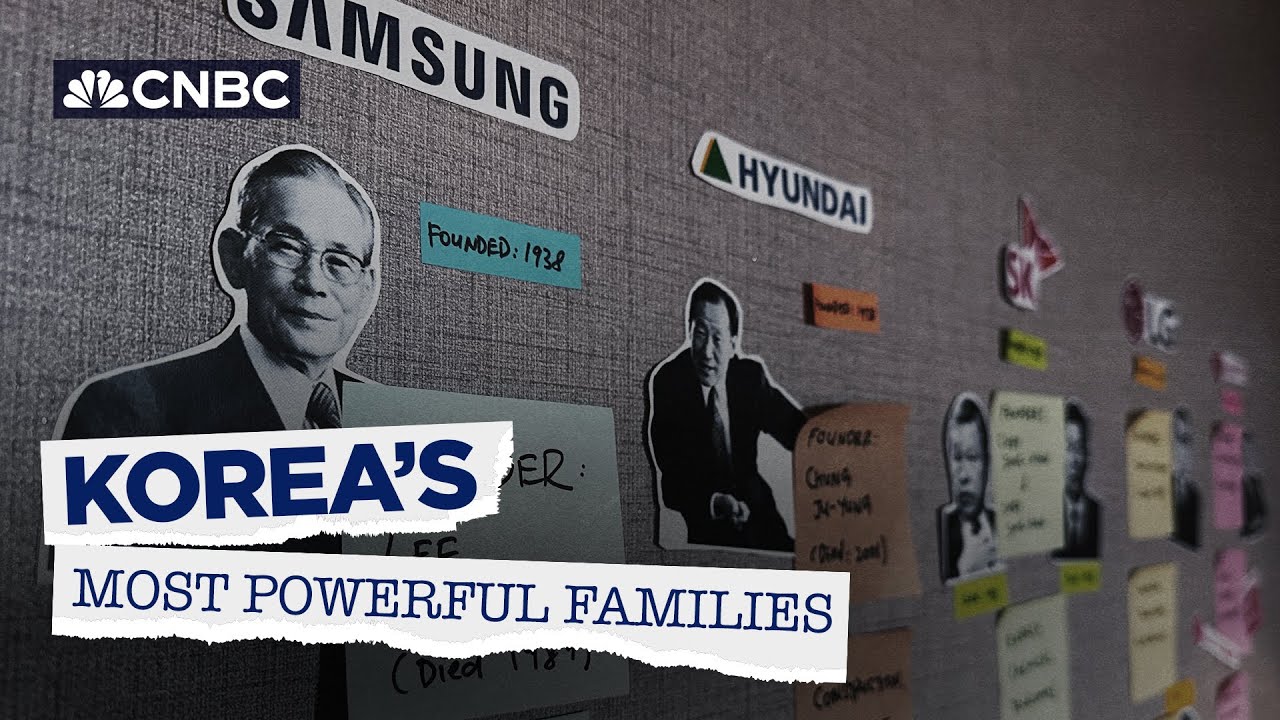
The government invested in heavy industries such as steel, petrochemicals, automobiles, electronics, and shipbuilding. This was the era when chaebols began expanding their influence into every corner of South Korea. Basically, chaebols of South Korea are like a really big family business that owns lots of different companies and they are very good friends of government agencies.
Such as Samsung, LG, and Hyundai. You know Samsung today for its smartphones; Hyundai for its cars, LG for its high-tech refrigerators. But these companies started off in the mid-20th century selling basic goods like sugar and wool, plastics and rice.
Today's Samsung, for example, doesn’t just sell electronics. It sells life insurance, cars, refrigerators, and so much more. To lift his country out of poverty, Park initiated export-oriented economic plans and coerced the chaebols to cooperate.
He used incentives like concessionary loans, subsidies, and tax cuts, along with pressure tactics such as tax investigations and limiting business licenses. However, that growth came at a cost. Democracy disappeared while Park was in control, and businesses were free to treat workers poorly as a result.
Many people lived in slums, and government support for the vulnerable was often lacking. Working in collaboration with the authoritarian government’s state-led economy, chaebols laid the foundations that enabled them to grow into the massive conglomerates they are today. Much of South Korea's economic miracle can be attributed to these large conglomerates.
Chaebols are 'among the most technologically and commercially progressive agents in the Korean economy. ' For instance, Samsung Electronics, one of the 83 companies within the Samsung empire, sells more smartphones than Apple. In fact, the Samsung Group is the largest chaebol, so influential that some speculate the entire South Korean economy would collapse if Samsung were to fail.
Generally, Korea's large companies employ slightly less than a quarter of the workforce but produce more than half of the country's output. This puts excessive pressure on society and the workforce. As the chaebol corporations expanded their operations in South Korea through vertical and horizontal integration, their need for labor changed from unskilled factory-floor labor to people with technical and engineering skills and knowledge.
The South Korean government began promoting education, especially education in STEM (science, technology, engineering and mathematics) subjects. At the same time, the chaebol dominated corporations stressed a culture based on loyalty and dedication to the company, hard work and long hours. However, this intense focus on work and corporate success has contributed to serious societal challenges.
There are two particularly shocking statistics. South Korea has the highest suicide rate in the developed world. And it also has the lowest birth-rate in the developed world: 0.
8 children are born for every woman. Paradoxically, both social problems may be linked to something that is often regarded as one of the nation’s great successes – its incredible record of educational attainment. In global comparisons, South Korean 15-year-olds rank top for both literacy and maths.
But this great achievement comes at a price. The majority of school-children receive extra tuition at home, so that they can compete at school. The cost of paying for education is thought to be one of the things that deters South Korean parents from having more than one child.
And the competitive ethos that is instilled at school – and the stress that goes with it – is widely cited as a possible explanation for the high suicide rate. There are other sources of stress, too. Household debt reached 204% of disposable income in 2022, well above even the 147% in mortgage-loving Britain.
Some 60% of South Korean housing loans are floating-rate, in contrast with America, where most lending is on fixed terms. This risk is enhanced by the country’s bizarre rental system, known as jeonse. Many tenants pay huge lump sums to landlords, often 60-80% of the value of a property, which are returned after two years.
In the interim the landlord can invest the cash as they wish. The system is a relic of South Korea’s rapid industrialisation, when mortgages were harder to attain. This financial stress also coincides with rising inequality.
Between 1980 and 1997, its Gini coefficient, a measure of income inequality, fell from 0. 33 to an exceptionally low 0. 28.
Since the Asian crisis 1997-98 it has been rising. Judging by the relationship between the richest and poorest tenth, Korea is becoming more unequal than it used to be. Worse, the growing number of poor people is disproportionately elderly.
In other rich countries, people between 66 and 75 are no more likely to be poor than the population as a whole. South Korea has the second-highest rate of income poverty among the elderly in the OECD, a club of mostly rich countries (the highest is tiny Estonia). Nearly 40% of South Koreans over 65 live below the OECD’s poverty line, set at half the national median income.
The problems of the South Korean model should not overshadow its achievements or its enduring strengths. True, over the past 40 years annual GDP growth has declined from about 10% to 4-5%. That is not surprising.
Every country's growth starts to ebb as its income reaches about $10,000 a year. South Korea has kept going longer than most. Yet South Korea’s transformation goes far beyond economics.
The country’s evolving identity is reflected not only in its politics but also in its vibrant arts scene and pop culture. In fact, by 2018, South Korea exported more "cultural products"—including music, television dramas, and films—than home appliances like televisions, signaling a shift in the global influence it now commands. Social transformation is not easy.
The country is going through a stage of what sociologists call “anomie”, a mismatch between individual expectations and the guidance they receive from society. They are living through this process of transformation, and nobody quite knows where it will lead. Economic change can be wrenching, too.
The export-led model that powered South Korea’s economic rise had come under scrutiny. Growth has slowed markedly: in 2019 the economy grew at a rate of just 2%, the lowest in a decade. Competition from China and the stalling of globalization have hurt the chaebol, South Korea’s big conglomerates, which have long been the engines of its economy.
Despite these challenges, there is confidence that an expected boom in demand for AI-related hardware, including DRAM memory chips needed for large language models, will require titanic investments, and the chaebols are already investing. Additionally, South Korea spends around 5% of its GDP on research and development, which helps keep the country competitive. However, while this economic progress is impressive, it’s important to acknowledge its social consequences.
Normally, I’m a little impatient with the argument that capitalism leads to unhappiness. There are not many South Koreans looking to defect to the North, after all. On the other hand, there clearly is a dark side to the South Korean miracle.