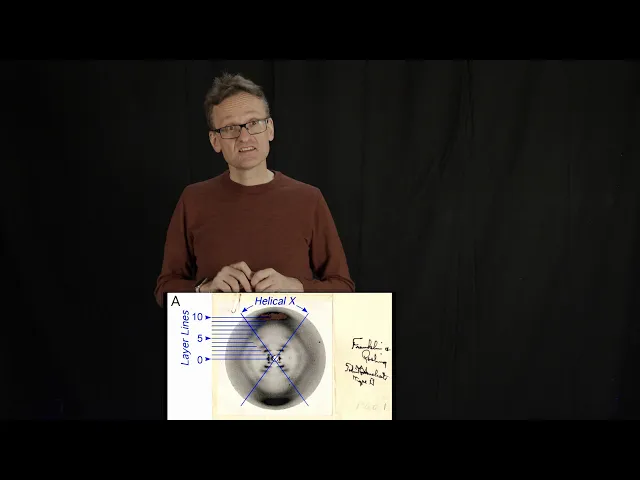
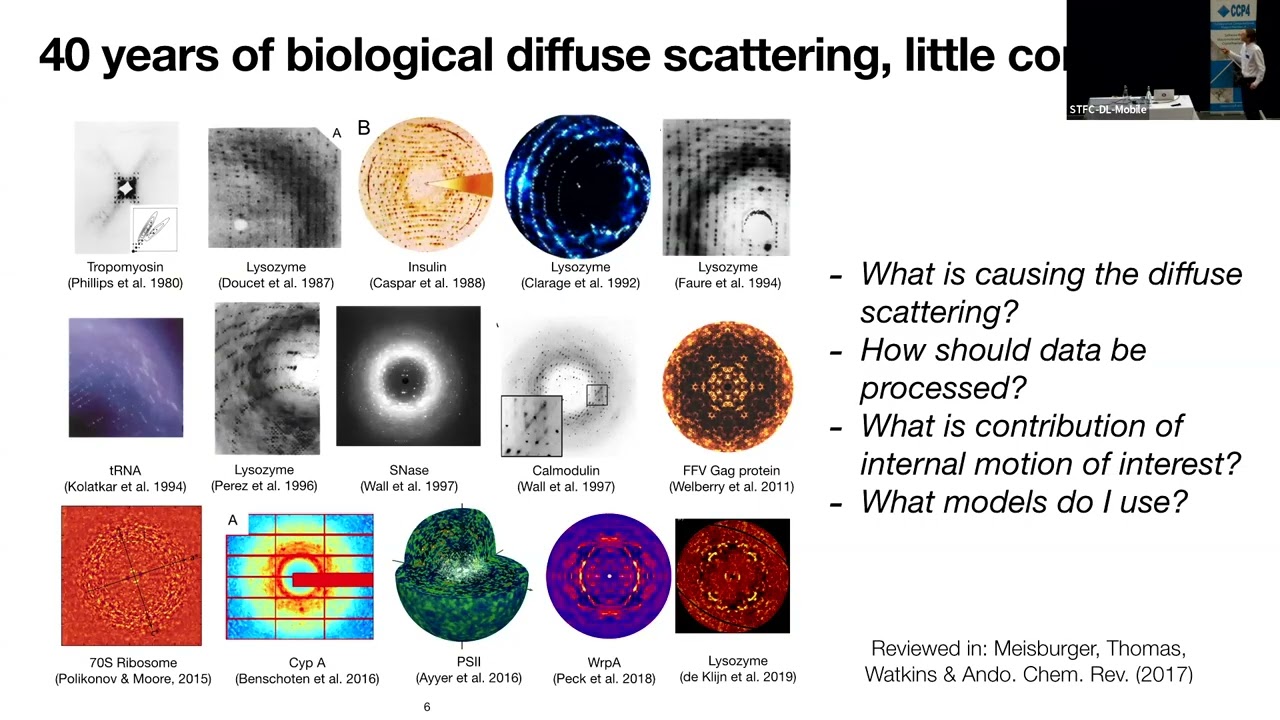
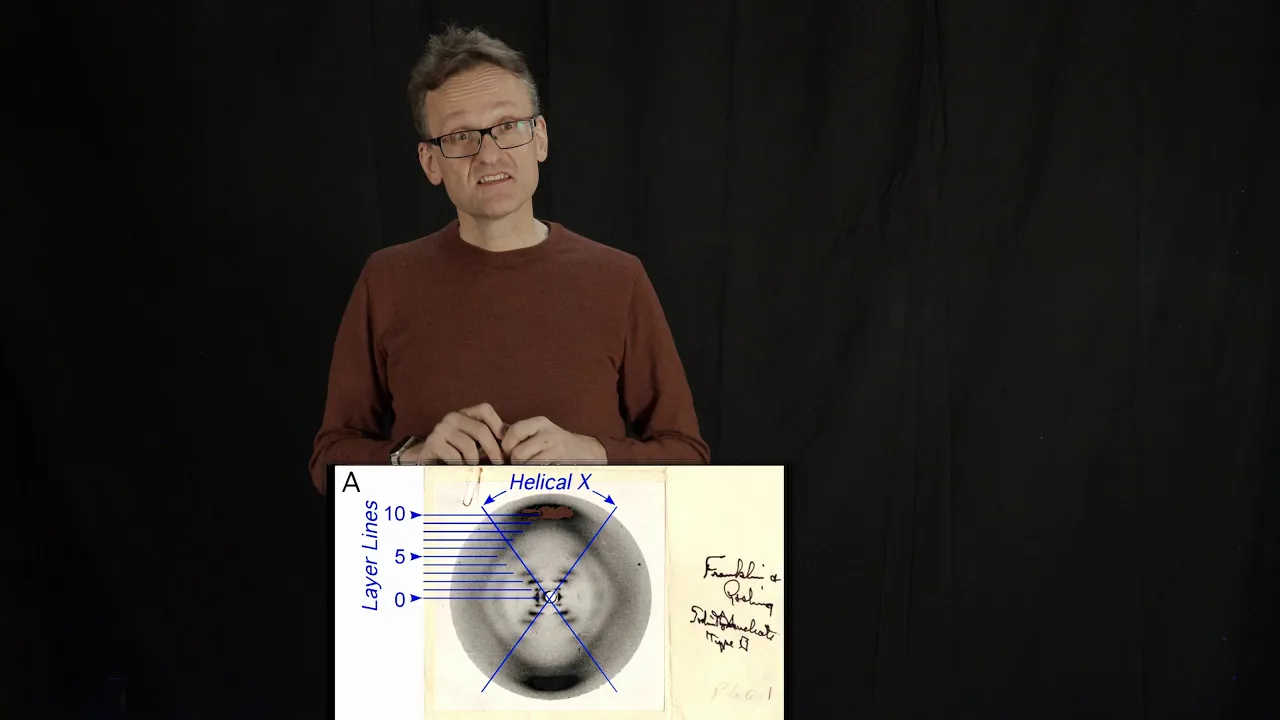
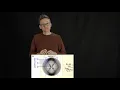
so water is important but we're going to do biophysics so let me introduce you to some slightly more biological molecules do you have any idea what this is this is an actual entry from a lab notebook and it's a so-called diffraction pattern in physics what you get in one of those x-ray experiments i told you about and this particular sample is something obtained by rosalind franklin who was a very famous x-ray crystallographer who unfortunately died much too young working with maurice wilkins and she was studying the salt of something called the deoxyribonucleic acid which was
a salt obtained in cells and already when they started to study it we knew that this was somehow important for the genetic material it's just that they didn't have any structure of it and they didn't know what the compound was already rosalind franklin managed to determine that if you're looking at this under a skilled x-ray crystallographer the pattern here and the angles between these two dots pieces means that you can deduce that this molecule must be helical but that doesn't really tell us a whole lot uh we're going to have tons of atoms in this
molecule it's a large molecule and this is pretty much all you have to go so several very smart groups spent a few years trying to go after this problem and understanding see if we can use this to determine the structure there were quite a few models being proposed because the only way you can't take this pattern today we might be able to do it and almost put this in a computer but in the 1950s you couldn't so the only thing we can then do is use pen and paper or build a physical model and then
have an idea i think dna might look this way and if dna were to look this way if i shine electrons on sorry if i shine photos on it with a synchrotron what kind of diffraction pattern would that give rise to and is that diffraction pattern i then get compatible with this one which is the actual experimental diffraction pattern the only problem is that that's an underdetermined problem so there were some very interesting models this is a model that has the backbone of dna in the middle of some kind of like spiral staircase and then
the basis of dna pointing out and it would be a triplet of a triple helix this model was discovered by proposed by an author um who was uh pretty famous linus pauling um not one of his best predictions ever actually no um let me strike that i think this was a beautiful model there was only one problem it turned out not to be correct but that's an important distinction it is a model that fulfilled most of those things it was largely compatible with this data it made sense at least in some aspect and it was
paid based on good reasoning now when this turned out to be wrong linus pauling should have full credit because he was the first one to realize you know a second thought there are better models than mine and if you're going to be a good scientist don't hesitate making predictions but it's important that you don't fall in love with your model and that's why i really like using linux pauling as a role model here because he was he gave up his model the second he realized there's somebody else's model who's better and where did we get
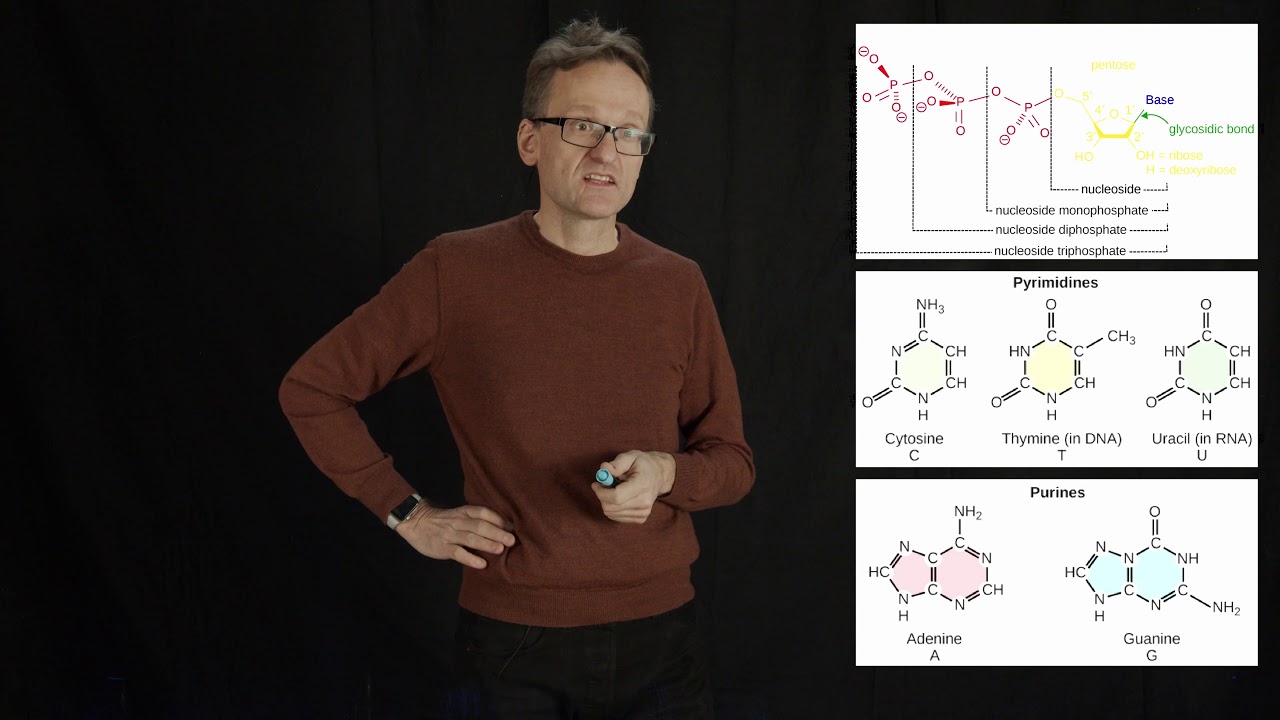
those better models from well today you know roughly what dna looks like right we know that dna is this double helix where you have the backbone or something that the chain out on the left and right and then on the inside we have those bases binding to each other and this molecule has become so popular over the last few decades that it has become the poster child of science you see it everywhere on journal coverage you can even see it in architecture and there are even some horrible illustrations where you have mirror images of this
spiral so it has the wrong handedness don't do that on your poster