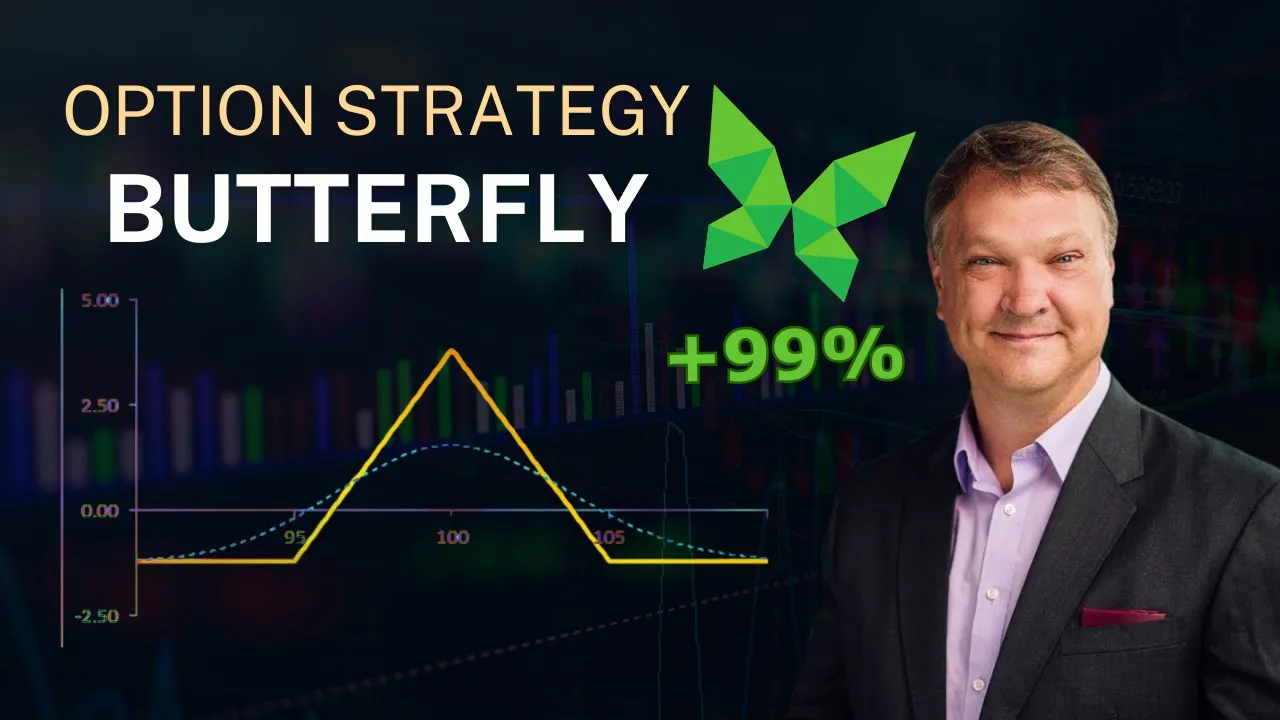
hello everyone my name is Brian Overby I'm the new team member at options play my title is senior options strategist and I've known Tony for many many years uh I guess my one claim to fame would be that I am the author of the options Playbook which we're going to use today we're going to go to options playbook.com and we're going to probably start there but more important ly this is really part two of our butterfly presentation and I do plan on having a part three by the way but uh the title of our presentation
is is your butterfly no longer flying and ultimately when we get done with this presentation that is going to be true cuz we're going to adjust a butterfly and we're going to take away take away one one of the butterfli Wings which I know is a little sad to do to a nice pretty butterfly but that's what our adjustment is going to be on this butterfly so we're going to focus on one of the Butterflies I introduced in the previous actually my first webinar ever for options play which is just about uh uh butterflies and
uh uh the butterfly breakdown is what the title I lost it there for a second apologize I got it back though and uh if you'd like to review that when we're all done you should have if you've attended the first session you should have received an email with the link to it but if not you can just email info@ optionsplay outcom and they will send you that link no problem and also a copy of the slides so with that said welcome to options play education uh we're try to you know here's one little thing that
I I've been teaching options for 30 plus years and I've been and I don't know today I don't have the camera on today but uh you've probably seen my ugly mug if you've been uh a part of the options play platform and I've been actually doing a lot of the daily plays and we're adding videos to those daily plays so a little bit of a video introduction on it and those daily play not only that I mean if you're not actually looking for a trade they're very educational talk a little bit about the concepts that
are involved with the strategy why we're picking the expiration that we're picking why we're picking the strikes that we're picking they're usually in a in a couple to two to three minutes we try to cover that to go along with obviously we like this stock we're bearish or we're bullish because of this or that so I strongly suggest that you check out the the daily plays which uh I've been working on for the last couple of weeks actually adding videos to most of them all right so disclaimer it is important that anything that we talk
about is not meant to be a recommendation and past performance is not uh indicative of future results I know that's not the word but I I came up with it fairly quick all right so today we're just going to look at one butterfly so we know what a butterfly is if you're here and you don't know what a butterfly is this is going to be a very uh over-the-top presentation on it cuz we're going to start with a m a butterfly and then we're going to modify it and then we're going to adjust it so
we go butterfly modified butterfly look at the adjustment for when it's gone against us and we'll just talk about when we want to do that adjustment and I got that titled as best practice and then we'll have a Q&A so this is really important in that I'm going to ignore the chat box uh if you would if you have questions please do put them in the Q&A box so I will not answer them if they're in the uh chat box uh you can chat amongst yourselves but if you got a true question and if you
put it in there I'll see it I might not address it right at the moment but I'll be happy to address it at at the end all right now when we go through uh this entire trade uh and and the adjustment uh oh the the entire presentation should take about 40 minutes but I I like to talk so I get a little bit long- winded um and there will be a recording and we will email the recording with the slides later on all righty so here's for the free trial if you are not in options
play client and you would like a free trial that goes for an entire month please just scan this right now or go to optionsplay dcom SL sign up and you will have access to the Daily play and all the education and you'll get a plethora of emails that are more about education than anything else but every once in a while asking you to if you want to join the free trial okay so here was the butterfly team that we put together from last week we went in and looked at a standard butterfly just Flatout butterfly
kind of boring uh if I do a standard butterfly I'm usually doing it right at the money maybe using zero DTE options uh in an index like the S&P 500 or look at a modified butterfly this is what we're going to focus on today we're going to modify the blood butterfly so we're going to pay a little bit more up front you'll notice like even this is actually graphically uh makes sense uh in that on a standard butterfly you pay a normal amount you can lose that if if it's down below or you can lose
it I'm sorry if it's down below or if it's up above this is a put butterfly that we talked about stock was trading up here and this is where our middle strike was now if you modify it you pay a little bit more but if the market goes up you can lose that so you're losing more than you are over here but if the market goes down you can actually make money so uh so this is open-ended if it goes below this put strike on our modified butterfly and then we also introduced a skip strike
butterfly which I really like I think of it as a good alternative to actually a uh uh a credit spread now on this instance we're showing that it's done for a net debit but if I'm doing a skip strike butterfly I'm going to do this for a net credit so the marketplace if the market goes up on the skip strike butter fly with puts you would have a small net credit and on the way down you got a lot of risk on the Downs side so basically the exact opposite of the modified butterfly but uh
a lot of people will call this a modified butterfly I prefer skip strike CU you're literally skipping a strike and betting a call spread in it uh a put spread in this instance to pay for the butterfly all right all right so I already have a question uh what kind of adjustments would you do if a butterfly was put on in very low volatile environments and it keeps being challenged on the upside uh well I I don't think it's going to change uh uh that question was asked by n and we answered this live so
I'm just going to let that one go away because that's what this is about uh you can look at the adjustment and the adjustment will apply we're going to do the put side of things because this is where we started with our butterfly team is on the put side of things but the adjustment could be applied to to calls so i' I'd say hang on Jessica is no longer with options play she's moved on um and I'm with options player now at this point in time but it's not that's not tied together let's put it
that way all right uh what when is a put butterfly most efficient oh Chris we haven't even got into the butterfly yet you guys are kind of getting there um efficient is a is a strong word I butterfly I could I could say butterflies are cheap when implied volatility is high right and if you put on a butterfly and the market goes towards your short strike you would want uh uh implied volatility to come in and I'll leave it there oh wow we we're getting way ahead of ourselves let's get into the adjustment and then
we're getting a lot of questions just about butterflies in general I'll try to address as many of them at the end of the show so I'll keep the last two that just popped up I I'll keep those for the end of the show okay so uh I am going to minimize this and we're going to start by looking at my book the options Playbook and let me zoom in a little bit on this and we're just going to talk about a standard butterfly and I'm going to show you the the basis that's be behind my
adjustment the the the thought the theory that's behind it okay so if you just look at a standard butterfly uh it's a ratio you're buying the stock that if we're doing put butterflies which this one is considered a long put a a long butterfly with puts if you're doing these the stock is if I'm doing puts I'm being directional it usually means that I want the market to go down so the stock is up here somewhere by strike C you want it to drift lower down to strike B hang out there and then be there
at the expiration date so we're going to buy a put at strike C then sell two puts at strike B and buy a put at strike a very low risk right it's the net debit that you paid for it but you need it to stay within the wings of the butterfly now how is this trade made up if you look at this if you buy a put at strike B and just sell one put I'm sorry at strike C and then sell one put at strike B what you have is a long put spread it
would go up like this and then it would extend out and then on the other side if you sold that same put at strike B and then went lower on the uh scale and bought one at strike a that would be a short put spread and it would look like this and then you would go this way so I'm going to click on them so basically what a butterfly is it's a combination of a long spread and a short spread these this line gets offset by this line and you come up with a long butterfly
now why am i showing you this I can tell from the questions that almost well at least everybody that's asking the questions has a pretty good feel for what a butterfly is but the reason why I'm bringing this up is because this is going to be our modification on the butterfly we're going to roll into we're going to roll into an out of spreads by doing this trade we're going to start with the first modification which means we're going to start with a butterfly and then we're going to roll into a spread when the market
goes against us but if you look at these two spreads right the long put spread wants the market to go down and the short putut spread wants the market to go up now remember and let me scroll this up a little bit just so it's a little clearer okay there we go uh so the long spread wants it long put spread wants it to go down and a short put spread wants it to go up when we started this trade we were hoping that the market would go down all right what happens if it goes
up well we start losing money on our put but what strategy out of these two strategies is bullish well the short put spread right I want the market to go up and this part is the short put spread so if we have a butterfly on and the market is going up this is going to be the most expensive put strike C because it's closest to where the stock is at even though it's running away from us so let's sell that but if we sell that we are short to of strike B so strike B is
less than strike C right so let's buy one back so basically we're closing the long put spread that is still worth something because the market is running away from us and this is worth less because the market is running away from us and this is a bull trade so you close this out and you end up with that and that's the adjustment thank you for coming no just kidding all right so let's go through uh an actual trade and Tony and I had a a a long conversation with this because this is a strategy that
I like to do in uh the SPX and it and in particular the big reason why I wanted to bring up and start with butterflies cuz I considering let us think about this this is my first presentation to options play I jump right in with the butterfly but September and October I I like to do butterflies in the VIX Index I like to do butterflies in the SPX and in particular in September and October I'm usually bearish with the trades that I'm doing so uh the platform right at this moment doesn't support the SPX but
to me the SPX is a cash settled index it has daily expirations zero DTE options and uh and it's big it's so you can go wide with your butterflies and there's some premium in it because it's big and so to me I really like the SPX the ndx is too much the Spy is you know a tenth of the value so a 20 point wide butterfly in the Spy it is only two points wide I'm sorry if a 20 point wide butterfly in the SPX would only be two points wide in the spy and that
changes the pricing Dynamics that's a very very tight butterfly even though you can do 10 of them right because it's a tenth of the value it's still the pricing Dynamics are different and that I'll leave that for a different date so this is my favorite underlying to do the SPX in and that's what we're going to roll with okay so I put this whole example together today let's hope I got all the math right um but I did this today so we're using live quotes well the vix trade that I uh put on at the
end of September is doing pretty well the vix is now at 2055 and like I said if you're doing butterflies uh and yeah I'm looking at the Q&A I apologize I got distracted okay um and I'm and if I look at the modified put butterfly the SPX when I did this was probably this afternoon when I grabbed the quotes the SPX was at 56 8963 markets were moving I tried to screenshot the quotes but expiration is 5 days away now this is a Wednesday expiration I'd rather do this during the week I don't necessarily want
the weekend into this trade cuz uh we all know that Mondays in October well I don't know if we all know that but in general if there's been a big downturn in the marketplace it's usually a Monday in October after a long weekend so I prefer to do I would like I don't mind doing five days so you do it on a Monday take it off on a Friday but I I did it as of today so I went five days out which is a Wednesday and we're looking at the October uh well today is
October 3rd so we we're looking at the October 9th expiration all right shoot I wrote that third so this is the 9th today's date is the third so it's 5 days away so you got to keep that in mind so here we go buy one SPX uh October 9th expiration 5685 put that was trading at these prices and the prices matter so I didn't just say this is the net debit but if we put this trade on this is a modified put butterfly this is the profit and loss graph that we're talking about how did
we modify it well the long put spread that we talked about is 5685 down to 5660 that's 25 points now on the short putut spread uh that goes uh 5660 down to 5640 that's 20 points wide now what is that Doe the short put spread brings in the credit so by by not going further down to the 5635 by not going 25 points we don't bring in as much of a credit so we have to pay a little bit more for the butterfly and I looked at it I wasn't going to like uh take a
screenshot of it or anything but if I went down to the 35 this was trading for about uh 230 235 like I said the markets were moving so it was about cents cheaper so why wouldn't I do that well I can make 70 cents or I can pay 70 cents extra and if the market goes all the way down here the difference between the width of this and the width of this is what the value of the butterfly would be at if it Market tanked and it went Voom all the way down okay so that
value is Five Points because this is 20 points wide and this is 25 points wide the difference is five points but we had to pay more for it and we still had a net debit in the account of $35 so you take five minus $35 and you're up $2.95 if you're dead wrong well you wouldn't be dead wrong cuz the market came down but if the market surprised you blew through your strike your short strike and continued on down you could still make $1.95 on this trade which is a very good profit on on a
a $35 net debit uh which is our total risk of the trade so on this side of the coin if we're looking at a a real life profit and loss graph we would see this would be $35 for every 1X 2x1 butterfly or 3.05 and this instance 1.95 here maximum upside would be 25 minus that net debit or 2195 and that would be right here all right now this is a midpoint fill and in the SPX I'm you're usually I mean the markets are really moving but in the SPX you know you're looking for a
midpoint fill the markets are artificially wide uh I used to work at the Chicago Board option exch change where they uh trade the SPX and uh you know you get really good markets there's a lot of people that make markets in the S&P 500 Index so I I would want to trade somewhere towards the midpoint now so here's our Max risk like I mentioned our break even now here's what's interesting compared to a standard butterfly where do we break even at well it's there's instead of two break evens you only got one right because down
here we're profitable so that is this strike minus that net debit of 305 I guess I would point right here and it's 56 8195 so if we hold it all the way to expiration which very rarely do with a butterfly but if that did happen uh this is where our break even point would be at okay so everybody know what to do if the market goes down in this instance right that's simple if the market goes down to 56 uh 5660 uh and the market was at 5689 well I want to get out of this
trade and I do want to emphasize this before I move on to the next point is if I'm putting this on for $3 I'm not thinking I'm going to make $22 on this trade um and if you do which I've always used this phrase you should get the stupid award for doing that because you should have been out of the trade a lot sooner if you rode all the way to expiration and you got lucky enough that the stock or that the SPX or the index stopped at 5660 well you should have been out a
lot sooner than that right because you shouldn't have taken on that risk so if I'm doing a trade that's got 25 points is the width of the spread here and that's the max upside minus the debit of course um if I can double on this trade I'm definitely going to get out and in this instance if it's a $3 trade and it happened tomorrow and I was up a dollar well out I I'd probably get out of the trade if I'm closer to the expiration five days away and I make it to Monday well maybe
I'm going then I'm going to shoot for a double on this trade but a double is very good when you're doing butterflies you pay three you sell it for six that's a good trade have realistic expectations when you're doing these trades okay and I always do it one by two by one to try to make the math simple you can imply how many contracts you would want to do and I'll leave the last little tidbit at this um if if uh if you did a 10 lot and the market came down right away to 660
and you were up a couple of dollars on the trade well I don't mind you closing out eight of them and letting two of them ride okay that's that's a different scenario and I've done that before with my own trading but I definitely want to have a realize that it's very hard to obviously have the stock stop right at that strike okay so with that said uh p&l at 5660 at 5660 the profit and loss is only because we're here is going to be $21.95 at 5660 if we're at expiration it's going to be 25
points minus the net debit paid or 2195 all right how do you determine the strike structure well just quite simple if I'm looking at these strikes and this is 25 points the the the smaller the width on my short spread like how we started out the short spread if I make this 5645 I'm going to have to pay more of a debit so I do something that's feasible it's going to cost me about let's call it 70 cents to go from the standard butterfly to the modified butterfly and to me that's worth it because I'm
going to pay an extra7 cents up front but if the market blows through my short strike I got the potential to make a $1.95 on the back end and it just makes me more comfortable being in the trade overall all right so blink of an eye and these are real prices but they're based off of today's numbers so they're going to change a little bit in the real world cuz you're very rarely going to put on a trade and then adjust it the very next second but grabbed a little drink there but uh I basically
did this based off of a 1% move in the SPX so uh today is Thursday we wake up tomorrow and we see the SPX up 1% which is a real good that's a big move in the SPX um on a one day basis it happens 2% % is usually the most that it will move a very uh every once in a while will go over 2% on on a one day movement but a 1% move is a is a a big move in the SPX from all my years of trading it okay so we're dead
wrong on our forecast uh the market went up 1% which is really 57 points but we'll call it 60 and it's now at 57 4963 so I adjusted my trade I moved I went down and looked even though we have the same strikes here I went down and I uh just adjusted it and got real pricing based off of this so if I did this trade and the market went up 60 points as of today using real market prices the net debit would be $2 meaning that we'd be down 105 on the trade or about
34% I may not adjust it at the this point in time uh but that's a pretty big percentage loss if you got a fairly large position on a 10 lot or a five lot that that's going to hurt right so at that point in time do you want to adjust and realize the market has now uh gone up and you got momentum to the upside all right so max profit is still the same the break even is still the same we're down $2 we could sell it and get out and that's not a bad alternative
either we just sell the trade uh lose our dollar five and be out of the trade but here's the adjustment here's what we do now remember all everything that I just talked about on the Playbook okay we're going to ignore this option for right now but realize that it's still in your account right and exactly what I said based off of The Playbook you got a short put spread and you have a long put spread spread we're going to sell the long put spread and if you notice with my slides I got really tricky and
I highlighted everything that's basically different from this slide over here okay so we're going to ignore this but realize that it's still there we're going to sell to close the most expensive option contract the one that's closest to the money and then we're going to buy to close one of the 660 strike puts Now flip the script right we're now going to end up being short a put spread by doing this trade and we're if we do this we bring in a net credit of 550 to the account so now our 550 net credit minus
the 305 debit means overall in our whole gaggle of Securities on this position we now have a $245 net credit that came into the account as opposed to a $35 net debit now on a 1 by two by1 basis this would be $245 that we brought in relative to a $35 debit that sounds great doesn't it Market's up we're now rolling into a short put spread but o Max risk all right so what has happened with the max risk well by doing this trade we've now rolled into a short put spread and I'll run to
the next slide and show you that okay so now in this instance this option is gone we are now short just one now remember this is the eth uh this is the Wednesday 5 days away uh so I'm really sad that I didn't change that I grabbed this one instead of that but this is the eighth and this put and these were real prices right so this is $21.90 when we start I'm going to highlight that too okay so these were the prices when we started it ended at 305 Market ran up then these would
be realistic prices this would be midpoint the market ran up and now we're here sell selling the most expensive one buying that one 245 night credit but the biggest thing is is that our Max risk TR changes this option's gone it's closed we sold the close we bought to close we left ourselves with one and and we are long one here so we went from this profit and loss graph now to this profit and loss graph we are now short aut spread Max profit totally changed $245 now uh our Max profit was a lot on
the other trade but we were only trying to make a double so we were trying to make about three bucks we said if we got a double we'd want to get out now we see it's $245 so our Max profit is $245 our Max risk has completely changed so if you do this trade this is very important because you are now short one 20po put spread you have to have the margin to be short a 20p point put spread so I like this trade in a little bit because it doesn't let you over leverage your
account if you're planning on doing the adjustment But realize the market has now gone up um and when we started going all the way back to here we wanted it at 56.85 well we got rid of that and the market went up 60 so now you're 85 points away from that short strike and I'll say that once again slower right because we're selling to close this we were hoping it would come down to 5685 We Were we were wrong or at least the market was wrong it didn't agree with us right but we were probably
right the market just went the wrong way but with that said if the market comes down to 5685 right we were happy well now we got rid of that and so it's up 60 plus this difference which would be 85 points total so now we're what 1 and 1 12% away maybe one and maybe a little bit more 6 120 well yeah about 1 and half% uh away from our short strike and the Market's going in that direction and this is our credit spread we're short to 5660 short to 5640 net credit is 245 and
we want the market to stay above our short strike this would be 245 and this would be where our risk would kick in and the market is now way up here on the profit and loss graph all right right so now our break even it becomes this put minus this net credit or $5 and uh 5,675 55 that's our break even but once again I'm not going to really ride it all the way to the expiration date and you know what I I I use this a lot but when you're doing a trade like this
and you bring in this type of net credit you got to realize you did lose some money on your long foot spread right so if you can make like even if you can buy this back for a dollar in this instance uh you're still making a145 on the trade on the on the on the whole trade not just this trade you're making a145 on the whole trade and you might want to just do that to get out if you're nervous about this risk most of the time when I'm doing credit spreads the the for sure
out for me is uh if I can make 90% of 80 or 90% sometimes depends on the underlying but if I can ever buy this back for a dime or a quarter or or 20 cents I would buy that back in a heartbeat on this trade okay so now what do we do if the market comes down and you say now this thing's trading for $5 to close it we pay we got 245 Market totally Whiplash came back and it's now trading for5 or $6 um get out right that's I'm not going to adjust it
again it's a 5-day trade there's no more adjustments to make we set ourselves up you know uh in the SPX which you know there there's not as big a gap opening I don't want I you can do this in apple you can do this in a stock but the biggest thing you want to that you worry about with stocks are Gap openings because you can't adjust you can't get out fast enough but in the SPX you don't usually have if you're going to go down 2% or up 2% it doesn't usually happen on the open
instantly um it have to be major news for that to happen right uh so you're much more so I'm much better if I'm doing these adjustments I like to do them in indexes or spy if you want to do it in the Spy feel free to check it out but I prefer large indexes uh and part of the reason why I don't like to do the NASDAQ as much is you're going to be much wider and then when you roll you're going to have a much bigger requirement on your spread just because it's a very
expensive index okay so don't forget free trial optionsplay docomo or you can put your phone up right now and you can scan that and I think I'm ready to answer some questions if you have any questions I'll leave this up for a little bit for you I see there's quite a few in here cuz I know I just blew your mind ultimately right so let me go back to see where I'm at okay so the very first question by n n just says what kind of adjustments would you do if a butterfly was put on
in a very low volatile environment well first of all if it was a very low volatile environment I wouldn't necessarily put on a butterfly cuz they're going to be fairly expensive in low volatile environments the biggest thing the reason why butterflies are interesting is when you got a very expensive underlying that you know as expiration approaches uh that it's got to go to zero right we if we go all the way back to look at our initial strikes in here right this is a 5-day option contract these are outof the- money puts and they're trading
for $30 but guess what at expiration these all time value right and if this Market doesn't move at all they're all worth zero so that's a a situ first of all I don't want to put on a butterfly I want expensive option contracts and if I'm right on my forecast I want them to become inexpensive at expiration so shorter term as a matter of fact a very popular trade right now in uh SPX options is to do a one-day butterfly say the SPX is right here put it on and see if it stays with in
the wings because you get so much premium in an SPX option contract that's a very popular thing to do put it on at noon hope the market stays within the range and take it off on the close or just let it go into the close because it's cash settled in the SPX which I absolutely love okay and then there's an extra part to this and it keeps being a challenge on the upside uh the extreme Bull Run start from end of 20 and ended recently oh so you did long term and low of all is
what I'm seeing yeah that's a tough one uh I I don't this you could do the spread but man you'd have a long position on for a long time and uh that would be the adjustment the only adjustment that I really do in butterflies is what I'm showing you that's simple or you just take it off and that would be just managing your risk if I was doing a a a low volatility butterfly and I was going out further in time I would probably just use the old I put it on for this I'm going
to sell it for that that's the way I think I would approach it all right let's scroll down when a when is a put butterfly most efficient well I think I just covered that kind of right on high price underline things what you ideally want is something with some volatility and some predictability and I know that's an oxymoron but uh I feel that that is true about an SPX like I said a 2% Gap open or uh uh on in the SPX is just very uncommon so I don't want to do a put butterfly or
a call butterfly around earnings because I don't have any predictability I might do a modified but I don't want to do a standard butterfly per se um so I ideally want exactly that some volatility with some predictability a more expensive underlying is easier to do butterflies in just because of the pricing Dynamics thank you Chris what are the scenarios where a call butterfly is more advant well it's just Direction you're going to if you're doing an at the money say go all the way back to this standard butter fly I usually use calls just because
it's easier to understand but I'm going to use a call butterfly uh well a put butterfly if I'm directional I want to trade the out-of- the- money option contracts that are lower in value than an in the money option contract right so uh if I'm targeting something where I think the Market's going to go down I'm going to use puts if I'm targeting a price where I think the Market's going to go up I'm going to use calls and if I'm at the money I just use calls because there's simpler uh Michael why do presentation
and then answer the questions so there we go thank you for that suggestion Michael uh Mr Anonymous how how about we hold off on the Q&A okay is it possible turning a losing credit spread into a short butterfly yeah um is it possible turning a losing credit spread into a short butterfly to reduce your losses uh another Mr Anonymous my question I I I will do it the other way around and that's going to be the probably the next presentation is it possible to take a long spread instead of a short spread and turn it
into a butterfly and use that to try to offset some of your losses and the answer is yes now on the credit side of things it's a little bit tougher but I if I'm doing a long call uh debit spread uh and the market goes down just sell the credit spread bring in a credit lower your debit and then you got to chip in a chair if the market comes back and lands within the wings of your butterfly you're okay okay trying to get caught up here yeah so there is some possibility to answer your
question Mr Anonymous uh upper long put at market price yeah no well they're not Market everything that I used is midpoint pricing market prices would be insane in the SPX right because it's a very high value index and you can usually trade espec the more legs you have in the SPX the more likelihood that you're going to be able to fill at at the midpoint how do you determine strike price structure well I think I went through that Jonathan I'll tell you this uh in the SPX I sometimes will go 30 points wide but it's
all about the risk if you roll the trade right so the wider you can do the butterflies the quicker they pay out okay so for example let's let's get off of this slide and go up one right this is 25 points wide and just think about options in general if you've traded a lot of options if the market comes down to 5685 that's an at to money put all that juice is in here you want this option contract to Decay because you got to buy these back and close them well what's going to Decay faster
a 5660 put or a 5655 put further out of the right those out of the money option contracts Decay at a very accelerated rate they got a lot more Theta than the at the money ones well Theta is bigger on the at the monies but on a percentage basis it's it's real big on the out of monies so if you make this wider and it gets to this strike man you you're probably making money just by getting to the strike so that's why how I determined my structure I did this here because when we roll
your credit spread is going to be 20 points wide which that's not a ridiculous to have you know a 20 point wide margin requirement or 2,000 dollar uh minus the net credit received but with that said if you go and go Five Points wider well then it's a 25 point wide when you make the adjustment so it's all about what risk tolerance you're you're willing to have okay am I considering Delta is not really as a matter of fact I'm watching the spread more than anything um in the SPX I did it we started how
many points down 5689 85 so we started fairly close to where the stock is at and I'm usually within five points maybe 10 points if I go 10 points it'll be a little bit cheaper right um but like I said a one% move in but in the Butterfly World or the SPX world is pretty big so from 8 n so we'll call it 90 down to 60 that's 30 points that's half a percent so I'm doing it for 5 days so I'm looking more so at what's a realistic number that the SPX can move and
I think it's more more often than not the SPX moves at a half a percentage Point move than it does a 1% move right so that's that's what I'm looking at I'm just looking at that underlying and I and I'm dealing with it that way not the Delta not the Delta at all uh you could so uh de said this is a different adjustment this is a totally different adjustment so here's what deak said why would you not sell the 5685 and just buy another 640 put so why not sell this and buy that and
de can you answer that question you would bring in a bigger credit right cuz you're not paying for this one let me see if I scroll down do you got the answer deck if you think about it if I do that I'm long two of these my requirement is no longer 20 points it's now 40 points but if I did that I'm going to bring in a lot bigger net credit and when would I do that deak I would do that if it got a away from me we looked at a 1% move right what
if we woke up one day or we took a nap or something and the market was up 2% before we knew it well that's an alternative but you'd have to have double that margin requirement and I've done that before so what deick is saying uh here so let's go down one more slide here we are selling and buying one of these well why don't we sell this one and buy this one and then you're talking about we'll just call it uh $9 as opposed to 550 net credit well you double the risk it's that simple
and if the market gets away from you well then maybe I will double the risk because we're another 60 points higher and I still need to get this 550 net credit and by the way this is you know our goal was to make $3 on the trade that's I'm totally doing this based off of this net credit if I can get an alert when this hits 550 then I want to get that alert and then I want to go in and make my adjustment I'm not looking at Delta I'm not looking at anything I want
to get somewhere around $5 right because if I paid $3 for this trade to start with uh what's an acceptable net credit for the risk that I'm receiving all right SPX is at uh yeah that is okay done can we do the same thing with SPI you can do the same thing Al but the big difference in the Spy is that you're 20 points you're 20 uh you're two points wide versus 20 points wide and and this is what I'm talking about the market comes to 5685 this is 25 points away in this instance right
so it' be two and a half in the SPX to make it equivalent divided by 10 and just the pricing Dynamic is different you would do it 10 lot but it's just different I I don't know how else to tell it and it doesn't settle in cash so just letting it ride to expiration gets a little bit iffy too but if you want to start in that I'm okay with it I'm okay with it does that make sense so Al I hope it does I if you don't get it it you just got to sit
there and P it's one of those things where you're in the shower and all of a sudden a light bulb goes off oh I get it any views on doing it in a rut yeah the rut is fine rut is just you know some predictability is not there as much in the Rut but I don't mind doing it in the Rut the rut I'd rather do it in the Rut than in the MDX but obviously it it's risk you know especially in the Rut the bounceback the Whiplash if you're incorrect but I don't mind the
rut what range you uh what range works for that daily I think we answered that uh how would you just SPX quickly changed 56 a short strike how would well if it came down to 5660 I'd probably just get out so the question is what if we woke up the stock was here instead of going up 60 it came down to 5660 instantly um in that instance you're not going to be up a lot I would probably get out but here's the beauty of this that is 100% the case Wesley if I was in a
standard butterfly but if it comes to the 5660 and keeps drifting down remember we got this down here I do not mind at all if it goes down to 5640 5630 right so I'm less apt to just close out right away but I'm not going to adjust it if it goes quickly man how many more we got here holy cow great questions by the way we still got 200 people in the room that's beautiful uh do you consider major events no I don't want to do major well major events are going to happen all the
time I might not do it like fomc was going to say 50 basis points versus 25 basis points last time around I might not do it that week right but all the other weeks where we knew they're going to do nothing the the fomc doesn't doesn't scare me uh CU if you're just trying to avoid news then you're just never going to put a trade on uh how do you trade with the vixs no I trade with the vix Jim that's for a different side uh I was going to do one actually that would have
been very profitable at the end of September but uh I did one at the end of August going into September and I did one personally in my own account modified with calls to the upside that's too hard to get into right now Jim I'm almost done I'm I'm dying here it's five 507 here in Charlotte North Carol Carolina yeah if I'm up uh ji I'm sorry if I I Mr Woo uh or Mrs woo if uh would it be good to close if next day sees 25% p&l that that's up to you but you just
want to be consistent right I want to be if I would it be good to close if I'm up 25% I mean General no no probably not I'd probably want to see at least 50% it's just not you'd just be closing way too much way too often 50% would be the lowest but like I said usually I'm looking for a double if I put this trade on to start with if I put this trade on to start with right my first thing that I do is turn around and put in a sell order for six
bucks on this I'm going to manage the risk if it goes against me but limit orders are fine good till cancel limit to sell this at $6 I'm definitely going to do that instantly because I want $6 Mario this adjustment works for all three of the Butterflies it does but obviously it changes a lot of things I like it for this one the most but uh on a standard butterfly it works fine too yeah not necessarily a Delta not really I'm looking just at the width if you can go wider you go wider it's all
about the risk you're willing to take after so this was the question uh Brian what Delta would you choose for the body and the wings and my answer as far as the wings are concerned is it's all about think of the adjustment before you put on the trade and how much Capital it's going to take you to adjust the trade I so Alex asks about uh zero DTE butterflies uh if you're going to do a zero DTE at the money butterfly when is the best time to do it in the SPX I'm going to put
in the words SPX and I 11: around 11:00 a.m. eastern time noon eastern time that last half of the day man you get a lot of time decay in the SPX but also be prepared because if you're wrong it's going to go against you really fast too right so it's yin and yang uh you're going to have extremely high Deltas extremely fast if uh those option contracts go against you and it's going to hurt so if they go out of the money well that's just a it zero DTE options are a uh are exciting and
scary uh Ron this will be emailed to you if you signed up you'll get a link with it uh I'm not sure if Philip's in the room maybe he can tell us this uh I I'm not sure if it's going to be on YouTube I think it's going to be an email link all right let me go I'm going to fly through a couple of these what's the win percent of back tested uh I don't have that number I don't have that number uh Jason I prefer it to reenter for a little more net more
debit Jason says I prefer to recenter for a little more debit that way I don't take on all the risk when closing just one side excellent Jason do some modifications I'm giving you the concept the concept I really explained at the very beginning using the options Playbook website and that's what the concept is a butterfly is a long put spread with or a put butterfly is a long put spread and a short put spread you can start with a butterfly and go into the short put spread or even go into the long put spread if
you want you can this this is what's need about a butterfly so if you want to modify it go ahead nothing wrong with that how far would you go on an expiration date well if I was doing something that was not as high in value not a 5,700 Point index um I would go out maybe two weeks but butterflies only pay when the center strike gets sold so you know I want to make sure of that but uh I five days I like to do them on Mondays and close them on Fridays and I don't
even mind if with the vix at 20 right now I wouldn't mind doing it on Wednesday and close it on Friday and why do I say that it matters that the vix is at 20 because then the butterfly is going to be cheap with only two days left right because the VA premium is there uh Jim had to take off he said thanks Brian and thanks to all you for for hanging around so Jim's gone that was just being funny all right with that saying if Jim had to leave I guess I have to leave
too it's 5113 we're well over the time thanks for coming my name is Brian Overby follow me on twitter.com uh well I should say formerly known as twitter.com tweet twitter.com on x.com my name it's simply at Brian Overby very very simple at Brian over my name Brian with an i and we can go all the way back to the beginning here's the free trial please sign up and check us out get all the research all the daily plays and there's my name Brian Overby uh feel free to follow me on x.com and we'll come back
and we'll adjust a long call spread that's going to be the next one so make sure you sign up thanks for coming everyone