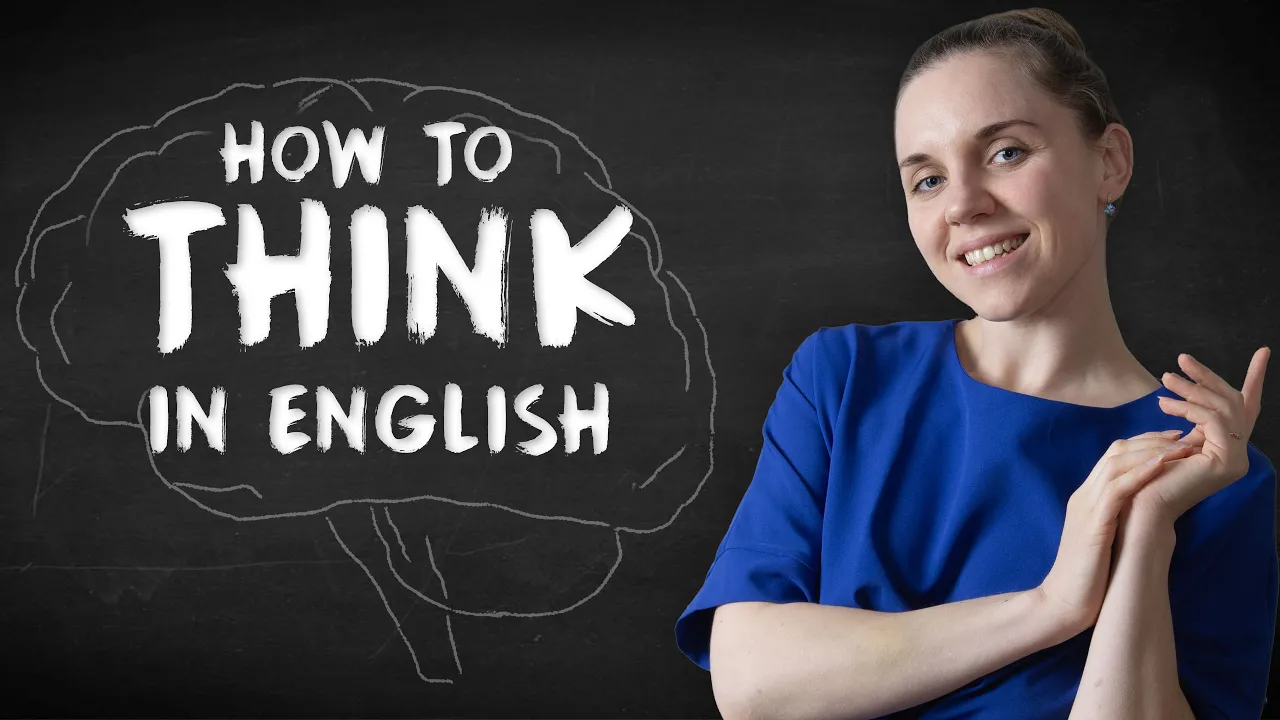
Have you ever had this problem? You know many English words, but when it's time to speak, you can't remember any of them. Your brain just freezes and the words you learned simply do not come out.
So, you start translating from your native language and that only makes things worse for you and for the person you are talking to. So, why did this happen and how can we fix it? Stay till the end because in this video I'll show you how to stop translating and start thinking in English.
When you translate from your native language, your brain does double work. First, it thinks in your language and then translates everything into [music] English. That creates cognitive tiredness which results in slower conversations, [music] anxiety, and fear of making mistakes.
So getting rid of the habit of translating is essential if you want to speak English fluently. Let's go through eight simple steps that can become a real game changer for your spoken English. Let's break down each one.
In the first step, name objects around you. Start simple. You're sitting in a room right now.
Try to name five objects. For example, table, window, coffee, phone, pillow. Make this your fiveinut daily warm up.
And every time try to name and describe new objects at the office, in the metro, at a friend's house. Make it more challenging by changing locations and naming less obvious things. And step number two, think in simple sentences and use collocations.
And now we're leveling up. Single words are just like drops in the ocean. But as soon as you start learning connected structures, the language begins to make sense.
So instead of single words, learn word combinations. For example, make a decision, take a break, have a conversation, meet a deadline, give feedback, build confidence, explore the city. At the same time, don't aim for complexity.
Start turning words into simple sentences. Instead of I need to complete several professional tasks, think I need to work. There are many tasks.
Or instead of I would like to purchase some groceries because I'm running out of food, think I need food. I'll go to the store. Yes, sometimes it feels awkward to start conversations with native speakers when your English is simple without complex structures or detailed descriptions.
But imagine using simple sentences in a real conversation with a native speaker. That's exactly when they actually stick with you and that's when your English really improves. And for practicing English without the fear of sounding off and enjoying the process, I recommend Ialkie.
Ialkie is an online language learning platform where you can practice languages with native speakers. I've had lessons there in English, Spanish, and Chinese. So, it's a platform I trust.
You can find a teacher for your level, whether it's for building vocabulary or for overcoming the barrier of constantly translating in your head. What makes it effective is the ability to choose a teacher who fits your learning style. When you feel comfortable, it becomes much [music] easier to turn simple sentences into real conversations.
And with one-on-one lessons from native speakers, you get the kind of rail practice [music] that builds confidence. You can select the category where you need support. For example, improve listening and speaking skills.
[music] You can choose the type of teacher and their country of origin. You can watch their video introduction and read information about them and get realtime feedback. In addition, you'll see their prices and can immediately book a lesson or find a teacher that fits your [music] budget, paying only per lesson.
No pressure, no monthly fees. It's very simple. With just a few clicks, I found a teacher for myself.
>> Hello. How are you? >> I'm great.
How are you doing? >> I'm good. Thank you for asking.
I'm really a community teacher. So, usually I just have conversations with my students. Uh I think that this is really the best way to learn a language.
Doning. Can you help me with the daunting? You know, >> d Okay.
Daunting. >> Daunting. One advice that I can give you if we talk about the present continuous.
So sometimes you use verbs in the present tense. But if we're doing something right now or if we're doing something in our life right now, like I'm trying to learn Spanish for example, we're going to use the present continuous. >> Got it.
Thank you so much for the advice. >> You're welcome. So, if you want to start living the language and you're serious [music] about speaking fluently, this is the fastest way to get there.
Click the link below in the description, use my code, you let you, and when you buy $10 worth of credits for your first lesson, you'll get an additional $5 free, but only for the [music] first 50 users. So, do it. All right, let's continue.
Step number three. We have already covered naming objects around you and thinking in simple sentences plus using collocations. Now I want to talk about balance.
And what do I mean by that? Combining familiar and new. And this is important.
At some point you need to move to the next level. When you can already name the things around you, it's time to step out of your comfort zone and start adding new words and phrases to your vocabulary. So something familiar, simple repetitive sentences heard a level describe new surroundings.
At first you can use a translator or CHP, but later these phrases will become familiar to you as well. That's how we expand our vocabulary. Let me show you two examples.
And the first one is at home. I'm making coffee. It's so quiet at home this morning.
And the second one is in a new place. This street is very busy. The metro is um swamped.
The metro is swamped with people. I have two options to get to the gallery. Maybe I'll take a stroll and cut the park.
Cut the park? No. Ah, cut through the [music] park.
So, maybe I'll take a stroll and cut through the park. Bingo. Oh, that's a bingo.
All right. Step number four. Have small conversations with yourself while walking in the park, in the shower, while cooking.
Try talking to yourself for a few minutes, maybe even several times a day. That's actually a great form of meditation. Ask yourself, what am I doing?
Why am I doing this? What do I think about this? For example, I'm cutting an eggplant on a cutting board.
Why am I doing this? Because I'm hungry and I want to cook dinner. Step number five, change one everyday habit into English.
At first, pick one. A to-do list. Grocery shopping.
Searching online. This creates real life immersion. For example, if you're planning a trip, type in Google.
Five must visit places in Paris this spring. Or if you're going to the store, try writing your grocery list in English. This helps you surround yourself with English even more and brings you one step closer to thinking in English.
My favorite ways are writing to-do lists and reflections in my journal, listing what I've done and what I still need to do. All right, we have three more left. And step number six, keep [snorts] track.
Thinking in English is a skill and skills need daily repetition. What I recommend is writing down what you've done in English. For example, today I thought in English for 5 minutes, named 10 objects in the park, used three clations I just learned, wrote a grocery list in English, and tomorrow I plan to.
These are the same thoughts you already have. You're just putting them on paper in English and it becomes a bridge to thinking and speaking in English. Journaling, thinking, speaking.
It boosts motivation when you see progress. Your brain gets wired. So, you actually want to continue practicing.
Step number seven, my favorite one. Recap your day in English. And now, it's not just about your English, it's about your life.
Every night before bed. Go over your day in English. Today I woke up early.
I worked a lot. I am [music] tired but productive. Yes, there are days when you're tired and don't even have the energy to think in your native language, let alone a foreign one.
But even [music] if you skip one day, try again tomorrow. Don't quit. This habit will lead to big results.
And finally, step number eight, use your imagination. Create stories in English. Yes, it might sound childish, but this is exactly what activates your brain in the right direction.
Try create stories, especially using the words and phrases you have just learned. You can choose any vocabulary. Create any contexts.
Here the sky is the limit and the benefit for your English is enormous. Your task now is to choose one or two steps and start applying them today. Seriously, take a pen and paper or finish watching this video and think in English just for a few minutes.
So, go ahead, write in the comments which method you're going to try first. And of course, don't forget to click the link in the description to try italking. Thank you for watching and I'll see you in the next video.
Bye.