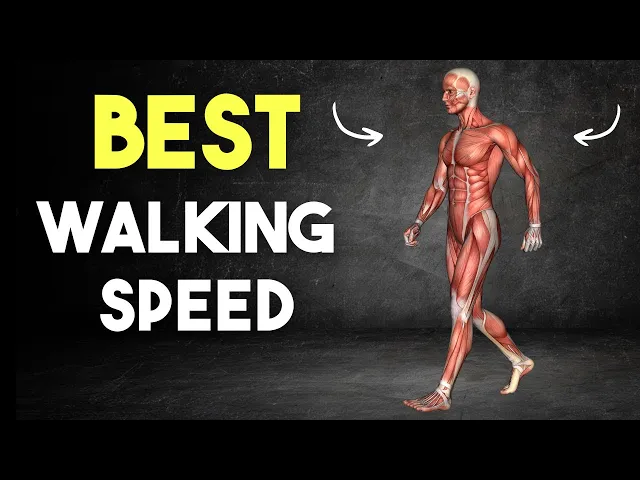
walking speed determines how fast you get from point A to point B but Recent research shows it could also determine how long and how well you live before I begin I want to say thank you because I got the idea for this post from reading your comments so Studies have repeatedly shown that faster walking speeds are linked to reduced risks of disease better cardiovascular health and a longer healthier life let's see why it matters how fast you walk let me try a car metaphor for you just like cars a cruising speed so do people walking at a natural efficient pace of around 3 mph keeps us moving with minimal energy loss like a well-tuned car however a very slow walking speed can signal your health is declining studies like walking speed the sixth Vital sign argue that naturally walking slower than 1. 3 M or 2. 1 kmph can indicate declining muscle strength poor cardiovascular health or underlying conditions that strain the body these inefficiencies increase the likelihood of hospitalization and a loss of Independence because the body simply cannot keep up in contrast a walking speed above 2.
2 M or 3. 5 km per hour demonstrates better muscular and cardiovascular efficiency when you walk at a Brisk Pace your heart Works harder to pump blood delivering oxygen and nutrients more effectively this supports your overall body function and reduces The Strain on your cardiovascular system studies repeatedly show that faster walking speeds reduce the risk of early death because they push the body to function optimally keeping it resilient against diseases and age related decline according to the University of Cindy quote walking at an average pace was found to be associated with a 20% risk reduction for all cause mortality compared with walking at a slow pace while walking at a Brisk or fast pace was associated with a risk reduction of 24% and these percentages are more pronounced the older you are if you're over 60 and can maintain an average walking pace of 3. 5 to 5 kmph or 2.
2 to 3. 1 mph you can reduce your risk of death from cardiovascular causes by 46% and if you go above that speed your risk declines by 53% however walking slower isn't necessarily bad if you're recovering from injury dealing with pain or just starting your fitness journey slower walking allows you to move without over straining your body even walking slowly promotes circulation but it's also great for mental Clarity gradual Improvement in mobility and keeping your joints lubricated walking is also great for brain function according to a study by New Mexico Highlands University quote foot impacts dramatically modify the central blood pressures that drive blood to the brain that means your brain gets more nutrients and oxygen so it can work better even if you're walking slowly besides if you want to learn more benefits of walking I'll include a video for you in the description below anyway the point is walking speed matters because slower speeds don't stimulate your body enough to elicit enough cardiovascular or muscular benefits walking faster is also linked to better cognitive health because cardio exercise in general is also linked to improved cognitive performance doing a mile in less than 20 minutes also influences your longevity and biological age one study from the University of leester argues that consistent fast walkers have a biologic age that's up to 16 years younger than their chronological age Brian Johnson should definitely add this to his longevity protocol especially since his number one rule in life is don't die anyway joking aside the study was done on over 400,000 partipants and found that people who consistently walked faster had longer telr which are protective caps on DNA linked to biological age on average faster Walkers had a biological age up to 16 years younger than their actual age meaning their cells were aging more slowly so here's some practical advice to improve your walking speed first start by measuring your current Pace grab a stopwatch Mark a distance of 20 ft and time how long it takes you to walk it from there calculate your speed by dividing 13.