What if I told you there’s a single, static movement—requiring no machines or equipment—that has the potential to rebuild foundational leg strength, correct your posture, and support your energy levels? And what if I added that it also enhances pelvic circulation, which is tied to vitality and even libido? Now, from a medical perspective, that might sound like a bold collection of claims.
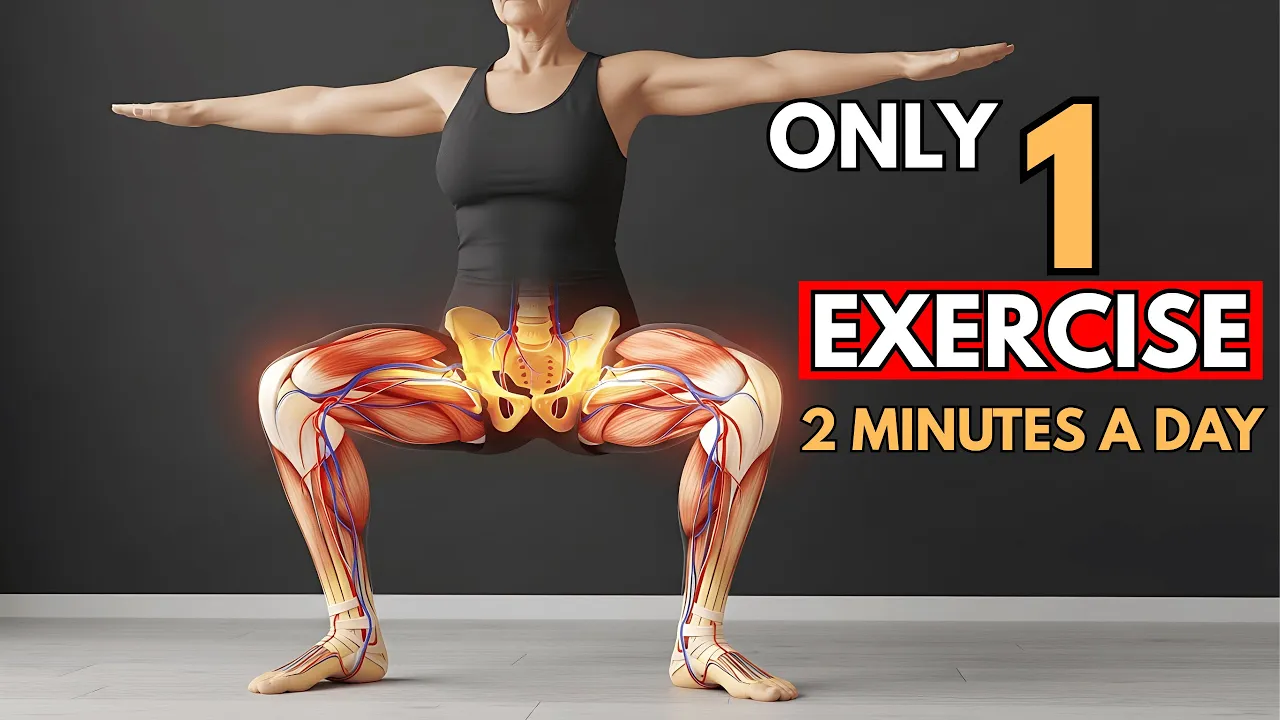
But the physiological principles behind it are very real. The movement I'm referring to is an ancient pose known as the Horse Stance, and it’s a tool that many people, especially those over 50, are completely unaware of. While it may look like you are simply standing still, don't be fooled.
For centuries, this stance has been a cornerstone for martial artists and healers, not for its appearance, but for its profound functional effects. And here is its clinical appeal: the commitment is as little as two minutes per day, performed anywhere in your home. It’s an alternative for those for whom high-impact activities like running are no longer suitable, as it builds remarkable strength without creating wear and tear on your joints.
But perhaps its most overlooked value is how it trains your mind’s resilience in tandem with your muscles. What this simple hold can do for your balance, joint integrity, and even your hormonal regulation might genuinely surprise you. In our discussion today, I’m going to break down the science—the 'why' behind how the Horse Stance works—so you can understand and start using it as a tool to stay strong, sharp, and centered as you age.
And I encourage you to stay with me, because as we explore these benefits, I’ll explain one specific circulatory effect that modern fitness rarely discusses, but that everyone over 50 should understand. To begin, we need to be frank: after the age of 50, maintaining leg strength is no longer about aesthetics; it's about preserving your independence and your quality of life. This relates directly to a medical condition called sarcopenia, the age-related loss of muscle mass and function.
It's the primary reason why simple tasks become difficult and the risk of falls increases dramatically. The Horse Stance directly counteracts this through a mechanism called isometric contraction. Unlike lifting a weight where your muscle shortens and lengthens, an isometric hold involves activating the muscle without changing its length.
You are holding the muscle under constant tension. This is incredibly beneficial because it stimulates the muscle fibers, particularly the slow-twitch fibers responsible for endurance and stability, without causing the repetitive impact on your knee and hip joints that can aggravate conditions like osteoarthritis. It builds strength in the muscles, tendons, and ligaments that support your joints, essentially creating an internal brace.
This is how you build a robust, resilient lower body that can carry you confidently through life. This foundational strength naturally extends upward to your body's central pillar: your core. When I speak of the core, I'm not referring to the superficial 'six-pack' muscles.
I’m talking about the deep, stabilizing system of muscles like the transverse abdominis, the multifidus along your spine, and the pelvic floor. Together, they form a natural corset that protects your spine and serves as the platform for all movement. Holding the Horse Stance forces this entire system to engage in order to keep your torso upright and stable.
It's not an aggressive motion like a sit-up; it's a practice in endurance. It teaches your core how to provide stable support for long periods, which is exactly what you need to sit, stand, and walk without developing lower back pain. A strong, enduring core is the difference between feeling fragile and feeling powerful in your daily life.
This isn't about vanity; it's about building a structurally sound and pain-free body from the inside out. But this structural integrity is only half of the equation. For it to be truly effective, it must be intelligently controlled by our nervous system, which brings us to the critical topic of balance and proprioception.
This enhanced control system is where the Horse Stance truly begins to shine, moving beyond simple muscle strength. Balance is not just a muscular function; it is a neurological skill. At the heart of this skill is proprioception—an intricate communication network between your muscles, joints, and brain that provides a constant awareness of your body's position in space.
As we age or become less active, this crucial sense can begin to dull, which is a major reason why the risk of falls increases. Holding a static, challenging pose like the Horse Stance acts as a powerful recalibration for this system. While you may be still on the outside, your nervous system is firing intensely, making thousands of tiny adjustments per second in your feet, ankles, and hips to maintain your center of gravity.
You are actively retraining and sharpening that neurological feedback loop. This heightened awareness doesn't just help when you're holding the pose; it translates directly into better stability and quicker reactions in your daily life, whether you're navigating an uneven path or catching yourself from a stumble. It restores a quiet confidence in your body’s ability to support you.
This stability is intrinsically linked to the mobility of your hips. So many of my patients suffer from chronic lower back pain, and a very common, yet often overlooked, contributor is chronically tight hip flexors. Decades of sitting cause the muscles at the front of the hips to shorten, which can tilt the pelvis forward and place continuous strain on the lumbar spine.
The Horse Stance addresses this beautifully and safely. The wide-legged position gently encourages the hip joints to open, creating a sustained, low-load stretch on the adductor muscles of the inner thighs and the deep hip flexors. Unlike aggressive stretching, which can sometimes be risky, this allows the connective tissues to release tension gradually.
Over time, this can help correct postural imbalances, alleviate back pain, and restore a more natural and efficient gait. When your hips move freely, your entire body moves with less effort and greater ease. Now, let's address the specific circulatory benefit I mentioned earlier—the one that is so vital for quality of life after fifty.
This is about supporting your health from 'below the belt. ' The sustained isometric contraction in the large muscles of your legs and glutes during the Horse Stance creates a significant demand for oxygenated blood. This naturally increases circulation and tissue perfusion throughout the entire pelvic basin.
This area contains a network of crucial muscles, nerves, and organs. For both men and women, the pelvic floor muscles are essential for core stability and bladder control. Enhancing blood flow and gently engaging these muscles helps maintain their health and tone.
For men, robust vascular health is a fundamental prerequisite for erectile function, and improving circulation in this region supports this system naturally. For women, a toned pelvic floor provides better support for pelvic organs and contributes to overall core strength. This isn't about miracle claims; it's about simple physiology.
By improving the health of the tissues in this region through a natural, functional movement, you are supporting a sense of vitality that is integral to healthy aging. This improvement in our physical and neurological systems doesn't happen in a vacuum. It creates a cascade of effects that influence our hormonal environment and even our mental state.
This brings us to the profound connection between the body and the mind, and the hormonal response to this unique form of exercise. The physical challenge of the Horse Stance places the body under a state of 'eustress,' which is a beneficial form of stress that stimulates adaptation and growth. This controlled challenge can have a positive regulatory effect on your endocrine system.
For instance, consistent practice of mindful, low-impact resistance exercise has been shown to help regulate cortisol, our primary stress hormone. Chronically high cortisol levels are linked to a range of health issues, including poor sleep, inflammation, and difficulty managing weight. As your body works to hold the pose, it also releases endorphins, which are powerful neurochemicals that act as natural mood elevators and pain relievers.
This is why you may feel a sense of calm focus and vitality afterward, not just fatigue. The goal is to support a healthier, more balanced hormonal environment, which is crucial for maintaining energy, mood, and cognitive clarity. The mental benefits, however, may be the most transformative.
In a world that pushes us to move faster and be constantly distracted, the Horse Stance teaches the radical act of stillness under pressure. As you hold the position and your muscles begin to tremble, your immediate impulse will be to stop. This is the critical moment.
By choosing to stay, to breathe deeply and remain calm, you are training your mind. You are teaching your nervous system that you can tolerate discomfort without panicking. This is resilience, and it is a skill that you carry with you long after the two minutes are over.
This practice of focusing on your breath—a slow inhale, a long exhale—activates the parasympathetic nervous system, our 'rest and digest' response, which counteracts the 'fight or flight' instinct. It's a form of active meditation that builds a deep sense of inner strength and composure. Finally, the most compelling reason to adopt this practice is its sheer accessibility.
The best exercise is the one you do consistently, and the Horse Stance eliminates nearly all barriers. There is no equipment to buy, no gym to travel to, and it takes only a few minutes. You can do it in your kitchen, your living room, or even your office.
To begin safely, stand with your feet about double your shoulder-width apart, with your toes pointed slightly outward. Keeping your back straight and your chest up, slowly lower your hips as if you were going to sit on an invisible chair. Only go as low as you feel comfortable and stable.
It is vital that your knees track in the same direction as your toes to protect the joint. Start by holding for just 30 seconds, focusing on slow, deep breaths. As you grow stronger, you can gradually increase your time.
However, a word of caution: if you have had recent surgery on your hips, knees, or back, or if you have uncontrolled high blood pressure or severe joint pain, you must speak with your doctor before beginning. The power of this practice lies in its consistency. Aging is a biological process, but the decline of your strength, balance, and independence is not inevitable.
It is something you have the power to influence, starting with small, intelligent actions. The Horse Stance is one of those actions.