It's often said that despite humanity's many conflicts, we all bleed the same blood. It's a nice thought but not quite accurate. In fact, our blood comes in a few different varieties.
Our red blood cells contain a protein called hemoglobin that binds to oxygen, allowing the cells to transport it throughout the body. But they also have another kind of complex protein on the outside of the cell membrane. These proteins, known as antigens, communicate with white blood cells, immune cells that protect against infection.
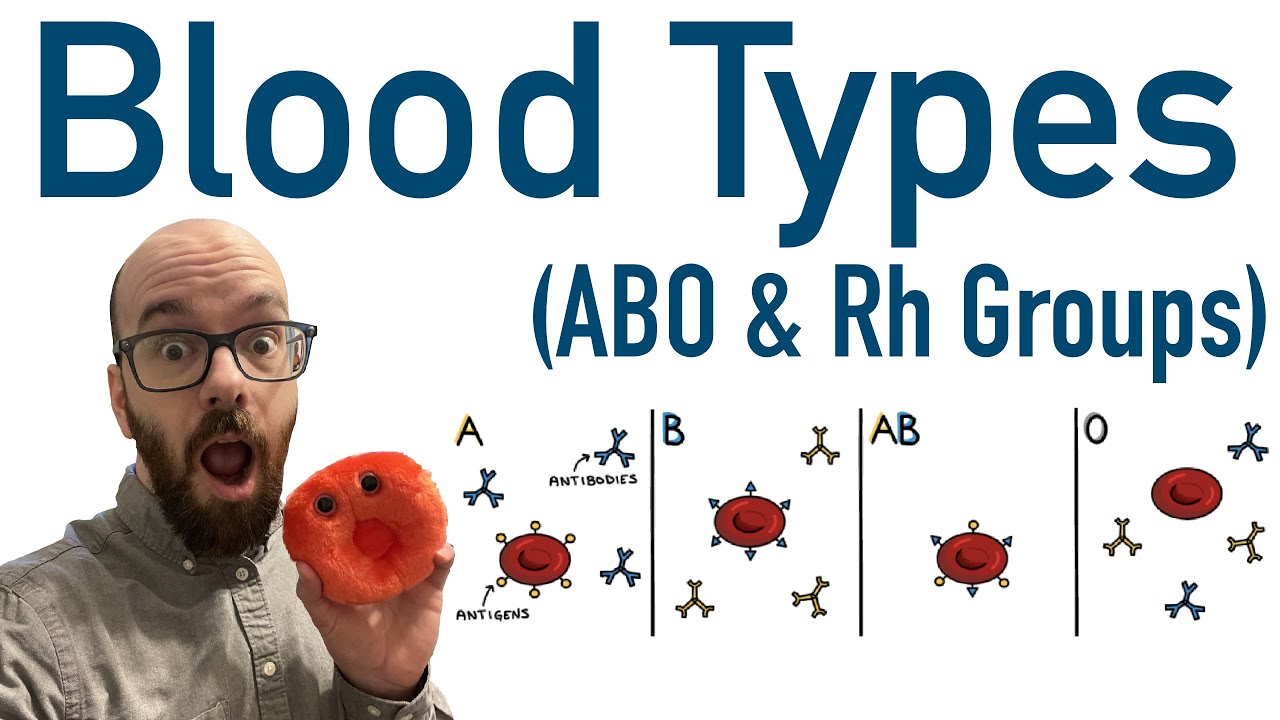
Antigens serve as identifying markers, allowing the immune system to recognize your body's own cells without attacking them as foreign bodies. The two main kinds of antigens, A and B, determine your blood type. But how do we get four blood types from only two antigens?
Well, the antigens are coded for by three different alleles, varieties of a particular gene. While the A and B alleles code for A and B antigens, the O allele codes for neither, and because we inherit one copy of each gene from each parent, every individual has two alleles determining blood type. When these happen to be different, one overrides the other depending on their relative dominance.
For blood types, the A and B alleles are both dominant, while O is recessive. So A and A gives you type A blood, while B and B gives you type B. If you inherit one of each, the resulting codominance will produce both A and B antigens, which is type AB.
The O allele is recessive, so either of the others will override it when they're paired, resulting in either type A or type B. But if you happen to inherit two Os, instructions will be expressed that make blood cells without the A or the B antigen. Because of these interactions, knowing both parents' blood types lets us predict the relative probability of their children's blood types.
Why do blood types matter? For blood transfusions, finding the correct one is a matter of life and death. If someone with type A blood is given type B blood, or vice versa, their antibodies will reject the foreign antigens and attack them, potentially causing the transfused blood to clot.
But because people with type AB blood produce both A and B antigens, they don't make antibodies against them, so they will recognize either as safe, making them universal recipients. On the other hand, people with blood type O do not produce either antigen, which makes them universal donors, but will cause their immune system to make antibodies that reject any other blood type. Unfortunately, matching donors and recipients is a bit more complicated due to additional antigen systems, particular the Rh factor, named after the Rhesus monkeys in which it was first isolated.
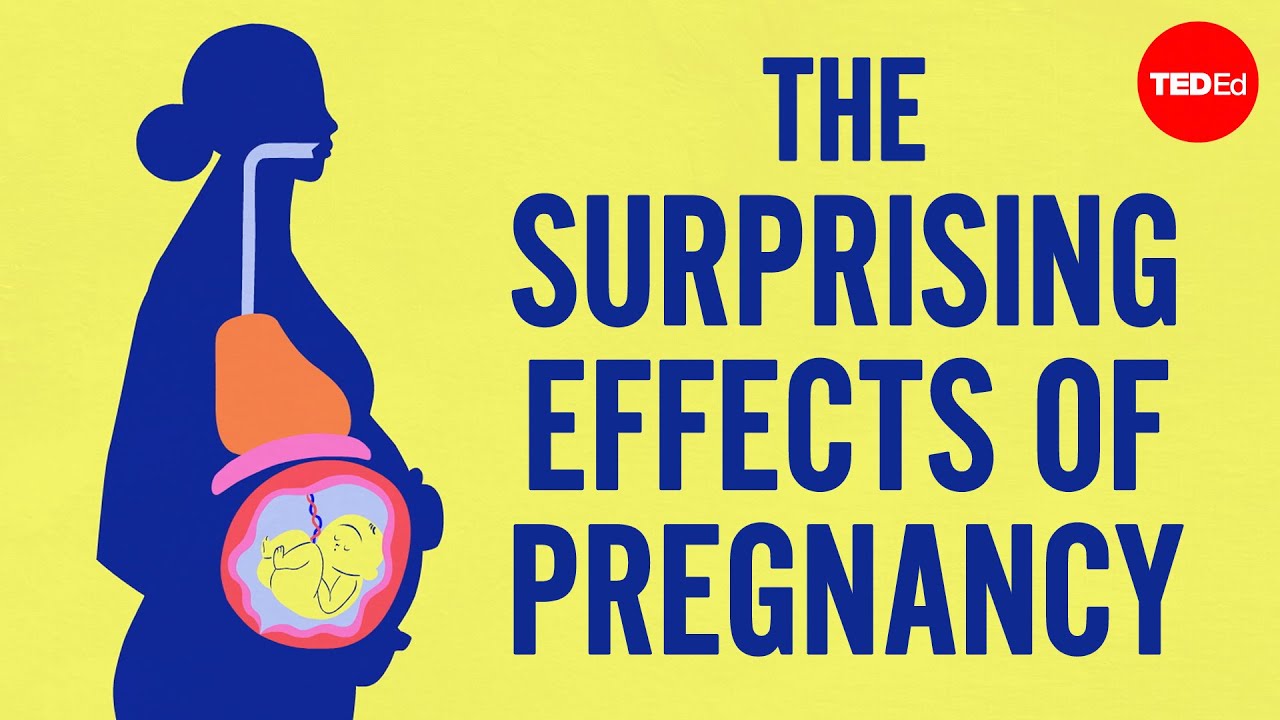
Rh+ or Rh- refers to the presence or absence of the D antigen of the Rh blood group system. And in addition to impeding some blood transfusions, it can cause severe complications in pregnancy. If an Rh- mother is carrying an Rh+ child, her body will produce Rh antibodies that may cross the placenta and attack the fetus, a condition known as hemolytic disease of the newborn.
Some cultures believe blood type to be associated with personality, though this is not supported by science. And though the proportions of different blood types vary between human populations, scientists aren't sure why they evolved; perhaps as protection against blood born diseases, or due to random genetic drift. Finally, different species have different sets of antigens.
In fact, the four main blood types shared by us apes seem paltry in comparison to the thirteen types found in dogs.