Scribe
Scribe

Bevalt het? Maak Scribe nog beter door een review achter te laten

Chrome Extensie

Bladeren

  • Populaire Video's
  • Recente Video's
  • Alle Kanalen

Gratis Tools

  • Ondertitel Downloader
  • Tijdstempel Generator
  • Video Samenvatter
  • Woorden Teller
  • Titel Analyzer
  • Videotranscriptie Zoeken
  • Video Analytics
  • Hoofdstukken Maker
  • Video Quiz Generator
  • Chat met Video

Product

  • Prijzen
  • Blog
  • Chrome Extensie

Developers

  • Transcript API
  • API Documentation

Juridisch

  • Voorwaarden
  • Privacy
  • Ondersteuning
  • Sitemap

Copyright © 2026. Gemaakt met liefde door Scribe

— Als dit uw leven makkelijker heeft gemaakt (of op zijn minst iets minder chaotisch), laat ons een review achter! Dat maakt onze dag goed.

Related Videos

Solar System 101 | National Geographic

Video thumbnail
33.13M546 Woorden2m readGrade 9
Delen
Channel
National Geographic
- [Narrator] Our solar system is one of over 500 known solar systems in the entire Milky Way galaxy. The solar system came into being about 4. 5 billion years ago, when a cloud of interstellar gas and dust collapsed, resulting in a solar nebula, a swirling disc of material that collided to form the solar system.
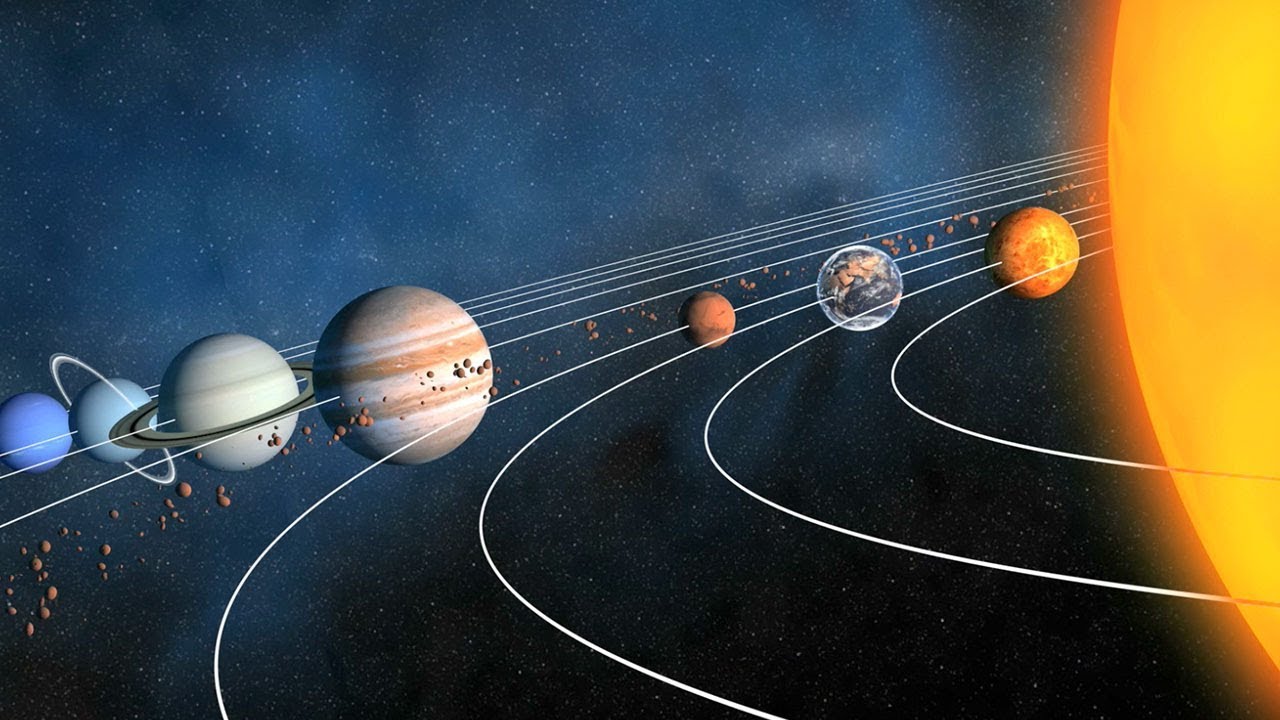
The solar system is located in the Milky Way's Orion star cluster. Only 15% of stars in the galaxy host planetary systems, and one of those stars is our own sun. Revolving around the sun are eight planets.
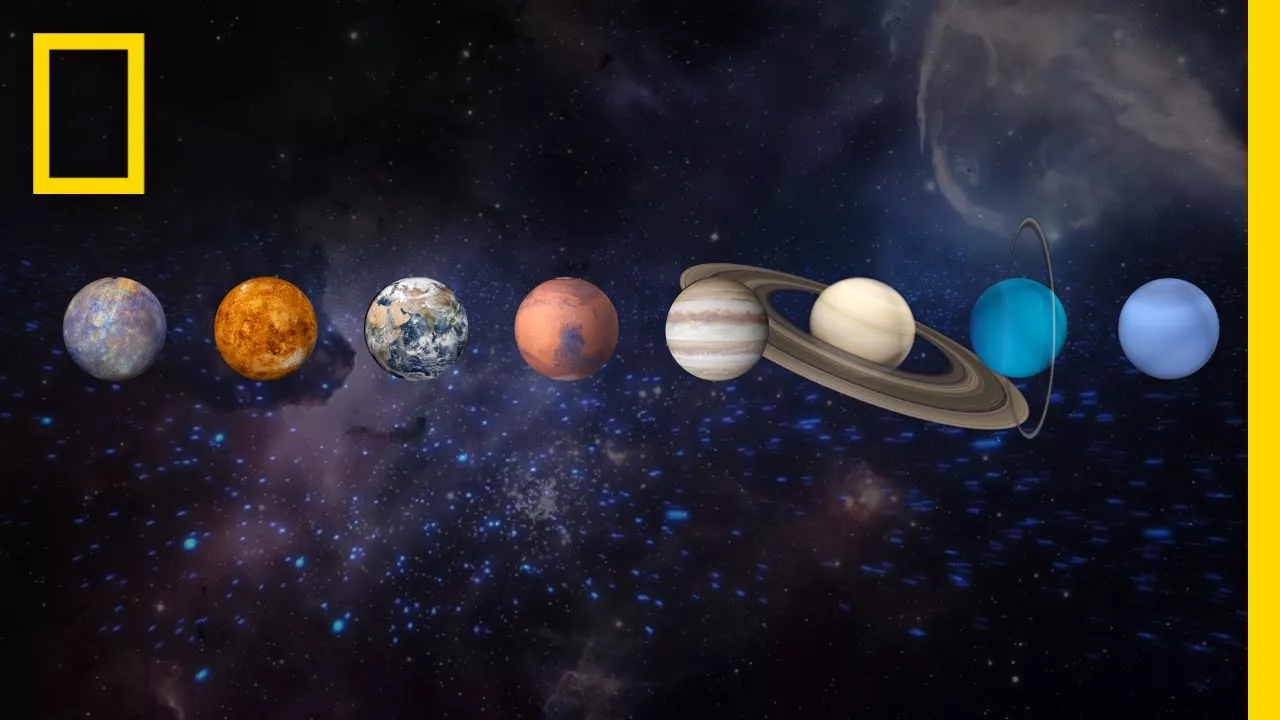
The planets are divided into two categories, based on their composition, Terrestrial and Jovian. Terrestrial planets including Mercury, Venus, Earth, and Mars, are primarily made of rocky material. Their surfaces are solid, they don't have ring systems, they have very few or no moons, and they are relatively small.
The smallest and closest to the sun is Mercury, which has the shortest orbit in the solar system at about three Earth months. Venus is the hottest planet, with temperatures of up to 867 degrees Fahrenheit, due to an atmosphere of carbon dioxide and extensive lava flows. Next to this world of fire is a world of water, Earth.
The water systems on this planet help create the only known environment in the universe capable of sustaining life. The last of the terrestrial planets, Mars, might have also supported life about 3. 7 billion years ago, when the planet had a watery surface, and moist atmosphere.
Beyond the four Terrestrial planets of the inner solar system lie the Jovian planets of the outer solar system. The Jovian planets include gas giants Jupiter and Saturn and ice giants Uranus and Neptune. The gas giants are predominantly made of helium and hydrogen, and the ice giants also contain rock, ice, and a liquid mixture of water, methane, and ammonia.
All four Jovian planets have multiple moons, sport ring systems, have no solid surface, and are immense. The largest Jovian is also the largest planet in the solar system, Jupiter. Nearby is Saturn, the solar system's second largest planet.
Its signature rings are wide enough to fit between Earth and the moon, but are barely a kilometer thick. Past Saturn are the ice giants, Uranus and Neptune. The slightly bigger of these ice giants, Uranus, is famous for rotating on its side.
Next to Uranus is Neptune, the outermost planet in the solar system, and also one of the coldest. Orbiting the Terrestrial planets is the asteroid belt, a flat disc of rocky objects, full of remnants from the solar system's formation. From microscopic dust particles, to the largest known object, the dwarf planet, Ceres.
Another disc of space debris lies much further out, and orbits the Jovian planets, the icy Kuiper Belt. Apart from asteroids, the Kuiper Belt is also home to dwarf planets, such as Pluto, and is the birthplace of many comets. Beyond the Kuiper Belt is the Oort Cloud, a vast, spherical collection of icy debris.
It is considered the edge of the solar system since that is where the gravitational and physical influences of the sun end. Our solar system's particular configuration of planets and other celestial objects, all revolving around a life-giving star, make it a special place to call home.
Gerelateerde Video's
How Big is The Universe?
11:10
How Big is The Universe?
Science Time
5,482,814 views
The Solar System if it was Alive!
14:37
The Solar System if it was Alive!
SolarBalls
1,565,413 views
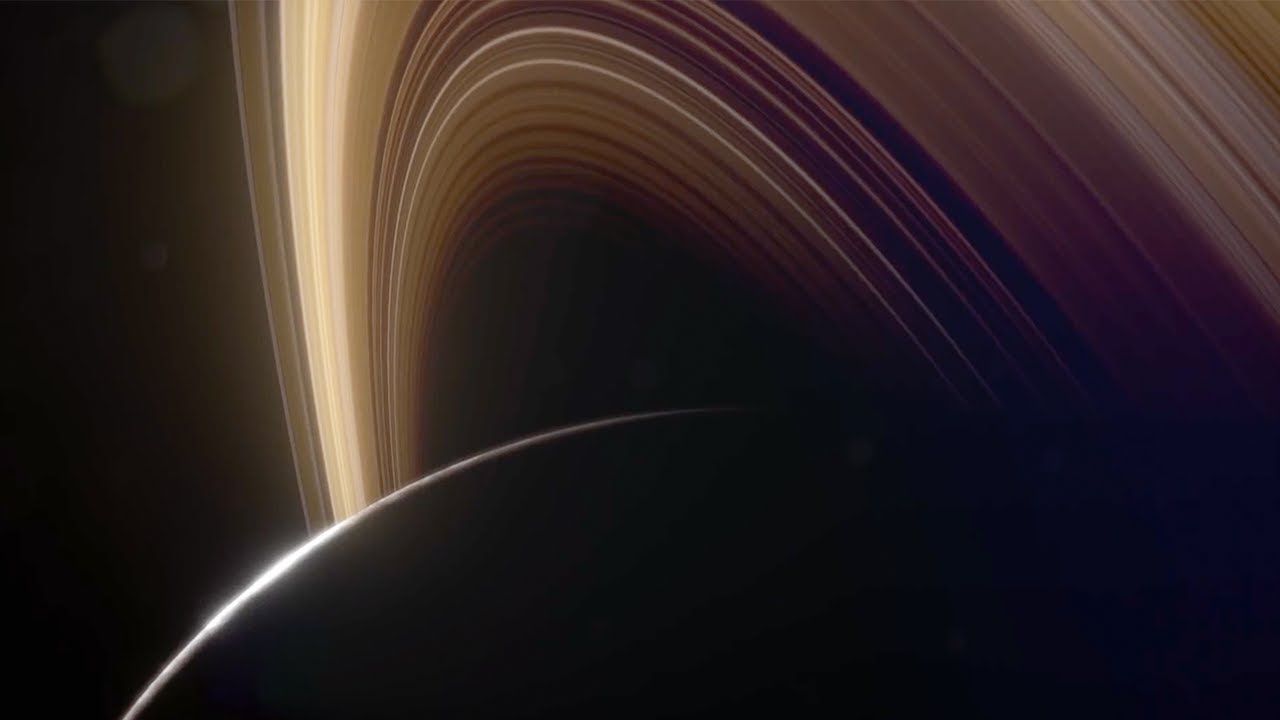
Eight Wonders Of Our Solar System | The Planets | BBC Earth Science
1:05:30
Eight Wonders Of Our Solar System | The Pl...
BBC Earth Science
6,375,463 views
Everything About Solar System | Solar System Explained | The Dr Binocs Show | Peekaboo Kidz
28:53
Everything About Solar System | Solar Syst...
Peekaboo Kidz
5,050,389 views
🌙 MOON IMPACT ► First person view
5:33
🌙 MOON IMPACT ► First person view
MetaBallStudios
11,027,014 views
The Planets In Our Solar System
15:59
The Planets In Our Solar System
Beyond Nature
2,596,339 views
This Planet Can Become Our New Home
26:44
This Planet Can Become Our New Home
BRIGHT SIDE Series
2,204,955 views
Universe Size Comparison | 3D Animation Comparison
11:07
Universe Size Comparison | 3D Animation Co...
Galaxian Journey
2,571,429 views
🧠 How Good is Your General Knowledge? Space & Universe Edition 🚀☀️🪐
10:27
🧠 How Good is Your General Knowledge? Spa...
Quiz Blitz
1,238,077 views
To Scale: THE SOLAR SYSTEM
7:07
To Scale: THE SOLAR SYSTEM
To Scale:
13,861,456 views
Planets in the Solar System for Kids | Learn about the sun and the eight planets
11:23
Planets in the Solar System for Kids | Lea...
Learn Bright
1,703,640 views
Sun 101 | National Geographic
5:01
Sun 101 | National Geographic
National Geographic
10,261,103 views
What If the Moon Got Bigger (Much Bigger!)
25:33
What If the Moon Got Bigger (Much Bigger!)
BRIGHT SIDE Series
1,560,060 views
Universe Size Comparison | Planet Size Comparison | Stars Size Comparison
5:51
Universe Size Comparison | Planet Size Com...
Countless Number
6,650,993 views
Real Images From Our Solar System
12:04
Real Images From Our Solar System
Destiny
15,372,102 views
I Jumped From Space (World Record Supersonic Freefall)
3:30
I Jumped From Space (World Record Superson...
Red Bull
30,547,677 views
Venus 101 | National Geographic
3:29
Venus 101 | National Geographic
National Geographic
4,987,512 views
Universe Size in Perspective 3D 2024 | Atom to Universe Size Comparison 3d
23:44
Universe Size in Perspective 3D 2024 | Ato...
Global Data
4,750,565 views
How Long Would It Take To Travel the Solar System? | Unveiled
7:13
How Long Would It Take To Travel the Solar...
Unveiled
3,267,029 views
What If The Planets Changed Positions?
13:20
What If The Planets Changed Positions?
What If
219,776 views