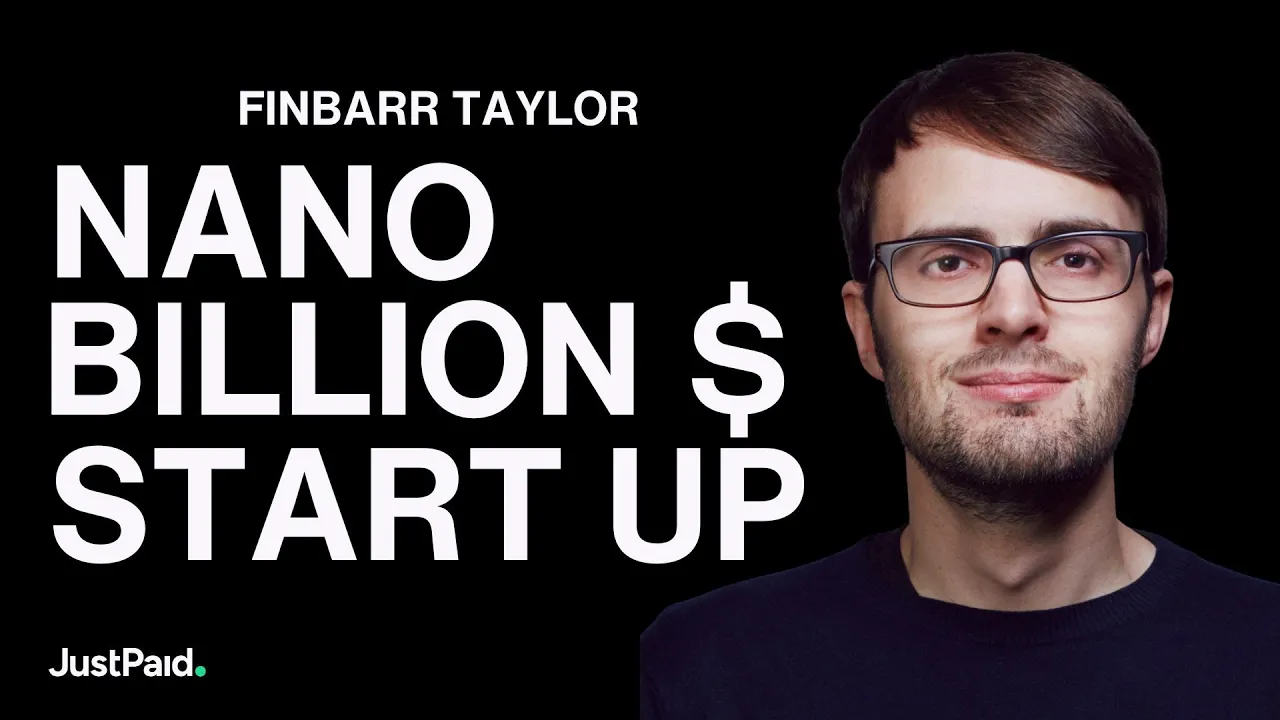
Speed of iteration is absolutely everything uh if you are not moving fast you are how big can you scale a company while keeping the head count tiny if you imagine you're clinging to the outside of a rocket ship you can go really far you might even get to the space but you're not controlling the rocket ship [Music] finnbar has been in like the startup Ecosystem for a long time and I actually was really impressed you were giving me like really Sage advice all around finnbar when we were out out at the campsite we were at
a campsite like with a bunch of Founders just kind of talking about ideas and brainstorming and just honestly hanging out with a bunch of really cool people but finnbar I think like you know you've been in this industry for a long time like just in the startup ecosystem like how did you Get into it like where did you come from to get into it and like this is the Silicon Valley bubble you're in it you're like in the ecosystem like I'd love to know about like your past and we could kind of take things from
there yeah for sure uh so I mean it really starts you know I studied computer science in Scotland at shade University uh and during the course of that degree I discovered Hacker News uh and um I was reading TechCrunch and Mashille and Venture beat and all these other blogs and I had a Google Reader account and every day I was reading about all these companies that were doing super well they were raising all this money they were launching really cool products I remember being so impressed when I read you know that somebody had raised this
$500,000 seed round I thought it was absolutely huge uh and almost all the companies I was reading about were in San Francisco they Were all in the Bay Area and so it just became this Focus for me of okay I need to figure out how to get there that's clearly the place where all this Innovation is happening um and so at the end of my degree which was in 2011 um I applied for jobs all around the world but with a particular focus on silicum Valley and I ended up getting a job with group on
which was awesome I had a really great time working there um but I had moved out to the Bay Area with kind Of the express intent of starting a company and um quite quickly after group one I ended up joining a small startup and yeah it kind of all goes from there but that was how I got into it in the first place so Groupon so that was like I mean Groupon was massive like it was like a energy bubble like this is like uh you know it was like a force of nature for such
a long time right um was the founder there when you joined or was it post founder yeah so I applied for Groupon around April or May of 2011 uh I got a job offer uh June or July of 2011 uh and it took four or five months for the visa to come through when I got the offer Groupon was this incredible Tech darling that nobody could write a bad word about it was just amazing they were like the hottest startup around at that time after I got the offer you know the Visa took four or
five months by the time I arrived in Silicon Valley in October 2011 a lot of bad things had started to be said in in the Press um but group one ipoed a month later they they ipoed I think it was November 2011 which was incredible you know I was there the day of the Groupon IPO they had a big cake the founder Andrew was still there uh he's a really cool guy um and but yeah it was an interesting time because Groupon's stock price fell 90% in the 12 months after that uh and so it
was a real taste of the sort of boom and bus Cycles of silic and Valley got it got it so I actually have like this question where you actually mentioned Hacker News there so so what kind of impact did Hacker News and reading all these articles because I'm I'm like super into you know reading Hacker News as well just you know just going on Reddit and just going on uh Twitter as well and just finding all these startups so how exactly did that shape your understanding of the startup Ecosystem yeah yeah for sure I mean
I think it really opened my eyes to the fact that there was there were things happening outside of Scotland uh you know Scotland is an awesome country tends to be quite insular you know it looks they look inward a lot and it was my first time really looking outward and seeing Oh my God there's this whole other massive thing going on uh and it's happening in in San Francisco uh and in the Bay Area um and and a little in New York too but it it really just opened my eyes to how Global of an
ecosystem it is and how the internet is truly everywhere in the world uh and how this was a force that I wanted to be involved with because of the way it allows you to distribute things to the whole planet in an instant um and so it just seeing all these companies launching and the traction they got really quickly and how they were able to just come up with these ideas launch them in days Immediately get traction was just so inspiring to me uh and I I wanted to move to uh California and see you know
where it was all happening and and what it was all about um so you know I I I moved to Thea and yeah immediately started to immerse myself in hackathons I went to loads of hackathons the first year of being in the Bay Area I went to hackathons every couple weeks I won a few prizes which was good fun met loads of people I'm still in touch with quite A few of them um but really just yeah the whole kind of the inspiration I mean I I always was kind of business-minded and entrepreneurial but the
focal point of of the Bay Area came from discovering this community around whyc combinator and um the um you know all the incredible Innovation that was happening in this area yeah yeah so my actually you know question was um on the hackathon part you right because I actually been to hackathons as well when I was starting off but um what what I've seen is that while doing hackathons you always have this mindset of just you know going there for prizes and all of that but um does that really shape uh when you want to do
startups as well or is it just going to be a hacker on the because um I mean most people do want their hackathon projects to become like actual startups but do they actually become that or did you only go there for the muscle of you know becoming that Hacker yeah no I went there for fun I went there to network to meet people I went there to kind of train myself on shipping quickly uh and um you know I knew absolutely nobody I before moving to the Bay Area when I got the job offer from
Groupon I got it via a Skype interview which you know that was what everybody was using at the time uh and I'd never set foot in the Bay Area before so I I I'd never set foot in California so you know I I got this job Offer we did the Visa and I landed four or five months later and when I got off the plane to start the job at Groupon that was my first time here so I knew literally nobody I mean I knew you know a few people vaguely that I'd kind of met
through the interview process at group one and ended up becoming good friends a bunch of people there and I'm still friends to this day were quite a few people there which is amazing it was such a nice group there um but the Hackathons it was really a way for me to try and get deeper into the startup ecosystem and it wasn't just hackathon like I remember going to Y combinator startup school conference back in 2011 um and 2012 and I remember that YC did this event in 2012 which was called work at a startup and
it was at the YC office in Mountain View uh and I went there uh and I met all these amazing Founders um you know in a very short space of time and that was less than a Year after arriving and I met Paul Graham and I met those people and you know I Funny Story um I actually asked Paul gam when I was there hey is YC hiring software engineers and he said no what would you even do and I said I'll do whatever you want I'll do literally anything you want and he kind of
got distracted and walked away and that was the end of the conversation but a few years later I did end up working for YC as a software engineer so it sort of as This foreshadowing of something that that eventually happened I think aons back to your question um most people that work on hackathon projects it doesn't actually become a startup but you do build some fun stuff I built some really really fun projects um the the most fun project was we built an antisocial Network where when you sign up you're friends with everybody and you
have to block and dislike people who don't want be friends with anymore uh And we got thousands of users within 24 hours and it really kind of blew up and was was T of fun and then we shut it down because it just wasn't a real thing but it was a fun thing to build there's a lot of those crazy types of social networks that kind of take off and then they have this like weird moment right and they may not like have the longevity but it's fun for the moment it's almost like a video
game in a sense like it yeah it's there and then like people get Bored they kind of just oh totally yeah I mean that was exactly what it was like I mean it was it was something that people were amused with for a very short amount of time uh and so were we you know it wasn't a real business it was just something fun you have certain traits that like are kind of doer traits which means like uh you got to Silicon Valley you figured out how how to get here you got to like one
of the best Darlings like Groupon who you know no One know you know it was like this pristine like place to work like it's almost like Google impenetrable you got through there you got into startup school which was really hard to get into like I was there I think it was there it was like Mark there was a bunch of Zuckerberg was there yeah great speakers yeah it was at that incredible it was absolutely incredible event and then you talk to Paul Graham and you're like hey I'm I want to work for you so you
were You had this mindset that was very different than a lot of people which was I need to get here and I need to be here and I need to be at Ground Zero I don't see a lot of people having that mindset and that's how they you know they kind of just become complacent like was it your upbringing is it just who you are was it just like this go-getter attitude like what what is it I think it was I mean it's it's always been my attitude um I I Think it was partly my
upbring and part my attitude I mean you know candidly I grew up in a pretty poor household so we didn't have any money uh and it was always something that was a concern growing up um you know and when I finished University I finished University with tens of thousands of dollars in debt and no money and I remember um you know in the group one interviews speaking to uh the guy who later became my boss or he was my boss's Boss um you know at one point as well um really cool guy Kyle um and
um I said to him hey look if you guys are going to offer me this job I have no money you're going to need to help me even buy the plane ticket to get there uh like that's how that's how lot of money I have and he said okay cool no worries we'll figure it out and um you know they helped me out a little bit uh and then I discovered just how expensive Silicon Valley was after I got here and I Realized that they hadn't actually helped me out all that much but it was
all good um but yeah I think part of it was my upbringing like um you know even from a fairly young age I was doing some things to try and make a little bit of money uh from time to time uh and I've just been obsessed with computers from about the age of six or seven years old I've been utterly obsessed with computers um you know I got my first computer when I was about seven my mom Got this secondhand computer from a client she was a a massage therapist and she paid for this computer
by with massage therapy to this guy and he was giving away his old computer and I got it and it was like the most incredible thing ever that's kind of the backstory is growing up in Scotland not coming from much in in the way of money uh being obsessed with computers realizing how incredible internet was uh and realizing that the combination of the Two is just was so explosive um and wanting to be right where it was happening in in silen Valley was it a Mac or was it a PC it was like an amstrad
uh and it windows I don't even think it had Windows 3.1 on it I think it was like an even older version of Windows I don't remember exactly um but it had some games on it and that was what I loved uh so uh yeah I played a bunch of games when I was young you got got the computer you learn started to Learn how to code on that or like was it too no the the coding came later and actually the coding I I started learning to code when I was about 13 or so
uh and that was in high school um there was some Visual Basic in high school uh and then also I was big into this online game Rainbow 6 uh the original Rainbow Six and there were a lot of people that cheated on that game and I built an anti-che patch for the game and I learned how to write a bunch of scripts For that uh and it was just bash actually um but it was sort of like checking files against one another and all that sort of stuff um but that was when I really started
the program and then when I I left home when I was 17 and I went to University uh and within a year of leaving home I had learned some really basic web development uh and when I was 18 I started a web development business and throughout University I built a whole bunch of websites for People um and so I think I built maybe 12 to 15 websites over the course of four or five years for paying customers in Scotland um and some of them were really cool like I built an e-commerce store uh a druple
e-commerce store for a bike shop um and ended up getting a whole bunch of bike gear out of it which was amazing and I'm really good friends with the bike store owner to this day throughout University I was obviously doing my course and kind of I even went To hackathons and was doing side projects through at University but I also was doing this side business where I was um you know building building websites for paying clients and kind of learning more and more about the trade of uh you know shipping things in Internet so you
know just look looking at your journey on paper it just feels like a documentary movie I mean it just feels like you know uh like watching social network right I mean just Scraping through things and then um just you know trying to work at YC then again raising from YC you know it just it just feels so perfect here so but again there must have been like one personality trait that you must credit right like is it just being a goetter or like what was it that you know that clicked so I would love to
learn that I I mean I think it's just like I I have a a fairly Grim determination uh you know and I'll power through things are very very difficult For a long period of time um and so yeah uh you know there there was other things in my childhood that I really had to kind of power through and and so I just um I've kept that to this day I've been fixated for the longest time on the idea of building something at scale for the internet um and you know you go into you go into
that kind of Journey and you think it's going to be tons of fun and of course an incredible grind and that's you know I ended up starting a couple Companies along the way and one of them reached significant scale and it was hard uh you know but I I certainly learned a lot from that and I think um yeah I think I would credit being determined also just curiosity you know learning a lot of things uh all the time being willing to kind of dive into manuals reading about all kinds of obscure topics uh just
going deep on things that are often overlooked uh is something that I would credit as well I Think just having some empathy for for users and just loving solving people's problems uh it would be another thing that that I would I would point to uh I really get a lot of satisfaction from people deriving value from things I built in this journey like did you have um um like was there any kind of impact that happened or was it like talking to a lot of users or was it just a special Insight that you got
that gave you the idea for Shogun so how did how did Shogun happen so that was actually my question there yeah so I well I mean I'll quickly paint in a bit of the history you know between Groupon and Shogun um at at that start of school event I met Justin KH who was a YC partner and he was a founder of a company called exec I worked at exec for a year which was incredible it really taught me how to ship quickly uh you know Justin had this saying perfect is the enemy of done
and that we lived that Every day after that I started a small company called give it 100 um and that was kind of a it in end up not being a great business but it was it was a lot of fun we basically built a site where you sign up you pick something to practice and um you record a video of yourself doing it every day and you see your progress over time and funny story we ended up on stage at startup School in 2013 so me and my co-founder Karen were interviewed on stage by
Paul G and Sam Alman about our startup give 100 uh which was just crazy after give 100 didn't really work out that's when I started playing around with um with different ideas and I ended up starting uh starting Shogun um so I started Shogun originally with Justin K's brother Damian and we set out to solve this problem where every company I've worked for has had an issue where the uh the marketing team can't update the website uh and it's super frustrating For everybody uh it's frustrating for engineering because they have to end up updating it
it's frustrating for marketing they don't want to have to go through engineering want it themselves so we set out to build a tool where you plug it into your existing website and then anybody and your team can use that tool to update the website uh and some friends of ours told us they'd pay for it we built it and launched it they didn't pay and so we ended up having to Try and find uh some some other customers the Shogun story is kind of interesting because we we spent most of 2015 fulltime just hacking on
it talking to literally anybody who would talked to us who had a problem with their website and it felt like it was going absolutely nowhere uh and then uh our our third co-founder Nick who joined a few months after we started uh um he got he was connected with an e-commerce agency and they said make this work for Shopify and We'll pay you for it and we made it work for Shopify and they paid us and so did tens of thousands of other people and it just was this Super Lucky break but you know there
were there were several things like e-commerce is kind of this Vortex once you start once you start solving the problems of e-commerce you end up getting sucked into it and a lot of people end up that way e-commerce is just so big and so many people have the problems and willing to pay that it's Quite an easy space to kind of accidentally end up in so it was a lucky break for us in a way but we also had spoken to tons of people including some e-commerce folks who who had got quite close to being
customers of ours so that that was sort of the original that that's kind of the backstory of how we got started it was just we were trying to solve our own problem of being able to uh edit the website as a non-technical person and then we found a Really great fit in e-commerce e-commerce is I would say a kind of a it's a tough space but those are the best spaces to be in being tough like uh there's a lot of competitors yeah did you look Inward and not look at competitors or did you go
outward and like look at what competitors are doing like how do you even like build a company in a space where there's so much noise and some of the products are useless right there's a lot of like Really bad products out there and then there's really like slick modern products like yeah well we discovered that Shopify we've never heard of Shopify before but we heard of Shopify from this agency we discovered that Shopify didn't have a good visual Builder and the way that our product worked is it plugged into your existing text sack so we
we weren't competing with all the other website Builders we were only inside the Shopify space and Helping people who had Shopify websites build their websites on Shopify and so it was this really it was kind of this untapped Channel with massive demand inside of it uh and you know webflow and Weebly and Wix and Squarespace and all these other builders they're their competitors for shopy they they've created their own e-commerce functionality so we were totally insulated against the competition and we happened to be and we were the second Page builder in shopy but we were
like night and day better than the other page builder that was in there at the time we ended up killing you know that company um and or they shut down I don't know if it was entirely us but you know we certainly were we were part of the story of of them discontinuing their products we we had this perfect situation where we had the exact solution to a problem that a big group of a big and growing group of people had in the shopy Platform and no existing companies were paying attention to it because they
were all trying to build their own platforms not Integra to somebody else's platform would you say uh that's a better strategy is like join a rocket ship versus build everything yourself you're so you saw I guess unintentionally you you partnered up with Shopify without you know I mean maybe that was really intentional but it sounds like that was like a rocket ship That took company yeah I mean so I would say um it has pros and cons you know if if you if you imagine you're clinging to the outside of a rocket ship you can
go really far you might even get into space but you're not controlling the rocket ship you're not deciding where it's going and you might end up getting burned by the boosters on the rocket ship uh and so that's I think that's kind of what happened to us eventually but it took a Really long time um you know and we s we sort of saw it coming as well but you know we had years years and years of unabated exponential up to the right growth by just being in Shopify and later we launched in big Commerce
and Salesforce Commerce cloud and other platforms too um but um we were certainly lucky to be one of the first in the shopy space and you know Shopify is absolutely massive at the time it wasn't massive I think they just they Only just ipoed when we launched on uh you know October 2015 when we launched on Shopify and in fact we launched on Shopify and it seemed like it wasn't going anywhere and we all quit and went and got jobs and that's where that's when I worked for y company as a software engineer but by
the time I wored by the time I started at YC as a software engineer day one of YC sh was making $1,000 a month and then a few months later was making 5,000 a month And a few months after that I was making 10,000 a month and then that's making 20,000 a month and that's when I looked at it and said oh this thing is actually growing really really fast like what's going on here um you know it wasn't like I was doing no work on it it started to eat up more and more of
my free time uh and it it got to to the point where I just was only working basically um and I realized I had to focus on one or the other and I forecast Out the growth you know at the time Shogun was growing 15 to 20% per month and it felt very small and I forecast out okay what's the current Revenue times 1.15 drag down 12 columns in in Google Sheets and I realized 15% monthly growth is 435 per annual growth it's super big it's bigger than you would think when you just think about
it mentally you know the mental shock that you take is like oh it's probably like 150 188% growth you're just timesing by 15 but that's not how it works compound gross is completely different um and so it was just this incredible moment of oh this thing is going to be really big so you had this dilemma you were at y accomodator one of the best places to work in the world so you got that fortunate job which is amazing it was awesome and then you got this crazy hot startup like you were in like a
weird position it was like you fell into Silicon Valley like the B the best Position to be in like yeah yeah yeah I fell head first into Silicon Valley and I you know came out with I don't know a bunch of dollars in my mouth I guess well I guess while you were working at YC like let's focus on that a second like you probably saw thousands of you know Founders and saw like what worked what didn't work I bet a lot of those learnings applied to your startup like in a lot of ways like
you were just seeing what tech they were Using advice they were getting like you were seeing all the really smart Partners like give advice like did that correlate to your startup and like I guess you must have learned like really good I'd call it like axioms like truths like I should be doing this because all these really top tier Founders are doing this like yeah what are like one or two or three that like you took away you maybe used a show gun or not but like yeah yeah well okay so um you know when
I left YC which was it was hard to do I mean YY truly is one of the greatest it's one of the greatest companies of our time the C phenomenal institution um I left in May 2017 uh and we didn't we hadn't raised any money at the time but we later ended up getting into YC um you know we were in YC winter 18 but while I was in YC I absolutely took the time to soak up as much startup advice and startup learnings and just everything about Startups I possibly could being at YC is
truly like being the center of gravity in the startup Universe you get to see so much interesting stuff one of the things I did at YC which was very interesting uh YC has a kind of internal CRM system where they're tracking all the updates and stuff from all the companies one of the first things I did is I built almost like a Facebook feed of every update from every YC company and then I read it back to the beginning Of time so I read every single company it took me a long time to read them
all but I was fascinated um you know and it was both YC company updates as well as partner thoughts on how the companies were doing and it was like unbelievably interesting so I just fire hosed that I read the entire um and there were a lot of really interesting takeaways from that I think uh speed of iteration is absolutely everything uh if you're not moving fast You are basically as a stop um so you know you have you have to go as quickly as quickly as you can um getting to some kind of data with
an 80% good product is a million times better than waiting a while you know with a 0 to 100% good product um you know so you should launch as soon as possible um but I mean here's Kind of a Funny takeaway uh one of the biggest things I learned is that every startup is a show there's just stuff broken every single Company and so that really helped me internally to realize when things were going wrong at Shogun oh this is normal this is just what every company's going to the very biggest companies are are similarly
screwed in some way and everybody's just fighting the fire every single day um and so um you know that was something that I really internalized at YC um and it was a really good good lesson for for me as I kind of went forward with Shun always be launching Essentially like always be iterating and launching and pushing product to customers and basically don't let the ship kill you like you have to keep going because it's a mess inside so you have to like fight those battles and just keep pushing the company forward and that was
like any other tips those are really good tips for every founder out there I mean every founder hear this yeah yeah I I mean I think um avoid co-founder disputes like try and have a Good co-founder and a good relationship with your co-founder a CO founder relationship is like a marriage uh and a good marriage looks like one with a lot of communication in it and that's the same thing with a co-founder relationship my co-founder Nick and I are super direct with one another um you know we tell each other all the things that we're
unhappy about and we talk about it and it's nothing is off the table I think it's unbelievably Important to be to be able to do that as a startup founder because the number one cause of startup or infant startup mortality is co-founder disputes people breaking up you know big fights company uh ends up getting embroiled in all kinds of legal disputes all kinds of stuff that kills tons of early stage STS so you have to have a really solid foundation in your co-founder relationship to be successful I'm sure you've had hard disputes like do you
Guys go on a walk do you go like rent an Airbnb do you like have oneon-one sessions like what do you do do you have Executive coaching like what is your strategy all yeah you know Nick and I um we have very different personalities but the thing which actually is more from his camp that the thing I think which has really helped us have such a good relationship is Nick wears his heart on his sleeve he cannot keep a secret he can't tell a lie and his personality is Just such that if anything is bugging
him he has to talk about it and so he trained me to seek conflict rather than avoiding conflict and if he ever felt like I was avoiding conflict he would it would bother him and he would come to me and be like you're not there's something there's something going on like you're bothered about something you've got to talk to about it right now and then one day he came in his feedback he said I've noticed that you're comfort of Ven You're too slow at bring up when things are bothering you you've got to be much
faster about that and so it just was you know I think I learned a lot from him uh and then I learned a lot from you know hiring people and managing people and like you know the the whole thing of scaling a company I Le I learned a ton from but the pivotal moment I think in in the relationship with Nick was him coming to me and saying to me that he thought I was conflict avoidant uh and Then I ended up uh doing doing some coaching around that uh and it's just something that you
know once I I absorb information really well and so if somebody gives me feedback like that I internalize it quite quickly uh and uh I then just paid super close attention was kind of hyper aware of any internal resistance to having a difficult conversation uh and I think you have to run towards things that you're resisting internally otherwise it just breeds Anxiety actually um you know if you try and shut down things that are bothering you internally and you don't run towards them uh it um you end up having a bad time um so um
you know that applies to startups and Beyond um but it certainly applies to co-founder relationships so address things head on like uh if there's an issue do you say it right then and there or do you wait in private like I don't know say that there's an employee that's Not doing a good job yeah you bring it up in front of everybody because that's the moment you're thinking about it You' strategically like yeah I mean there's different schools of thought on this the way that I would usually do it is I would give critical feedback
like that oneon-one but I mean I'd be direct about things not working in a group setting I'd be like okay this is cool and not working you know we we're going let's have let's connect about this offline And chat about it and then you know there are whole Frameworks around giving feedback and there are things that I've learned about how to give feedback well um and um you know we could go into that but usually the feedback would be even in private and you know often then documented and sent to people afterwards so there's a
record of it so you can refer back to it and so on and so on got okay so that's that's a really good a really really good strategy there Because you were at YC did you get the bug to like do Investments like is that where you get the bug like do do people go and become partners and they have to invest a lot more or like if you're part of the te you know what I mean just part of the like employee base at YC to people just start investing more aggressively like yeah I
mean it's it's so interesting um I I I do actively Angel invest I did not at the time I was working for YC um but YC I mean it was it was mostly during my tenure there Sam mman was in charge for I think most of it or maybe he left kind of right towards the Enemy being there the really interesting thing about the way that YC worked at that time is it was a very flat partnership structure all Partners were equals anybody could have an idea they could anybody could drive an initiative and so
it was kind of chaotic by Design where a lot of people were trying out all different Things one of the things that we tried during that period of time was Sam opened it up so that anybody could join YC interviews and actually be an interviewer so anybody on staff could be an interviewer for YC and so I got to be in I don't know uh couple dozen or more uh interviews for people coming into YC so I I now intimately understand how that whole process works I also you know I worked on the application software
and I I worked on the you know the CRM that Kind of captures all the applications and the ranking of them and all sort of stuff that was fascinating one of the things that I used to enjoy doing was I would sit on the sofas in Mountain View uh outside of the interview rooms and I would just be sitting there working on my laptop and teams would come through the door and they would check in for the interview and they would sit beside me and I would ask them about their companies and then I would
try and guess Like okay is this company going to get in or are they not going to get in uh and then I would you know they would go into the room and when they came back out I'd be like refreshing the CRM to see if they got in or not I didn't tell them OB I didn't say anything to the teams that were sitting there um but that helped me to kind of tune my uh you know YC um fundability meter uh because I I got quite you know I got fairly good at predicting
whether People were going to get in or not based on uh their demeanor and you know how they presented and the way that they talked about the problem they were trying to solve and all sort of stuff YC wasn't directly the inspiration for being an investor but I mean it is an inspiration to all investors you know they are uh the kind of the um the Nate plus Ultra startup investor uh so I don't think there's a better startup investor in the world so you're saying Uh so just from that there was a lot of
context there so YC makes decisions fast so when they meet a team that's like maybe not all of the time but like when you were there during your time there they made decisions literally when they walked out absolutely yeah they made decisions when they walked out uh and at the time and it may may be different now but at the time it was implemented such it was kind of this um the the system of admissions was um geared towards Contrarian viewpoints only one person in the room need to say yes you again um so that
that was kind of how it work uh and so obviously based on the fact that most people don't get into YC there's a lot of NOS you know a lot of people that come along it's only a 10-minute interview right and so like you don't get that much a 10 interview you're looking for something really exciting in that 10-minute interview and if you can get across something very exciting in That 10-minute interview and at least one person in the room is excited about you you've got a chance getting in uh that's that's how it worked
then now we're you know coming up on 10 years on we're eight years on from then so um you know it might be it might be a very different process the leadership's completely changed the structure's changed I don't know how they do it these days but at that point in time it was geared that way um and truly they Made a decision within minutes of you know within seconds often of a team leaving the room they would know um and um if they were unsure they would often invite teams back for a second interview the
same day so teams would go and wait outside and then there was like a coordinating staff who would let the team know they could either go home or they had to wait around for another interview uh that was kind of how it worked got it that's crazy the Contrarian view think blows my mind because Normal VCS like they all kind of have to buy in or the general partner has to buy in like there's a a very hierarchical structure there right like usually there's one Advocate they have to kind of fight their way to get
everybody to buy in and it's a no no the the YC structure just cuts all the of regular VC it's it's just like unbelievably streamlined wow that's crazy so it's like it's truly like one Person could like get a whole team into YC even though it may or may not work but it they give them a shot I mean again they may have changed the process now yeah that's how it worked then um I'm sure they process now I mean so much about about the world has changed but was a very very interesting thing to
witness and you you built the software like uh parts of the software like when I was there I did winter 20 winter 11 there was just very little software Like it almost was non-existent like I think under like the you know the years of YC being around they built more and more and more and even now they're like building more software for the the founder support system which is a complete Advantage it like gives YC like such an advantage over every investor like I don't think people realize how amazing it is but this awesome you
were in a trajectory where I actually saw it changing very quickly like there must Have been big Vision under Sam Alman and you and like I'm sure you had a lot of ideas and were like implementing a lot of these ideas like yeah was that a Renaissance period for the software in YC like for them or yeah I I mean it was but it was also as with all things at YC at that time it was kind of chaotic by Design there wasn't a road map there was just a discussion every couple of weeks and
Michael SEO is or cyb I can never remember how I pronounce it um is a a Big proponent of this particular methodology for startup Road mapping which is every week or every two weeks whatever it is you meet with your team and people just put ideas up on a whiteboard and whatever the most popular ideas are that's what you build for the next two weeks then you throw everything else away you never keep a backlog you just redo this every two weeks and so ideas that come up again and again and again eventually get implemented
so that Was part of how YC's uh software worked and then part of it was very much partner Le of like you know a partner would have a particular thing that they absolutely wanted to try and the software team would pick it up uh and we would uh build different things and so you know when I was there I built a whole bunch of stuff and some of it was very experimental like um we built this software called the investor day software an investor day YC used to do Demo days across two days and then
they they followed it has this experiment with this thing called investor day uh and investor day was um uh a day where they automatically scheduled meetings between companies and investors and they did like, 1500 meetings in one day which is absolutely incredible like the com the investors like the companies the companies stack ranked investors that like them and we use this stable matching algorithm to autogenerate a Schedule um and everybody had like 15 to 20 meetings a day uh so that was like one of the experiments we did and they ran that for a couple
years and they abandoned it because they felt like it wasn't ultimately adding the value um but there were loads of projects like that like there was the YC Fellowship that that some software involved as well um we ended up building a lot of software for finance uh I built the first version of startup school there Was a lot of software on demo day uh I built software that let YC do video interviews which turned out I guess very useful uh during Co um and so there was it was like this um it was almost built
like a game where the web page is there and you just like click next next next and the next team just like pops on the screen um so that was a cool project to work on but yeah I mean there were lots of really interesting things yeah so I I think our question might be a little Similar here so I was actually thinking about um all the internal tools um that YC is kind of building so um my question again like circling back um um are there any kind of internal tools that you see building
for Shogun as well because right now it's like it's it's becoming so easy to build software just using Ai and you know just scaling it so uh is there something that you're trying to build as well that really helps you uh get that you know Leverage um I mean so we did build some internal tools over the years at Shogun I did actually recently leave the company so I left as of the 2nd of August so I'm I'm taking a break right now which feels very good um but I mean we we did build some
internal stuff like I'll give you one example of an internal tool built a Shogun years and years and years ago before it got cool to launch on Shopify uh I built software to scrape the Shopify App Store every single day Uh and I was scraping the ranking of every single app I was scraping the search ranking of every single app I was scraping the reviews I was scraping the images like everything public on the App Store I scraped the whole thing uh and then I also was um observing how changes like diffs in the description
of the apps was leading to changes in search ranking so I could kind of reverse engineer how um you know oh this they changed their heading there and I see They got higher for this particular search term and they got more reviews as a result and so that helped us to be very precise uh in how we uh extracted the maximum number of installs from the App Store uh because we were able to just we had this incredible view that I that nobody else had at the time um that enabled us to you know just
understand exactly what to do to get in stalling App Store so that was like one example of an internal tool that that I built a Shog that was a quick project I just built that in a couple days uh but it ended up being very impactful for us one thing that blows my mind is uh the way that YC was Building Product did you take away from that uh building things in that chaotic way at Shogun or was it different than that oh I mean Shogun you know we had this crazy Journey where you know
it started off as just the two of two co-founders and the third co-founder then it became two Co-founders again and we scaled to a massive scale at one point and we scal back down and um our process changed a lot over time it was different different for every size of company that we had Shogun has felt like many different startups over the years uh you know and I think the role of a CEO feels like a different role every 3 to six months if you're really growing and and changing as a company um and you
kind of have to pay attention to that and realize the Ways in which your uh motor operandi is is breaking I think in the early days we had a fairly chaotic Ro map like that but in the early days it was sort of like finar just builds whatever you know like is the thing uh and then we started you know collecting lots of customer feedback and feedback from agency partners and building what the things that they were asking for uh and some it was always some it was always gut driven uh development and some amount
of it is Always customer-driven development and so it's I think you have to balance those two things because customers don't always tell you what the best solution to their problem is they might describe their problem um it may not be the problem that you think is worth solving um you may think a different problem is actually more worth solving and they can't even articulate that um and so you have to have some amount of product sense internally and some got feel for How you're going to solve the problem got it so there was some consistency
it wasn't just pure chaos every two weeks wipe the board no no no no it it was I mean we we we've had you know at this point there's even like long-term road maps and you know quarterly and monthly and all that sort of stuff but um in the early days it was much more free farm and to be honest I think that's I miss I missed those days and obviously I left the company recently so I'm looking to Get back to that are you uh I guess like what uh you know when you leave
a company kind of part of your identity changes immediately like you're you know not in there dayto day like what are you excited about like what do you see in the future is it more investing is it like doing another startup like what is getting you up in the morning is it AI is it yeah so I um I mean I've been doing I've been investing pretty actively over the last few years I've Invested in tons of companies and and some funds as well but I love building things for fundamentally uh you know I think
I I just truly enjoy building things and getting them in people's hands and and seeing the happiness and and the value that you can give to people um I like solving problems um and so the thing that I'm really obsessed with at the moment uh is how big can you scale a company while keeping the headcount tiny uh like I'm really into This idea of tiny companies with absolutely massive revenue and I have a whole bunch of theories and opinions and hot takes on on this topic um but you know Shogun ultimately we raised absolutely
tons of money way too much money um and it didn't really work you know we had a very efficient business we scaled incredibly efficiently to eight figure AR and then we took on a lot of money and did a bunch of very inefficient unscalable things that Didn't work and there was this period of a lot of pain in the company now we're back to being smaller again but you know I I just needed a break and I've decided to move on um but I want to get back to that really really early uh you know
one or two or three person team that just moves incredibly fast and I think that that's I think we're going to see a whole wave of tiny you know few person 100 million companies uh and and I'm very very excited about that um you know I think that um Revenue per employee is an extremely underrated metric uh and that's like the metric I'm most interested in actually for my next thing so you're saying if you double an engineering team you're going to maybe not get better output and that's yeah well I me okay so you
double an engineering team if you go from one to two Engineers you're probably going from one person's productivity to like 1.75 people's productivity if you double from 10 to 20 Engineers you're probably going from like four or five person's productivity to seven or eight people's productivity like it just decays so quickly um and the communication overhead is absolutely crazy uh the knowledge uh you know there's just knowledge retention and knowledge loss as people transition in and out of teams and companies uh I think there there's this totally false narrative that the Way to move quickly
is to have a big team and to raise a bunch of money and have a big team and I just think that that's that's completely not true um the fastest companies the fastest moving companies are are the ones that are winning in each space um and what ends up happening is you get all these emergent startups that are doing super well and starting to win markets and then they take on all this money and they take on all this inefficiency and Then they become the companies that get disrupted by the next wave of startups that
are moving really really fast and I don't understand why more people don't just stay in that small phase where you're crushing it always uh I think it's I mean I think there's actually a lot of reasons I I I do partly understand the reasons it happens but I think that a lot of people have learned some painful lessons in the last few years and we're going to see a bunch of People myself included hopefully build companies that are really great companies that scale to amazing scale but they're very small in headon and AI is obviously
a big enabler of that but um I think yeah that's that's the thing I'm most interested in right now I know one thing is there's a big debate around remote non remote if the team is small remote not remote like what would you do so we went fully remote pretty early at Shogun um Back in 2016 my co Nick moved to Thailand and I was still in the Bay Area so we were remote from each other and then we had you know I was at w SE at the time and Su was getting bigger and
bigger we couldn't really afford Bay Area salaries so when we went back to working on it we started hiring contractors and they were in parts of the world that were more affordable you know we we had at one point Su was 22 or 23 countries um and It was all around the world and we truly you know I was I used to kind of joke sugar never sleeps because we had people on every single time zone more or less um and um I wouldn't do that again actually I would not do that again uh and
the reason is it kind of works okay when you're early um but when you when you start to be bigger the time zone disparity is just so painful and the the communication the bandwidth of communication the latency of Communication is so much lower than if you have people with a significant time zone overlap um and so I felt that repeatedly like the nice thing about very desperate time zones is it's almost like time travel when you're going to bed at night you can message people and say hey this is what I'd like to do next
and you wake up the next morning and it's done that part is awesome but the part that's not awesome is when you wake up the next morning and it's done Incorrectly and then you have to tell them hey you actually I met it more like this and then you're waiting another 24 hours before it's actually done so it's it's it has pros and cons but I think starting again now I would not do the same thing again I would still do remote but it would have to be with a lot of times on overlap and
we'd have to meet regularly which is something we've always done at Shogun we've always met in person regularly and that's been a Lot of fun actually that's really good advice that's actually really good advice for all founders honestly in like Silicon Valley like if they're going to build a remote company I've been using a lot of that strategy so I I agree with you 100% it's like time zone overlap is critical yeah for for any company this is something I think Sam mman or Gary tan said it's like there'll be a one person billion dollar
startup do you believe that yes absolutely absolutely 100% I totally believe it h how and uh like won't there be copycats to take that Revenue like how do they do that with a like how I mean how do you envision that like happening well I mean there's copycats of every company that's successful right but somehow people are still getting to meaningful scale how will it happen uh I think some you know some somebody will figure out how to deploy AI in a way that meaningfully replaces is all the Functions that you need to run a
company um and they'll they'll take that into one or many markets um you know like an interesting strategy could be one person billion dollar company if you have an AI team that can do everything you don't really need just one product you could have literally hundreds of thousands of products in one company and even if each one is just very small you're just taking a small piece of every single Market if the whole thing's automated You're making a L of money um but I think you know that's kind of an extreme example of of automation
a lesser example would be you know um if you have a company that's growing quickly that is unbelievably efficient that's printing cash the multiple you're going to get on that company is way larger than another company of the same Revenue scale that has an absolutely huge team behind the thing the value of your company is is a function of your growth Your Revenue your margin and a bunch of intangibles and some other measurables as well and if you're growth is massive and your margin is 99.9% because you've got no team uh and um you know
your customer satisfaction is large you've got net ration all these things it's easier actually to become a small billion dollar company than a big billion dollar company in some ways your cost structure is so much less and that plays a big part into Valuations and I'm not talking about VC valuations here like VC valuations are kind of a thing and maybe it'd be more difficult for one person company to get a billion dollar VC valuation but why would one person need a billion dollar VC valuation they literally wouldn't and I think that's another change we're
going to see a lot of people just raising a lot less Venture Capital just just reading through everything on Twitter and this's this New wave of people who are you know on product hunt you know scraping through everything that's going on and just building these um micro SAS products right so and just to double click on uh your whole concept you know of building1 billion doll companies as just one person I want you you know talk about a gentic AI like how how you know building AI agents could really enhance this because I really don't
think we're we're still we're there yet but there's still A wave of this happening because clawed computer use you know the new 3.5 son it I've been trying to use that it's like uh I have it on my different computer I just put in the API key I ask it to do the task it's able to do these smaller tasks but again the API pricing is is a little too much I feel for that task but how do you think you know uh this can actually scale because if it does I mean I think it'll
just be crazy because uh we don't have to go raise those big Millions from VCS it's you just find a product you solve it and that's it well I think the trend with AI tools is they get faster uh they get better and they get cheaper and so if you bet on that being a continuing Trend in AI then the cost approach is zero the accuracy approach is 100% And the speed approach is instantaneous um you know and and so if you have if those things are being true true then cost isn't a factor and
you Can easily replace the vast majority of what people are doing uh with AI uh with AI tools my own sort of dream around this would be if you're a one person billion dollar company you log on to slack or it's probably not even slack but some tool like slack and you you say cool I'm interested in launching a product in this space and then you have this whole team that's just like like you can say like hey at design design up a new page for the new product we just Shipped yesterday and you'll see
all the different agents working with one another tagging one another and they only tag you back into the conversation when they need your approval on something so that that sort of workflow would be awesome it would be you could get to extremely quick feedback loops and extremely quick deployments um you know you could have one for engineering at marketing at design at product at research like all these different groups Could just be a single AI agent each one could even be a different company that's providing a tuned model you know for each of those things
and they all interact with one there us see something that can coordinate between all of them uh you know and manage the memory between all of them which I think people are building all those kinds of tools so um I think it's infinitely possible uh what's funny is uh actually we had the Big Y combinator Event in San Francisco Recently and I ran into emiter and he was talking about these like micro agents all working in unison to like literally create like an ecosystem almost like cells in a body it's like they all work together
to create something like like a company essentially so right there is this like thinking that's out there now you know there's this other part of me that's thinking like oh you know Microsoft will have its big AI which will try to take Over and then like you have open Ai and anthrop like the big guys will come out Google and they'll just like there wouldn't be as many as like small agents but maybe that's the wrong thinking well I I do think a lot of value will ACR to big companies until I mean I don't
know there's two schools of thought on this right there one school of thought is like all the value acrs to the biggest companies that have the most data and I do think a lot of value will will ACR to Those folks and they will help a lot of smaller companies as well um but then there's also you know I think there's a lot of space for small super efficient highly targeted very focused companies to chip off pieces of the market from all these bigger companies and if you have enough people doing that in enough different
ways you know across enough different vertical you start to make a meaningful dent in those businesses so it's going to be super interesting to See how it plays out like I don't think the world is only going to be small companies there will be big companies out there for sure um but I I just think that there's an opportunity for a wave of a new type of company which is I don't know I I I kind of jokingly I mean I I was trying to figure out what what's a good term for a company like
this like the word bootstrap is almost like this dirty word so you know and and I think that there's there's there's kind of a False dichotomy that gets presented of like you either bootstrap and grow slowly or you raise VC and you grow really quickly and I think that there's something in the Middle where you raise some amount of VC with the full intent of growing very quickly but without going down the path of raising tons of money um and I think you know I was trying to come up with a good word for for
these and it's a silly word but maybe we'll see like nanoc corns like These tiny unicorn companies coming out in the next few years um and so that's my personal theory on what we'll see happen I that's awesome I actually love that idea of like a nano corn it's like raise 5 million have 12 employees and have a billion dollars in Revenue whatever it is like some crazy yeah if you're if you're even if you get to like 80 to 100 million Revenue growing 2x year-over year with a team of 12 people you're massively profitable
that's a Billion dollar company right there like the comps on that would be you probably over a billion dollars one question on investing like what do you what for what do you look for when you invest in a company is it like tenacious Founders is a big idea like what what is what inspires you to invest in a company well i' I've written up some of this on my website but it it's really um Team I'm looking for a great team first and foremost uh Tam uh I'm looking For something which is a big market
and interesting to me personally and I'm interested in all kinds of things so you know it's not like traditional traditionally interesting I'm interested in I'm interested in things I know nothing about you know if somebody comes to me and tells me about an industry that I know absolutely nothing about that actually piques my interest and I start asking questions and figuring out how it works so team Tam traction Like what have they done so far like have they got customers where is it at velocity um which is subtly different to Traction in terms of like
it's how fast are you moving and and where are you moving towards why are you moving in that direction and then the final thing that I started looking for is the opportunity for efficiency like can this be massive with only this small team of people or only a few more people do the founders want to take it big with only a Small team of people cuz my my hot take honestly on on a lot of VC is a lot of companies that raised a ton of money and hired big teams and got really big they
did so despite hiring tons of people and raising loads of money not because they raised loads of money and H on people like some companies were destined to be successful anyway the market was going to pull out of them they just made themselves extremely inefficient through the process of uh you know the whole Venture thing I'm kind of looking for Founders that actually share that vision of like you know we're not going to be a bootstrap slow growing company we're not going to be a company that is wantedly inefficient and burns tons of money we're
actually trying to be a winner of a space but by staying really small and I think the constraints of that actually are really helpful um you're able to remain focused on the things that matter rather than you know what happens when You raise a l of money is you hire up loads of people and you start to split your focus you start working on all kinds of secondary and tertiary things and you're still working on the things that actually move the needle but you end up working on a lot of these other things that end
up not moving the needle and if you'd been smaller and you for to be more focused you probably would have done the primary things quicker than you did when you were bigger and you had all These secondary and tertiary things going on as well and it may be that only the primary things really matter um so we'll see but that's those are the things that I look for team time traction velocity and uh an appetite for efficiency I this was this was awesome Finn finnbar I I feel like you gave so much insight for people
I learned a lot just in this one hour um Hari do you want to ask any other questions before we We end um I'd say I just say about resources like anybody just sitting you know any corner of the world maybe they're not specifically in SF like are there any kind of resources that you uh kind of you know focus on or is it just like y ACR news or how how do you build that you know that kind of insight that's basically that what that's what I want to know yeah I mean I think
there's no substitute for trying to move here and uh you know getting getting involved In it um you don't have to have your whole company here I think actually it's it's a very smart play to move here and raise money here but hire elsewhere and build a company elsewhere as a substitute for that even if you don't move here you should still come here uh you know fairly regularly if you can um and as a substitute for that I mean I don't know read Hacker News every day um read some interesting blogs um which you'll
find through Hacker News so it's Probably just Hacker News is the answer and then some good YouTube content like Y is putting out some quite interesting YouTube content as as well and also podcasts like these yeah and podcasts like these exactly yes podcasts like these exactly awesome well thank you so much vinbar this was awesome I I I thought it was one of my favorite podcasts so far so I appreciate you taking an hour out of your day and doing this with us it was Really it's really uh it's it's good fun to chat about
this kind of stuff so I really appreciate the opportunity thank you very much for having me on [Music]