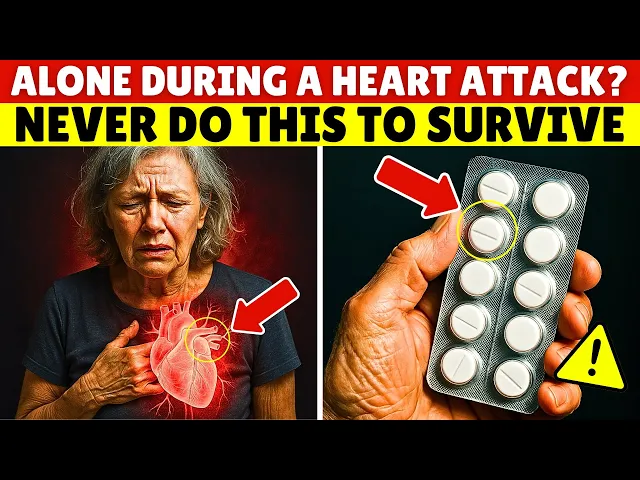
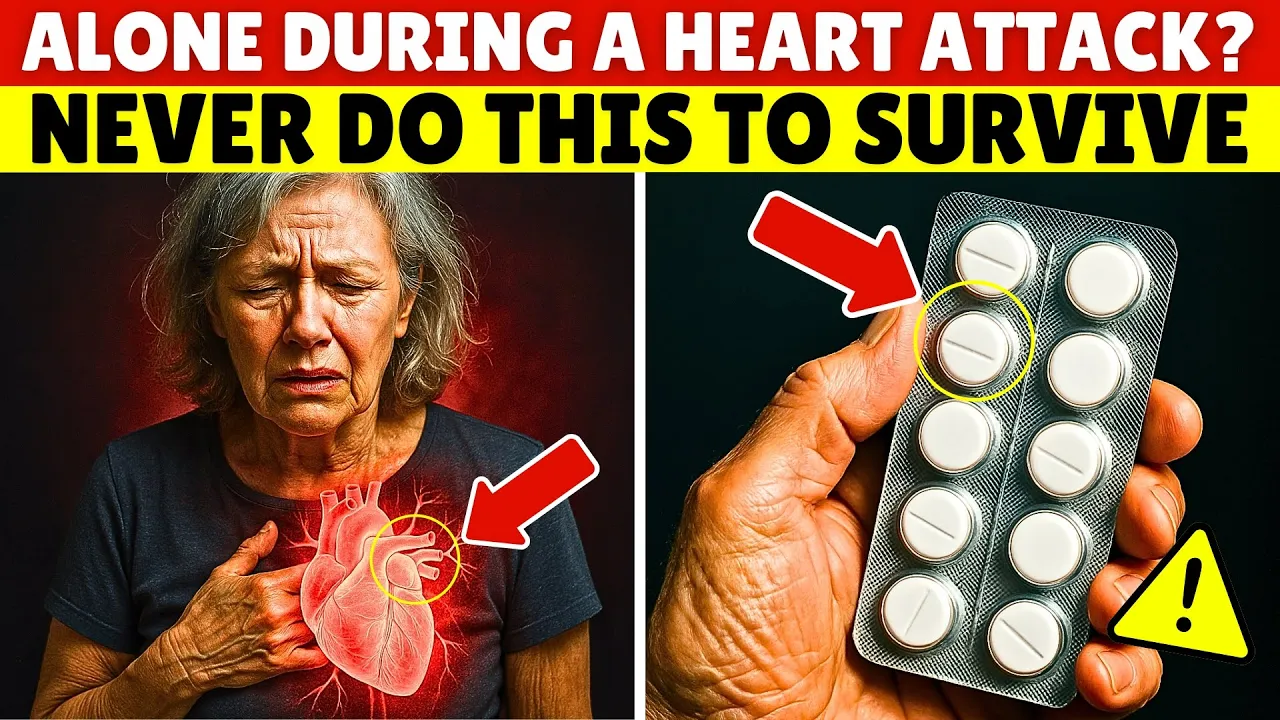
I've worked in emergency rooms for over 30 years, and I need you to hear me clearly. Most people over 60 will not survive their first heart attack if they're alone. That's not fear-mongering, that's fact.
Almost half of heart attack deaths happen before the patient ever makes it to the hospital. Why? Because they waste time.
They hesitate. They panic. They don't know the simple life-saving actions that can keep blood flowing long enough for help to arrive.
And the brutal truth is this. If you don't know these steps, you could be gone in minutes. Every single day I've seen patients carried into my ER who could have lived if they had just done one or two things differently at home.
A crushing pain in the chest, sudden breathlessness, dizziness, cold sweat, and by the time they arrive, the golden window has slammed shut. But here's the good news. There are sciencebacked techniques, simple actions you can perform right now, even if you're completely alone, that can double your odds of survival, not gimmicks, not myths.
Real strategies cardiologists teach their patients. In this video, I'll walk you through seven life-saving tips every senior must know to survive a heart attack when nobody else is around. These are the very steps I wish every patient in my ER had practiced before their attack.
And wait until you hear number three. It's so powerful. Research shows it can make the difference between permanent damage and walking out of the hospital alive.
Most people have no idea, but after today, you will. All medical references and scientific studies I mention are listed in the description below. Before we dive in, here's a quick question.
How old are you? Tell me in the comments. I personally go through and reply to every single one like it's a conversation in my clinic.
So, don't hold back. Now, without any further ado, let's start with number seven on our list. And it's the very first step that could decide if you make it out alive.
Number seven, call emergency services immediately. Don't wait it out. The very first and most critical action when you feel the signs of a heart attack is this.
Call emergency services immediately. Do not wait. Do not second guess.
Do not tell yourself, "Maybe it's just indigestion, or I'll see if it passes. " Every minute you wait, the damage to your heart muscle grows worse. Cardiologists explain it in simple terms.
Time is muscle. The longer blood flow is blocked, the more heart cells die and the less chance you have of walking out of the hospital alive. Research backs this up.
According to the American Heart Association, patients who call emergency services within the first 5 to 10 minutes of symptoms have survival odds up to 50% higher compared to those who delay. Yet, tragically, many seniors downplay their symptoms. Studies show nearly onethird of people over 60 wait more than 2 hours before seeking help, often because they don't want to bother anyone or believe they can tough it out.
That hesitation can be fatal. Picture this. A 68-year-old grandfather in Ohio felt a strange pressure in his chest one evening.
He told himself it was probably gasp, drank some water, and sat down a rest. He waited for hours, hoping it would fade. By the time his daughter found him and called 911, the damage was irreversible.
Doctors told the family that if he had called emergency services right away, he might have survived with minimal heart damage. That story repeats thousands of times every year, and it's preventable. So, if you're over 60 and you ever feel crushing chest pressure, sudden shortness of breath, unexplained nausea, or that eerie cold sweat, act as if it is a heart attack until proven otherwise, pick up the phone and dial emergency services without hesitation.
Even if it turns out to be indigestion, you've lost nothing. But if it is a heart attack, and often is you've just taken the single most important step to save your life, recognizing the urgency and making that call is the first act of survival. But while you're waiting for paramedics to arrive, what you do next can keep your blood moving and buy you even more precious minutes.
That leads us to tip number six, a technique proven to keep oxygen flowing when every second counts. Number six, shoe an aspirin if available and not allergic. Once you've called emergency services, the next move can be the difference between life and death.
Chew an aspirin, not swallow chew. Why? Because aspirin is not just a pain reliever.
is one of the most powerful clot fighting drugs you can get without a prescription. Heart attacks happen when a clot blocks blood flow to the heart muscle. Aspirin works by thinning the blood and stopping the clot from growing larger, keeping some flow moving until help arrives.
The science is clear. A landmark study published in the Lancet found that taking aspirin during a heart attack reduced the risk of death by 23% in patients. But here's the catch.
Speed matters. The faster it gets into your bloodstream, the faster it starts working. Swallowing an aspirin hole can take 10 to 12 minutes to break down in your stomach.
Chewing it breaks it apart instantly, allowing the active ingredient to absorb through your mouth and stomach lining within just minutes. In a situation where every second counts, those minutes can save heart muscle and save your life. One retired bus driver, 70 years old, was alone in his living room when he felt that crushing pressure in his chest.
He remembered his doctor's advice, reached for the aspirin in his cabinet, and chew it while calling 911. Paramedics later told him that simple action kept his blood flowing just enough to prevent major heart damage. He walked out of the hospital two weeks later alive and still independent.
But here's where many seniors go wrong. They either don't keep aspirin in the house or they hesitate because they're not sure if it's safe. If you have an allergy to aspirin, a bleeding disorder, or if your doctor has specifically told you not to take it, then skip this step.
For everyone else, keeping a bottle of uncoded aspirin in an easyto-reach place is one of the smartest emergency precautions you can take. Doctors usually recommend one full 325 mg tablet shoot at the first sign of a heart attack. Think of it this way, showing that one pill is like sending in a rescue team to slow down the disaster until reinforcements arrive.
It doesn't cure the heart attack, but it can stop the damage from spiraling out of control. Acting fast with aspirin keeps the odds in your favor. But surviving a heart attack alone isn't just about what you take.
It's also about how you move your body in those terrifying minutes. And that's where tip number five becomes crucial. Number five, loosen tight clothing and sit upright helps reduce strain on the heart.
When a heart attack strikes, every movement you make affects how much strain your heart must endure. One of the simplest yet most overlooked survival actions is to loosen tight clothing and sit upright. Seniors often underestimate how quickly restricted circulation and poor posture can make a bad situation worse.
Tight belts, waistbands, or collars compress blood vessels and make it harder for your body to circulate oxygen rich blood when it needs it most. Sitting upright relieves pressure on the diaphragm and lungs, making breathing easier and reducing the workload on your already struggling heart. This isn't just common sense.
It's backed by physiology. During a heart attack, your heart is desperate to pump oxygen through narrowed or blocked arteries. Lying flat forces the heart to work harder, especially in seniors with weaker lungs or pre-existing conditions like COPD.
By sitting upright, preferably at a slight angle with your back supported, you improve air flow into the lungs, lower pressure inside the chest, and allow blood to flow more effectively. A clinical review in the European Heart Journal emphasized that positioning patients upright during cardiac distress helps reduce pulmonary congestion. Basically, the buildup of fluid in the lungs that makes breathing feel like suffocation.
In other words, the way you position yourself can literally mean the difference between gasping for air and keeping calm enough to survive until help arrives. One 74year-old woman in Florida felt chest pressure while gardening. Instead of lying down in panic, she moved to a chair, loosened her gardening apron and waistband, and sat upright while waiting for the ambulance.
Her doctor later told her that decision likely prevented her from fainting and collapsing before paramedics could give her oxygen. That tiny adjustment kept her heart from collapsing under the strain. It's a step so simple that many seniors overlook it, but it matters.
If you feel those telltale signs, pressure, shortness of breath, or cold sweat, sit upright, relax your shoulders, and free your chest and waist from restriction. Think of it as giving your heart room to breathe. This adjustment buys you precious stability.
But to further improve your odds, you need to keep blood flowing to the brain and heart when circulation is under attack. That brings us to tip number four, a powerful physical action seniors can perform in those desperate minutes before medical help arrives. Number four, cough strongly if you feel faint.
Can keep blood flowing to the brain temporarily. It sounds strange, almost too simple, but in the middle of a heart attack, coughing, yes, coughing, can sometimes keep you alive long enough for help to arrive. Doctors call it cough CPR.
The principle is straightforward. When you cough deeply and forcefully, your chest muscles contract, your diaphragm compresses, and pressure builds inside your chest. That pressure forces blood out of the heart and into the brain, keeping you conscious when circulation is collapsing.
Now, let's be clear. Cough CPR is not a replacement for medical treatment, and it's not a cure for a heart attack. But it can buy you valuable seconds if you feel faint, dizzy, or like you're about to pass out before paramedics arrive.
Research published in the Journal of the American College of Cardiology showed that repeated strong coughing during cardiac arhythmias kept patients conscious and maintained blood pressure temporarily until emergency treatment could be given. In some cases, patients were able to remain alert for several minutes simply by coughing every 2 to 3 seconds. Imagine this.
A 69-year-old retired mechanic in Texas felt a sudden wave of dizziness during what turned out to be a massive heart attack. Alone in his workshop, he remembered hearing about cough CPR. He began coughing forcefully again and again and stayed conscious until paramedics arrived.
Doctors later said those coughs likely prevented him from collapsing and suffering brain damage before they could restart his heart. The science is simple. Fainting during a heart attack is caused by a sudden drop in blood flow to the brain.
By coughing hard, you create artificial heartbeats, almost like squeezing a pump with your chest muscles. It's not perfect and it won't stop the attack, but it keeps oxygen flowing to the brain long enough for help to take over. If you ever feel your vision narrowing, your head spinning, or your body going limp during chest pain, try this.
Take a deep breath, then cough hard and strong as if you're trying to clear your lungs. Repeat every 2 to 3 seconds until the dizziness passes or paramedics arrive. Think of it as manually keeping your heart in motion when it's struggling.
This unusual but powerful technique has saved lives. But once you've stabilized yourself, you also need to make sure oxygen is getting into your lungs effectively. That's where tip number three comes in.
Another simple but life-saving habit every senior should master. Before we go on, if you're getting value from this video, go ahead and tap that like button and make sure to subscribe and turn on the bell icon so you never miss out on powerful health tips like these. Number three, unlock your door and keep phone nearby so help can reach you quickly.
When a heart attack strikes, every second is precious. Not just for your body, but for the people trying to save you. One of the most overlooked survival steps is also one of the simplest.
Unlock your door and keep your phone within arms reach. It sounds small, but in a crisis, it can mean the difference between being found in time or being trapped behind a locked door while precious minutes slip away. Here's why this matters.
Paramedics are trained to break down doors if they have to, but every extra barrier costs time. And during a heart attack, time is muscle. Studies show that for every 10 minutes of delay in treatment, survival rates drop by nearly 10%.
Imagine losing those life-saving minutes just because help couldn't get to you quickly enough. Unlocking your door in advance removes that risk. A 73-year-old widowerower in Arizona learned this lesson the hard way.
He dialed 911 after severe chest pain, but collapsed on the floor before he could unlock his front door. Paramedics arrived within minutes, but had to waste precious time forcing their way inside. By the time they reached him, too much damage had been done.
Contrast that with the story of an 80year-old woman in Florida who unlocked her door, clutched her phone, and stayed in a chair by the entryway. Paramedics got in immediately, started treatment, and rushed her to the hospital. She survived with only minor heart damage.
The second half of this tip is just as critical. Always take your phone nearby, especially if you live alone. Too many seniors leave their phone in another room or plugged into a charger out of reach.
During a heart attack, even walking a few steps can cause collapse. Having your phone next to you ensures you can stay connected with emergency responders until help arrives. Some even recommend putting your phone on speaker so you can follow instructions without holding it to your ear.
Think of it this way. Your phone is your lifeline and your unlocked door is the bridge that gets helped to you faster. Together, they eliminate barriers and buy back time you cannot afford to lose.
Once the path for help is clear, the next step is about keeping your body calm enough to survive until that help arrives. And that's where tip number two makes all the difference. Number two, take slow, deep breaths lowers stress on the heart and oxygenates blood.
In the middle of a heart attack, panic is your worst enemy. When fear takes over, your body shifts into fight or flight, releasing a flood of stress hormones like adrenaline. This raises your heart rate, spikes blood pressure, and makes your struggling heart work even harder.
That's why one of the simplest survival actions you can take is also one of the most powerful. Take slow, deep breaths. Breathing deeply does two critical things.
First, it increases the amount of oxygen reaching your blood and brain, which are desperate for fuel when circulation is limited. Second, it signals your nervous system to calm down, lowering the surge of stress hormones that put extra strain on the heart. Research published in the Journal of Cardiopulmonary Rehabilitation and Prevention found that slow controlled breathing reduced heart rate and improved oxygen delivery, even in patients with advanced cardiovascular disease.
It's not a cure, but it gives your body a fighting chance while you wait for help. A 76-year-old retired nurse from Michigan described how she survived her heart attack by focusing only on her breathing. As the crushing pressure in her chest grew, she resisted the urge to panic.
She sat upright, closed her eyes, and began inhaling slowly through her nose, exhaling even slower through her mouth. By the time paramedics arrived, she was weak, but still conscious. Her cardiologist later told her that those steady breaths likely reduced the workload on her heart and kept oxygen moving to her brain long enough for treatment to begin.
Here's how to do it if you ever find yourself alone and in danger. Place a hand on your stomach, not your chest. Inhale deeply through your nose, feeling your belly rise.
Then exhale gently through pursed lips as if you're blowing through a straw. Aim for about six to eight breaths per minute, slow, controlled, and deliberate. This kind of diaphragmatic breathing not only helps the heart, but also keeps your mind focused when panic wants to take over.
Think of each deep breath as buying yourself more time. Time for oxygen to reach your brain, time for your heart to ease its workload, and time for paramedics to arrive. And if there's one more habit that ties all these survival tips together, it's the last and most critical one.
The action at number one that research shows can double your odds of survival. Number one, stay as calm and still as possible. Movement can worsen damage during an attack.
When a heart attack strikes, your first instinct might be to move to pace or even to try and walk it off. But that instinct can be deadly. The number one survival rule is this.
Stay as calm and still as possible. Every step, every sudden movement forces your weakened heart to pump harder. And during a heart attack, your heart is already fighting for its life.
By keeping your body still and calm, you reduce the strain, conserve oxygen, and give yourself the best chance of surviving until help arrives. Science explains it clearly. During a heart attack, blood flow through the coronary arteries is blocked or severely reduced.
Movement demands more oxygen from the heart muscle. But with its supply cut off, that extra demand only increases damage. A clinical study in the European Heart Journal found that minimizing exertion during acute coronary episodes reduced complications and improved outcomes.
In plain terms, seniors who stayed calm and still lived longer than those who moved around in panic. One 71-year-old farmer in Nebraska learned this firsthand. While repairing equipment, he felt crushing pressure in his chest.
His first thought was to climb back up the ladder to grab his phone. Instead, he forced himself to stay put and called for help where he was. Paramedics later told him that Stang still kept his heart from collapsing under stress.
He survived with far less damage than doctors expected. Calmness isn't just physical, it's mental. Panicking floods your body with adrenaline, raising blood pressure, and worsening the attack.
By focusing on staying still, and practicing slow, deep breaths, you lower that hormonal surge and help keep your body stable. Tell yourself, "I call for help. My only job now is to stay still and breathe.
" This mindset prevents rash decisions like trying to walk to the door or grab something across the room. Actions that can trigger collapse before help arrives. Think of your heart during a heart attack like a fragile engine running on fumes.
Every movement revs the engine faster and risks blowing it apart. Stillness, calmness, and conserving every ounce of energy is the key to buying time. This is the final most powerful habit.
Do less, breathe more, and let help reach you. Together, these seven tips form a survival map. And while you can't predict when a heart attack might strike, knowing exactly how to act can be the difference between tragedy and survival.
And there you have it. Seven life-saving tips every senior must know to survive a heart attack alone. From calling emergency services right away to shooting aspirin, loosening tight clothing, coughing when faint, unlocking your door, taking slow breaths, and finally staying completely calm and still.
Each action buys you precious minutes. minutes, they can mean the difference between life and death. Remember this, a heart attack doesn't always give you a second chance.
But if you act fast, think clearly, and follow these steps, you can survive and live to see tomorrow. The science is clear, but it only works if you're ready to act. Now, I want to hear from you.
Where are you watching from? And do you keep aspirin or another emergency plan ready in your home? Drp your answer below.
We read and reply to every single comment because your story matters and your survival tips could help someone else. Don't forget to like this video, share it with your loved ones, and subscribe for more life-saving advice. Stay safe, stay prepared, and remember, knowledge is power, especially after 60.
If you have any questions or want to share your personal experience, don't hesitate to leave a comment below. We're always listening. Thanks for watching.