Hey there and welcome to our live stream. Whether you're watching from home, on the go, or somewhere in between, we're glad you're here. At Harmony Hill, our mission is simple. Awakening people from death to life in Christ. And we believe that begins with moments just like this. coming together to worship, to hear God's word, and take steps toward Jesus. If this is your first time with us, or you're looking for a way to get connected, we'd love to hear from you. You can visit our website, scan the QR code on the screen, or send us
a direct message, and we'll be in touch. Today's services include worship through song, biblical teaching, and a chance to reflect on what God is doing in your life. So get comfortable, grab a Bible, prepare your heart. We're glad you're with us. Welcome to Worship on the >> Welcome to Worship at Harmony Hill Baptist Church. We're so glad that each and every one of you are here today. Um we are very very excited not just about today the Lord's day where we get to worship together and but this week is a huge week in the life
of our church. It is vacation Bible school. >> Yes. Yes. So nice room shot. So that's what this shirt's all about. Uh our theme is Jesus is the light of the world and it's all about shining his light and we are so excited. We have over 250 kids registered to come and hear the gospel. Yeah, that's exciting for sure. For sure. And we have over 150 workers. Uh, but we could always, I know it doesn't sound like it, but we can always use more because it is a big machine that we want to be available
for these children. The important part is that we want to shine the light of Christ in their lives. We want to share the gospel clearly with them. We want to make sure that they hear the truth. This week, our Bible teachers have been working and preparing to share the truth there. But you know what? all the way from snacks to crew leaders, worship leaders, everyone that's involved, it's all about Jesus. And that's what we have to remember. If you're interested in being a part, maybe um contributing some snacks or anything along those lines, you can
see myself, Trey, um I'm the interim children's family minister. I if I haven't met you yet, come meet me today. And then or brother Ben Stokes or any of our ch children's coordinators. Uh you can bring snacks to office, but if you want to volunteer, you can go online. That's another way to get connected. Um our new website is harmonyhill.urch. You can go there and find out anything you need to know. You can sign up. There's also uh today I want to go ahead and mention before I forget. In your bulletin, there's going to be
no announcement video. So in your bulletin, the front page, everything that's coming up here at Harmony Hill, you can find the details there. Um, I want to mention too, if there are any of you families that have registered your kid uh already for vacation Bible school, it's great to register ahead of time. Be watching for an email this afternoon for the details on uh exactly uh which crew, which group your kid is going to be in for the week. So, um they'll be prepared and you'll be prepared as well. Excuse me. I do want to
also I welcomed you in the beginning. I want to mention again that we are glad that you're here. Even if you're watching with us online, we're glad that you're joining us for worship today on the hill. There is a next steps card hopefully within arms reach of you sitting in the pew. So, if you look in front of you, that chair in front of you um or pew for those of you that want to call that a pew, there's a pocket and there should be a next steps card. I've discovered recently that there are some
people that attend for weeks, even months before filling one of these out. And that's okay. But it's important important to let God's family know that you're here and that you want to be a part. So, if you would take just a few moments to fill that out, you can place it in one of the offering bags when you leave the worship center or walk right across the mall into our Next Steps room. Find somebody. We've got a gift over there for you. we would love uh to connect with you and make sure that we are
doing the most we can for you and u there's a bunch of opportunities listed there and if you want more information I do want to say that we are wrapping up the series on David this morning so hopefully you've been here and um you're going to get to hear the last if not our sermons are online you could hear those as well let's pray father God we come to you now thanking you God for this time that we have to worship you in spirit and in truth. Father, I thank you for each and every person
under the sound of my voice and even behind the scenes that is here to glorify your name. Those that are online, Father, seeking truth, I pray, Father, that they would receive and that they would also have the opportunity to give of themselves. Father, we thank you, Lord, that we have this awesome opportunity this week in vacation Bible school. Father, what a ministry. Father, I pray for each and every children and the families represented in those kids as they come to these this this place, to this campus, to hear your truth, to celebrate your name, and
to hear the life-changing gospel of Jesus Christ. Father, I pray that you would soften their hearts and even begin to speak to them now. And Father, that you'd be with all the workers involved. You give them strength and endurance throughout the week. Father, those that are teaching and preparing, I pray, Father, that you would be with them. Your Holy Spirit would speak through them to these children and even to each other. And Father, for everyone, God, that will hear your truth this week. I pray that as you promised, it will not return void. We thank
you for your love for us. We thank you, Father, that you loved us enough to give us your son, Jesus Christ, that gives us eternal life. In whose name we pray, amen, Stacy, >> Trey, you know, this week is vacation Bible school week. The first song we're singing right now is going to be for all those who who teach. It's called The Battle Belongs to the Lord. In heavenly armor, we'll enter the land. The battle belongs to the Lord. Take courage, my friend. Your redemption is near. God is always near. We're here today to worship
him and to praise him because our God does have our lives in his control. We're going to stand together right now. We're going to begin with the battle belongs to the Lord. in heavenly armor to the land. The battle belongs to the Lord. No weapon that's fashioned against us will stand. The battle belongs to the Lord. And we sing gloryy honor, power and strength to the Lord. We sing glory on earth, power and strength to the Lord. When the power of darkness comes in like a flood, the battle belongs to the Lord. He's raised up
a standard. the power of his blood. The battle belongs to the Lord and we sing glory. Power and strength to the Lord. We sing glory honor. Power and strength to the Lord. When your enemy presses it hard, do not fear. The battle belongs to the Lord. Take courage, my friend. Your redemption is near. The battle belongs to the Lord. And we sing glory on earth, power, and strength to the Lord. We sing glory. Power and strength. We sing glory. We sing glory honor, power and strength to the Lord. We sing glory honor, power and strength
to the Lord. Our God is an awesome God. He reigns from heaven above with power and blood. Our God is an awesome God. Sing it again. Our God is an awesome God. He reigns from heaven above with wisdom, power, and our God is an awesome God. Our God is an awesome God. Our God is an awesome God. We come to God's presence. We enter his courts with thanksgiving and into his gates with praise. As I come into your presence, past the gates of praise, into your sanctuary, till we're standing face to face. I look upon
your countenance. I see the fullness of your grace and I can only bow down and say you are awesome in this place. Mighty God, you are awesome in this place of the father. You are worthy of all praise. To you our lives. You are awesome in this place. Mighty God. >> Everyone together please. >> As I come into your presence, pass the gates of praise. The progression horse standing face to face. I look upon your countenance. I see the fullness of your grace and I can only bow down and say you are awesome in this
place. Mighty God, you are awesome in this place of the Father. You are worthy of all praise. To you praise. You are awesome in this place, mighty God. Sing it again. You are awesome, God. You are awesome in this place, mighty God. Oh, you are awesome. You are awesome in this place. Father, you are worthy of all praise. To you are praise. You are awesome in this place. mighty God. >> Amen. You can have a seat as we move into a time of prayer. We've got two prayer prompts today. Uh number one, as today we
are taking the Lord's supper, I want to encourage you to take a few moments to just pray and ask God to prepare your heart for taking the Lord's supper, repenting of any sin, and just turning your heart towards him. And then secondly, tomorrow we kick off a big week here at the church with vacation bible school. Hundreds of kids will be coming and sitting in these very rows. And so would you take time to just pray that the Lord would use VBS this week to impact the lives of children? And so you take a few
moments to pray over these things and then the choir and orchestra will lead us in another song. I love you, Lord. Oh, your mercy fails me. And all my days have been held in your hands. From the moment that I wake up until I lay my head. Oh, I will sing of the goodness of God. All my life you have been faithful. And all my life you have been so so good. With every breath that I am able. Oh, I will sing of the goodness of God. I love your voice. You have led me through
the fire and in darkest nights you were close like no other. I've known you as a father. I've known you as a friend. Oh, I have lived in the goodness of God. All my life you have been faithful. All my life you have been so so everywhere I am. Oh, I will sing of your goodness around. Your goodness is running after. It's running after me. Your goodness is running after. It's running after me. With my life laid down, surrendered now. I give you everything. Your goodness is running after. It's running after. Join us in this
together. Your goodness is running after. It's running after me. Your goodness is running after. It's running after me. I lay down and surrender now. I give you everything. Your goodness is running after is running after me. >> And all my life you have faithful. And all my life you have been so so good. With every breath that I am, oh I will sing of the goodness of God. All my life you have been faithful. All my life you have been so so good. every bread that I am. Oh, I will sing of the goodness of
God. Oh, I see of the goodness of God. Praise to our great God this morning and his goodness to us. Amen. Good morning. >> Very good. Be good to be with you this Sunday morning as we worship and uh as we conclude our second part in the David series. We'll pick up with part three sometime next school year. Uh, but we're going to conclude 1 Samuel today looking at chapters 30 and 31. And if you're just joining us, let me give you a little background to where we are in David's story. We've been charting his
his journey from being anointed in front of his dad and his brothers by the prophet Samuel to be the next king after Saul. And then he is then brought into battle and he defeats the giant Goliath. And then he is brought into the king's palace, King Saul, until that point in which Saul becomes jealous and paranoid and angry. in fact angry enough to try to kill him on multiple occasions, which then begins a cat and mouse journey through the wilderness of Saul pursuing David and David having opportunities to strike down Saul, but refusing to touch
the Lord's anointed. In recent passages though, we've seen that David stopped looking to the Lord and began looking at his own heart, which then led him to find refuge in the land of the Philistines, the enemies of God's people. And in fact, David was anointed king of Israel, and he found himself on the precipice of battle, not on the side of Israel, but against Israel. But God allowed him a way of escape and the Philistine generals rejected David and they sent he and his 600 men home. And that's where we pick up today. And as
we look into this story, it is really a story about how do we respond to pressure? How do we respond to crisis? In fact, in chapters 30 and 31, we're going to have yet again a picture of contrast between David and Saul and how they both respond to pressure and crisis. I I don't know if you've ever seen a video of someone that has a watermelon and they're continuing to put rubber bands on that watermelon. How many of you have ever seen a video like this? It It's pretty uh intense because they will keep adding
rubber bands until the pressure from those rubber bands explodes the watermelon. And typically on average, you've got to get to about 4 to 500 rubber bands in the middle of that watermelon. And every time you put it on, you see them run away because they're afraid it's going to blow up in their face. But what we're what you're looking at in one of those illustrations is what pressure and stress can do until ultimately whether it's 400 rubber bands, 500 or a thousand, if it's just a really sturdy watermelon, eventually there will be one rubber band
too many and it will explode. And don't many of us feel like that in life sometimes that it just feels like the rubber bands just keep getting placed around our life and we just keep wondering how many more can I take before I pop. Both David and Saul find themselves in pressure cooker situations, but we're going to see a big contrast in how they respond. And so with that, I'm going to read the first six verses of chapter 30 of 1 Samuel, and then we're really going to be taking a look at the next two
chapters. But this is what is written. Now when David and his men came to Ziglag on the third day, the Amalachites had made a raid against the Ngev and against Ziglag, they had overcome Ziglag, burned it with fire, taken captive the women and all who were in it, both small and great. They killed no one, but carried them off and went their way. And when David and his men came to the city, they found it burned with fire, and their wives and sons and daughters taken captive. Then David and the people who were with him
raised their voices and wept until they had no more strength to weep. David's two wives also had been taken captive. Ahanoam of Jezrael and Abigail, the widow of Nabal of Carmel. And David was greatly distressed, for the people spoke of stoning him, because all the people were bitter in soul, eat for his sons and daughters. But David strengthened himself in the Lord his God. There's three contrasts I'd like for us to look at between Saul and David and the pressure they're under today. Here's the first point. Number one, crisis can be a window to the
soul. Pressure and crisis sometimes gives us a picture and a window into our own soul. So, let me set the scene again for David. They just avoided having to go into battle against Israel, having been rejected by the Philistine generals. They now make the 50-60 mile journey home to Ziglag, which again is a city in Philistine territory. They get home to discover while they've been away, the Amalachites, another one of the enemies of God's people, has come in. They've made a raid on Ziglag. They've burned it to the ground, and they have taken all of
the women and children. Now, one good piece of news is we're told that none of them were killed, but they were all taken. And the reason they were probably taken was not just out of mercy, but because they wanted to sell them into the slave market. The men come home to find this. Their city burned, families gone. David as the leader feels the weight because remember when he looked at his heart and decided to go into Philistine territory, it was probably because he was concerned about the women and children having to roam around in the
wilderness and he thought this will be a safe place. And now it's not a safe place and they're gone and they have no idea where they have been taken. Not only that, but as the leader, David begins to hear murmuring and grumbling that begins to grow louder because his 600 men that have followed him everywhere have gone from grief to bitter to anger to blame. And they're beginning to say, "Let's stone David. He's the one that brought us here. He's the one that let us leave our families, telling us it would be safe. He's the
one. He is the one to blame. If we had never followed David, this would never have happened." And they start picking up rocks and going, "We've got to do something." David is facing crisis. not only for his men but his own family has been taken. And so he too is in grief. He too is probably questioning all of his decisions. But the Bible tells us what David did. the window into David's soul. When pressure came, when the rubber bands were being added to his life, he found strength in the Lord his God, which is actually
the first time that David has sought the Lord since about chapter 23. But he knows where his source of strength must come from. Meanwhile though, if you were to jump ahead to chapter 31, so th chapter 30 and 31 are almost happening as if they are simultaneous events happening on the same day almost from the the writer's perspective. So if we jump forward, Saul, just a reminder where he's been, he has seen the Philistine army camped out. He has been fearful. He went and consulted a medium and brought up the prophet Samuel to find out
what he should do. And he was told by the prophet Samuel, "You are going to go into battle. Israel will lose and you and your sons will die." And now Saul is in that battle. The Philistines make their raid and the Israelites are getting whooped. In fact, they are fleeing the mountain, fleeing their camp. And we find out that Jonathan, Saul's son, and two other brothers are killed in the first wave of the attack. And then we find out that archers from the Philistines have pinned Saul and his armor bearer down. And in fact, one
of the archers has wounded Saul. He's facing crisis. He knows we're going to lose this battle. His family has already paid the price. Israel is scattering. He has been fearing this moment and fighting against this moment for multiple chapters ever since God said, "I will take and pull the kingdom away from you." He has done everything in his power to not let it happen. And now crisis has fallen on him and a window into Saul's soul. Instead of turning and repenting to the Lord, he turns to fear and he turns to his armor bearer and
he says, "Kill me because I don't want the enemy to come and abuse me." And so the contrast here from these first opening uh verses of each chapter, the contrast is David turns to faith while Saul turns to fear. And then here's the truth. A crisis does not create your foundation. It reveals it. And this is really the point when we look at the whole of First Samuel. We see Saul. We see Saul as one who is arrogant and prideful and does not wait on the Lord and refuses to repent, tries to do things in
his own strength, refuses to submit and hand the kingdom over to David. The foundation for fear has been built over all these chapters. It didn't just come up in chapter 31. And David, yes, even though he had been in Philistine territory, the foundation for faith though goes all the way back when he was a shepherd watching his father's sheep. When he said that when the lion and the bear came after his father's sheep, that it was the Lord who delivered them into his hand. And then when he faced Goliath, it will be the Lord that
delivers him into my hand. And then it was the Lord that he leaned on instead of striking Saul himself, but said, "I will not touch the Lord's anointed, but I will let the Lord handle my reputation." And now with his men turning on him, his family gone, his city in shambles, the foundation was not just created in chapter 30. It's been built through all the chapters leading up to it. So there's a question here in the outline. Where do you instinctively run when pressure hits? What foundation are you building in the chapters of your life
that when pressure and crisis comes? Will faith be what comes out or fear or something else? Where do you turn? What when the rubber bands of life start squeezing on you, what comes out? anger, bitterness, blame, or do you find your strength in the Lord? Which leads us to the second lesson about crisis and pressure. Crisis shapes the kind of person we become. Crisis shapes the kind of person we become. And so back to chapter 30, David, he finds his strength in the Lord. He calls for the priest, Abathar, and he brings him and he
says, "Let me inquire of the Lord." And so they get the ephod, which has the the two stones that they're able to discern God's will as according to the first five books of the Old Testament. And he asks, "Can I go and chase after my family? Will we have success?" And through the prayer and through the discerning with the priest, the Lord responds to him and says, "Yes, you can go after them and you will overtake them." And so he goes and he rallies the men who were just talking about stoning him. And he says,
"Let's take that aggression. The Lord has told us, let us go after our real enemy." And he rallies the men and they begin a march in the direction to the Amalachite home. Now, for 3 days, they've just covered 50 to 60 m from the front lines of the Philistine battle to Ziglag. And now, they've gone an additional 15 miles. And they get to this brook of Bazor. And 200 of the 600 men say, "We should have done more cardio training. We cannot go on. We are exhausted." And David says, "Stay with the stuff. Stay with
the baggage. stay with all the extra supplies and the 400 of us will move on. And so they begin to move on. But then they run across a near dead Egyptian and they bring him to David and he is dehydrated and hungry and had been left for dead. And David, even in the midst of a high pressure situation, even in the middle of trying to get to his family, in the middle of all of that, they bring this Egyptian slave and they give him food and water and show him compassion. You can almost see the
good Samaritan story. And they bring him and nurse him back to health. And David begins to inquire. He's looking for information as well. He says, "Tell me, where have you been?" And he says, "I was with the Amalachites when we were doing all of our raids, and we even burnt the town of Ziglag, but then I got sick and they just cast me aside, left me for dead." Now, David has just found out that this man was part of burning his city and kidnapping his children and his wife and all of the men's families. You
would think, many of us would think we just wasted some raisins because gone. But David says, "Will you lead us to where they are?" Now, this Egyptian servant was at least wise enough to say, "I will do it as long as you don't kill me and you don't leave me with them." And apparently David agrees to this. And then they go and they find the Amalachites in the middle of a party celebrating their their victories over the land of the Ngev. And then they camp out and they wait till dawn and at first light they
go and they battle the Amalachites all day until it is a total and utter victory. Every one of their family members recovered unharmed, unheard. All of their possessions retained along with even more possessions because the Amalachites didn't just raid Ziglag, they raided an entire region. Now they have even more things and David is now the hero. But I want I want to just circle back for a moment. In the midst of pressure and crisis, David still showed compassion on his men that were too tired to move on on a foreign Egyptian who had been left
for dead. They nursed him back to health. He then showed courage to go in to battle. I mean, these are characteristics in the middle of crisis and pressure that speak to the character of David. Speaking to what God can do in us even in the midst of pressure and crisis and stress. Now, let's look over at Saul again in chapter 31. He's just turned in the middle of these arrows flying out and he turned to his armor bearer and said, "Kill me. Kill me." And his armor bearer is afraid. Maybe he's been close enough to
Saul all these years and he's seen David say, "I'm not touching the Lord's anointed." And he's going, "I mean, I know this is a bad situation, but I just really don't want to do this." And so then Saul takes his own life. And here's the contrast. In the midst of crisis, David became a leader while Saul became a tragedy. David became a leader. And Saul became a tragedy. And here's the truth. Even in the midst of crisis and pressure and stress, God can produce courage, wisdom, and compassion. Even in pressurefilled seasons, how many times out
of our own mouths or the mouths of others have we tried to make excuses for bad behavior and just saying stress or I'm under a lot of pressure right now. See, when we have a foundation of faith, it doesn't mean that we'll be perfect. And David has not been perfect and he won't be perfect. But there is still God's hand on us to bring compassion, wisdom, and courage. Because I I cannot believe that there's anyone under the sound of my voice, whether in this room or watching online this morning, that you would say, "I'd really
like my story to be like Saul and end in tragedy. I I'd really just, you know, if I could just write my script and my story, chapter 31, that's my favorite chapter of the Bible. I doubt there's anyone here that would say that. But when we do not follow the Lord faithfully, when pressure comes, tragedy is around the corner. And here's the question. When pressure rises, what comes out of you? Is there still compassion? Is there still wisdom and courage to face what's in front of you? Or is it fear and anger and blame that
leads to tragedy? Fire is often a metaphor for when we go through a trial. I'm walking through fire right now. But you know as well as I do that fire when it comes up against wax melts. But when fire is applied to clay, it can be forged into something useful for the kingdom. What comes out of you? What comes out of me when pressure rises? Which leads me to the third point this morning. Crisis can position you for kingdom impact. crisis can position you for kingdom impact. So, let's jump back to chapter 30 with David.
They have had this huge victory. The same guys that were grumbling and ready to stone him are now saying, "This is David's win. These are David's spoils." And they have all this loot, all this herds of sheep and cattle, and they've got all their families back. And they're making their way back home. They get back to the the brook of Beazor where the 200 who got tired after basically 75 miles in four days are waiting with the extra stuff and they're celebrating and David comes in and checking on their welfare. How are you guys doing?
But then all of a sudden some more grumbling pops up. Some of the men who had fought are looking at the 200 who did not risk their lives, who have stayed by the brook. It's almost like they've been on vacation at the resort by the creek and they're going, "You know what? I don't think that they should receive any of the spoils. They can have their wives and family back, but nothing else." And in fact, the Bible describes that these men who put forward that recommendation describes them as wicked. said, "Some wicked men made the
suggestion that those who stayed at the creek should not receive anything but their wives and their children back." Now, think about this for a moment. Some of what was captured by the Amalachites belonged to the 200. Some of their goods, some of their treasures, some of their possessions were taken and now won back by the 400. And they're saying, "I know that that was your grandma's signant ring, but you didn't fight, so I'm keeping it now. I know that was like your kid's favorite toys, but we're the ones that fought for it. Make some new
toys. I know that was your favorite dress and tools or whatever it may be." But hey, be happy you've got your wife and your kids back. We We'll handle. You can see me slinging that hammer around and just know that's because I fought and you didn't. This is the tension. But then David seeing this tension back and forth steps into the middle of it and he says this was the Lord's victory. In fact, all that we have gained back is a gift from the Lord. Essentially saying we did not earn this. This was given to
us by God. And so I'm making a new rule that whether you go and fight or whether you stay by the things, everyone will share in the spoils equally. And then the writer of 1 Samuel says, "And that has been the case all the way up until this very day." The day of the writing of First Samuel, David becomes a unifier on the heels of crisis and pressure. He becomes a unifier. And then he takes even some of the spoils of war. And chapter 30 concludes with this sort of uh couple of verses where David
begins to send out some of the some of the plunder to cities in Judah. And what he's doing is he's beginning to build a network. He's beginning to rebuild allies back home. And in fact, when we pick this up next year, we'll see that where he sent this plunder in those cities, they are the first ones to recognize him as king. David is becoming a leader and a unifier behind God. Now again, chapter 31, hopefully no one's favorite chapter in the Bible. Saul having died. The Bible then tells us that all the other Israelites around
heard that Saul had died, that the Philistines were on the attack, and they abandoned their cities and had to scatter. And the Philistines moved into their homes. Here's the contrast. David became a unifier while Saul left people scattered. On the heels of crisis, David unified people to the Lord's purposes. And Saul's tragic ending left people scattered, aimless, directionless. Here's the truth. In God's hands, your response under pressure can positively impact everyone connected to you. Have you ever had an interaction with someone? Maybe it was personal or maybe it was from afar and they were going
through crisis but they were doing it not out of fear but in faith. Maybe it was a health crisis, a family crisis, a job crisis, a money crisis, whatever it was. But they were going through it and they were leaning on God and you looked at them or other people around them had their faith bolstered because they saw them walking in faith even in the midst of pressure. All these rubber bands just continuing to be added to their life. And everybody's going, they're about to pop. And yet they found their strength in God and everyone
around them could not could not question their faith or their God. This is what David has done. He does not take credit himself. He points all the credit to God. Everything we receive back was from God. And he sends these gifts out as a share of what God has done. and he begins to unify a nation on one corner of the map while Saul in his pride and arrogance and refusal to repentance ends up in fear and tragedy and his nation that he was supposed to be leading is fracturing and scattering. Don't you want to
be someone that God can use to be a unifier, not a scatterer? The application question for this section. Does your response to pressure point people toward God or away from him? And then I'm going to conclude and we're going to move into the Lord's supper. But there's one last little section of chapter 31 that I want to mention. The book of 1 Samuel ends on sort of a dow note, particularly as it pertains to Saul. Couple of weeks ago, I mentioned Star Wars, and I know some of you don't care about that at all, but
some of you do. But you may remember in the original trilogy that the second movie, The Empire Strikes Back, ends on a negative note. It feels like the Empire has won. That's sort of how 1 Samuel ends, but with a little glimmer of hope. See, Saul is dead. The Philistines, chapter 31 tells us, the next morning, they go out and they're looking over the battlefield and lo and behold, somebody got Saul. There's his sons. And because it's Family Sunday, I'll let you read exactly what happens there because that's not in the kids Bible. But they
take Saul's body and they hang they put him up on a wall in one of the towns as sort of a we defeated him. It's a shaming. But then the chapter and the book of 1 Samuel ends with this group of men from Jabesh Gilead. They're described as some valiant men heard that Saul had been shamed in this way. And they sneak out in the cover of night and reclaim his body and his son's body and give them a proper burial. And it seems like maybe just a a note about, you know, Saul being honored
even in his tragedy and disgrace. But if I could rewind about 20 chapters earlier before Saul had the kingdom torn from him, the potential that Saul had was at Jabesh Gilead. They were surrounded and the Philistines were ready to attack and they said, "You can give yourselves up." And they said, and I don't even understand this in war, but they said, could we could we phone a friend before we give up? Can we phone a friend and just send a messenger to see if anybody will help us? And I guess out of the arrogance of
the enemy, they said, "Yeah, do that. Call call your friend. We'll give you just like, you know, a couple days." And Saul heard that they needed help at Jabashes Gilead. And he rallied an army and came and defeated the enemy and liberated Jabes Gilead. And then all these years and chapters later, some men who had seen Saul's potential rose up to honor him one last time. And while that's a nice story, it's really a reminder of potential squandered. Potential squandered because Saul refused to repent and follow God. As we get ready to take this this
Lord's supper, sort of in front of us is this contrast, David and Saul. David is the forerunner of what a king for God's people could look like. A foreshadowing. He wasn't perfect, but he pointed to the New Testament, to the Messiah, our true king, our perfect king, our holy king, Jesus Christ, the ultimate unifier, the ultimate example of what it means to find strength in the Lord our God. And he humbled himself even to the point of death on a cross to pay our penalty because on our own we respond with fear and tragedy and
scattering. But when we trust Christ, that is how we can respond in pressure with faith, with wisdom, compassion, and courage even in the midst of the rubber bands of life squeezing us. And we can be a unifier for the kingdom rather than one who brings division. It is through Christ. And as we get ready to take this supper, it's a reminder. Are we going to be like David and find our strength in the Lord Jesus Christ or like Saul? Are we building a foundation that leads to fear, tragedy, and division? If you're here today and
you've never repented of sin and trusted Christ for salvation, that invitation is open to you. Doesn't matter what you've done, you can repent and turn to him. After our service, I'll be up here at the front. Would love to connect with you about that. You can go to our next steps room. If you came here with a believing friend or family member and you're more comfortable asking them questions about what it means to follow Christ, by all means, talk to them. Just let today be the day of salvation. And then for the rest who are
already believers in Christ today, let us let us respond in faith with compassion and with unifying actions and words and attitudes for the kingdom. And part of that is to take the supper today. I'm going to invite the deacons to come forward and Stacy and his team to come forward to get prepared as I give just a few instructions here. If you're here today and you've not asked Christ to be your savior, if you would not identify with a Christian, if you're not sure even what that means, then I'm going to ask you to not
take this supper. the the Bible clearly teaches that this is for those who are believers, those who are Christians, those who have been saved by Christ. And so if that does not describe you today or describe your children, would you just honor this act of worship and pass pass the the elements by? That's okay. We won't look down on you. We would appreciate that that act of earnest. And then secondly, if you were in the time of prayer today, if the Lord brought something into your heart that indicates even if you are a believer that
there's some sin or there's some reason that that you should not take the supper today, I just want to encourage you out of obedience to the Lord to also just pass the elements by and use that as a reminder to go and make things right to either repent or to go to talk to someone, whatever is needed. But then for the rest, we're going to take the the supper together and and worship him. And Pastor Ross will come up and lead us in in taking it after it's been distributed. Um I'm going to pray for
us. If you do need gluten-free option, this mic down here has that. He'll be walking around. Just wave him down. Otherwise, you'll be passed both the bread and the cup stacked together in the same thing. And then wait until Pastor Ross comes up and we'll take that together. All right, let's pray and then gentlemen, if you'd serve the church. Father, thank you for the picture and the contrast of David and Saul. So clarifying, Lord, we want to be people of faith, even in the midst of pressure and crisis. God, build a foundation for each of
us, of faith, not fear. Lord, help us to respond not with destruction and tragedy, but with leadership, wisdom, compassion, and courage. Lord, unify us today as we take this supper, as we are one, as we are united together under the blood of Christ. Lord, may we do this as an act of worship to you. It's in Jesus name. Amen. Heat. Heat. Heat. Heat. Heat. Heat. Heat. Heat. Heat. Heat. Heat. Heat. We know as we come to celebrate the Lord's supper that this is a time that was started in Exodus when God called his people out
of the kingdom of Egypt and he made a way for them out of the darkness of that kingdom. And then Jesus gave its special meaning when he was preparing to go to the cross for our sins and for your sins and my sin. And he made it a special meaning. He took the Passover and he said uh this that Paul gives us in 1 Corinthians. For I receive from the Lord what I also delivered to you that the Lord Jesus on the night when he was betrayed took bread and when he had given thanks, he
broke it and said, "This is my body which is for you. Do this in remembrance of me. And in the same way also he took the cup after supper, saying, "This cup is the new covenant in my blood. Do this as often as you drink it in remembrance of me." Let's pray. Father, we thank you that you are a God who delivers. You are a God who sees our sin and sees everything that is within us. And you still say, "These are my people who I've called by my name." And you deliver us from a
kingdom of darkness to the kingdom of light. We thank you that you are a God who sees, who delivers, and who draws us in to worship you on Sunday and in our lives throughout the rest of the week. And we thank you that you are a God who will follow us out of this church building today as we seek to bring that same hope and peace to a world that is lost and is dying without you. We pray this in Jesus name. Amen. >> Instruction then we're going to sing a final uh chorus and be
dismissed. Number one, it is our habit to take uh a benevolent offering on the days that we take the Lord's supper to help meet needs of those either in our church or locally. If you want to give to the benevolent offering, you can do so by using the the wooden boxes at the door. Uh and then your regular tithes and offerings go into the bags which will be held by the guys at the back. Secondly, I wanted to inform uh you as the church that our uh our middle school minister Kyle Croll has taken a
position in Kansas which allows him and his wife to be closer to family. Uh, and so he and his wife uh, Brandy are going to be at the family lounge out here. I hope you'll stop by after the service and just thank them for their time of ministry and encourage them on their way. Uh, Stacy, if you would lead us in a final chorus and we'll be dismissed. >> To God be the glory. Great things he has done. Let's stand together as we sing this verse and then the chorus. >> To God be the glory.
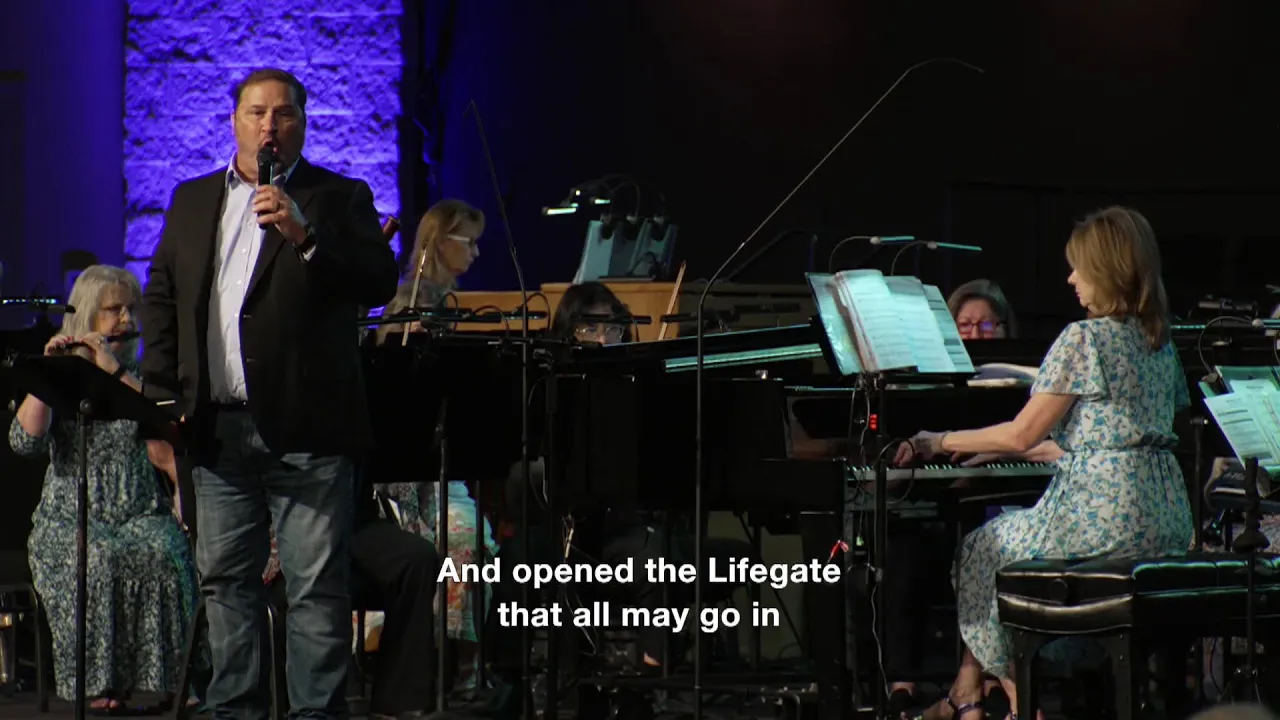
Great things he has done. Oh ye the world that he gave us his son who yielded his life and atonement for sin and open the lifegate that all may go in. Praise the Lord. Praise the Lord. Let the earth hear his voice. Praise the Lord. Praise the Lord. Let the people rejoice. Oh, come to the Father through Jesus the Son and give him the glory. Great things he had done. Amen. Have a wonderful day in the Lord. Thank you so much for joining us for worship today. We're glad you were here. Again, at Harmony Hill,
our mission is awakening people from death to life in Christ. And we believe God is at work in every heart, in every home, and every screen tuning in. Hey there, and welcome to our live stream. Whether you're watching from home, on the go, or somewhere in between, we're glad you're here. At Harmony Hill, our mission is simple. Awakening people from death to life in Christ. And we believe that begins with moments just like this. Coming together to worship, to hear God's word, and take steps towards Jesus. If this is your first time with us, or
you're looking for a way to get connected, we'd love to hear from you. You can visit our website, scan the QR code on the screen, or send us a direct message, and we'll be in touch. Today's services include worship through song, biblical teaching, and a chance to reflect on what God is doing in your life. So, get comfortable, grab a Bible, prepare your heart. We're glad you're with us. Welcome to Worship on the