Imagine that you’ve been unemployed and seeking work for months. Government benefit programs have helped you cover rent, utilities, and food, but you're barely getting by. Finally, you hear back about a job application.
You receive your first paycheck in months, and things seem to be turning around. But there’s a catch. Your new job pays just enough to disqualify you from the benefit programs, and not enough to cover the same costs.
To make things worse, you have to pay for transportation to work, and childcare while you’re at the office. Somehow, you have less money now than when you were unemployed. Economists call this demoralizing situation the welfare trap— one of the many different poverty traps affecting millions of people around the world.
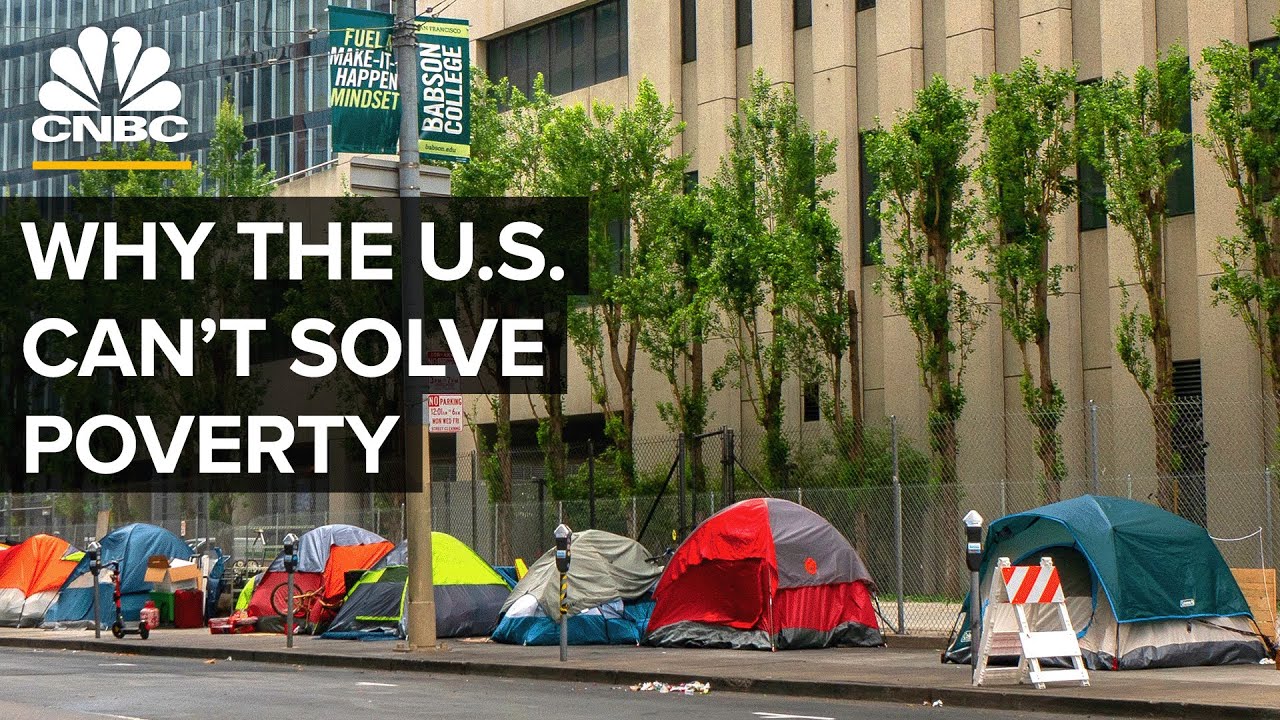
Poverty traps are economic and environmental circumstances that reinforce themselves, perpetuating poverty for generations. Some poverty traps are tied to an individual’s circumstances, like a lack of access to healthy food or education. Others can affect entire nations, such as cycles of corrupt government or climate change.
But the cruel irony of welfare traps in particular is that they stem from the very policies designed to battle poverty. Most societies throughout history employed some strategies to help people in poverty meet basic needs. Before the 20th century, religious groups and private charities often led such initiatives.
Today, these are called welfare programs, and they usually take the form of government-provided subsidies for housing, food, energy, and healthcare. Typically, these programs are means-tested, meaning that only people who fall below a certain income level are eligible for benefits. This policy is designed to ensure aid goes to those who need it most.
But it also means people lose access as soon as they earn more than the qualification threshold, regardless of whether or not they're financially stable enough to stay there. This vicious cycle is harmful to both those in poverty and those outside of it. Mainstream economic models assume people are rational actors who weigh the cost and benefits of their options and choose the most advantageous path forward.
If those in poverty know they'll gain no net benefit from working, they're incentivized to remain in government assistance. Of course, people work for many reasons, including societal norms and personal values. But income is a major incentive to pursuing employment.
And when less people take on new jobs, the economy slows down, keeping people in poverty and potentially pushing people on the cusp of poverty over the edge. Some have suggested this feedback loop could be removed by eliminating government assistance programs altogether. But most agree the solution is neither realistic nor humane.
So how can we redesign benefits in a way that doesn't penalize people for working? Many countries have tried different ways to circumvent this problem. Some allow people to continue receiving benefits for a given period after finding a job, while others phase out benefits gradually as income increases.
These policies still remove some financial incentive to work, but the risk of a welfare trap is lower. Other governments provide benefits like education, childcare, or medical care equally across all their citizens. One proposed solution takes this idea of universal benefits even further.
A universal basic income would provide a fixed benefit to all members of society, regardless of wealth or employment status. This is the only known policy that could entirely remove welfare traps, since any earned wages would supplement the benefit rather than replace it. In fact, by creating a stable income floor below which no one can fall, basic income might prevent people from falling into poverty in the first place.
Numerous economists and thinkers have championed this idea since the 18th century. But for now, universal basic income remains largely hypothetical. Although it's been tried in some places on a limited scale, these local experiments don’t tell us much about how the policy would play out across an entire nation— or a planet.
Whatever strategy governments pursue, solving the welfare trap requires respecting people’s agency and autonomy. Only by empowering individuals to create long-term change in their lives and communities can we begin to break the cycle of poverty.