hi so today i would like to discuss little bit more about the concepts and practices of seed quality in fact seed quality assurance and before we go into it we would like to tell you that what exactly are we achieving here so after this module you will be able to understand the modalities of seed quality assurance you can set up and manage your own field inspection team and also you can set up and manage a c testing laboratory so that's what exactly we are looking for in this discussion so if you have any more questions
or any other detailed discussions regarding that we can talk about that uh surely so just wanted to tell you what are the basic points of seat politician so during the seed quality assurance that you have already seen in the earlier lectures uh seed quality assurance is a third party assurance system so there what do they do so they do first of all the seed source certification the seeds coming from a verified source others had the seeds been produced in the right way are the seeds which are being used for the seed production is having a
very high quality or not these things we need to verify if the seed source is verified next is the field inspections we need to see exactly are the seeds which are being produced now are being produced in the right way or not by scientific way or not then we have to go for the seed testing so after the seeds have been produced they have been assured in the field by sealed infection to just check out that if everything is has gone in the right way we take a sample and do the seed testing we will
be elaborating on these two and then finally we have the varietal purity testing so after the seeds have been produced already they have been tested for germination moisture and all these we need to see that if the genetic purity of the varietal purity is correct or not so in the seed quality assurance in today's discussion we will be a little bit focusing on the field inspection and the seed testing so that's the main fundamental thing that we are going to do here so talking about now the field inspection there are certain objectives so first of
all we need to verify the seed source we need to monitor crop and cultivation conditions we need to ascertain the isolation distance so that the varieties that are being grown are at a current isolation from the other varieties so that there is no admixture we need to monitor the of types are there enough types within the plots that we are growing the seeds we need to monitor the objectionable diseases are there some objectionable seed bone diseases inside it so we need to check it so we also need to oversee the contamination during harvesting so at
the time of harvesting the seed inspectors who are whoever are in charge of doing it they will also see that are the seeds are harvested in the right way are the seeds two varieties are being harvested very close to each other so there can be a mechanical atmosphere so these things are always checked so now we come to the field inspection methods first question is when actually a seed field is collected a number of times and this number depends on the crops that we are dealing with and normally there are three mandatory inspections three mandatory
times where which you have to do this field inspection first is that sewing where you verify a lot of things i'll be explaining soon at the time of flowering because that's the time the flowers are exposed to other foreign pollen grains so at the time of flowering and then at the time of harvesting when there is a huge chance of when many crops or many varieties are harvested at the same time we need to see that if there is a mechanical admixture so these are the primary things that we are looking for so now we
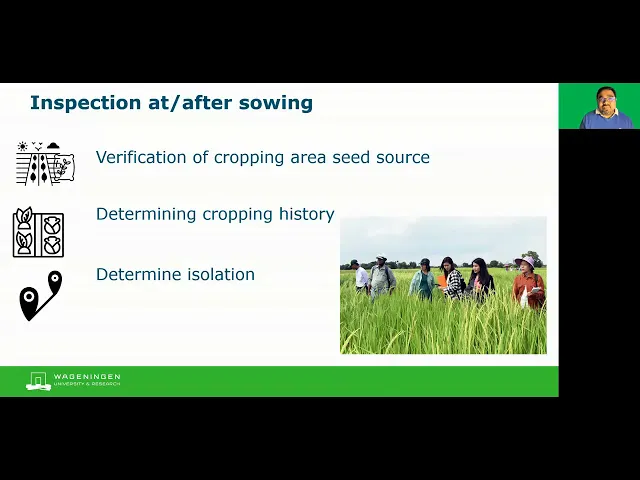
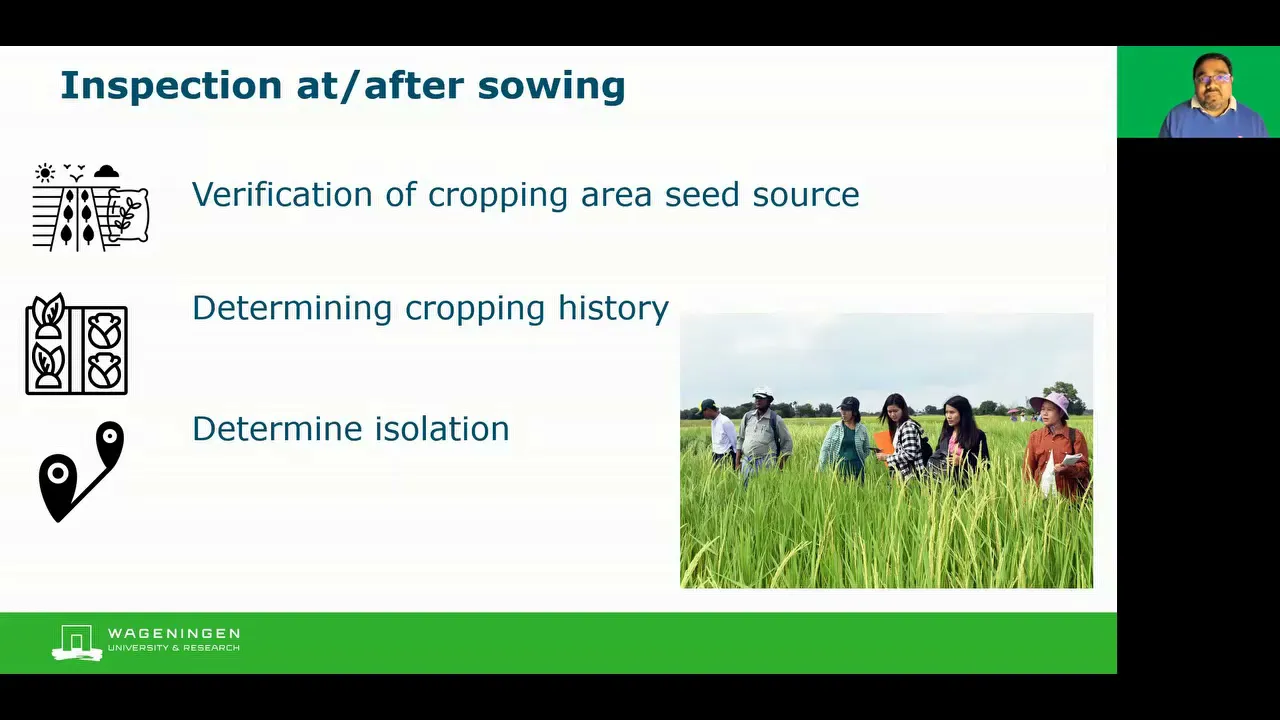
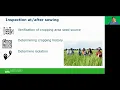
will look into the inspections the field inspection that is done during the time of the sewing so what are the things that are being taken into account so primarily first of all verification of the cropping area and the seed source so from where the seed has been purchased either the foundation seed or the registered seed wherever they have been purchased have they been purchased from a authentic source was it up do they have purchase labels they have to purchase purchase orders or something like that so that you can verify them and then you have to
verify that cropping area the cropping area means is the land that has been already applied for is the correct is there any error in calculating the area of the land so all these things are verified then we have to check out the cropping history this cropping history determination is extremely important there is a concept called volunteer plants so volunteer plants are the crops same crops or different crops which were already there in the last cropping season and some seeds may be there already in the soil and after when you saw this new seed crop these
these crop seeds will germinate and they will also come up and they will ultimately contaminate the whole seed so it is already it's it's always necessary to determine what we are the cropping history what crop was grown earlier so normally what happens is that a field is outrightly rejected if the same crop of a different variety was grown in the in the earlier season so this is already done so that there is no chance of error of any kind of admixtures then we have to determine the isolation so after the seeds have been seed crop
has been shown in the field we have to check the isolation now why isolation now isolation is normally done so that there is no contamination of pollen from other crops or other varieties coming into this this crops so what happens is that if if they are not isolated they are very close by the pollen grains will travel after the pollen grains will travel then in the next generation there will be a mixture of the varieties so the variety that has been designated or it is growing in the next seasons or in the subsequent generations they
will be totally broken down so that's why we have today we have to get isolation now there are isolation distances are already specified in the international sea testing association manuals as well as the as well as many other uh seed certification manuals so for every crop depending on how far the pollen travels the isolation distances are maintained so i'll give an example right for uh wind pollinated crops self-pollinated wind pollinated crops like wheat and rice the isolation distance is 3 meters so it is believed that more than 3 meters this pollen will not travel but
like for cabbage cauliflower these kind of crops where the pollen pollens can travel through insects the isolation distances are 1500 1000 meters so that means you have to have one and a half kilometers distance between two crops of different varieties of same crops of cabbage or cauliflower to be to be grown because these insects can travel long distance so this is the basic fundamental reason why these isolation distances are different for different crops so depending on how the pollen grains and how far and how the pollen grains travel these isolation distances are already formulated and
again the how to do the control plot test for field inspection of seal crop field crops there are the oecd seed schemes already there you can it will be these these documents will already be there in in the links in this in this learning management system so the the with those links you can access these documents these are very authentic as well as comprehensive documents with which we can follow on how to do the field inspections so whatever i will be discussing today are based on the guidelines which are already published in these uh documents
so coming to the next thing the inspection during or just before and after flowering so somewhere after flour so this is the most important time where we normally do our uh field inspections so first of all what are the things that we are looking for so first we look for of types other crops weeds or admixtures so the inspector the field inspection personnel or the field seed inspector they enter the field and you can see these figures they they work at uh they walk in uh random according to these the different patterns with which you
can walk inside and you can see these small squares these small squares are the places where you should take the measurements so if this bigger square is the field and the person is walking through this in this line so you should take samples from these positions so you can see that this is uh adopted from the serial sit technology this uh document is also provided in our in this in the learning manual system as a link and then we have to examine a unit area you can see the small squares that i have shown so
these unit area normally they are one meter square wire frames normally they carry they put it on the fields and they start to take counts and we take that in that square how many of types are there how many other crops are there how many wheat seeds are there how many mixtures are there and these are calculated in different places as for these walk patterns i've just shown so this is the protocol that how we do it and then what we do is we calculate the percentages so we calculate the percentages based on the total
uh the percentage that is averaging of all these percentages of these of types or other crops or weeds or the other admixtures we calculate the percentage and then we note down and the next thing is we have to recheck the isolation maybe during the sowing and this flowering stage there have been some recently some other crops that already been shown in the vicinity we have to recheck the isolation distance we again have to just check if the isolation distance from the seed crop which we are inspecting is uh different uh is a similar that what
we had already earlier okay so now we are talking about the inspection that is happening at the post flowering or pre-harvesting inspections so there is another very in many crops there are post flowering inspections also again we have to check the of types weeds and we have to advise the roguing and we have to advise if roguing is uh necessary then we have to advise clean harvesting procedures the seed inspector they will be advising on the on the farmers whoever is growing the seed crops on clean harvesting procedures how we should clean the harvesting machinery
how we should be doing the harvesting and the threshing in an isolated area so that there is no mechanical admission or any other admixture of any other any other seeds or any other crops or near different varieties and then after at this stage the inspection report is finalized so you can see that we had inspections many times of the same field of the same plot and then we will be compiling at the harvesting stage all these reports which were already there will be compiling into one final inspection report so you can see that this is
one of the calculations i'm just showing you as an as an example so the seed inspector has entered into the field and he or she has taken counts total normally what are the number of heads the within that unit area is there maybe this was thousand and in the first square you just you just saw earlier so first square there there was no no of types and again zero zero and there was one plant affected by uh seed borne diseases so like this in in the second square so every the small small squares where we
are stopping and stopping to take the counts are called the counts so in the second count you can see that there were two of types in the third one there were one options and ultimately we do this calculation and we find out that what is the percentage so you can see that there are point zero one two percent of types are there there are inseparable other crops are there so inseparable other crops are the seeds of which a similar shape and size so that you cannot separate just like mustard and ajimon you can say wild
oats and wheat so these seeds cannot be separate very difficult to separate they look similar they they are very difficult to say for separate by mechanical means so this is how the calculations are done and this is an example i'm not sure if you can read it but the example will be there in the in the in the link so this is how a final field inspection format looks like this is this the blue uh well uh ones are the actually the ones that we need to fill in so this is an example from uh
from myanmar where you can see that this is the report number two and the field numbers we have that uh uh take which crop is that which variety the date of sewing date of inspection so these are the information we have to put in the field inspection form and this is very standard most of the field inspection forms all over the world will have a similar kind of a pattern maybe here and there some of the information will be different but ultimately this is actually the most standard field inspection form so this is how you
should do so there are so since this is a rice one there may be uh field inspection forms specific for different crops also so like there in some places the sea bone diseases may be more where the seat bone dieses may be less and all these things depending on that the field inspection reports are there so this is an example you can see and after that what we are doing is we will now learn about we have learned about the field inspection procedures now we will be going into the seed testing procedures