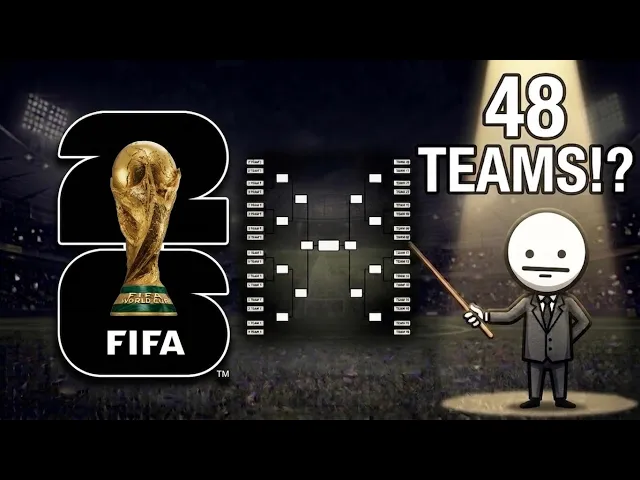
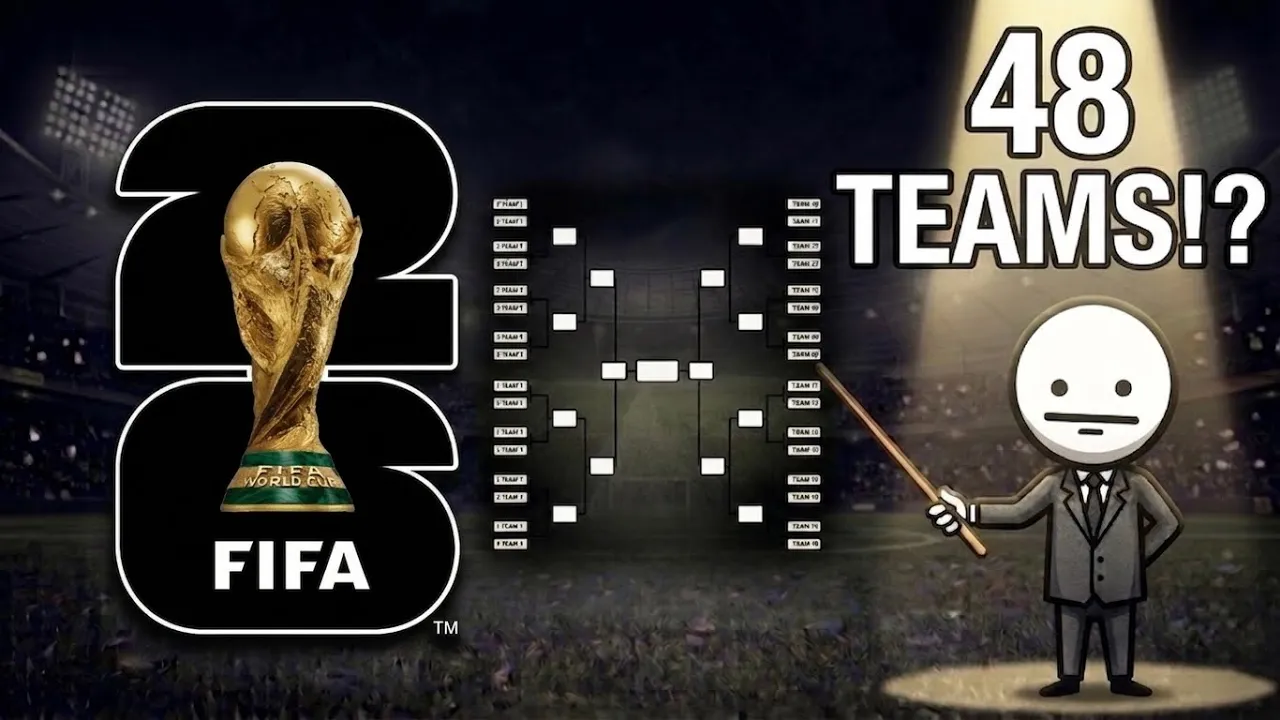
The World Cup just changed forever. For the first time in history, there is a round of 32, 48 teams, 12 groups, and a system nobody fully understands yet. If you are confused, do not worry.
So is everyone else. Your friends pretending they get it. They do not.
That commentator explaining it on TV also guessing, but by the end of this video, you will understand it completely. Better than your friends, better than the commentator. Let us break it down piece by piece.
First, let us remember the old World Cup. For almost 30 years, the World Cup had 32 teams, eight groups of four, top two from each group advanced. That gave you 16 teams.
The round of 16, clean, simple. Everyone understood it. It worked for almost three decades.
And then FIFA looked at it and said, "Too simple. " So they blew the whole thing up. Now there are 48 teams, not 32.
That is 16 more teams than before. A whole World Cup of extra teams. Now they are split into 12 groups of four.
And here is where it starts to get interesting. The top two from each group still advance. That is 24 teams.
But 24 is an ugly number for a bracket. You need 32 teams to make it clean. So you are eight short.
So where do the last eight teams come from? Here is the rule that changes everything. The eight best third place teams also advance.
Read that again. You can finish third and still survive. In the old World Cup, third place meant you were going home.
You would lose a game, finish third, and pack your bags. Now third place might just keep you alive. 12 groups, 12 third place teams.
The best eight survive, the worst four go home. But how do you decide which third place teams are the best? It comes down to five things in this exact order.
Number one, points, the most important thing, more points than the other third place teams, you are through. Number two, if points are tied, goal difference. Number three, still tied, total goals scored.
And number four is the strange one, fair play. Yes, yellow and red cards can decide your World Cup. Fewer cards you advance.
More cards you might go home. And if everything is still equal. Number five, the world ranking.
No coin flips. No drawing names from a hat. Not anymore.
And the fair play rule is not just theory. It is brutal. Picture three teams all tied on points.
Tied on goal difference. Tied on goals scored. Tied on everything.
So it comes down to cards. And one team had a single extra yellow. One yellow card.
That is all it took. That team went home from the World Cup because of one card. Somewhere a player is thinking about that one stupid foul.
In this World Cup, every single card matters now. So now you have 32 teams in the knockout stage. That is double the old number.
Double. You cannot jump from 32 straight to the round of 16. The maths simply does not work.
You need one more round first. A round to cut 32 down to 16. And that round has never existed at a World Cup before.
This is it. The round of 32. The brand new first step of the knockouts.
From here it is beautifully simple. Win or go home. No draws, no second chances, no mercy.
Round of 32. 32 teams, 16 matches, 16 survive. Round of 16.
The round the old World Cup used to start with. Now it is just the second step. Times have changed.
Then the quarterfinals, eight teams left. Then the semi-finals, four teams, the whole world watching. And then the final, two teams, one trophy.
That is the whole bracket. Five rounds to glory. But what happens when a knockout game ends in a draw?
Because in the knockouts, a draw is not allowed. First, 30 minutes of extra time. Two halves of 15.
30 more minutes of football. Legs burning. Hearts pounding.
Still tied after that. Then comes the crulest part of football. Penalties.
Five kicks each. The coldest test in all of sport. Still tied after five.
Then it is sudden death. One scores, one misses. And just like that, it is over.
In the knockouts, somebody always goes home crying. And here is the part nobody's talking about. To win the old World Cup, you played seven matches.
To win this World Cup, you must play eight. Three group games, then five straight knockout wins. Five knockout matches in a row without losing once.
One more match than any champion in the history of the sport. More games, more pressure, more ways to fall. This is the hardest World Cup to win that has ever existed.
Whoever lifts this trophy will have earned it like no one before. Now, let us clear up the confusion because people are getting this wrong everywhere. Misconception one.
People think more teams means it is easier to win. It is the opposite. More teams means more games.
More games means more chances to lose. A bigger tournament is not an easier tournament. It is a longer war.
Misconception two. People think finishing third is now safe. It is not.
Only the best eight third place teams survive. Four still go home. Finishing third is not a safety net.
It is a coin toss. You might survive. Misconception three.
People think the group stage matters less. Now every goal, every card, every result decides who sneaks through as a best third place team. The group stage matters more than ever, not less.
So now you will not just understand the format. You will not get fooled by people who do not. So let us put it all together.
48 teams, 12 groups, eight lucky third placed survivors, a brand new round of 32, five knockout rounds, eight games to glory. It is bigger, longer, and harder than any World Cup before it. And now you understand it better than almost everyone watching.
If this video helped you, make sure to subscribe so you don't miss the next one. The game has not changed. You have.
You're welcome.