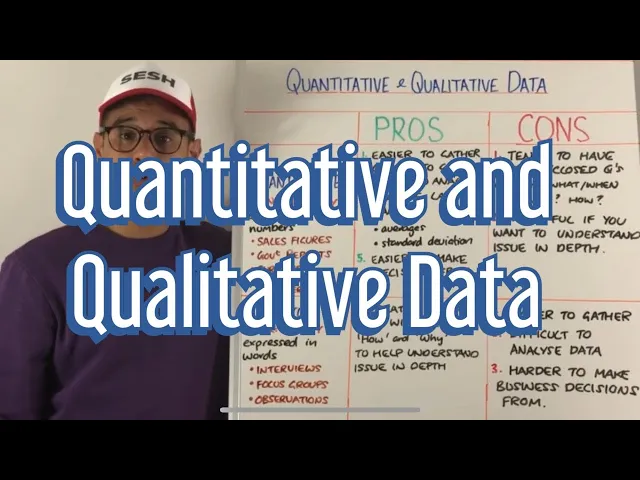
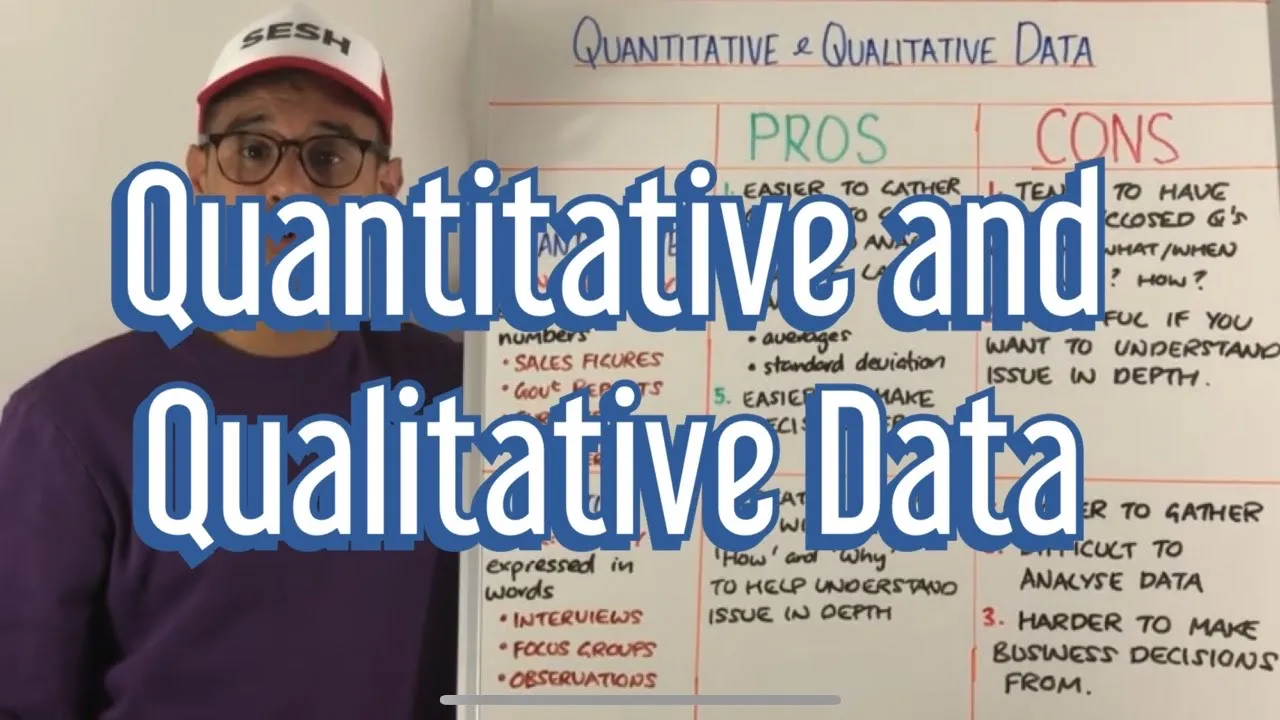
less recession quantitative and qualitative data we'll start with quantitative data so quantitative data think quantity is almost in the name and it's all about data that's expressed in numbers examples of that could be sales figures government reports or surveys with opinions if they're using the Likert scale the Likert scale being strongly agree agree neutral disagree strongly disagree because you convert that into numbers you could convert that into numbers there's now the pros of quantitative data is easier to gather it's quicker together it's faster to analyze you can examine larger samples and also you can do
statistical analysis you could do averages you could just found deviation on this data because it's in numbers and the key thing is it's easier to make decisions from now the cons of using quantitative data it tends to have a narrow or closed questions focus and so for that reason it's focusing on the who the what the when not the why and the how because it's not focused on that why and how is unhelpful if you want to understand the issue in depth the other type of data is qualitative data now qualitative data because it's expressed
often in words types of ways that you could do qualitative data is for interviews focus groups or observations now the advantages the pros of doing this would be well though you can get some more analysis on it because you can look at it in depth when you're looking at it in words format you saw the data increases in depth because you could focus now about how and that wire as well as that who want and when so therefore you can understand the issue in depth but the thing to notice and the con about qualitative data
is that it's slower to gather it's difficult to analyze that data and it's harder to make the business decisions from because there's lots of it and you're not really sure how to interpret it I hope that helps and I'll see you in the next session [Music] [Applause] [Music]