[Music] foreign [Music] course in the open online the last three sessions and the UC course that's very important to me because we really need to at the end you know we need your help we need everybody's help to see how social evolution is socially constructed through digital technology and we need to socially construct that together so we build our way up to that and we have to do that we go through that in these uh three sessions or in three three blocks we start with digital technology then you go into social change and then we
can see how we socially construct that so let's see first of all let's go into the theory of technological change that is a subpart of innovation Theory and see how technology evolves let's take a pretty old information technology that can store sound for example so we started with the tinfoil wrap from Edison and then we see we went through some different Innovations until we have our streaming services nowadays and the question is so how how does technology evolve actually what's the evolutionary trajectory it evolves like biology to how does that actually work and we can
see spoiler alert look I go through all of this now very fast I hope you don't you know you don't get overwhelmed with that and say like oh my goodness no each one of them will take quite some time to work through so I just want to show you a little bit what's going on there and then please come and visit us take the time you know we can also watch the content you know several times that's the great thing in in online recording and see how it works but basically I hope that's intuitive technology
evolves exponential that makes technological progress so overwhelmingly fast and so so difficult for us to predict because it's so fast exponentially fast but it also goes in you know I could call it jumps in biology we call this punctuated equilibriums so there is you know a dog and a wolf and in between it's like there's a gray Zone but either it's a Docker it's a wolf so we have we have these also these punctuated equilibrium either it's a vinyl record or it's a tape and that's how that actually works so we will go much deeper
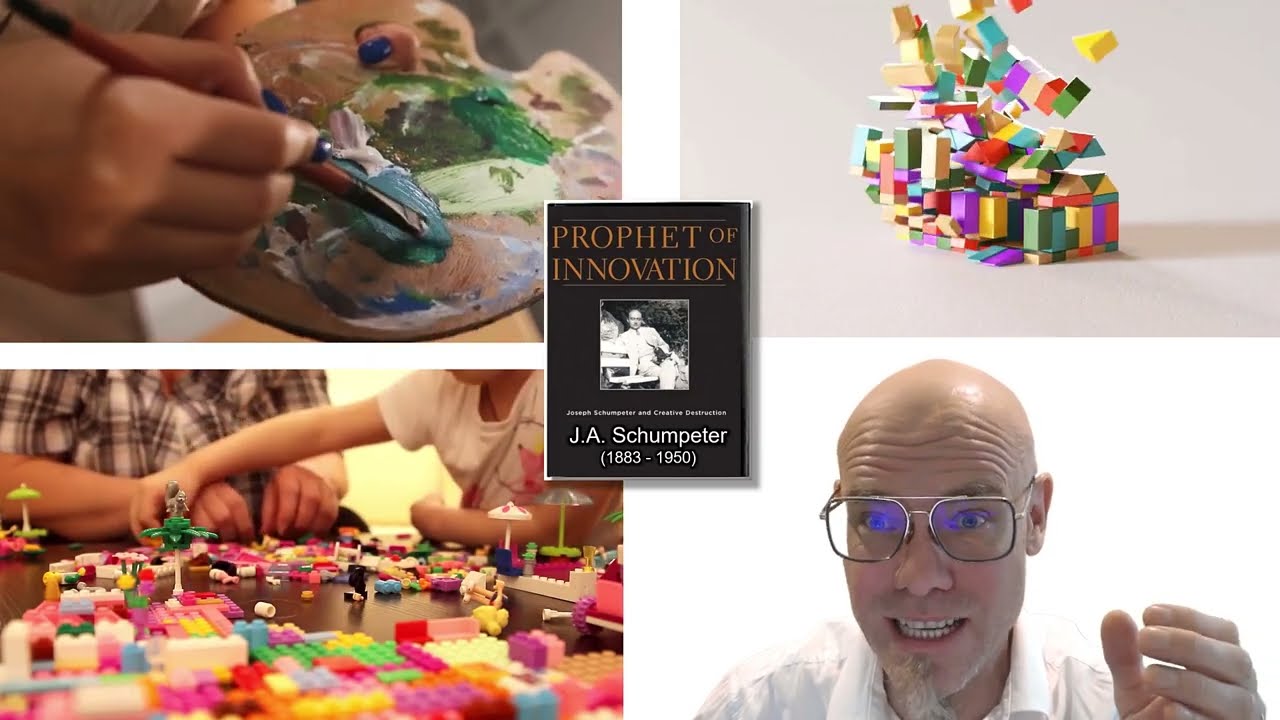
into technological innovation cycles and and technological change uh and it's important to understand that so you don't have to be you know we don't have to be so anxious it's it's it's it's it's okay in artificial intelligence follows the same logic in other applications new technology so it's important to get an understanding in order to confront our digital reality now how does society evolve spoiler alert quite similar so we take the the profit of innovation schumpeter Innovation theorist Economist and the Contours of innovation if we look at them how Society evolves and take the energy
consumption or we can take an economic indicators and if you look really closely and study that you can see also well it increases exponentially and there is some progress and there are also these similar waves that we can distinguish and I told you in the digital age we are in the second already according to me so first we started with data and communication and now we are in knowledge and they're also accumulative in technology theological changes also often not so clear in Social Innovation social Evolution yes it's accumulative similar to biological evolution I mean once
the eye is can be adopted but then it can be adopted by other species and we still use some of the hardware of the eye in different in different different species as it has evolved and the same here it still creates value to own land and to or extract resources from the land or like do agriculture it still creates value to do that energetically efficiently and hopefully we get much more energetically efficient to you know satisfy our ever increasing needs but now we optimize information and create knowledge we automate the knowledge creation that's these that's
the additional the aggregate value of that and we will look much deeper into how this actually goes together and how this technological change goes together with social Evolution and then you can also then understand it better for your own creative ideas and I hope a lot of interesting projects will come out of that now inevitably a society technology diffuses through society and we will work through this process here it doesn't fall equally like from Heaven it it takes some time and inevitably unfortunately creates a divide we call this the digital divide it's a new form
of inequality a very very some form of inequality because it's a difference in information and knowledge as the technology diffuses slowly through Society inside a society not everybody has the same access and is more more advanced it becomes there are newer forms of inequality and knowledge inequality and knowledge is famously power isn't it so you have to look into that as well the digital divide and then finally we get into policy or business strategies now what can we do here and in the knowledge Paradigm we will go directly to that it has a lot to
do with ethics and we go back to the ethics textbooks it's still very important much more important especially in a new technological Paradigm to talk about ethics and the different aspects of it and you see how we can align a technology with our human values that hopefully will sustain us we are not a very old species if you think about it that way and it's important that we align that it's called AI alignment but we also align still previous Technologies I mean that with a combustion engine with a car hours and so forth and the
global warming is that really aligned are we sure that we are not good aligned sustainable path here or not or what we're still working on that too now if it comes to the automation of knowledge if you take one of the Pioneers professor and Norbert wiener cybernetics the early days of AI you could say already weiner in the 1960 warned us and Professor Vina said if we use to achieve our purposes a mechanical agency with whose operation we cannot efficiently interfere once we have started it it's automated then we had better be quite sure that
the purpose put into the machine is the purpose which we really desire and we better be quite sure are we are we so we have to really talk about that and we use our artificial intelligence framework that I already introduced here and we we will work a lot around it it's very important that we align this goal here because that's one input you know we put data and the goal in so what is the goal that we actually want to achieve this goal has many names in computer science it's the reward function the loss function
utility function the objective function so what is the objective where are we going what what is the utility that we want to get out of that once we Define that that's maybe the most important thing because the machine itself tells us how to get there we just have to say we want to get to Rome the machines as well you want to get there quickly or safely or how do or energy efficiently how do you I can do all of that and the Machine looks for the best way to achieve open but where do we
want to go and that's why the most important question in the digital age might be WTF always ask yourself WTF what's the function what is the function that we put into the machine and once we have a basic understanding then of you know the alignment of this technology which we get to there in the last part I can also share some of the experiences I gathered working in governments in the international organizations the United Nations and in companies too Chief digital strategist or something in in companies or ngos and I can share some of my
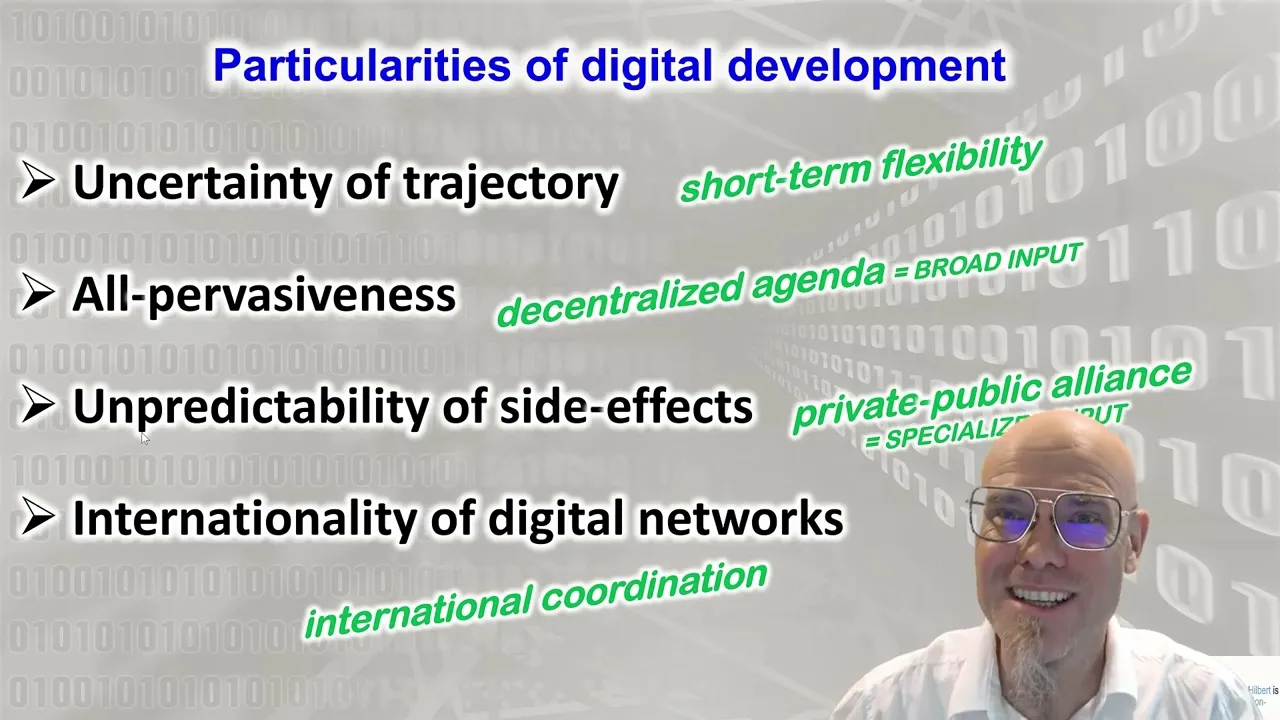
experiences with what we can do in order to confront this exponential emergent phenomena that we call the digital Paradigm and as it co-cons is co-constructed with our social reality well that brings it together these are the four parts that we have here so and it these different Explorations have different length you can look them up together and and I hope you stay with us I I don't mind if you listen to me in double speed I don't know if my language goes to double speed so you can certainly cut down in that length you can
also skip some parts especially in the public version in the on in the UC online version you better down skip some parts there's also some extra content that in the public version you're very kindly invited to explorers for the UC students it's not optional so you have to work through that content but still it's very manageable also for UC students and we will talk a little bit more about that so every week it's not even two hours of content and we will talk more about that that extremely extremely light in in terms a lecture a
heavy class like this one and we have split it up over over these 10 weeks all right this is the content I hope to see you in in all the different parts and I'm very much looking forward and I thank you that you come here and help us to co-construct the digital Revolution and it hasn't even started yet I mean it is already by far the dominating Paradigm but we didn't see anything yet a lot is still to come so thank you for taking the time as well and being part of this very exciting exploration
into our digital future