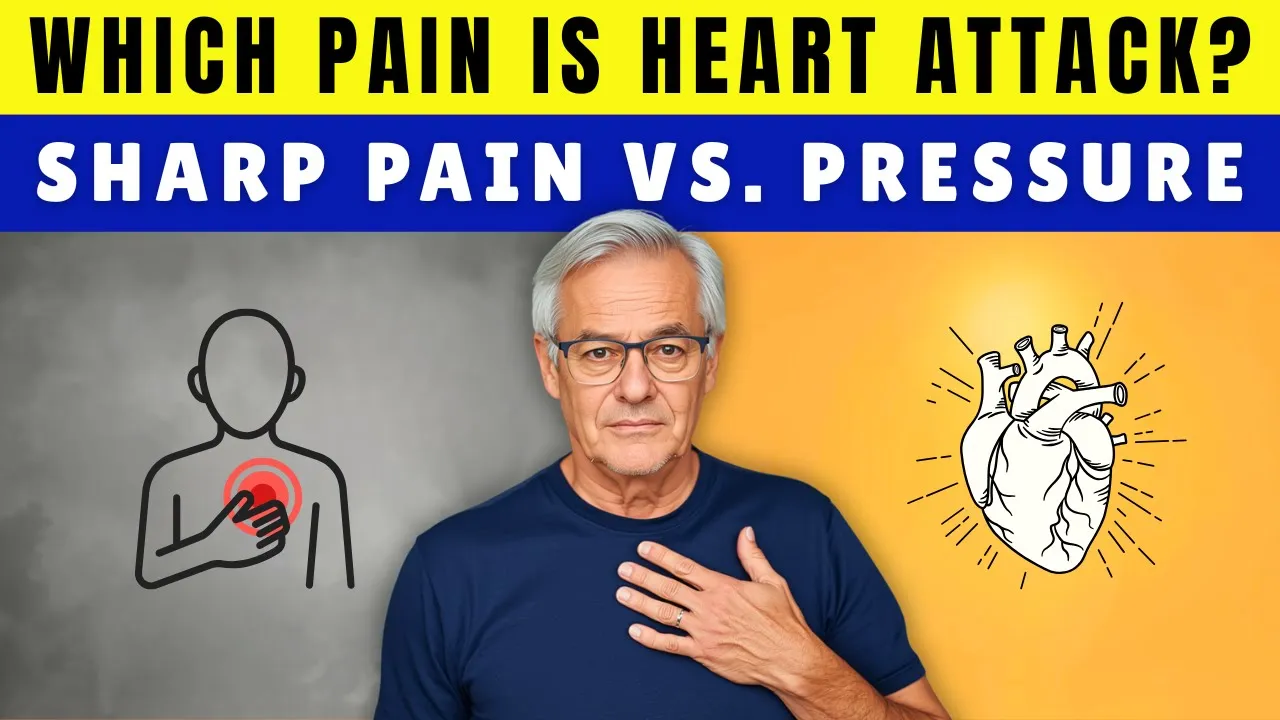
Chest pain. Two words that can stop anyone in their tracks. One moment it's a dull ache after a heavy meal and the next it could be the first sign of a life-threatening emergency.
So, how can you tell the difference? Not every chest pain is a heart attack. Sometimes it's muscle strain, stress, or acid reflux, harmless and temporary.
But other times, it's your body's only warning that your heart or lungs are in danger. In this video, you'll learn how to tell when chest pain is serious, when it's not, and what to do in those crucial first minutes. You'll also discover doctor approved signs that reveal what your body is truly saying and when to act fast.
Because when it comes to chest pain, guessing is risky, but knowing is life-saving. Disclaimer: This video is for educational purposes only and not medical advice. Why chest pain happens?
The body's alarm system. Chest pain isn't always a sign of danger, but it's never something to ignore. It's your body's way of saying, "Pay attention.
Something inside needs help. " What chest pain really means? The chest holds some of the most vital organs in the body.
The heart, lungs, esophagus, and major blood vessels. All of them share nerve pathways that send messages to the brain when something goes wrong. That's why the same dull ache might come from a pulled muscle or from the heart itself.
When you feel pain, pressure, or burning in the chest, it's not random. It's a warning system. A biological alarm triggered whenever tissues lack oxygen, become inflamed, or are stretched in unusual ways.
Dr Insight, Dr Clyde Yansy, cardiologist, explains, "Chest pain is one of the body's most sensitive danger signals. It can represent anything from mild irritation to life-threatening loss of circulation. " The heart's role in chest pain.
When blood flow through the coronary arteries is reduced from blockage, spasm or strain, the heart muscle becomes starved for oxygen. This lack of oxygen called eskeeia produces the deep heavy pressurike pain known as angina. If blood flow stops completely, that pain becomes the hallmark of a heart attack.
People often describe it as tightness or squeezing in the center or left side of the chest. Pressure that spreads to the jaw, shoulder, or arm. A heavy weight or burning that worsens with exertion.
This is the kind of pain you never wait for. Other organs can cause chest pain, too. The same nerves that carry pain from the heart also serve the lungs, diaphragm, and upper stomach, which can confuse your brain about where the discomfort starts.
That's why lung infections or blood clots can mimic heart pain. Acid reflux can cause burning pressure behind the breast bone. Strained chest muscles can ache with movement but feel fine at rest.
All these conditions send pain signals through similar nerve channels and your brain doesn't always label them accurately. Dr Note, Dr Martha Galott explains, "The body isn't wired to give you a map of pain. It just says something's wrong in the chest.
It's up to you to take that message seriously. " How the pain signal works. An organ or muscle becomes stressed or injured.
Nerves detect that stress and send an alarm signal to the brain. The brain interprets it as pain or pressure in the chest. This mechanism is protective.
It's meant to slow you down before the problem worsens. Ignoring that signal can allow small reversible issues to grow into emergencies. Why understanding this matters?
Not every chest pain is dangerous, but you can't know which one is harmless until you understand the pattern. The next sections will help you tell the difference. Which types of pain demand an emergency call?
Which come from the heart, lungs, or digestive tract? And which are common harmless sensations caused by tension or strain. Because when you know how your body's alarm system works, you can respond with calm, clarity, and confidence, not fear.
The dangerous types of chest pain you should never ignore. Chest pain can mean a hundred harmless things, but there are a few patterns that doctors never take lightly. These are the pains that could signal your heart, lungs, or major blood vessels are in distress, and knowing how to recognize them could save your life.
One, pressure or tightness in the center of the chest. This is the classic heart pain. Often described as squeezing, fullness, or heaviness, not sharp or stabbing.
It may feel like a weight sitting on your chest and can spread to the arm, shoulder, back, jaw, or neck. If it lasts longer than 5 minutes, gets worse with exertion, or comes with sweating, nausea, or breathlessness, assume it's your heart until proven otherwise. Dr Insight, Dr Steven Nissen cardiologist says true heart pain rarely feels like a jolt or a stab.
It's a deep dull pressure that grows and radiates. That's when you stop everything and call emergency services. Two, chest pain with shortness of breath or sweating.
When chest discomfort comes with difficulty breathing, clammy skin, or lightadedness, it's a red flag. This combination may mean your heart isn't pumping enough oxygen or your lungs are compromised by a clot or infection. If you feel breathless without obvious exertion or break into cold sweats with chest pressure, don't wait.
These are hallmark signs of a heart attack or pulmonary embolism, a clot in the lungs. Three, sudden sharp pain that rips or tears. If your pain is abrupt, severe, and feels like it's tearing through your chest or radiating to your back, it could signal an aortic dissection.
A rare but deadly emergency where the wall of your main artery splits. Dr Note, Dr Clyde Yansy explains, "Aortic dissections don't wait. It's a 911 situation.
The pain is unbearable, sudden, and often described as ripping or stabbing. This pain may also cause fainting, weakness, or uneven pulses between arms. Immediate treatment is critical.
Minutes truly matter. Four, pain that worsens when you breathe deeply or cough. Pain that sharpens with breathing, coughing, or moving could be pleuritic pain, often caused by inflammation or a clot in the lungs.
While mild versions can occur with infections, persistent or severe pain that limits your breathing must be treated as an emergency. Tip: If chest pain makes you afraid to take a full breath, get checked immediately. This is not a wait and see situation.
Five, chest pain accompanied by nausea, fatigue, or back pain. These subtler symptoms, especially in women and older adults, can still mean a heart attack is happening quietly. If discomfort radiates to the upper back, jaw, or feels like indigestion that won't go away, seek care.
Dr Insight, Dr Chiron Hayes says silent or mild heart attacks are far more common than people realize, particularly in women and diabetics. Always trust your instincts. Any chest pain that lasts more than a few minutes, spreads, or comes with shortness of breath, sweating, nausea, or faintness is serious.
Don't diagnose yourself. Call emergency services right away. It's far better to have a false alarm than to ignore your body's most urgent cry for help.
Common but harmless chest pains. How to tell the difference? Not every chest twinge means danger.
In fact, most chest pain people experience every week has nothing to do with their heart at all. But knowing when to stay calm and when to take action is the difference between peace of mind and panic. One, muscle strain or chest wall pain.
Sometimes what feels like heart pain is actually soreness from muscles or joints in your chest. If you've been lifting, coughing, sneezing, or even sitting awkwardly for hours, you can irritate the chest wall or cartilage, a condition called costtochondritis. How to tell pain is sharp or localized?
You can point to it. It worsens when you press, twist, or move your upper body. It often improves with rest or gentle stretching.
Dr Insight Dr Martha Galott explains if you can reproduce the pain by touching or twisting your chest, it's more likely muscular scalidal than cardiac. Two, acid reflux or heartburn. One of the most common causes of chest burning is acid reflux, also called GER D.
It happens when stomach acid travels upward into the esophagus, irritating the lining. How to tell burning or pressure after eating, especially when lying down. Bitter taste or sour burps improves with antacids or avoiding heavy meals.
However, reflux pain can feel almost identical to heart pain. That's why doctors say treat your first heartburn like a possible heart attack until proven otherwise. If chest burning always happens after certain foods, spicy, fried, or citrus, it's likely digestive, not cardiac.
Three, anxiety and panic attacks. Emotional stress can create very real physical symptoms. A panic attack can mimic a heart attack.
Pounding chest, shortness of breath, tingling, dizziness, and fear of losing control. How to tell? Pain feels like tightness, not crushing pressure.
Symptoms peak within 10 minutes and fade as you calm down. Breathing exercises or reassurance often ease symptoms. Dr note Dr Chiron Hayes says anxiety related chest pain is real and frightening, but it's different.
The key difference is that it improves when you slow your breathing. Heart [snorts] pain does not. Four, muscle spasms or rib nerve pain.
Tiny nerve irritations between the ribs can cause stabbing or sudden pains that feel alarming but aren't dangerous. These pains are fleeting, lasting just seconds, and don't come with breathlessness or sweating. If pain comes and goes instantly, doesn't worsen with exertion, and doesn't spread to other areas, it's usually not from your heart.
Five, gas or digestive pressure. Gas trapped in the upper stomach can cause sharp or bloated sensations under the ribs, sometimes mimicking angina. Gentle walking or burping often relieves it.
Chest pain that's brief, position related, or connected to movement, meals, or stress is usually harmless. Still, if you're unsure, always rule out the heart first because peace of mind comes not from guessing, but from knowing. Key warning signs that chest pain is coming from your heart.
Your heart doesn't always shout when it's in trouble. Sometimes it whispers. And if you can learn to recognize its unique voice, you'll know when to act before it's too late.
One, the nature of the pain. Pressure not sharp. Heart related chest pain usually feels like pressure, fullness, heaviness or squeezing, not stabbing or pinching.
People describe it as if something is sitting on their chest or tightening around it. The discomfort often builds gradually, lasts several minutes, and may come and go, especially during physical effort or stress. Dr Insight Dr Clyde Yansy explains, "True cardiac pain feels like internal pressure rather than surface pain.
It's deep, diffuse, and unrelenting, the kind that makes you stop what you're doing. Two, it spreads to other parts of the body. Heart pain rarely stays put because the same nerves serve your chest, neck, jaw, arms, and back.
Discomfort can radiate into these areas. Common patterns include chest to left arm or shoulder, chest to jaw or throat, chest to upper back. If pain moves outward or feels like it's traveling, it's a sign that the heart, not the muscles, is responsible.
Pain from the heart often feels deep inside, while muscle pain feels closer to the surface. Three, it comes with other symptoms. When chest pain is heart related, it rarely travels alone.
It usually brings a few companions. Shortness of breath, nausea or vomiting, sweating or clamminess, dizziness or faintness, feeling of impending doom. Even mild chest tightness paired with these symptoms should be taken seriously.
If you're unsure, assume the worst and seek medical help immediately. Minutes matter. Dr Note Dr Chiron Hayes says the most dangerous symptom combination isn't severe pain.
It's mild discomfort plus breathlessness or nausea. That's often how real heart attacks begin. Four, it's triggered by effort or emotional stress.
If your chest discomfort appears when you walk, climb stairs, or feel upset, and eases when you rest. It's a classic sign of angina, the heart's warning signal that oxygen supply is running low. This is your heart's way of saying, "I'm struggling under stress.
" Ignoring this early message can lead to a full heart attack later. Dr Insight Dr Deepak Bahhat notes chest discomfort that predictably appears with effort and disappears with rest is the body's red alert for blocked arteries. Five, it lasts longer than a few minutes.
Pain that persists beyond 5 minutes or keeps returning in waves must always be treated as an emergency, even if it's mild. Heart tissue can begin to die within minutes of block circulation. The earlier you act, the greater your chance of full recovery.
If your chest pain feels heavy, spreads, lasts, or comes with breathlessness, sweating, or nausea, it's your heart asking for help. Don't second guess it. Your safest move is always the same.
Call emergency services right away because ignoring heart pain doesn't make it go away. It just makes it permanent. Non-heart causes of chest pain.
Lungs, muscles, digestive system. Your chest holds more than just your heart. The lungs, ribs, muscles, nerves, and even your stomach all share the same space, and sometimes they send mixed messages to your brain.
That's why not all chest pain points to the heart. One, lung rellated pain. Lung problems can cause sharp stabbing chest pain that worsens when you breathe deeply, cough or move.
This type of pain usually sits to one side of the chest rather than the center. Common causes include puricy, inflammation of the lungs outer lining, often after a viral infection. Pneumonia, infection that can cause chest discomfort, fever, and shortness of breath.
Pulmonary embolism, a blood clot in the lungs. This is an emergency. Pain is sudden.
Breathing is difficult and you may feel dizzy or faint. Dr Insight Dr Chiron Hayes explains lungrelated chest pain is sharp and linked to breathing. Heart pain is heavier, deeper, and unaffected by inhaling or exhaling.
If pain worsens when you take a breath, it's more likely lungreated, but still worth medical evaluation. Two, digestive system pain. Your esophagus and stomach can easily imitate heart pain.
The nerves overlap and acid reflux can produce a burning squeezing sensation behind the breast bone. Common culprits gird, heartburn, burning after meals or lying down, esophageal [clears throat] spasm, sudden tightness that feels like a heart attack, gallbladder issues, pain under the right ribs radiating to the shoulder after fatty meals. Dr Note, Dr Clyde Yansy adds, "Up to 30% of patients who come to the ER with chest pain actually have a digestive cause, not a cardiac one.
If antacids relieve the discomfort and pain isn't tied to exertion, it's more likely gastrointestinal. Still, if you're unsure, get checked. Reflux and heart disease can coexist.
Three, muscle and rib causes. Your chest wall is made of interlocking ribs, cartilage, and muscles that can easily strain. Pain from these areas is usually sharp, localized, and reproducible, meaning you can trigger it by pressing or moving.
Typical causes: heavy lifting or sudden twisting, persistent coughing, costicondritis, inflammation of the cartilage near the sternum. Dr Insight, Dr Martha Galott says, "If touching or twisting reproduces your pain, it's almost never from your heart. Apply gentle heat, stretch, and rest the affected muscles.
These pains often resolve within days. Four, nerve pain and anxiety. Pinched nerves in the spine or rib cage can cause shooting or burning sensations that move with posture, not effort.
Anxiety and panic attacks can create chest tightness, rapid heartbeat, and tingling. Powerful but harmless once confirmed by your doctor. Not all chest pain is heart related, but every chest pain deserves respect.
Pain that changes with breathing, movement, or position is often from muscles, ribs, or lungs. Burning after meals points to digestion, but persistent spreading or pressure-like discomfort always belongs in the hands of professionals. Because understanding where your pain comes from doesn't just calm your fears, it keeps you one step ahead of danger.
What to do when chest pain strikes. Doctor approved response plan. When chest pain hits, panic is natural, but panic can also cloud judgment.
The truth is, every second matters. Whether it's something harmless or an emergency, knowing what to do in those first few minutes can protect your life or someone else's. Step one, stop what you're doing.
Sit and stay calm. If you suddenly feel pressure, burning, or tightness in your chest, stop immediately. Sit down, stay still, and take slow, deep breaths.
Avoid walking, climbing stairs, or driving. Any movement increases your heart's oxygen demand and can make things worse. Dr Insight Dr Clyde Yansy explains.
When in doubt, stop and rest. If the pain improves within a few minutes of rest, it may be angina, the heart's early warning that oxygen supply is falling short. If pain fades quickly after rest, still contact your doctor soon.
If it continues, worsens, or comes with other symptoms, move to the next step immediately. Step two, call emergency services. Don't self- diagnose.
Never assume it's just indigestion or anxiety. If chest pain lasts longer than 5 minutes, spreads, or feels accompanied by sweating, dizziness, or breathlessness, call emergency services like 911 right away. Do not drive yourself.
People often collapse behind the wheel. Instead, unlock your doors, sit upright, and keep your phone nearby while you wait for help. If you're alone, text or call a family member or neighbor to alert them while you wait for paramedics.
Doctor note, Dr Chiron Hayes says most heart attack deaths occur before the person reaches the hospital, not because of the pain, but because of the delay. Step three, take aspirin if it's safe for you. If you've had previous medical clearance and are not allergic, chew one regular 325 milligram aspirin or four baby aspirins.
Chewing helps it absorb faster. Aspirin works by thinning the blood slightly, slowing down the growth of a clot in the arteries. Do not take aspirin if you're allergic or have a bleeding disorder.
You're already on blood thinners. The pain is severe and tearing, possible aortic dissection. Dr Insight, Dr Deepackbot emphasizes early aspirin use can save muscle, but never delay calling emergency help to take it.
The first call is always the most important step. Step four, loosen clothing and focus on breathing. Tight clothing, belts, or ties can make it harder to breathe comfortably.
Loosen what you can and take slow, steady breaths. In through your nose for 4 seconds, out through your mouth for six. This simple rhythm helps calm your nervous system, lowering adrenaline and easing strain on the heart.
If you're helping someone else, speak calmly. Say, "Help is coming. " Just breathe with me.
A calm environment stabilizes heart rate and oxygen demand until professional help arrives. Step five, if the person collapses, start CPR. If someone becomes unresponsive or stops breathing, begin handsonly CPR immediately.
Place the heel of your hand in the center of the chest. Put your other hand on top and lock your elbows. Push hard and fast about 100 to 120 compressions per minute to the beat of staying alive.
If an AED automated defibrillator is available, turn it on and follow its voice instructions. Even if you're not trained, any attempt at CPR is better than doing nothing. Dr Note, Dr Martha Galott says, "Every minute without CPR lowers survival by 10%.
Even basic chest compressions can double or triple survival chances. " Step six, track and share key details. While waiting for help, note important details.
when the pain started, what it feels like, pressure, stabbing, burning, whether it spreads, what you were doing when it began, any medications taken like aspirin or nitroglycerin. This information helps emergency teams act faster. If possible, keep a written list of your medications and health conditions in your wallet or phone.
Many smartphones have an emergency medical info section accessible without unlocking. Use it. It can save critical minutes.
Step seven, stay calm after the pain passes. Even if chest pain fades on its own, don't ignore it. Heart pain can come and go for hours before a major attack occurs.
Always schedule a doctor visit within 24 hours after any unexplained episode. Dr Insight Dr Dr Na Goldberg notes, "He heartreated chest pain sometimes disappears when the heart temporarily reopens a blocked artery, but it almost always returns stronger. When chest pain strikes, act fast, but stay calm.
Stop what you're doing. Call for help. Chew aspirin if safe and breathe slowly while waiting.
You don't need to diagnose the pain. You just need to respect it. Because every heartbeat after pain begins is a chance, and every minute of hesitation is one you can't get back.
Conclusion: Chest pain is one of the body's loudest alarm bells, but not every sound means danger. Sometimes it's just your muscles, digestion, or stress. Other times, it's your heart quietly pleading for attention before it's too late.
The key is not panic, it's awareness. If the pain is deep, heavy, or comes with breathlessness, sweating, or nausea, act fast. If it's brief, position related, or linked to food or movement, it may be harmless, but still worth checking.
Because the truth is simple. You can't tell the difference by guessing. Only by acting wisely.
When in doubt, get checked. You'll either save your life or gain peace of mind. Both are victories.
Disclaimer: This video is for educational purposes only and not a substitute for professional medical advice. Like this video to spread awareness. Subscribe for more doctor approved heart and blood pressure guides.
Share this video. Someone you love might need this information today. Thanks for watching.