in our final lesson on techniques used in the study of proteins let's consider together the topic of proteomics just as there is a genome representing the genetic content of the cell so there's a proteome that represents the total protein content of the cell proteomics is therefore the study of the content and interactions of cellular proteins we might approach the study in such a way as to determine the structure of the proteins produced under a given set of parameters we might instead be interested in the total protein content of the cell that is to say which
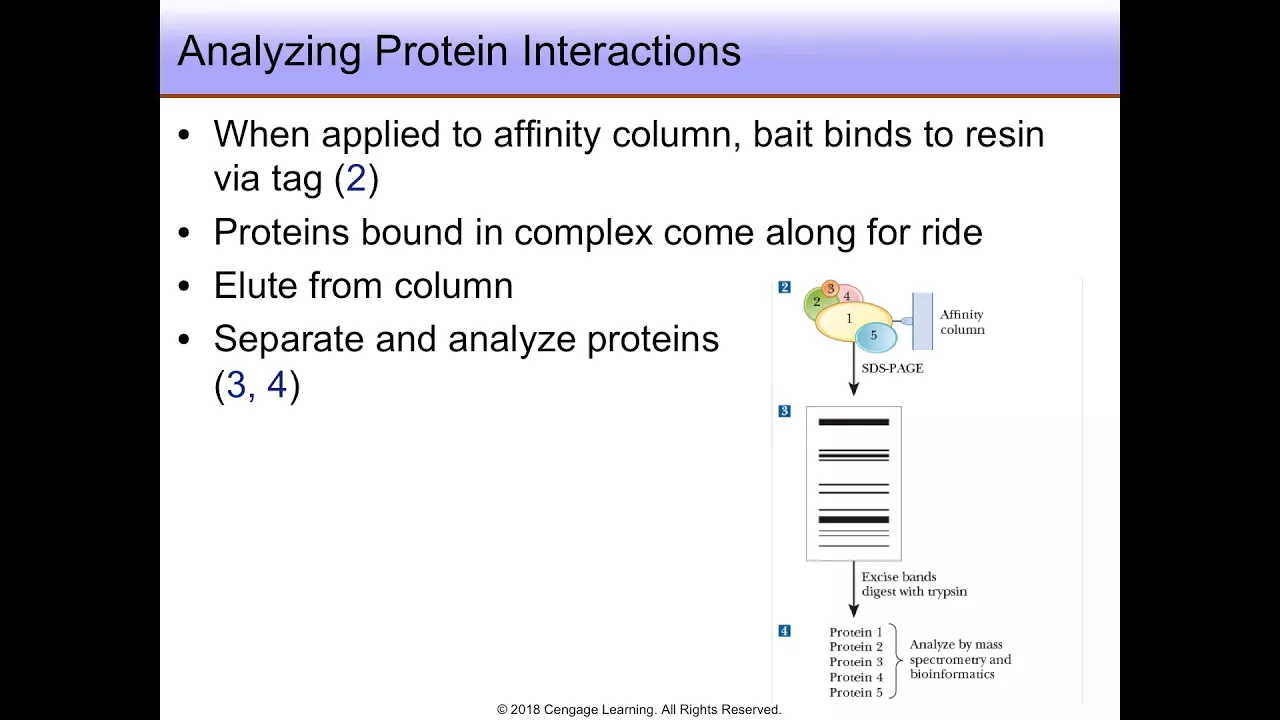
proteins are expressed under varied circumstances lastly rather than total protein content we might be more interested in specific protein interactions let's consider a method sometimes used in this last type of proteomic study in this example we are studying a target or bait protein that has been genetically engineered so that it carries a molecular or affinity tag on its surface as illustrated by step one of our figure the presence of this tag allows us to isolate the protein using affinity chromatography we allow our bait protein to interact with cellular proteins under given set of conditions and
these proteins are illustrated here by the shapes numbered 2 through 5 in step two a cellular extract is applied to the affinity column and the bait binds via the surface tag the bait is then eluted from the column in complex with the other proteins in step three the proteins are isolated using SDS page and the protein bands are excised from the gel in step four each protein can then be subjected to analysis by peptide digestion followed by mass spectrometry to determine the primary structure or amino acid sequence finally bioinformatics techniques allow us to identify each
of the proteins involved we will consider many examples of protein interactions in our study biochemistry and this is one example of the techniques employed in making those determinations













![Kaffara Episode 60 - [Eng Sub] - Ali Ansari - Laiba Khan - Zoya Nasir - 23rd September 2024](https://img.youtube.com/vi/ihdFNyn-Z-4/maxresdefault.jpg)