good day to everyone joining us and welcome to today's xtalks webinar today's talk is entitled liquid biopsy in oncology opportunities and challenges hi my name is sonja hunt and i'll be your ex talks host for today today's webinar will run for approximately 60 minutes this presentation includes a q a session with our speakers this webinar is designed to be interactive and webinars work best when you're involved so please feel free to submit questions and comments for our speakers throughout this presentation by using the questions chat box and will try to attend to your questions during
the q a session now this chat box is located in the control panel and that's situated on the right hand side of your screen if you require any assistance please contact me at any time by sending me a message using that chat panel at this time all participants are in listen only mode please note that this event will be recorded and made available for streaming on xtalks.com at this point i'd like to thank medpace who developed the content for this presentation netpace is a scientifically driven global full-service clinical contract research organization providing phase one through
four clinical development services to the biotechnology pharmaceutical and medical device industries medpace's mission is to accelerate the global development of safe and effective medical therapeutics through its high science and discipline operating approach that leverages local regulatory and deep therapeutic expertise across all major areas including oncology cardiology metabolic disease endocrinology central nervous system and antiviral and anti-infective now it's my pleasure to introduce you to your speakers for today's webinar and first i'd like to introduce you to dr elma mustafa bahasi he's the director of clinical laboratory sciences with medpace dr bahasi is a research scientist with
over 20 years of clinical and research laboratory experience he is experienced in biomarker development mustafa moved to the department of cancer biology at the university of cincinnati and later became a faculty member as an independent faculty mustafa developed a translational line of research where he worked closely with clinical oncologists to develop new companion diagnostics using cutting-edge genomic technologies and now it's my pleasure to introduce you to dr line gleich he's the senior vice president of medical department at medpace lyon has been directing medpace's oncology program since 2004. mine has served as a medical monitor on
multiple oncology studies at medpace he is responsible for the development of study specific training materials as well as the ongoing training for the clinical operations group lyon spent more than 10 years as an academic investigator during which he became a recognized expert in new molecular therapeutics and finally now is my pleasure to introduce you to dr christopher huth he's a senior clinical trial manager clinical trial management at medpace christopher has nearly 10 years of clinical oncology operations management and monitoring experience at medpays this experience includes the management of large-scale global studies as well as management
of fih targeted agent trials christopher has served as global ctm on multiple med pace targeted agent programs his expertise has been used not only for the trials he manages directly but also as a resource at medpays for developing processes and operational excellence in targeted agent studies now it's my pleasure to pass a mic and the controls over to mustafa so mustafa when you're ready you may begin thank you sonia and uh welcome everyone and thank you for joining the webinar sony am i on the right um screen yes you are all right thank you um
so um as everybody knows the field of liquid biopsy is a very active area of research and i will try today to present a high overview of the field in about 35 minutes but we will leave time for discussions at the end for our panelists to shed more light on the current status of liquid biopsies in clinical management so for those of you who are still wondering what the liquid biopsy is um a liquid biopsy is a minimally invasive technology for detecting molecular science of cancer and other diseases in body fluids such as blood cerebrospinal
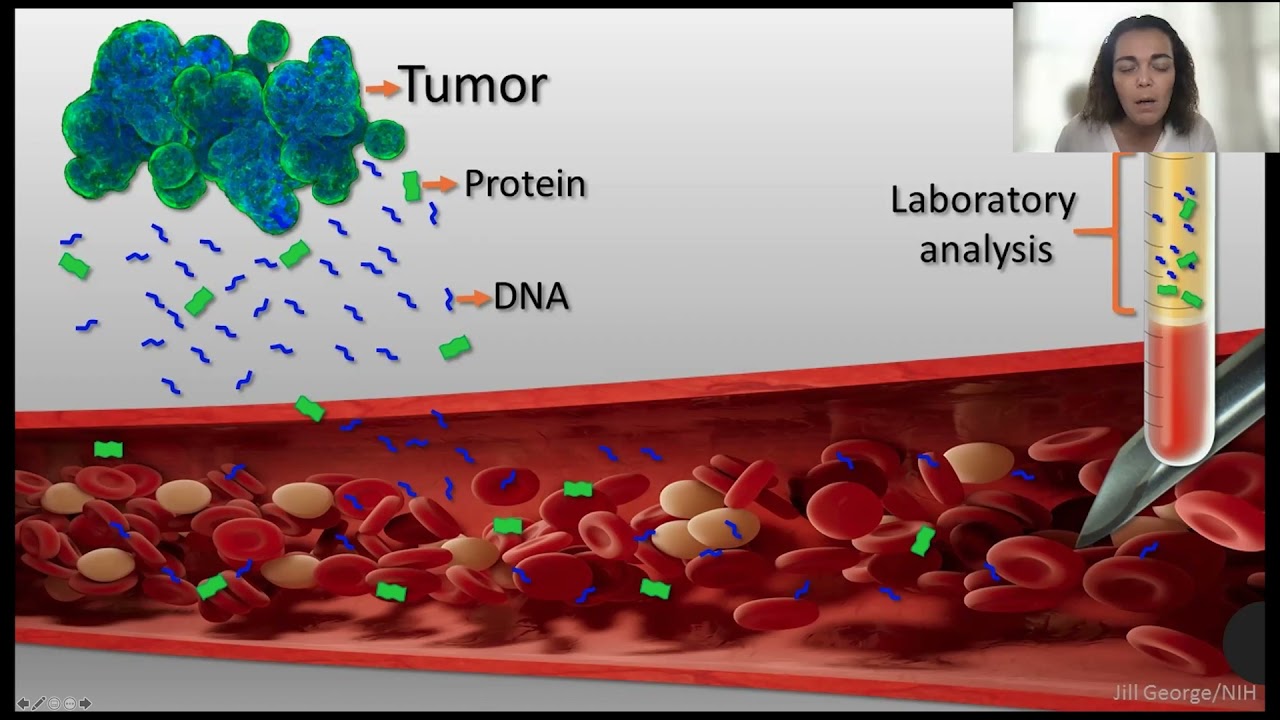
fluids csf or urine these include separating tumor cells for ctcs secreting tumor dna and for ct dna and exosomes finding biomarkers for solid tumors was limited to tissue samples collected via a tissue biopsy but now with ctc cell free dna and exosomes we have other options so for ctcs these are cancer cells that split away from a tumor and circulate in the bloodstream ctcs can sometimes exit the bloodstream and enter other organs growing into new metastatic tumors these this tumor shedding in the blood can be measured to determine to determine whether a patient has cancer
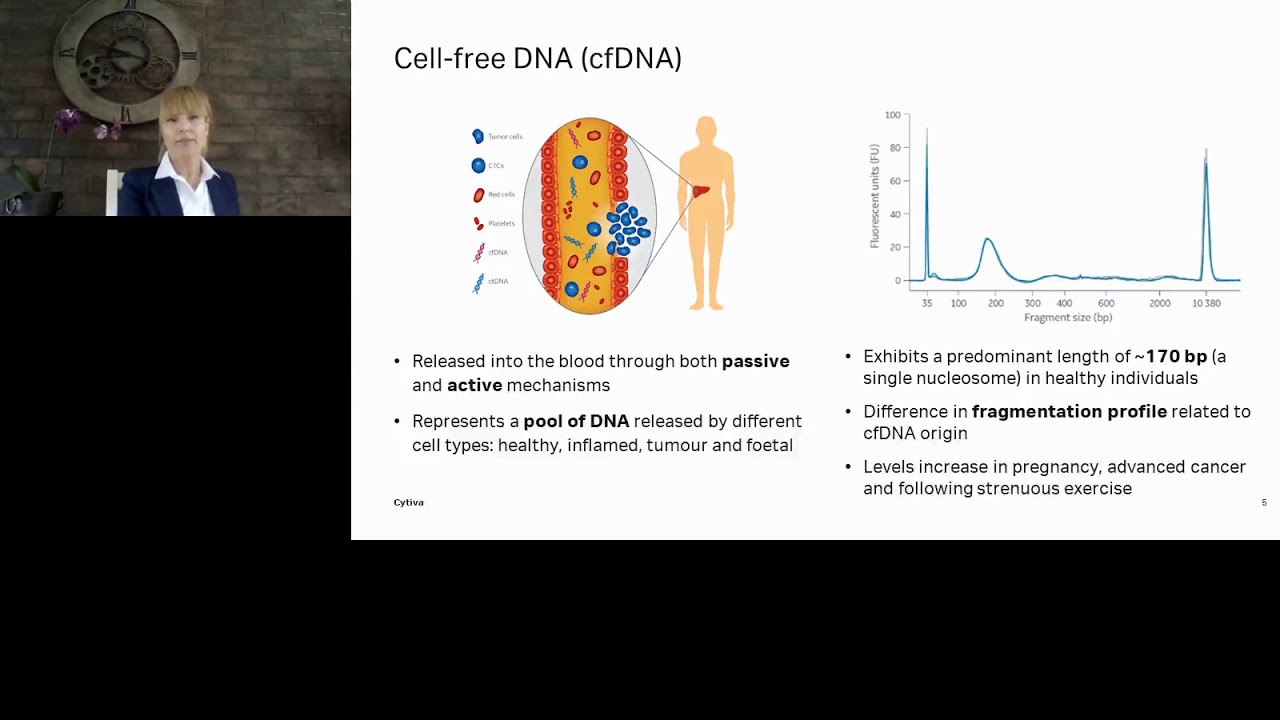
and the more shedding found in the blood the higher the likelihood of a patient having late stage cancer as we'll get to it in a minute you will see that these ctcs are mostly abundant in late stage cancer and less abundant in early stage cancer for circulating tumor dna um circulating tumor dna or cell free dna first is dna that is shed into circulation during cell death by apoptosis of necrosis most cell free dna in circulation actually doesn't come from from the tumor but it comes from other sources such as muscle cells endothelial cells leukocytes
etc but a very tiny small fraction derives from circulating cancer cells and tumors in cancer patients the cell free dna that comes from cancer cells is called circulating tumor dna or ct dna as tumors grow cancer cells die and they are replaced by new ones and the content of dead cells including dna is released into the bloodstream like ctcc dna can be measured in a patient in a patient samples to screen for cancer ct dna is known for its higher sensitivity to alternative biomarkers and therefore exosomes exosomes are extracellular vesicles responsible for cell to self-communication
and the transmission of diseases exosomes are particularly useful as a basis for liquid biopsy as they are secreted by living cells rather than secreted during cell death like we um talked about for cell free dna as a result exosomes based assays offer they offer a more comprehensive real-time window into the patient's health and have higher sensitivity they also offer logistical benefits because exosomes are highly stable and easy to obtain and distinguish and that's one of the limitations for all circulating biomarkers so in the field of liquid biopsy as i mentioned earlier it's a very active
area of cancer research a um recent a recent survey of the ongoing clinical trials using liquid bypassing cancer showed that there are almost 3 000 clinical trials involving ctcs in clinicaltrials.gov and over 1600 using either cell free dna or ct dna and there are fewer studies using exosomes as a liquid biopsy um these clinical trials at least the ones that have results available they have shown promising results for the early detection of cancer and confirmed these biomarkers as a good tool for real-time monitoring of acquired therapy resistance accurate disease progression surveillance and the improvement of
treatment so all this would translate obviously into a better quality of life and extended progression through survival and overall survival for cancer patients one of the limiting factors that is hampering the use of liquid biopsy in the clinical management of cancer patients is the low abundance of these biomarkers in situation for instance um ctcs there is between 0 and 10 ctcs per ml of blood in early stage cancer versus thousands of ctcs in metastatic carcinoma for instance but that would depend on several factors so it varies depending on cancer type i will later show um
you know some cancers um such as glioma that shed very little ct simulating human dna circulation compared for instance to colorectal cancer or other cancer and the method of isolation there are different methods of isolations of ctc and the method of isolation that is used can make a huge difference in terms of the number of uh ctcs that are um you know inaugurated so separation based on epithelial surface markers for instance compared to separation based on size and morphology will make a big difference the concentration of cell free dna in healthy subjects is between 0
and 100 nanograms of cell-free dna per ml of blood with an average of 30 nanograms per ml whereas the concentration of cell-free dna in the blood of cancer patients varies from zero to a thousand nanograms per ml with an average of a hundred nanograms per mil that gives you an idea again about how um very um you know there isn't much of this selfie dna in circulation which requires to improve technologies for detection and for analysis for exosomes um there are about 10 to the 8 to 10 to the 90 exosomes per ml in serum
or plasma but still a very tiny fraction originates from the tumor and the method of separation also can make a big difference in the number of exosomes that are recovered so this is study i was um referring to um that looked at the number of patients that are um you know these are both all these studies that i'm gonna be talking about now um in this particular slide they are looking at late stage cancer so they're not looking at early stage cancer but as you can see on the left the fraction of patients with detectable
circulating tumor dna can be 100 of patients we're talking about bladder cancer or colorectal cancer or ovarian cancer when we look at the glioma patients patients with gbm for instance less than 10 percent of them will have detectable security in human dna although gbm is a very advanced form of brain tumors yet um the number of circulating the tumor dna is detected in less than 10 of the patients so that may be explained by the presence of the blood-brain barrier but again gbm usually at that stage the the blood-brain barrier is very compromised and then
um the uh security continued should be released in circulation so so um in in that area when working with blood it's extremely hard to detect immunization tumor dna from gbm um with the exception of some over expressed um mutations like egfrp the v4 variant of egfr and gbm patients sometimes you can detect it in plasma if you're looking for mutations in idh1 or idh2 usually you have to use csf for that purpose um other other tumors that shed very little dna in circulation tumor dna circulation could also tie with cancer um so when you look
on the right for the quantification of mutant fragments this time um same thing um you know neuroblastoma for instance um has you can detect over between a hundred thousand and a million copies of mutated dna circulation compared to gbm where again you are detecting less than ten copies of mutant dna so so it depends on the stage of the cancer um stage four being the one that has the most uh mutations that are in circulation and stage one the one that has the least um and then it also depends on on the type of cancer
with blood the cancer points and colorectal cancer having the most and glitterman tire with cancer having the lease so uh for um the one thing that makes a big difference in terms of um you know analyzing these biomarkers is the isolation techniques so um the uh because ctcs are ultra rare events with numbers as low like we mentioned as one ctc in 10 to 6 or 10 37 silicocytes in one mil of blood enrichment and investigation of cities it has been extremely difficult several methods are currently used to isolate ctcs but each one of these
methods has its own challenges limiting their clinical implementation so the one that has been used um since the first if the approval for um for the cell search system is immunofluorescence staining of ctc so this is using epithelial or tumor cell cell surface markers such as epithelial cell adhesion molecule etcam and cytokeratin ck and um the first and only device um the cell searched which which was approved by the fda for ctc inauguration used this concept but when we know that cancer cells when they leave the uh site at the primary tumor site they undergo
epithelial mesenchymal transition also known as emt so when they leave the tumor site and move into circulation we can imagine that this device will only detect very few ctcs the ones that suit still have those epithelial markers the ones that have already started the transition to mesenchymal form will lose those markers and will not be detected so indeed several studies have shown that there are sometimes 30 to 300 times more ctcs in circulation that what cell search was able to detect there is also the antibody targeting of white blood cells for removal so this is
pretty much a negative selection you use a cd45 marker to remove the white blood cells from the the from the sample and then leaving just ctcs but again this method of negative selection um which use antibodies um to study 485 to remove normal leukocyte this selection is not very usually but not very efficient and ctc population is usually high um very highly contaminated uh with um leukocytes also um some ctcs express cd45 service marker those will be also eliminated in this case so there are a lot of limitations when it comes to methods of isolation
and those can make a huge difference when we are enumerating or isolating ctcs a size based uh filtration of ctcs can be um also used and um it's based on the cells morphology but their heterogeneity is a major obstacle for ctc detection again size and morphology um it does you know all the people who use science and morphology for ctc isolation this is based on the fact that that's um cancer cells are bigger than leukocytes but again some ctcs may be smaller so you lose those some of them may have same morphology or you know
like leukocytes and then you will end up by isolating leukocytes instead of ctc so several strategies that combine size shape and immune phenotype are being investigated but the multi-step cell preparation process of doing all these steps you know um trying to isolate cells based on shape and immune phenotyping and all that all that process leads to ctcs being damaged and fragmented uh causing inaccurate detection and interpretation for cell free dna however suffrage dna is much easier there are a number of kits that can be used to isolate cell free dna and instruments to measure its
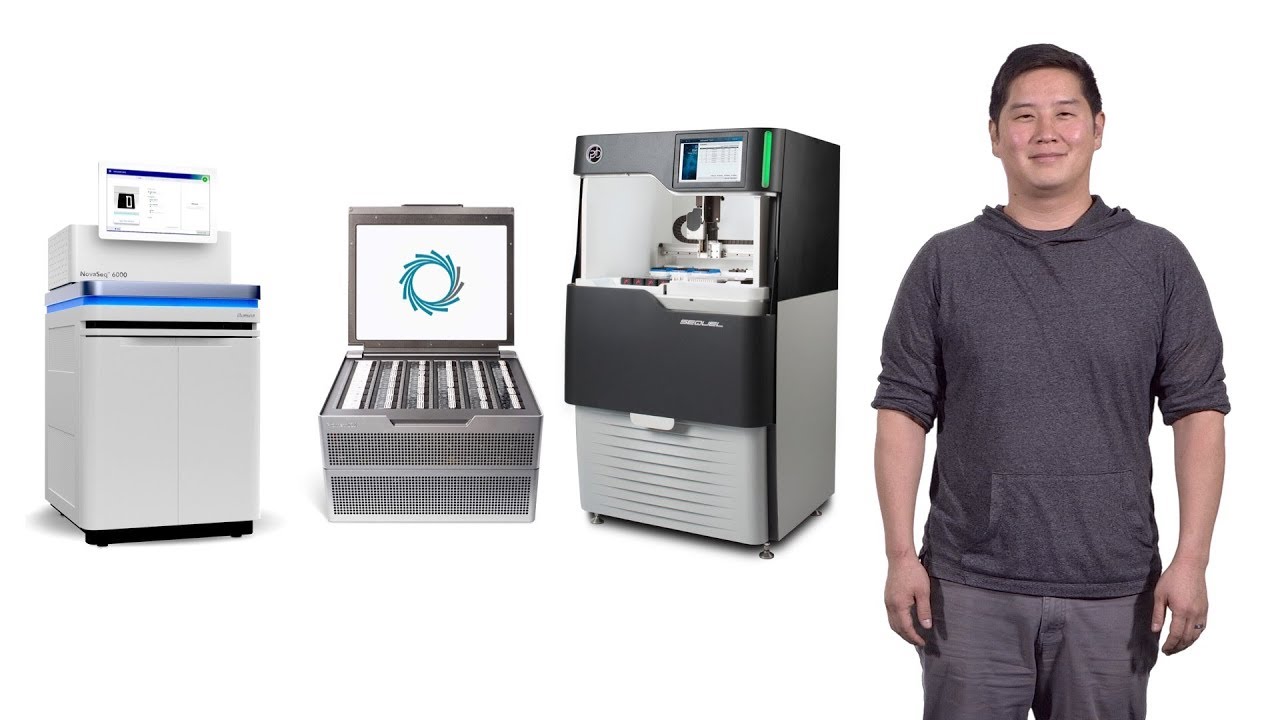
concentrations such as the aging tape station nanodrop etc and there are newer chemistries for ngs library preparations and platforms for separate dna sequencing so as a result as i will be showing later cell free dna is the most advanced liquid biopsy by market in the clinic with several itly approved assays and many more being considered for approval for exosomes exosomes have shown great advantage in liquid biopsy first of all because the presence of large amounts like i mentioned earlier almost 10 10 to the ninth particles per mil in biofluids contributed to relatively easy obtaining of
physicals second the exosomes are secreted by living cells and inherent um inherently bonded biological information from their parental cells third exosomes are innately stable because of their lipid bilayer the high biological stability allow long-term storage of specimens for exome excellation and detection and exosomes are being mostly used for detection of secreting rna and micrornas multiple platforms have been developed to isolate exosomes using ultra centrifugation um immunoaffinity uh and filtration but there are still a number of issues related to purity um and sensitivity highlighting the need to develop an easy to operate high sensitivity and high
purity uh platform for exosome separation and detection so um these limitations have translated to a few regulatory approvals for exosomes in liquid biopsy as liquid biopsy for us in cancer so as i mentioned earlier although we still have a long way to go into liquid biopsies fully incorporated in cancer management uh the three biomarkers that i discussed today have shown some utility in cancer management and predicting outcomes for instance for ctcs um you know the cell search system has been approved by the fda since 2004 and um ctc count in whole blood is an independent
predictor of progression pre-survival and overall survival in a number of metastatic cancers like multi-site breast cancer colorectal cancer prostate cancer and um so it has been used uh in the clinic for a long time but again like i mentioned earlier there is a lot of limitation to using this system because it only looks at epithelial markers at the surface of ctcs while we know that cities is after they leave the primary site to be transitioned to the zenkanal and then you lose those surface markers um so uh we'll discuss um you know later some of
these um issues with isolated ctcs for cell-free dna the use of cell-free dna to detect mutant fragments in circulation has been approved for many indications either for screening uh for disease monitoring or for prognosis uh several assets have been approved by the fda as we will discuss later on my check last night there were 22 um sell free based assays that have been approved by the fda and i'm sure there are some more that are approved by the european medicines agency um in in europe but at least in the us there are quite a large
number i will show um in a table but it's going to be a very few of them there are 20 of them that have been approved by the fda so um just an example here i'm showing detection of activating egfr mutations um in for non-small cell lung cancer so these activating mutations usually are a good indicator that the patients will respond well to egfr inhibitors you know such as gipatinib or lotinib detection of t790m mutation in patients that are undergoing treatment with egfr therapy is always indicative of resistance uh to these egfr inhibitors and um
these 799 mutation can be detected either in plasma or even in urine detection of brco12 mutations and etm alterations in prostate cancer as a companion diagnostic for elaborate for the part inhibitor or opera also has been approved so and again the list is long of the fd approved assays for use of selfie uh dna security team of dna um for exosomes exams have also shown some um usefulness in cancer screening especially in detection of arc fusions in exothermal rna and lung cancer detection of brfv600e mutation in lymphatic drainage derived exosomes and melanoma so for um
again we're talking about the regulatory approvals in terms of if the approvals uh all three biomarkers have received some regulatory approvals although they mentioned earlier circulating tumor dna in south korea has been leading the number of approvals especially after the development of new technologies with better sensitivities and specificity in the ngs space ctc's received the first ever fda approval for cell search um the ctc enumeration platform um that's to monitor patients with advanced metastatic breast colon prostate cancers based on the cancers level and secretor you know circulating tumor cells uh recently just the last august
actually the fda approved the parsortix c1 clinical system the first fda cleared the medical device for the capture and harvest of ctcs for metastatic breast cancer patient blood for subsequent analysis again this platform is not for enumeration of ctcs like the cell search but it's for capture and harvest of ctcs for um you know potential downstream use for ngs or whatever application they are used for they are not for enumeration so for uh selfie dna like i mentioned has the most approval especially in the companion diagnostic space as um last night there were 22 fd
approved cell free dna listed on fda.gov website starting with the roche covas egfr mutation so that has been approved for multiple indications um as a companion diagnostic for detection of egfr mutations um the terascreen prik3ca for breast cancer also and non-small cell lung cancer for egfr uh mutations and for pik3c3 mutations and also um the the leaders in in this space now are foundation medicine and government 360. uh they all have a large number of fda approved companion diagnostic essays for different indications so um so like i said the list is long is much longer
than what i'm showing here but you can always go and and check it on fda.gov they have a list that you can search uh whether the essay is plasmid-based or if it's other liquid biopsy type of essay um but again foundation medicine and gordon 360 they have um you know a large list of um fda approved essays so for um for exosomes um i mentioned um there are in 2016 the exodx long alk was approved for the isolation and analysis of exosomal rna from blood samples and this was not mainly for the detection of the
ltml4 bulk mutations in non-muscle lung cancer and then in 2019 the exodx prostate intelliscore was approved by the fda um so this score would predict patients with psa from two to nine nanograms per milliliter weekly to develop high-grade prostate cancer based on detection of a number of um gene rna exosomes so um these are the two um you know um that's the uh approved assets that i i i was able to to find um you know i'm not sure if there are any more but um as far as my uh research goes those are the
only two that they found for uh so when we look at the overall workflows for uh the overall workflows for um circulating tumor cells cell free dna and exosomes they all share the same limitations and at the pre-clinical and the pre-analytical analytical and post-analytical stage stages um let's start with ctcs for instance so when we look at ctcs um with the sample collection and and stabilization that's the very first um area of limitations so the tubes that are that need to be used to collect blood that will be used for ctc in enumeration or for
collecting ctcs uh there are a number of tubes like ktv dta tubes but they provide only stabilization for after four hours and in temperature um there are like cell save which is the tube that's used for cell search um those um allow stabilization for up to 96 hours ambient uh strike tubes seven days ambient pax gene tubes um 72 hours um refrigerated etc so there are a number of tubes that are out there but there isn't really any standardization of the process so we don't know um you know the stabilization of these ctcs how it
how for how long they can be uh during the shipping process how long uh how long can we afford to have them for instance ships um ambient etc so so there's a lot of research that needs to be done in that area the other thing is the cell search system it uses 7.5 ml of blood and we all know that with very few uh ctcs and circulation especially at early stage cancer 7.5 mil when may not be enough to detect or to isolate enough ctcs and there are studies that show that 40 ml of blood
for instance allows detection of more ctcs but again um sometimes it's not feasible to collect that much blood so there is always there are different issues that happen at the center collection stabilization the choice of the volume of blood that needs to be collected the type of cancer that is being looked at and then whether it's a cancer that shows um you know more ctcs and other types of cancer like i showed earlier gbm has almost no city season circulations but even at stage four um so so all those things are things that need to
be stabilized and and established and then there is the issue with isolation isolation we talked about positive selection like the cell search system um using uh epcham as a biomarker as a marker for isolation and we talked about the fact that those tumor cells are actually undergoing um epithelium transition and then how those markers may be fading away when cells leave the primary tumor and then they go into circulation negative selection using cd45 marker we also talked about the fact that this leads to um and pure uh ctc population also getting uh rid of some
ctcs that may may express the cd45 market size based enrichment uh we talked about this newly if they approved parsiltrex platform that is able to isolate ctcs based on size but again uh ctc heterogeneity also is a problem when isolating based on sites of morphology there are some platforms out there like the array allows sorting and recovery of single cells um you know from a a population of ctcs you can isolate single cells and then you can use those single cells whether to test for cancer specific gene panels um some move into the detection step
so you can use either specific gene panels there are a lot of gene panels out there for lung cancer for prostate cancer for breast cancer that can be used to specifically interrogate genes that may be mutated in that type of cancer one can use rna-seq microarray analysis whole exome sequence in whole genome sequencing but again when we are talking about a single cell uh whole genome sequencing or a single cell rna-seq um the variability that is from one cell to another is is so big that one needs to sequence a dozen or few dozen single
cells in order to have data that has reproducible and repeatable and accurate results and when we are talking about doing rna sequence or whole genome sequencing on a single cell um obviously it's going to be very costly and it takes a very long time which makes it very easy very hard to implement in clinical use so um so and then there is data analysis and the interpretation so data analysis uh most of the pipelines for data analysis are based on the gatk best practice pipeline and the interpretation of variants is usually based on the acmg
guidelines so so those um the data analysis and interpretation although there are still need for to improve um those bioinformatics uh tools to uh better analyze the data they are mostly based on this jtk best practice pipeline so the complexity of using ctcs um you know or using the analyzed data from ctcs uh and i talked about how not so accurate and then not reproducible and then if you are doing for instance whole genome sequencing you're going to need to do whole genome amplification first which will introduce a lot of uh duplicates that you need
to get rid of so so those kind of um made the fda really worried about implementing any ctc based assays or or um or approving them so none of the ctc based genomic transcriptomic or proteomic assays have so far gained regulatory approval for clinical use so um for cell free dna against cell free dna is a little bit easier because we have um you know some established protocols to do so um we you know one can use dta tubes but stabilization is only for up to an hour so cell free dna is extremely labile very
unstable um half-life you know you know it's about 140 minutes and then um you need so one can either like collecting dtu tubes but has to process uh cell free dna isolation within an hour uh or you can use track tubes for instance um they allow stabilization of your cell free dna for up to 14 days ambient or paxo gene cell free dna tubes for 10 days ambient and for isolation that's where i think um the what makes the big difference um when we talk about cell free dna versus ctcs is the isolation process is
much easier for cell free dna we have a number of kits like the magmax selfie dna oscillation kit from thermal pressure or cayenne elute separate dna kit from kaijin those allow good isolation of cell free dna so um and then for detection there are a number of cancer specific gene panels i would come back to talk about some of the ones that are either like personalized genes that panels that are that are built based on the the uh somatic mutations that are detected in the primary tumor from the patient or some non um you know
personalized kits that are commercially available that one can use either in-house or have it done through you know some of the providers in the field qpcr and digital pcr can also be used to detect specific mutations um in cell-free dna one can also use whole exome whole genome sequencing to detect mutations in cell free dna data analysis and the interpretation same thing jtk best practice pipelines acmg guidelines but there are different um workflows and pipelines that each lab can use to um address their their their needs so um the the next one is a workflow
for exosomes again it's um it's it's it's the same thing but here that it's not extremely it's not very clear in terms especially of isolation so ultracentrifugation immunoaffinity uh ultra filtration size exclusion chromatography so it's very similar to ctc so so when we are talking about immunoaffinity we are using uh surface markers again like um um like the same surface markers that are used for ctcs and that limits the uh the the recovered amount of security and tumor exosomes uh in in um you know from from plasma uh samples uh detection one can detect using
cancer-specific gene panels uh rtq pcr for uh for um rtpcr or digital pcr um you know for dna and micro rna when can you also use rna-seq or microarray for uh for data analysis and interpretation it's the same it varies from the lab that's analyzing but it's always based usually based on gtk based practice pipeline and the cmg guidelines so just to talk a little bit about the um the non-personalized versus personalized approaches for looking at somatic mutations in cell-free dna so the non-personalized approaches can be both in-house or through a service provider and these
include for instance like the avenue ct dna panel from roche or the uncombined panel uh cancer panel from thermal pressure or also the truth site oncology panel from illumina so one can acquire uh these um panels and then use them in-house or use them in collaboration with um either an academic partner um you know that they have established collaboration with or this can be done um through foundation one for instance or government 260 so those there are end-to-end commercial providers you send them sample and then they do all the sequencing data analysis using their um
existing um existing technology so the second option um is personalized targeted essays so for personalized targeted assets i think this is this is the one that makes the most sense but as i will mention later it also has its own limitations so the personalized targeted assays so you start with your patient's tumor or the baseline plasma sample and then you the whole exome sequence in a whole genome sequence or you can use some large panels as well and then you determine a list of somatic mutations from the tumor or from the baseline plasma and then
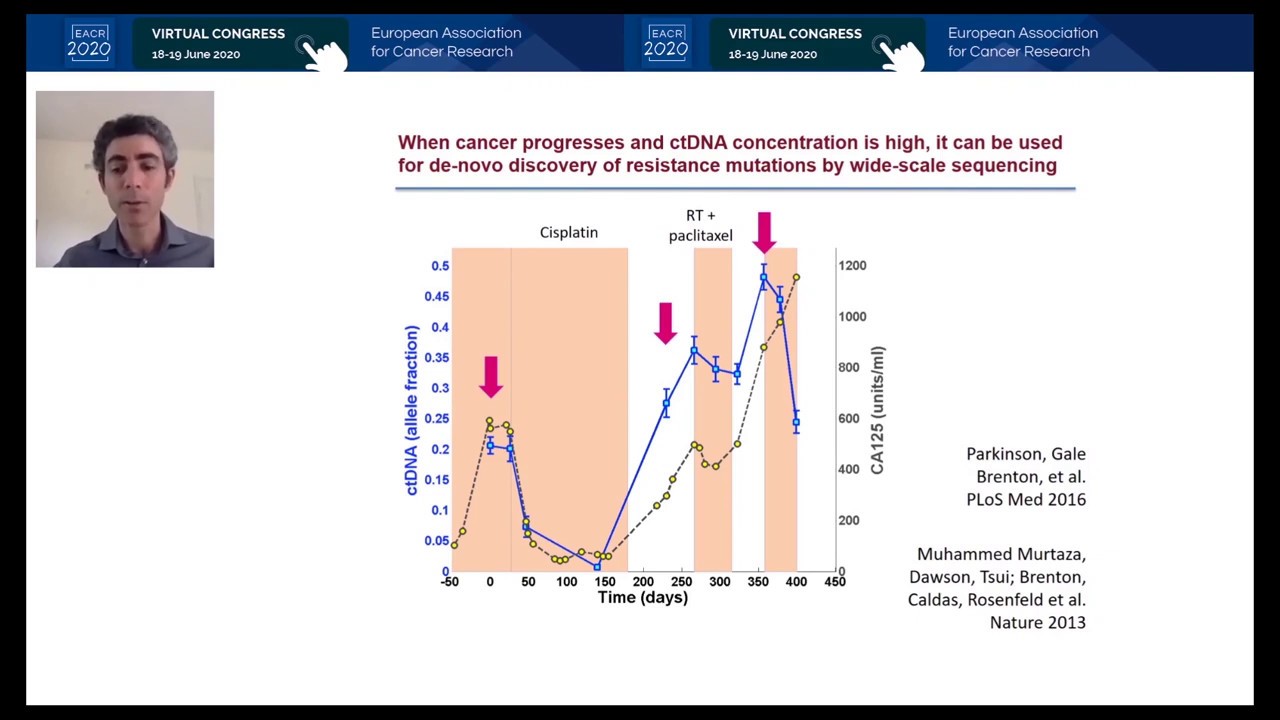
either you design a panel an ngs panel based on the somatic mutations that were detected in the primary tumor and you you use that panel for uh following disease progression monitoring this progression in these patients over time uh signeterra essay is based on the same on the same um it's it's the same strategy and also the other thing that you can do is uh to try to detect or quantify a set of these somatic mutations by digital pcr so mutations that were detected in primary tumor can also be detected um in in [Music] also using
digital pcr but i would usually look at five to ten mutations at least to detect by digital pcr so the the um there is a limitation uh for this particular essay for the personalized essay is that the mutations that are detected in primary tumor may not be the same mutations two weeks or three weeks later when you are detecting in plasma and following up disease progression um that the drivers of that primary tumor may have changed and then uh it's gonna be an issue that's why i said uh when you are doing for instance um
digital pcr for instance you need to do five to ten mutations because some of them may not be there at that time um so to current challenges and limitations for secreting tumor dna synchronicing tumor cells and exosomes um i will try to um go quick so we can get to the q a session but uh for secreting too much cells um again the limitation is very low abundance one to ten ctcs per ml of blood um blood collection and stability uh the issue that we discussed the epithelium zenko transition um also these are detected mostly
in metastatic stage high background abnormal cells low sensitivity and high blood volumes required it's unclear what is the benefit of using ctcs and treatment decision making yet in clinical practice for cell free dna very low abundance as well especially in early stage cancers blood collection and stability um no standards to address pre-analytic analytic and post-analytic criteria high risk of false positives um especially when we are getting at very low oblique frequencies and um there are there's still some need for optimal methods for bioinformatic analysis for exosomes low abundance high heterogeneity and nano size limited sensitivity
and specificity low purity and throughput no standardized method active research is needed to develop an easy to operate high sensitivity and high quality platform for exosome separation and detection um for the conclusions um obviously there are a lot of conclusions that can be made but i just chose some so obviously liquid biopsies have demonstrated promising activity in multiple clinical settings but the great enthusiasm and expectations around them can be harmful if not adequately adequately managed a simple enumeration of ctcs like cell search system will not contribute significantly to the development of improved or more personalized
cancer treatments technological advances in genetic sequencing of cell free dna had enabled liquid biopsies and led to marked increase in the therapeutically targeted implementations detection as we have seen with the number of if the approved assays in in cancer um the sensitivity of detection is improving with more novel ngs based platforms although these come with a higher uh cost and a longer term now time the limits of detection have improved with new technologies such that the uh the cap and seek the ids and safe seek allowing detection of gaining delay frequency is lower than 0.01
uh prospective clinical trials are needed to explore whether changing therapy based on ct dna dynamics prior to radiologic or clinical progression will improve outcomes compared to our current standard adoption of ctcs use or other non-city dna based plasma biomarkers in routine clinical practice will require robust demonstration of analytic validity clinical validity and most importantly of clinically utilized utility because like i mentioned earlier simple enumeration of ctcs will not contribute significantly to the development of improved and more personalized cancer treatments so this concludes my presentation and now i'm back to sonia well first of all i
just want to say thank you very much for that very detailed presentation we are now going to begin the q a portion of the webinar and for that i would like to advise the audience that you can continue sending in your questions by using the questions window that's located on the right hand side of your screen and we'll try to address all your questions during this time that we have together now i'm just going to pass the mic over to mustafa to moderate the q a and lion and christopher will join him with the answer
so you may go right ahead mustafa thank you sonia um so i think the first question that we had was a operational question and this is for chris um so chris what what are it from a regulatory and particular considerations what are some of the considerations that need to be taken into account when enrolling patients into a clinical trial that uses its self-reading lct dna as a primary or secondary endpoint yeah thanks smith uh thanks mustafa um there are a couple considerations um you know when it comes to uh enrolling patients in clinical trials um
some a lot of protocols will have uh some uh requirements built into it uh surrounding certification of lab requirements um you know you might see language around cap clia iso iec uh certification required so i think it's important to you know as we're getting these results that there's certification associated with those uh with those results regulators may ask at some point um to provide that documentation so it's important to track that across the life of the study um along with that certification too especially in europe um with the uh implementation of ivdr uh requiring um
uh you know results to come from ce marked uh labs or lab kits um i think that's important uh consideration if you know if you're enrolling patients in europe just make sure ce mark kids results are coming from ce mart labs um along to even though some studies are allowing liquid biopsy results for enrollment um especially in like lung cancer and breast cancer which mustafa uh presented we still may require um biopsy actual tissue biopsies as far as enrolling as well so even though we might have that liquid component for eligibility protocols still may require
the actual formal tissue submission centrally and this is lying one of the things i'll add to what chris said is you know we one of the concerns we see especially from fda is with uh percutaneous lung tissue biopsies and in these advanced patients whether it's a primary lung cancer or somebody with metastases mets to the lung or so common and the lung biopsy if it's done percutaneously carries a real risk of pneumothorax and from a safety point of view that's an fda concern so that's a strong reason that's pushed a lot of this push into
the liquid biopsies one of the earlier indications that got fda approved was for the t7 90 m mutation in lung cancer to try to get away from the tissue biopsies for safety so there is some compromise in mutation detection but some potential improvement and not needing to have the patients with the lung primary of the lung net risking the metastases and so much of the targeted medicine activity that's going on right now is in lung cancer that it's making the liquid biopsies particularly important thanks lion thanks chris um i just want to add also for
you know when designing trial um that's used simply in human dna there are a number of other factors that can influence detection for instance surgery so a surgery increased total selfie in dna and can affect sensitivity particularly dna detection and the timing of self separating dna measurement must be taken into consideration like four to six weeks post surgery um there are um you know patients that are undergoing for instance active treatment with chemotherapy um that increase the total cell free dna and can affect sensitivity of circulating tumor dna detection so readouts from serial ct tests
must be carefully timed to ensure reliable treatment monitoring patient weight also can increase total surgery dna can affect sensitivity of security control dna uh pregnancy increases total surgery dna can affect sensitivity of circulating human dna detection as well and that may influence the initial enrollment into a trial because of the toxicities from treatment as well infections um also can increase the cell free dna and can affect sensitivity of secreting human dna so all those are like considerations that need to be taken into account when um enrolling patients for a clinical trial yeah and not so
much for enrollment but we do still see in a lot of the studies uh sponsors considering uh using the circulating tumor cell quantity as an there's been a lot in the literature for specific tumor types prostate cancer is a very good example where there's been pretty good correlation between circulating tumor cell quantity and poor disease outcome so not so much for an eligibility criteria but for following patients over time perhaps on drug especially in a randomized study to see if patients on drug and on the background therapy or a control arm are having higher levels
of circulating tumor cells and that in the future might be more of an end point right now it's more of an exploratory or secondary endpoint but something that's uh viewed in the clinical community is likely meaningful okay yeah thanks lyon um so i think this question also is for you lying about um will tissue biopsy become obsolete in the future or will liquid biopsy complement tissue vibes so the tissue biopsy when you can get the tissue is still more or less the gold standard it's that as well as far from perfect we know there's uh
tumor heterogeneity even within the tumors and the primary and the met might have different profiles as well and you can't biopsy everything and everywhere but the tissue biopsy is still the ideal but the liquid biopsy can avoid adverse events for the patient and if the issue is really to find out is a specific mutation present that might let somebody get a targeted agent or another specific therapy that they might benefit from only if certain markers are present and a liquid biopsy is able to show that that can have great benefit for the patients in terms
of avoiding the invasive procedure because unless it's really a cutaneous metastasis all biopsies are reasonably invasive there's a big difference between doing a liver biopsy in terms of the toxic risk for the patient and doing a percutaneous lung biopsy and you know sadly as mustafa pointed out the uh glioblastomas don't do great at putting uh circulating tumor cells out to be able to be detected and obviously the brain is not one of the easier places to biopsy but for certain tumor types the tissue biopsy is still going to really be needed that doesn't necessarily mean
for tumors that are metastatic to the brain that that holds because there they've already metastasized to the brain they were present in the blood there's a you've got advanced disease that's a situation where there's more of a likelihood that the uh liquid biopsy might detect a tumor and therefore mutations meaningfully thanks ryan so i i think another question that came up is in in addition to diagnosing cancer guiding treatment decisions and monitoring treatment resistance what other applications might be on the horizon for liquid biopsy so lyon do you think liquid biopsy may become um you
know like the primary um you know source of let's say for testing for mrd for minimal residual disease it's coming along and you know what's already sort of there in some of the tumor types in clinical usage already is the quantity of circulating tumor cells has already moved there um the uh liquid biopsy equaling say mrd like we have in chronic myelogenous leukemia not there yet but possibly in the future um if you take lung cancer is the best example of where you know years ago we used to divide by adeno versus squamous and now
if you look at almost all the articles it's the pie chart of do you have any of the actionable mutations present so whether that initial biopsy is a tissue biopsy or a liquid biopsy if you can find those mutations and get the patients on a targeted agent that might have greater benefit for them and save the patient just being thrown onto a chemotherapeutic regimen with less of a chance of success and a lot more toxicity that's the biggest benefit we've seen yet is in that group and that's then spreading out into all the other tumor
types but lung cancer is in the lead because of the large number of actionable mutations seen there okay thanks lion yeah so um another question that came up is um are there any promising liquid biopsy assays for early detection of cancer in asymptomatic patients so so as we saw before it was more like um late stage cancers but i can take this question so there are two blood based early cancer detection tests that are under clinical trial investigation and may be making their way onto the market soon potentially changing the paradigm and cancer screening and
the results of which were actually presented during the last um 2021 astro annual meeting and they did show some intriguing finding in detecting um early cancer in individuals so this is thoroughly cancelling it in asymptomatic patients so um i think the first one was came actually from um it's the the study of galeri which was developed by grail so the company has since been purchased by illumina so um these have found that the test accurately detected cancer signals across more than 50 cancer types with an overall sensitivity of 51 so so that's that's a very
good um actually a very promising one the second one that they can think of is the uh the early detection test um that is in the lunar uh to study and then i think that one came from um from garden health so and and that essay did incorporate ct dna assessment of somatic mutations and tumor derived ventilation and um fragmentation which is nucleic acid fragments across genome patterns so so those are the two that i can think of that um actually they are actively pursuing um if the approval and they might be approved very very
soon so i think uh we are beginning at the top of the hour um i will um you know um thank you again for all your questions and um i think my um you know my fellow uh you know met bass panelists for their contribution and um i will go now back to sonia for closing okay well first of all thank you very much christopher lyon and mustafa for answering all those questions uh yes we have reached the end of the q a portion of the webinar and if we could not attend to your questions
the team at medpays will follow up with you after this presentation now if you have any further questions please direct them to the email address that's on your screen and that's info medpayslab.com thank you everyone for participating in today's webinar you will be receiving a follow-up email from xtalks with access to the recorded archive for this event a survey window will be popping up on your screen your participation is appreciated as it will help us to improve on our further webinars now give me a few seconds i'm going to send you a link in your
chat box and you'll be able to view the recording of this event on this page and you can also share this link with your colleagues when they register for the recording as well so i encourage you to do that now please join us in thanking our speakers christopher lyon and musampa uh for that very informative presentation and for answering all your questions so thank you very much gentlemen on behalf of the team here at x talks we thank you for joining us i'm sonya hunt until next time please take care and bye for now bye
everyone you





![[Webinar] High Sensitivity TSO500 Detection of Somatic Variants in Matched FFPE and Plasma](https://img.youtube.com/vi/AVLvEc0MKz8/maxresdefault.jpg)