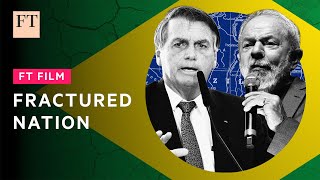
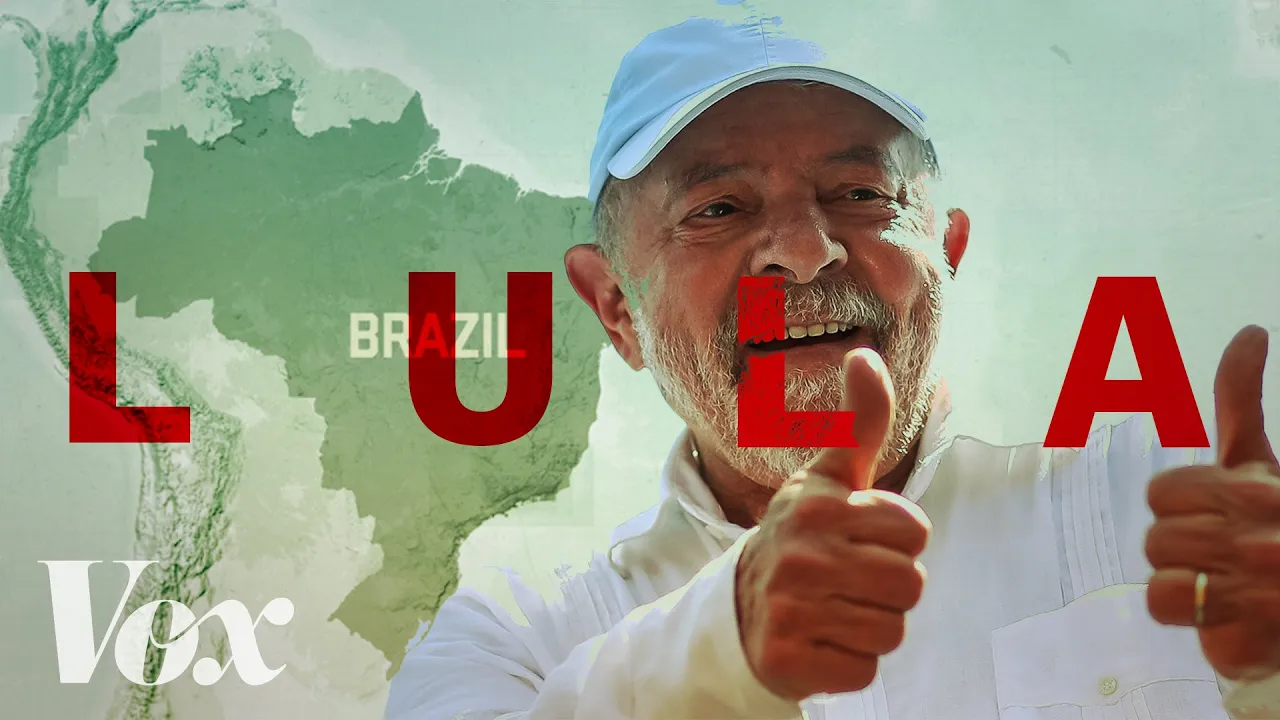
On October 2nd, 2022, Brazilians voted for their next president and most of the votes went to two frontrunners. One was current president and far-right leader. Jair Bolsonaro.
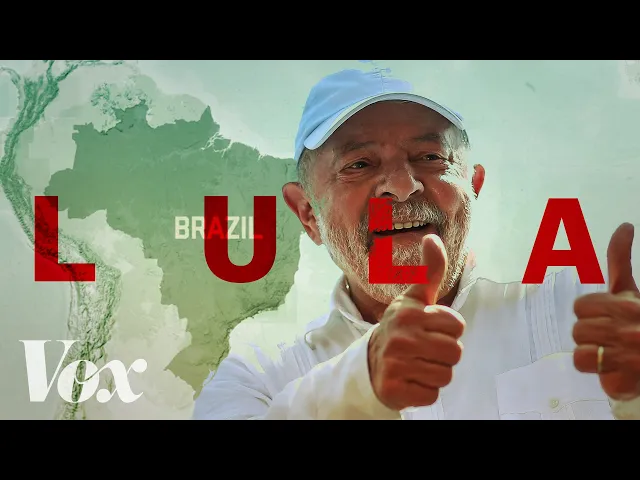
And the other was Brazil's former president, the left-wing politician Luiz Inácio da Silva, also known as Lula. For months leading up to the election Lula polled very well against Bolsonaro and was expected to win comfortably in the first round. But when the results came in, Lula's lead was small.
As of this video, he and Bolsonaro are set to face each other in a runoff. Lula is Brazil's most famous and popular politician. At one point during his presidency, his approval rating was nearly 90%.
But Brazilian politics has changed and the story of Lula's career is a good way to see exactly how. Lula's left wing politics are rooted in his days as a factory worker and a union leader. That's where he began his career as a politician.
During Brazil's military dictatorship Lula led massive strikes and protests. By the 1980s, he had helped organize thousands of trade union supporters into a political party. The Workers Party, or the PT.
Lula's coalition drew mainly from Brazil's political left. It included the working class low income people, left-leaning Catholic voters Afro-Brazilians and Indigenous people. This is a pretty unique arrangement of forces.
In my opinion, it's one of the things that allowed the Worker's Party to grow and become so strong. In 1989, Lula ran as his party's candidate for president. He made it to the second round and lost by only 4 million votes.
Then he lost again in 1994 and again in 1998. His base was growing, but not yet enough for him to win a presidential election. During much of this time Brazil was experiencing an economic crisis.
At one point, inflation was so out of control that the country switched its new currency 5 separate times in 7 years. And about a fifth of the country was in poverty. In the late 1990s, Brazil's center-right led government passed a series of dramatic economic reforms.
They brought inflation down by establishing a stable currency and they brought down poverty. But their recovery also left much of the country behind. .
. including many in Lula's coalition. But in 2002, when Lula ran for president a fourth time he tried something a little bit different.
In the 2002 race, Lula brought several members of Brazil's conservative and center-right parties into his campaign. Including prominent businessman, José Alencar as his running mate. By including them, Lula expanded his coalition attracting the support of center-right voters like business owners and bankers.
Lula's this guy that he can go to a board meeting at a major bank or to a poor favela and speak in a way that people will relate to him. This new kind of coalition led to Lula winning his first presidential election. In Lula's first term, Brazil's economy grew rapidly mostly because of a booming trade partnership with China.
He benefited from a magical economic moment. He used this cash flow to finance a new social welfare and cash transfer program: Bolsa Familia which gave Brazilians a stipend for ensuring their children were attending school and up to date on their vaccines. It was a way to give people money for their immediate needs while getting them to put their kids on the path that would eventually help them escape that cycle of poverty.
This program, along with other reforms like increasing the minimum wage also grew his coalition even further. And more Brazilians voted for left and center-left politicians politicians across the country. The economy picked up and then we had this massive period of growth.
Lula became an unstoppable force. By the end of his first term in office Lula's approval rating reached over 60%. And even though his administration began to attract accusations of bribery and corruption.
. . Lula's unprecedented popularity and coalition building led to a reelection victory in 2006.
By the end of Lula's second term in office GDP was the highest in Brazil's history. And so was the president's approval rating. OBAMA: The most popular politician on earth.
In 2009, Lula picked a fellow Worker's Party member Dilma Rousseff, as his successor. She inherited his coalition and easily won the presidency in 2010. Early in her administration global demand for commodities fell which led to a recession in Brazil.
. . and her approach to managing the economy cost her some support from the center-right business community.
Her administration also faced accusations of corruption which cost her even more support. It didn't help that she was not a good politician. She did not negotiate with Congress in a very skillful way.
And the economic guidance of her administration was very flawed. And then in 2014, something happened that would lead to the entire coalition's collapse. A government investigation found that many Workers Party officials were involved in a corrupt scheme with Brazil's state owned oil company including Rousseff.
. . whose approval rating tanked and in 2016 she was removed from office.
Lula was also implicated for allegedly taking bribes. He was convicted in 2017 and sent to prison. But unlike Rousseff, he remained popular.
For a lot of people, despite Lula going to jail they still love him. For one, a lot of people say "Oh, they all rob us. " "At least this guy was giving us back something.
" But with no one there to hold the left coalition together. The opportunity emerged for an unusual politician to start building his own from the right. Throughout Rousseff's impeachment retired military officer Jair Bolsonaro was laying the groundwork for his chance at the presidency in the 2018 election.
Bolsonaro's core supporters were evangelicals farmers, businessmen, and anti-abortion voters. He was the candidate of the far-right but he also gained the support of the center-right and even some leftist voters who are disillusioned with the Workers Party creating a unique coalition. Meanwhile, Lula's former coalition was split between several candidates helping propel Bolsonaro to an easy victory.
. . and signaling a new political moment in the country.
What Bolsanaro did in 2018 was unlike what we had ever seen. It was a real shift. The hard-right was replacing the moderate-right.
. . at the center of the political arena.
In office, Bolsonaro oversaw further destruction of the Amazon extreme hunger and Brazil being one of the worst impacted by COVID with over 680,000 deaths. Brazil's GDP dipped back down and he also took a confrontational stance with Brazilian democracy trying to control the media and undermining the Supreme Court. Due to these factors, his popularity never exceeded 35%.
In 2019, Brazil's Supreme Court released Lula from prison and later annulled his convictions enabling him to run again in 2022. Lula also positioned himself as a pro-democracy candidate in the race. He worked to assemble another strong and diverse coalition from across the political spectrum.
Lula has made a front that maybe cannot get broader. Eight former presidential candidates from left and right a big part of the business community. Lula even courted evangelicals by campaigning at churches.
At the same time, Bolsonaro enacted social reform programs to court low-income and working class Brazilians who are usually aligned with Lula. But as the 2022 election approached Lula's strategy seemed to be working more than Bolsonaro's. The polls were spot-on in regards to Lula.
Lula finished the first round with around 48% of the vote. But they were dead wrong about Bolsonaro. Lula still won the first round, but Bolsonaro outperformed every poll leading up to the election.
And the bigger surprise was in Brazil's Congress where the right wing candidates aligned with Bolsonaro won the majority. So even if Lula goes on to win the presidency. .
. he'll face a stronger opposition than he ever has before. Lula has made a lot of commitments.
It remains to be seen how he will be able to implement that. This is a force that has to be reckoned with. It is part of Brazilian mainstream politics and will continue like that for years to come.