Buying or starting a business could be the best or the worst decision of your life. It really depends on what business you do. I've personally bought or started over 30 businesses worth 100 million bucks all in and have an advisory firm with 5,000 business owners.
So, this list is not just an educated guess. These are real numbers and data from people who've done it to give you what it's actually like to start or buy one of these. Warning though, some are my absolute favorite businesses, but others they will ruin you.
So, nine businesses, nine unfiltered databacked rankings. Let's steal their homework. Starting with e-commerce, the influencers on the yachts, the dashboards showing 10K yesterday, the Lamborghinis that apparently materialized because someone found the perfect product to drop ship.
You've seen it. Seven and 10 e-commerce businesses, though, they fail in their first year. more than double the failure rate of any other business type.
And the ones that make it aren't run by someone who watched a YouTube video and listed someone else's product with a 20% markup. That math is wrong. You know, they say buy wholesale, sell retail, pocket the difference.
That's true, but margins run 10 to 30% on a great day. On a 40 bucks shirt, you're making maybe$4 to$12. And that's before the ads that are only the real reason why someone actually found you.
the cost of launching. It's not cheap. It's like 30 to 50k and people burn money trying to make the thing work before they admit it isn't going to.
So, I wish more people said this out loud. You don't own any of it. You know, Amazon changes your algorithm and your rankings disappear.
Meta raises your CPMs, your margins gone. You are building on rented land and paying full price for the privilege. So, what does it actually work for?
The person who walks in on an unfair advantage. If you've already got an existing audience, an existing customer base or product you already make, then you're not starting at zero. And e-commerce could actually work, especially if you own the relationship on your site.
If you're though starting from zero, and you're paying Meta to introduce you to people who have no reason to buy from you yet, that almost never maths. So, final ranking on e-commerce, F tier. If you have a product nobody else has, something you made, something patented, fine.
If you're selling the same thing as 10,000 other hustlers, you've entered a race you're going to lose. Next up, landscaping. Rich people have yards.
Rich people hate yard work. You already understand this business. So do I because I pay for it every day.
Now, what's fascinating is weekly mowing runs 50 to 150 bucks per residential property on the low end. So a solid crew hits 10 to 15 properties a day. But here's the sexy part.
Recurring monthly revenue, the same customers every single week as long as they have grass that keeps growing. And it always keeps growing. But the actual way to make money here is not to mow lawns.
It's the upsell. So, you start with cutting the grass. You end up designing a $60,000 backyard patio.
The work is there for you to get because you're already in the yard. And you can start this for 2,000 bucks. You need a mower, your own two feet, you knock on doors in a neighborhood with big lawns on a Saturday afternoon, and you can have your first clients before dinner.
But if you have some capital, there's even more upside in buying an existing business. So, one of our Contrarian Academy members, Meredith, is acquiring a landscaping business valued at 900K. It has six employees, and 85% of its customers has been with the business for over 10 years.
60% for over 20. Look at this. There's no website, no Instagram, no Google ads, no automated billing, no online booking, no digital presence.
It's literally been people talking about them for two decades, word of mouth. That shows how powerful this business model is. So Meredith gets to walk into a business with 20 years of loyal customers and the entire digital layer completely unbuilt.
That's when I started to hear the sound of money and opportunities like this are everywhere. So final ranking for landscaping B tier. Solve rich people's problems.
They'll pay you every week and call you the moment you stop showing up. The only reason it's not higher is lots of competition. And we're not even talking about commercial yet.
Maybe comment for me if you want to hear more about that model and I'll tell you in the comments. laundry. I spent years managing real capital, institutional money, a lot of it.
Then I bought a laundromat. And when I tell you that my colleagues on Wall Street thought I was having some kind of mental breakdown, I mean, I left corner office, really expensive, fancy job to own a room full of washers and dryers in a strip mall that sometimes had a crackhead outside. And from the outside, that probably doesn't make a lot of sense.
But from the inside, I knew people would always have dirty laundry. And I knew I probably didn't have to be there all day to run it. So regardless of like what happens in the economy, regardless of whether we're in a recession or a boom, humans get dirty and they make dirty clothes.
And that's the thesis. So I put up less than $100,000 and the cash flow started immediately. You know, there's there's two versions of this business now.
There's the classic laundromat, what I did, that's physical location. You make about 2 to four bucks per cycle. You have about 30 machines on average, 15 to 30k a month if it's right, but you got tight margins.
So that means you don't make a lot of profit. And the newer pickup and delivery model, you actually collect the laundry or they bring it into your laundromat. You wash it, you fold it, you either bring it back to them or they come and pick it up.
You charge by the pound like uh $153 bucks a pound or you charge by the bag like 25 to 75 bucks. When you add subscriptions and you have recurring revenue from customers handing you their dirty clothes every single week, your business model ends up making a lot more profit, a lot more money. On the other side though, it costs more to start.
So start up for delivery is a van. You know, you could throw them in your truck to start. I didn't have a van at the beginning.
You need to have commercial machine access and detergent. So it's like under 5k to get going if you rent the van. And if you use somebody else's laundromat.
Now, if you have to buy an existing laundromat, we're talking more like $300,000 to a million bucks depending on location and equipment. By the way, do not can I just have a warning here? Please do not do this.
Do not start a laundromat. You can buy it and you can rent laundry space, but you do not start this business. You could start the wash and fold on top of somebody else's laundry mat.
You could literally just rent machines, run it during the night, but you buy them because it's way cheaper than building them. You can use creative finance. And all those years working on Wall Street gave me sort of the playbook for how to find businesses, structure the deals, and use other people's money.
And so the way I bought that laundromat, like that changed my life. And I'm obsessed with one idea, which is giving that playbook back to other people. So, if you want to learn more about how to buy businesses with creative financing, I'm actually hosting this virtual live event.
We only are doing this this last time this year. It's called Main Street Millionaire Live and I go through in every detail, every part of the process. It'll cost you a couple cups of coffee basically to come.
You learn more and get done on your couch than most people do in an MBA. Okay, so my final ranking on laundry, A tier. boring in exactly the right way.
You can scale it with just renting a few bucks your time. And this is actually how I started my business. Digital agency.
In a digital agency, there is a risky way and a less risky way to do this. So, version one, you start an agency. It could be anything.
Marketing, social media, SEO, paid ads. You're going to land a few clients right away. That's not that hard.
You charge 1,500 bucks to 10,000 bucks a month in retainers. and suddenly you got 15K to 80K coming in monthly. On paper, this actually looks amazing.
Then one of those clients calls and says they're cutting their marketing budget and then another goes to one of your million competitors and the business is very quickly halfed in size. The problem is you grew your team during all that portion. So these not so sticky clients actually are killing all of your margin and all of a sudden a business that used to be profitable with one person is completely unprofitable with five or 10.
The problem with agency is the whole thing is held together by you. They actually in the beginning they want your relationship, your hustle. They're they're betting on your reputation.
So you're going to work 16 hours a day, 7 days a week. Take a vacation, your agency slows down. Lose two clients in the same quarter, you're in trouble and bleeding money.
And AI is now doing the work that made this business really worth building in 2018. You know, copywriting, design, SEO. The margins are compressing fast and I don't actually think they're coming back.
So, starting an agency from scratch right now, hard pass. Uh, buying one, different conversation. Let me tell you why.
One of our members, Ken, got rid of this risk in two ways. First, he found a hyper specialized marketing agency. I like those better.
One that helps independent hotels optimize their bookings through revenue management. Talk about niche. Specialization is harder to replace.
It's also fewer competitors and your right fit customer exactly knows that you are perfect for them. Then King got rid of his startup risk. He bought a multi-million dollar business.
I know that sounds like a lot of money, but he used a lot of revshare and sweat equity and it already had clients, systems, and recurring revenue with long-term contracts. So, he at least walked into a client base that had been loyal for years. So, we know their likelihood of continuing to stay loyal was pretty high.
And I remember him saying to me, "If you want something bad enough, you'll find a way to get it. So, stop blaming somebody else. " And the reason that I like this business today is that you don't want to start too many of these unless you're going to keep your team really, really small in the beginning.
So D tier to start unless it's really going to be a job, not a business. Btier to buy because you already know if this is a long-term path or not. I don't think the business model is broken, but the path matters a lot.
Otherwise, you're never going to be able to scale yourself. Car wash. This one isn't rocket science either.
The whole startup kit is Home Depot, you know. Uh you could be like this kid. You get a bucket, sponges, microfiber towels, car soap, and a foam cannon, and you get a hundred bucks.
Actually, he made a couple hundred doing this. You drive to a neighborhood with nice cars, and you knock on doors. Nice cars belong to people who hate watching them get dirty.
Now, an exterior hand car wash is 30 to 60 bucks in location. Full interior detail, 100 to 300 bucks. You can also charge more in nicer neighborhoods.
In the beginning, you work solo like he did. You can service 5 to eight cars a day. That's 150 to 480 if you don't have upselles before you've hired anyone.
Let's say something crazy like you're doing this 30 days a month. Well, that's damn near 15k a month. And that's just with your work.
If I was doing this really cleverly, I would probably do it at offices and go try to wash a bunch of cars using somebody else's water on site for people who are already located in one spot. But there is a problem. The ceiling on the mobile version is real.
You can only wash so many cars by yourself. So to build something that scales, you've got to have a fixed location, maybe a tunnel wash, automated systems, and you're looking at a lot of money to do that. You know, $500,000 to a million dollars.
The mobile version is just a great proof of concept, but it's a job that depends on your labor until you build a crew. Not enough people realize though that you don't have to write that check. Perfect example.
This 22-year-old now makes millions of dollars a year with car washes. But where did she start? Hannah actually started at 12-hour shifts on a factory floor before she decided she wanted a car wash.
Her dad, he was a factory worker, too. Like, she came from nothing. What did she do to get the cash to do this?
She cold called the owner of a local self-s served car wash. Had like six bays, vending machines, three vacuums. She made a relationship with him and then made an offer with $0 cash down.
Why did this work? Is the owner crazy? No.
The owner was ready to exit. And what was fascinating is Hannah took over operations, handed the owner the majority of the revenue until the purchase price was covered, and kept her cut from day one. Now the car wash brings in 7,400 bucks a month, and she owns more of them.
Then we've got my friend over here, Investment Joy. He ran the exact same play but different scale. He bought two car washes in a storage facility for 675K.
But look at the guy. He would be the first one to tell you he didn't have cash. So it was 95% seller financed.
$40,000 down on a $675,000 deal at 3% over 20 years. He was profitable in the first week. And I've seen the car wash myself and been here many times.
This business goes to show that nobody needs to come from money because both these people didn't. But they understood the same thing. A seller with no buyer lined up will take a creative deal over no deal at all.
And that will be your name. Oh, and if you want to learn exactly how to structure those conversations, I will teach you that. You can go to msm.
live or click the link below or you can scan this QR code. This one B tier. It's the easiest business on the list to start and one of the harder ones to scale.
So know which version you're building before you buy the sponges. But we've seen people make thousands, hundreds of thousands, and millions with all levels of game. Content creation.
Now, I know what the comments are going to say. I'm a content creator. How can I put this in here?
I'm going to tell you exactly why. It's cuz I'll show you my actual numbers. Not a range, not a best case scenario, but I'm going to show you the most honest account I think I've ever given you.
And for every number I show you, I'm going to show you what it took to get there. Because sometimes people just show you the highlight reel, especially on social media. And that's why people make bad business decisions.
YouTube pays three bucks to 20 bucks per thousand views on your niche. Finance and business, like what I do, sits at the top of that range. Gaming and pranks sit at the bottom.
So, if you're pulling a 100,000 views on a single video, that's 500 bucks to 2,000 from a piece of content. In 2024, I made 360,000 from YouTube AdSense. But that number took years to build.
And do you want to know what it cost me that year? About a million2. So, $360,000.
But I actually lost money on the top end. That's okay cuz I have all these other businesses. That did not happen in month one or month six or even year one for most people.
And I'm someone who posts consistently. Like, don't you get tired of me sometimes? And we have a whole team that obsesses on the algorithm, has built a real business around content.
Most people who start a channel are not doing $360,000 in AdSense, which is why most of them quit. So, where's the real money in content? ads, sponsorships, digital products, memberships, real products, speaking engagements, and things that we add on to the business.
Like a speaking engagement might run somebody $10,000 to $200,000 per event, depending on how big you are. So content is this flywheel of my business, and without it, I obviously wouldn't be here yapping at you. But there are two serious problems.
The first is time. It takes most people 1 to 3 years just to build an audience that's even worth monetizing. And there are outliers, like handful of Tik Tockers who blew up, but candidly like I was here.
This is a secret YouTube meeting with the CEO and Oprah and whatever. I heard all their numbers. They make so much less money than you think.
Tell me what you think the biggest YouTubers in the world make besides Jimmy cuz he's a phenomenon. The truth is you can do it, but it's going to take time and most people actually underestimate how much work it is for how little money. And the deeper problem is the similar to e-commerce.
You don't own the asset. So, your audience lives on Zuckerberg's platform. He can kill your reach tomorrow.
YouTube's my favorite, but they could rewrite the algorithm. I was at this secret event with all of them, and I actually heard every single person there talk about decreasing views and how they're prioritizing new YouTubers, which sounds good to you guys, except guess what that's going to mean for you later? They're going to dep prioritize you later.
So, one platform shift in years of work goes quiet, and that's on the best platform that there is, YouTube. Don't even get me started on what happens on Instagram, how you make no money. Tik Tok, how you make negative money.
Snapchat, negative money. And Twitter, I love Elon, but negative money. So, this is Dtier.
Better to focus on actually building a thing and making content around it, not trying to make money from content. Otherwise, you've built a very time-consuming hobby that's actually really expensive. Paint an amazing business.
Why? It's because, yes, it just takes some paint, paint brushes, and a little knowhow. But more than that, there's so many ways you can do this business, and I'm going to prove it to you.
Let's break it down. You can charge hundreds of dollars per residential house room, or thousands or tens of thousands of dollars for the interior and exterior. It will take you a couple hours per room and probably 6 to 10 hours for an entire house.
That means that you can do one to two houses per day to start. That's thousands of dollars on day one. But you might be saying, "Wait a second.
I don't know how to paint. Oh, no problem. Because you actually do subcontracting on this, which means most often you find painters who don't have customers and you pair the two and you take the margin in the middle, aka the extra profit.
So, speaking of margins, usually they're about 50% gross, which means without all of your costs taken out of it, which is insane, but the average profit margins for a service business are really somewhere between 15 and 30%. So, what does this mean for beginners? The extra margin means you have room to hire people and still cash flow, which for anyone starting out is a must because you don't know how to paint and you can start it for almost nothing.
I wouldn't even go out and buy or rent paint brushes or get a truck or any of that. I would actually go out and get customers. So, I would have a website.
I would have a phone number. I would have some really cool business cards. You might need to put some signs in front like real litterers in the houses that you're doing and insert those business cards in it.
Now, if you think this is all too crazy and there's no way this could work where you don't actually have to paint the house, but you get to make money from painting houses, well, other people doing it, you should meet Steven. So, Steven actually worked in home services for years. He had owned his own little company.
Now, that little company is Resibrands and they do nine figures a year in revenue. What's fascinating is he's helped hundreds of people start painting companies all around the country and on average these painting companies can make hundreds of thousands and millions of dollars per year. Most of the people that own them are not actually painters.
So you can start if you're into painting yourself with a Home Depot run or you can start if you're a good marketer and hustler online with a website. This is S tier. It's actually a pretty high margin, a big market with really big price tags for every job you get done.
So, this business is one I not only like, but I own. >> LONG LIVE PAINT. >> Speaking of marketing, if you're going to go that route, you better have a website worth keeping.
And that's actually the first thing any new operator needs to sort out before they touch ads, before Instagram, before anything else. Most default to do. The problem is the good names are gone.
Smart operators aren't settling for some clunky hyphenated workaround. What are they doing? They're using online domains because it's actually the cleaner choice.
When someone lands on Steven Painting LLC. 123. com, okay, that feels like a fake business.
But if it's just resands. online, clean, professional, immediately credible, easy to read, easy to remember, and it looks like a business built for real users, not from leftovers. Over 3.
5 million businesses worldwide already use it because the word online shows up in over 500 million monthly searches. So, it gives your site a real SEO edge from day one. You can get aonline domain at all the major providers.
But if you want a deal on the first year, go to the link on screen or in the description and get yours for just 99 cents today. Now, back to the list. Fuel delivery.
The concept is simple. People hate stopping for gas. Me especially.
Like it interrupts your morning. It's 5 minutes in the wrong direction. But they do it anyway because there's no alternative, especially back when I didn't have any money.
Well, these two decided there should be one. So, Juice Fuel is a mobile gas station. You open an app, submit a fuel request, and someone drives wherever your car is parked and fills the tank up.
Yes, yes, yes. You pay convenience premium over the price at the pump. And these days, that's already so expensive.
But remember, this is rich people. They have money. So, they're happy to pay for the time.
It's only like 15 bucks, which to them they probably make way more than that an hour, which is why in year two, Corey and Caroline did $385,000 in revenue. Year three, over a million bucks, which is when I said, "Actually, can I own part of this thing? " You know, in a market where essentially nobody else was competing, they're a winning.
Now, there's lots of catches here, so listen up closely. You cannot start this with two gas cans and a little bit of hustle. You need a fuelcertified vehicle, hazmat permits, a state specific regulatory compliance.
Look, their initial investment was like 80K and most of it went to compliance before they served a single customer. You cannot test this for 100 bucks on a Saturday. That barrier though, that's also the opportunity.
The permits that make it hard to start are the same permits that keep everyone else out. So this industry I think especially when you start doing what they did next like how to go to the next tier commercial fleets boats doing this at factories and locations where they need big trucks to be fueled up big machines to be fueled up. This is a really interesting business but it's expensive to start which is why it's Ctier.
Do the compliance work and you might build something nobody else can be bothered to copy. I bet this company goes to nine figures. Trash and junk removal.
This business model is incredible. People have things they don't want. You come and get rid of it for them.
Especially now in the days of Amazon, it's a lot of stuff. There are two ways to do this. First one is junk removal.
It's like a one-time pickup. Someone is moving, a restaurant closed down, home is being remodeled. There's a bunch of stuff.
People come and grab it, and that's where you come in. You can charge 200 bucks to 600 bucks per job, and a lot more if the job is bigger or on commercial sites. Now, this part sounds easy, but the problem is you're going to need a truck, and depending on the size of the job, you probably need something more than grandpa's pickup.
Now, you don't have to buy it. You can rent one for around a hundred bucks a day. You'll need some gloves, maybe some straps, maybe some biceps, but let's call it 50 bucks for all those in a gym membership.
And all in one day, you're looking at a small profit. It's a great place to start, especially if you know, if you're like a hustler out there, a young dude. That's probably why there are a bunch of these companies that are called like hunks that move junk.
But this isn't going to scale easily. The problem is that the restaurant that shut down, it isn't going to shut down twice. It's rare that the same person remodels constantly that there's no recurring revenue in this.
And you guys all know that's my love language. That's where trash removal excels. You know, the loud truck that wakes you up every morning, it's going to cost more upfront because you got to get a special truck.
But this thing scales and I am talking to the billions. Which is why with residential subscriptions, you can charge 30 bucks to 70 bucks per household per month. A midsize garbage truck like this can service about 1,500 houses.
And I did some complicated math so you don't have to, which means it brings in about 60k a month. The truck is going to cost you at least a K a month. And you have to factor in maintenance and gas and dump fees.
Those are real but easy to find. But this is recurring revenue and it scales. This is exactly what my friend Spencer did.
He was really frustrated with his trash pickup and he noticed other people's frustrations on Facebook. So, he puts out this message and asks how many people would sign up for his garbage service if he started it. Within a day, he had 150 people paying 33 bucks a month.
He bought a truck with a 15K investment on Facebook Marketplace like a psychopath and started Lonear Garbage. Now, there are pros of both of these models. They're recessionp proof.
Trash doesn't just stop existing during a downturn. There's low skill to start besides the truck and having to drive it. Although that thing's fun but kind of hard.
Be careful with those arms. You can see how I nailed it here. There's recurring revenue with trash and you can replicate it across new industries.
The cons are that it's physically demanding. It's pretty smelly, although not as smelly as I thought it was going to be. And the cost of equipment, including the trucks.
So, this one though led to this guy becoming a billionaire. That's why this is S tier. One truck, recurring revenue, a market that will never go away.
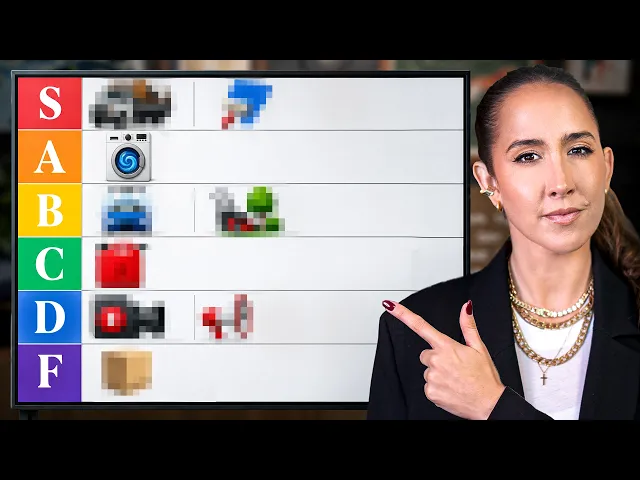
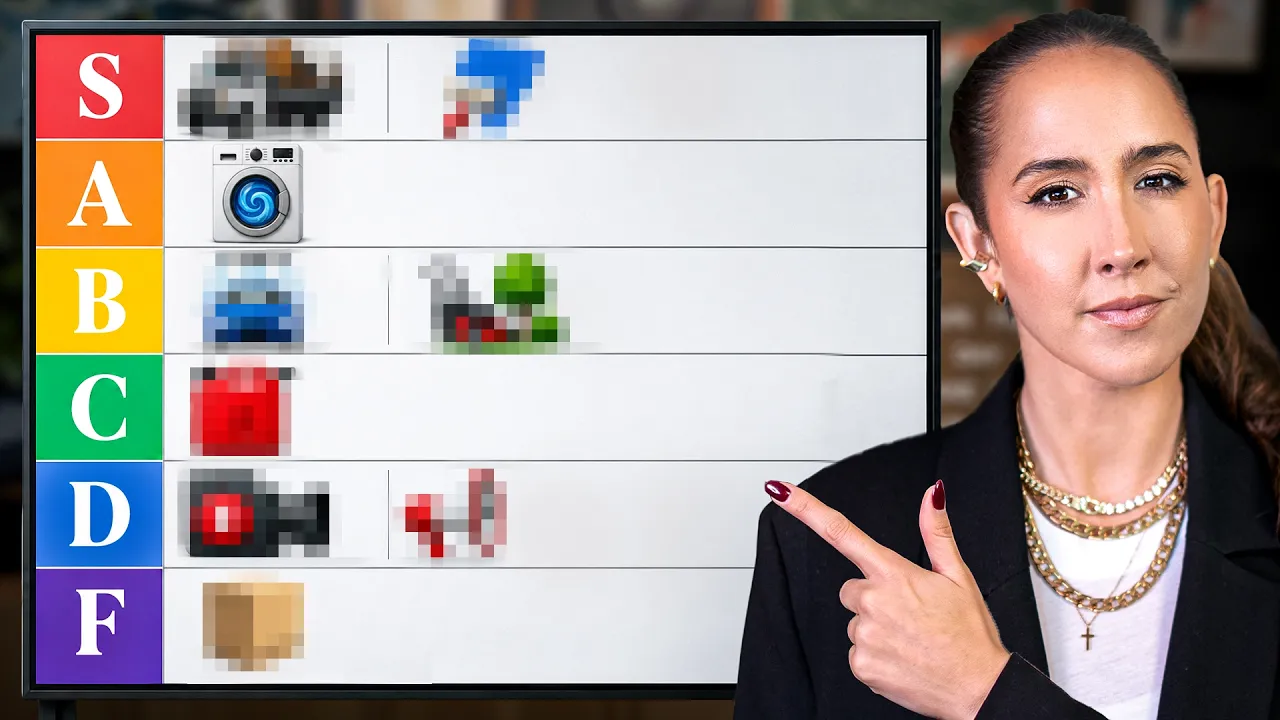
Hot garbage. Here's the tier list one more time. Pick the one that matches your capital, your skills, and how fast you need cash.
Then spend one hour a week actually researching it. Not watching videos about it. You already did that.
Research it. What does the deal look like in your city? What's your startup cost?
And if you need help knowing where to start and beginning the whole process, I got you. Come to Main Street Millionaire Live and I'll break down every step of buying or starting these. Let's go.