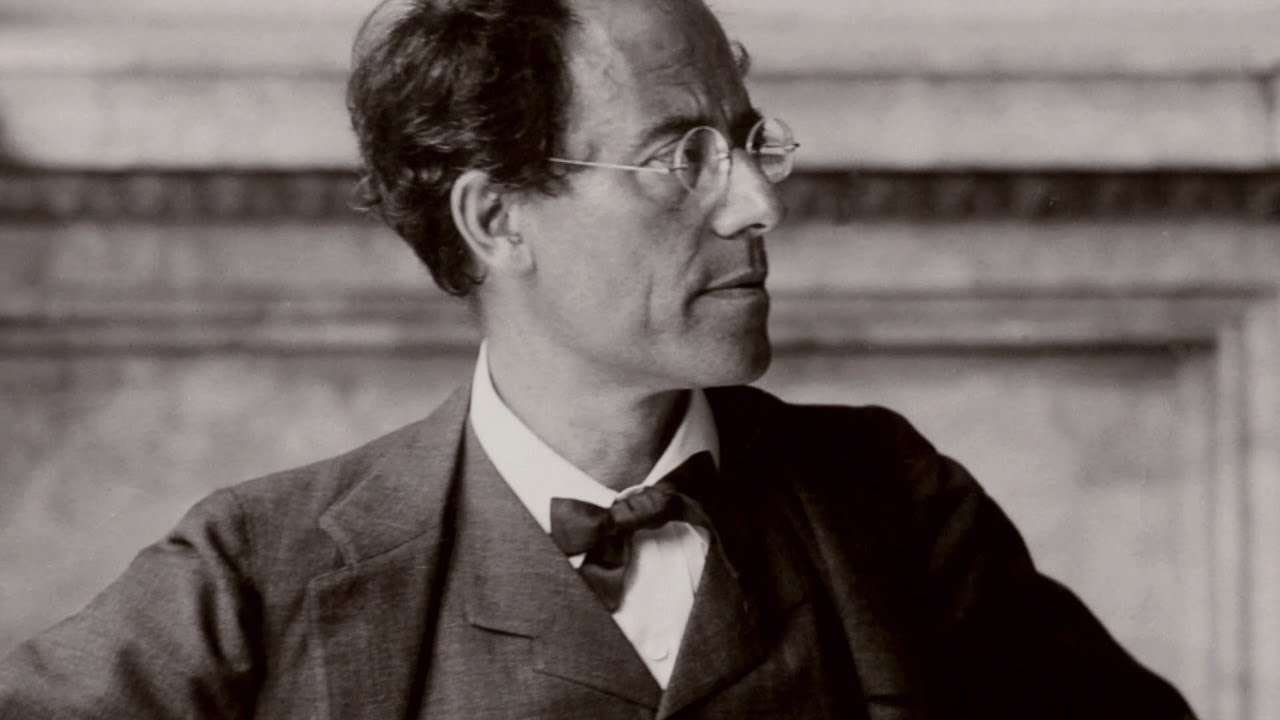
Oh new naba zdenka do so and closes well imagine a world like him so large that it mirrors the entire world so said gustav mahler a visionary composer who sought to create a new kind of music of such immensity and scope that it could invoke the very forces that created the cosmos a music so dramatically charged that it possesses the power to change us [Music] in malas third symphony a voice in tones the great questions of existence oh man beware what does deep midnight tell us we yearn for happiness and life yet there is suffering
and death seeking answers to life's contradictions Mahler tapped the wisdom of a living planet mystic ominous music it isn't music and emotion but rather mystical immense sound of nature can music shape a world and reveal life's deepest secrets will we be changed by entering that world Mahler's epic journey begins with the creation of the cosmos [Music] for his third symphony Mahler assembled singers in an orchestra of unprecedented size they perform with Mahler described as a musical poem that travels through all the stages of evolution the first movement alone develops two immense themes the creation of
the world which he named pan awakes and the relentless self-assertion of life called summer marches in [Music] [Music] after this enormous fan for the awakening of life mala does something quite unexpected all of the energy dissipates down to almost a quiet Rumble and he reduces the musical elements to the barest the most essential gesture of difference and that is the notion of oscillation [Music] [Music] two notes alternating and a universe vibrates into existence chaos begins to take on form timelessness gives way to a definite pulse from the bass drum [Music] [Applause] there is a lot
of rather disconnected bits and pieces of musical material none of which have long life they're rather like those primary particles that we know about from physics that don't exist for very long things that appear and disappear they sort of glow in the dark and then fade away [Music] a Bernoulli system then out of unfathomable silence it is the world nature as a whole that is awakened in two tones and sounds [Music] there are such energy unleashed but there's an element of terror and of overwhelming power that can go very wrong but one sense is a
force there at work that's dangerous that one shouldn't just romanticize [Music] mother thought of calling this first moon for the mountains tell me was facing debated near to the cliffs Rock and it's not coincidental that in Schopenhauer's philosophy there's a very hierarchical description of life that begins with inorganic matter in fact with rocks the ideas of the German philosopher Arthur Schopenhauer deeply influenced Mahler and helped explain much of the conflict in his third symphony according to Schopenhauer the universe and everything in it comes into being through the action of a single underlying force he called
the will why do we live why do you live why do you have to live it is the will to life that makes you want to live the shop and hurryin picture suggests that the whole world of created matter is brought into being by an underlying will which then turns itself into individuated matter which is things and organisms all plants all animals all human beings are driven forward by this invisible force by this overwhelming force the will as a single purpose to propagate and perpetuate itself this it does through ceaseless competition and struggle as unwitting
agents of the will all living creatures are doomed to a narrow limited experience of the world only the artist Schopenhauer believed has the power to perceive a deeper reality not deformed by the will the artisan raises big questions but we don't just raise big questions as human beings we try to come up with answers all the scholarly disciplines history biology our efforts by the human community to come up with better answers than any of us will come up with on our own Malheur being a master of the musical idiom his answer to the existential questions
were musical answers not all in life is struggle Mahler introduces the playful and creative side of nature in a passage labeled pan sleeps once awakened pan the Greek goat God will call up the whole teeming pageant of living creatures romantics love the metaphor of pan as this deep terrestrial spirit whose name in ancient Greek means all and so there's a sense of the spirit that is in everything [Music] hands melody which we now here in the cellos keeps shifting shape eventually taking the unexpected guise of a marching band [Music] moer doesn't hesitate to borrow from
popular elements along the way well everybody that has experience to March for example marching band music awakens announced the experience of watching a marching band go by they are participating in something with many other people [Music] so we have this idea of the image of life developing as a kind of march of life and a march moves it goes in a particular direction it involves taking people with it [Music] once the March is underway it opens up to an enormous Vista huge panorama of sound [Music] which sounds like the moment before fulfillment [Music] just as
we think we're going to lead us to the top at all classes [Music] that's exactly that that idea that we thought we'd gotten away from it's the stirrings of life once again and they struggle to get out the stirrings of life must break out of their frozen prison the first movement of Mahler's third symphony develops into a ferocious struggle between the turbulent forces of life and the dead silence of winter for this battle mother drew upon the ideas that perhaps the most radical thinker of his time Friedrich Nietzsche what's very important for Mahler was Nietzsche's
notion that Greek art had had a heroic period in which religion and art were fused [Music] in the philosophy of friedrich nietzsche Malu saw a connection between the creation of the universe and human creativity Nietzsche wrote that Arturo is from the interaction of two contrary forces represented in Greek mythology by the gods Dionysus and Apollo [Music]