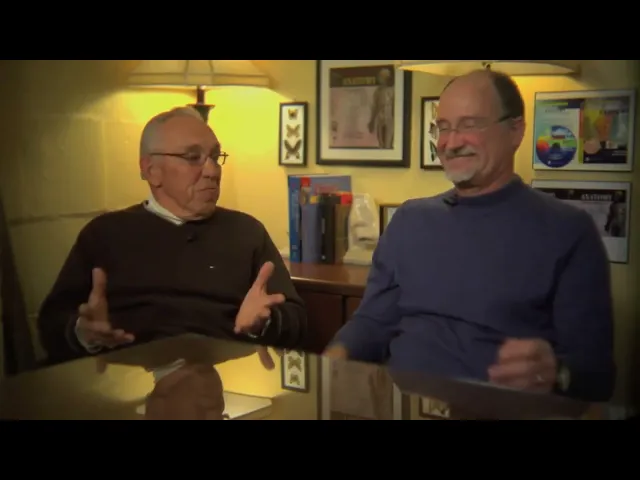
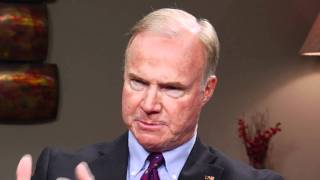
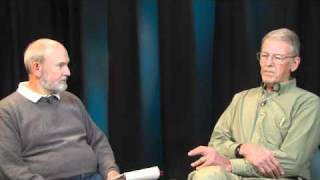
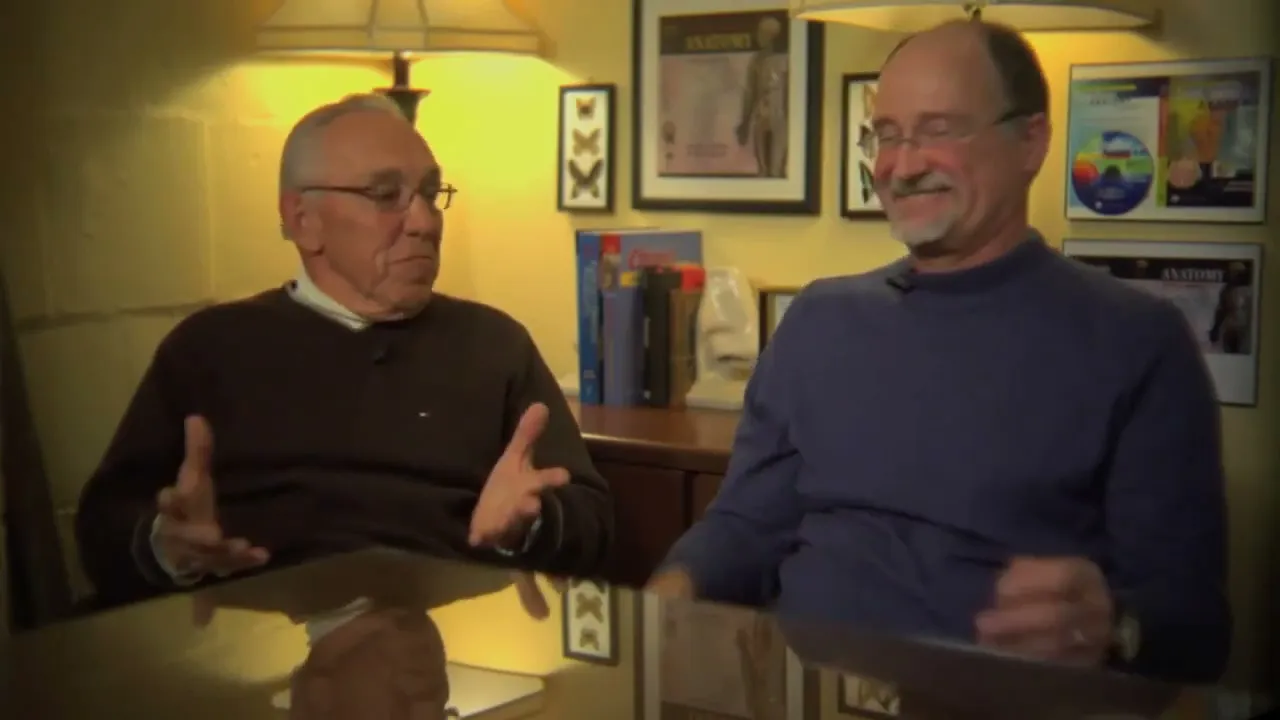
[Music] welcome to the American Association of anatomists living history of anatomy project my name is Arthur Del and I'm professor of cell and developmental biology at the Vanderbilt University School of Medicine director of structure function and development and director of the Vanderbilt anatomical donations program we are filming this interview at the Vanderbilt University School of Medicine here in Nashville on December 29th 2009 I'm pleased to be interviewing Dr Keith L Moore professor ameritus in the division of anatomy department of surgery in the faculty of medicine of the University of Toronto Toronto Ontario Canada Keith is
known worldwide for his research on the sex chromatin and clinically and his books on clinically oriented human anatomy and embryology no Canadian except perhaps The late professor JCB Grant has done more for teaching clinical Anatomy than Dr Moore one of his colleagues said Keith has uplifted the profession with his outstanding books in addition his modest down toe personality and demeanor make him one of the truly great anatomists of his generation Keith was professor and share at the University of Toronto for 9 years and then associate dean of the basic medical Sciences for 5 years before
Accepting the chair of anatomy in the faculty of medicine at the University of Toronto Keith was professor and head of the Department of anatomy for 11 years in the faculties of medicine and Dentistry at in the University of uh Manitoba in Winnipeg Manitoba Canada Keith graduated from the University of Western Ontario in London Ontario Canada receiving his Bachelor of Arts in 1949 his master of Sciences degree in 1951 and his PhD in 1954 afterwards he was awarded a two-year post-doctoral Fellowship by the National Cancer Institute of of Canada to study sex chromatin patterns in cells
of human malignant tumors thank you for that uh introduction uh some of those things are very pleasant for me to hear but uh I'm very happy happy that you are willing to interview me for this because you're very busy uh but we've been friends for a long time and uh as most people will know you're a co-author on Two of my uh gross anatomy books and uh have made great uh improvements in the in the books I think that's I know we were uh we were hoping to have have uh Dr Ann auger who's the
third author on our books as well uh included in this interview but she unfortunately was unable to make it this weekend but I know she wishes she could be here for this uh this event Now Keith I'm going to ask you uh uh many questions here uh Sir Isaac Newton said that uh if I have seen further It Is by standing on this shoulders of giants whose shoulders did you stand on during your career in medical Sciences well the first one was Dr Murray bar who was my supervisor for both my Master's and my PhD
and uh he taught me how to uh do research really and also how to give lectures and so on so he was very uh important part of my development and I appreciated that and we worked together for I think it Was six years working on the project of the sex chomon which we'll talk about later the other one that was very important to me was uh Professor uh Ian McLaren Thompson at the University of Manitoba faculty of medicine uh he uh preceded me there as as a chairman but the one thing that I really enjoyed
with him he in third year of medicine he uh would take the students over in groups of say 15 or 20 into the hospital and bring in a patient with the problem for Example there one lady came in and she'd had breast cancer so he would ask the patient what was her problem and she'd say well I had breast cancer and so on and so on and after he'd talked to her for a while then they would take the patient out and then he would ask the students uh where would where would the cancer cells
go where would you find most of these things like that and so this was my first real introduction to uh teaching of clinically oriented Anatomy when I was a student they just said learn it and if you asked them I'd like to know why I'm learning this why is it important they said don't worry about that you'll get that in your third year and I didn't like that so he he then was very good and then the other one was Dr Duckworth he was chairman of the Department of anatomy uh just right after Grant Professor
Grant retired and he had a uh memory he could practically read the the Grace's Anatomy he was said that good and he he was very interested when I was writing this book and so he read all the manuscript every time I would work at night L 2:00 in the morning and he'd come in he say what did you write last night so I'd give it to him and he'd go through and make suggestions and that that was very helpful and then the other person there that I really thought a lot of uh I first knew
him when I was in the Navy and we'll talk about that later U Dr uh name Dr McCrae I forgot us a long time ago but uh he uh before I got to uh uh Toronto he sent me a letter and said he would like to come in and work teach in the department he didn't want any money but he wanted to be able to help students because he said over the years he saw people uh didn't understand certain things and that bothered him so he said he'd love to help me teach that so again
when I was uh uh writing he Would read that and he was very careful to make sure that I wasn't saying anything that was going to be uh wrong for the students so he was that and then the final one that I had to mention there uh was my wife Marian she was a great uh influence to me and helpful to me uh she not only had to look after her five children but she worked and and earned her Bachelor of Arts degree degree and uh because she was reading the manuscript I said well instead
of Taking that Mickey Mouse course that you get in in arts I said take the first year of biology that the medical students take it and she took it she this is kind of tough stuff but she got through it and and used we used to talk and help it but it made it easier for her then when she was reading this manuscript to understand what I was talking about and then she was able to criticize me which uh sometimes she wasn't too tactful and I Kept saying well I'm not perfect and and she'd say
yes but you don't have to keep proving it I know that Maran was a uh of all these people that Maran of course was the being your wife was the greatest influence of anybody and uh she was always your constant companion at meetings and so forth and uh we'll probably want to say more about her well I I was going to mention that uh sadly she got colon cancer Uh and uh we thought that it happened to be a Grade Three which I never told her but that's pretty serious but they she took chemotherapy for
uh I guess about a year and uh she was fine until one doctor said you better go home and enjoy yourself for a couple of weeks and Mar said do you mean I'm going to kick the bucket he didn't know what that was and uh but uh she she was uh faithful right to the end and she died about three week weeks before our for our 57th 57th um Ann anniversary you at the beginning of your career and and how you started would you tell us a little bit about your uh your parents and their
influence on your career yes they were they were uh very influential my father was really an amazing person he was the oldest of uh 13 children his his dad had 13 10 girls and three boys and he was the oldest so when he finished his elementary school he had to go and work in a factory and give some of that money To raise all these girls that kept coming along and uh but he did save money so when he was uh 21 he went to high school but he went to a private school cuz he
saved enough money went to a private school and uh he did very well uh there and then he went to McMaster University which at that time was in Toronto and uh it's now in in Montreal no it's it's in uh I can't think now where it is it's uh Hamilton OH Hamilton Hamilton yeah my my because I'm 84 my old brain doesn't work as well as it used to but anyway uh he would he the McMaster University was up with the museum there in Toronto and he'd ride down his bicycle and Mar mother was doing
music and in down at the bottom of this thing and he'd go down there and listen to the music because it was free and he met her and he was uh 10 years old in her but they they got married and had five boys and Uh they of course mother always wanted a little girl and then he finally said five boys he said I'm not going to fill up the backyard with with with boys to get you a girl so that was kind of but he was very influential and he wanted me to become a
minister like he was see he learned trained as a after he finished his bachelor's degree in Latin and Greek he uh then uh took two years of Theology and became a a minister and he'd picked me out to do that and he used to teach Me I knew more before I started kindergarten just from what he taught me so he he was very influential and uh but mother took her uh she was the sociate of the tronic conservative music so she was uh well trained to to the top in in uh piano and organ and
singing and everything and so but she was he was very pushy a bit for getting me in there and I didn't particularly want to go but that's the way it was but she finally would whisper in my ear you'll do what You want so that was did you have an early interest in medical science or uh not not well I did but again Dad didn't he was all for arts and he he kept saying well you know that's good but uh uh when you go to high school you you uh should take uh languages so
I did Latin and French and German and uh and then he said you also have to take special courses on speaking you know public speaking and he wanted me to uh do that so I could Preach I guess someday and I did when I was only 12 years old went and and went in a competition and won second with that and I I was scared speaking speaking Yeah but you know so that that why was why I didn't he never talk to me about science so that that's really the way that was so what did
you do after you finished high school well uh I went uh I went into the uh let's see was it I went to the services first I think it was did the Army uh I was in the Army for about 17 months and then I uh went back back to uh they allowed me to go back and do finish my high school because I had done so well in these courses that I think they were going to have me for an officer but instead of going back into the army I decided I would go into
the Navy and uh so that that's really uh what I did there and and in the Navy you were in the uh a medical branch medical Branch yeah and I that I joined in Toronto and uh I was a signed to a doctor who cuz all the recruits had to be examined so he he got me in and he let me do a lot of the things you know take the Pulse and the blood pressure and all that sort of thing and uh uh so I learned a bit there and where did you go after
this initial well after after after about a month or so I was sent to uh Vancouver Island and because there's a big Naval Base there and I uh I I Worked in the in the hospital on on the Awards and I enjoyed that they taught me how to put needles in and to do other things and the one thing I didn't like was carrying out the the uh bed bed pans bed pans and that that was really awful and did you did you learn some uh Radiology in that time yes well after I got over
the award in the awards I wanted to get out of there so I went down and into the radiology department and he he knew I was quite interested so He said would you like to come down with me so he I went down with him and he uh took me to the level where I was a radiology technician and I used to take x-rays because every time a ship came in from U overseas they had to take uh uh X-rays of these xrays yeah so sometimes they were two or 300 on a on a ship
and so I had to take all of those and uh and uh also I learned how to do uh barium uh drinks swallow swallows yeah for and then also you do uh Barum anim buum Animas yeah and they don't do those sorts of things nowadays but that we did a lot and that's where I met Dr McCrae that I had mentioned before and uh yeah so were you were you ever assigned to a ship well I was eventually yes I uh I always wanted to get a ship yeah and uh Dr McCrae I talked to
him and said well maybe you could you could uh work this out to get me get me on a ship I really wanted to be on the ship where there were doctors you see well I couldn't get It but they had this this one ship they said I could go on there so uh I uh got onto this uh Castle Class Corvette they were used in the WW2 originally to uh when the boats went over with with troops or they taking food and so over for the troops uh they used to go on and protect
it from the submarines and and uh this ship came down through the canal to the West Coast that's where I was in Vancouver Island and uh this was a ship was 250 ft long Which is pretty good had 93 men and three officers and then you had people like me I was the only medical person there and then they had other people who were the cooks and they had you all that sort of thing but because I was the only medical uh person I was treated like a like an off officer and so they used
to invite me up to with the with the officers to get the good meals and good drinks and all the rest what were what were the most common complaints that you Had to deal with on that that type of Duty well when we'd go into Shore and then we'd go out for three weeks but after we've been in Shore there were always about six or seven guys that were sick for five or six days you know and nobody had any sympathy with seasick yeah seasick and they'd go to the to the Cook and they'd go
in there get some fat and they put it in give it to this guy or no they'd go sucking It you get sicker and sicker they'd have no sympathy for these people this one on telling me that the fat was a cure for it when when it actually made it worse so they but it was a lot of a lot of fun when were you uh discharged from the Navy and then what did you do uh when you got home I was discharged in 1946 actually I I I got a a telegram from my brother
saying that Dad was sick and had cancer uh uh U where was it now the U a serious cancer is yeah yeah was I'll think of it in a minute is uh but anyway uh so I flew home and I had trouble because when I went to the padri to get a leave to go home and see him they said they said well if he's that bad he's going to die and there's no point of you going I didn't think that was very nice from a pad anyway it got on there I was the only
one on this flight and on those days small planes and when you went over the mountain you had to put on a mask With oxygen and woke up the morning my face was all red because I didn't take it off after we got over the mountain so that was good but uh that's how I how I got out of the Navy again a little uh quicker but he did live for about two weeks after I got home and he was able to sign my uh forms to go to university and that he was very pleased
about that but uh I didn't tell them well I didn't I still was going to do what he wanted me to do but that was about it yeah and When uh so you started at which university uh University of Western Ontario uh I really couldn't get into tonic because I just came out of the uh Navy for and Sh I missed two years so uh when we used to join when I joined in in 44 No 19 19 yeah 40 44 I guess it was when I went and uh if you were if you left
to go in the service and you had an a they made it a b because you weren't going for for April May and June you see so you Everything got dropped uh so uh that that was uh what I did I started there and uh my daughter always said she went to University of Toronto and I said well I got here is the professor and head of the department so that was pretty good did did the death of your dad make it difficult for you to pay the uh the fees no really really didn't because
I was I was lucky in a way but when you were in the service for every month you had a Service you got a month the university and as long as you stayed in the top third of the class they'd continue so I got nine years of training they paid for my all my fees my books and uh they gave me uh they even paid for the when you graduated and they gave me $60 a month for you know to help them live so that was that was pretty good uh so uh but my brothers
I had four brothers in the service too two in the Army and two in the Air Force when they got out you had A choice so they one of them took money to buy a car another one took buy it build build a house and you know and that sort of thing you know so that was quite uh uh quite I was lucky I felt you may have been better off for having fewer options available to you that's right when so when you got your Bachelor of Arts what did you decide to do well I
think the first thing I decided was to get married because I had met Marian at a university Dance and uh it was one of those things it's sounds kind of corny but it one of those things where we met and just hit everything off like great and so we were going together for about a year and and uh I decided that if I wait 5 years she's not going to be there she was so pretty and so smart so I wasn't going to wait wait so we got married and of course my mother thought this
was crazy you know what are you going to live on I said don't worry about that but she did U help out and and Marian's mother lived on a farm so we'd go out there every two weeks she'd load us up with a bag of potatoes and a bag of car carrots and and chickens and all kinds of of food and she didn't like the idea either but uh it was a good job we did get married because 13 months after we got married we had our first son who you know it was one of
these gifts of God we didn't ask for but we we Lov to have it and so uh so then you after getting Married you decided to work on a master's degree at that point yes I I uh uh I wanted to I hadn't really thought about going to the medical school uh because I didn't think I would get in with those grades so I started in the zoology Department working for a very good uh uh teacher Professor Helen battle who was a beautiful teacher and so I took all kinds of uh courses in h zoology
and uh I worked on uh zebra fish where we're using strogens to try to Cause Mal development and so on that was that was you know very interesting and uh did did you finish your work on tery no I'll tell you how why that happened uh she was going down to a seminar at the medical school and she asked me to go with her so I did and when I got there this is when Dr U Murray bar uh was there and and Mike Bertram uh who had been my teacher in first year university he
was there and he was given this seminar on the uh what we now call The sex chroman and uh I was very fascinated with that and we stayed after and talked to to uh Mike beram and Dr bar and then when I went back and uh I was talking to Professor battle and and she said you seem to be very excited about work or that that kind of work and I said well it really sounds great to me and she said well if you want to make a change CH that's fine with me it won't
make won't hurt my feelings at all so in the meantime then Mike Bertram whom I Knew pretty well he he called me up and uh said well Dr bar is looking for graduate students to work on this sex CHR so um I went down and he he said well come on in and so I got in there so that's how that change came about so after you transferred to the medical school what was your actual area of research that well yeah well I I was uh asked to uh study this sex chromin uh in in
see Mike buram only worked at the Nerve cells and as most people will know that he's he was the first one to notice this uh nucle or satellite which he called it and uh so uh he was working on that and the cats what he would do is stimulate the hypoglossal nerves and keep stimulating but he kept taking sections I guess he would go so far and then he would uh uh make slides from the the cat and as he did this he found that this this satellite wasn't staying inside the nucleolus it was moving
out Towards the end that's that's really what he he he uh so there so when I went down he wanted me to study other cells in in the uh humans and in animals and where I got most of the thing in the in the human I used to go to I went to 54 autopsies in one year and I would take specimens from the all the different organs so I was able to find out that uh places like the uh uh adrenal glands or superar renal glands as we now call them that the the sexr
in there was very Clear even Undead people but it was better of course if you got someone that just was there for a short time and uh I had had a a friend in in pathology and he uh would call me when uh one would just came in he said come on get down this one only di there was another autopsy that's right and so I was able to to do that and in order to uh he wanted me then to go and look at uh cells in U cancer cells that's where I got the
uh reward the uh the grant the Grant for post do and I was working on studying the sex Roman patterns and and tumors so then I had to take uh pathology I took General pathology and then Cancer's uh pathology and I used to read the slides and then another friend of mine who I would read them and then he would show me where I went wrong so I got pretty good and and uh but that didn't work out it didn't see much uh once they had cancer you couldn't really see the sex woman in a
lot of cases yeah Now initially it was it was uh known as the nucleolar satellite why did they change it sex chromatin yeah well we as a as Mike was doing this he noticed this thing going back and forth and he he had his notes and he was very good as any good scientist he had a book and he had them all there and he he looked at it and he found that the only ones that had the sex gromen were the female cats and the males didn't well you know that that told us that
this was something to do With sex it wasn't in the male wasn't the female so uh uh that that was uh really why that uh he we then decided Well we can't call nucleolar satellite in fact it was what was his name Ro uh go Gall yeah romantic Hall he had he had named it actually this the nucleolar satellite but he he didn't know what it was and then he didn't see it moving so we decided Well let's call it the sex chroman and uh I wish we didn't I tried To suggest we call it
the ex chroman ex chromatin because when you're talking in the hospital and I ask used to go in I'd look at at patients that had problems and uh you hear this word sex chromin and they thought there was something wrong with their sex so I said we call it ex chromin they wouldn't do it but I couldn't get Dr barer to accept that and so that's why it was called that and did it did it become a clinically important structure what was the the function of The the sex yeah well yeah the really uh the
thing that was so important and and I got involved in a lot of this with with hermaphrodites and and people uh that were were babies born with uh ambiguous external genitalia but one in every thousand babies have external genitalia you probably know uh you can't tell whether it's a male or a female uh so uh we started to uh I would go over and get some uh uh uh cells from the umbilical cord and things like that a Lot of babies I tested that and I could tell the sex woman there and so that was
the first indication that this was I know it was a female and not a male and so we used that as a guide we got to sign a sex and you have to sign that sex with within you know a week because the parents want to know what do they got a boy or a girl so within within a a couple hours we could tell them that this this was meant to be a boy and we'll uh we'll do it but often times uh If they had the if the penis was so small uh they
would just turn around and make it into a female take the testes out because they they they weren't working that's the reason uh they didn't have they didn't develop that way yeah what what was the first test that you used to determine uh yeah well after doing things like uh Bill cord and so on I uh decided that we could use Skin because the ones I was getting from the from the dead people they were pretty Good but they weren't as clear so uh I had another friend I had a a lot of friends there
and he was a plastic surgeon so I said well uh would you mind taking some skin biopsy so I had one taken off and it left just a little scar you can't even see it now and then I got Maran she gave a piece of skin it was only a little piece of skin you know scripted the and then and then I didn't dare take the babies but I did get medical students That volunteered you know to have a skin B you you and you and we did several and we had it so we saw
there it was very clear and uh so that that was really the first uh test we had we called the skin biopsy test and Dr bar was making a lot of trips and going over and so it wasn't long before people from all over uh I don't want to say all over the world but certainly from Europe and so on they would send would tell them how to fix the they' take skin biopsies and send it To us and and uh we would go back and say well this is sex chromin uh female we used
to call it if they had the sex chromin Mass we would call that chromin positive because it was there and if they didn't have it it was chromin negative so males are chromin and negative and females are chromin and positive so we got these things coming in but it got so uh that uh it's difficult to get somebody to take give your skin just to test whether you're a Male or a female yeah so it did that develop then into the Buckle uh Buckle smear smar test yeah and that is really interesting the way that
developed I was went to NAA meeting in I think it was 1951 I think it was in Detroit and going around to the to the uh uh what do they call those when they have the posters yeah the this one person had there and she was talking to me and she said uh uh think that uh test would work with my ducks she said I'm working with ducks And I get some of them that're sort of inter seexual you see and uh I said uh well you just pull a few feathers out and cut some
skin out and take it around oh I can't do that with my my ducks you see and I said well it's kind of fun I said well uh why don't just uh take a knife or you know an ordinary knife and not a sharp one but and go in and scrape the inside of the beak and then spray that out and then it'll work you see well then once I got home I got think That's a pretty good idea so I went home and I start scraping the inside of my using first of a one
of those wooden spatulas what they call tongue depressor tongue depressor but eventually we used a metal uh spatula spat sort of thing to do it and there again I Maran gave me some and I did Pam that time and Pam was your daughter yeah Pam was the daughter and so but it didn't hurt doesn't hurt anybody and I remember then uh Dr Ham who was a very famous uh his histologist And had a great book uh in his book it said you want to study the mucosa and you just tell you to put your finger
in your fingernail scratch some of the S put it on a slide look it under the mic so I thought well here's a good idea and that's so hard it happened happened just by accident really well that really turned out to you know be a really good task did you did you detect any abnormal um chromatin patterns using this survey of of human tissues yes uh the the uh Again another doctor friend of mine was there and he he was actually an endocrinologist so I was talking to him about this test and what it might
be used and he said well you know we you should be testing people with kleinfelder syndrome because he said these people they they have very small testies about the size of a marble and they have high-pitch voice they have no no facial hair and they're usually very tall and he said maybe maybe there's Something wrong with like that so I did the test and and it turned out they were chromin posa and So eventually after a year or so we started to uh culture the chromos s and found out that these people with the kleinfelder
had XX y so they had an extra X and the same in the female they have two xes and they only need one so the one that's not being used curls up and forms a sex woman so in these men uh they had the extra one so it formed the sexual one because it Didn't you know they only need one X and so that that really uh uh we didn't know uh uh people wonder well how common is this well I started looking at the books and so and said about one 25,000 people have it
well I I wasn't quite happy with that situation so I went to the head of Pediatrics and said I'd like to do Buckle smears in all the babies for a year and uh he said that was all right as long as we got permission to the the parents and I said I won't hurt the Babies so I went in and uh the nurses held the baby and they never even woke up I had scraped the inside of their cheek making a SL I and go I did I think it was over 4,000 babies and out
of that the female ones uh all were chromin and positive uh and they're not always women are not always chrom positive I we talk about that later but I found out of ,400 I think it was male babies that five of them had uh this sex chromant so that Was worked out to be one in 500 which was quite different from one to 25,000 so that that was I was the first one to uh use that test to to to check it yeah so that did you do any uh studies of other persons with the
chromosomal AB well after I finished that survey I thought well uh I better look at some more people that were abnormal and I looked at well a lot of people said well maybe it was gay people well I I didn't think that But I I smeared a few of them they were normal so that got rid of that because a lot of people said it was genetic you know so on but so it didn't but then I I decided this is after I'd gone to Winnipeg I went to the uh mental hospital uh and there
were about 5,000 people there and I went out and smeared smeared all these people uh and to check although it was kind of funny one lady came up and I said I want to smear your inside Je And then she wouldn't open her mouth and uh so uh I tried to said can I do open no I'm not going to do that so then I just pulled her lip down and scrap scraped her lip and of course I was able to get a test but I did I don't know a couple thousand and out of
that we had we this was a strange thing we get we get men would have uh xxy and xxxy and then sometimes four the females would have three XXX instead of XX so They'd have two chroman masses and the ones that had three or four you know just all showed up up to this time that sort of thing hasn't really been documented never documented so uh that that let in in fact Dr bar won an award because of that that study because I worked with him even after I left and he got a award from
uh uh the president of the United States what his name Kennedy he went there and they got gave him $25,000 and the reason was is you know one of the Kennedy children was uh had mental uh problems and he was so good uh and proud of this work we were doing because we said we we hope this will help yes uh doing that sort of thing yeah so so who who supported the most of your research well the uh medical uh medical what is it called the uh Cancer Institute yeah the no there was the
medical medical research Council yeah and that was Canada and then also The Canadian Cancer Society that mainly because of the study of the the tumor cells you see yeah were there any other areas of science that you uh studied along the way and how did this well there was the other test we did see the skin first then we didn't stop that then we didn't the Buckle smear and then when I was doing these uh cadavers uh I of course tested everything and and also I would uh scrape the from the autopsies yes yeah I
Would uh uh scrape the uh cervix and the uh uh the cervix and you know so on and those cells came out beautiful I don't know whether it's just seemed to be you know like that the the uh U nucle yeah so that was beautiful well this really got the attention of the Obstetricians and people like that and uh it wasn't long till I got a letter from uh Dr Papa nikoo you oh really you remember the pap SM the fellow that developed the papsmear and uh he he was Very excited so he nominated me
for fellow of the International Academy of cytology so so that I was very proud of that but also then he made me put me on the board of that thing and he signed it and that was something I really prized to have a famous man like that the other thing that I found out when I read my book that I wrote on the whole sex chrom and we wrote a whole book ah Hadad so this this was your first book was actually on The this this was uh book that I thought we had to do
and there was always this controversy between Mike Bertram and Dr bar uh who who discovered this you see so and it it Bears his name as the bar body yeah they used to call it the bar body of course we as as working on the terminology committees uh I didn't want uh uh to use eponyms because bar body that's his body but it's not doesn't tell you what it is yeah so uh he finally said well he would say we don't Want to use that term uh but it still hangs around you ask mostly people
talk about the bar body yeah and still still have a common term today yeah did this so did your research then stimulate your uh interest in uh lead you to start writing uh embryology books yeah it really did because of uh I did a lot of as I say with the intersexual people and so on and uh uh so I got interested in that and uh I felt it was also important to have a book explaining this sectr you Know a little cell going out or little Mass going out and so uh uh I knew
a lot of people working in the field so I think there was 26 chapters and I wrote I wrote six of the chapters uh and I also was the editor but I had another 22 people I think roting writing different uh chapters and Dr bar wrote a very this was sex chromatin book book yeah he he wrote one and the one that was most difficult was the one that the the story of discovery Of the sex stromman and so I did the first draft then I sent it to Mike and he said well I don't
know sent it to Dr bar and then he'd come back and say well it isn't quite right in the change it took eight eight shots before we got them to to Agree to Agree to who got credit for what but I I felt it was important for Mike yeah to to get the credit he was the one that saw it and when uh uh same as when I did this Buckle smear Dr bar laughed when he said That's that's silly you know well it wasn't silly when it became worldwide use uh so that that book
uh I don't know hard to get now but it but it it it uh was really uh wonderful having all these people you know that was the time when we were culturing chromosomes remember when I don't whether when you were young but when I was young they said we had 48 chromosomes you remember that you don't remember that well then back around I think it would be about 1949 some people In Sweden or something found out when they did better cultures that there were only there were only 46 and the reason there were 48 in
the old days was because the one of the chromosomes was splitting you see and it weren't very good so that that was uh quite interesting there well so wh when did you write your first textbook on embryology well it it came out in 1973 I started to work on it 1970 uh and uh the the reason I did that Was because the books of that period there were good ones you know H boy Mossman was a wonderful book but they didn't have really any clinical re relevance of uh abnormality to talk a bit about it
and the other one that was very strong was langu embryology but he didn't have pictures of abnormal babies and so on and so on the congenital anomal that's right he he Didn't he didn't have that in there and so I used to write uh notes and I uh did notes for each uh area and uh produced them and sold them in the bookstore for cost with you know they they wouldn't let these were these were more like a course note yeah that kind of thing yeah and we we didn't make I didn't make anything to
nobody but but I had pictures of of babies that were had clef lip and all that sort of thing and uh so one of the uh representatives from Saunders came down and he went into the bookstore and saw this and he came back in to see me and he said hey you know that that's that's good stuff you could write a book and I said well I don't know whether there's enough for that there's langan's a good book and all these other I don't think we need another one so he he took a back and
showed uh the uh editor-in Chief this uh and uh it was interesting because he that was Saunders turned down the Langman book and he regretted that cuz it was very successful and so soon as this came in he said oh this is good and so he gave me everything I asked for all the pictures and so on so was this was this the book that was it called the developing human at that time or is the one that became the developing human no well the notes where and then so when he agreed to do it
then that became the developing human uh and uh uh a lot of people at least Dr Thompson at the time Where I was out in winipeg he he didn't like that name he said just call it embryology I said that that's not very good name it's a developing human so that's how it got its name yeah and then how did it come about that you uh WR wrote the uh the smaller embryology yeah well uh as you know in most schools uh we taught nurses we taught Physical Therapy we had uh course in in Sciences
you know the Arts and Science and so on uh and uh I felt the big book had much More information than they needed so I wrote the the smaller book well as it turned out medical students got on that this had enough information that they could pass an exam so they would buy the big one but when it came to an exam they could read the little book pretty well on the weekend short period and so it really became successful but the the U the developing human is in the uh eighth edition now the other
one is in the seventh edition and the developing human Is very widely used and it's been translated into 13 languages right and uh so uh that that was but each time you know if your book's successful the Publishers will give you more money and so they let me use colors and so on at that time so at this time you were you were uh still at the at Winnipeg if I remember right so at what point did you uh uh when did you move from Winnipeg to Toronto and what what were your well it SS
in doing this well it was I I had Been offered uh once that book came out I started to get offers to one in one to go to Calgary which is a good University I was invited to to go to Queens which was in Kingston and uh where was the other one oh yeah Hamilton and I didn't like Hamil because they were the first ones to have the um what is that that program they have uh uh they don't uh do class they don't have lectures they have large group oh kind of problem based problem
based learning and nothing I'm Nothing against that but it it didn't fit with me because when I went down and I said well I I get lecture well you know it's not a lecture you see and they used to invite me down don't call that lecture don't talk don't talk about this and they didn't dissect very much yeah so I wasn't happy with that and so I didn't go well then uh uh Mike buram again he was on the committee when they were looking for a new chairman at the University of Toronto Toronto yeah and
there were about eight people one of them was Dr Bas Magan you know and he was very famous and and was a graduate of that school and uh so I didn't think I had a hope of getting that but uh anyway uh Mike called me up and he said the dean's going to call you and so you give you a chance to think about something like that so anyway that's that's how I went and but these other ones every time we'd get an offer Mary I would sit down and Worry for a week what are
we going to do and it was really upsetting so once that we just said well let's if either Toronto University of Toronto or McGill in Montreal offer me the job we're going we're not even listen so when this came along we didn't have worry about it we we l and did you did you enjoy being the chair of anatomy at at University yeah it it was quite a challenge because at that time and I guess they still have it there were there was you know they don't Have it's quite different now but they had a
a hystology division and they had a aead of that and then there was the anatomy division which was for gross anatomy and neuroanatomy and embryology right and uh it was kind of hard because the fellow who was head of the histology he didn't want to give up any things and it was kind of difficult there a lot of territorial that that was but I handled that and there was uh there was a lot of uh uh the histologist had very good Research program the gross anatomy didn't have much so when I talked to the dean
I said well this is a problem here and uh so he talked out he gave me four new positions which is pretty good so I hired four people who were very good researchers and also were good teachers so I got those and then I said well I have to have Labs so he gave me enough money to make labs for all these new people and so on So eventually we had a pretty good uh developed a strong Program that's right yeah yeah now in in uh in the mid 70s I know there was already uh
Dr Snell had his first clinical uh Anatomy book out and there were several other uh Anatomy texts published at that time what made you decide to write another book well well it was that there again a lot of these things are interesting but after I got to Toronto I think about a year after I got there Sarah finigan from uh lww lipot Williams and Wilkins she came down And I thought it was a routine thing she came in and talk she said well I really like that embriology b it was a book rep coming to
visit so she said well that I really like that embryology book it's giving us a tough time because languin was done by them yeah but she said it's doing so well I would like you to write a book in in grat using the same technique you see and uh so I said oh I'm pretty busy I don't think I can do that well uh so she uh Made all kinds of things that she was going to give me going to give me money to get an extra secretary and I could take any picture I wanted
out of Grants Atlas which we took quite a bit because they didn't want to spend a lot of money if it wasn't going to work uh so you're able to uh import illustrations from other lww any book I wanted from lww Williams and wils that's right it was yeah it was so uh I thought about it for about a week 10 days and I said I called Her and I said well I'm thinking about this but here's what I would want and I went un listed I wanted 10 pages of color which nowadays that's nothing
but in those days that was pretty expensive and I said that uh I want it to be uh sold for not less than $28 and that was low for anatomy book and I said you you got to keep down then once again gets doing well you can raise the price so not more than $28 yeah okay and uh so I got everything I want wanted and they They paid for the artwork and all that for it how many how many years were there between the time you they proposed the idea that actually came out well
it was I started it or I said I would do it in 19 uh or yeah 19 what was it it was uh no 19 it would be 1977 yeah and it came out in 80 oh okay and it came out interesting enough usually a book comes out what in February or March well it didn't come out till the fall because it wasn't finished but they put it out and it sold 15,000 copies from that time and that's not the time students buy books so did very well there and uh uh but I another funny
joke about that we had it there at the meeting in April and it it was about this thick and the page but we had about that thick of empty pages to show them how many pages oh kind of a dumy book and this and this One one guy came up to me and he said well you know what what's all these pages I said well that's where you make your notes you see he thought it was funny and I thought well you know no and I finally I said no we haven't finished the book so
it it it hit off pretty pretty well and uh and how did you get the idea to uh to develop the blue boxes yeah well again I I got to thank Marian my my wife uh she was she did her Bachelor's of Arts Degree when she was about 45 when she decided uh not to have any more children and if she were here now she'd be giving me the problem because she didn't want it only wanted three and she got five but anyway she went wanted to go to school and she so she worked and
and took her bachelor degree and she did very well with that and uh she was doing a Clinical Psychology uh and and the book they had she brought it home and this is very Interesting but they had yellow boxes and they were talking about case studies showing how it was and she said you know that'd be a good idea to work in your book that's really how I got on the blue boxes before probably uh I I would have just had them in some different print but I I put them in blue and they've stayed
blue so the students they don't call they call them blue boxes they're not clinical correlations or BL fact we even have a we have an we after Marin Died we had a uh gave award and it's called the Maran and Keith Moore uh uh publication no blue box award blue box award yeah and so that that was uh quite interesting there and and she was very very helpful to me uh you know I know uh when when uh I joined the the team and started working with you she was uh very much part of the
editorial uh the editorial team did a lot of the proof reading and corrected a lot of our grammar tying in those days the typing Yeah that was before the word word processing that's that's right it's uh uh you've traveled uh around the world a lot to uh different meetings and so forth do you usually give lectures when you attend International the the last five years or so I've been getting a lot of people wanting me to go back this last year it was it was almost ridiculous CU we went I was invited to go to
uh uh Ecuador and went to the Kito which is the capital and we had the Meeting of the chairs there we spent three or four days there and giving papers and so on and uh went from there over to the gpus islands which was really and that would take 20 minutes to talk about that but it's really worthwhile anybody wants to go to it and of course that's where uh the origin of the species and so on all the Darwin's work Darwin's work yeah so that was that well then we got home and and I
was invited to go to Uh where Robin Hood was that's nodding ham oh oh and I wanted to go there because I wanted to see that everywhere you looked there were pictures of of uh what's his name the the guy that was going stealing from the Sheriff of Nottingham yeah and the one guy was stealing the money and giving it to the the poor people Robinhood yeah yeah so and then we came home and we went to uh went to uh New Orleans for a meeting of course the Triple A and then we went to
Uh uh Ohio Columbus no it was it was Cleveland and we came home we went to uh Cape Town South Africa for the World Congress of anatom we were home 10 days and went to Istanbul and I was invited to all these and they paid my hotels and meals and everything but I was at all these I was mainly trying to speak and behave keeping a good Anatomy because as you know there are some uh schools that don't teach very much anatomy and uh so I I and and Embryology took a real beating because a
lot of schools didn't didn't teach it or very reduced and as you know in our book in the in the book uh the uh clinically oriented Anatomy we started to integrate the embryology now somebody said yeah but that's going to affect your Embry embryology I said don't care they're not teaching it so we get it in there and so there's a lot of the embryology in our gross anatomy book uhuh so have you uh uh how many books do you think you how Many books have you written there's 10 I think 10 different books yeah
and have you have you done work on in other media besides uh books oh yeah I've done I did uh uh videos some of them at the University and I did one in in in um Chicago we did it for uh March of Dimes and they bought about 20 different Specialists now were these embryology or I did the no this was I did the embryology and they had Obstetricians they had surgeons and so on and then we We donated that book or that video to marchad and it did quite well and and so on but
uh I ALS o did movies uh it was done I did six movies I had a contract for 32 movies but the the president and the secretary died within a couple of years and so the other people didn't want to carry it on but they're still we put them on videos and they're still available uh but I wanted to do the whole thing and I know they've developed animations to go with the embryology Yeah I I I took me about five years to get uh elere to to agree to do uh animations because they're very
expensive and finally because they have three books they have ours the developing human and they have larsson's book and then they have Carlson's book and they're all embryology but but different different so I said I went to the these people the authors of those others and I said let's go together and then I said to them you'll get three Books that will use the same animations and these are beautiful animations they were done by David bolander in Madison Wisconsin he did the story board and so the students can bring them up on their in their
computer but if any uh teacher if they if they adopt the book The any one of those three books they'd adopt that they can get the maximized uh uh animation so if you want to show it on a big screen in a lecture you can do it and so that that uh I think is something That's uh really important and they don't charged for they they give it if they adopt the book they get that animation so I know that you have been a member of the federative uh International committee on anatomical terminology for uh
uh 20 years and uh what did could you tell us a little bit about Fiat and what what they do yeah that uh well I started that in I think in 19 1991 I think was and uh I I joined that committee and it's a lot of work because we we met met twice a year for a long time we did terminological anatomic for gross anatomy terminological hystological for hology and we just finished terminologic embryologic so that for the embryology and what we were trying to do is to get all uh different countries using the
same language now the basic the basis of all that is Latin of course but but then you'd find people Who didn't know Latin and they would try to translate it into English and and and they would get it wrong wrong and and I I took Latin but I still found it difficult when you get a tensor fasi LTI and I can remember if you misspell that you're a doct you see so what we call that is tensor of f fasila because that's a tensor that's pulling on that that muscle and so but people can they
can they can use Latin mostly or they can add some of the English in there Because it's a a double list that's right and then then for for nothing they can if say the Russians took it and they they have the Latin and the English and then the Russian and then you have Spanish and so on so there so they can adapt it to their particular language so there's at least six or seven so and we don't favor eponyms because as you know they don't tell you anything when I worked with the national board of
uh what is it the national board of Medical uh the examiners the examin 4 years and when I was there they were they were talking about this one question they had and they said 95% of the people fail on that and I said well what is it see they brought it up and they said well one of the the detractors was uh uh something it's it's for the the uh po Parts FL and I said well there there's your answer I said I don't know who poop Part is I don't know what that is and
uh they said well they should know it that that's the ininal ligament you see and I said well no but so let's put it on the exam everyone got it right you see so that's where eponyms are are really wrong and many of them uh poop art wasn't the first one so so they often don't give credit to the to the proper person uh you've been retired since uh 1991 what uh what What's kept you busy for the main part since then I know well The large part is uh you know keeping the books up
as you know we we have five books at least I have five books that that are still in print and so uh we just finished uh the uh the large gross anatomy and then this and the ECA the central clinical n that's coming out in February I think it is now fourth edition now we're working on the embryology and I do the two of them together so that that I don't know how many sometimes I'll spend four or five Hours but when a chapter comes from my co-authors and so on then I I really work
hard and and that's it so that keeps me busy and then uh I I I I enjoy not having to go to all these meetings we had when we were I was a chairman and so on but also I Golf and I I'm doing pretty well I say you know I'm 84 and I can beat any one of my sons-in-law and they don't like that yeah you mention Speaking of meetings uh I know that you have quite an amazing Record of attendance uh at the uh uh AAA meetings and so forth you it goes back
to uh I think it was 5 56 I think I joined and I I've only missed two meetings in all that time and one of them was because I was working on on the books and another one I I don't know whether I was sick or there was another meeting but I always felt it was very important to uh to go to that meeting I I liked it when we when it was just you know the Amer Association of AD but you Know the tendance was so small they joined with the fastab toward the end
yeah and that works out but you do a lot of running back and forth become it's much larger meeting now but that that means that you've attended at least 50 uh tripa a meetings over the years and uh I know you're also uh one of the founding members of the American Association of clinical anatomist yes yes and uh you uh I've never missed any though never missed any You were an honored member of that Association you've received many awards over the years uh which Awards uh uh have been most meaningful for you yeah well the
the one that really I just couldn't believe it and actually you you were one of the ones that recommended this is called Henry graay ele distinguished educator award and I was the first one as you know to get that award and I I just couldn't believe it it was just a fantastic they gave $44,000 which I didn't take I took it back and and put it into a publication award they didn't like the blue box idea so they called it uh the uh what was it the uh is it also oh mar mar and Keith
more uh it it wasn't blue box it was I think it was uh uh anatomic or something for award for presentations meetings right then in addition to that they give you money to run a symposium so we ran a Symposium on the integration this is on the distinguished educator award that's right so I we I did that we did a symposium on the integration of the different aspects of anatomy because with embryology that's right and and hystology and the whole thing and that that turned out uh you know quite well the only other one I
got just about a year ago and I I'm quite proud of that too they started to have uh fellows of the American Association Of adamist and I was in that first group of people a little pin and uh uh what's her name uh Andrea Andrea P Pon says make sure you wear that award so so that's really what it was well uh uh and now you're uh in the Vanguard of uh the living history U project that uh is being done by the uh American Association of anatomists and so uh that kind of rounds out
our questions it's been uh very enjoyable uh speaking with you and as one of uh uh the truly uh Prominent anatomist of our era it's uh great that we've had this opportunity to visit and I uh appreciate the E the support of the association and uh uh having this project so that uh generations to come can look back on the history and the individuals that made these These are the the Giants on Whose shoulders they will be standing yes well I think it's a a real good idea because I remember you know Grant JCB Grant
everybody remembers that because during World War II we couldn't get the books from the Europe and so on so he wrote The Atlas and he did a book called Grant's method gr method of anatomy and he was an excellent uh his was the first North American right Anatomy so I wanted uh uh to uh uh what was I going to say now that if we'd had a video of gr what about Le blon you remember leelon from Montreal Migel he's probably one of the be best scientists we've ever had in anatomy and yet we have
no record of That so you could go on and on the people Russell Woodburn and patton and all those people so they're going to now I I said to to my daughter Pam I said I think they've got me because I'm 84 and they figur they better get me before I die yeah so thank you very much shart for taking the time and and uh also Chris right Chris Adams yeah he's he's over there running photographer thank you thank thank you very much and thank you very much to the association Uh it's been a pleasure
yes thank you [Music]