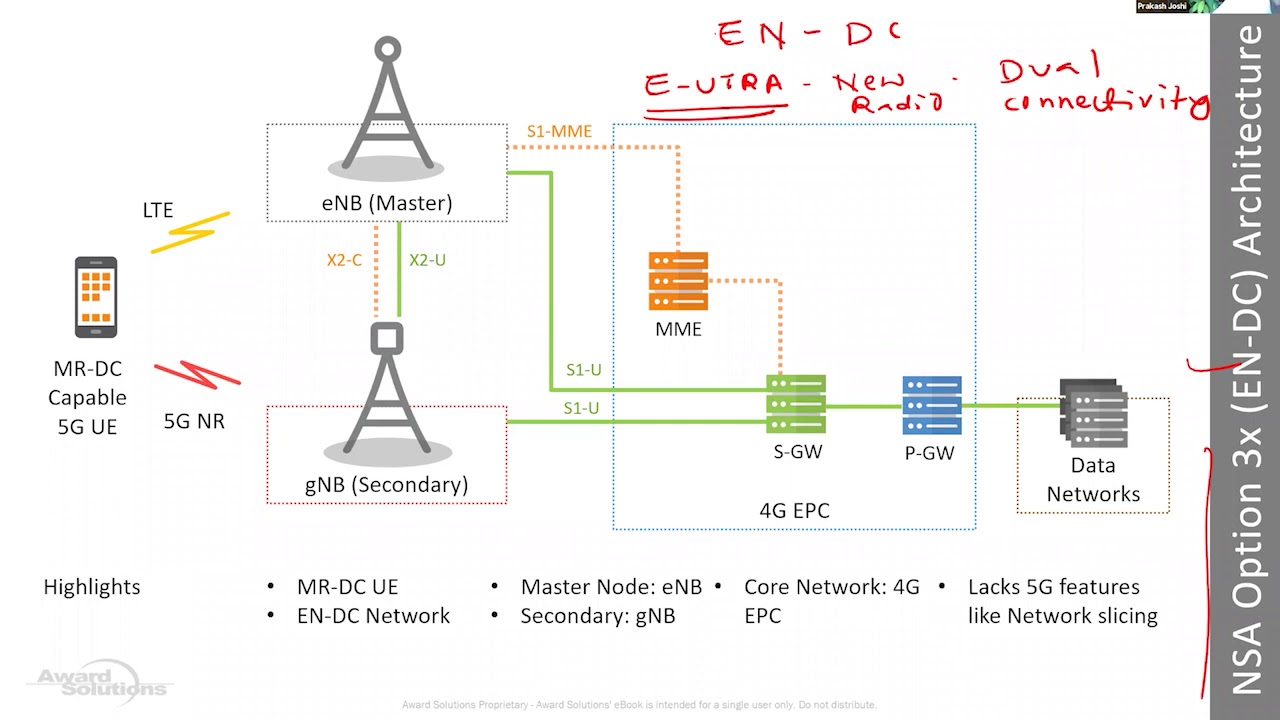
[Music] 5g deployments in early 2021 are largely based on a non-standalone approach as you can see that means that we take the 4g network in its entirety including the radio network and the car and we add 5g functionality through the radio access network in particular we add a 5g gnb now with this architecture the device itself can utilize a 4g radio interface and a 5g radio interface simultaneously and hence overall data throughput is increased now using this configuration the 4g run node serves as what's known as the master run node and it provides all control
to the gnb the gnb serves as a secondary run node and as such the gnb is considered to be non-standalone it needs to get its control from the 4g e node b and does not get control from the core network now in terms of data delivery voice over lte services are largely centered on 4g so volte is not delivered over 5g in this particular deployment methodology internet based traffic largely floors via the gnb some of which will be distributed over 5g some of which will be sent to the 4g run node to be distributed over
4g as well now with this methodology we're not really hitting the three main pillars of 5g those three pillars include enhanced mobile broadband ultra reliable low latency communication and massive machine type communication and of those three non-standalone 5g is only really delivering the enhanced mobile broadband experience the other two are really relying on a standalone 5g network including the deployment of a 5g car network so in order to deliver the full 5g experience which encompasses enhanced mobile broadband ultra reliable low latency communication and massive machine type communication we need to deploy a full 5g system
in other words a standalone 5g deployment whereby we have a 5g gnb connecting directly to a 5g car network so the gnb is taking its control from that 5g network directly and not relying on a master run node notice also that our voice delivery methodology hasn't changed so we still have an ip multimedia subsystem responsible for call control but obviously we're going to call this voice over new radio as opposed to volte now although this will give us the full end to end 5g system which includes the 5g core note that there are other access
methodologies that can be applied for standalone 5g and the main alternative is to actually deploy 4g radio based nge node b's the ng standing for next generation evolve node b so here we have a 4g run node supporting a 4g radio interface with the device however it can take its control from the 5g car network as well as the 4g network final point to note here is it's really up to the service provider as to which route they potentially go down they might not deploy any nge node b's in the network and base their 5g
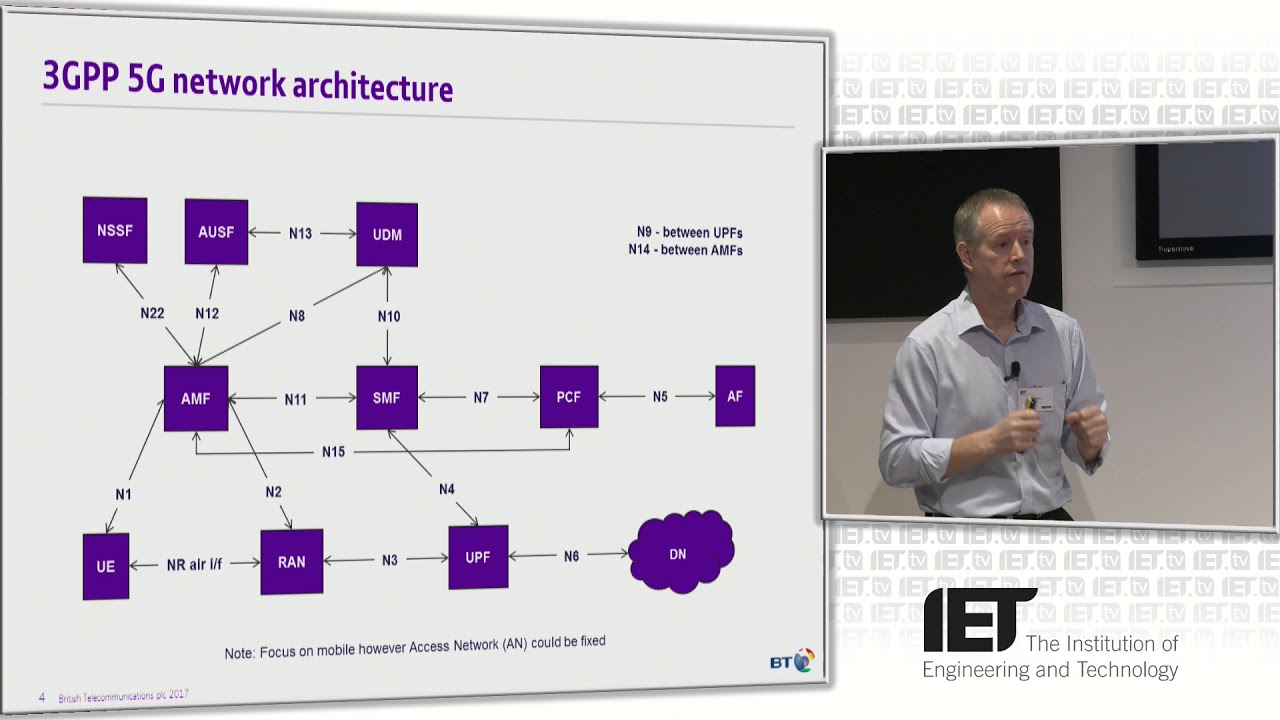
infrastructure entirely on a 5g run deployment for other service providers it may be appropriate to deploy nge node b's in their network a key aspect of a standalone 5g network is the 5g car network itself and although complicated we're going to look at four main components starting with the amf or access and mobility management function it is responsible for first of all tracking the location of a device at any given time now the accuracy of that location will vary it could be an individual cell or it could be a wider tracking area it really depends
on the activity of the device the amf also is responsible for the registration process so that is occurring when the device first connects to the network and a big part of that is security including mutual authentication and key agreement as well the next platform the next component that we have is the session management function this as the title suggests is responsible for our data sessions so anything to do with the establishment the modification or indeed the termination of data sessions is handled by the smf and that could include interaction with both the policy control function
and the charging function now staying with the user plane we have the user plane function this sits on the user plane and sees effectively all of the traffic exchange between the device and the data network that we're actually connecting to so that data network could be the internet or the ims for example so it serves as that data network anchor but because it's on the user plan path it can also serve as the point at which we enforce policy and then the final key function that we have is the udm this stands for unified data
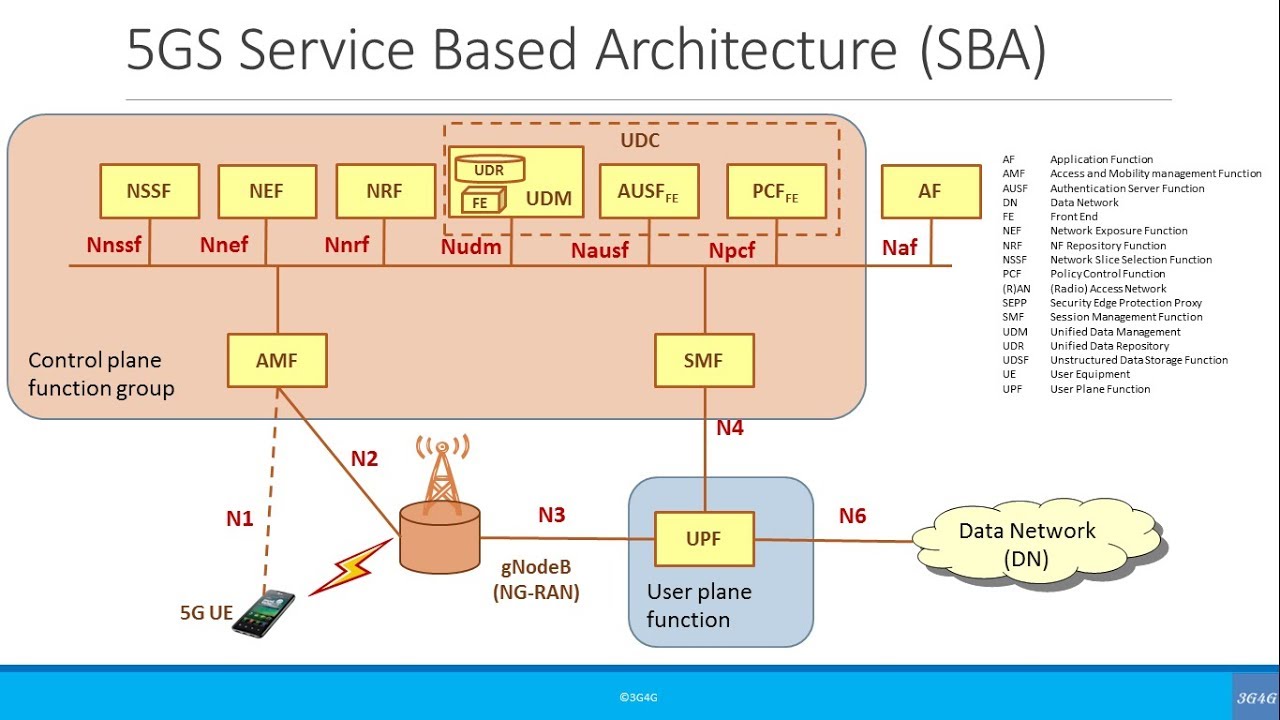
management it is our central repository of subscriber profile information and as part of that we will also hold the secret keys that are used to support subscriber security although we have some of the main components of the 5g car network on screen here the truth is that doesn't really give justice to what is potentially quite a complicated car network architecture and in reality three of our components that we have on screen are associated with what is known as the service based architecture notice though that the upf isn't the user plan function sits on the user
plane and it could be located within the car network or indeed in the run as part of a mech or multi-access edge compute deployment back to the control plane though any component within the 5g car network control plane is considered to be part of the service based architecture and as you can see there are many more additional network functions that actually can be included and even this doesn't encompass every single component of the service based architecture it's called the service based architecture because each individual function will offer services to other network functions and the way
that those services can be accessed is through a service-based interface and every function has its own service based interface which has been standardized by the 3gpp it's effectively an api orientated car network architecture where the majority the vast majority of traffic is based on http 2 and on occasion you will see json uses the payload of that traffic [Music] you