now we will be going into the seed testing procedures so talking about seed testing i would see that what are the objectives of seed testing so first of all seed testing determines the suitability of planting okay the suitability of planting means how much seeds do we need to plant during a during the sowing so if the germination is less maybe we have to we have to put more uh increase the seed rate so that the population is maintained if the generation is very high we can do with lesser seed rate so the suitability of planting
so is it suitable for planting or how much should we plant so this is one of the primary objective of seed testing this the report will give us and then we have to identify the seed quality problems is there any issues with germination some issues with physiological conditions some if there are some abnormal seedlings or something like that to meet the leveling specification so every seed lot that is being packed inside packets and being sold in the market will have a leveling specification so there will be minimum limits of germination so that seeds that packet
should have seeds which are having a minimum of some x amount of germination maximum some percentage of inert matter and inaudible all these different kind of uh seed quality attributes so that the label standards are already there for each different crop to meet these leveling specifications the testing is necessary then also this the one of the most important testing that are done during a seed testing or general citizen is seed moisture so do we need to dry because if you are storing if you are packing uh wet seeds then after maybe few months all the
seeds will be dead so is there a need for drying those things will also be determined by seed testing and i'm telling you there are different kinds of uh seeds the seeds are already there are standards that at how much temper at how much seed moisture content the seeds should be packed inside the moisture vapor proof container so if you are storing the seeds under sealed plastic packages there is a standard that the seed the mossy moisture content should not be above a certain limit so normally for cereals and all these uh for for pulses
and all it should not be above six or uh seven percent and for moisture vapor moisture vapor permeable containers like in cloth bag or jute bags yeah they are normally around nine to ten percent this is this is not a thumb rule but there are there are different crops are having different standards of uh moisture content at which you can pack the skills and then the basis of the price so based on the proceed quality the prices are determined so taking into account all these things these are the objectives of seed testing that uh that
are normally there to do the this operation and seed testing is a very organized operation you can see that many cases if you don't have if seats are moving from one country to the other without the there are certain certificates that are international certificates that are involved without those certificates which are issued by specific laboratories accredited by specific organizations and they issue the seed testing report and these without these certificates the seeds cannot move from one country to the other so these are the most uh just to tell explain about we you don't have to
learn this by heart or something like that there are so many different international organization for seed testing but the most important seed testing organization that normally majority of the countries are calling is the international international seed testing association or the easter you can see on the right so these are the international rules for seed testing these are all updated every year and you can see the list here so these are the normally the uh american seed testing association the association for the official seed analyst aosa aosca the european seed association is also there which are
also a body that implements quality seed accreditation quality seed laboratory accreditations also within europe the ilac or the international laboratory accreditation cooperation they are the people who are accrediting any kind of laboratory or calibration laboratories all over the world within which seed is also upper view but the international seed testing association the last one you can see so they are the biggest body in which are i would say they are controlling the [Music] seed movement or accreditation or conferring quality and giving training and to all different kind of member countries the headquarters of vista is
in zurich in switzerland and they have different committees with which they are also doing a lot of research in terms of seed testing so in a nutshell this is a these are all the international organization who are involved in seed testing and who are involved in different aspects of seed testing some are a body which which regulates the country's seed movements some are an international organization who are accurating laboratories some are also issuing certificates esta issues eastern east accredited laboratories are issuing orange certificates so that the seed can move from one country to the other
so every seed movements will require the orange certificate so these are these are the in a nutshell these are the international organization which are uh involved in the seed testing and those who are implementing different kinds of laws and regulations for uh seed testing so now talking about this we will be what we are going to do is we are going to learn a little bit about uh seed uh testing and seed testing is done in a seed testing laboratory so within a laboratory everything it happens in a very specified or i would say in
a very organized manner the basic there are three very important things that are necessary in a seed testing laboratory first of all the organization so everyone should be responsible and everyone should know about their skills risk know about their responsibilities and their skills they should be an organogram how who reports to whom and how the flow of information and the flow information flow happens and the division of labor who is doing what who is doing which testing this is very important because there are things that we we need to be very careful about time when
the sample is going in when the sample is coming out when we are starting the test when you are stopping the test so all those things and then the most important of course the testing procedures the testing procedures should be robust and based on standard methods so like ista the international seed testing association have their how all these standard operating protocols and how to do germination testing how to do seed moisture testing how to do physical purity testing so these are all there and these are based on many years of research they have standardized this
protocol so you have to have robust and based on standard methods and this test has to be has to be easy to perform and there should be a reference to work instructions there should be work instruction so that they should be written somewhere that i i should be able to refer that okay what temperature should should that be at what time should i be taking the seeds out what seeds at what temperature which species i should put at what for how how long so all these things and there should be a defined workflow what work
workflow me it should be defined when is doing what that i just just shown in a in a flow flow diagram then comes the documentations the documentations are very much important like the control of records these are all based on the international standards association iso control of records we should have data recording and data entry procedures temperature data calibration data then the equipment data so all these things has to be has to be there inside the laboratory non-conformity plan how we will be handling if some tests errors were there while doing the test so all
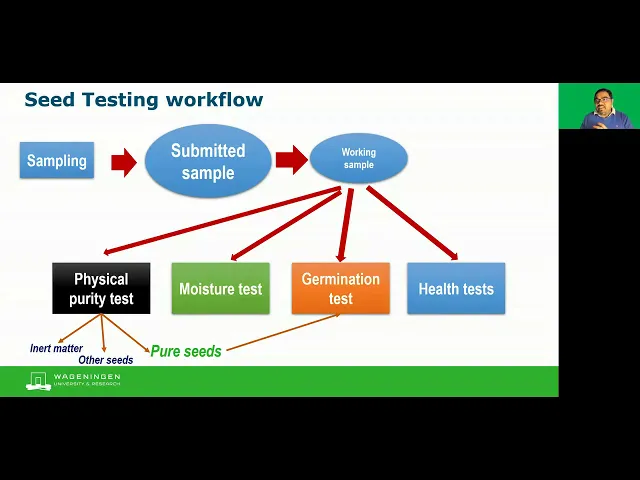
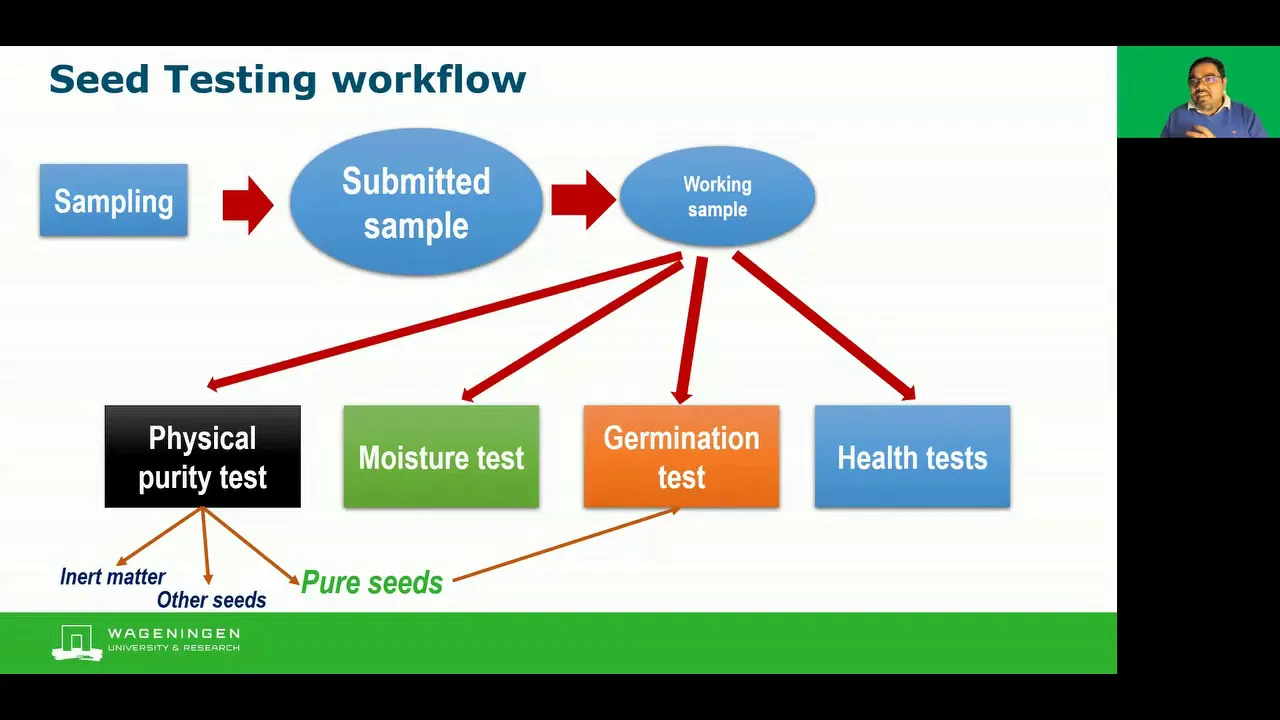
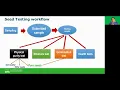
these things has to be there and the results handling what are we going to do with the result if the results are not done in the right way should we communicate or should we do the re-testing so all the decision making it should all all should be specified now let us come to the seed testing workflow in a in a nutshell so first of all it starts with sampling so the sample actually comes as a submitted sample inside the lab so in the field itself or wherever the samplers are doing the samplings the unit that
is being packed and sent to the lab is called the submitted sample but the submitted sample is also more than enough it has enough uh quantity that will not only suffice the testing but also it will suffice some of the seeds that can be kept as an insurance suppose we lost some of the samples so submitted samples are normally little bit over than what it is really needed and so we need to reduce it to a working sample in a thumb rule normally we have it so we take half and we use it as a
working sample so we work with those working samples so how much should be the submitted sample for every crop and how much should be the working sample these are again specified in the uh in the seed laws of easter seed rule so what should be the submitted sample what should be the working sample all these things are again specified so like like there are some crops you need one kilogram of submitted sample and the working sample is 500 grams for some the working sum uh the submitted sample is how 100 grams because small seeds and
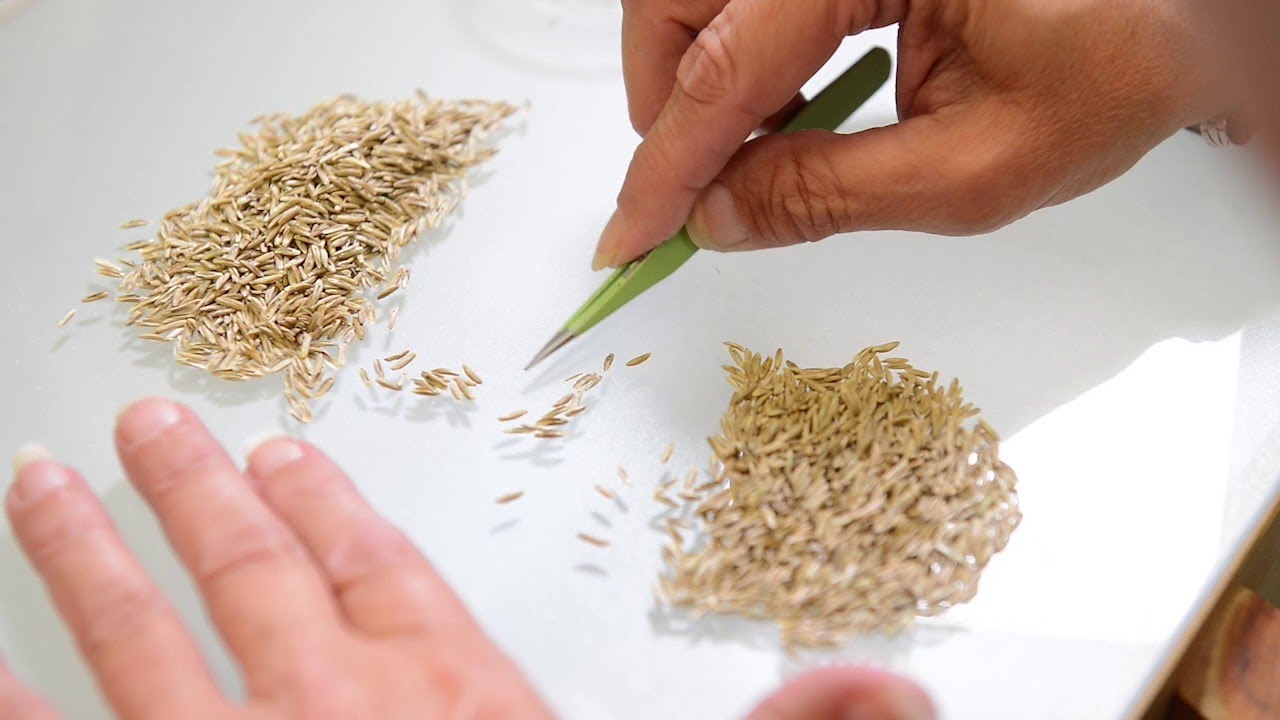
the working sample is somewhere around maybe 50 grams or 30 grams so we have to reduce the sample so the working sample and after reduction the first test that is done is the physical purity test i will go into more details of the physical beauty test but in general if it is physical put it as the working sample is divided into inert matter other seeds and pure seeds so the pure seeds are separated and the other seeds that are that are not conforming to that species and inert matter like broken seeds or muds or mud
balls or stones or plant parts all these things are the inert matter so it is separated weight and percentages are calculated so this is a physical period now this pure seeds are used for generation test so this many people ask that why is it it is not used because a seed sample may have many kind of inert matter so those inert matter if i am directly using for the generation test it really messes up the whole workbench so it is better to work with a cleaner sample so the generation test is we have to remember
that the germination test is always done with the pure seed fraction after we do the physical purity test the small sample packet which contains the pure seeds are taken to the germination test table so from here the generation tests are actually done and of course the moisture test we have to determine the moisture there are again standards that to have if you want to have do moisture test the seeds should be packed in moisture vapor proof containers so you cannot just put it in a paper packet and send it to the lab because on the
way while it is coming to the lab it will again release the moisture or absorb moisture and there will be errors we will never know that what was the exact master content at the time of the when the sample was back so we have to remember that whenever if the client or the person asks for moisture test we should remind them that the sampler should put this sample inside a moisture vapor proof or a plastic container or a metal container aluminum foil parts which is not pervious to water vapor and then the health tests are
there you you can perform many health tests normally the the cold tests are there in which you can you you can perform the health test but health test requires of quite a high amount of expertise as well as it means equipments like microscopes and media preparation and ultraviolet uh light so that you can you can incubate the seeds and all these things so yes the seed health tests are very important which can show you that are there any kind of seed bone diseases inside the inside the seeds and what is the microbial flora of the
seeds so there may be some cypropathic fungi or some other fungi which are may be harmful may not be harmful at least we'll get a health report of that and of course the genetic purity test many places we call the grow out test it is also performed which is also part of the seed testing procedure where the see whether see the sample is actually planted outside in the field and they have counted and how many seeds are how many plants or seedlings are conforming to that particular variety is calculated and we can say that okay
there are some mixtures or of types or not some other species are there or not so this is this confirms the genetic purity so these are the total seed testing workflow the total amount of different kinds of tests that are already performed so first of all there are we need to know the seed sampling is is very important the seed sample it should be a representative of the the whole lot so this is how you can see that there are sampling priors are you so these are pipe like slotted equipment with which you can insert
it inside the bulk or insert it inside the bag you can you can see here and you can pull the sample and also if the seeds are not that much bulky you can use these methods like the spoon method or the modified halving method and the hand halving method these methods with which you can actually collect the sample then reduce the sample then pack it and send it to the seed testing laboratory we can now see a small kind of a video where with which you can see that how exactly the seeds are sampled so
this is a sleeve dryer you can see these slots in these slots actually these slots the seeds are actually falling inside inside this pipe and it this it is actually a concentric kind of there are two sets of pipes one pipe goes inside the other and it can close and open based on where where you want the samples to be so you can see this yeah so now it is going inside so the sleeve is inserted inside the slotted tube and the slots are can be opened by turning so now you can see when you're
putting it inside the slot should be closed once it is inside you have to rotate it and open it and then the sample will fall inside the tube and now you take out take it out see then you you close the bag so that no more seeds are coming out of it and then you take out the sample and then collect it so we come to the next test that is the physical purity test so physical security test is actually when the seed first comes in the working sample is taken and then this working sample
is taken on a workbench and it is separated into pure seed other proxy speed seeds and inert matter so objective is to confess to the prescribed physical per purity standards with regard to the physical component physical components we are talking about so the method consists of the working working sample and it is separated into pure seed inert matter and then the fractions are weighed and expressed in percentage percentage by way it is it is quite very simple you can see from this picture that this is uh this is the whole working sample in which it
is being separated into you can see the small uh small pans in which the broken seeds so the there is a rule regarding regarding the physical period that if a seed is broken more than half so if the more than half is missing then it is considered as an inert matter but if it is less than half is broken up it is considered as a pure seed so this is this is a tricky thing but regarding the regular seed but otherwise you can easily identify the wheat seeds the inert matters that is the broken you
can see from here the the result inert matter is there the weed seeds are there other crop seeds are there and this is the pure seed so this these fractions are again weighed weighed and the percentage is calculated based on the submitted sample so the seed germination test is again the pure seed fraction is taken and the seed generation test is conducted using these the pure seed reaction so there are different methods by which you you are doing a cc germination because the seed sizes are different and if you are not doing the right uh
taking the right substrate or the process is not done in the right way the seeds will not germinate you will not even get a right result so based on the size of the seed so very small seeds who need light the seed testing that germination test is done on top of the paper you can see this this picture on a petri plate or on a similar kind of a tray like that you have to put the seeds on a moist filter paper and then you have to put it inside the incubator and there is another
thing called the between paper so here what you do is you take two moist paper rolls paper put the seeds inside and roll it inside so you can you can see that these are the testings that are done between paper medium size and most common method of doing any kind of seed seed testing is between paper method very reliable and it doesn't require much space and all and which are very big seeds like maize and big beans these the kidney beans and corn so these seeds require these are very large it is very difficult to
germinate them in in between paper so it is very easy to do it inside so there is uh these things are always done in in such a way so that uh so that the maximum amount of moisture the maximum amount of moisture is available for the seed coat to to imbibe and the next very important thing is the seedling evaluation so we have done the germination how are they going to interpret the reports so the international seed testing association has a handbook or vista handbook on seedling evaluation where for most of the species that are
grown in the world the images of what uh how the seedling should look if we want to classify them as an abnormal settling or normal seedling or dead so these all are there but in general in general it is it is always something like that that if you can see that the root system and the shoot system is well defined then it is a is a normal seedling but if you see you can see here in this picture that the shoot system is developed but the root system is not developed so these are there are
some kind of physiological disturbances within the seeds which are not allowing it to develop into good roots and you can see of course the dead seeds you can identify so within the paper if you just press there will be some kind of a liquid oozing out so you can find out that easily that there is a bacterial or fungal infection within the seeds and the seeds are dead so this is how we are going to do the seedling evaluation again normally easter recommends that we should test 400 seeds so 100 seeds into in 4 replication
and then we make this calculations too as as a percentage so we count all those 400 seats and we determine that how many are abnormal how many are dead how many there is also concept called the hard seeds the hard seeds are having dormancy so mostly in many pulses there are seeds are really hard so that they don't allow water to imbibe so these are also counted and expressed in the report so the seed moisture testing is again another very important method or a very important test which is actually an amount by weight of water
that is present in the seed plot so within the seeds what is the percentage of water that is present and the most two very common method by which it is determined in the laboratory firstly it is a hot air open method so in this method actually the seed this is the most accurate one of the most accurate methods and it is recommended by easter in this method the seed moisture is removed by drying the seed sample at a specified temperature for a specified duration and we calculate the weight before drying before drying and after drying
so you remove all the water and there are again standard easter egg specified standard that what should be kept at how much temperature so normally there are two different methods so we keep the seeds at 103 degree centigrade at for uh five six or seven hours for longer so it is called the low constant temperature oven method so at a lower temperature we keep it for a longer time these are normally done for the oily seeds where if you do go for high temperature then the oil will also evaporate and we'll have a false result
and we'll find out that okay that oil percentage also has moisture percentage so we just want to evaporate the water not the oil so and we have the high constant temperature method in which we keep the seeds inside that oven for around three hours at 130 degree centigrade but this is normally done for these starchy seeds like corn maize rice and even pulses so this is a hot air oven method with which we calculate the moisture content and there are so many moisture meters moisture meters are estimate the seed moisture very quickly but it is
not very precise because the properties are by which these moisture meters are calibrated or these moisture meters are manufactured it depends on some other property which indirectly relates to the water so like there is one equipment that determines the moisture based on the resistance so higher the moisture higher the resistance in the seeds and another moisture meter that determines the moisture based on the capacitance and again so the capacitance varies when the water content inside the seeds are uh increases or decreases so these are the different kinds of methods by which these moisture contents are
measured so let us watch a small video again on how the oven method for moisture content is actually is done so you can see that this is the oven yeah he will set it to 130 yeah so it is set at 130 and we have to weigh the samples normally it is done in two replicates or three replicates the more the better but normally two replicates are taken so this is the moisture content it is called on a wet basis the weight of the wet grain temp weight of the wet grain weight of the dry
dry grain divided by the wet weight of the wet grain so this gives the moisture content so you can have three samples three replicates and then you do the average that is how it is done so now the report compilation this is very important then we have the we get the results of the physical purity we get the result from the germination we get the result from the moisture and these are actually the results that are required for the labeling is required leveling requirement so any kind of seed that are sold in the market these
are the most important parameters that should be that should be there in the level and then finally the report is uh generated so let us see the documentation flow in a in a seed lab how it how it happens in a in a flow chart basis so first of all the submitted sample so this is a separated sample it enters the lab and we have to remember these things because this is the lab workflow so then the sample is entered in the registers now this can be done on a register or there can be a
software with which you can enter the information and the lab reference number is generated this is very important samples are coded so that the to just to avoid conflict of interest any kind of thing so it is just so that none of the people none of the analysts who are working in the lab can know that whose sample or what crop they should not be able to know what samples or which companies see this is so the everything happens on a lab reference code so the coding is done by the lab manager so now again
the sample is divided normally into two parts so we have the working sample and rest is kept as a guard sample the guard sample is kept so that just in case we have to do a uh retest the test has gone wrong or we lost the sample or something like that we have to keep an as an insurance because maybe those seats are already sold and already finished in the market we we cannot uh get the those uh get hand our hands on that sample again so that's why we have to keep this guard sample
and then of course the working sample now from the working sample the seeds will go to the germination test physical purity test and moisture test which i have already explained the first the physical pretty test happens and then the pure subtraction goes for the germination test and moisture test so this goes to three different tables for analysis and then what happens is that after the results are entered and there's a job card kind of a thing also so it is there's a card that moves with the with the sample where everyone at at the end
of the each step they enter the enter the results and if you don't have a job card this also can can be done in an in a software in a tablet where all the results of the sample is automatically compiled so you can enter that and then this result is actually checked once by the lab in charge the lavender will check and then the final result will be generated and again this can be done manually through the register or it can also be done through uh software or by the computer anything is uh allowed and
then it is reported reports are generated the report goes to the client or the customer whatever to the farmer or to the agriculture department whoever from whoever the sample has been received so the seed law will always have a provision of the quality assurance and there will be many bodies which are responsible for sleep certification and issue and issuing of the surf uh certificates and also the supply of the early generation series like the breeder seed foundation seeds etc and this is actually required for the seed law enforcement so summing up we have seen talked
about the seed quality assurance in general we have also talked about the field inspection so now you are able to you will be able you have a very nice idea on how to do the field inspections and since all the protocols and the procedures are already there there are approved and tested international procedures are there for field inspections the field inspection the lat lab test report the lab test report these things combined to form a certificate so the final seed certification is actually a combination of the field inspection report and the seed testing lab report
so combining all these things becomes the certificate certification so that's what i wanted to talk about and now i think you will be able to uh have your if you if you are uh enough capable to make your own seed testing laboratory and you can run the own seed testing laboratory based on the procedures that i have just explained and there are other methods and other procedures which i will be elaborating again later on a separate platform thank you very much you