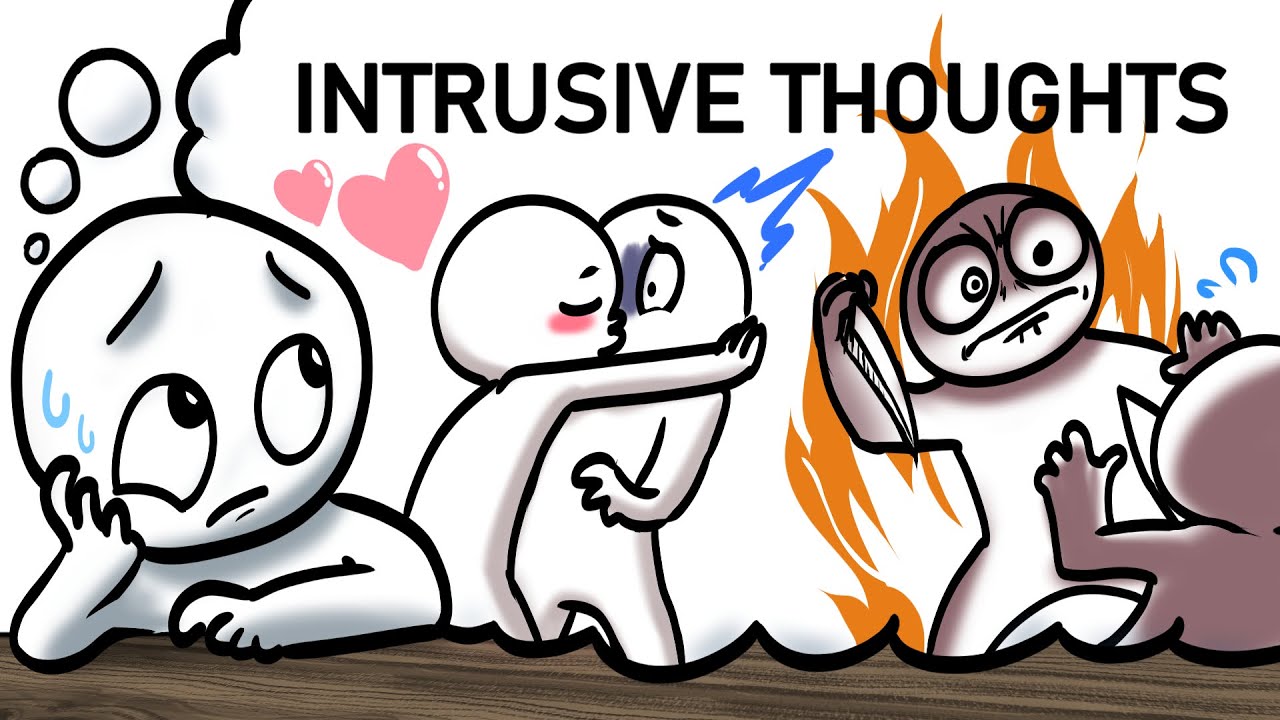
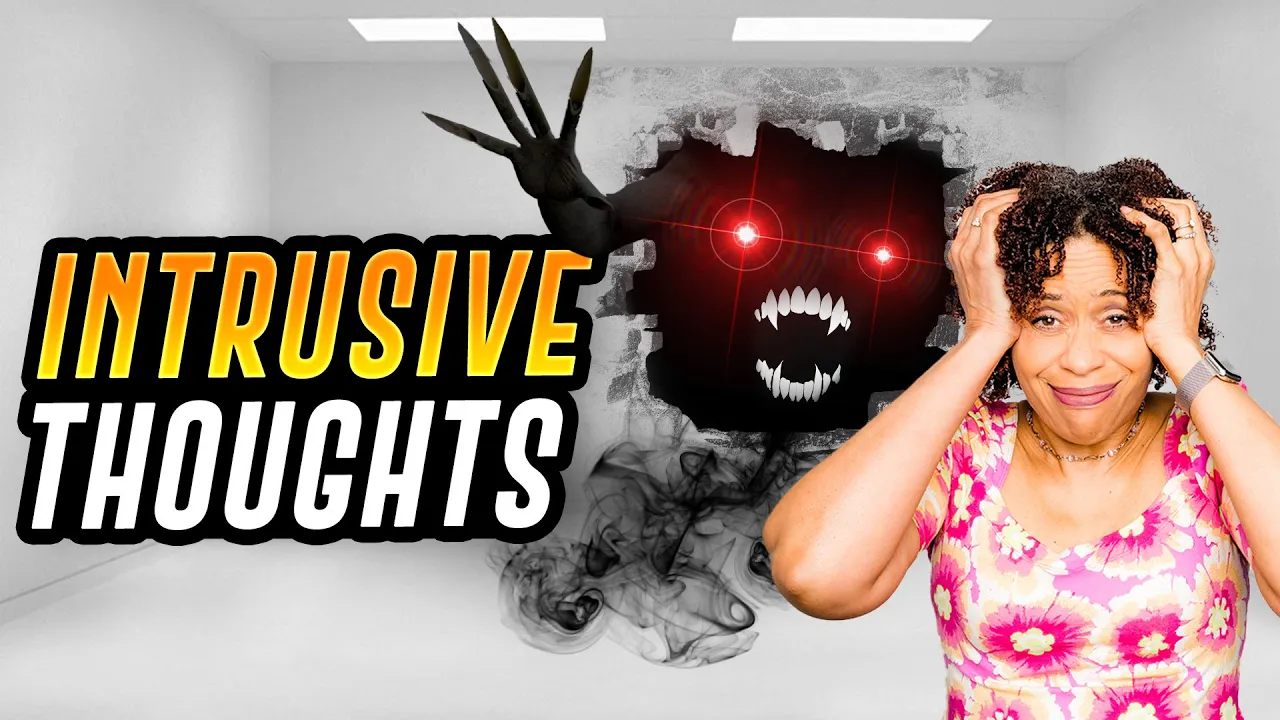
Hi, I'm Dr Tracey Marks, a psychiatrist, and I make mental health education videos. It's normal to have unwanted thoughts that intrude into your awareness. They're unwanted because they're objectionable in some way.
They may be thoughts of harming someone or yourself, doubts about decisions that you've made, or fears about something bad happening to you or someone else. In the person without anxiety, these thoughts can just come and go. You may have an emotional response of disgust or revulsion if it's bad enough, but you're able to move on to thinking about something else and the objectionable thought just has no lasting impact on you.
But in the person with anxiety, these unwanted intrusive thoughts can stick in your head and cause you a lot of distress. So if these thoughts are normal, what makes some people get hung up on them and others not? Well, using the cognitive model developed by the late psychiatrist Aaron Beck, there's six ways that we can turn these normal thoughts into problematic intrusive thoughts.
The first way is having an inflated sense of responsibility for the thoughts. With this, you believe that you have the power to cause the negative outcome or the duty to prevent the negative outcome. Let's say you grab a wine bottle off the shelf to pour yourself a glass of wine.
And as you look at the bottle, you picture yourself hitting your partner over the head with it. With inflated responsibility, you believe that even though it's not like you to do such a thing or you don't even have the desire to do that, you have this other power that can override your resistance and make it happen. You may even condemn yourself for having such a thought.
A second way that these fleeting thoughts can morph into sticky, intrusive thoughts is by attaching too much importance to the thought. With this, you believe that having the thought makes it a fact, or in the case of imagining a behavior, seeing the image in your head increases the possibility that it's likely to happen. For example, suppose you think that you may have hit someone while you were driving.
You don't remember seeing a person, but you do remember hearing a bump sound and then you start to doubt yourself. Did you really commit a hit and run? Seeing an image in your mind of someone lying on the road makes you think that it must have happened.
Otherwise, how could you picture it so clearly? Another version of this over importance bias is called thought-action fusion. Thought-action fusion is where you believe having the thought is just as bad as committing the thought.
So if you had a thought of touching your mom's crotch, you might as well have just done it because just having the thought float through your mind generates the same level of disgust and shame as it would if you did it. Number three is excessively thinking about controlling your thoughts. You believe that it is possible to have complete control over what you think and that this level of control is essential.
Number four is overestimating the threat. Sexual thoughts are a common theme of unwanted thoughts. Let's say you have a thought or image that pops into your mind of touching your child inappropriately or being sexual with a relative.
The mere presence of that thought in your head sets you off into worrying about how easy or hard it will be to resist the urge to act on those thoughts. And you start to believe that your children are relatives are at risk of you being inappropriate with them. After all, you wouldn't be thinking this way if it weren't a high probability.
And since you don't feel strong enough to control your thoughts, how could you feel strong enough to resist the urge? Number five is having an intolerance of uncertainty. This mindset is common with anxiety.
You believe that it's possible to completely certain that there won't be negative outcomes and you become extremely anxious when you can't get enough facts to support your desired outcome. Unanswered questions and loose ends cause you a lot of distress. The sixth way these fleeting thoughts can become sticky is by having a perfectionistic mindset.
With this mindset, you believe that it is possible for everything to be perfect and just so, and you don't tolerate mistakes. What are the common types of intrusive thoughts? I've already mentioned sexual and here are four more.
Harm, injury and aggression; contamination; doubt; and religious thoughts. Scrupulosity involves intrusive thoughts about violating religious or moral codes. And I'll talk more about that in a later video.
The natural reaction to intrusive thoughts is to try to eliminate them all together or reduce the anxiety they cause. People with generalized anxiety tend to use avoidance and seeking reassurance to reduce anxiety and people with obsessive compulsive disorder tend to use rituals to neutralize the anxiety. But these strategies only worsen the distress and cause you to worry even more about the thoughts.
So what can you do to control these intrusive thoughts? One approach is using acceptance and commitment therapy techniques, or ACT. ACT is a behavior therapy that teaches you how to be more flexible with your thinking.
For example, you could start with mindfulness by bringing your awareness to the present moment and then reflect on how the thought is one of many that you have over the course of the day. The thought is not fact. It's just a thought.
You're the one who attaches meaning to it. And you choose how much weight to assign to it. You can assign less weight to the thought and if you give it less weight, you'll be less likely to see the thought as dangerous or draw conclusions about what the thoughts say about you.
The next thing you can do is recognize the triggers that set off the thoughts. Write them down in a journal so that you can look at them from a bird's eye view. Do you see a pattern?
Do you see a connection between the trigger and your thoughts? Maybe you get them while you watch certain things on vision or online. Maybe you get them when you haven't had enough sleep or when you've been eating too much processed food.
Yes, what you eat does affect your thinking. Another behavioral approach to lessen the impact of intrusive thoughts is exposure therapy. Exposure therapy teaches you to confront the thoughts instead of running away from them.
You confront them to purposely think about them and maybe even saying them aloud. Doing this doesn't feel good. And it may cause you to feel more anxious at first.
But over time, you learn that the thoughts are safe and you can tolerate them. You can also learn to manage the anxiety that the thoughts cause you, you don't need to neutralize them. Instead, you lean into them.
Leaning in shows you that you don't need your safety behaviors to protect you from the anxiety. Ideally, a therapist is the best person to help you craft the exposure exercises. But if you don't have a therapist, think of scenarios that could result in the outcome that you fear.
So for example, let's go back to the thought of hitting your partner over the head with a wine bottle. Because of that thought, you've stopped drinking wine at home or you're afraid to handle the bottle yourself. And you always get someone to pour the wine for you while you look away.
These are some of your safety be behaviors. In this example, you could practice writing, "I feel like I want to hit my partner "over the head. " Write it out several times like Bart Simpson does on the chalkboard during the Simpsons opening.
Writing it out takes the scary taboo thought and makes it less threatening. A next step up from that could be holding the wine bottle in your hand and swinging it in the air. Your arm will probably get tired from that.
Then you can hold the bottle in your hand with your partner near you. With this experience, you can see that you do have control over your arm. It's not just going to take a swing on its own.
Sit with the anxiety, do some deep breathing to calm yourself while holding the bottle. This is what's called situational exposure exercises. You can also do imaginal exposure where you picture scenes in your mind.
Imaginal exposure is good when you have a situation that you can't replicate in person. Watch this video where I talk about safety behaviors. And when it comes available, this one where I talk about scrupulosity.
Thanks for watching. See you next time.